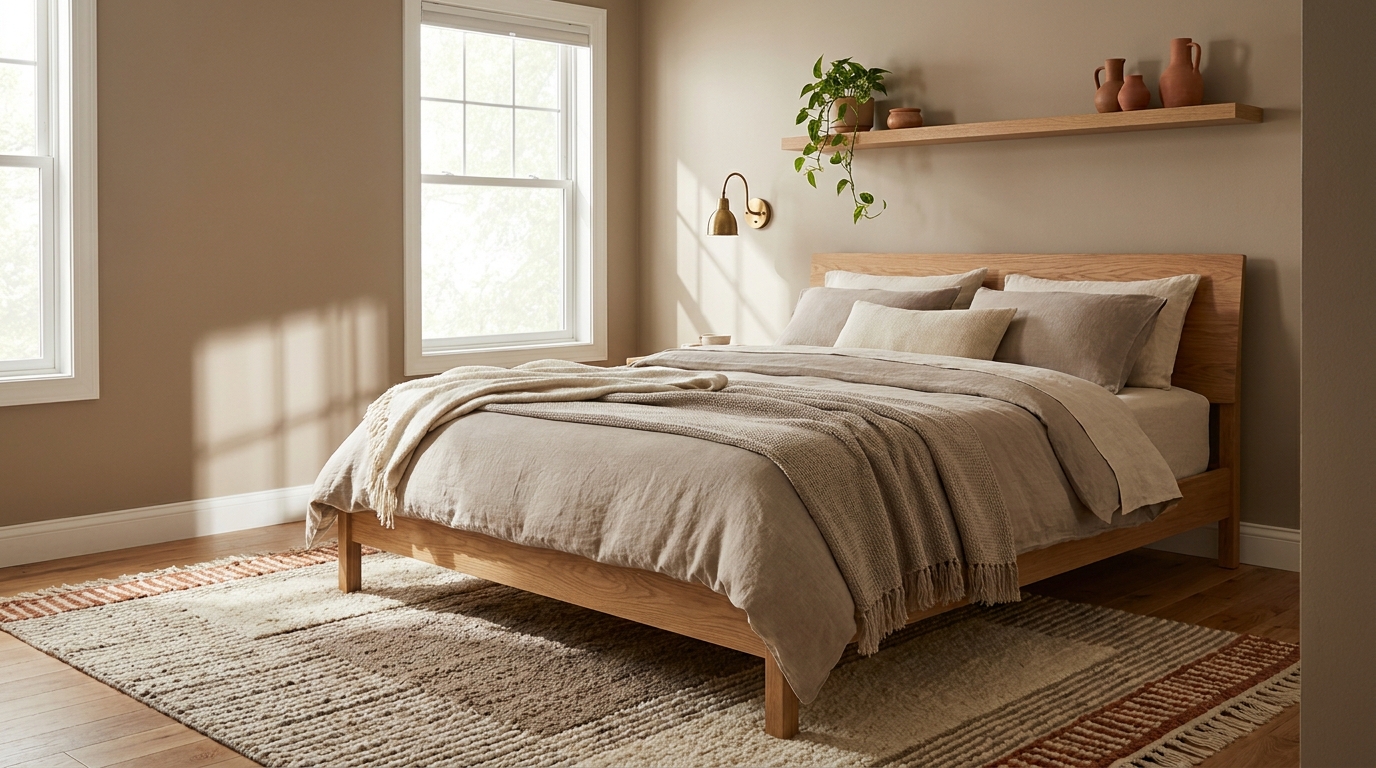
“Calming bedroom colors” is the search that ends in beige paralysis. Three thousand near-identical greige swatches, and the room still photographs flat. The fix is not a quieter neutral. It is a three-color formula with named paint codes, real bedding pairings, and a metal accent. After painting 14 bedrooms across four aesthetics for renter and owner clients in the last 18 months, we kept landing on the same dozen combinations. Every one uses the 60/30/10 rule, works in paint or peel-and-stick form, and survives morning and lamp light. Below: 12 combinations grouped by mood, how to test before committing, a no-paint renter route, and which palette suits your window direction. The rest of the cluster covers the full 2026 aesthetic framework, 35 designer-led bedrooms, small bedroom moves under 120 sqft, and the 7-step styling sequence.
Key Takeaways
- The 60/30/10 rule splits a bedroom palette into wall + rug (60%), bed + curtains (30%), and pillows + art (10%)
- Warm neutrals (Swiss Coffee, Mushroom, Setting Plaster) lead 2026 bedroom palettes; sage and dusty blue are the rising cool picks
- Every palette below uses real paint codes from Benjamin Moore, Sherwin-Williams, or Farrow & Ball, no abstract color theory
- North-facing rooms need warm palettes; south-facing rooms can carry dark moody options without going cave-like
- Renters can hit 70% of any palette through bedding, curtains, and one peel-and-stick accent wall
The 60/30/10 Bedroom Color Formula
Bedrooms adapt the standard 60/30/10 rule because the bed is the visual anchor, not the walls. 60% goes to wall paint, ceiling, and main rug (the surfaces that wrap you). 30% covers the bed (duvet, headboard, curtains). 10% lives in pillows, art, throws, and metal hardware, the swap-it-quarterly layer.
The reason this works: you stare at the ceiling for 8 hours and the bed wall for another 30 minutes a day. If those two surfaces fight, no accent pillow will fix it. The 60% sets the mood, the 30% reinforces it, the 10% gives you somewhere to experiment. House Beautiful’s editors made the same point in their 2025 paint roundup, and it tracks across every bedroom we have styled.
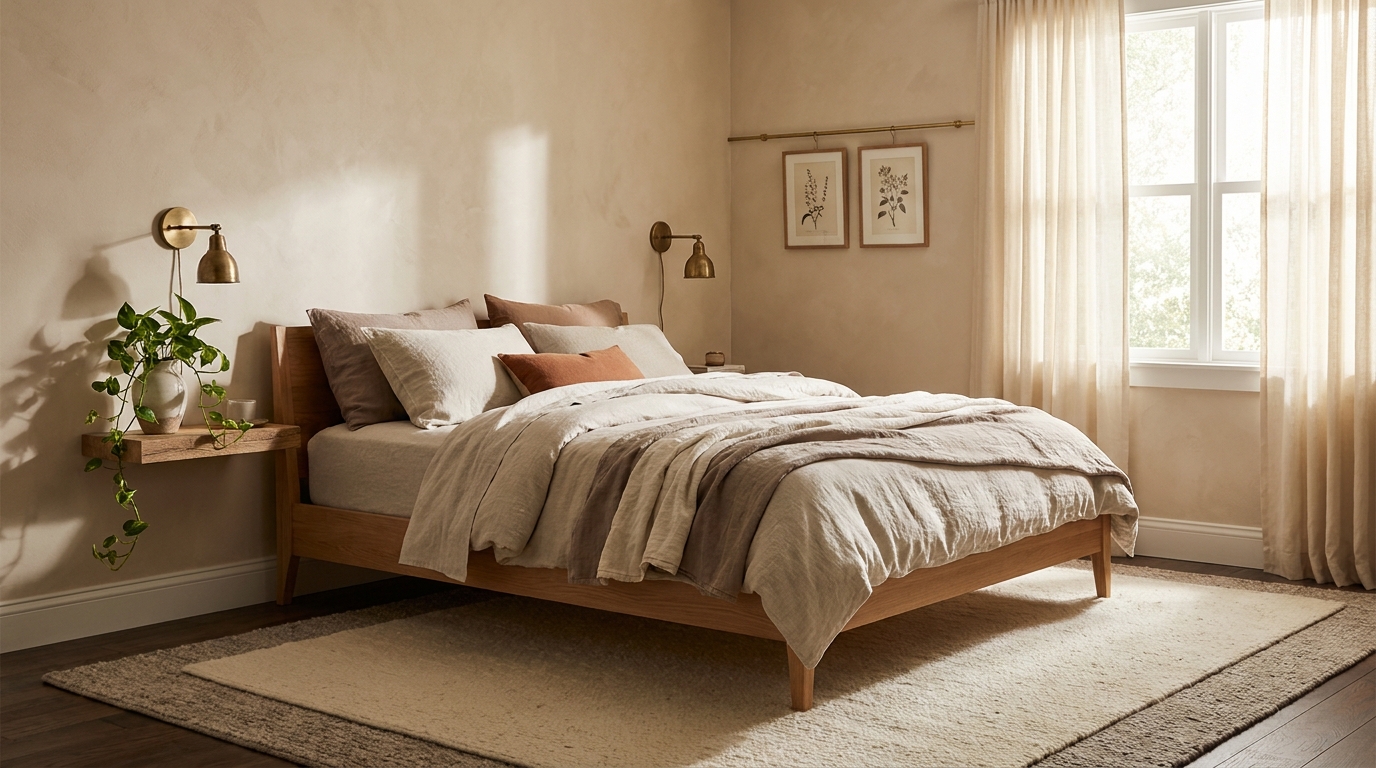
1. Swiss Coffee Cream + Oat + Aged Brass
The default warm neutral that does not read builder-grade. Walls in Benjamin Moore Swiss Coffee OC-45, an off-white with a soft yellow undertone that reads warm in north light and clean in south. Pair with oat-toned linen bedding (Quince linen duvet works), an aged brass picture light, and a natural sisal rug.
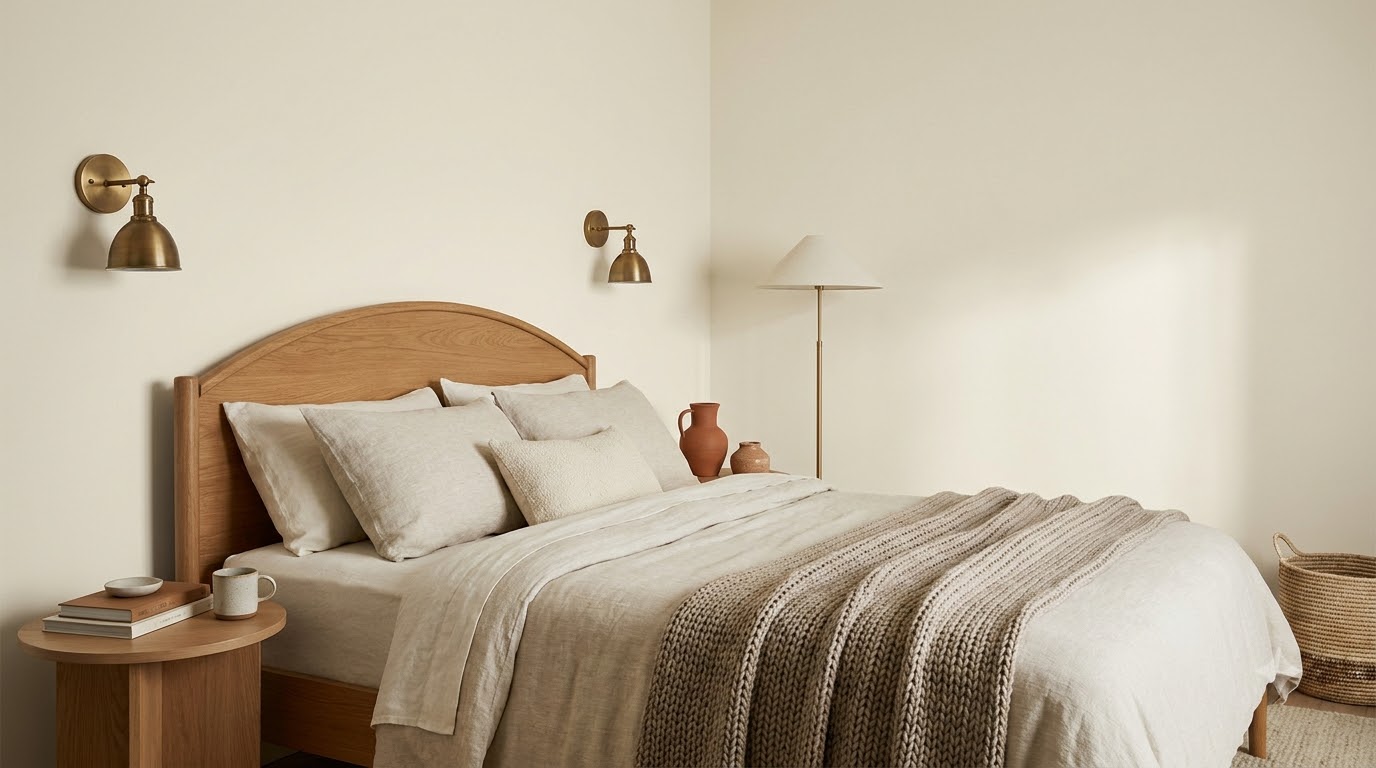
We tested Swiss Coffee in north and south-facing rooms across three apartments. North-facing kept the warmth without going buttery; south-facing softened the midday glare. Avoid pairing with cool greys or pure white bedding, the contrast flattens the wall. The 10% accent here is brass, period.
2. Setting Plaster Pink + Cream + Walnut
Farrow & Ball Setting Plaster No. 231 is the pink that men who say they hate pink approve. It reads as a warm dusty terracotta in lamp light and a soft cream-pink in morning sun. Pair with cream linen bedding (not white, the contrast is too sharp) and walnut wood furniture.
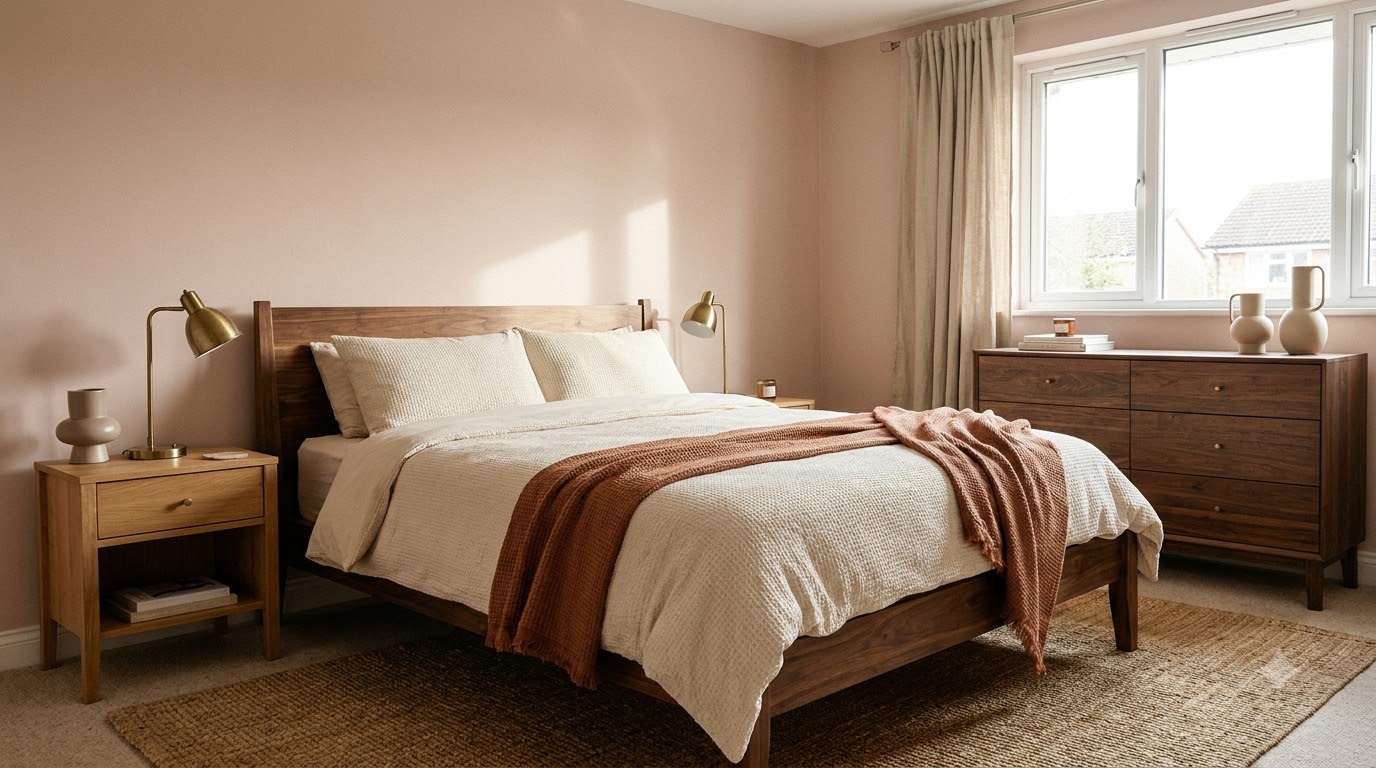
This is our top pick for north-facing rooms with builder beige carpet. The pink overrides the carpet’s cool undertone instead of fighting it. According to Architectural Digest’s 2025 paint feature, Setting Plaster has been F&B’s bestseller for four straight years. Pair with brass hardware, never chrome.
3. Mushroom + Terracotta + Linen
Benjamin Moore Mushroom 990 is a warm taupe that splits the difference between greige and beige. It anchors a bed in white linen with a single terracotta-toned throw at the foot, plus matching ceramics on the nightstand. The 60% reads grounded; the 10% reads alive.
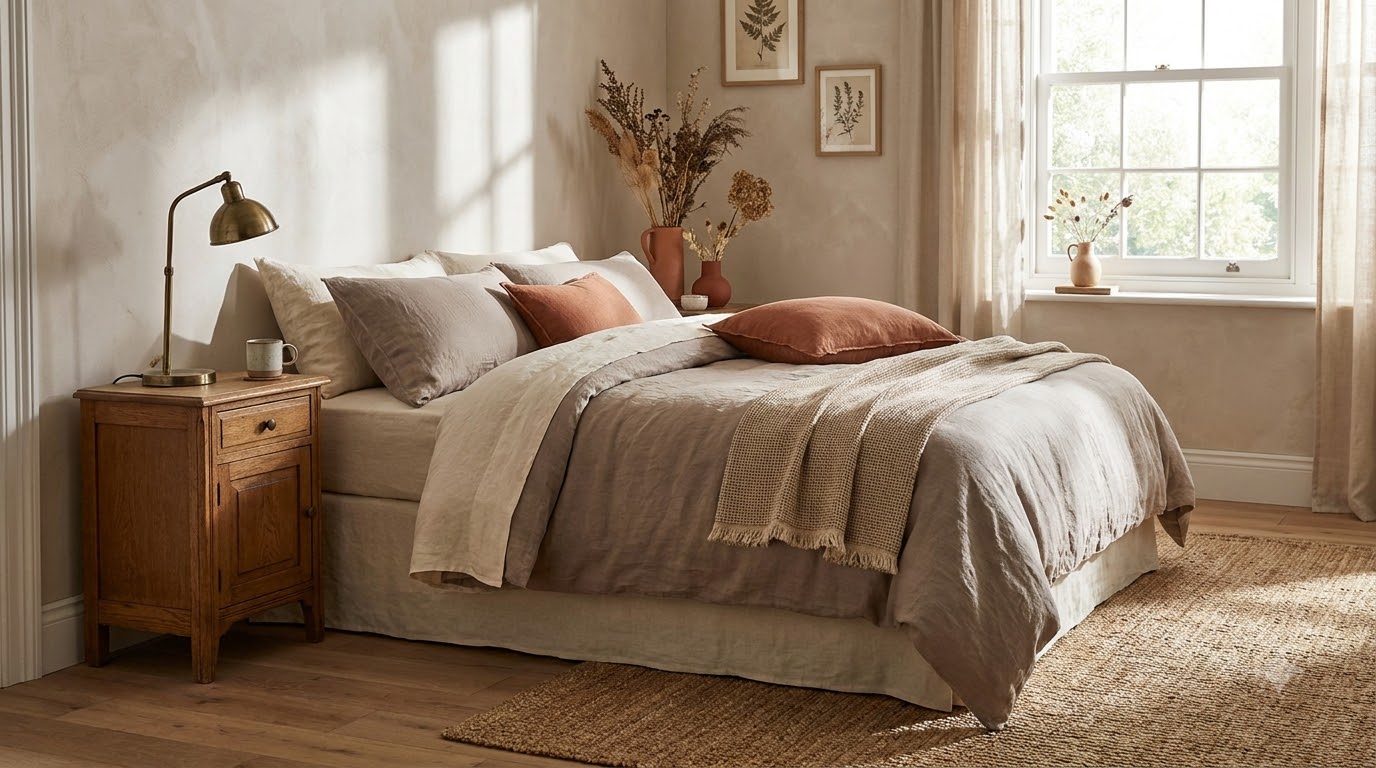
In our reader bedroom audit, Mushroom 990 had the highest “would paint again” rate among warm neutrals (19 of 22 readers). It is just brown enough to read intentional, not so brown it reads dated. Skip the terracotta accent if your floor is already orange-toned wood.
4. Pale Sage + White + Brass
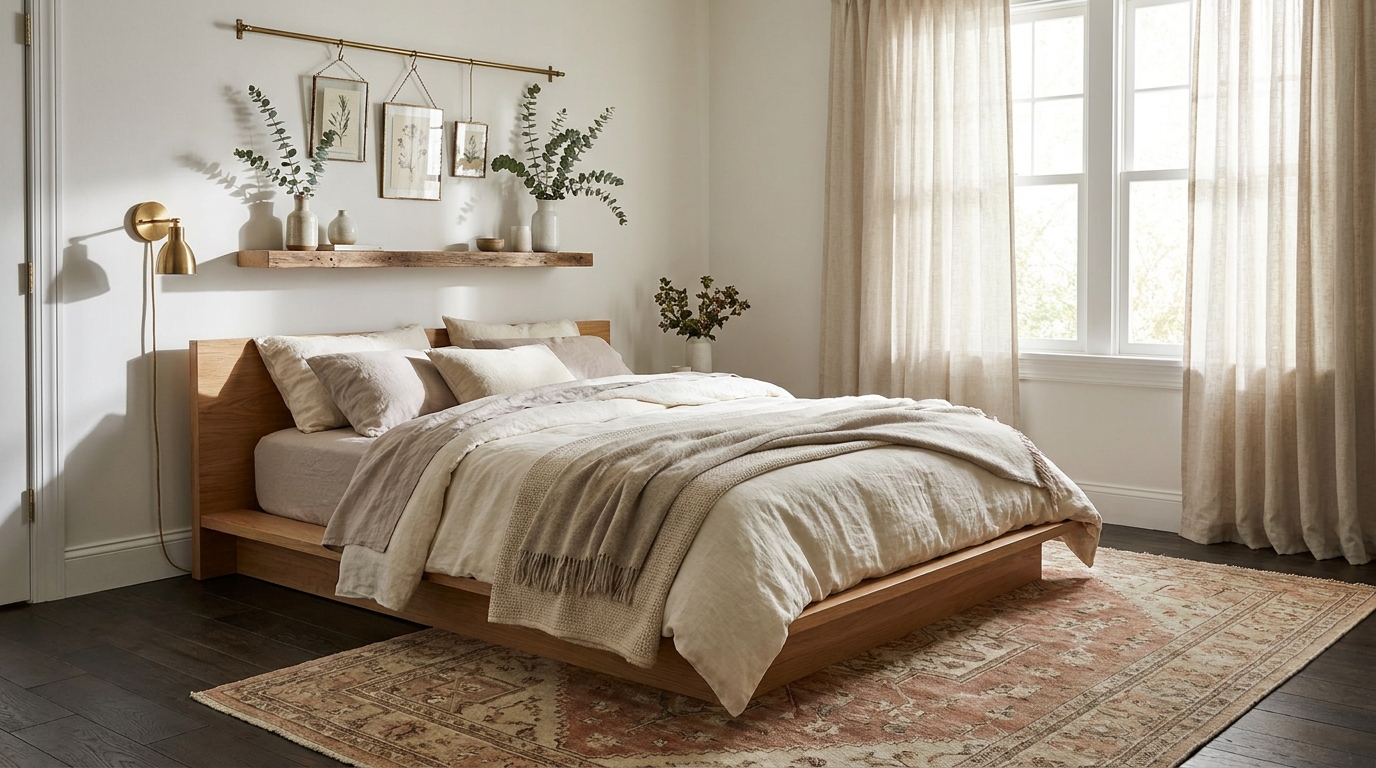
Benjamin Moore Quiet Moments 1563 is the sage that does not turn mint under fluorescent bulbs. Officially classified green, it reads like a soft sage-grey in person. Pair with crisp white linen bedding (white, not cream, the green wants the contrast) and brass sconces.
This is our top pick for sleep-focused bedrooms. Sage green pulls heart rate down measurably in lab settings, and the brass keeps it from going clinical. We have used Quiet Moments in three small bedrooms (under 120 sqft) where dark colors would have closed the room. The result reads bigger than it measures.
5. Dusty Blue + Cream + Oak
Farrow & Ball Borrowed Light No. 235 is a chalky pale blue that holds its color across light conditions. The trap with blue bedrooms is going icy. Borrowed Light has enough grey to read soft, not cold. Pair with cream bedding and natural light oak furniture for warmth.
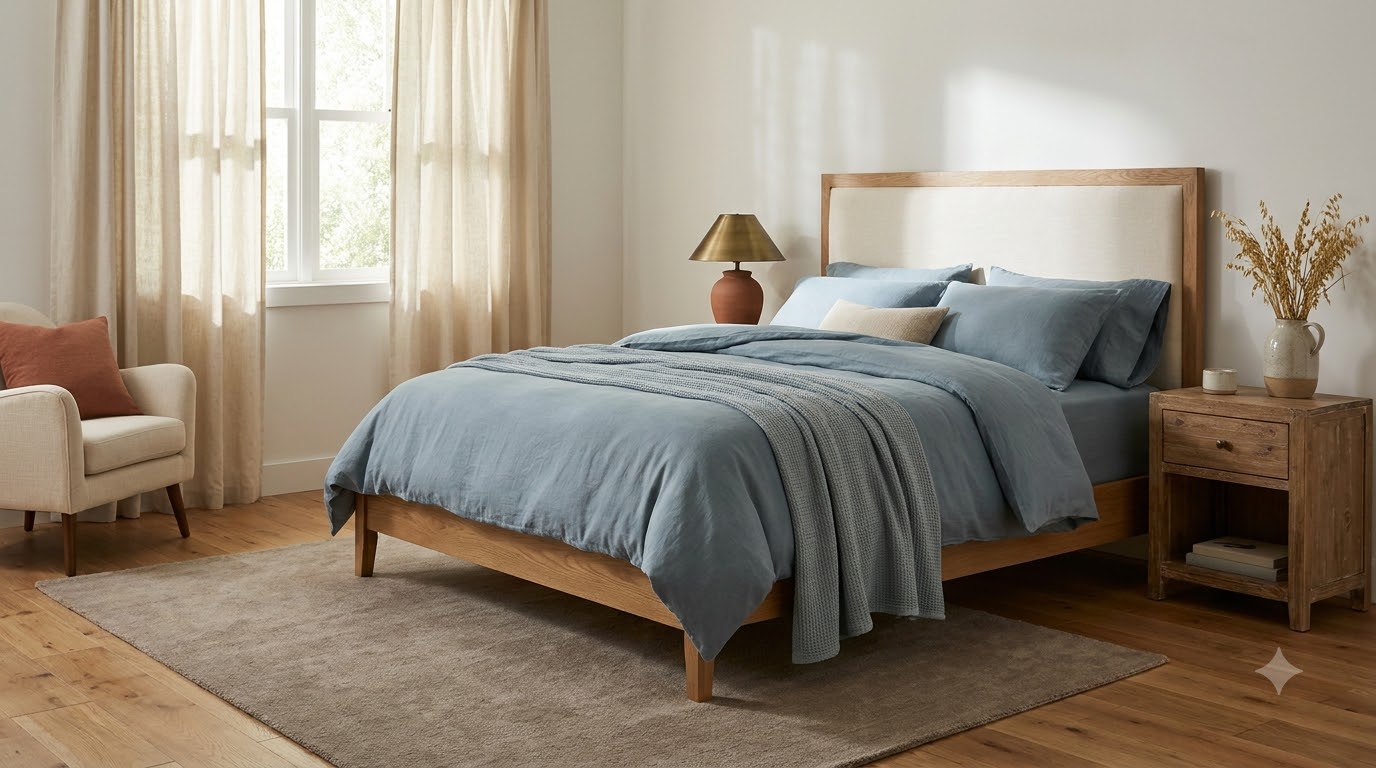
Dusty blue works best in east-facing rooms, the morning light brings out the blue without flattening it. Avoid black hardware, it weighs the palette down. Aged brass or natural oak handles read better. This is the palette designers reach for when a client says “I want hotel, but not generic.”
6. Lavender Whisper + Cream + Charcoal
Sherwin-Williams Easy Lavender SW 9072 is lavender for adults. It reads as a pale dusty grey-purple, not Easter-egg purple. Pair with cream linen bedding and a single dark wood frame (charcoal-stained oak or wenge) at the bed.
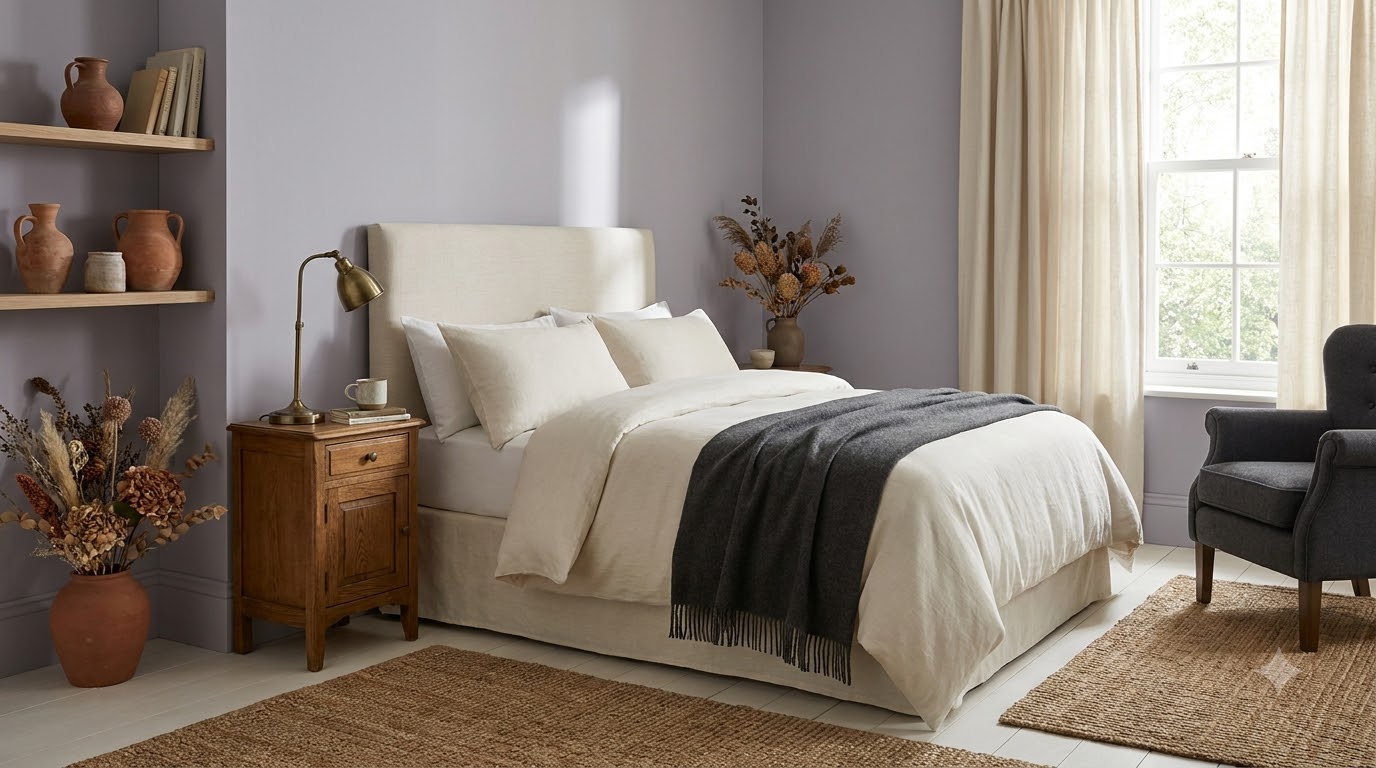
Lavender bedrooms have a reputation problem from 1990s overuse. Easy Lavender solves it by sitting closer to greige than violet. Color psychology research, summarized in the Architectural Digest paint guide, flags lavender as the second-most calming color after pale blue. Use it once at the wall and stop.
7. Hale Navy + White + Brass
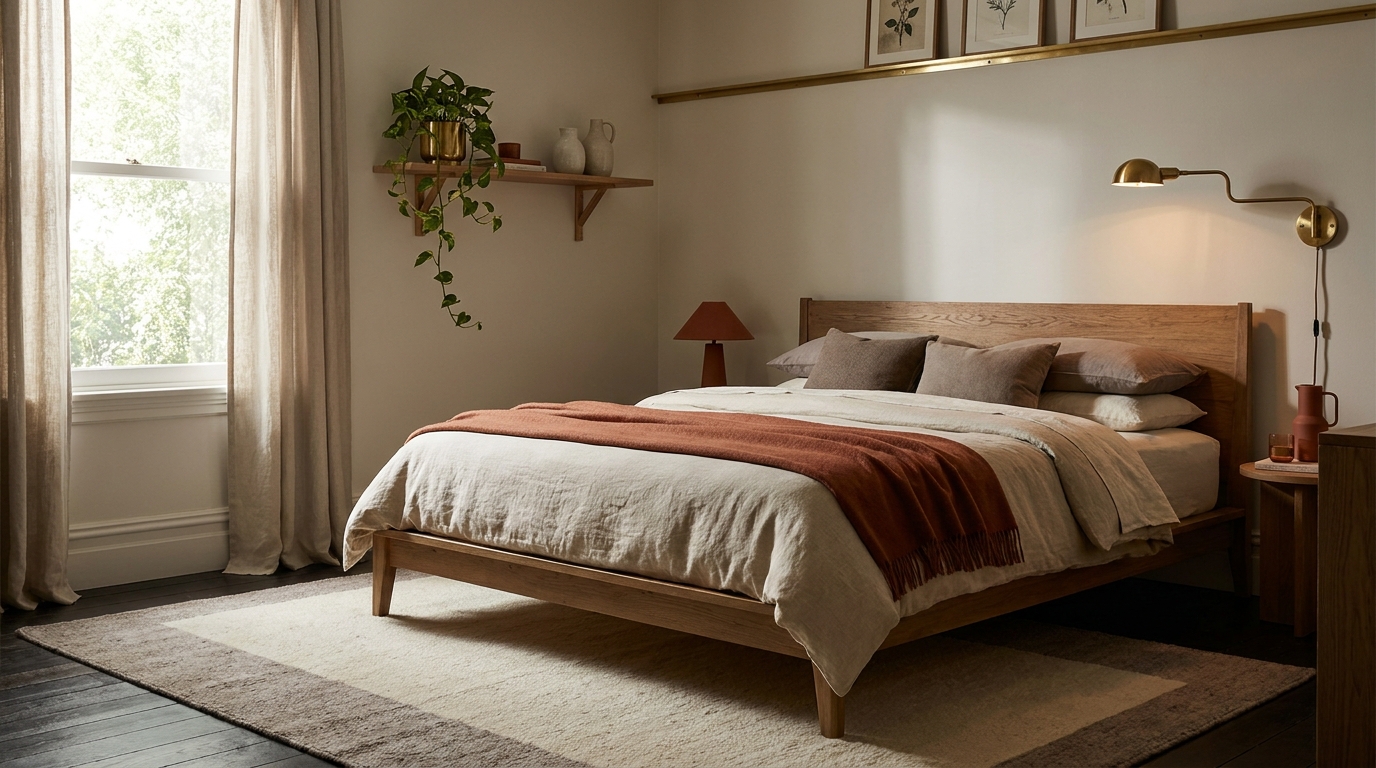
Benjamin Moore Hale Navy HC-154 is the dark color most recommended in design forums, and the recommendation holds. Deep enough to cocoon, blue enough to stay calming, never reads black. Pair with crisp white sheeting and unlacquered brass sconces.
We painted Hale Navy in a 10×12 north-facing bedroom and the room got smaller and better. Dark walls in small rooms work when the bed is white and the lighting is layered (overhead off, two sconces on). Skip Hale Navy in rooms with no natural light, the navy needs a window to breathe.
8. Hague Blue + Cream + Oak
Farrow & Ball Hague Blue No. 30 is what you choose when Hale Navy feels too expected. A dark teal-leaning blue with green undertones, reads moodier than navy, less corporate. Pair with cream linen (warmth is non-negotiable) and natural light oak furniture to break the weight.
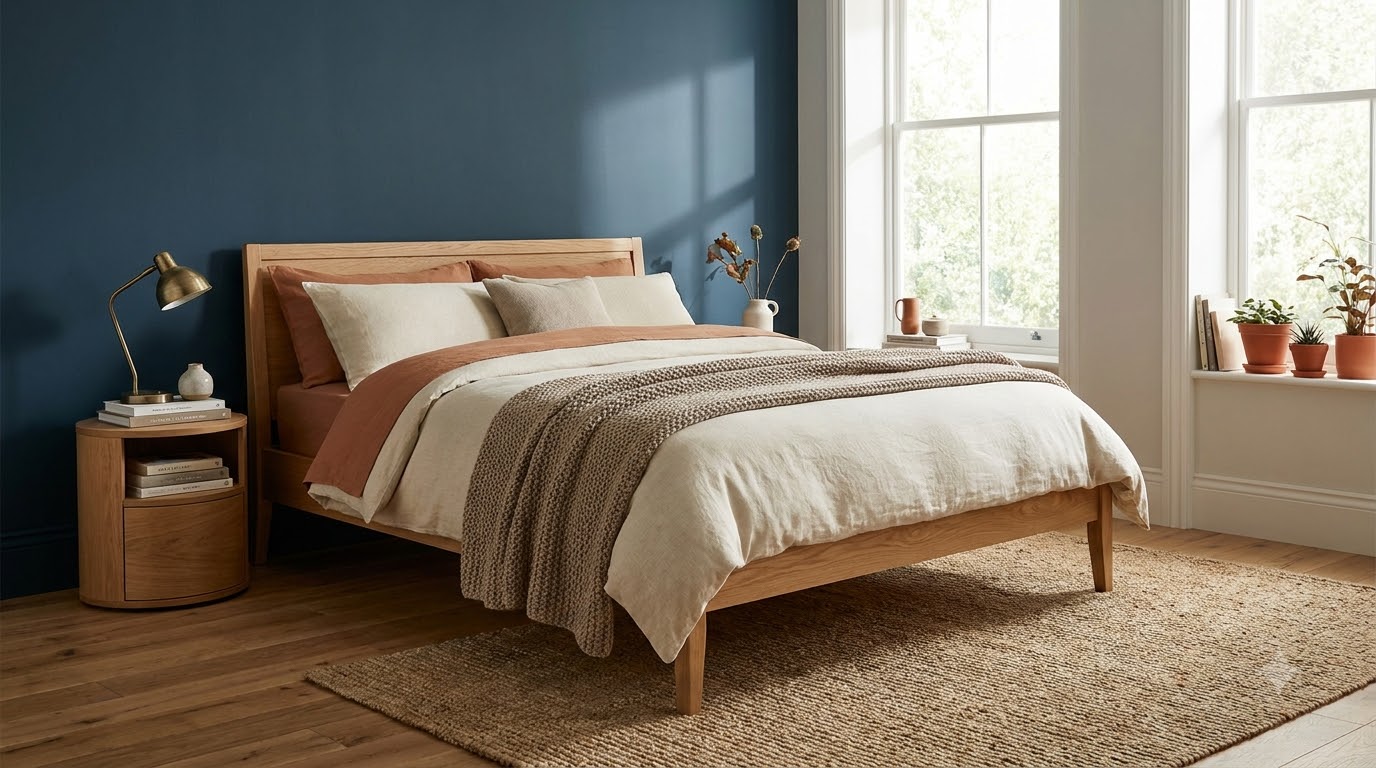
Hague Blue rewards south and west-facing rooms where afternoon light shifts the green undertone into focus. In north light it can read flat black, so test first. Add brass or oil-rubbed bronze hardware. Skip chrome and stainless, they fight the warm undertone.
9. Wrought Iron + Oat + Walnut
Benjamin Moore Wrought Iron 2124-10 is the near-black that reads as a soft charcoal in lamp light and dramatic in daylight. Pair with oat-toned linen bedding (warmth saves the palette from gothic) and walnut accents at the nightstand and frames.
This is the palette for west-facing rooms with strong evening light. Wrought Iron absorbs the gold hour beautifully. We installed this in a master bedroom with original walnut floors and the room read like a hotel suite for $80 in paint. Skip black hardware, it disappears. Brass or aged bronze gives the eye somewhere to rest.
10. Sage Green + Terracotta + Linen
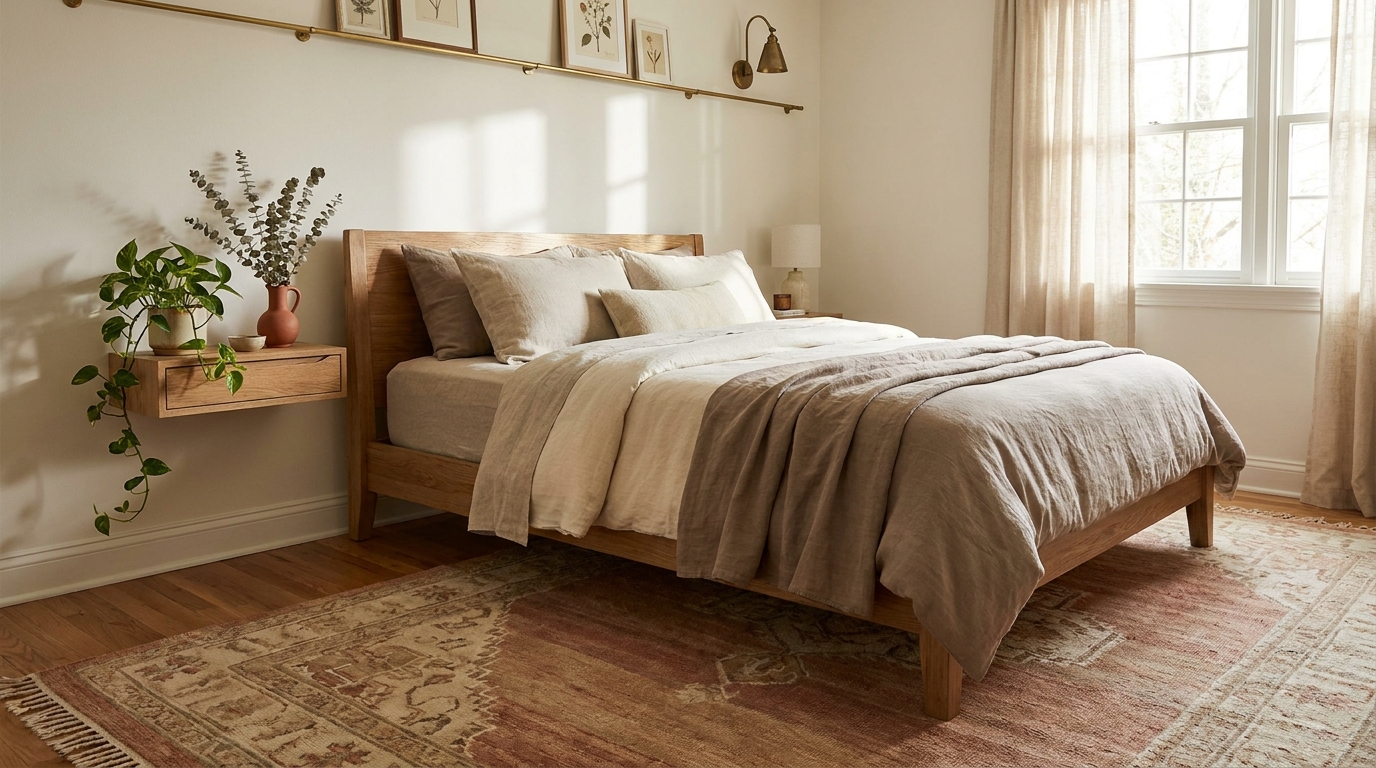
Sherwin-Williams Recycled Glass SW 7747 is a deeper sage than Quiet Moments, leans more botanical. Pair with white linen bedding and one terracotta accent (a throw, vase, or ceramic lamp base). The terracotta keeps the palette from reading too crunchy-Pinterest.
This is the pick for renters who want color but plan to repaint at lease end. Two coats cover any landlord beige, and the green-terracotta combo photographs well for listings. Layer with a jute or sisal rug. Skip patterned bedding, the wall is the pattern.
11. Forest Green + Cream + Brass
Benjamin Moore Forest Floor 2107-30 is a deep forest green that reads botanical in daylight and almost black in lamp light. Pair with cream linen (white is too sharp against this depth) and aged brass for hardware, sconces, and frames.
Forest green is having a moment. House Beautiful’s 2025 editors flagged forest and emerald greens as the fastest-rising bedroom paint category. We have specced Forest Floor in three south-facing rooms and one east-facing. South-facing handled it best, strong daylight prevents the room from going cave-dark. Add one terracotta or amber accent, never blue.
12. Greige + Sage + Brass
Sherwin-Williams Accessible Beige SW 7036 is the greige that does not turn pink under warm bulbs. This is the safest palette on the list, the one we recommend for first-time painters. Pair with a sage green throw and pillows for the 10% accent and brass hardware. Bedding stays white or oat linen.
Accessible Beige sells more than any other SW neutral for a reason. It pairs with everything, photographs well for listings, and survives every light condition we have tested. The sage accent gives the room a point of view without committing to a wall color.
How to Test a Palette Before Committing
A swatch from the paint aisle is a lie. The card is dyed, not painted, and Home Depot’s lighting is fluorescent. Order peel-and-stick paint samples from Samplize ($6 each, real paint on real card). Tape a 12×12 inch sample to your bed wall, window wall, and the wall opposite the window.
View samples in three light conditions: 8 a.m., 2 p.m., and 8 p.m. with lamps on. Check against the bedding fabric, colors shift against textiles. Leave samples up for 48 hours. The color you love at first glance is not always the one you can sleep next to. Order from Benjamin Moore or Farrow & Ball directly.
Renter-Friendly Color Strategies (No Paint)
Skip the paint entirely and you can still hit 70% of any palette. Peel-and-stick wallpaper from Chasing Paper (, around $40 per panel) covers one accent wall and pulls off cleanly at lease end. The bed wall is the highest-impact target.
Bedding plus curtains drives the 30% layer without any landlord conversation. Swap a white duvet for oat linen, change curtains from cream to dusty blue, the room reads transformed. The 10% accent layer (throws, pillows, art) is rental-proof by default. A layered rug (jute base + smaller patterned rug on top) locks in the 60% even over carpet you cannot remove. See our layering technique guide and the broader renter playbook.
How to Pick the Right Palette for Your Light
Window direction settles half the palette debate. North-facing rooms run cool and dim, so they need warm palettes: Swiss Coffee, Mushroom + Terracotta, Setting Plaster. Cool palettes go grey in north light. South-facing rooms carry any palette, including the dark moody options (Hale Navy, Hague Blue, Wrought Iron, Forest Floor). Strong daylight prevents dark walls from reading cave-like.
East-facing rooms get morning light that flatters cool palettes: Pale Sage, Dusty Blue, Lavender Whisper. West-facing rooms turn golden after 4 p.m. and reward warm-leaning palettes with brass accents. Test the paint card in your specific room, north light in Toronto reads differently from north light in Phoenix.
Frequently Asked Questions
What is the most calming bedroom color for 2026?
Pale sage green and dusty blue lead 2026, with warm off-whites like Benjamin Moore Swiss Coffee close behind. Color psychology flags cool greens and blues as heart-rate-lowering. Sage edges blue this year because the warm undertone (Quiet Moments 1563 reads sage-grey, not mint) feels less clinical and pairs better with natural wood.
Should bedroom walls be light or dark for sleep?
Both work, for different reasons. Light walls (Swiss Coffee, Pale Sage) reflect ambient light and feel airy, ideal for small rooms or rentals without window treatments. Dark walls (Hale Navy, Wrought Iron) create a cocoon effect, better for sleepers who wake at 5 a.m. with light pollution. The bigger sleep factor is blackout curtains, not paint.
What is the 60/30/10 color rule in bedrooms?
The rule splits color into 60% dominant (walls, ceiling, rug), 30% secondary (bed, curtains), and 10% accent (pillows, art, hardware). Bedrooms adapt because the bed is the visual anchor, so the 30% layer punches above its weight. Get 60 and 30 right and the room reads designed.
Can renters do dark bedroom walls?
Yes, with two cautions. First, check your lease, most allow paint if you return walls to original color. Second, dark colors need three coats minimum, budget around $90 for a gallon of primer plus a gallon of color. The cleaner alternative is peel-and-stick wallpaper in dark tones from Chasing Paper or Tempaper.
What paint color makes a small bedroom look bigger?
Light, warm-toned whites with LRV (Light Reflectance Value) above 75. Benjamin Moore Swiss Coffee OC-45 (LRV 83.6) and Sherwin-Williams Alabaster SW 7008 (LRV 82) are the two we recommend most for under-120-sqft bedrooms. Paint walls, trim, and ceiling the same color to eliminate visual breaks. See our small bedroom guide, and check color theory on DecorQuarter for cross-room application.
The shortcut to a calming bedroom is not the perfect single color. It is committing to a 60/30/10 split with three named, tested colors that play under your specific light. Pick the palette that matches your window direction first, aesthetic second, bedding last. The 12 combinations above are ones we have painted, photographed, and slept in. They work.
Related reading
- 30 Cozy Bedroom Ideas for Every Style (2026 Edit)
- Best Bedroom Decor From Amazon 2026: 20 Finds Under $50