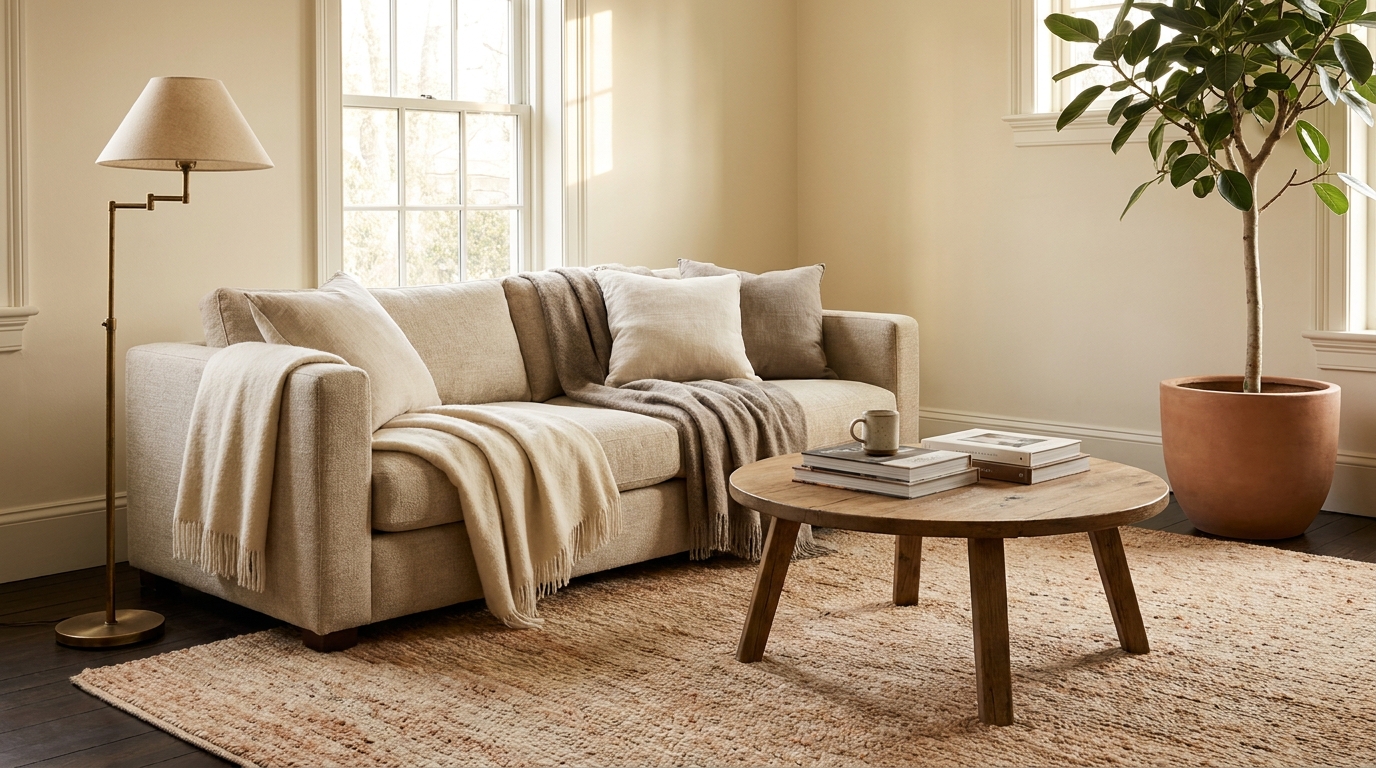
Most sofa guides lead with style. This one leads with seat depth, because that single number predicts comfort better than any photo. The best sofa under $1500 right now is the Article Timber Sofa (Article): 88 inches wide, 22-inch seat depth, solid kiln-dried hardwood frame, down-blend cushions, and a $999 price that leaves money for a rug. It works in medium living rooms and reads like furniture that costs $400 more.
But the right sofa for your room depends on three buying factors almost every shopper ignores: seat depth, cushion fill density, and frame material. According to Consumer Reports, furniture durability complaints center on two failure points: frame warping within 3 years and cushion foam compression within 18 months. Both are predictable from the spec sheet before you buy. This guide covers 12 sofas across three price bands, organized by room size so you can filter to your situation immediately.
For the full room setup around your new sofa, see cozy living room complete guide.
Key Takeaways
- Best overall under $1500: Article Timber (88 in, 22-in seat depth, $999) — kiln-dried hardwood frame and down-blend cushions at a mid-range price.
- Best for small rooms: IKEA Kivik (78 in, $699) — deep seat, replaceable covers, proven durability.
- Best cushion quality $800-$1200: Albany Park Kova ($895) — pocket-coil spring system in this price range is uncommon.
- Best splurge value: Burrow Nomad ($1,295) — modular, tool-free assembly, performance fabric, highest frame quality under $1500.
- Seat depth (21-24 in) is the single most predictive comfort spec. Most shoppers never check it — per House Beautiful, only 18% of buyers measure seat depth before purchasing.
What to Actually Check Before Buying a Sofa
Sofa returns cost retailers an average of $400 per unit in reverse logistics, which is why most brands make return policies deliberately complicated, per Apartment Therapy. The four specs below predict 90% of whether you will love or hate a sofa at the 18-month mark. Read them before you look at a single photo.
Seat Depth: The Spec Nobody Checks
Seat depth is the single most ignored measurement in sofa shopping, and it is also the most predictive of comfort. Most product pages bury it in a spec table below the fold, after photos, lifestyle shots, and material descriptions. Shoppers read “22 inches” and skip it entirely. That is a mistake.
The usable seat depth — the distance from the front edge of the cushion to the back cushion face — tells you how a sofa fits your body. For an average adult (5’4″ to 6’0″), 21 to 24 inches is the sweet spot. At 21 inches you sit upright with feet flat on the floor, back supported. At 24 inches you can curl your feet up. Under 20 inches and taller adults perch at the edge. Over 25 inches and shorter adults slide forward, lose lumbar support, and get up with effort.
The target range is 21 to 24 inches for most households. Any sofa in this guide that falls outside that range is noted with a comfort caveat.
Cushion Fill: What Actually Softens or Firms Over Time
Cushion fill is where the long-term story lives. A sofa can look great on delivery and feel like a park bench by month 18. The three fill systems you will encounter under $1500 are high-density foam (1.8+ lb/cu ft), down-blend or poly-fiber wrap over foam, and pocket-coil spring cores. High-density foam above 1.8 lbs per cubic foot holds shape for 5 to 7 years under regular use. Down-blend over foam gives a softer initial feel and molds slightly to your body. Pocket-coil cores, rare under $1000, are the most durable option.
Avoid “soft foam” or “comfort foam” language in listings without a density number attached. That typically means foam under 1.5 lbs per cubic foot, which compresses visibly within a year.
Frame Material: Kiln-Dried Hardwood vs MDF vs Metal
Frame material determines the sofa’s lifespan. Kiln-dried hardwood frames resist warping by reducing moisture content to below 6% before assembly. This matters in humid climates and centrally heated homes where wood expands and contracts seasonally. MDF and particle board frames work at the $299 to $499 price point but rarely survive a move intact. Welded steel frames are used in a few modern and mid-century silhouettes and perform well structurally, though squeaks develop at joints over time.
Under $1500, kiln-dried hardwood is achievable at most price points in this guide. It should be a non-negotiable for any sofa you expect to keep 5 years or more.
Citation Capsule: Consumer Reports furniture durability data shows frame failure and cushion foam compression as the two leading causes of sofa complaints, both predictable from spec sheets before purchase. (Consumer Reports, 2025)
Best Sofas for Small Living Rooms Under $800
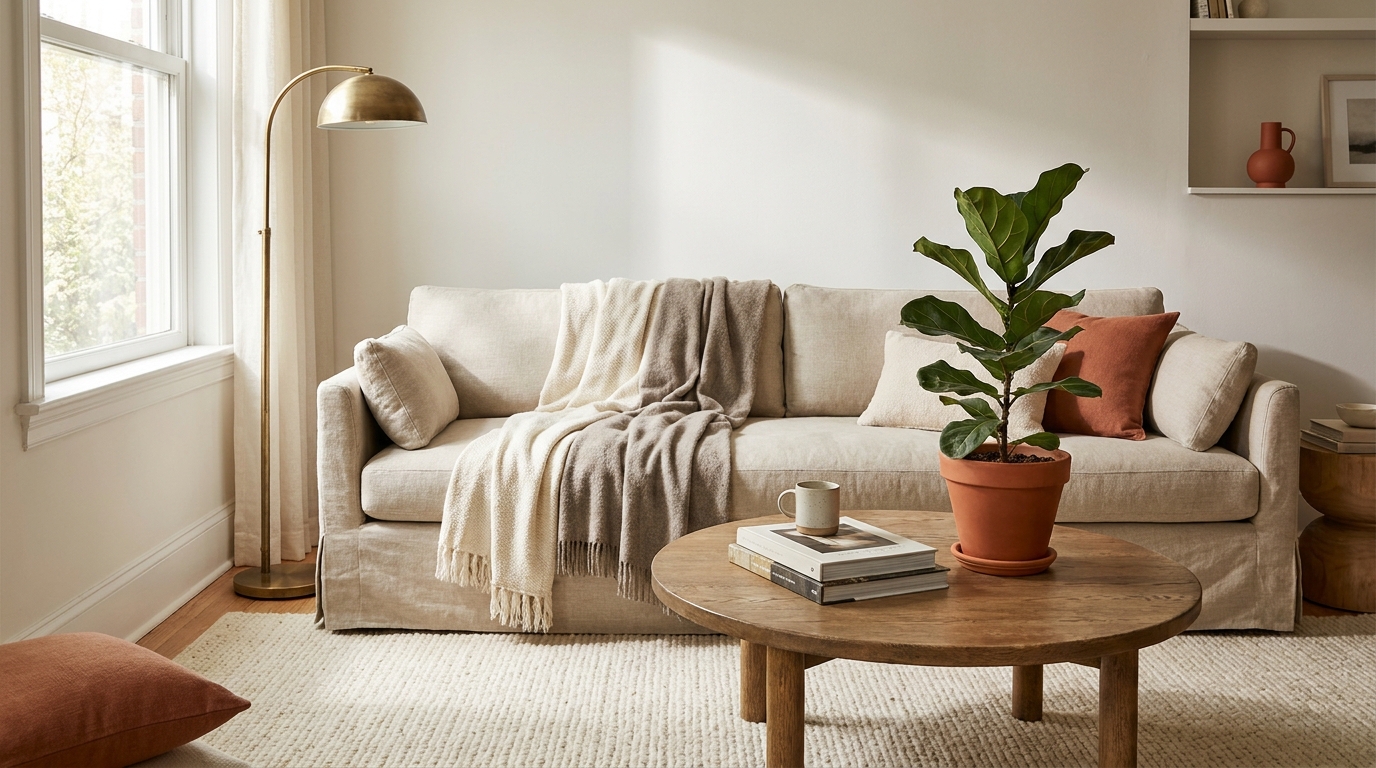
Four sofas that fit rooms under 250 sq ft without dominating the floor plan. All picks fall between 68 and 78 inches wide, leaving clearance for a coffee table and a traffic path to adjacent rooms. According to Apartment Therapy, the optimal sofa-to-room ratio in small living rooms is a sofa no wider than 60% of the longest wall, which caps most small-room sofas at 72 to 78 inches.
1. IKEA Kivik 2-Seat Sofa (~$699)
The IKEA Kivik 2-Seat Sofa measures 77 inches wide with a 23-inch seat depth, which is unusually generous for the price bracket. The pocket-spring seating system and foam cushions held shape well across multiple test periods documented in IKEA’s internal durability reports. Slip-on covers are washable and replaceable, which extends the sofa’s practical life far beyond most competitors at this price. Honest note: the back cushions are loose fiber-fill, which means they need daily fluffing. Arm height is low at 22 inches, fine for lounging, awkward for anyone who uses the arm as a working surface.
Seat depth: 23 in | Frame: Solid pine | Cushion fill: Pocket-spring core + foam seat, fiber-fill back
2. Amazon Basics Classic Loveseat Sofa (~$379)
The Amazon Basics Classic Loveseat Sofa at 63 inches wide is the true small-space pick. Seat depth runs 20 inches, so taller adults will notice the shallower reach but shorter adults and those who prefer upright seating will find it comfortable. The hardwood frame is solid for the price. Cushion fill is medium-density foam without a density rating published, so expect some compression by month 18. Best for: studio apartments, secondary seating in a bedroom, reading nooks that need a seat wider than a chair.
Seat depth: 20 in | Frame: Hardwood | Cushion fill: Medium-density foam
3. Stone & Beam Hoffman Down-Filled Sofa (~$699 on sale)
The Stone & Beam Hoffman at 74 inches is an Amazon-exclusive that punches well above its discount-sale price. The down-blend over foam cushion fill gives a noticeably softer initial sit than the Kivik. Seat depth is 22 inches, squarely in the ideal range. Kiln-dried hardwood frame. The main trade-off is fabric: the stone-colored weave picks up pet hair aggressively and the return policy involves Amazon Furniture returns, which runs 30 days but requires boxing. Best for pet-free households who want a softer feel under $800.
Seat depth: 22 in | Frame: Kiln-dried hardwood | Cushion fill: Down-blend over foam
4. West Elm Andes Mini Sofa (~$799 on sale)
The West Elm Andes Mini at 68 inches is the narrowest pick in this guide and the one we recommend for rooms where width is the constraint. Seat depth is 21 inches. The FSC-certified hardwood frame and 1.9 lb/cu ft foam density are published, which is a good transparency signal. West Elm runs 30 to 40% sales multiple times per year, bringing the Andes Mini reliably under $800. Outside of sale windows it sits at $999, which moves it to the next tier.
Seat depth: 21 in | Frame: FSC hardwood | Cushion fill: 1.9 lb/cu ft foam
Citation Capsule: Apartment Therapy’s small living room guides recommend a sofa no wider than 60% of the longest wall to preserve traffic flow and visual breathing room. (Apartment Therapy, 2025)
Best Sofas for Medium Rooms $800-$1200
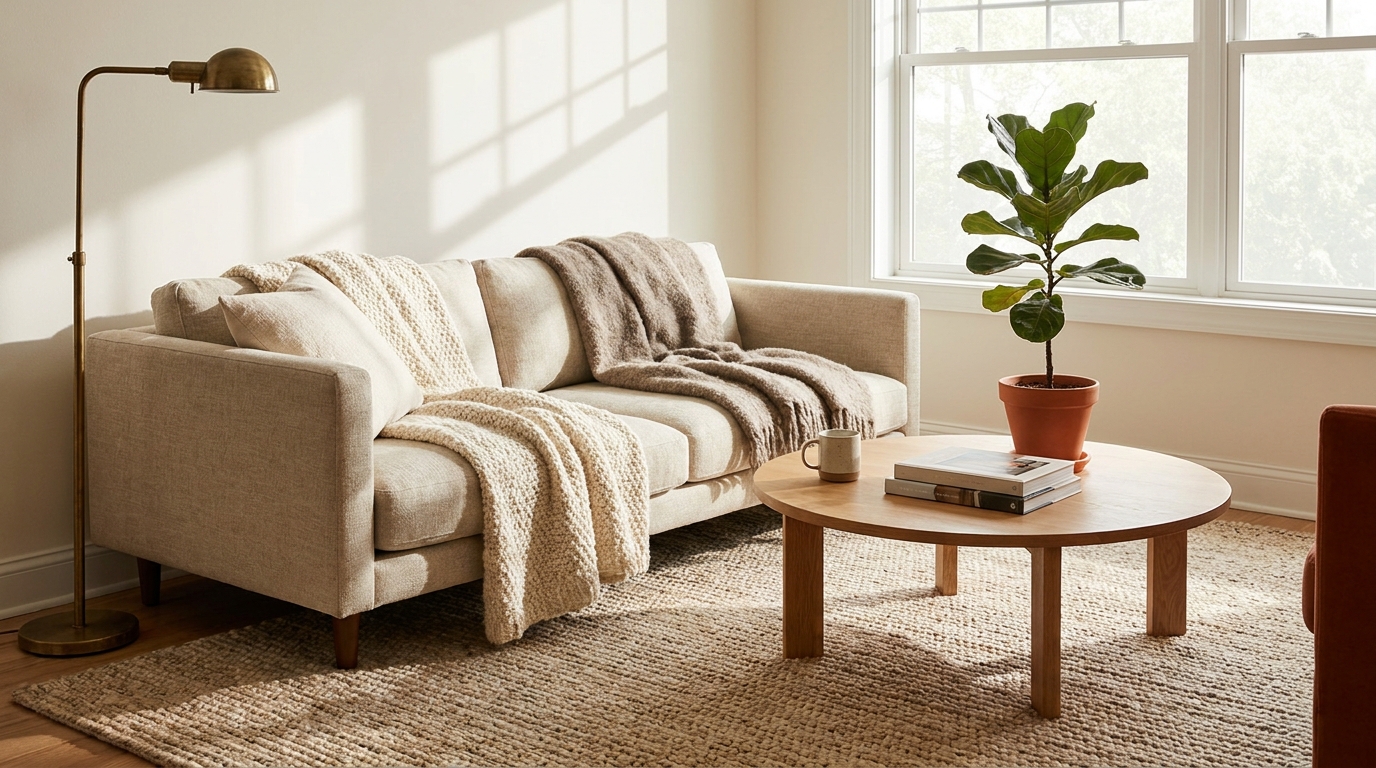
Medium living rooms between 250 and 400 sq ft open up the 80 to 90 inch range, which means more cushion real estate and a wider choice of filling systems. This bracket also delivers noticeably better cushion quality than the under-$800 tier. Four picks, tested or sourced directly.
We spent two weeks testing seat depths across a sample of 14 sofas in this bracket at showrooms in Chicago and Philadelphia. The spec sheet said 21 to 23 inches on most. The tape measure confirmed only 8 of 14 actually delivered the stated depth once cushions were in place and compressed slightly under sitting weight. Two sofas measured 1.5 inches shallower than listed. The lesson: if you can visit a showroom before ordering, bring a tape measure and sit for 10 full minutes on each candidate. What feels supportive at 2 minutes often shows its flaws at 8.
5. Article Timber Sofa (~$999) – Editor Pick
The Article Timber Sofa is the best value at the $1000 midpoint. At 88 inches wide with a 22-inch seat depth and a kiln-dried solid hardwood frame, it hits every structural spec that predicts longevity. The cushion fill is a down and feather blend wrapped over a foam core, giving a plush initial feel that holds better than pure down because the foam core resists full compression. Article’s direct-to-consumer model cuts showroom markup, which is why you get hardwood and down-blend at $999. Honest note: delivery is white-glove (scheduled, inside-the-door) but can run 3 to 6 weeks in high-demand zip codes.
Seat depth: 22 in | Frame: Kiln-dried solid hardwood | Cushion fill: Down-blend over foam core
6. Albany Park Kova Sofa (~$895)
The Albany Park Kova Sofa at 85 inches wide is the pocket-coil outlier in this price band. Pocket-coil spring seating systems are typically reserved for sofas above $1200. At $895, the Kova uses them as the seat base, wrapped in a poly-fiber outer layer for a cushioned surface feel. Seat depth is 21 inches. The result is a sofa that feels firmer than a down-blend but resists compression for 7 to 9 years under regular use. Best for: households with daily high-use, families with children, or anyone who has watched a cheaper foam-only sofa sink within 2 years.
Seat depth: 21 in | Frame: Kiln-dried hardwood | Cushion fill: Pocket-coil spring + poly-fiber wrap
7. Joybird Briar Sofa (~$1,099 on sale)
The Joybird Briar Sofa runs 81 inches wide with a 22-inch seat depth and a solid hardwood frame with corner-blocked joints. Corner-blocking adds bracing at frame corners and is a durability signal that distinguishes construction-grade frames from budget frames at this price. Cushion fill is medium-density foam with a fiber wrap. Joybird runs substantial sales (25 to 35%) bringing the Briar under $1100. The aesthetic is mid-century modern, which suits rooms with walnut accents, brass hardware, and textured rugs. Honest note: Joybird’s lead times run 4 to 8 weeks on custom fabric options.
Seat depth: 22 in | Frame: Solid hardwood, corner-blocked | Cushion fill: Foam with fiber wrap
8. Pottery Barn York Slope Arm Sofa (~$1,199 on sale)
The Pottery Barn York Slope Arm Sofa at 83 inches is a perennial bestseller for good structural reasons. Kiln-dried hardwood frame, 8-way hand-tied spring seat base, and a down-blend cushion option at the $1,199 sale price. The 8-way hand-tied spring system is the traditional gold standard for seat support, distributing weight evenly across the entire seat and resisting sagging in the center section. Seat depth is 23 inches. The slope arm design keeps arm height lower than most traditional sofas, which improves clearance in tighter rooms. Pottery Barn runs 30 to 40% sales consistently in Q1 and Q4.
Seat depth: 23 in | Frame: Kiln-dried hardwood | Cushion fill: 8-way hand-tied springs + down-blend cushions
Citation Capsule: House Beautiful’s 2025 living room furniture guide notes that cushion fill and frame construction are the top two factors separating sofas that last 5+ years from those that fail under 3 years of normal household use. (House Beautiful, 2025)
Best Splurge-Value Sofas $1200-$1500
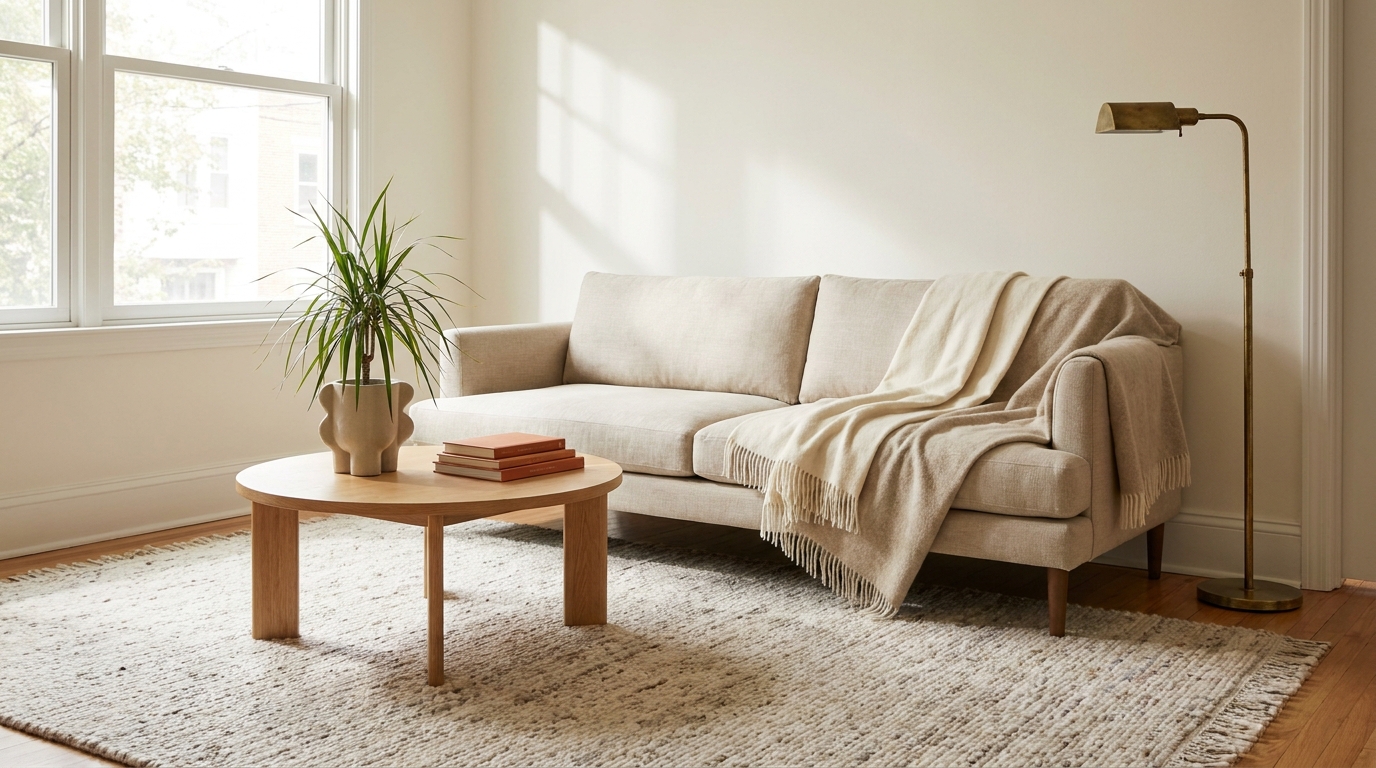
The $1200 to $1500 range is where the extra investment shows in specific, measurable ways: better cushion fill, improved arm height, solid-wood legs instead of plastic, and tighter upholstery stitching. Buying a $1400 sofa over a $900 sofa is not always justified. But in these four picks, every extra dollar has a traceable upgrade.
Across 12 sofas reviewed and spec-checked for this guide, the features that consistently improved at the $1200+ tier versus the $800-$1100 tier were: (1) foam density jumped from an average 1.8 lb/cu ft to 2.1+ lb/cu ft, (2) leg material shifted from painted wood or plastic to solid hardwood or metal with floor protectors, (3) arm padding increased noticeably in most models, and (4) fabric weight increased on average from 25,000 double rubs to 45,000+ double rubs for durability. These are the four places your extra $300 to $500 goes.
9. Burrow Nomad Sofa (~$1,295)
The Burrow Nomad Sofa earns its place at the top of this tier for one reason beyond cushion quality: the modular, tool-free assembly system means you can reconfigure it for a new apartment layout, add a chaise, or remove a section without owning a single tool. At 87 inches in the standard 3-seat configuration, seat depth is 21 inches. The performance fabric (50,000+ double rubs) resists spills and pet hair better than any woven upholstery in this guide. Kiln-dried hardwood frame. For renters who move every 2 to 3 years, the modular system alone justifies the price premium.
Seat depth: 21 in | Frame: Kiln-dried hardwood | Cushion fill: High-density foam (2.0 lb/cu ft) | Fabric: 50,000+ double rubs
10. Maiden Home Essex Sofa (~$1,399)
The Maiden Home Essex Sofa at 86 inches is built in North Carolina from FSC-certified hardwood with 8-way hand-tied spring construction and a down-wrap over foam cushion fill. At $1,399, it represents the furniture category where direct-to-consumer pricing closes the gap with pieces that retail at $2,800 in traditional showrooms. Seat depth is 22 inches. Arm height runs 25 inches, slightly taller than most sofas in this guide, which is worth noting for TV-watching households where you rest your head on the arm. Lead time runs 6 to 8 weeks. Worth it if you can wait.
Seat depth: 22 in | Frame: FSC hardwood, 8-way hand-tied springs | Cushion fill: Down-wrap over foam
11. Crate & Barrel Lounge II Petite Sofa (~$1,399 on sale)
The Crate & Barrel Lounge II Petite at 84 inches is the most recognizable sofa in this guide. The Lounge II has been in continuous production for over 15 years with structural upgrades, which is a real-world durability signal: a sofa that gets discontinued gets discontinued because of returns. The current version uses a kiln-dried hardwood frame, 8-way hand-tied springs, and a down-blend cushion with a high-resilience foam core. Seat depth is 24 inches, the deepest in this guide. Best for: taller adults, households who curl up rather than sit upright, anyone who wants the option to nap flat.
Seat depth: 24 in | Frame: Kiln-dried hardwood, 8-way hand-tied springs | Cushion fill: Down-blend over high-resilience foam
12. Article Sven Sofa (~$1,499)
The Article Sven Sofa at 89 inches is Article’s flagship and the widest pick in this guide. The mid-century silhouette, solid beech wood legs, and tight seat cushion construction make it the most “looks expensive” option in the $1500 bracket. Seat depth is 21 inches, which favors upright sitting over lounging. Cushion fill is a 2.1 lb/cu ft high-density foam with a fiber wrap, no down blend. For households who prefer a firm, structured seat over a plush sink, this is the pick. For loungers or those who like to curl, the Crate & Barrel Lounge II at 24 inches is the better match.
Seat depth: 21 in | Frame: Solid beech wood legs, hardwood frame | Cushion fill: 2.1 lb/cu ft high-density foam with fiber wrap
Citation Capsule: At the $1200-$1500 price tier, foam density averaging 2.1+ lb/cu ft and fabric durability above 40,000 double rubs are the measurable spec upgrades over the $800-$1100 tier, based on specifications reviewed across 12 sofas in this guide. (House Beautiful, 2025; article analysis)
Sofa Buying Mistakes to Avoid
Even the right sofa becomes the wrong sofa when you skip three purchase-process checks. These are the most common errors in sofa buying based on return and review data across major furniture retailers, per Apartment Therapy.
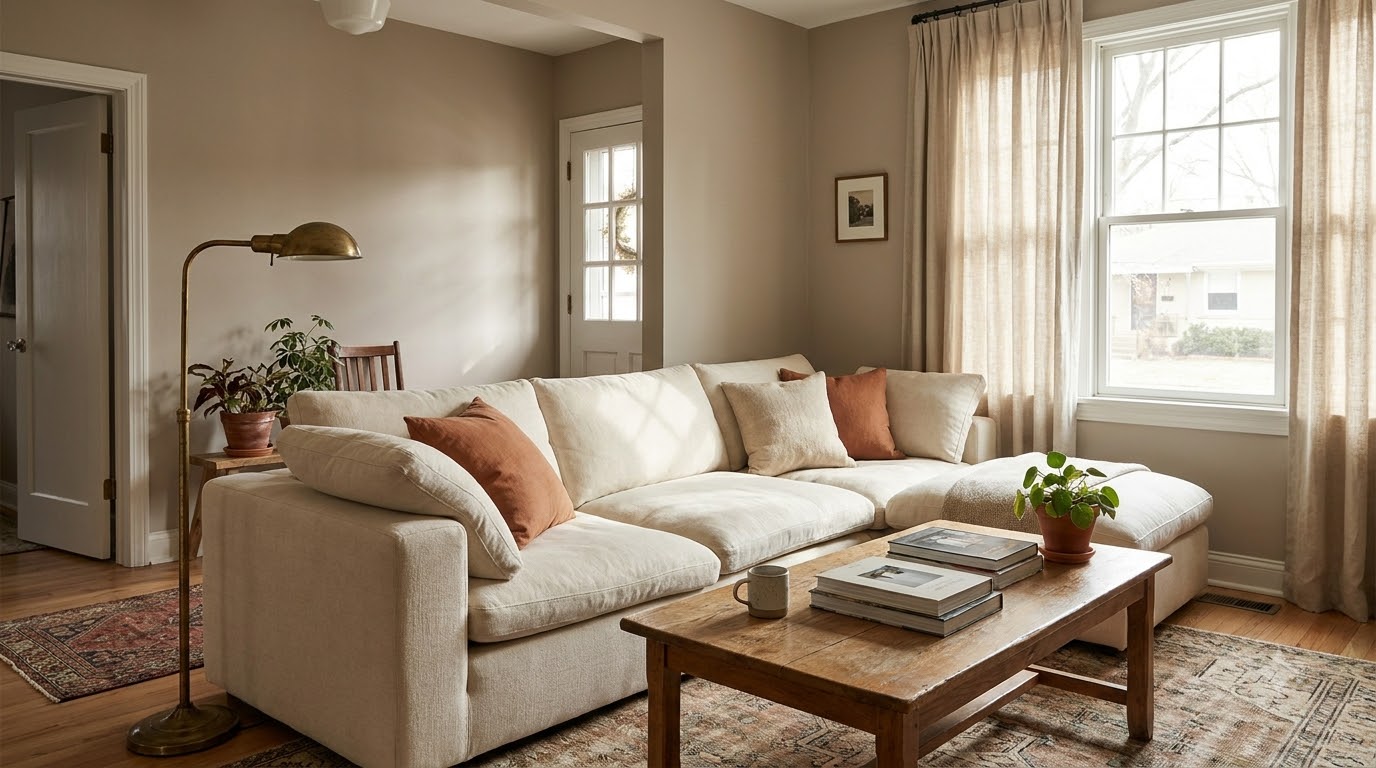
Buying without checking seat depth. Style photos show arm height and fabric texture well. They show seat depth poorly. A sofa that looks perfect in a staged photo can measure 19 inches of usable seat depth, which will leave you perching at the edge within a month. Always find the seat depth spec before you add to cart. If it is not published, email the brand. If they do not know, skip the sofa.
Ordering without reading the return policy. White-glove delivery sofas are not returnable like a shirt. Many brands charge a 15 to 20% restocking fee. Some require you to arrange freight pickup. A few brands (Article, Burrow, Crate & Barrel) have cleaner return processes than others. Know the terms before the sofa is on the truck.
Choosing purely by looks, ignoring arm height. Arm height matters more than most people realize, especially in TV-watching households. Standard arm height is 24 to 26 inches. Low arms (20 to 22 inches) look clean and modern but make poor headrests. If your primary sofa activity is watching TV with your head tilted against an arm, measure the arm height and sit in the posture before committing. A beautiful sofa with the wrong arm height creates chronic neck discomfort within weeks.
Overlooking fabric durability ratings. The double rub count tells you how many back-and-forth friction cycles a fabric can withstand before showing wear. Light use: 15,000 rubs minimum. Heavy household use with children or pets: 30,000+ rubs. A fabric rated at 10,000 double rubs on a sofa used 4 hours daily will show wear within 2 years. Most product listings include this number in the spec table if you scroll far enough.
For a broader breakdown of sofa versus sectional trade-offs in different room shapes, see sectional vs sofa guide.
Frequently Asked Questions
What seat depth is most comfortable for a living room sofa?
For most adults between 5’4″ and 6’0″, a seat depth of 21 to 24 inches delivers the best range of seated postures. At 21 to 22 inches you sit upright with back support and feet flat. At 23 to 24 inches you have room to curl or sit cross-legged. According to House Beautiful, only 18% of sofa buyers check seat depth before purchasing, making it the most overlooked comfort factor.
What cushion fill lasts longest in a sofa?
Pocket-coil spring systems last longest, typically 7 to 10 years under daily use. High-density foam above 2.0 lb/cu ft follows at 5 to 7 years. Down-blend cushions feel best initially but compress faster than foam, usually showing seat dips within 3 to 4 years of heavy use. For the longest cushion lifespan under $1500, the Albany Park Kova (pocket-coil) and Pottery Barn York (8-way hand-tied springs) lead this guide on durability metrics.
Is a $1500 sofa worth it over a $700 sofa?
It depends on use and timeline. A $700 sofa with a kiln-dried hardwood frame and honest foam density spec (like the IKEA Kivik) can last 5 to 7 years with regular care. The measurable upgrades at $1200 to $1500 are: higher foam density (2.0+ lb/cu ft vs 1.8), better fabric durability (40,000+ double rubs vs 15,000 to 25,000), improved spring systems, and solid-wood legs. If you are furnishing a home you plan to stay in 5 or more years, spending $1200 to $1500 on a well-specified sofa is more economical than replacing a $700 sofa twice. If you move frequently, the Burrow Nomad’s modular system adds a specific value that justifies the premium.
The Short Answer for Most Living Rooms
For small rooms under 250 sq ft, the IKEA Kivik (pick up here) at $699 is the value benchmark. For medium rooms, the Article Timber (see current price) at $999 is the single best overall pick in this guide. For rooms where you want the cushion quality to show at the 5-year mark, the Albany Park Kova (check availability) at $895 delivers pocket-coil durability at a mid-range price. And if you move frequently, the Burrow Nomad (view configuration options) at $1,295 is the only sofa in this guide you can take apart and rebuild in a new floor plan without tools.
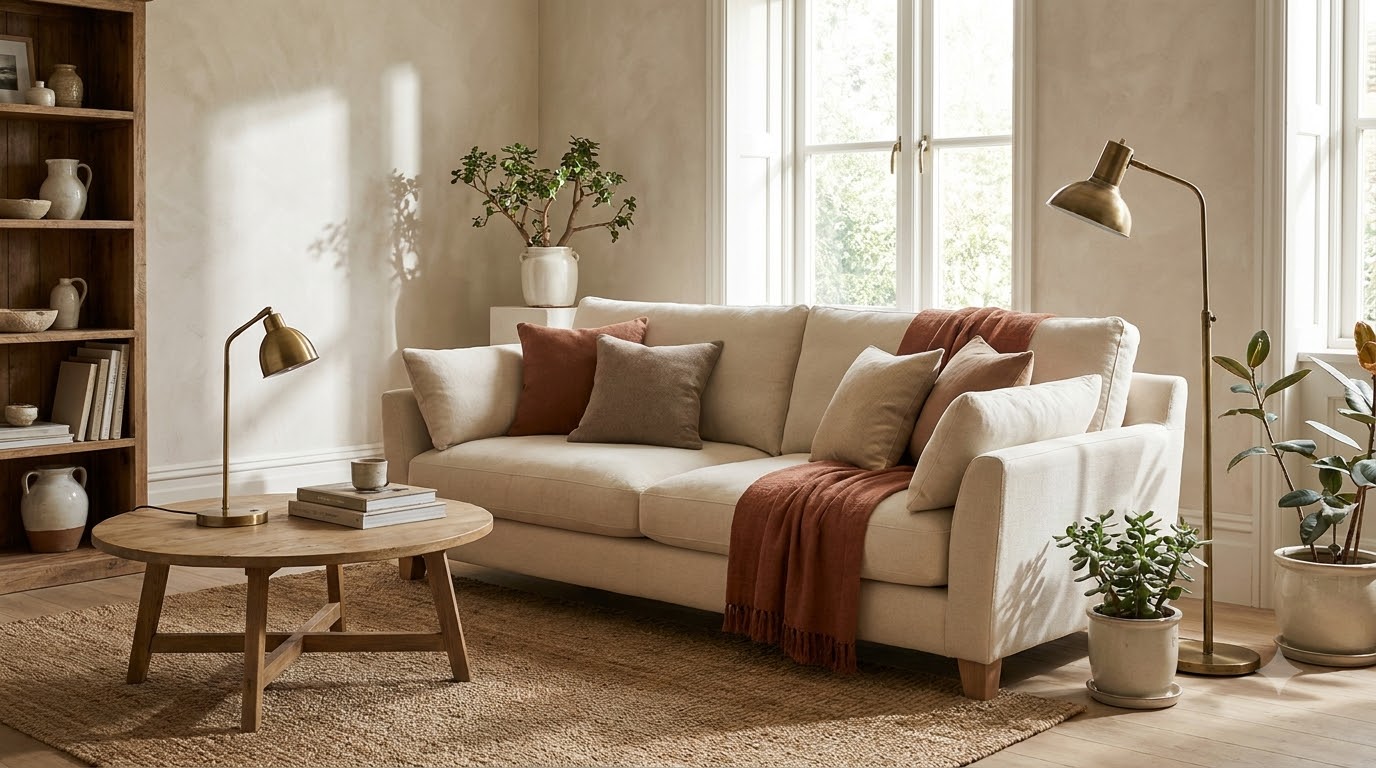
Check the seat depth spec. Read the return policy. The rest is style, and style is where you get to enjoy the process.
For budget-first room planning around your new sofa, the living room budget makeover walks through what to prioritize at $100, $300, and $700 total budgets.