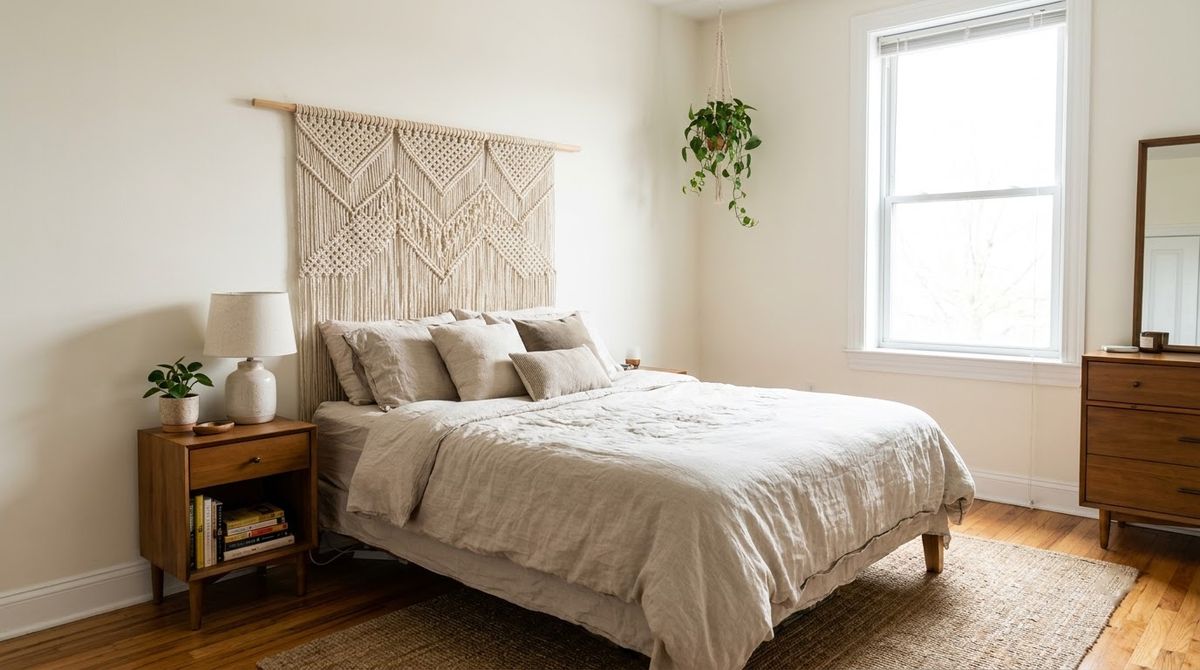
These 20 headboard ideas run from free to about $110, and most work on a twin, full, queen or king bed without a single wall anchor. Each one is sorted by how it attaches: leaned, hung, built freestanding or fixed to the wall.
Start with your mattress width, then pick the idea that fits your lease, your tools and your budget.
| Idea group | Approx cost | Renter-safe |
|---|---|---|
| Lean and stand, no tools (1-5) | Free-$110 | Mostly |
| Fabric and soft headboards (6-10) | $8-$110 | Mostly |
| Wood, cane and natural textures (11-15) | $20-$90 | Mostly |
| Paint, paper and light (16-18) | $10-$50 | Check your lease |
| Headboards that earn their space (19-20) | $60-$120 | Mostly |
Key Takeaways
- Match the headboard to the mattress width, or go about 6-12 inches wider for a deliberate look.
- A leaning or freestanding headboard needs no holes and moves with you.
- Anything tall or heavy should be anchored or wedged so it cannot tip toward the sleeper.
- Paint and wallpaper add height for the least money, but ask your landlord first.
- Pair the headboard with cheap extras from this under-$100 bedroom refresh list.
Lean and Stand: Headboards Without Tools
These rest on the floor or lean on the wall, so nothing is drilled. Mattress widths run about 38 inches for a twin, 54 for a full, 60 for a queen and 76 for a king, per Amerisleep’s size chart.
1. A Tall Leaning Floor Mirror
A 23 5/8 x 66 7/8-inch arched mirror, the size of IKEA’s LINDBYN, stands behind a twin or sits off-center on a queen. It bounces window light and makes a narrow room feel deeper. IKEA’s leaning setup uses one anchoring screw, so skip it only if the mirror sits stable.
Cost: ~$110 · Renter-safe: Yes
2. Oversized Art Leaned Behind the Bed
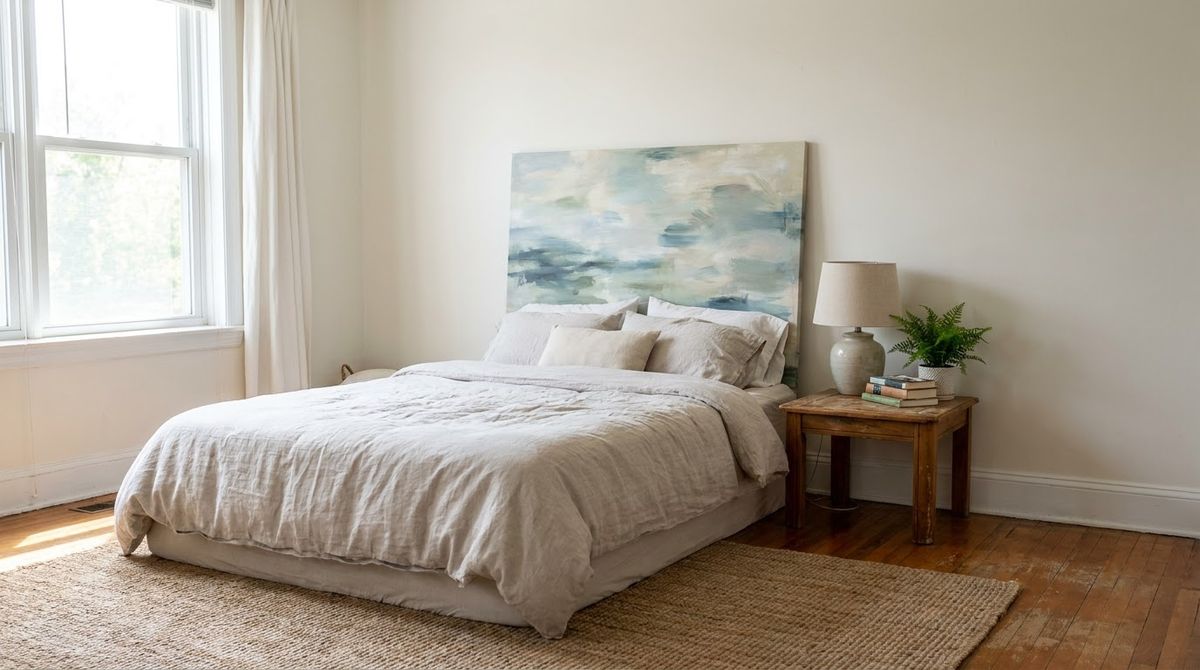
A canvas or framed print around 40 x 60 inches reads as a headboard once it sits a few inches above the pillows. Rest it on the floor against the wall, tucked behind the mattress edge. Thrifted frames, a stretched canvas or a large poster in a plain frame all work.
Cost: ~$30-$80 · Renter-safe: Yes
3. A Folding Screen Behind the Bed
A three-panel screen unfolds into a zigzag that stands by itself, so it never touches a wall nail. Pick one about as wide as the bed when opened, roughly 48-60 inches tall. Wood, rattan and fabric versions suit different rooms. It also hides cords, vents or a scuffed wall.
Cost: ~$50-$110 · Renter-safe: Yes
4. Stacked Pillows Against the Wall
Two oversized 26-inch square pillows stood upright against the wall act as a soft headboard for reading. They cushion your back and keep head oils off paint. Prop them with a wedge pillow for support, and wash the covers regularly. It is the fastest fix when you own nothing else.
Cost: ~$25-$60 · Renter-safe: Yes
5. A Low Bookcase Used as the Headboard
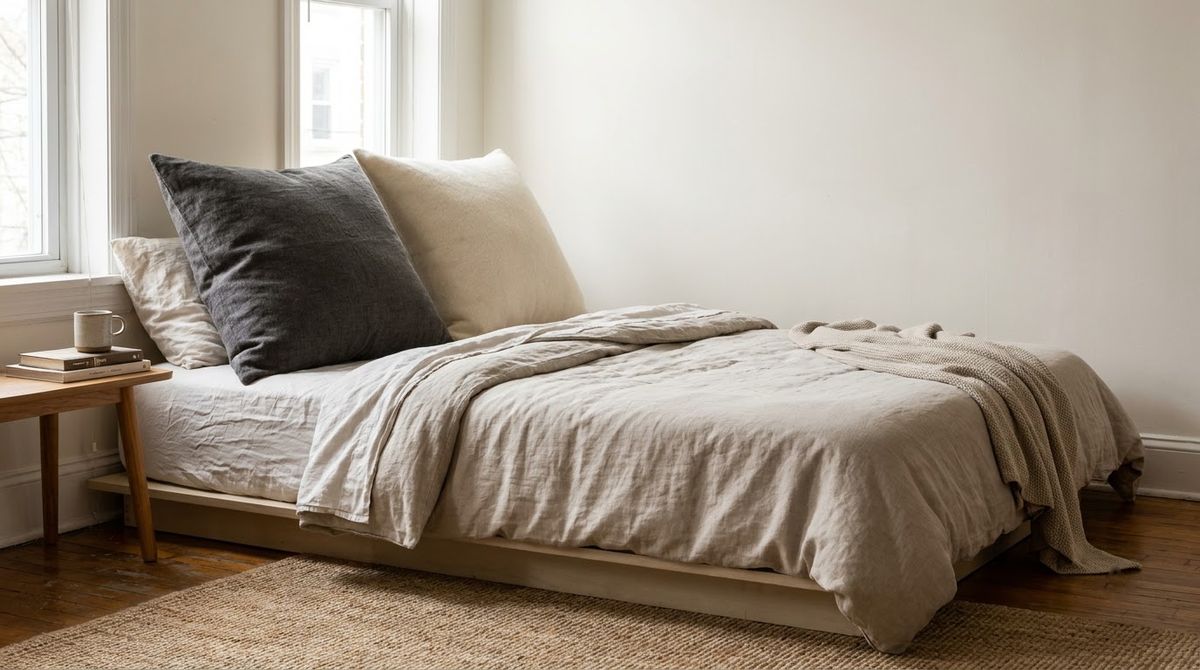
Set a 30-36 inch tall bookcase behind the bed with its back to the sleepers, or use it as a divider behind a floating bed in a studio. It adds storage and separates zones. Tall furniture should be anchored; the CPSC recommends inexpensive anti-tip brackets.
Cost: ~$20-$80 · Renter-safe: No
Fabric and Soft Headboards
Soft headboards add texture and warmth, and several can be made in an afternoon.
6. A Quilt on a Rod
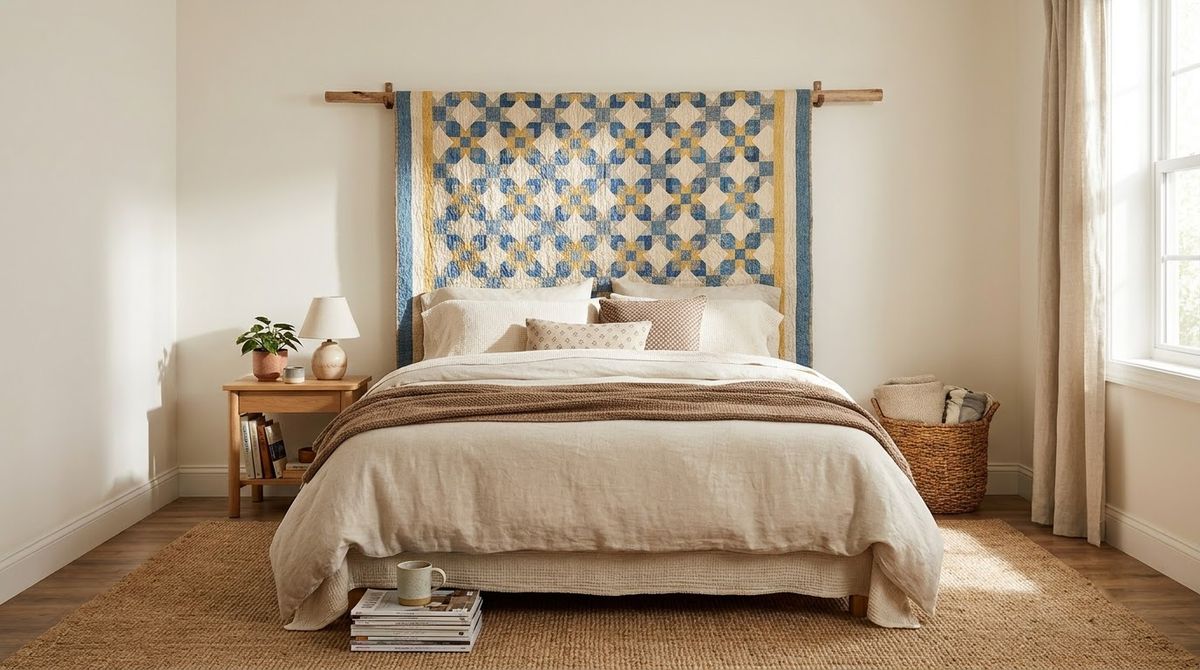
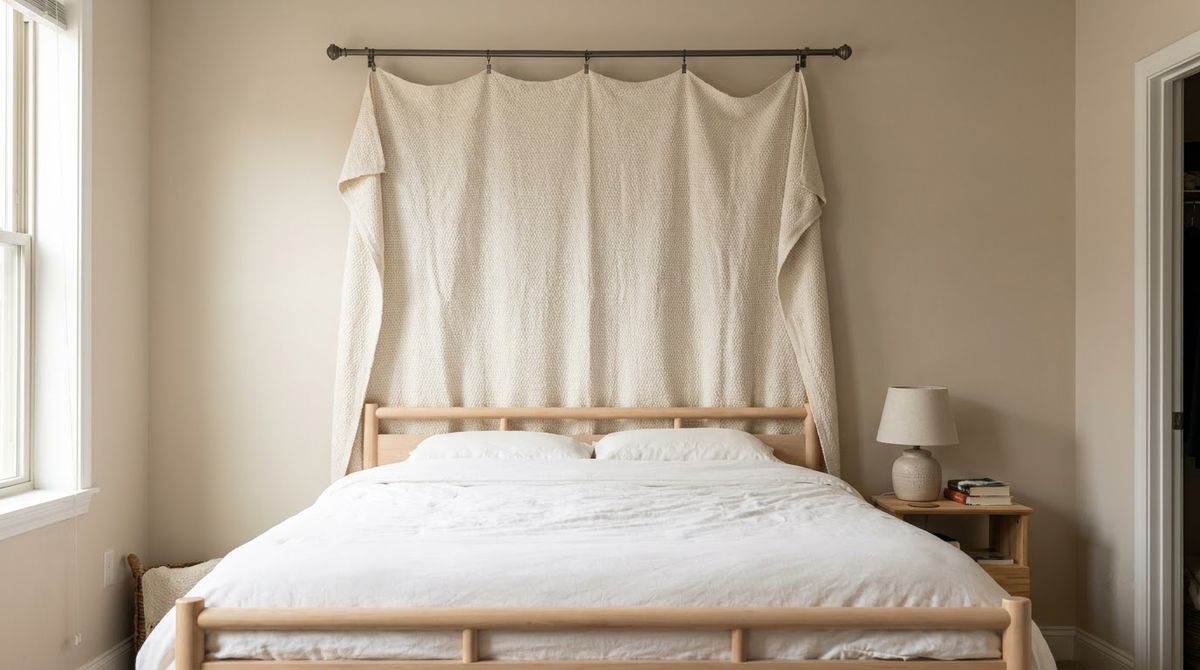
A quilt or woven blanket hung from a curtain rod becomes a wide headboard in one move. IKEA’s 47-83 inch HUGAD rod was $8 and spans a full or queen. Rods need brackets, so this one suits walls you may patch. Quilt clips make seasonal swaps easy.
Cost: ~$8-$40 · Renter-safe: No
7. A Curtain Panel Behind the Bed
One floor-length curtain panel hung behind the mattress adds a soft backdrop and hides small wall flaws. Gather it into folds with ties for a fuller look, or let it fall flat for a hotel feel. It uses the same rod idea as number 6 and costs less if you own a spare panel.
Cost: ~$15-$40 · Renter-safe: No
8. A DIY Upholstered Panel
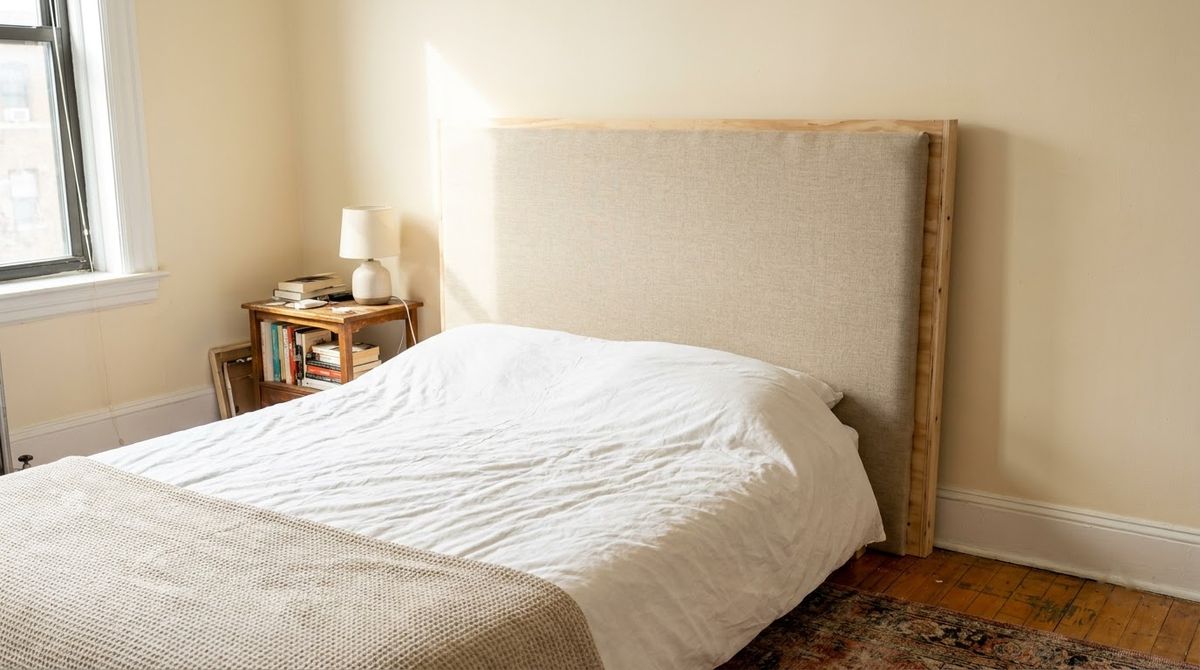
Cut half-inch plywood to the mattress width, glue on 2-inch foam, wrap it in batting and staple fabric over the back. A 60 x 36 inch panel suits a queen. Lean it against the wall behind the bed, or strap it to the frame with sturdy ties.
Cost: ~$60-$110 · Renter-safe: Yes
9. A Slipcover-Style Headboard Cover
If the existing headboard is dated or scratched, a stretch cover pulls over it in minutes and hides the finish. Measure width and height before ordering, since covers come in fixed sizes. It changes the look of the whole bed without a tool, and you can swap it when your taste changes.
Cost: ~$20-$45 · Renter-safe: Yes
10. A Large Throw as a Wall Hanging
A 51 x 67 inch off-white throw, like IKEA’s SÖRBYSKOGEN at $39.99, clips onto a rod or hangs from light-duty adhesive hooks. It reads as a soft panel behind a twin or full bed. Check the hook rating on the package, and use extra hooks.
Cost: ~$40 · Renter-safe: Yes
Wood, Cane and Natural Textures
Natural materials give a bed visual weight without clutter. These suit warm or minimal rooms.
11. A Slatted Wood Panel
Build a rectangle from six to ten 1 x 3 boards, spaced about 1 inch apart across two cross braces. Sand, stain or paint it, then lean it behind the bed. A queen needs about 60-62 inches of width. Vertical slats draw the eye up, which helps a low ceiling feel taller.
Cost: ~$40-$90 · Renter-safe: Yes
12. A Cane Webbing Panel
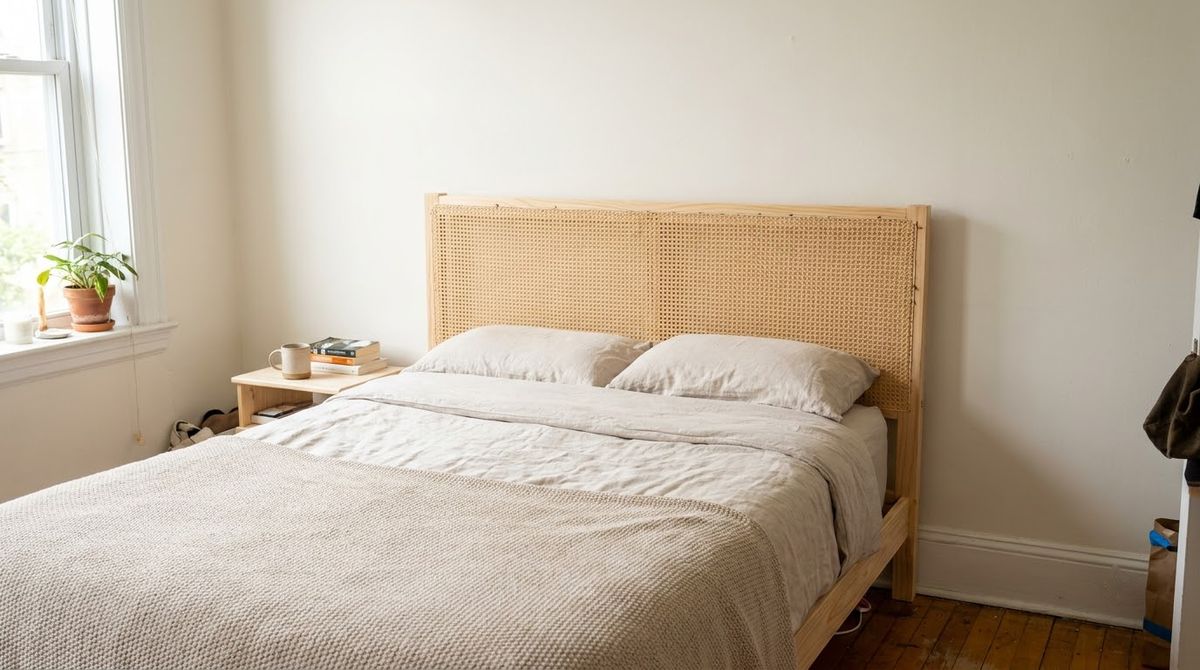
Stretch cane webbing over a simple wood frame and staple it taut. The woven pattern adds texture, lets light through and costs less than a ready-made rattan headboard. Soak the webbing briefly before stapling so it tightens as it dries. Then lean the finished panel behind the bed.
Cost: ~$40-$80 · Renter-safe: Yes
13. A Salvaged Door Behind the Bed
An old six-panel door is often 30-36 inches wide, about right for a twin or a narrow full. Clean it, add paint or keep the worn finish, and wedge it so it cannot slide. Test old paint for lead before sanding, and use a wet-wipe method if the door predates 1978.
Cost: ~$20-$60 · Renter-safe: Yes
14. A Plywood Arch You Cut Yourself
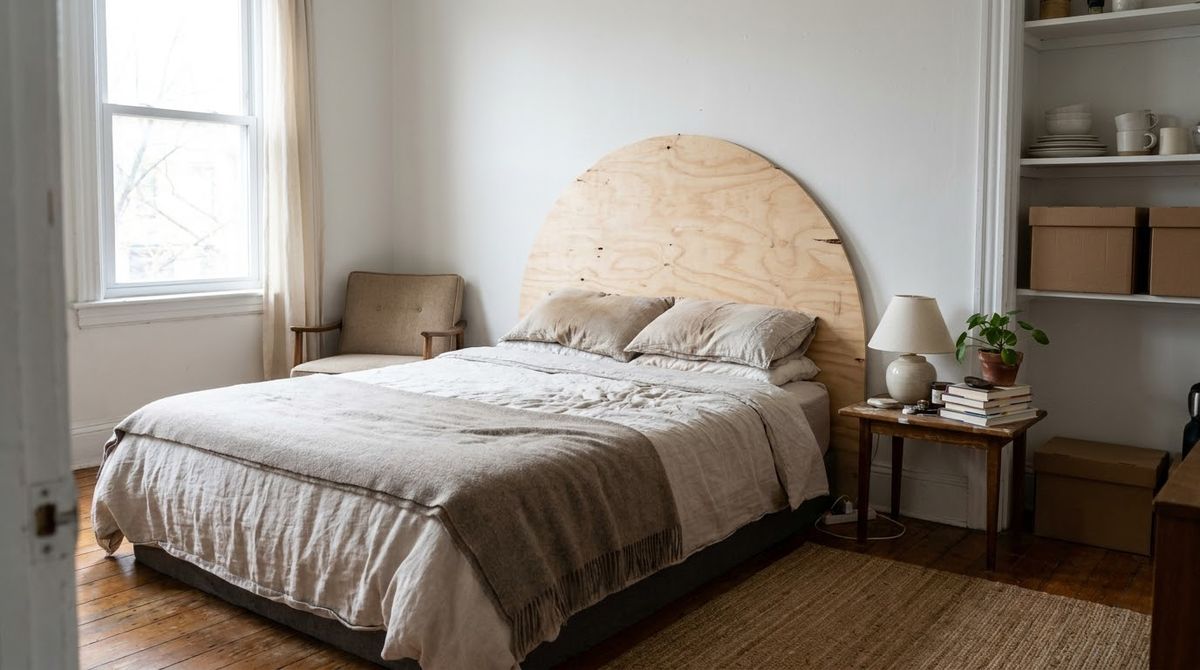
Trace an arch onto 3/4-inch plywood and cut it with a jigsaw, or ask the lumberyard to cut it. Sand the edge and paint it to match the walls or contrast with them. About 48 inches wide suits a full; scale up for a queen. Add a base block so it stays upright.
Cost: ~$35-$70 · Renter-safe: Yes
15. A Bamboo Roll-Up Shade as a Backdrop
A 5-foot-wide bamboo shade, rolled down and hung high, makes a lightweight natural backdrop. It is easy to remove and adds a warm tone for little money. Hang it from a rod or two sturdy hooks, and keep it away from candles and hot bulbs.
Cost: ~$20-$40 · Renter-safe: No
Paint, Paper and Light
If the wall itself can change, these cost the least. Ask your landlord first.
16. A Painted Headboard Shape
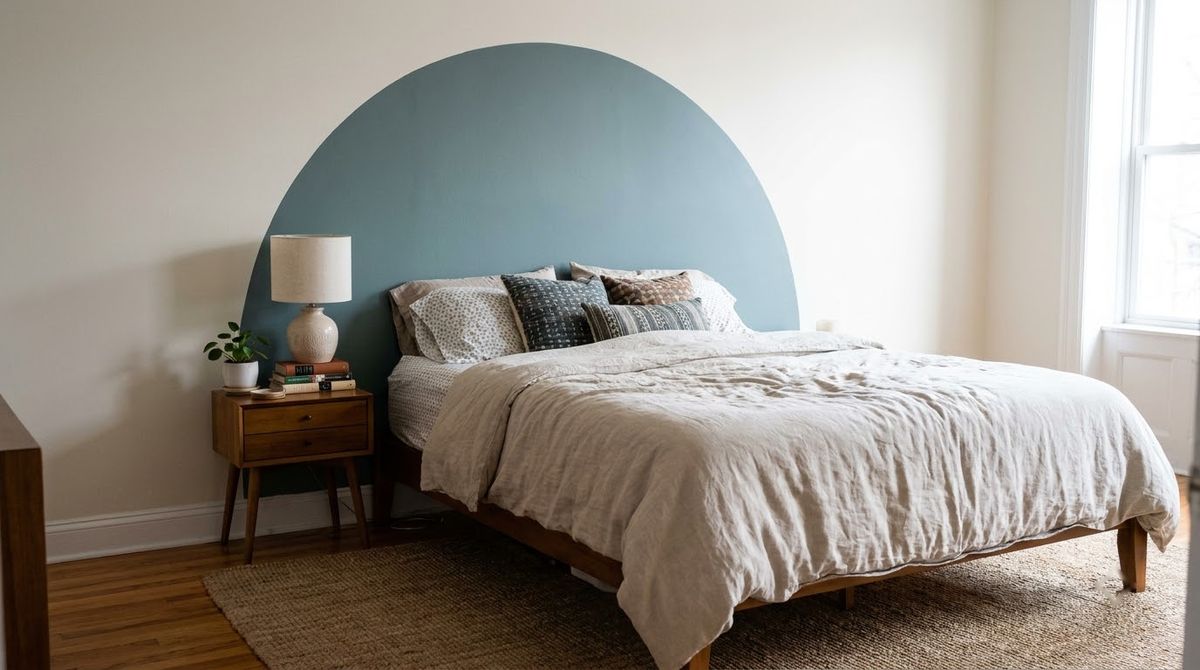
Paint a rectangle or arch on the wall, about 6-12 inches wider than the mattress and 12-20 inches above it. Use painter’s tape for crisp edges and one sample pot of paint. It is the cheapest way to add height, and it stays when the bed moves. Repaint at move-out.
Cost: ~$10-$25 · Renter-safe: No
17. A Peel-and-Stick Wallpaper Panel
Apply two or three widths of removable wallpaper behind the bed, squared off at the edges so the panel looks framed. Test a small patch in a hidden spot, because removable paper can still lift paint from a poorly bonded wall. Choose a bold pattern when the bedding is plain.
Cost: ~$30-$50 · Renter-safe: Yes
18. Reading Lights That Frame the Bed
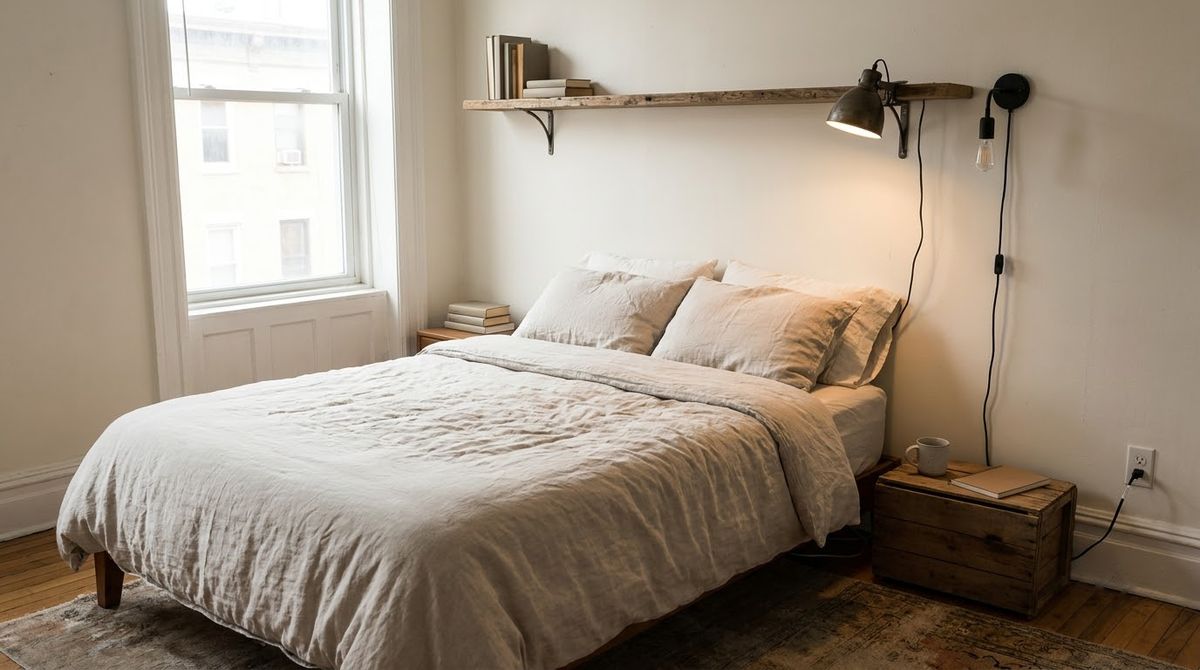
IKEA’s NÄVLINGE clamp spotlight grips a shelf or frame up to 1 3/4 inches thick for $21.99, and the SKURUP wall lamp plugs in with a 6 ft 3 in cord for $24.99. One on each side frames the bed like a headboard. Choose a warm bulb and aim it at the page.
Cost: ~$22-$50 · Renter-safe: Yes
Headboards That Earn Their Space
When the room is small, the headboard should do more than look good.
19. Floating Nightstands on Both Sides
Two compact wall-mounted nightstands, such as the 16 1/2-inch GRÅFJÄLLET at $29.99 each, frame the bed and free up floor space. They need screws, so they suit walls you can patch. Pair them with a leaning mirror or panel and the bed reads as finished.
Cost: ~$60 · Renter-safe: No
20. A Headboard Wide Enough for Two
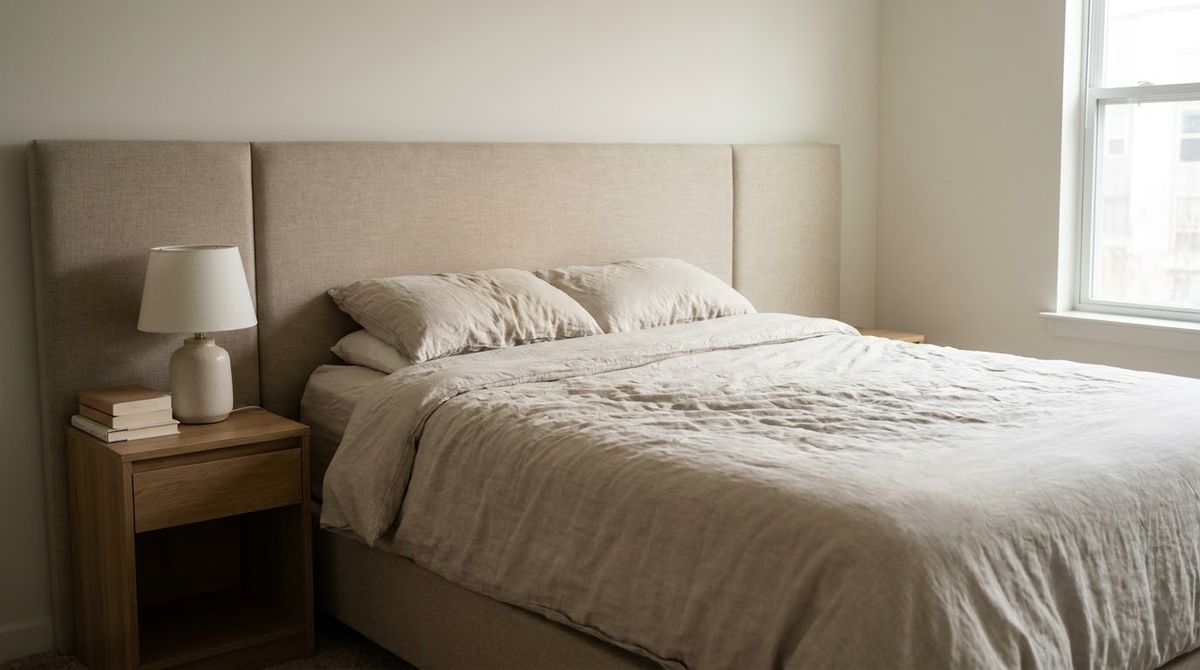
For a shared queen, a 60-inch mattress leaves about 30 inches per sleeper, so a headboard 66-72 inches wide looks intentional. Anything shorter than the bed looks lost. For storage that pairs with it, see these no-drill bedroom storage ideas.
Cost: ~$60-$120 · Renter-safe: Yes
Headboard Ideas to Skip in a Rental
Skip heavy wall-hung slabs or shelves unless you know where the studs are. A slab that falls onto a pillow is worse than no headboard. Skip glue-on panels too, because adhesive lifts paint and can cost you part of the deposit.
Skip a headboard much narrower than the bed. It looks like a mistake, and the bed still reads as bare. Match width first, then pick the style; the cozy bedroom ideas can help with palette.
Also skip anything that blocks a window, vent or outlet. A bed can slide a few inches sideways, but a blocked vent changes how the whole room feels.
Frequently Asked Questions
How wide should a headboard be?
Match the mattress width at minimum: about 38 inches for a twin, 54 for a full, 60 for a queen and 76 for a king. Going 6-12 inches wider than the mattress looks intentional, while going narrower looks like an error. Measure the mattress, not the frame.
What is a no-drill headboard?
A no-drill headboard rests on the floor, leans on the wall or hangs from adhesive hooks, so nothing needs a wall anchor. Leaning mirrors, folding screens, freestanding panels and oversized art all qualify. They suit renters because they move with you and leave no holes to patch.
How high should a headboard sit above the mattress?
A common range is 12-24 inches above the top of the mattress, enough to cover the wall behind the pillows. Taller looks dramatic in rooms with high ceilings. For leaning pieces, check that the top tilts slightly toward the wall so it cannot fall toward the bed.
Can I make a headboard without power tools?
Yes. Leaning art, a screen, a quilt on a rod or stacked pillows need no power tools. A padded panel calls for a staple gun, and a hardware store will usually cut plywood to size for you, so you can assemble the panel at home with no saw.
Are DIY headboards cheaper than store-bought ones?
Often, yes, especially wood slats, a plywood arch or paint, which can cost about $20-$90 in materials. A padded panel can approach the price of a basic store model once foam and fabric are added, so choose DIY when you want a custom size or finish.