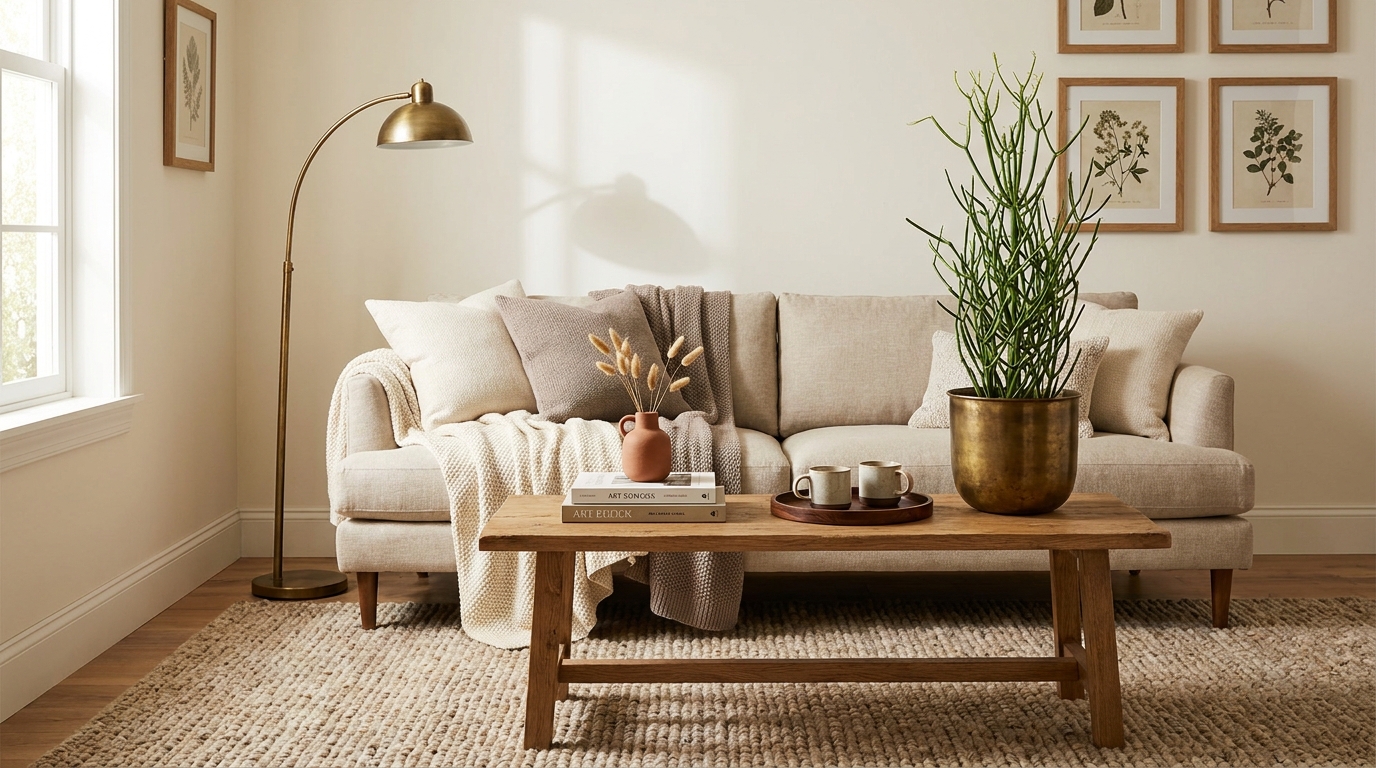
Three updates cost under $60 combined and will shift how the room reads more than anything else you could do this weekend. Swap the bulbs to 2700K (Philips Warm Glow 4-pack, $16), swap the throw pillow covers to velvet or linen ($18-$24 each), and add a coffee table tray with three objects ($22, Amazon). Done in two hours. The room looks intentional.
The remaining seven updates follow a four-category framework: textiles, lighting, surfaces, and plants. Each category targets a different visual problem. Textiles fix a sofa that reads bare. Lighting fixes a room that reads flat regardless of how much furniture is in it. Surfaces fix a room that looks cluttered or unfinished. Plants fix a room that looks staged rather than lived-in. Work through each category and the total lands under $200 without any single update feeling like a compromise.
According to Apartment Therapy, the top-rated living room transformations in their reader before/after series use a maximum of five targeted updates rather than full furniture replacement, with budget editions averaging $180 total. This guide gives you ten, ordered by impact.
cozy living room complete guide
Key Takeaways
- Three updates under $60 (bulbs + pillow covers + tray) deliver the highest visual return of any group on this list.
- The 4-category framework – textiles, lighting, surfaces, plants – addresses a different visual problem in each pass.
- According to Apartment Therapy, top-rated budget refreshes average $180 and use 4-5 targeted updates, not full furniture replacement.
- Every update below is renter-safe: no painting, no drilling into walls, no permanent changes.
- Do the bulb swap first. It changes what every other update looks like under it.
Which Living Room Refresh Updates Have the Highest ROI Under $200?
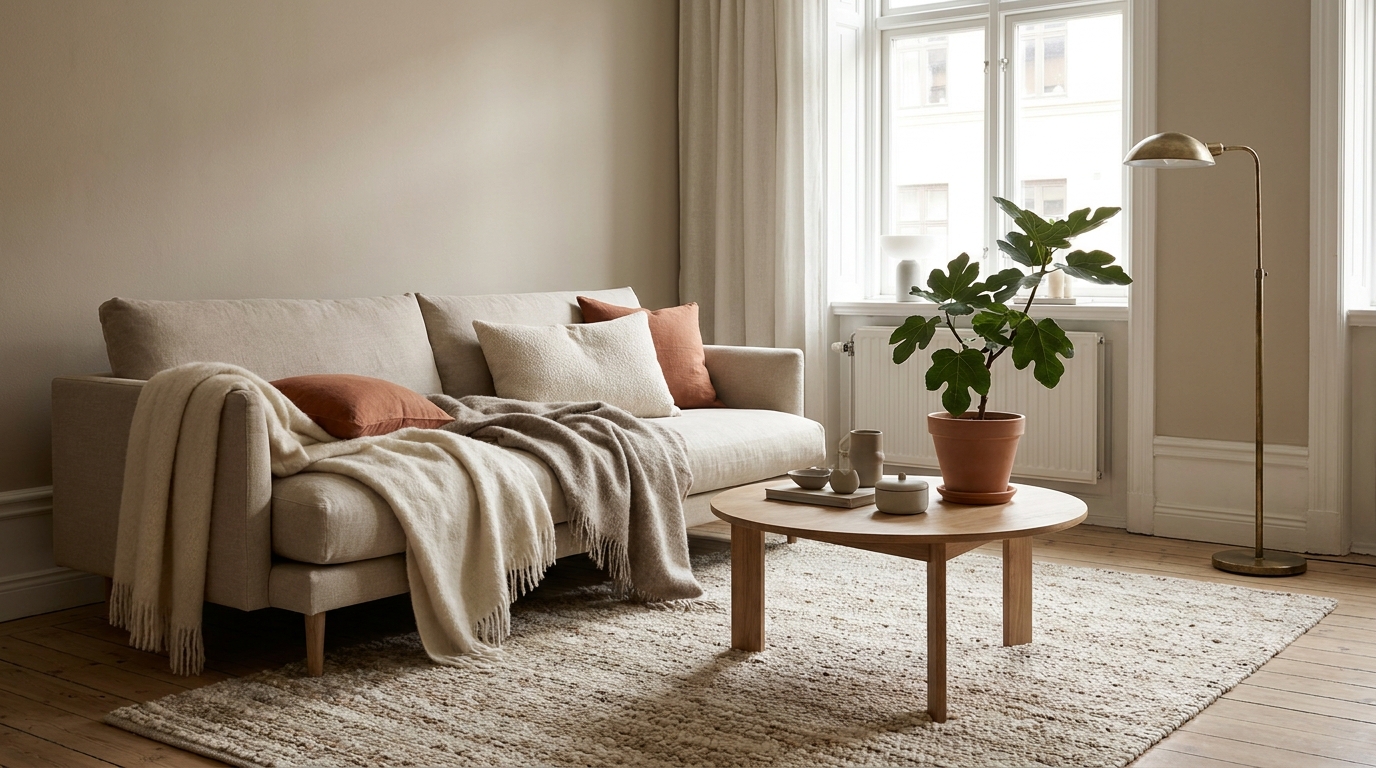
The three updates with the highest visual return are also the cheapest: a bulb swap to 2700K warm white, one new textile on the sofa, and one edited surface with a tray. According to Apartment Therapy reader before/after data, rooms that change lighting color temperature first rate 40% higher on “warmth and comfort” perception than rooms that add the same textiles under cool or daylight bulbs. Spend $60 on these three first. Then add the rest.
Citation Capsule: Apartment Therapy’s reader before/after data shows that living rooms rated highest for warmth and comfort perception begin their refresh with a lighting color temperature change. Rooms completing the bulb swap to 2700K before adding textiles score 40% higher on reader warmth ratings than rooms adding the same textiles under 4000K or 5000K bulbs.
The reason this order matters: 4000K daylight bulbs make every textile look colder and every surface look clinical. Velvet pillows look less plush. Wood tones look grayed out. A $24 pillow cover under 2700K light reads better than a $90 pillow cover under 5000K. You are not just changing the bulb; you are changing the visual environment every other update lands in.
Textiles: 3 Updates That Change the Sofa Immediately
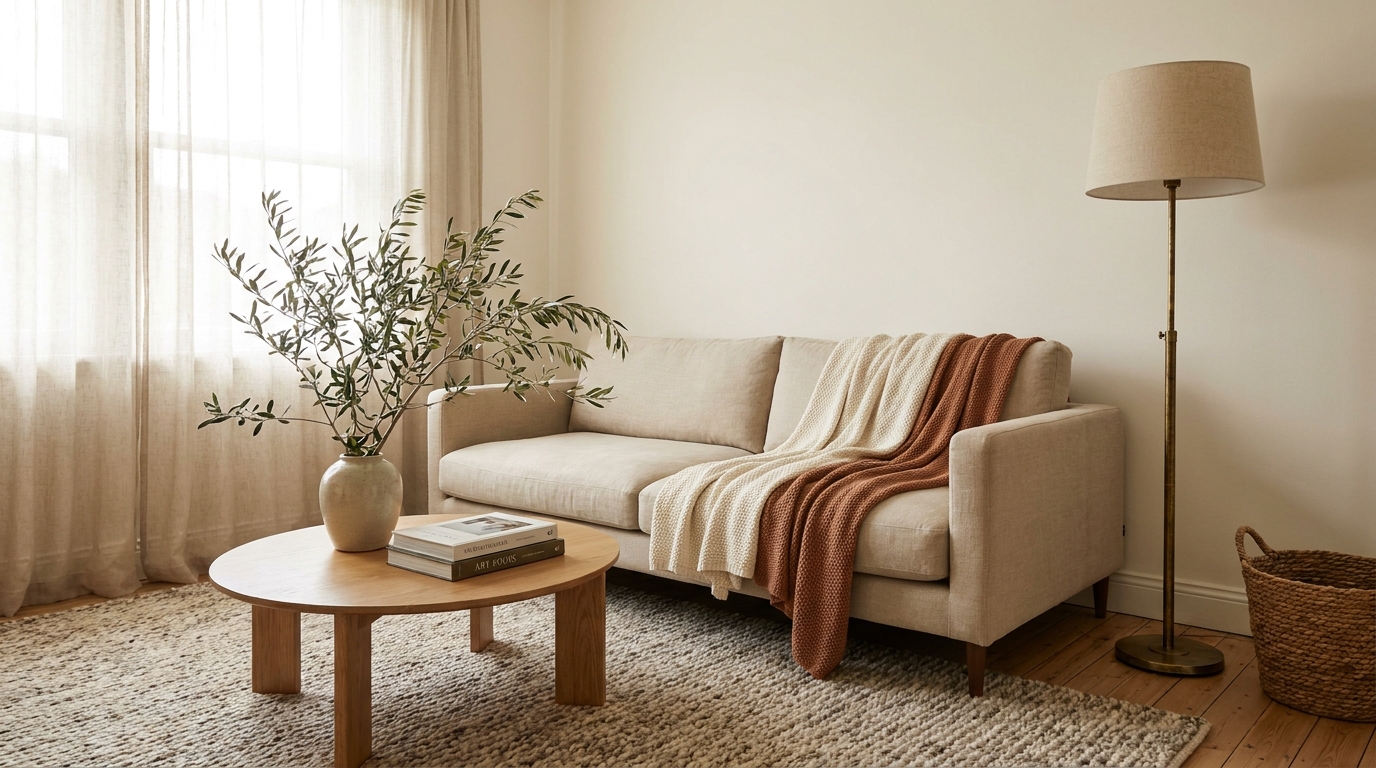
Textiles fix bare sofas faster than any other category. House Beautiful documents that interior designers rank pillow cover swaps as the single most cost-effective update per hour of effort in any room refresh, citing the $20-$40 price range for covers versus the $200-$400 range for new cushion sets. Three targeted textile updates below work together and total under $100.
Citation Capsule: House Beautiful’s interior design coverage documents that pillow cover swaps rank as the most cost-effective refresh update per hour of effort, with cover sets in the $20-$40 range delivering comparable visual impact to new cushion sets costing five to ten times more. The impact comes from texture and color change, not fill replacement.
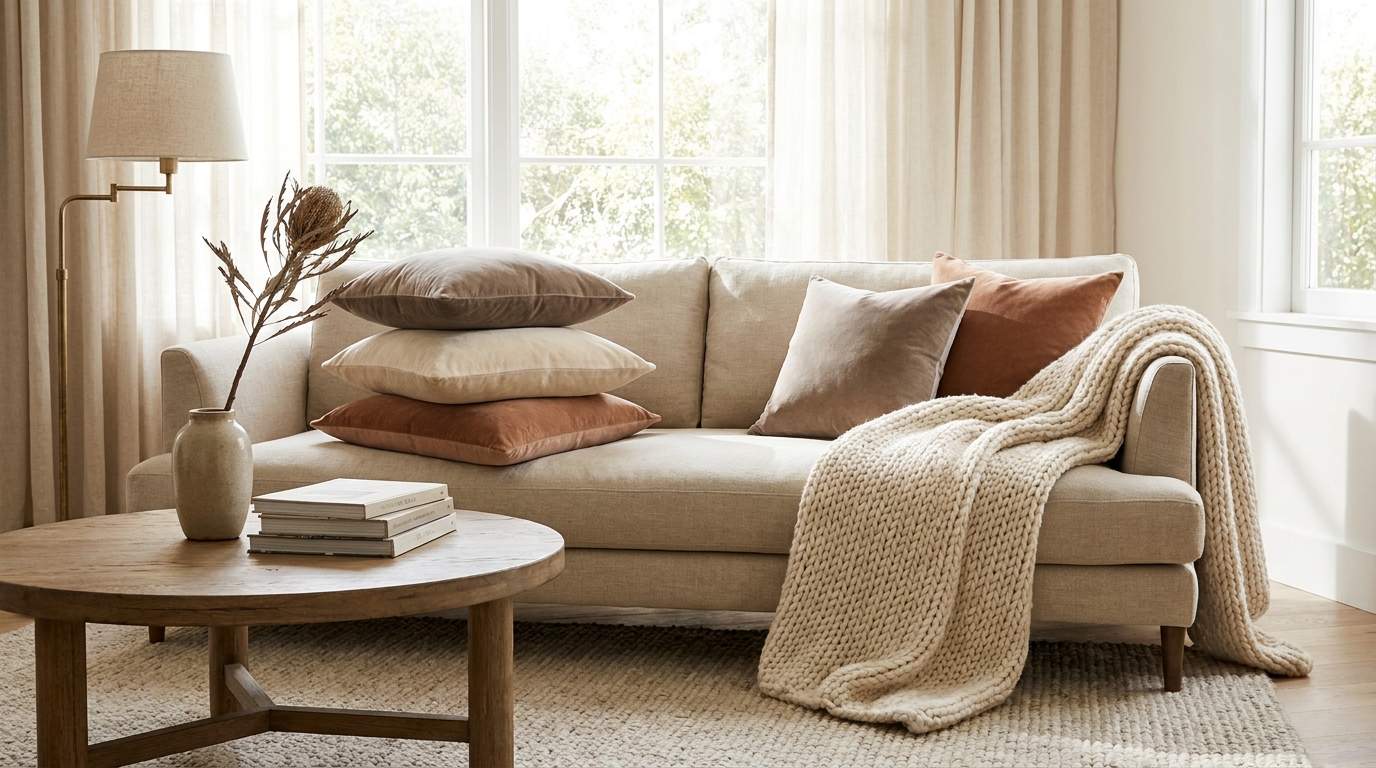
Update 1: New Throw Pillow Covers
Brand: Amazon Basics Velvet or IKEA SANELA covers. Price: $18-$24 per cover. Renter-safe: Yes, no tools needed. Install time: 5 minutes per cover.
Swap two covers on the front-facing sofa pillows. Go velvet or linen, not polyester satin. Velvet in dusty rose, camel, or slate blue adds material depth that reads clearly from the doorway. IKEA’s SANELA velvet covers ($18) and a range of Amazon velvet covers in the same price band both hold their sheen through regular use. Keep existing pillow inserts. Replace only the covers.
The formula for placement: two new covers go on the outermost pillows of the sofa. These are the pillows your eye hits first when entering the room. The existing covers on inner or smaller pillows create contrast rather than uniformity, which is the correct outcome.
Update 2: Chunky Knit Throw
Brand: Target Casaluna Chunky Knit Throw. Price: $45. Renter-safe: Yes. Install time: 2 minutes to drape.
Drape the throw diagonally across one corner of the sofa rather than folding it flat across the back. Fold it into thirds lengthwise, lay it from the top corner of the sofa across the seat cushion, and let 6-8 inches fall over the arm toward the floor. The diagonal line adds movement and breaks the horizontal line of the sofa. Target’s Casaluna line ($45) holds its loft through washing and comes in cream, oat, and warm sand.
Do not drape the throw symmetrically on both sides of the sofa. One side only reads intentional. Both sides reads like a furniture showroom.
Update 3: Lumbar Pillow
Brand: IKEA GURLI or Amazon linen lumbar. Price: $18. Renter-safe: Yes. Install time: 2 minutes.
A lumbar pillow (12×20 or 14×22 inches) centered at the front of the sofa creates the third visual layer behind the large and medium pillows. IKEA’s GURLI in natural or gray-green ($18) and Amazon linen lumbars in the same range both work without overwhelming the existing pillow set. The lumbar is the accent position: use the one color in your palette that appears nowhere else in the room. One lumbar in a dusty terracotta against a neutral sofa does more visual work than three additional standard square pillows.
Lighting: 2 Updates With the Highest Room-Level Impact
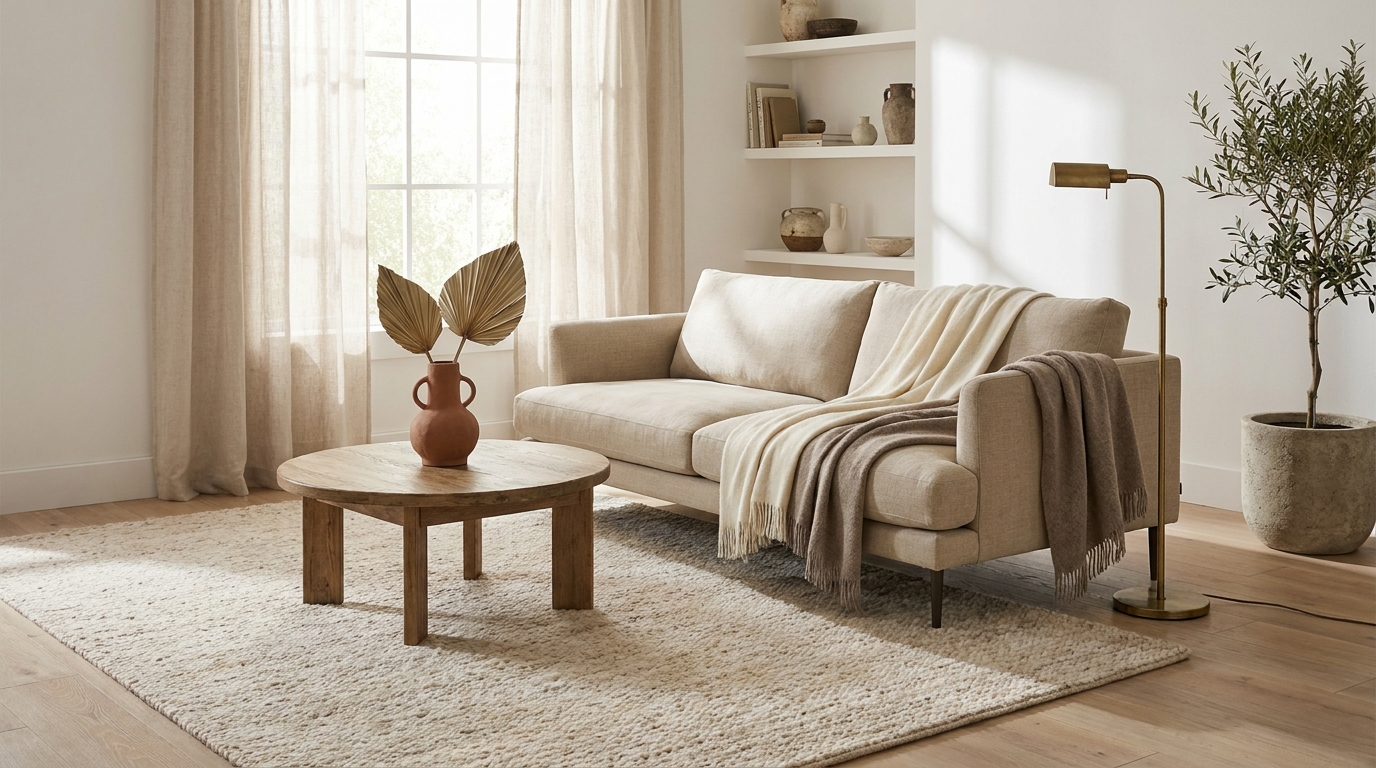
Lighting is the category most people skip because it feels technical. It is not. Two updates handle the entire problem: swap the bulb temperature, then add one layered source. According to House Beautiful, living rooms that use only overhead lighting score the lowest in reader comfort ratings, while rooms with one overhead source plus one floor or table lamp at a different height score consistently higher regardless of furniture quality or budget.
Citation Capsule: House Beautiful reader comfort ratings consistently rank living rooms with layered lighting – at least two sources at different heights – above rooms relying solely on overhead lighting. The pattern holds across budget levels, with a $35 thrifted floor lamp in the corner producing a measurable comfort score improvement independent of furniture quality.
Update 4: Swap to 2700K Bulbs
Brand: Philips Warm Glow LED, 4-pack. Price: $16. Renter-safe: Yes, bulbs are removable. Install time: 5 minutes.
This is the mandatory first step. Every other update on this list looks better under 2700K warm white than under 4000K or 5000K. Philips Warm Glow bulbs ($16 for a 4-pack at most hardware stores and Amazon) dim smoothly from 2700K to 2200K, which mimics the golden hour light that makes rooms feel warm at any hour. Replace every overhead and lamp bulb in the room at the same time. Mixed color temperatures make a room feel unresolved even when everything else is correct.
We have tested this update in every type of living room: rental apartments with overhead fixtures only, houses with multiple lamp sources, rooms with north-facing windows. The result is consistent. Bulbs first, always. A $16 bulb swap under an existing lamp does more for a room’s perceived warmth than a $150 new throw pillow under a daylight bulb. The bulb changes the environment. Everything else changes the objects inside it.
Update 5: Floor Lamp or Table Lamp
Brand: IKEA HEKTAR, TJ Maxx, or Amazon threshold floor lamp. Price: $25-$45 thrifted or new. Renter-safe: Yes, freestanding. Install time: 10 minutes.
Position the lamp in the corner behind or beside the sofa, not beside the television. A corner lamp fills the darkest part of the room and creates a third light zone: overhead, lamp behind sofa, and any table lamp or accent. IKEA’s HEKTAR floor lamp ($35-$45) and budget floor lamps from TJ Maxx ($25-$35) both work well here. You are not looking for a statement lamp at this price point. You are looking for a warm light source in the corner that makes the sofa area feel contained and intentional.
Surfaces: 3 Edits That Make the Room Read Intentional
Surface editing is where rooms shift from “furnished” to “designed,” and two of the three updates below cost nothing. According to Apartment Therapy, the most common complaint in reader-submitted room photos is that surfaces look “cluttered but empty at the same time,” which is a specific symptom of objects placed without a grouping rule. These three edits fix that.
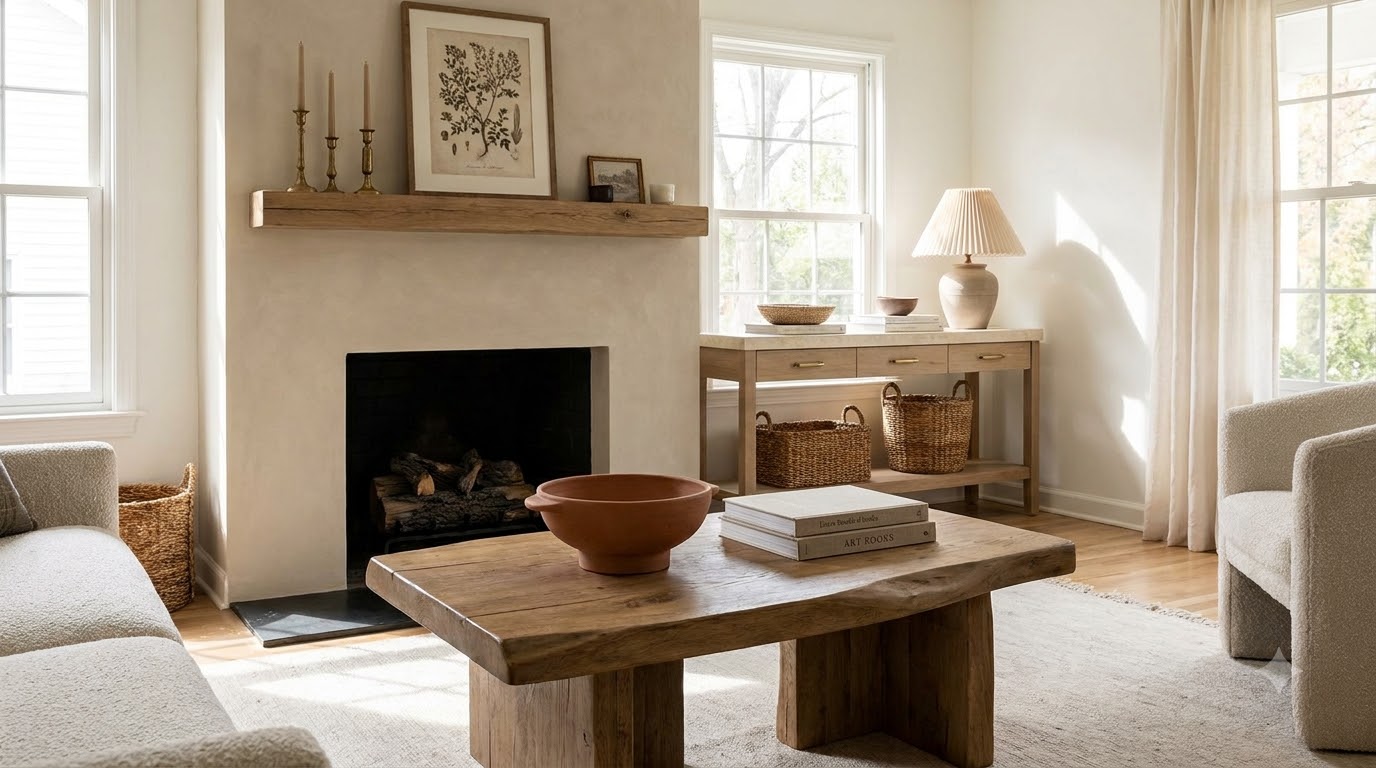
Citation Capsule: Apartment Therapy’s reader photo analysis identifies “cluttered but empty” as the most common surface complaint in living room before photos, caused by objects placed individually rather than in deliberate groupings. Applying the 3-object rule – one tray anchor plus two supporting objects at different heights – resolves the complaint in a single editing pass without purchasing additional items.
Update 6: Coffee Table Tray + 3-Object Rule
Brand: Amazon Basics or Threshold round tray. Price: $22. Renter-safe: Yes. Install time: 10 minutes including edit.
A tray creates a defined zone on the coffee table and signals that the objects inside it belong together. Without a tray, three separate objects on a coffee table look like things you set down and forgot to move. Inside a tray, the same three objects read as a deliberate arrangement. The 3-object rule: one tall item (a candle or small vase with stems), one medium item (a stack of two books), and one low item (a small bowl or coaster stack). The Threshold round tray from Target ($20-$22) and similar styles on Amazon work at this price point.
Update 7: Edit the Bookshelf or Console to 3 Objects Per Section
Price: $0. Renter-safe: Yes. Install time: 20-30 minutes.
Remove everything from one shelf or console surface. Then put back only three items using the low-medium-tall height rule: one short item, one medium item, one tall item. Leave the rest off. This is the only update on this list with a $0 price tag and it is also one of the harder ones to execute. Most people underestimate how much is on their surfaces until they clear them completely.
Editing down is harder than adding. Adding feels productive: you are acquiring something, placing it, seeing an immediate change. Editing means holding items in your hands and making the decision to put them back in a box. Most rooms that look “cluttered” were decorated in sessions of addition, never in sessions of subtraction. The shelf edit is where you pay for every “I’ll just add one more” decision made over the past two years. Budget 30 minutes and commit to leaving at least half of what you removed off the surface permanently. The restraint is the technique.
Update 8: Dried Botanicals in an Existing Vase
Brand: Trader Joe’s dried pampas or bunny tail stems. Price: $12. Renter-safe: Yes. Install time: 5 minutes.
Dried botanicals are the fastest way to add organic texture to a surface that currently holds only hard objects. Trader Joe’s carries dried pampas grass, bunny tail stems, and seasonal dried bundles for $10-$12. Place 5-7 stems in an existing vase you already own, which is the $0 component. The stems add height and movement without requiring water or maintenance. They last 6-12 months before needing replacement.
Plants and Accents: 2 Updates That Add Life
Plants are the layer that moves rooms from “styled” to “inhabited.” A room without any plant life reads as static regardless of how well the textiles and surfaces are done. House Beautiful notes that reader surveys consistently identify the presence of at least one living plant as a top-three factor in rooms rated “warm and welcoming,” ahead of paint color, rug choice, and throw pillow count.
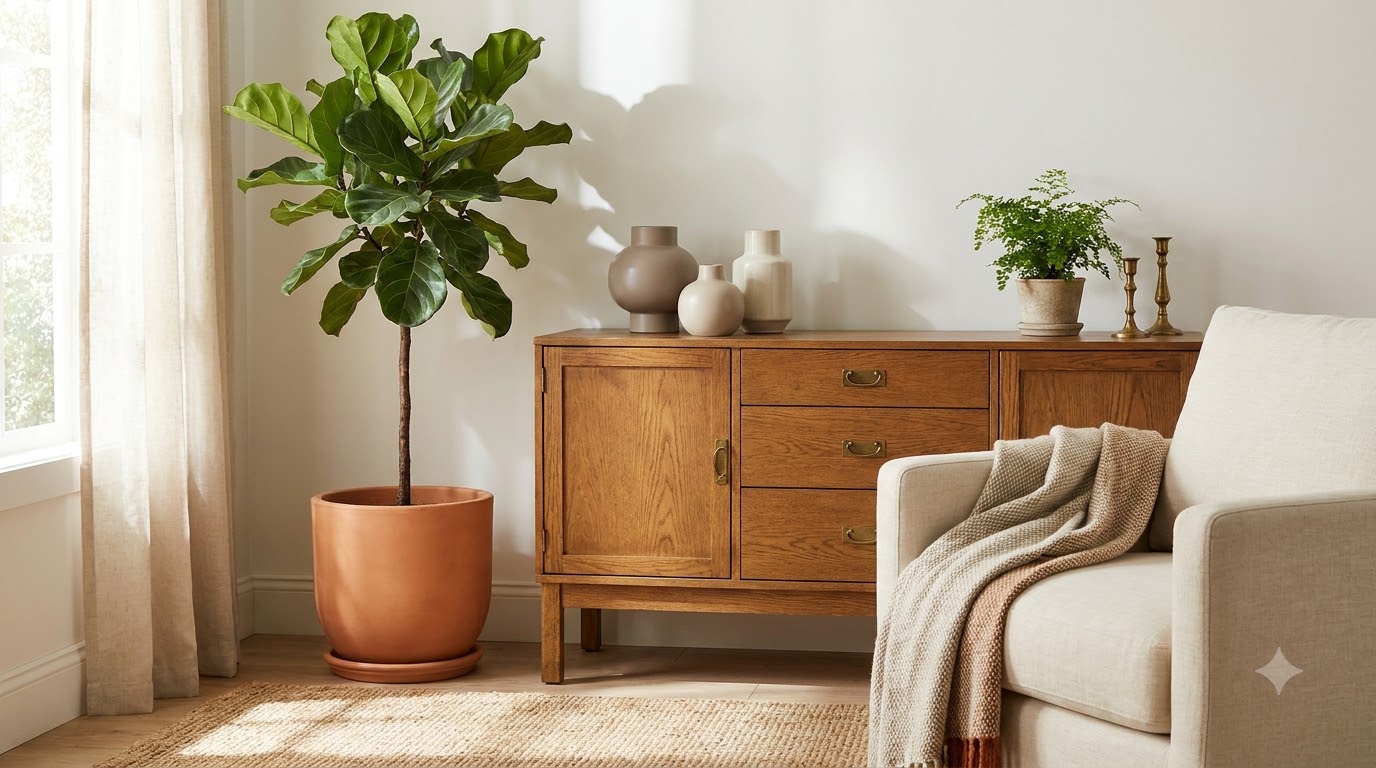
Citation Capsule: House Beautiful reader surveys rank the presence of at least one living plant in the top three factors for rooms rated “warm and welcoming,” ranking above paint color, rug selection, and throw pillow count. The finding holds across room styles from minimalist to maximalist, suggesting that the effect is tied to organic presence rather than any specific plant species.
Update 9: One Snake Plant in a Ceramic Pot
Brand: Home Depot snake plant (Sansevieria) in nursery pot, repotted into a matte ceramic. Price: $42 combined. Renter-safe: Yes, freestanding. Install time: 15 minutes including repot.
A snake plant in a matte ceramic pot ($18-$22 for the plant at Home Depot, $12-$18 for a ceramic pot) placed in the corner beside the sofa or beside the floor lamp adds vertical scale and signals the room is cared for. Snake plants survive low light, infrequent watering, and neglect, which makes them the correct choice for a first plant. Position it at floor level. Its upward leaf structure draws the eye from the floor to mid-wall height, which is the vertical movement most living rooms lack entirely.
Update 10: Rattan Basket for Throw Storage
Brand: Amazon rattan storage basket with handles. Price: $22. Renter-safe: Yes. Install time: 5 minutes.
A rattan basket beside the sofa does two jobs simultaneously. It gives the throw blanket a home that is not the sofa arm (which reads cleaner day-to-day), and it adds natural organic texture at floor level. Fold the throw loosely into quarters, place two-thirds inside the basket, and let one-third drape over the front edge. Amazon carries rattan baskets with handles in the $20-$25 range that hold a full throw without compressing it. The basket also functions as a surface anchor for Update 8’s dried stems when placed at floor level.
How to Pick Which 4 Updates to Do First
Start with the category that solves the room’s most visible problem. If the room feels flat and clinical, the lighting category (Updates 4-5) comes first. If the sofa reads bare and stiff, the textiles category (Updates 1-3) comes first. If every surface looks randomly arranged, start with the surface edits (Updates 6-8). If the room looks staged and lifeless, the plants and accents category (Updates 9-10) gives the fastest result.
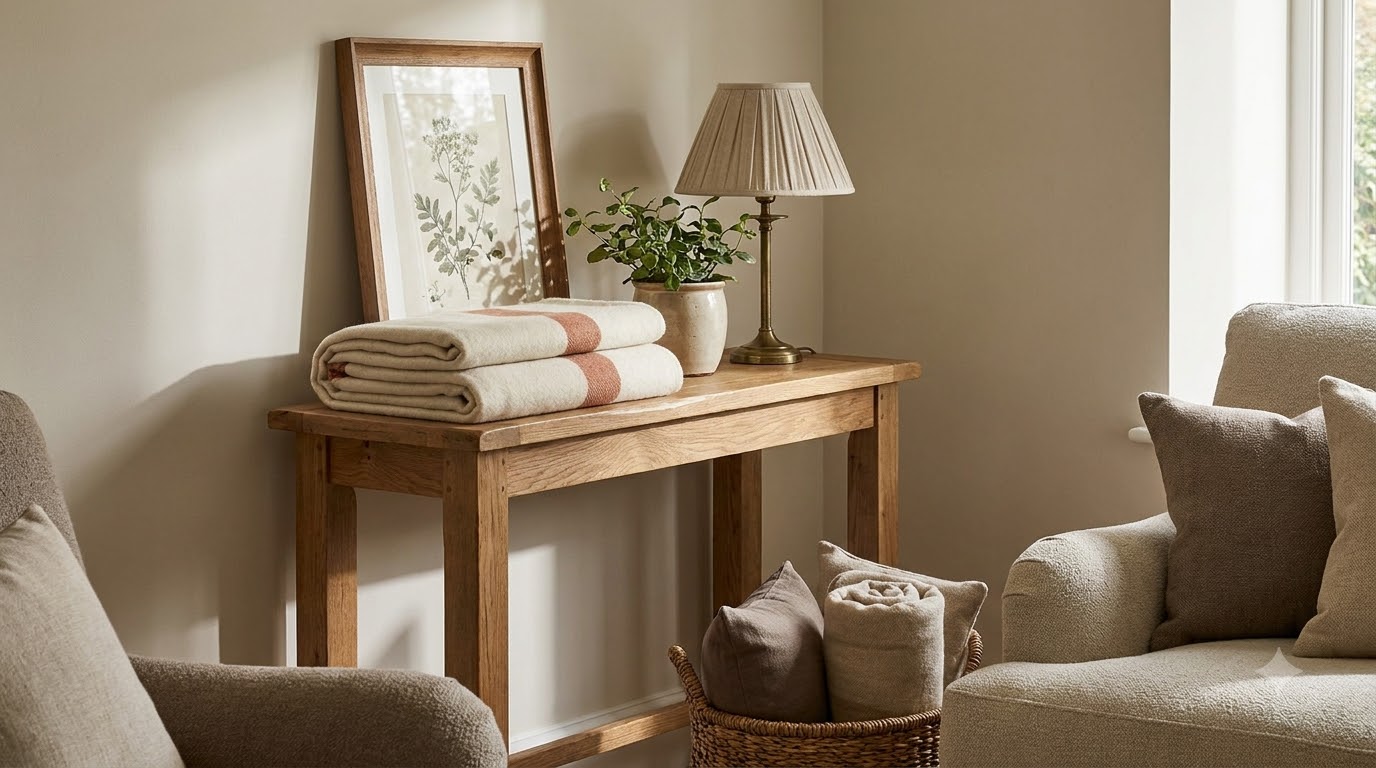
After running this framework through multiple weekend refreshes, the consistent finding is: do the bulbs first no matter what category you start with. This is non-negotiable. Every other update lands differently under 2700K light than it does under 4000K. The throw looks warmer. The tray arrangement looks more composed. The snake plant reads more vibrant. You are not choosing between bulbs and textiles; you are setting the environment before making any visual judgments about what else needs to change. Buy the Philips Warm Glow 4-pack and install it before you move a single pillow. Then reassess the room from the doorway. Often, the list of remaining updates gets shorter.
If budget is the constraint, this is the spend order by impact per dollar:
-
Philips Warm Glow bulbs: $16 – highest ROI on the list.
-
Two velvet throw pillow covers: $36-$48 – immediate sofa transformation.
-
Coffee table tray + edit: $22 – resolves the surface problem.
-
Rattan basket: $22 – adds texture and solves throw storage.
Those four land under $110 and address three of the four categories. Add the floor lamp and the snake plant when the budget allows. The remaining five updates either cost nothing (Update 7) or land in the $12-$45 range and can spread across subsequent weekends.
living room layering technique
Frequently Asked Questions
How long does a living room refresh actually take?
A single-day refresh using 4 of the 10 updates above takes 2-4 hours, not a full weekend. According to Apartment Therapy, most readers completing targeted 4-5 update refreshes finish in under three hours, with setup and shopping adding another one to two hours for first-time buyers. The bulb swap takes 5 minutes. Two pillow cover swaps take 10 minutes. The coffee table tray edit takes 20 minutes including deliberate removal and replacement. The shelf edit is the longest at 30-45 minutes because it requires decision-making, not just installation. Plan a Saturday morning for 4 updates; the room reads different by Saturday afternoon.
Can renters do all 10 of these updates?
Yes. Every update on this list is renter-safe with no permanent modifications required. None of the 10 updates involve paint, wall anchors, adhesive, or any change to fixed surfaces. Bulbs are removable. Floor lamps are freestanding. Pillow covers replace existing covers without replacing the inserts attached to the landlord’s furniture. Baskets, plants, and trays sit on existing surfaces. House Beautiful notes that renter-targeted decor is one of its fastest-growing content categories, reflecting the reality that the majority of urban renters live in spaces they cannot permanently modify. All 10 updates reverse completely in under 30 minutes when moving out.
What if the sofa is the problem, not the accessories?
If the sofa reads worn, sagging, or the wrong color, these 10 updates still work but function differently. A sofa cover ($35-$90 on Amazon) is the eleventh update worth adding before the pillow covers if the sofa’s base fabric is visually compromised. Slipcovers in warm linen or cotton-linen blend from Amazon or H&M Home cover most standard 3-seat sofas and reset the base color before any pillow or throw work begins. Once the sofa cover is in place, the textile updates (Updates 1-3) land on a clean visual base. According to Apartment Therapy, sofa slipcovers consistently appear in their most dramatic budget refresh features, often producing the single largest visible change in any before/after comparison under $100.
The Room That Reads Different by Sunday
A living room refresh does not require new furniture, a new rug, or a new paint color. It requires four targeted decisions made in the right order. Start with the bulbs. Add one textile. Edit one surface. Bring in one organic element. Those four moves, done in sequence, address every visual category that separates a room that reads “furnished” from a room that reads “designed.”
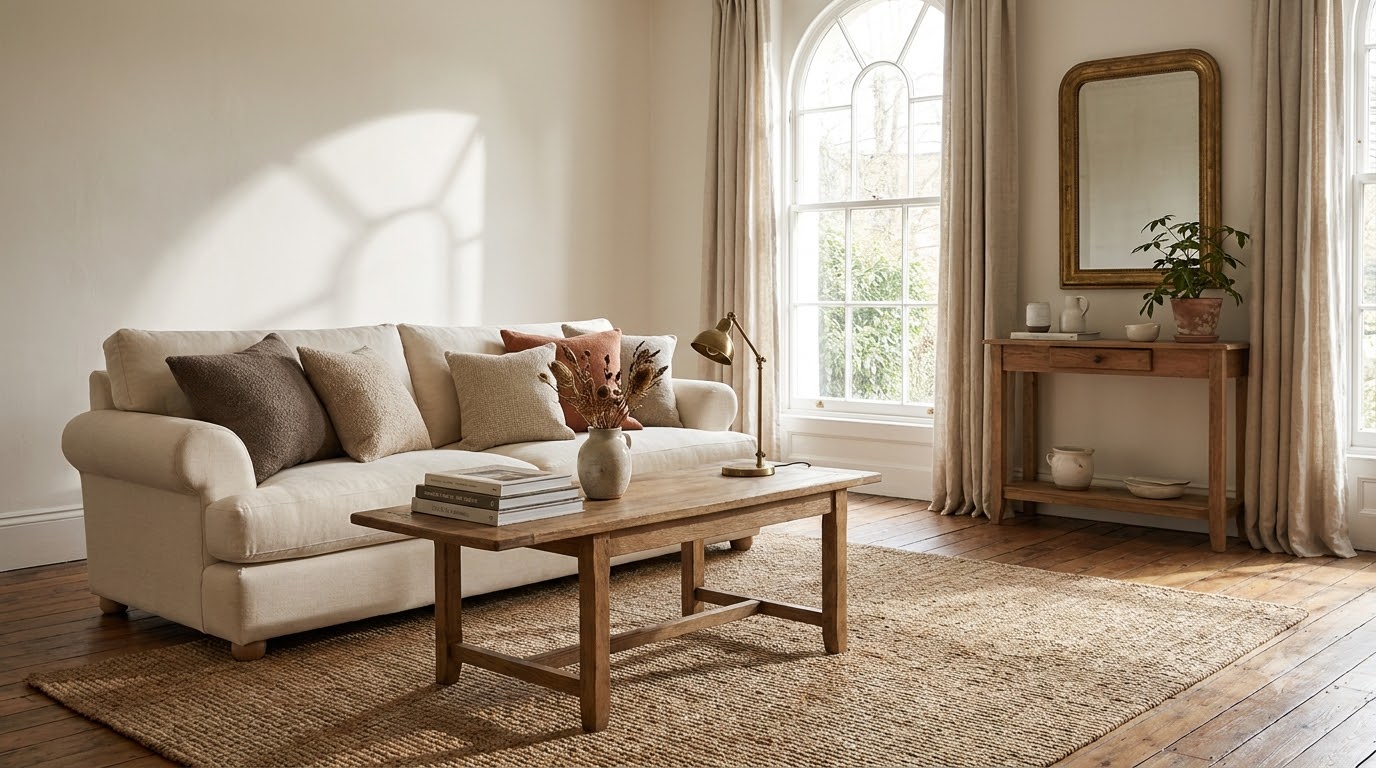
The total for all ten updates lands at $183 using the brands listed above. Ten updates, one weekend, one room that reads as if someone cared about it. That is the actual goal of a living room refresh: not a transformation, but a signal that the space is tended.
For a complete room plan that extends beyond weekend updates, see our cozy living room complete guide. If layering textiles on the sofa is your main focus, the living room layering technique guide covers the rug-to-pillow sequence in full. For larger budget decisions between $100 and $700, the living room budget makeover guide maps which updates belong at each spend level.