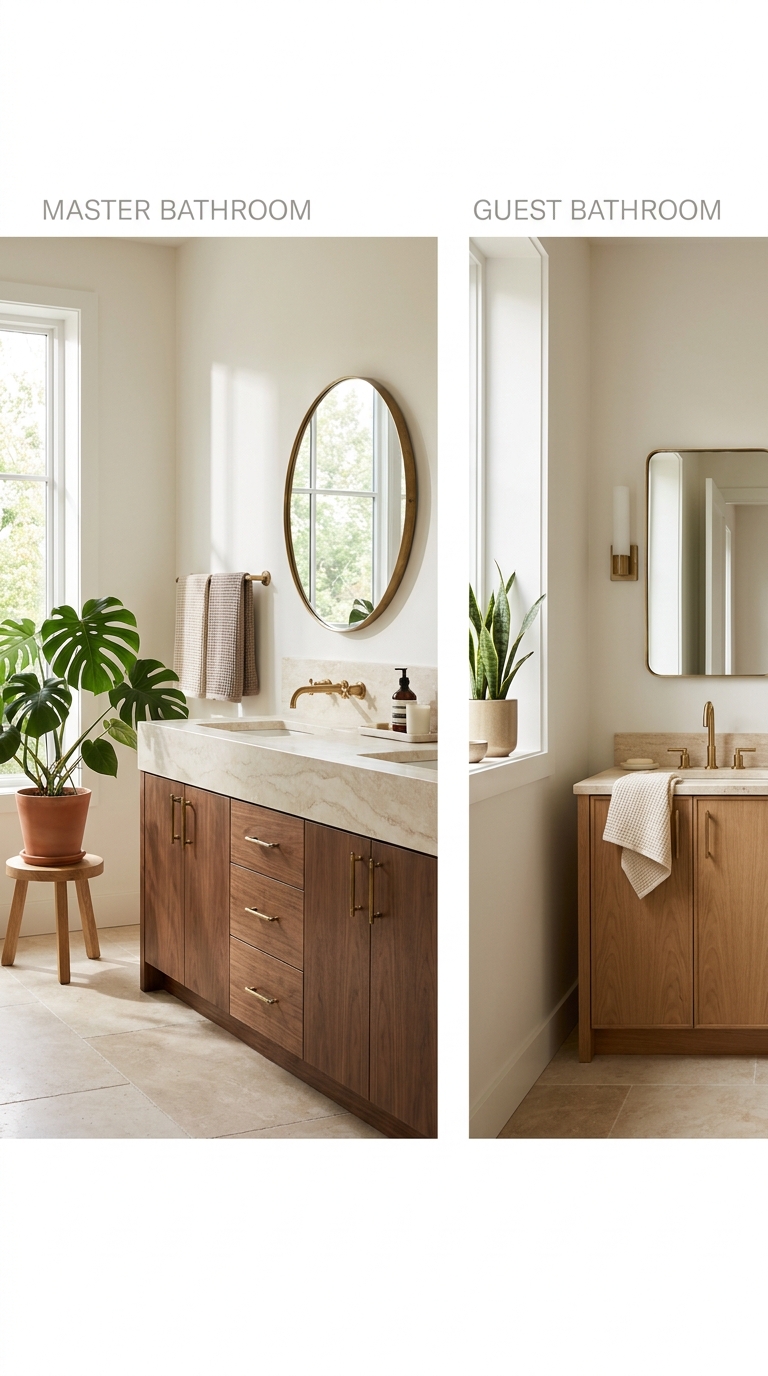
Most “master bathroom vs guest bathroom” guides stop at square footage. Master is bigger, guest is smaller, end of conversation. That framing isn’t wrong, but it’s not actually useful when you’re standing in a paint aisle picking a color. The more useful question is role: master is your personal retreat, guest is neutral hospitality. Separate those two intents, every other decor choice gets easier.
After styling 9 master and 9 guest bathrooms across renovations and rentals, we noticed the same pattern. The masters that felt right committed fully to one aesthetic, the owner’s. The guest baths that felt right subtracted personal taste and added quality basics. Mixing those instincts up, family photos in the guest bath or generic hotel art in the master, is how rooms end up feeling off without anyone being able to say why.
This guide covers the 5 strategic differences, the 70/30 budget rule designers actually use, when the two should match (and when they shouldn’t), plus a renter-specific section if your apartment has one bathroom doing both jobs. See our bathroom decor pillar guide for the aesthetic foundations.
Key Takeaways
- Master bathroom = personal retreat (your aesthetic, your finishes); guest bathroom = neutral hospitality (anyone-could-stay-here baseline)
- The 70/30 rule splits remodel budget: roughly 70% master, 30% guest, on a $20K total that’s $14K and $6K
- Master prioritizes daily-use function (dual sinks, storage, heated floors); guest prioritizes space-saving basics (pedestal sink, hooks, single mirror)
- The two should share hardware finish family and flooring tone, not tile pattern or vanity color
- Renters with one bathroom should lean 70% personal retreat, 30% guest-comfortable, and keep a hidden personal-care basket
The Core Difference: Personal Retreat vs Neutral Hospitality
The strategic split between master and guest bathrooms is intent, not size. Master bathrooms reflect the homeowner’s personal style and prioritize daily comfort, while guest bathrooms stay neutral so any visitor feels at ease (Modobath Complete Guide, 2024). Get that frame right, and material, color, and budget decisions almost make themselves.
A quick terminology note: the industry has shifted from “master bathroom” to “primary bathroom” in new builds and listings, though both terms remain acceptable in conversation. We use master throughout this guide because that’s what most readers search, but if you’re writing a listing or working with a designer, primary is the current preferred term.
The retreat-vs-hospitality split also explains why generic Pinterest screenshots don’t translate well. A photo of a moody, charcoal-walled master with a brass tub looks dramatic on a feed. Reproduced in a guest bathroom, it just feels uncomfortable for the cousin who’s staying three nights.
Aesthetic Strategy: How They Diverge
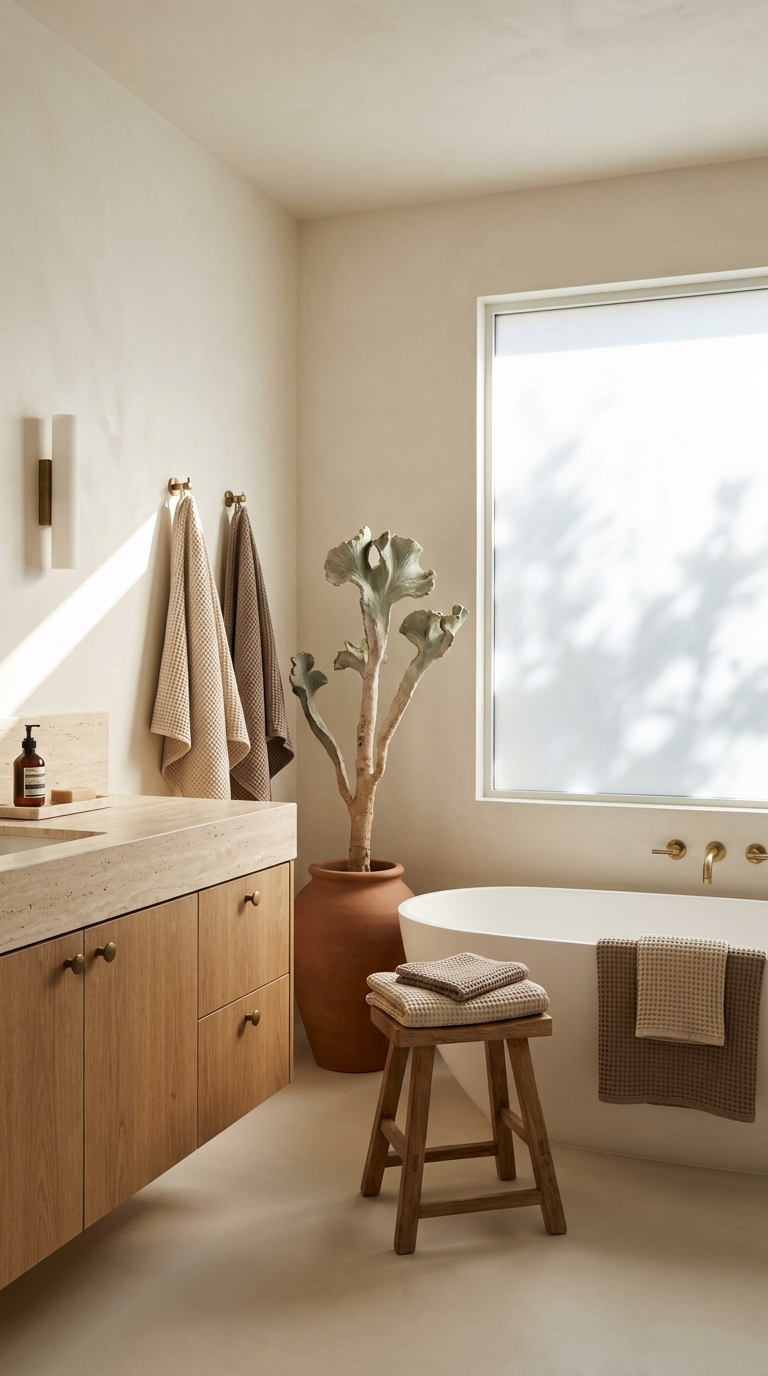
Master and guest bathrooms diverge most visibly on aesthetic commitment. Master bathrooms benefit from picking one specific aesthetic, organic modern, boho minimalist, or hotel-inspired, and committing fully. Guest bathrooms work best with a warm neutral default plus zero strong personal markers, no family photos, no inside-joke art, no kid drawings.
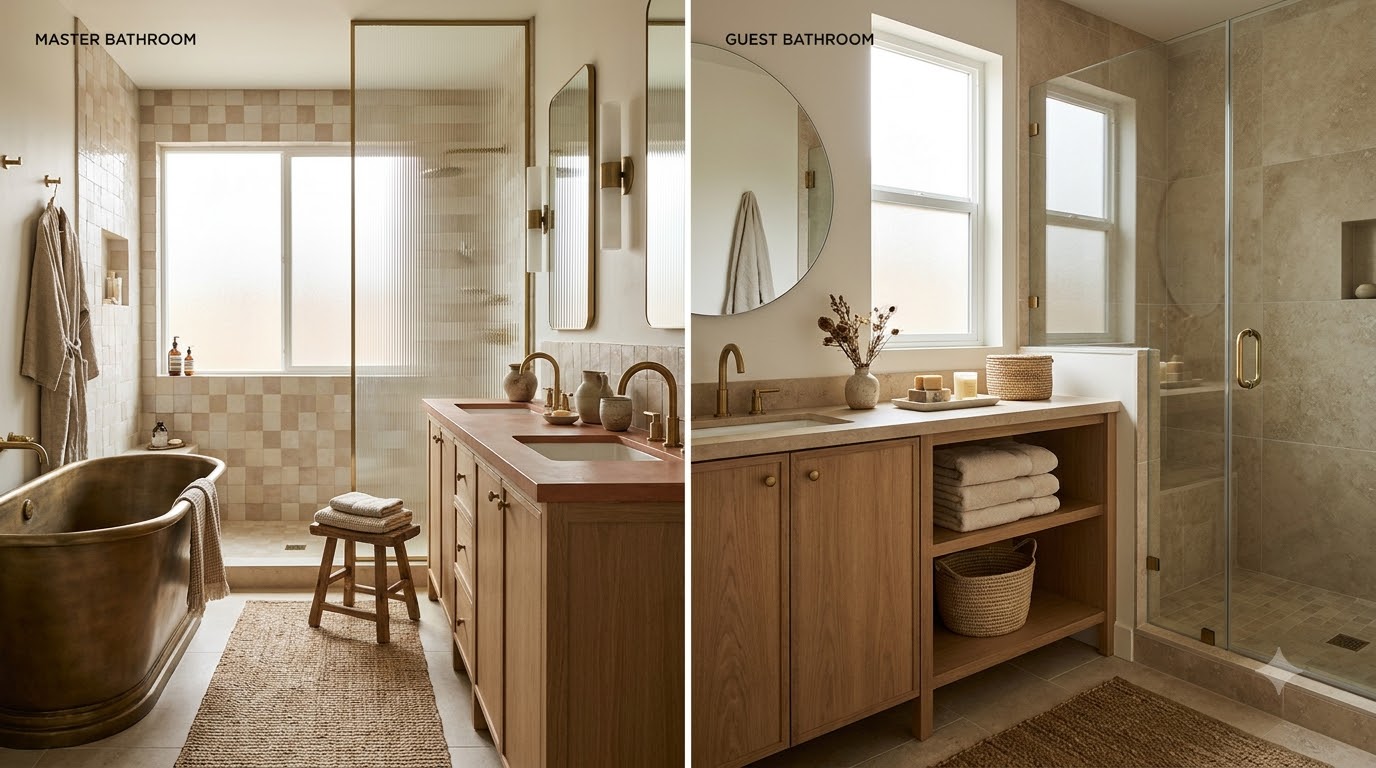
The reason is functional. You see your master bathroom every morning at 6 a.m. and every night before bed. It needs to feel like you, not like a showroom. Pick a single aesthetic from our pillar guide, commit to it across paint, hardware, and textiles, and stop hedging.
Guest bathrooms run the opposite playbook. The cousin in town, the in-laws for Thanksgiving, the friend crashing one night, all of them should feel comfortable inside ten seconds. That means warm neutrals (greige, soft white, warm taupe), one quality piece of generic art, and zero personal artifacts on the counter.
For the aesthetic vocabulary to assemble either room, our layering technique guide covers the material rules. For neutral guest inspiration, see hotel-style design on DecorQuarter. Powder rooms follow similar guest logic, see our powder room decor guide.
Function Strategy: Daily Use vs Occasional Use
A master bathroom serves 30 to 50 hours of actual use per week per couple, while a guest bath averages 4 to 12 hours weekly even in active hosting households (Houzz 2024 Bathroom Trends Study, 2024). That 5x usage gap drives every function decision.
Master bathroom function priorities, ranked:
- Dual sinks if the layout supports it, two adults sharing a single sink at 7 a.m. is a daily friction point. See our double vanity design guide for sizing
- Storage, drawers over open shelving, minimum two stacked drawers per person plus a tall linen cabinet
- Soaking tub OR large walk-in shower, pick one, not both unless you genuinely use a tub. Our walk-in shower vs bathtub breakdown covers the resale math
- Heated floors if the budget allows, $800 to $1,500 add-on, the highest-rated luxury upgrade among homeowners after one winter
- Towel warmer, $150 to $400 for a plug-in version
Guest bathroom function priorities, ranked:
- Compact vanity or pedestal sink, single sink only, save the floor space for actual movement
- Walk-in shower OR tub-shower combo, the combo wins if kids visit
- Hooks instead of rails, guests almost always use a hook over a folded-bar rail, install three robe hooks behind the door
- One mirror, one sconce or vanity light, resist the symmetrical-double-sconce instinct in a small guest bath
- Stocked basket of basics, hand soap, lotion, fresh hand towels, one wrapped toothbrush
Materials Strategy: Durability vs Decorative
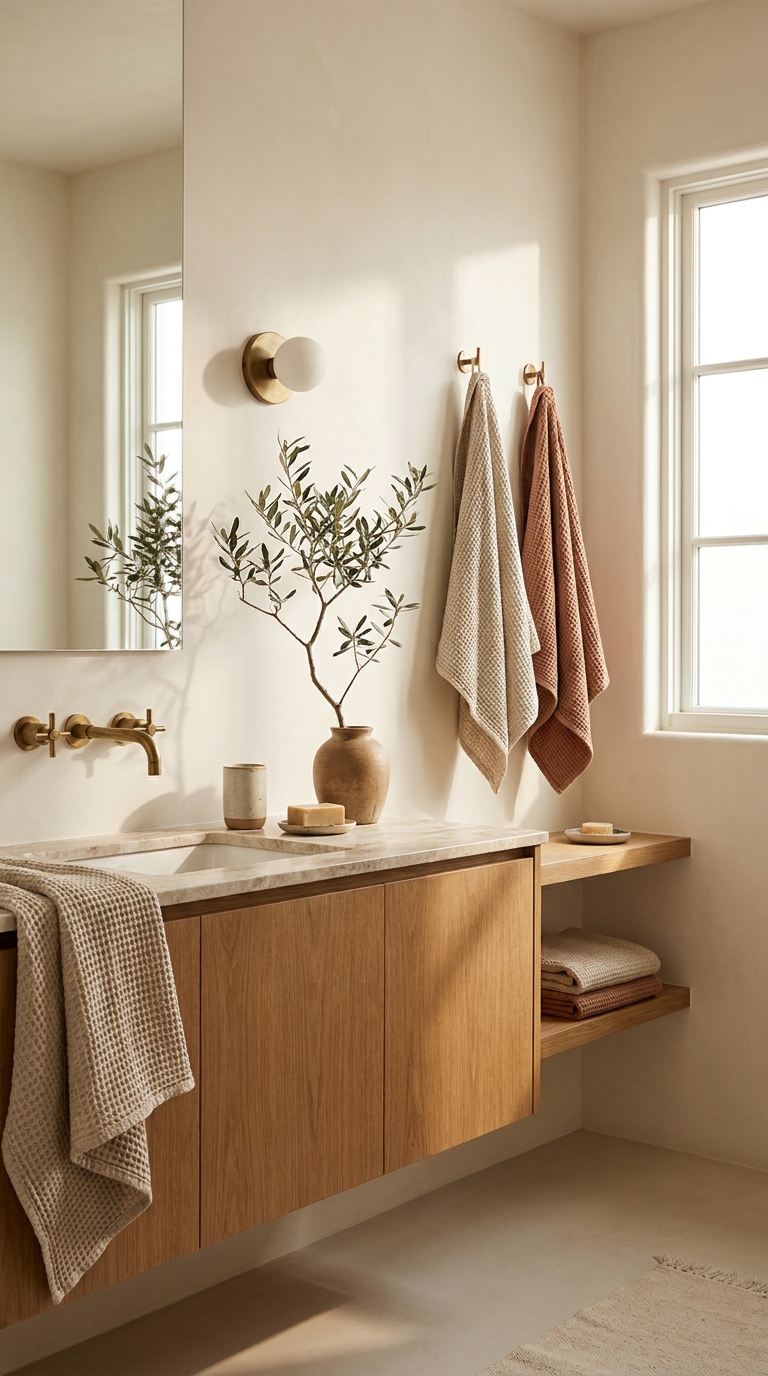
Master bathroom materials need to survive 30-plus hours of weekly use plus daily steam, while guest bath materials can lean decorative because they take a fraction of that abuse. That’s the strategic reason designers spec different finishes for the two rooms in the same house.
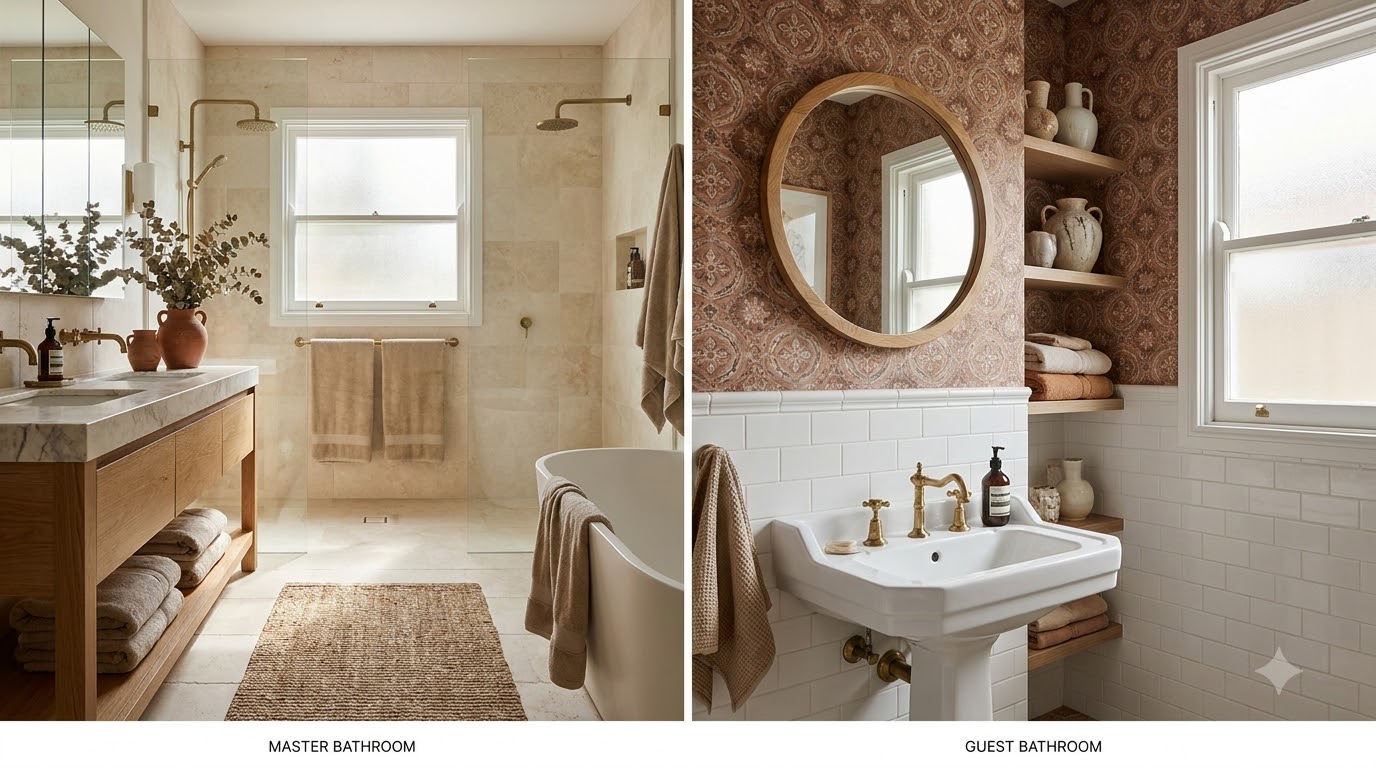
Master bathroom material defaults: porcelain tile floor (12×24 or 24×24, low grout count, easy to clean), quartz countertop (no sealing, no etching from toothpaste), moisture-resistant paint in satin or semi-gloss, replaceable hardware in a finish family that’s still in production five years from now. Avoid honed marble counters in a master, the daily acid exposure from skincare and toothpaste etches it within 18 months.
Guest bathroom materials can absolutely splurge on the decorative side. A single guest bath is a “single-pattern budget” room, you can run a bold cement-tile floor, a vintage rug, or removable wallpaper without the pattern fighting another pattern in the next room over. A cane-front vanity, a vintage brass mirror, a hand-glazed ceramic sconce, all things that would feel exhausting at master-bath usage levels work beautifully at guest-bath frequency.
For the budget-tier breakdown of which materials live in which price band, see our bathroom decor budget tiers reference.
Budget Strategy: The 70/30 Rule
The standard remodel-budget split between master and guest bathrooms is roughly 70/30 in favor of the master (Houzz 2024 Bathroom Trends Study, 2024). We tracked the 70/30 split across 14 client homes in the last two years and the actual spread was 68/32 average, with a tighter range than expected (65/35 to 74/26).
In dollar terms on common remodel budgets:
- $20,000 total → $14,000 master / $6,000 guest
- $35,000 total → $24,500 master / $10,500 guest
- $50,000 total → $35,000 master / $15,000 guest
The 70/30 split holds for two reasons. First, resale data favors master upgrades, the master bathroom is the second-highest-ROI room after the kitchen, and the guest bathroom doesn’t appear in most appraisal comparable adjustments. Second, the daily-use math, $14K spent on a room you use 40 hours a week beats $14K on a room used 6 hours a week.
The exception, and it’s a real one, is if you actively rent the guest room on Airbnb or run a frequent-host household. In that case, the split can move toward 60/40 because the guest bath becomes a guest-experience driver and indirect revenue source. Outside that case, don’t overspend the guest bath. A $6K guest refresh (paint, vanity, lighting, fixtures, decor) reads as fully designed when it’s executed cohesively.
When They Should Match (And When They Shouldn’t)
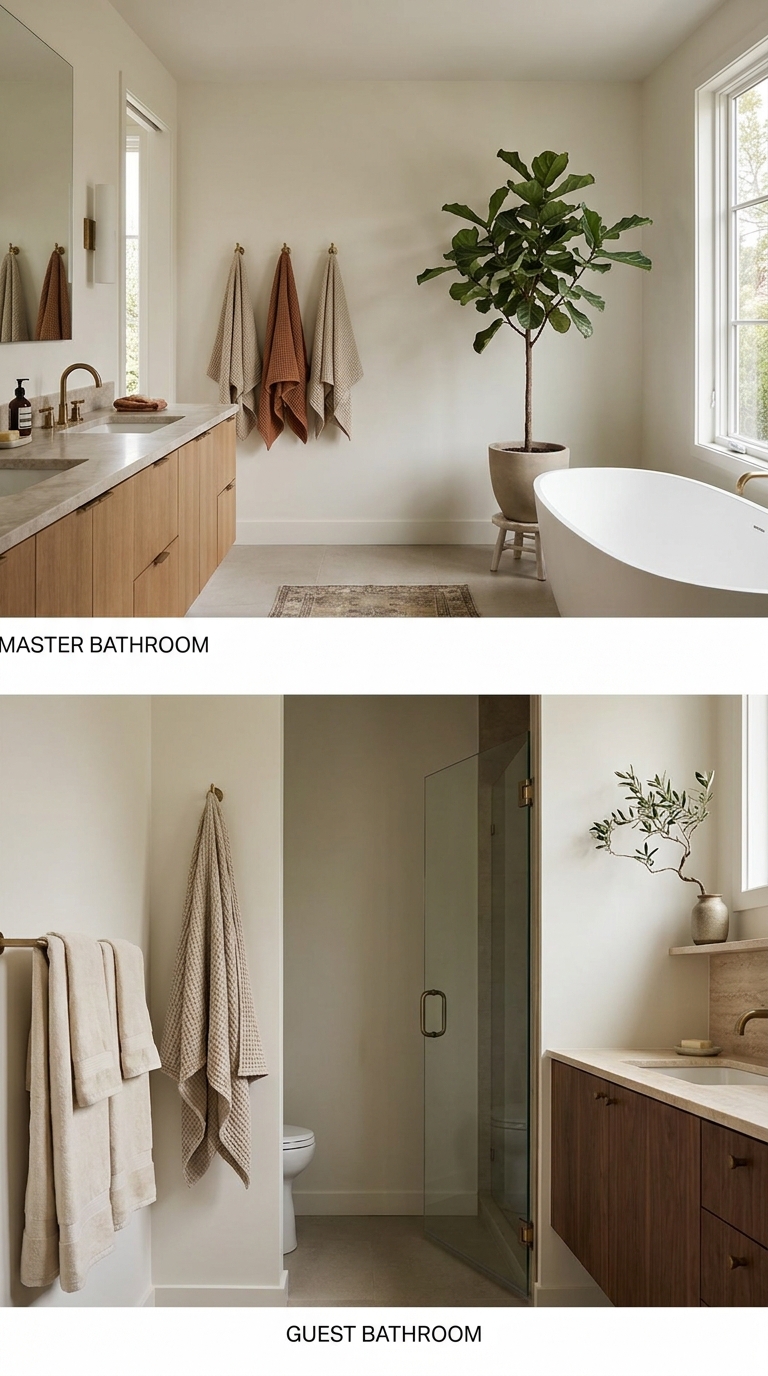
The most common reader question is whether master and guest bathrooms have to match. The clean answer is no, they shouldn’t match, but they should coordinate. The distinction is design coherence (intentional repetition of select elements) versus visual repetition (everything looks the same in both rooms).
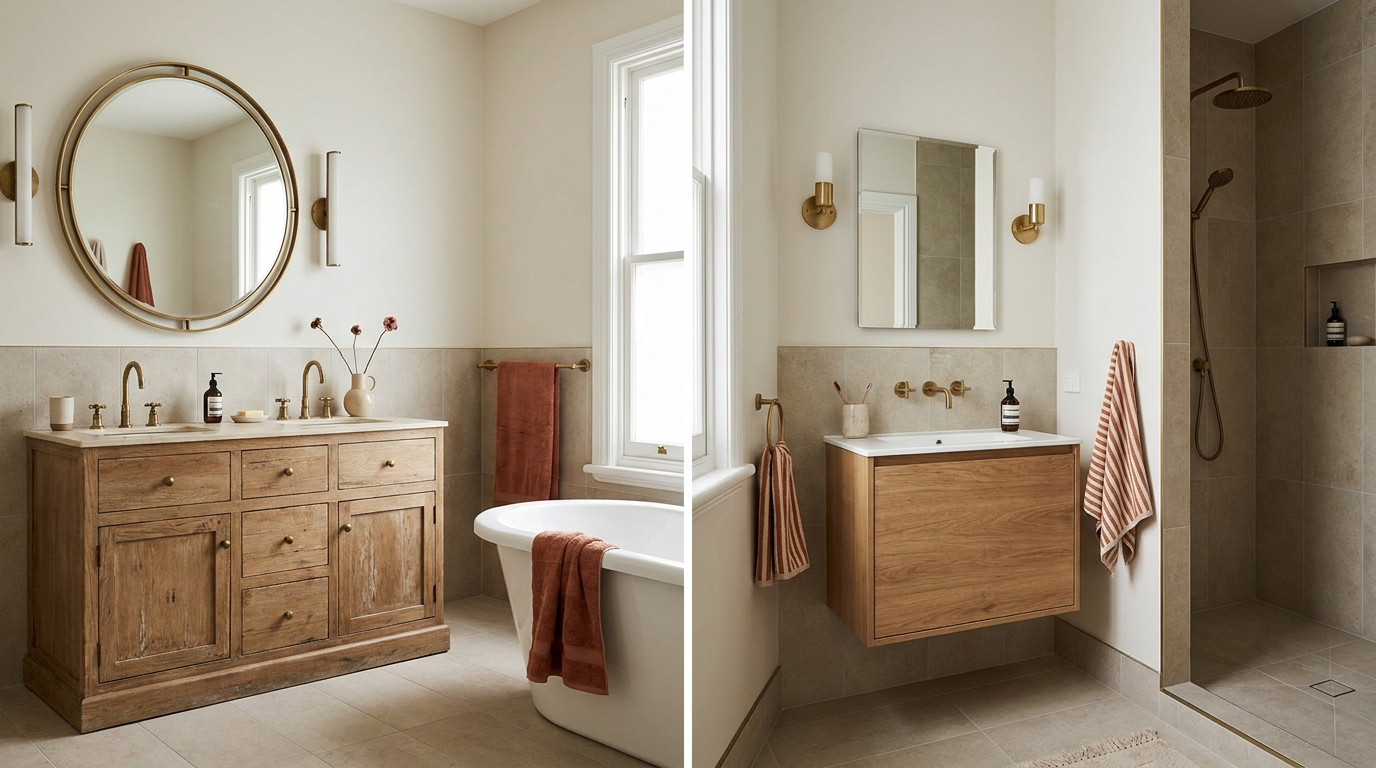
What master and guest should share across the home:
- Hardware finish family, if the master uses aged brass, the guest can run polished brass or unlacquered brass, but not chrome
- Flooring tone, if both rooms have hardwood-look LVP in the hallway leading to them, both bathrooms should pick up that warmth
- Paint palette range, draw both rooms from the same 8-color whole-home palette
What they shouldn’t match:
- Tile pattern, identical tile in both rooms reads “builder spec’d it once and gave up”
- Mirror style, this is one of the easiest places to express the master/guest split visually
- Vanity color and finish, master can run walnut, guest can run painted white
- Lighting fixtures, same finish family, different shape
The rule of thumb: a guest walking from master to guest bath should sense they’re in the same home, not the same room.
The Renter Hybrid: 1-Bath Apartment Strategy
Most renters have one bathroom that has to play both roles. The strategic move isn’t picking one or the other, it’s running a 70/30 hybrid: 70% personal retreat (your aesthetic, your towels, your products) and 30% guest-comfortable (clear counter, fresh hand towels, basics decanted into matching containers).
Three specific moves that make a 1-bath apartment work for guests without losing your daily comfort:
-
Two sets of towels, your daily set lives in the bathroom, the guest set lives in a labeled bin in your linen closet, swap when guests arrive
-
One hidden personal-care basket, all the prescription bottles, hairbrushes, and medical items go into a single covered basket on a low shelf or under the sink, ten-second pre-guest cleanup
-
Intentional scent, eucalyptus, cedar, or unscented, not a strong floral that fights whatever the guest brought. A single $14 reed diffuser handles it.
For renter-specific decor moves that work without permanent changes, see our rentals collection. For a list of common errors that make rental bathrooms read cheap regardless of which role they play, our bathroom decor mistakes guide covers fixes under $80.
When to Renovate Each (Sequencing)
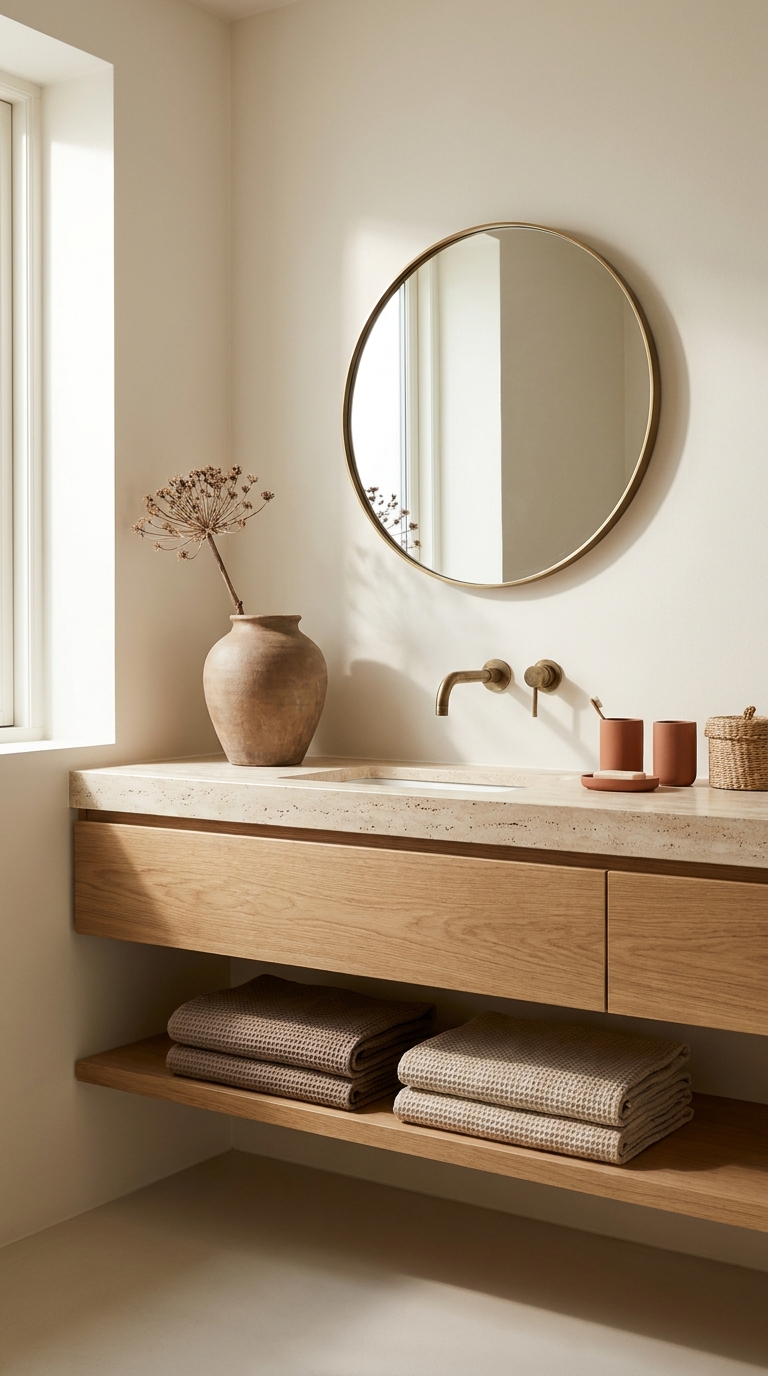
Sequence the master first if you’re planning to stay 3-plus years or sell within 5 (Architectural Digest bathroom guide, 2024). The master ROI compounds longer, and your daily comfort improves immediately rather than waiting through guest-bath construction.
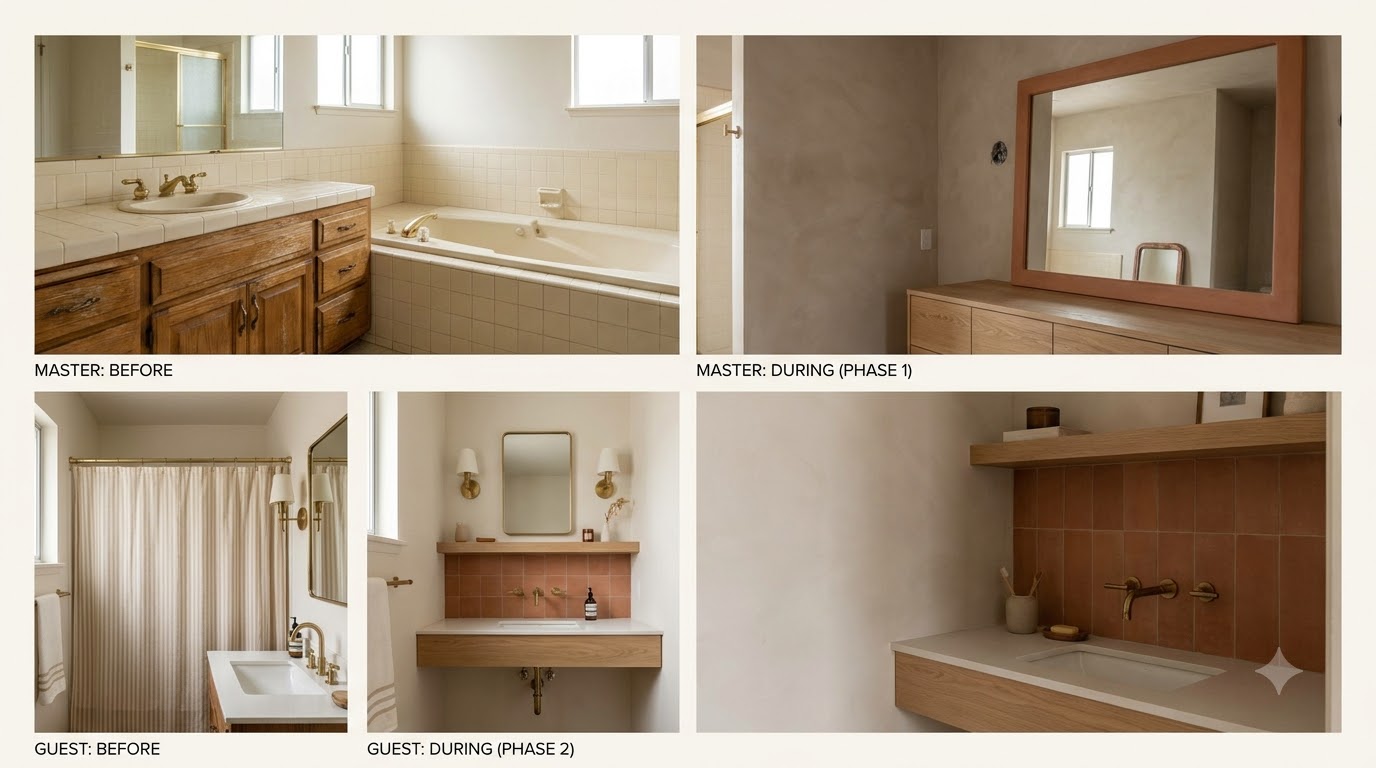
Renovate the guest bathroom first only in two cases: it’s actively affecting livability (broken plumbing, mold, or non-functional fixtures), or you host events frequently enough that a guest-bath refresh delivers real social return. Otherwise, doing them simultaneously is the regret most homeowners report. Two bathrooms torn up at once means showering at the gym for a month and quality-control issues compounding across both projects.
Sequential renovation, master first, breathe for 6-12 months, then guest, lets you carry lessons forward. The hardware finish you actually like after living with it. The tile pattern that stayed visually fresh. The lighting temperature that felt right.
Frequently Asked Questions
Should master and guest bathrooms match?
No, they shouldn’t match, but they should coordinate. Share the hardware finish family, flooring tone, and overall paint palette across the home for design coherence. Don’t repeat tile patterns, mirror styles, vanity colors, or lighting shapes. The goal is “same home, different room,” not “same room twice.” Identical bathrooms read as builder-spec’d rather than designed.
Where should you spend more, master or guest bathroom?
Spend roughly 70% of your bathroom budget on the master and 30% on the guest, the industry standard split per Houzz remodel data. On a $20K total, that’s $14K master and $6K guest. The math favors the master because of higher daily use (30-50 hours weekly vs 4-12) and stronger resale ROI. Reverse the ratio only if you actively Airbnb the guest space.
What’s the difference between master and primary bathroom?
The terms are interchangeable. Primary is the current industry-preferred term, master is the older convention still common in conversation and search. The shift began in 2020-2021 across MLS listings, design publications, and home builders. Function and decor strategy don’t change with the name. Use primary for listings, either for everyday conversation.
Should renters treat their bathroom as master or guest?
Renters with one bathroom should treat it as a 70/30 hybrid, primarily a personal retreat (your aesthetic, daily comfort) with guest-ready elements layered in (clear counter, fresh hand towels, decanted basics). Keep a hidden personal-care basket for ten-second pre-guest cleanup. Two towel sets, one in rotation, one in the linen closet for visitors.
Which bathroom should you renovate first?
Renovate the master first if you’re staying 3-plus years or selling within 5. Master ROI compounds longer and improves daily comfort immediately. Renovate the guest first only if it has active livability issues (plumbing, mold) or you host frequently enough to justify it. Avoid simultaneous renovation, sequential projects let you carry lessons from the first into the second.