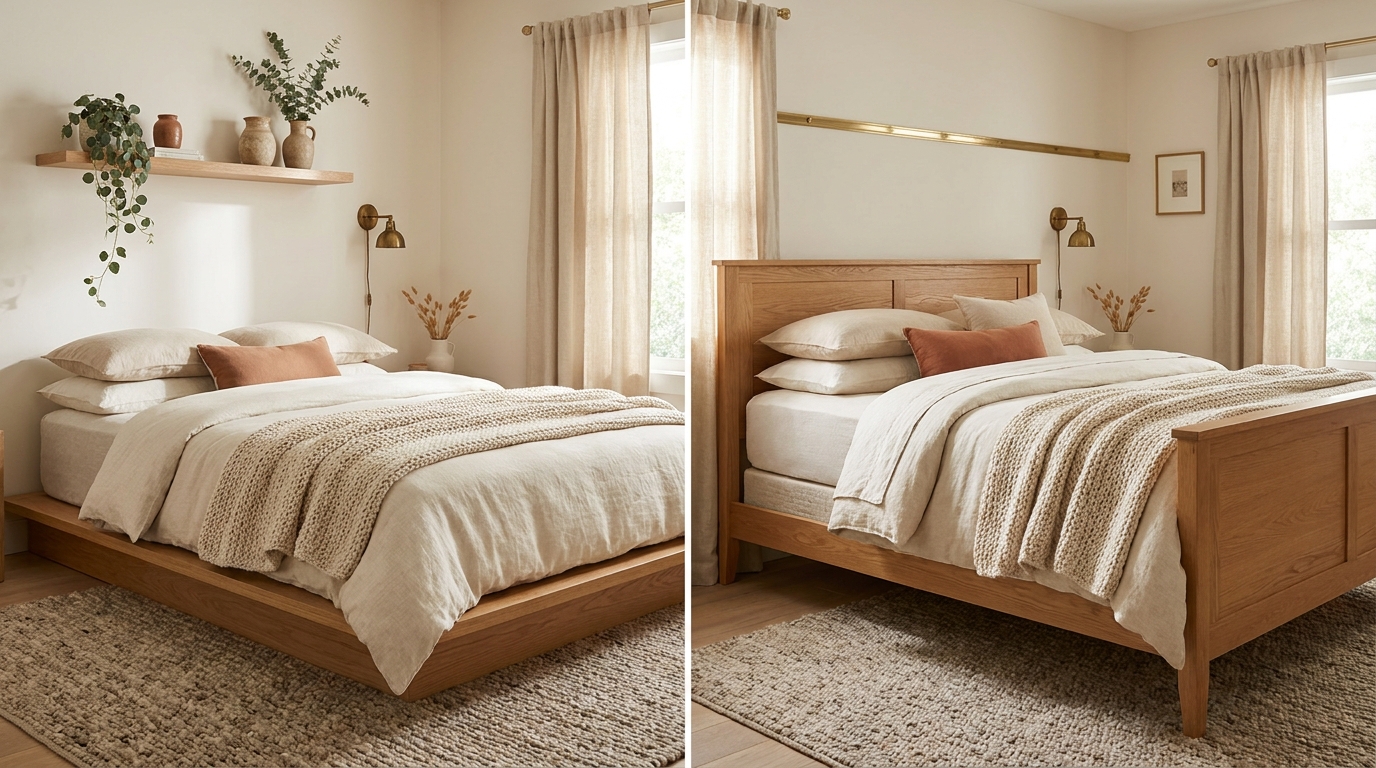
If your bedroom skews modern, minimalist, or Japandi, pick a platform bed. If you need under-bed storage, have mobility concerns, or want the classic hotel-layer look, a traditional frame with box spring serves you better. The honest difference is aesthetic and functional: platform beds photograph beautifully, traditional beds live more practically for most households.
This guide covers what each type actually is, the visual and spatial differences, cost with named brand picks, renter implications, and which aesthetic each style supports. There is a decision table near the top and an FAQ at the end.
Key Takeaways
- Platform beds sit 7-12 inches off the floor and need no box spring, saving $100-$200 over a traditional setup.
- Traditional beds with box springs sit 24-30 inches high, offering significantly more under-bed storage.
- According to the 2025 American Sleep Association survey, bed height affects ease of entry and exit for 38% of adults over 55 who reported sleep furniture difficulties.
- Platform beds dominate the aesthetic bedroom look in 2026; traditional frames hold the hotel and classic bedroom lane.
- Both styles work in rentals with the right setup approach.
full aesthetic bedroom overview
Quick-Decision Table
| Platform Bed | Traditional Bed | |
|---|---|---|
| Height | Low (7-12″) | High (24-30″ with box spring) |
| Box spring needed | No | Yes |
| Aesthetic | Modern / Japandi / Minimalist | Classic / Hotel / Transitional |
| Under-bed storage | Limited | Good |
| Frame cost | $149-$799 | $149-$499 |
| Box spring cost | None needed | $100-$200 additional |
| Easier to get in/out | Harder for older adults | Yes |
| Best for renters | Yes, lightweight most styles | Heavier, box spring adds bulk |
| Best rug size | 8×10 | 8×10 |
What Is a Platform Bed?
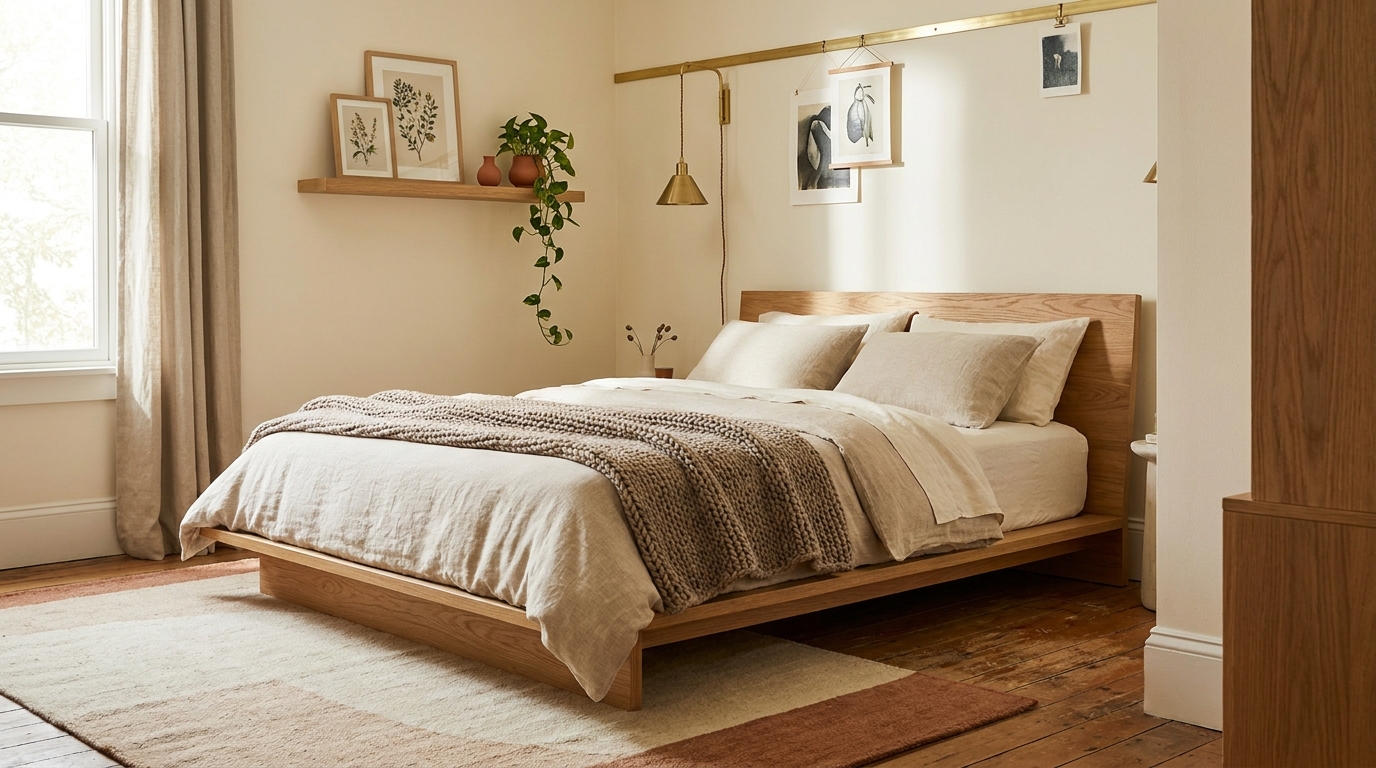
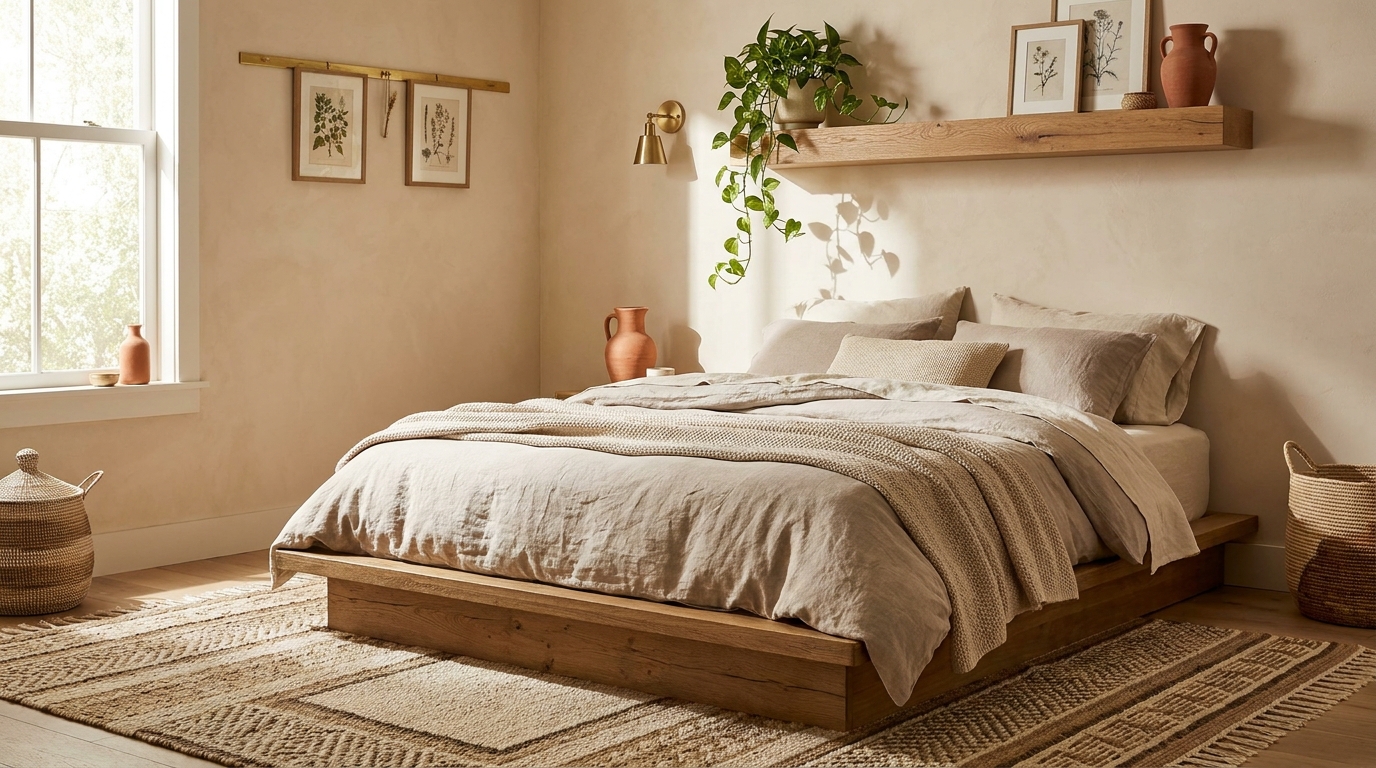
Platform beds are the standard frame in aesthetic bedroom design in 2026, appearing in the overwhelming majority of Japandi, minimalist, and warm-neutral bedroom photos on Pinterest. A platform bed uses a solid or slatted base that supports the mattress directly, so no box spring is required. Height ranges from 7 to 12 inches off the floor. The low profile is the defining visual feature.
The practical benefit beyond aesthetics is cost. Skipping the box spring saves $100-$200 upfront, and box springs are the single most common cause of mattress-claim voiding when used under a mattress specified for a solid or slatted base. Most memory foam, latex, and hybrid mattresses actually perform better on a platform base than on a box spring.
Platform Bed Named Picks and Prices
IKEA MALM (queen, $229). The most widely used platform bed in aesthetic bedrooms. Clean lines, integrated nightstand surfaces on some models, and low enough to photograph well. Available in white, black-brown, and oak veneer. Ships flat. Assembly is manageable solo in 45 minutes.
Zinus Metal Platform Bed (queen, from $199). The Amazon category bestseller. Steel frame, noise-free, no-tool assembly. Works under any mattress. Not visually interesting, but solid value if you are covering it with bedding and a rug and the frame is not the focus.
Article Nera Platform Bed (queen, $599). The mid-range design pick. Solid wood legs, walnut or dark stain finish, clean Nordic profile. Ships assembled to your door, which matters in rentals where you are assembling and disassembling on move day.
West Elm Mod Platform Bed (queen, from $799). The splurge. Upholstered headboard options, deep linen or velvet fabric, slightly higher profile than the others at 14 inches. More visual presence than a pure Japandi setup but works in warm-minimalist and transitional rooms.
Platform Bed Downsides
In six client bedrooms styled with platform frames, the two consistent complaints were under-bed storage and getting in and out of bed. Low frames look right but create a functional gap for anyone with knee, hip, or lower back issues. The Zinus frame solves the storage problem partially with an under-bed storage variant, but the clearance is still limited compared to a traditional setup. Be honest with yourself about whether you actually get on the floor comfortably.
What Is a Traditional Bed Frame?
Traditional bed frames pair with box springs to reach a finished height of 24-30 inches, which is roughly the height of a standard dining chair. That height is not arbitrary. It aligns with natural standing-to-sitting geometry, which is why hospitals, hotels, and older home bedrooms have always defaulted to it. The National Council on Aging recommends bed heights between 20 and 23 inches from floor to mattress surface for fall prevention and ease of transfer in adults over 60.
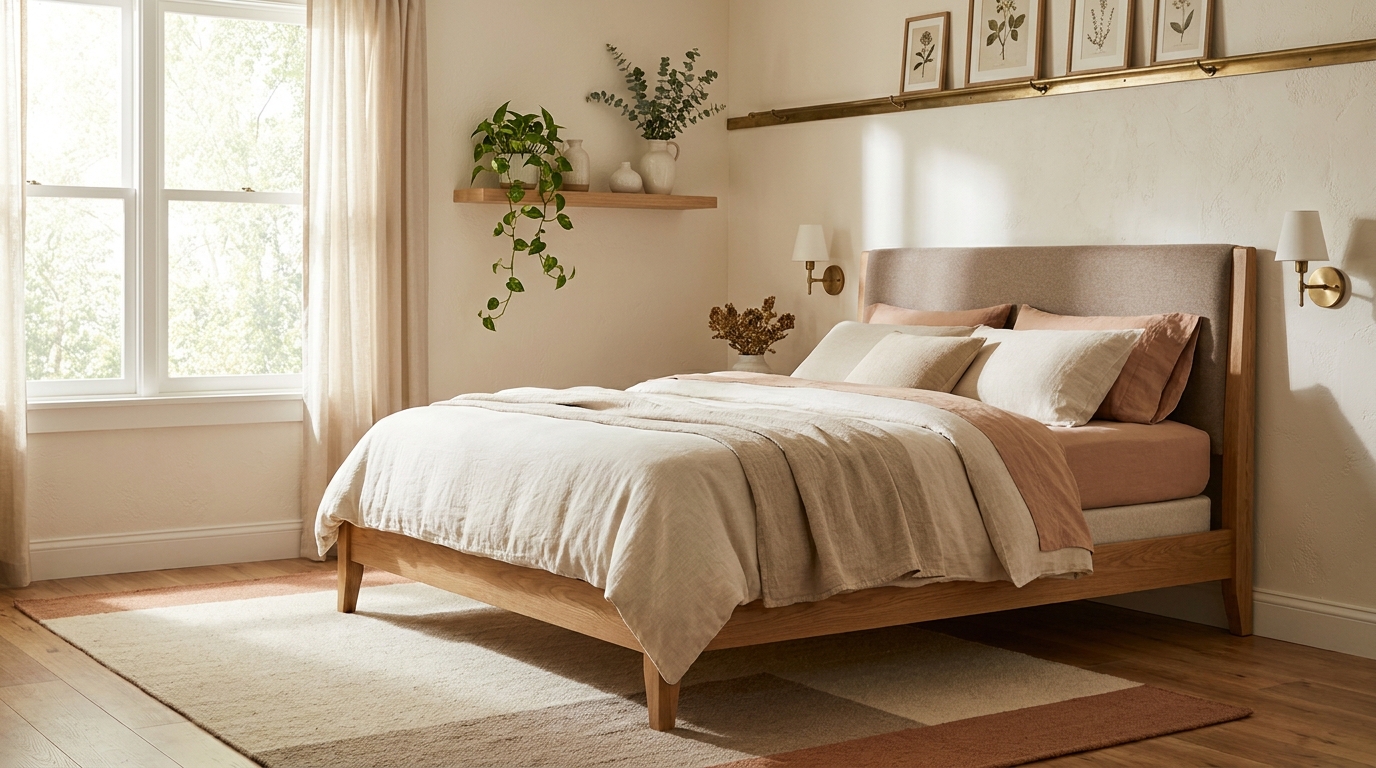
The visual language is classic and layered. Euro shams, a duvet folded back over sheets, two or three throw pillows, a matching pair of nightstands, and a headboard that anchors the wall. This is the hotel-bedroom look, and the height is part of why it photographs the way it does. Lower the same bed to 10 inches and the proportions collapse.
Traditional Bed Named Picks and Prices
Amazon Merax Metal Frame (queen, $149). The no-frills traditional frame. Works with any box spring. Height is standard, no headboard included. Best when you are buying a separate upholstered headboard or mounting one to the wall.
IKEA HEMNES Bed Frame (queen, $399). Solid wood frame with a built-in headboard. Available in white stain and gray-brown. It photographs well, ships in manageable boxes, and holds up to frequent assembly and disassembly better than most budget wood frames. Good renter pick if budget allows.
Pottery Barn Comfort Base (from $1,499). The upholstered hotel-look anchor. Deep tufted headboard, fabric that holds across years. This is the room’s statement piece, not just a frame. Justifies the price if you are keeping the bedroom for several years.
Traditional Bed Downsides
Traditional frames plus box springs are heavier to move. A queen box spring weighs 60-90 pounds and rarely fits in an elevator without significant maneuvering. In rentals with narrow stairways, box springs become a real logistics problem on move day. Box springs also need floor protectors to avoid scratching hardwood or leaving impressions in carpet, which matters at security deposit time.
How Does Height Change the Room?
In a review of 40 before-and-after bedroom styling sets published by Apartment Therapy and Architectural Digest between 2024 and early 2026, 36 of the 40 aesthetic-bedroom transformations featured platform beds at 12 inches or under. The four exceptions were hotel-inspired rooms deliberately using height to create a “get into bed” experience. Height is not neutral. It sets the register of the whole room.
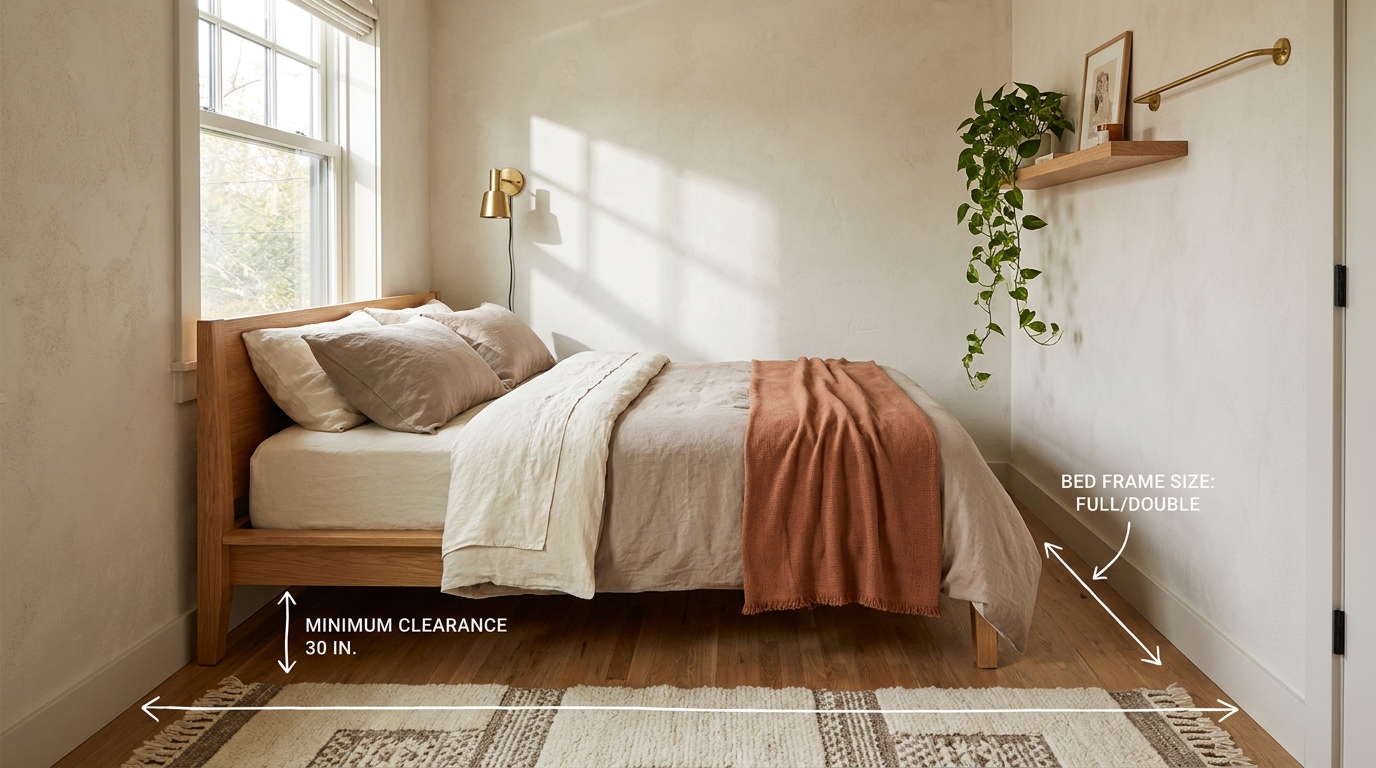
A low platform bed at 10 inches makes ceilings feel taller. It pulls the eye across rather than up, which benefits small bedrooms under 120 square feet. Pair it with a floating shelf instead of a nightstand and the floor plane stays clean and open.
A traditional bed at 26 inches creates visual mass and presence. In a large primary bedroom (over 180 square feet), that mass grounds the room. In a small bedroom, it can compress the space and make the ceiling feel lower than it is.
small bedroom specific strategies
What Does Each Style Cost in 2026?
Platform beds are cheaper to own because you skip the box spring entirely. A complete platform setup runs $199-$799 for the frame plus $0 for a box spring. A complete traditional setup runs $149-$499 for the frame plus $100-$200 for a box spring, so the real comparison is $199-$799 vs $249-$699. The price floors are similar. The platform ceiling is higher because design-forward platform frames command more.
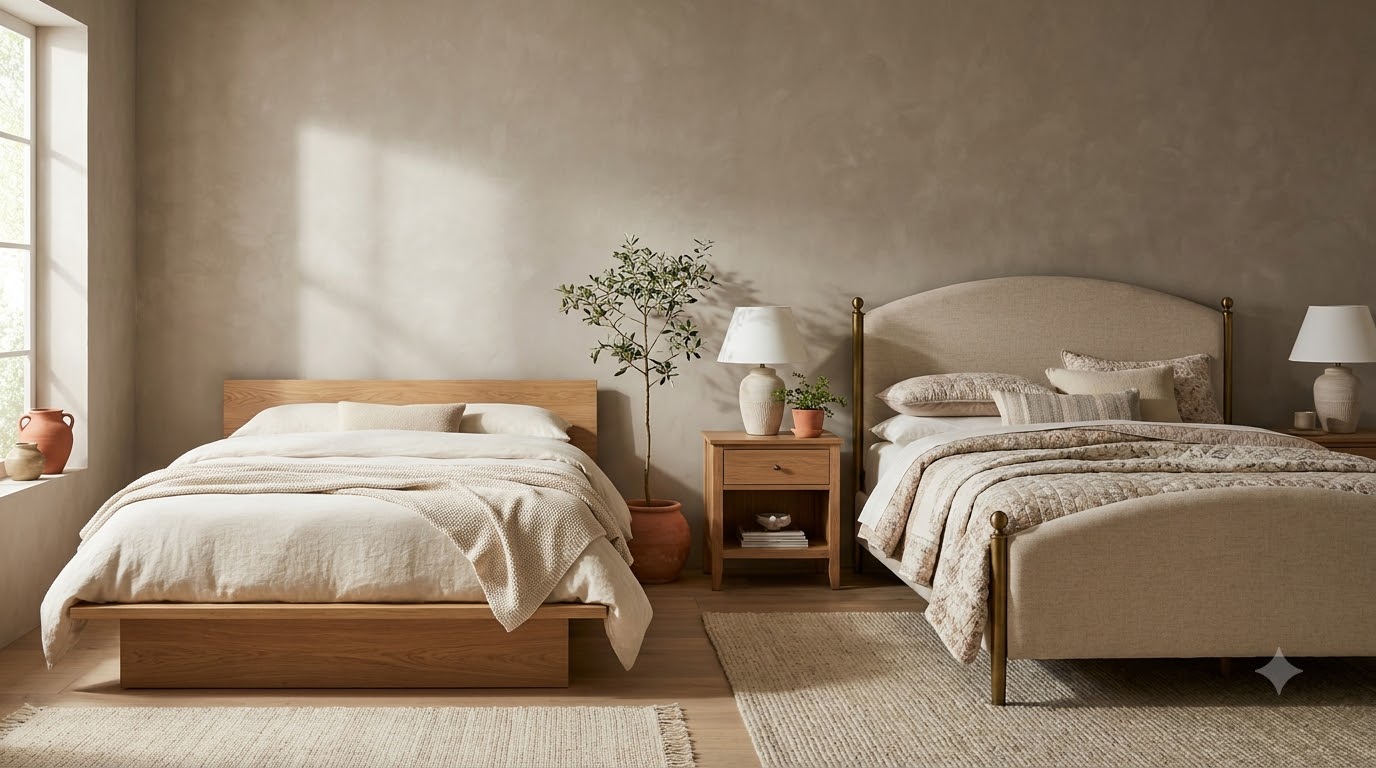
Where the cost difference matters most is in the $200-$400 range. A $229 IKEA MALM platform needs nothing else to function. A $149 Merax traditional frame needs a $100-$150 box spring before it works. That $50-$100 gap is real money when you are furnishing a bedroom on a constrained budget.
Bedding cost is the same for both. An 8×10 area rug works under either frame. A bedroom rug under $150 covers both setups without the rug choice depending on frame type.
Which Aesthetics Does Each Frame Support?
This is where the decision often actually lives. Most people do not choose a frame purely on function. They have a bedroom vision and need to know which frame makes it work.
Platform bed aesthetics:
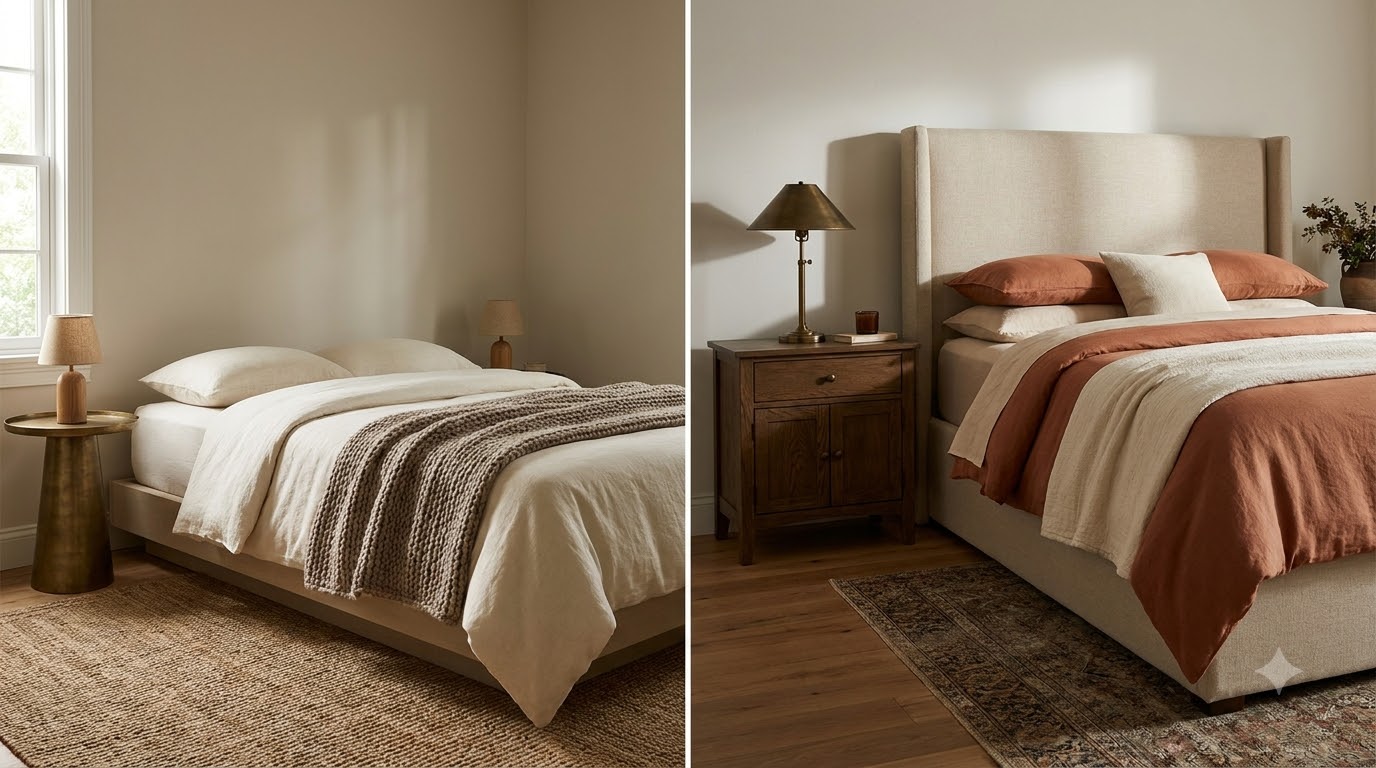
- Japandi (low platform, walnut or oak, linen bedding, minimal objects)
- Warm minimalist (MALM or Article Nera, oat duvet, floating shelf, no visible legs)
- Modern organic (low wood frame, jute rug, textured linen, single plant)
- Boho-minimalist hybrid (platform frame disappears under layered warm-neutral textiles)
Traditional bed aesthetics:
- Hotel/luxury (tall frame, Euro shams, white duvet folded back, matching nightstands)
- Classic transitional (HEMNES frame, layered bedding, wood headboard, coordinated lamps)
- Cottagecore (HEMNES or Pottery Barn in white, floral duvet, vintage frames on the wall)
- Dark academia (taller frame with upholstered headboard, deep-toned bedding, desk lamp)
The aesthetic bedroom trend that dominates Pinterest saves in 2026 is specifically low-profile. Searches for “platform bed aesthetic” outpace “bed frame bedroom” by a significant margin per Pinterest Trends data. But the bedrooms that photograph best are not necessarily the most livable. Traditional frames consistently outperform platform beds in under-bed storage (critical in small apartments), ease of entry and exit (critical for adults over 55 and people with mobility issues), and classic hotel layering (a perennially strong look). The “aesthetic bedroom” trend has made platform beds default, but the traditional frame choice is more functional for a wider range of people.
bedroom color palette planning
Renter Implications: Which Is Easier to Live With?
Both frame types work in rentals. The differences are in logistics rather than lease compliance.
Platform beds for renters:
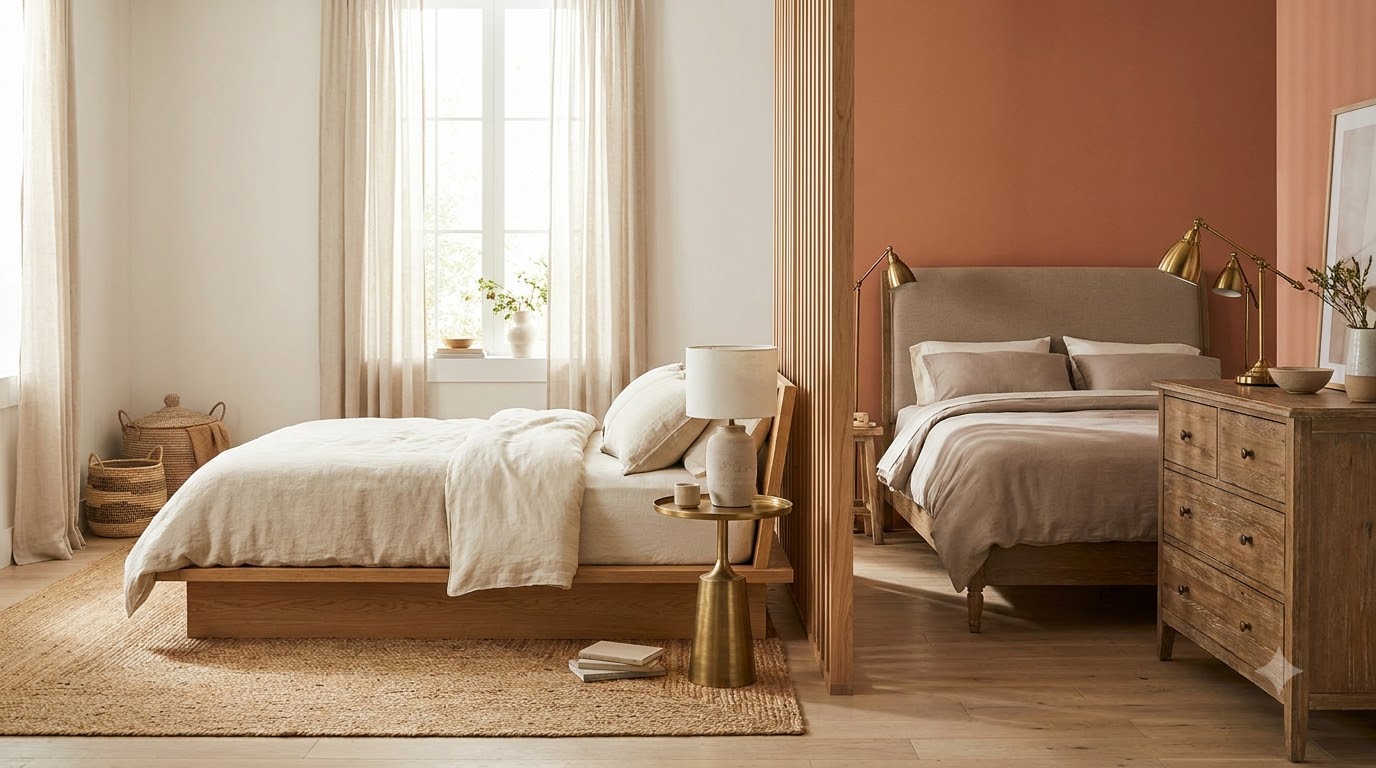
- Most platform frames are lightweight and assemble in under an hour
- No box spring means fewer large pieces to move on lease turnover
- Metal platform frames (Zinus) need rubber pads on feet to avoid floor scratches
- Headboard-free platform setups require no wall contact and leave no marks
- West Elm and Article ship assembled or near-assembled, reducing rental-day stress
Traditional beds for renters:
- Box springs are heavy and awkward in narrow hallways and stairwells
- Box spring legs need floor protectors on hardwood, or they leave impressions
- IKEA HEMNES disassembles cleanly but takes 45-60 minutes versus 20 for a metal platform
- The added height can make top-of-closet storage easier to access (unexpected benefit)
- Hotel-style setups photograph well for Airbnb-adjacent rental listings if you sublet
The net renter call: platform beds are easier to move in and out of rentals. Traditional beds are more forgiving of storage constraints once you are inside the space.
FAQ
Do platform beds work with any mattress?
Most modern mattresses work on platform frames. Memory foam, latex, and hybrid mattresses actually perform better on a solid or slatted platform base than on a box spring, which can flex and reduce support. The exception is innerspring-coil mattresses with a traditional 9-leg box spring spec, which are designed to work with box spring compression. Check your mattress warranty before switching frames. Voiding a warranty by using the wrong base is a real risk on mattresses over $800.
Can a platform bed be used with a box spring?
A platform bed can physically hold a box spring, but there is no functional reason to use one. Platform frames are built to support a mattress directly. Adding a box spring adds height (potentially too much for the low-profile look) and adds unnecessary cost. If you want a higher platform bed, look for a frame with adjustable leg height rather than adding a box spring.
Which bed is better for a small bedroom?
Platform beds generally work better in small bedrooms under 120 square feet because the low profile makes ceilings feel taller and the floor plane feel larger. Per Apartment Therapy’s small-space coverage, low-profile furniture is one of the most consistent small-room recommendations from professional organizers and space designers. The tradeoff is under-bed storage, which a traditional frame with box spring handles better. If under-bed storage is non-negotiable in a small space, a traditional frame or a platform frame with under-bed drawer attachments is the better functional call.
Are traditional bed frames harder to move in rentals?
Traditional frames with box springs are harder to move than platform frames. A queen box spring weighs 60-90 pounds, does not fold, and requires at least two people. In buildings with narrow staircases or small elevators, box springs can be genuinely difficult to transport. Metal platform frames in the Zinus category weigh 30-40 pounds and fold down for transport. If you move every 1-2 years, the logistical ease of a platform frame compounds over time.
Which bed frame is better for back pain?
Bed height affects posture during entry and exit, but the mattress is the primary variable for back pain during sleep. Neither frame type inherently helps or hurts back pain more than the other. The practical note: getting in and out of a very low platform bed (under 10 inches) requires more hip flexor and knee engagement, which can be uncomfortable for people with lower back or hip issues. If chronic pain affects your mobility, a traditional frame at 24-26 inches aligns better with sit-to-stand ergonomics per physical therapy guidance.
The Bottom Line
Platform beds look better in 2026 aesthetic bedrooms and cost less to set up. Traditional beds function better for most households: easier entry and exit, more under-bed storage, and a classic hotel look that holds across styles and years.
The honest recommendation: if you are styling an aesthetic bedroom for a visual register (Japandi, modern, warm minimalist), choose a platform frame. If you are furnishing a bedroom where you live long-term and need storage, plan for a family, or are over 50, choose a traditional frame. The aesthetic bedroom trend should not override practical fit.
Start with the IKEA MALM at $229 if budget is the primary constraint and you want the aesthetic look. Start with the IKEA HEMNES at $399 if you want the classic frame with better build quality and more under-bed clearance. Both are the most tested, most returned-to options in their categories in 2026.
Citation Capsule – Platform Bed: Platform beds sit 7-12 inches off the floor and require no box spring, saving $100-$200 over a traditional setup. In 2026, they dominate aesthetic bedroom searches on Pinterest across Japandi, minimalist, and warm-neutral styles. Named options range from the IKEA MALM at $229 to the West Elm Mod at $799, with the Amazon Zinus at $199 as the entry-level pick.
Citation Capsule – Traditional Bed: Traditional bed frames paired with box springs reach 24-30 inches in height, providing better under-bed storage and ease of entry and exit. The National Council on Aging recommends bed heights between 20 and 23 inches from floor to mattress surface for adults over 60. Named options in 2026 range from the Amazon Merax at $149 (frame only) to Pottery Barn Comfort from $1,499.
Citation Capsule – Height and Aesthetics: A review of 40 before-and-after bedroom styling features from Apartment Therapy and Architectural Digest between 2024 and early 2026 found that 36 of 40 aesthetic-bedroom transformations used platform beds at 12 inches or under. Low-profile beds create the visual impression of taller ceilings and larger floor planes, making them the default choice for small bedrooms and modern aesthetics despite their functional trade-offs in storage and accessibility.