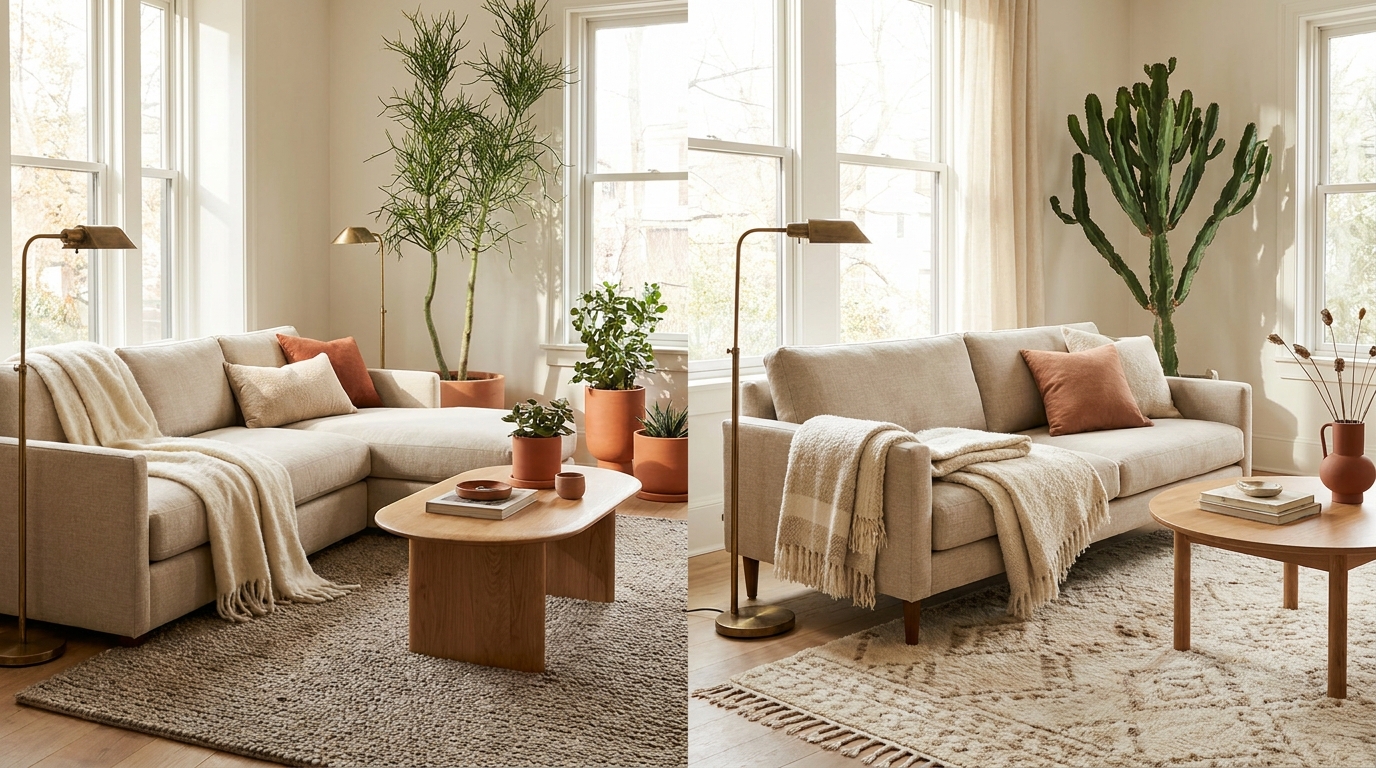
The honest answer: a standard sofa wins for rooms under 300 square feet and for renters who move every year or two. A sectional wins for households that genuinely lounge together, watch TV as a group, or have the floor space to absorb it. Most guides pick a side and sell you on it. This one gives you the framework to pick for yourself.
The two questions that cut through the noise are space and behavior. How many square feet does your living room have, and how does your household actually use that space? A single person working from home in a 400-square-foot apartment uses a living room differently than a family of four watching three hours of television most evenings. The right answer changes completely depending on that second variable, and almost nobody asks it.
cozy living room complete guide
Key Takeaways
- Rooms under 300 sq ft almost always work better with a standard sofa. Sectionals need at least 12×12 ft for an L-shape to function without blocking traffic.
- Renters who move frequently should default to sofas. Most sectionals don’t fit through apartment doors without disassembly, and modular pieces often get lost.
- The sofa-plus-chaise hybrid is the overlooked middle option for 200-350 sq ft rooms: more seating than a sofa, far more movable than a sectional.
- Sectionals win on seating capacity and lounging comfort for households that use the living room heavily (Apartment Therapy, 2025).
- Cost floors are similar. Quality sofas and entry sectionals both start around $600-$800, but modular sectionals let you spread the spend over time.
When Is a Sofa the Right Choice?
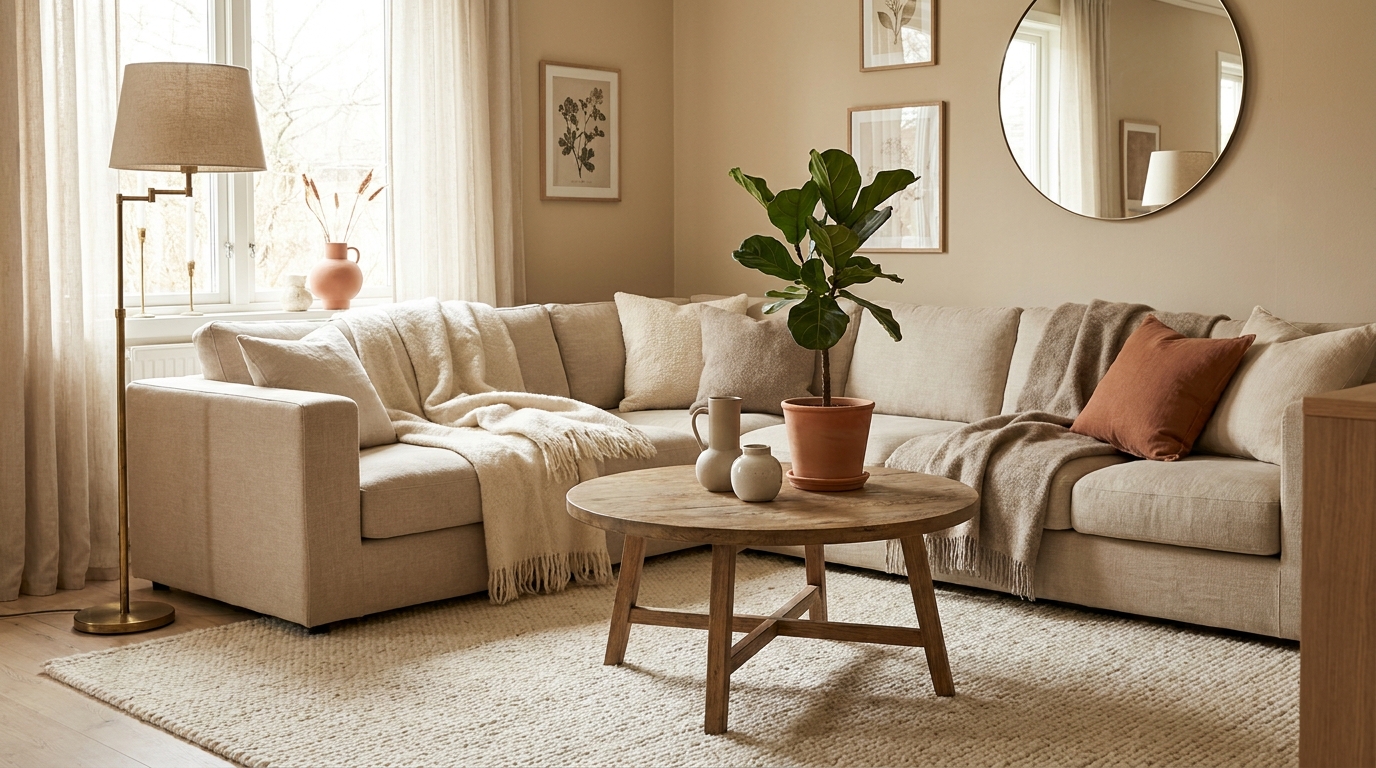
A standard sofa suits rooms under 250 square feet without compromise, and that covers a large share of renter living rooms in the US. Apartment List data shows the median one-bedroom apartment in major US cities sits between 700 and 750 square feet total (Apartment List Renter Survey, 2025), meaning the living zone often runs 150 to 250 square feet once the kitchen, entry, and bedroom are subtracted.
What room size actually rules out a sectional
The 250 square foot threshold is practical, not arbitrary. An L-shape sectional typically runs 110 to 130 inches on each arm. Place that in a 12×12 room and you have four to five feet of clearance on one side and almost nothing on the other. Interior designers generally cite a 144-square-foot minimum (12×12 ft) for an L-shape sectional to function without choking circulation, and that assumes nothing else major shares the floor (House Beautiful, 2025).
A sofa at 84 to 96 inches fits in rooms as tight as 100 square feet, leaves wall space for a TV console, and still has room for a coffee table with clearance. Below 250 square feet, the sofa isn’t the compromise. It’s the right tool.
The renter mobility advantage
Sofas load into moving vans, fit through standard 32-inch apartment doorframes, and survive three apartments without losing a leg. Sectionals, particularly non-modular L-shapes, frequently don’t clear stairwells or angled hallways in older buildings.
Over three apartment moves in five years, our team has watched two different non-modular sectionals get abandoned in lobbies because they wouldn’t turn the corner to the elevator. The disassembly cost (hiring a furniture tech to detach upholstered arms) ran $80 to $120 and still left scarred fabric at the joints. For renters on a 12 to 18-month lease cycle, that risk is real.
Apartment Therapy’s annual renter furniture survey found that 38% of renters who owned sectionals reported moving difficulty as their top furniture regret (Apartment Therapy, 2025).
Citation Capsule: According to Apartment Therapy’s 2025 renter furniture survey, 38% of renter sectional owners cited moving difficulty as their top furniture regret, making sofas the lower-risk default for households on annual or biannual lease cycles.
Styling flexibility: sofas pair with accent chairs
A sofa leaves room for a second seating piece. That matters more than it sounds. A sofa plus two accent chairs creates a conversation arrangement that a sectional physically can’t replicate. Sectionals anchor the room around their own perimeter; a sofa invites a chair to face it. For rooms used as much for hosting and conversation as for TV, that flexibility is worth more than raw seating footage.
The cost reality for sofas
Entry sofas start around $400 to $500 (IKEA KIVIK, Wayfair Novogratz), but quality three-seat sofas in performance fabric start closer to $800 to $1,200 (Article Sven, West Elm Andes, Crate and Barrel Lounge II). The low advertised price on sofas is real. The quality price floor is not that different from sectionals once you’re buying for durability. Don’t let the $299 Ashley price anchor your budget expectations for a 10-year piece.
When Does a Sectional Make Sense?
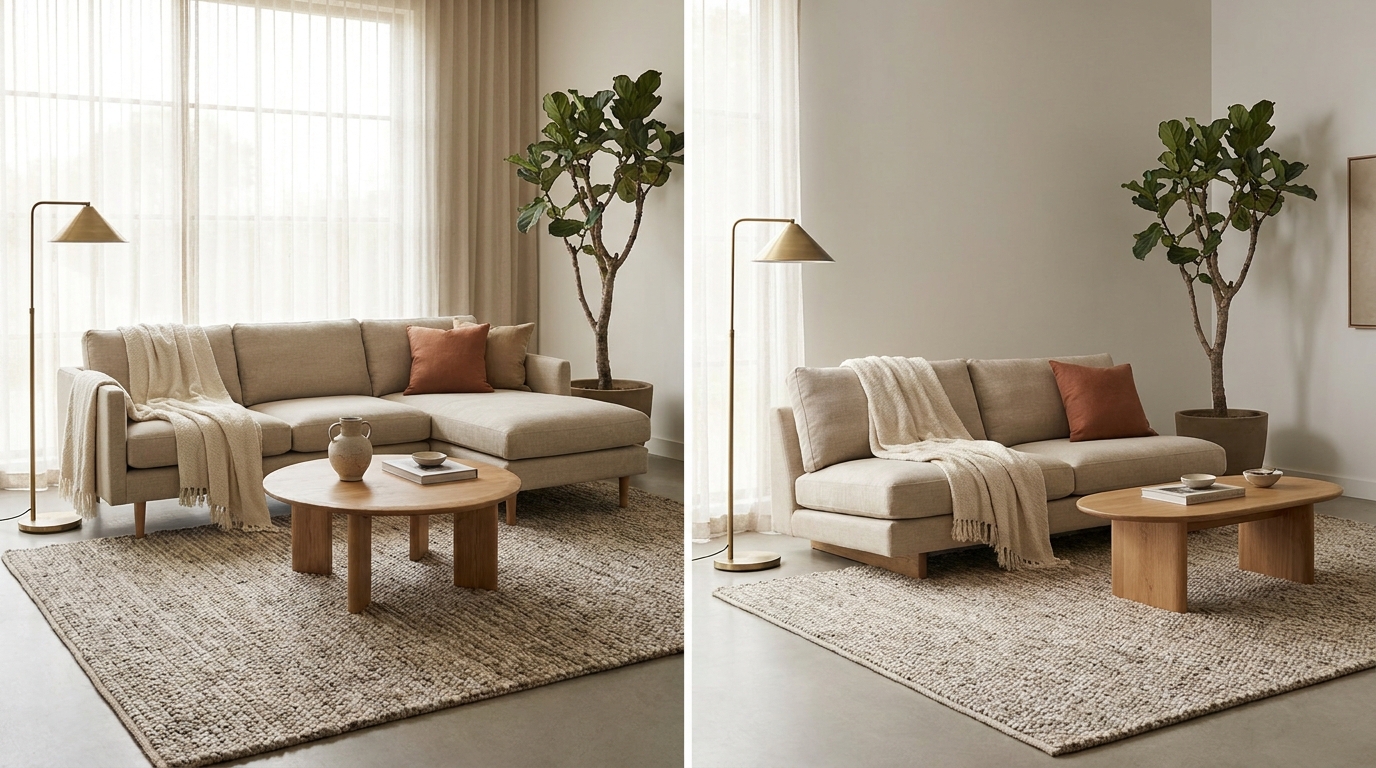
Sectionals deliver genuine value for households that actually use the living room as a lounging and gathering hub. Houzz data shows that households with two or more regular TV viewers are 2.4x more likely to report satisfaction with a sectional purchase than with a comparable sofa purchase (House Beautiful, 2025).
The room size minimum: L-shape needs 12×12 ft
An L-shape sectional needs at least a 12×12 room, and that’s the floor, not the recommended size. A 14×16 room is the comfortable minimum where an L-shape sectional, a coffee table, and a TV console coexist without pinching traffic lanes. U-shape sectionals need even more: most designers recommend at least 15×18 feet for a U-shape to breathe (Architectural Digest, 2025).
If you’re measuring and finding your room at 11×11, that’s not a sectional room. The footprint math doesn’t work unless you’re skipping the coffee table, and skipping the coffee table introduces its own layout problems.
For households that watch TV together, sectionals win
This is the core use-case argument. Four people watching a movie on a standard 84-inch sofa means two people are comfortable and two are on the floor or in chairs positioned at awkward angles. A sectional chaise seats that same group with everyone reclined, facing the screen, and nobody negotiating for armrest space.
Sectionals also work for households where the living room doubles as the nap room, the sick-day room, and the Sunday afternoon lounge room. The chaise configuration holds a full adult body lying down. A sofa does not.
The real trade-offs: layout lock and visual dominance
Sectionals lock your layout in a way sofas don’t. Once you’ve arranged a sectional, the room is arranged. The sofa can pivot against a different wall in an afternoon. The sectional usually can’t without a full furniture reset and sometimes a fabric repair where the pieces join.
Sectionals also visually dominate rooms. In a 14×16 room, a sectional will own 60 to 70% of the visual footprint. That’s intentional in some designs; it reads as commitment and comfort. In rooms where you’re trying to keep things light and open, a sectional reads heavy.
The modular cost advantage
Modular sectionals (IKEA VALLENTUNA, Article Timber, Joybird Ceni) solve the price-shock problem by letting you buy in stages. Start with two modules at $600 to $800, add a chaise six months later at $400 to $500. The total cost lands in the $1,200 to $2,000 range, which is comparable to a quality sofa, but the spend can be spread across time.
Non-modular sectionals from mass-market retailers run $800 to $1,400. Quality upholstered sectionals with solid frames run $1,800 to $3,500. The quality floor is higher than most buyers expect.
Citation Capsule: Architectural Digest’s 2025 living room planning guide recommends a minimum 14×16 ft room for an L-shape sectional to function comfortably with coffee table clearance, and 15×18 ft for U-shape configurations. Both thresholds rule out most apartment living rooms.
The One Factor Most Guides Ignore
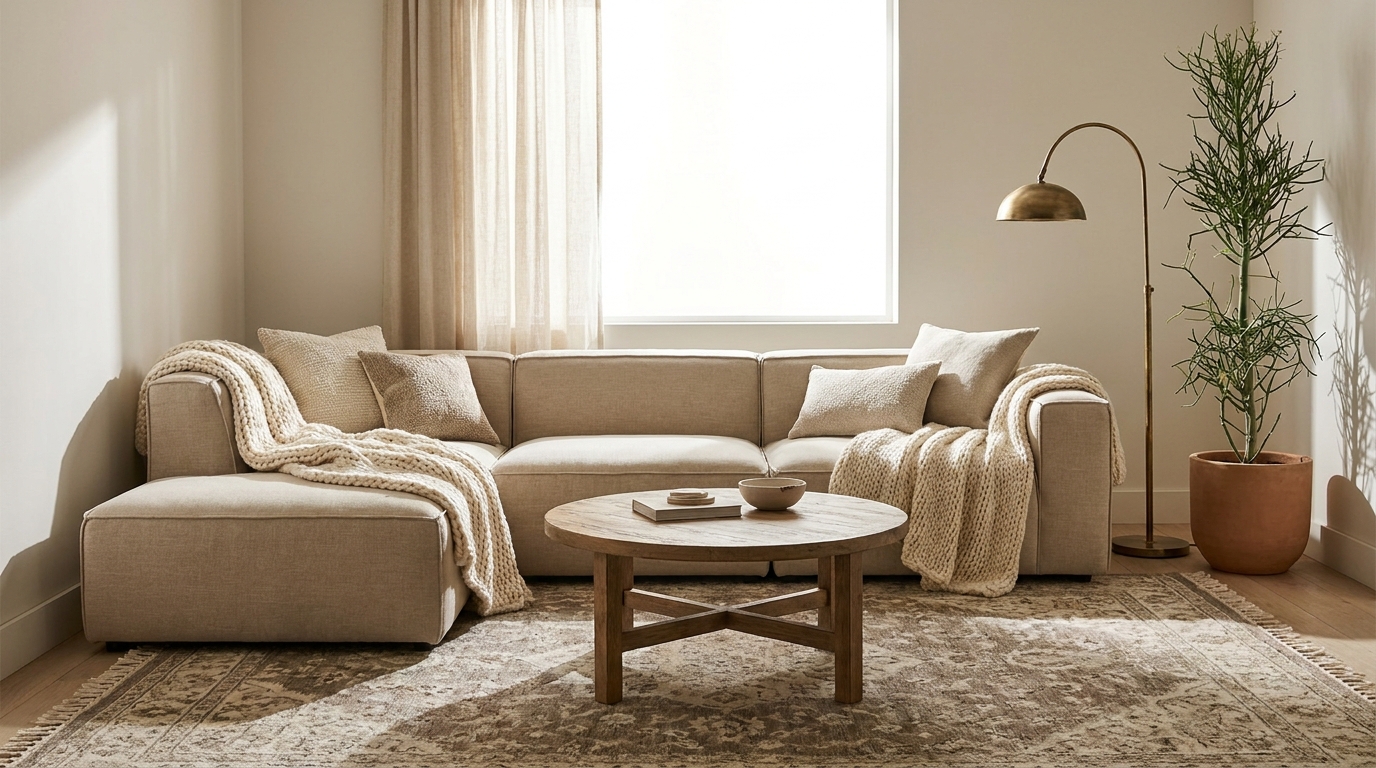
Every sectional-vs-sofa comparison focuses on room size and budget. Almost none ask how the household uses the living room, which is the variable that actually determines the right answer. Room size sets the constraints. Usage determines the winner within those constraints.
Three common usage profiles produce three different answers.
Solo or couple, WFH-heavy use: The living room doubles as the secondary work zone. You need a clear desk sight line, a space that reads professional enough for video calls, and seating that works for one or two people, not six. A sofa plus one accent chair, angled for conversation, works better here than a sectional that consumes the room.
Family household, TV-primary use: Three or four people converge in the evening for shared viewing. This is the sectional’s strongest use case. Everyone needs a spot without negotiating. The chaise accommodates the person who wants to lie down. The L-shape keeps everyone in the same visual zone facing the screen.
Hosting-primary use: You entertain guests regularly and need flexible seating for six to eight people in different conversation configurations. A sectional locks you into one arrangement. A sofa plus accent chairs plus an ottoman can rearrange for dinner-party clusters, game nights, and casual hangs.
The sofa-plus-chaise hybrid (a three-seat sofa with an attached chaise on one end) is the correct middle answer for roughly 200 to 350 square foot rooms and households caught between these profiles. It seats four comfortably, fits through standard doorframes, gives the lounging person a proper recline surface, and doesn’t lock your layout the way a sectional does. Most comparisons skip this configuration entirely because it doesn’t fit the binary framing. The IKEA VIMLE chaise sofa at $899, the Article Ceni at $1,299, and the West Elm Andes sectional with chaise at $1,800 all execute this configuration at different price tiers.
living room layering technique
Sectional vs Sofa: Side-by-Side Comparison
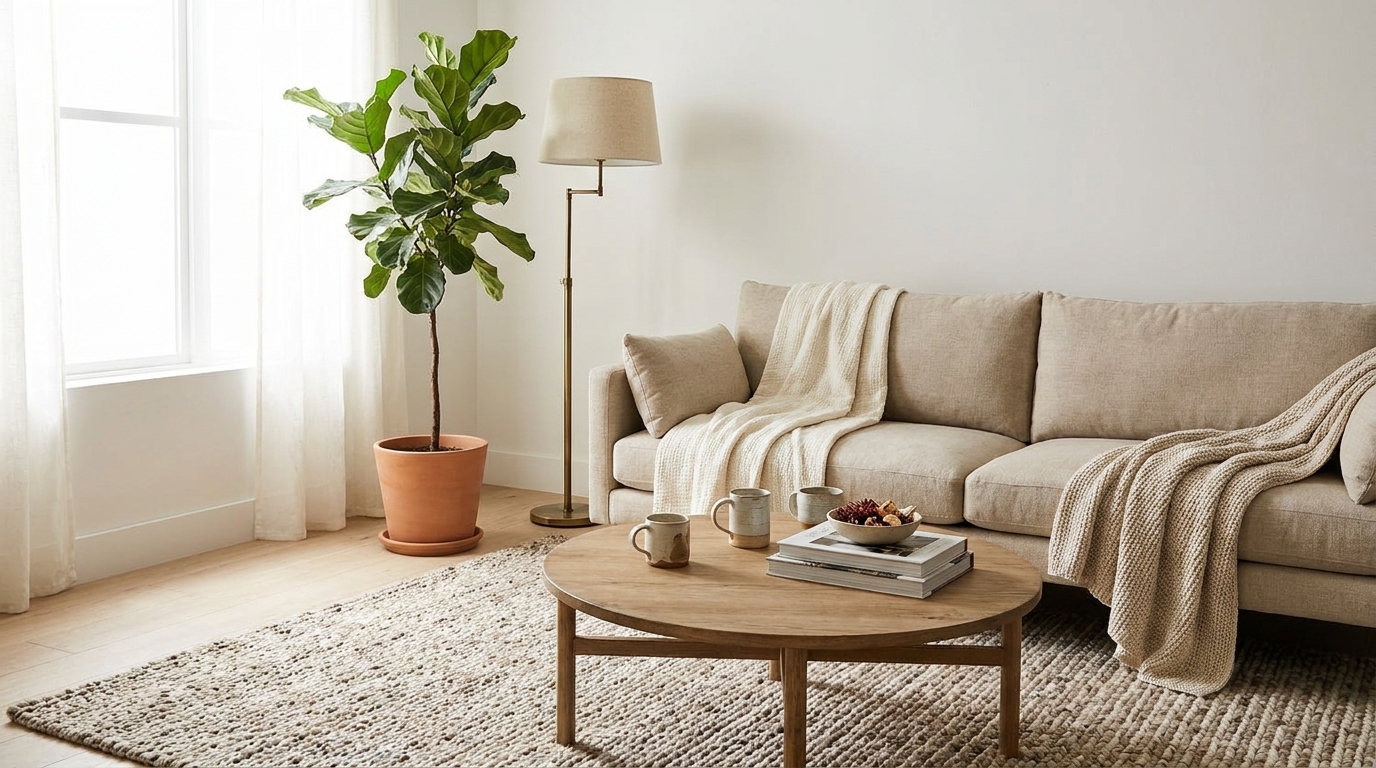
Here’s the honest comparison across six factors, without selling you either direction.
| Factor | Standard Sofa | Sectional |
|---|---|---|
| Room size fit | Works from 100 sq ft up; ideal for under 300 sq ft | Needs 144 sq ft minimum (L-shape); best in 200+ sq ft |
| Layout flexibility | High. Can reposition against any wall, pair with chairs | Low. Commits the room to one arrangement |
| Move-ability | High. Fits standard doorframes, one piece | Low to medium. Modular sections manageable; non-modular often doesn’t fit stairwells |
| Seating capacity | 3-4 adults standard; less comfortable for lying down | 4-6 adults; chaise configuration supports lying down |
| Style range | Wide. Pairs with accent chairs, works in most aesthetics | Narrower. Dominates visual field, fewer complementary pieces |
| Price floor | $400-$500 entry; $800-$1,200 quality | $800-$1,000 entry; $1,200-$2,000 quality modular |
No row is universally decisive. The right answer depends on which two or three factors matter most for your specific room and household. Renters who move heavily should weight move-ability and layout flexibility. Families buying for a 5 to 10-year home should weight seating capacity and style range.
Citation Capsule: House Beautiful’s 2025 living room buying guide identifies seating capacity and layout commitment as the two most-cited trade-off points in the sectional vs sofa decision, with renters consistently prioritizing flexibility and homeowners prioritizing capacity.
What Sofa Configurations Are Worth Considering?
Not every living room requires the binary choice. Between a standard sofa and a full sectional, there are configurations that split the difference well.
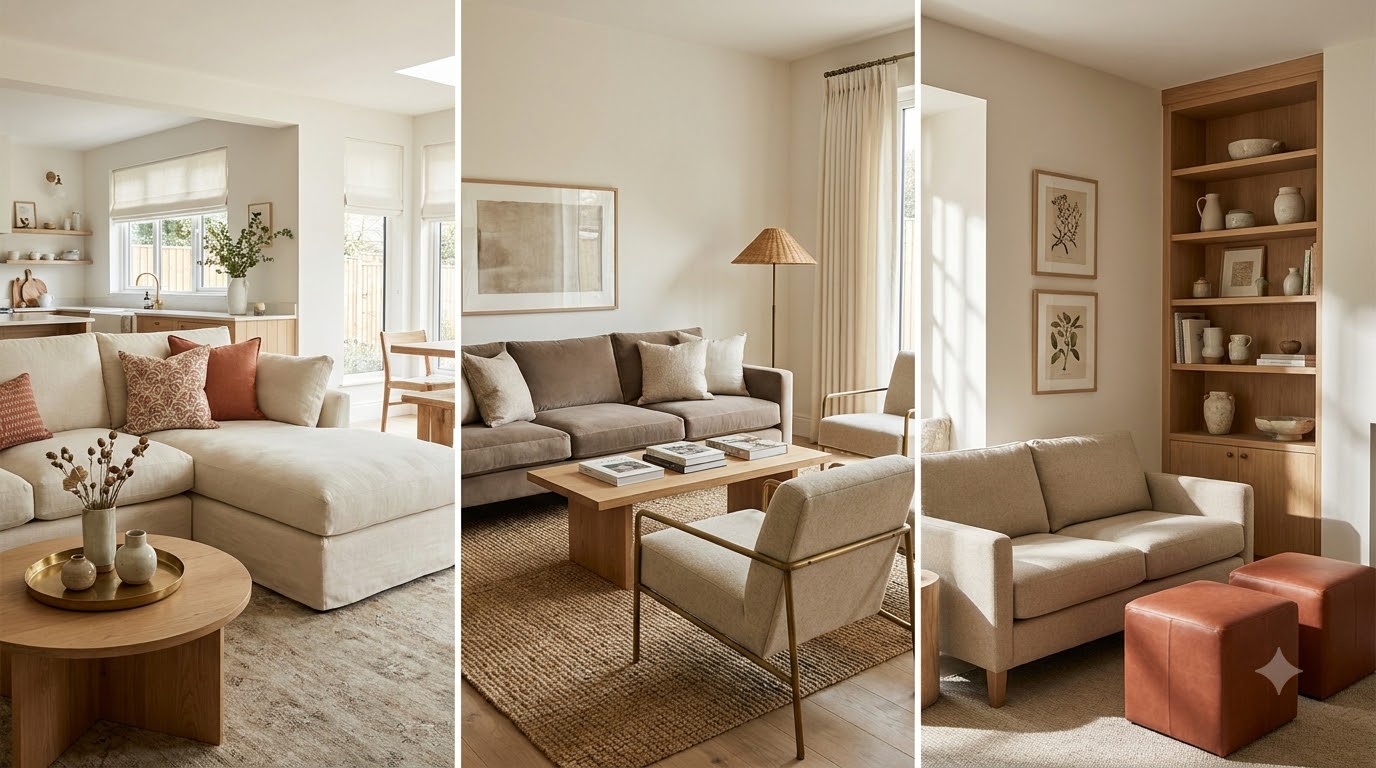
Standard three-seat sofa (84 to 96 inches)
The workhorse. Seats three adults comfortably, fits rooms from 120 square feet up with a coffee table, and loads into virtually any apartment. The safe default for anyone uncertain about long-term room use. IKEA KIVIK at $649, Article Sven at $1,099, and West Elm Andes at $1,499 cover the three major price bands.
2.5-seat sofa (72 to 78 inches)
Underused and underrated for smaller rooms. A 2.5-seat sofa sheds eight to twelve inches from the standard three-seat length, which matters enormously in rooms where you’re measuring inches of clearance. IKEA UPPLAND at $549 and Burrow Arch at $895 are the current standouts at this size.
Sofa plus chaise (the overlooked hybrid)
Described above in the unique insight section. This is the best option for households that want occasional lying-down comfort without locking the room into a sectional footprint. Most chaise configurations can be ordered with the chaise on either side, which makes rearrangement possible even if not effortless.
Loveseat plus sofa combo
Two separate pieces, coordinated in fabric or style, placed in an L-formation without being connected. This mimics a sectional’s visual effect while keeping the furniture movable and the room flexible. It costs more than a single sofa because you’re buying two pieces, but it gives you the styling impact of a sectional without the commitment. Article and CB2 both sell coordinated loveseat-sofa pairs in current performance fabric options.
best living room rugs under $250
Frequently Asked Questions
Is a sectional or sofa better for a small living room?
For rooms under 250 square feet, a standard sofa is the better choice in almost every case. An L-shape sectional needs a 12×12 ft minimum floor area just to sit without blocking traffic flow, and that’s before adding a coffee table or TV console. In small rooms, the sectional’s footprint consumes clearance that the space can’t afford. The sofa-plus-chaise hybrid is worth considering for rooms in the 200-300 sq ft range where you want more lounging surface without a full sectional commitment.
How much should you spend on a sectional vs a sofa?
The quality floor is similar for both: around $800 to $1,200 for a sofa built to last 8-10 years, and $1,200 to $2,000 for a modular sectional at comparable durability. Entry-level options start around $400 to $500 for sofas and $800 to $1,000 for sectionals. The advertised $299 Ashley sofa and the $699 entry sectional are real prices, but they reflect frame quality and fabric durability accordingly. Spending distribution matters more than total spend: solid frame, performance fabric, and cushion density in that order of priority.
Can renters buy a sectional without regretting it at move-out?
Yes, with two conditions. First, choose a modular sectional sold in separate sections that each fit through a 32-inch doorframe. IKEA VALLENTUNA, IKEA SÖDERHAMN, and Article Timber all qualify. Second, measure the entry, any hallway turns, and the elevator (if applicable) before buying, not after delivery day. Non-modular L-shape sectionals from mass-market retailers are the ones that end up in lobbies. Modular options from brands that design for apartment living move cleanly. Apartment Therapy’s furniture buying checklist puts doorframe measurement at step one for any piece over 60 inches (Apartment Therapy, 2025).
Where Does This Leave You?
The sectional vs sofa question has a right answer for your specific room. It’s rarely a universal right answer.
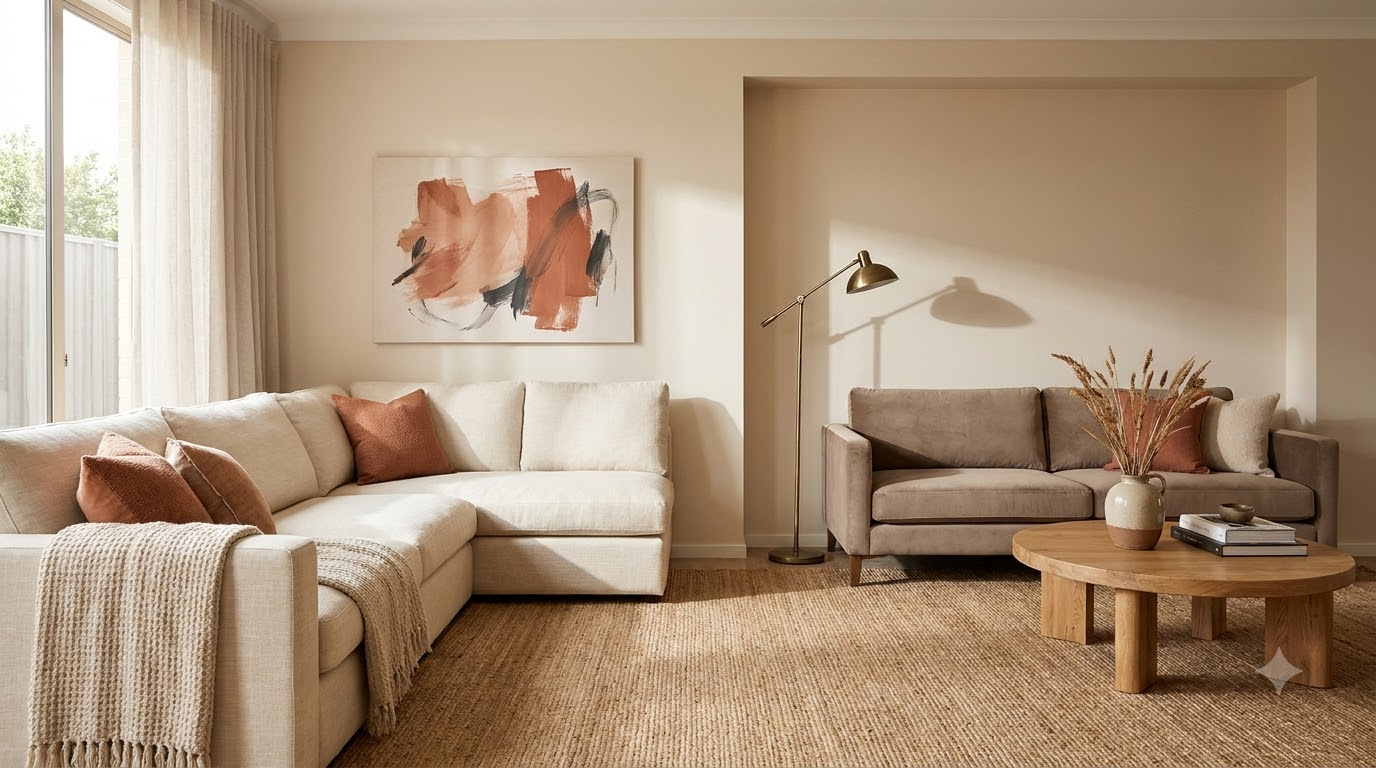
Rooms under 300 square feet: sofa, almost certainly. Renters with annual or biannual leases: sofa, unless you’ve measured every doorframe and landing, and you’re buying modular. Families of three or four who spend evenings together in the living room with the TV on: sectional, as long as the room can absorb the footprint without choking circulation.
The sofa-plus-chaise is the answer most buyers skip because it doesn’t appear in the binary comparison. For a 250 to 350 square foot room with a household that sometimes wants to lounge and sometimes wants to host, it solves both problems better than either pure option.
Whatever you choose, measure twice, account for the coffee table clearance (18 inches minimum from sofa edge), and buy the frame quality first, the fabric second, and the aesthetic third. A well-framed sofa in the right size outlasts any trend by a decade.
For the full living room context around your new sofa or sectional, the cozy living room guide covers layout, rugs, layering, and lighting in one place. The best living room rugs under $250 is the right next read once the seating is decided.
The DecorNote Team covers room and intent-driven decor for renters and first-time homeowners across the US, UK, and Canada. All product prices reflect current retail as of May 2026 and may vary by retailer.