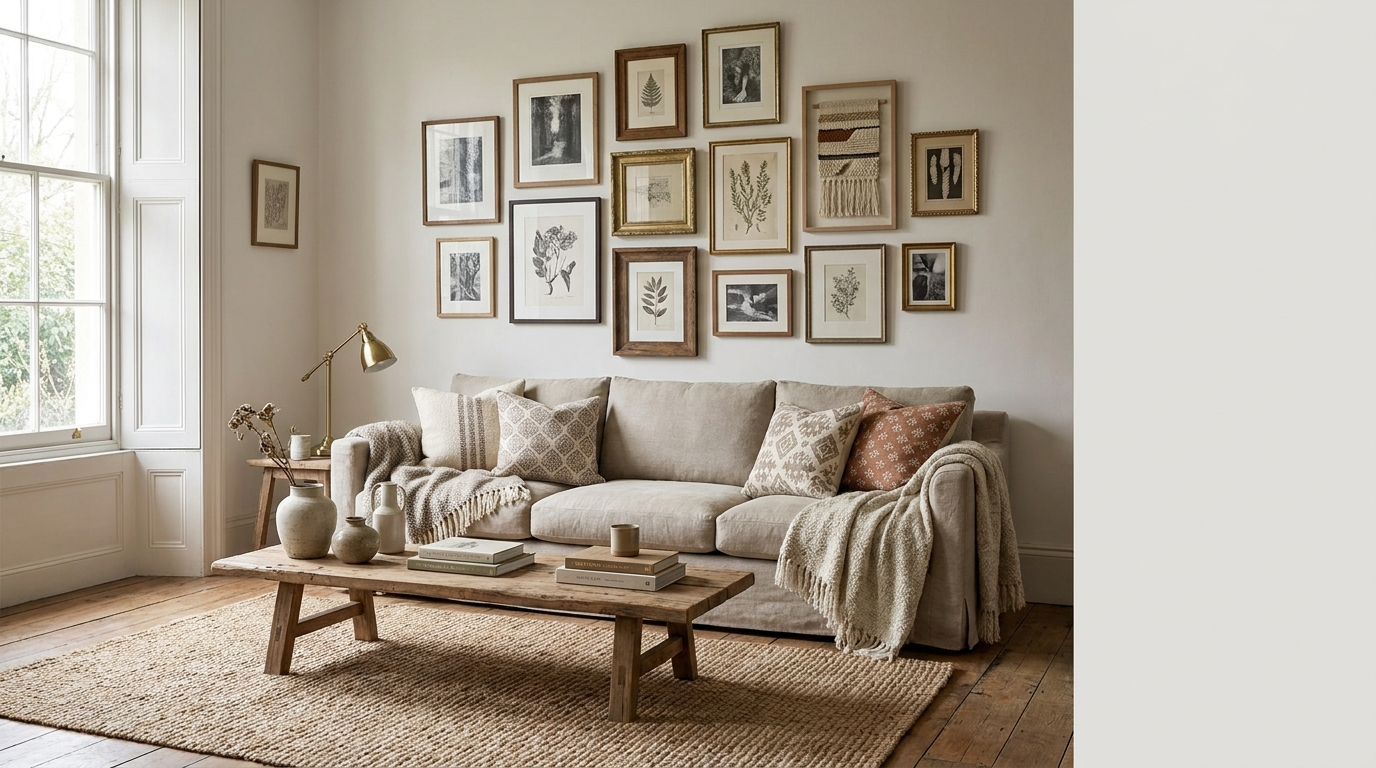
An aesthetic gallery wall can make a rental feel finished without painting, renovating, or spending a month’s rent on original art. The trick in 2026 isn’t filling every blank wall. It’s choosing a layout that fits your room, your lease, and the pieces you’ll actually want to look at every day. We’re seeing more renters use gallery walls as flexible design anchors: above sofas, around TVs, over desks, in narrow hallways, and even in bathrooms where floor space doesn’t exist.
If you’ve saved 200 Pinterest ideas and still don’t know where to start, we get it. Many examples look great online but don’t explain frame sizes, spacing, renter-safe hanging, or how much the whole wall might cost. Our team compared ready-made gallery kits, budget frames, removable hanging strips, and print sources to build setups that feel intentional but still doable on a Saturday.
In this guide, you’ll get layout formulas, price ranges, frame picks, art combinations, and renter-friendly install tips. We’ll also cover what’s changed for 2026: warmer woods, fewer tiny frames, more personal objects, and layouts that leave room to grow.
Key Takeaways
- A renter-friendly gallery wall can start around $90 with IKEA frames, digital prints, and Command Picture Hanging Strips ($13 for a large pack).
- Larger anchor pieces make gallery walls look calmer; 2026 layouts use fewer 4×6 frames and more 16×20 or 18×24 pieces.
- Pinterest reported continued interest in personalized, layered home styling in recent annual prediction reports (Pinterest Predicts, 2025).
- Mixed media works best when you repeat at least one detail: frame color, mat width, art palette, or subject matter.
- We tested paper templates and floor layouts, and paper templates made spacing mistakes easier to catch before anything touched the wall.
Choose the Right Aesthetic Gallery Wall Style First
The best aesthetic gallery wall starts with a clear style lane, not a pile of random frames. Pick one direction before you buy anything: minimalist black-and-white, warm vintage, coastal neutral, eclectic color, family-photo led, or art-studio mixed media. You can still mix pieces, but the wall needs one repeatable idea. In our experience styling rental living rooms, the most successful walls repeat either frame finish, art color, or subject matter at least three times.
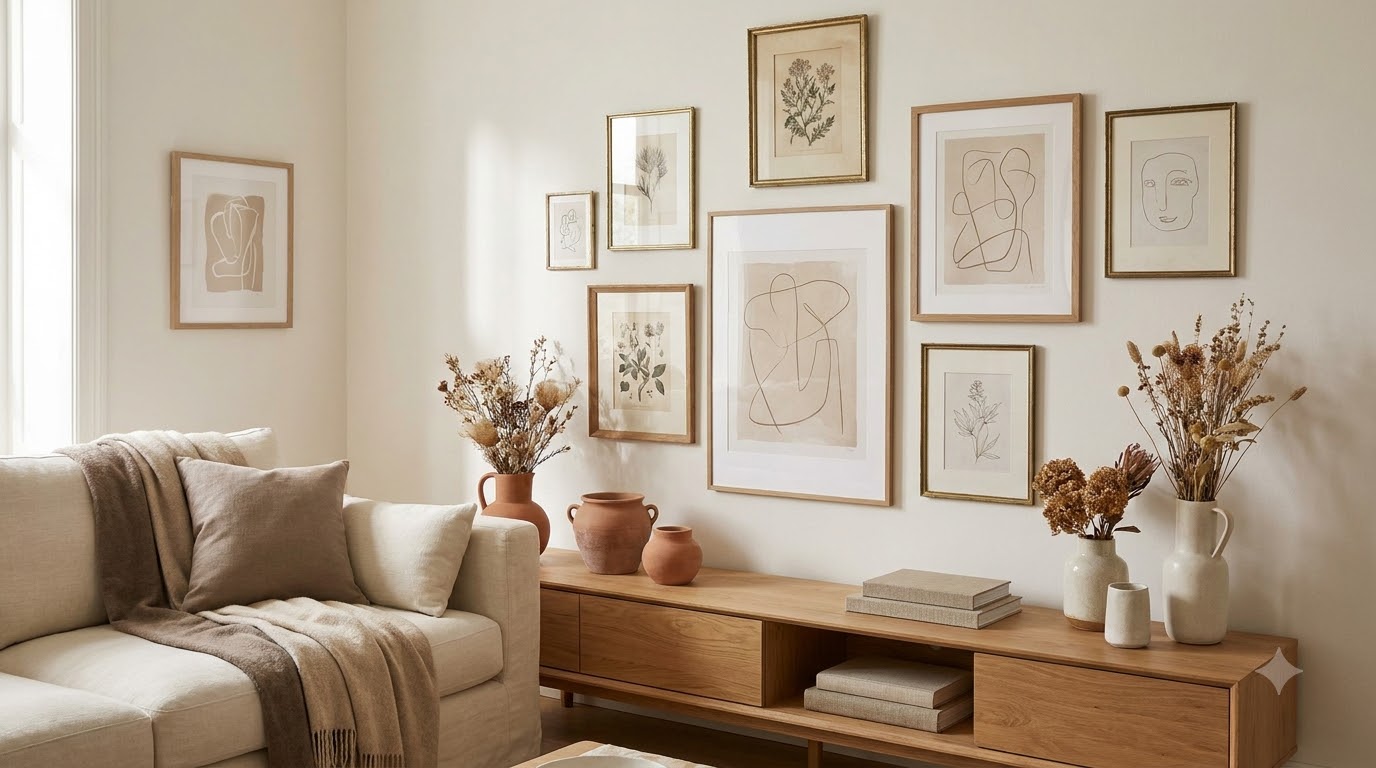
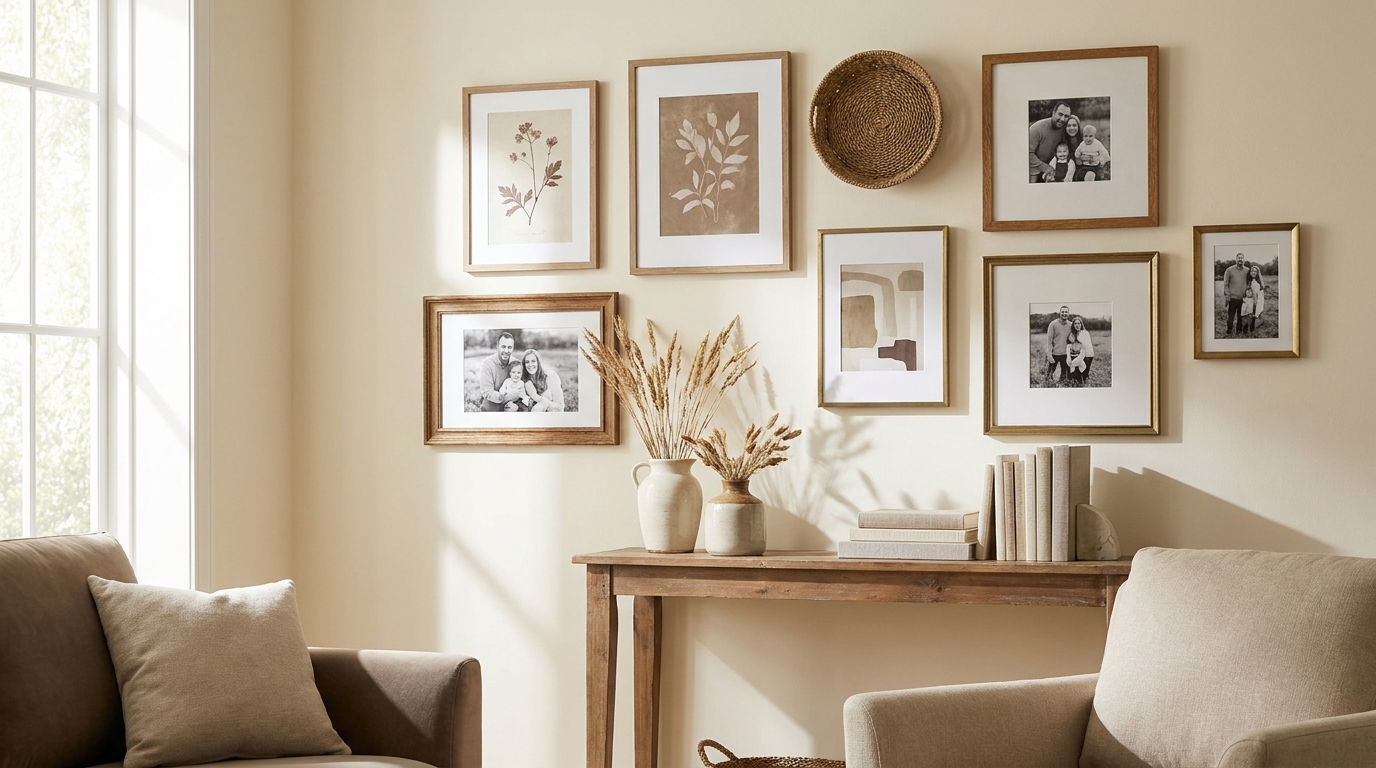
For a clean apartment look, try black frames with white mats and mostly monochrome prints. IKEA RIBBA frames start around $10, while Target’s Room Essentials Gallery Frame Set is about $35 for a small pack. If you want warmth, use wood frames like IKEA RÖDALM ($13-$25) or H&M Home wooden frames ($18-$35) with sketches, landscapes, and sepia photos.
Popular 2026 Style Directions
Warm minimalism is still practical because it works with beige sofas, white walls, and builder-grade rentals. Use oak frames, cream mats, and two or three black accents. For a more collected setup, mix thrifted art with new frames and one sculptural piece like a small woven wall basket from Target’s Threshold line, usually around $20.
If you like a softer bedroom look, pair botanical prints with personal photos and one text-based print. If your style leans modern, CB2 has black metal frames around $40-$70, and West Elm’s gallery frames usually sit around $39-$89 depending on size.
Plan Your Layout Before You Buy Frames
Plan the layout first because frame sizes control the final cost, balance, and install time. Start by measuring your wall width, then choose whether your gallery wall should fill about two-thirds or three-quarters of the furniture below it. Over a 72-inch sofa, a 48- to 56-inch-wide gallery arrangement usually looks right. You don’t need mathematical perfection, but you do need a boundary.
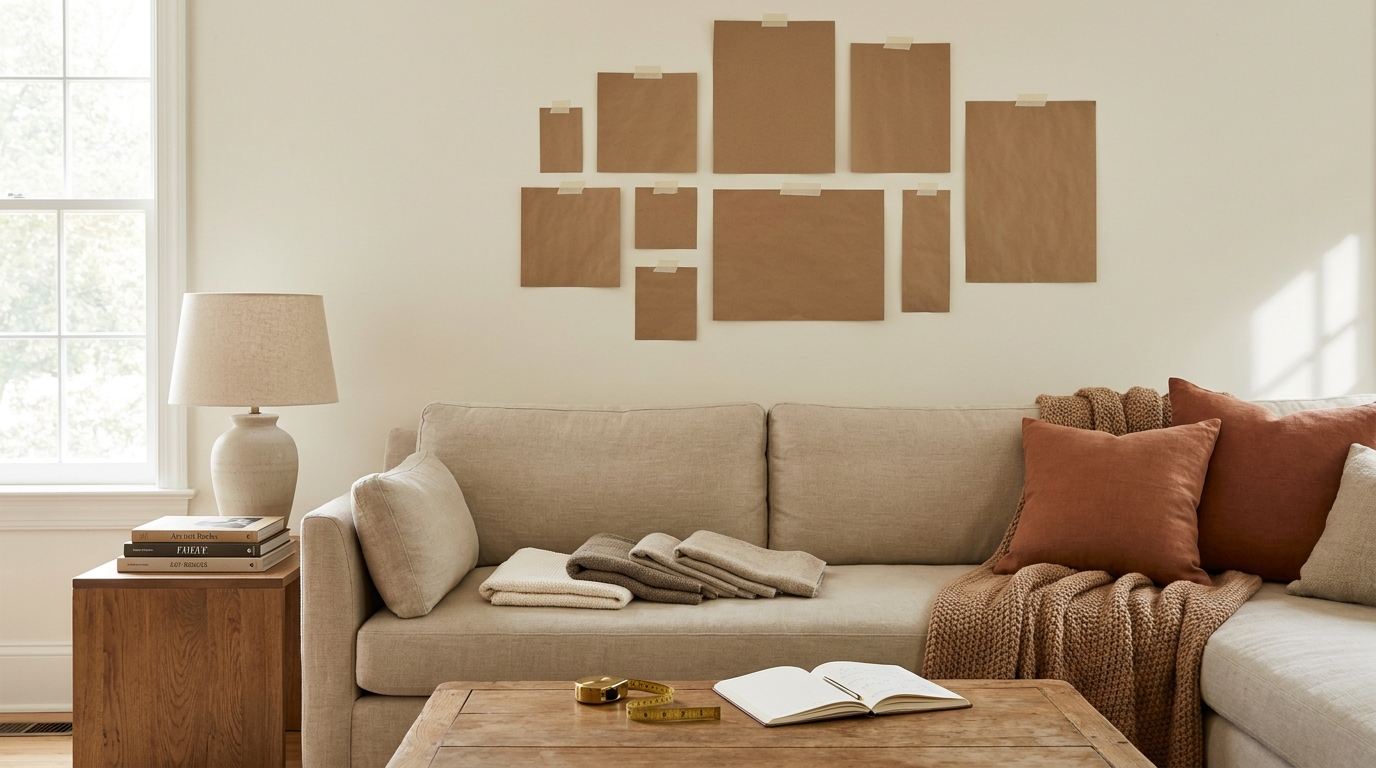
We tested three planning methods: floor layouts, phone mockups, and kraft paper templates. The fastest combo was floor first, then paper on the wall. Lay everything on the floor inside your planned width, take a photo, and edit from there. Then tape paper templates to the wall with painter’s tape. This step helps you check sightlines from the doorway, sofa, and dining area.
Easy Layout Formulas
A grid works well for renters who want simple symmetry. Use six 11×14 frames or nine 8×10 frames with 2 inches between each. It’s predictable, affordable, and easy to align.
A salon-style layout looks more collected. Start with the largest piece slightly off-center, then build around it with medium and small frames. Keep spacing between 2 and 4 inches so it feels deliberate.
A ledge gallery is the least stressful option. Use IKEA MOSSLANDA picture ledges ($17-$25), but only if your lease allows small screw holes. If not, lean frames on a console or bookcase instead.
Build an Aesthetic Gallery Wall With Budget Frames
You can build an aesthetic gallery wall without custom framing if you choose standard sizes from the start. The most useful sizes are 8×10, 11×14, 12×16, 16×20, and 18×24. Standard sizes keep print costs down and make replacements easier later. We’ve found that mixing three sizes looks more polished than using ten different sizes in a small apartment.
For budget frames, IKEA is still one of the strongest options. RIBBA and RÖDALM frames typically range from $8 to $30, depending on size and finish. Target’s Threshold frames often cost $15-$35 and look better in person than many ultra-cheap multipacks. Amazon Basics Gallery Wall Frame Sets can run around $32-$60, which works if you want a quick grid.
Where to Spend and Where to Save
Spend more on the largest frame because it gets the most attention. A West Elm Gallery Frame in a 16×20 or 18×24 size can cost around $59-$89, but one good anchor frame can lift the whole wall. Save on smaller frames by using IKEA, Target, or H&M Home.
If you’re using digital downloads, print at Walgreens, CVS, Staples, or Mpix. Small prints can cost under $5, while 16×20 prints are often $16-$30 depending on paper and promotions. For a better finish, choose matte or satin paper, not glossy.
For more frame combinations, see our guide to renter-friendly gallery wall ideas.
Mix Art, Photos, and Objects Without Making It Messy
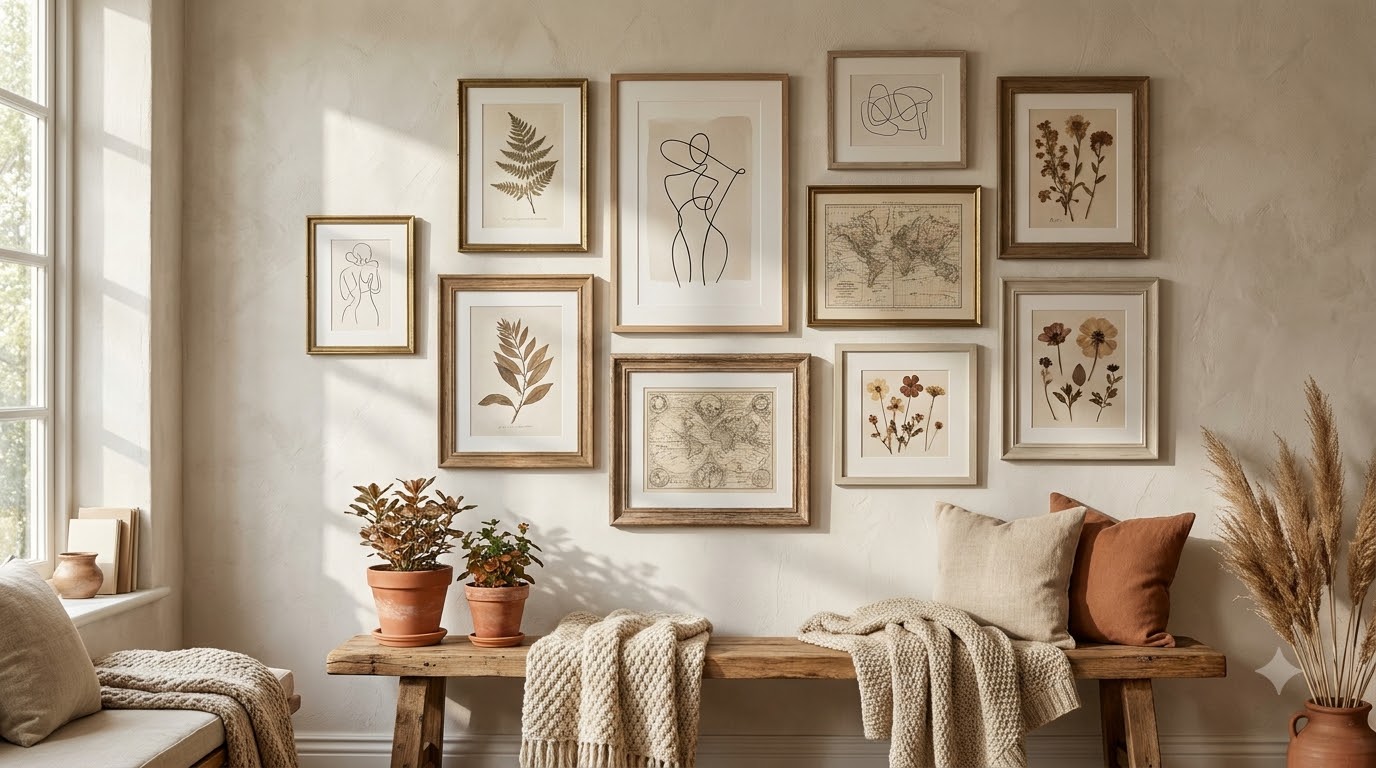
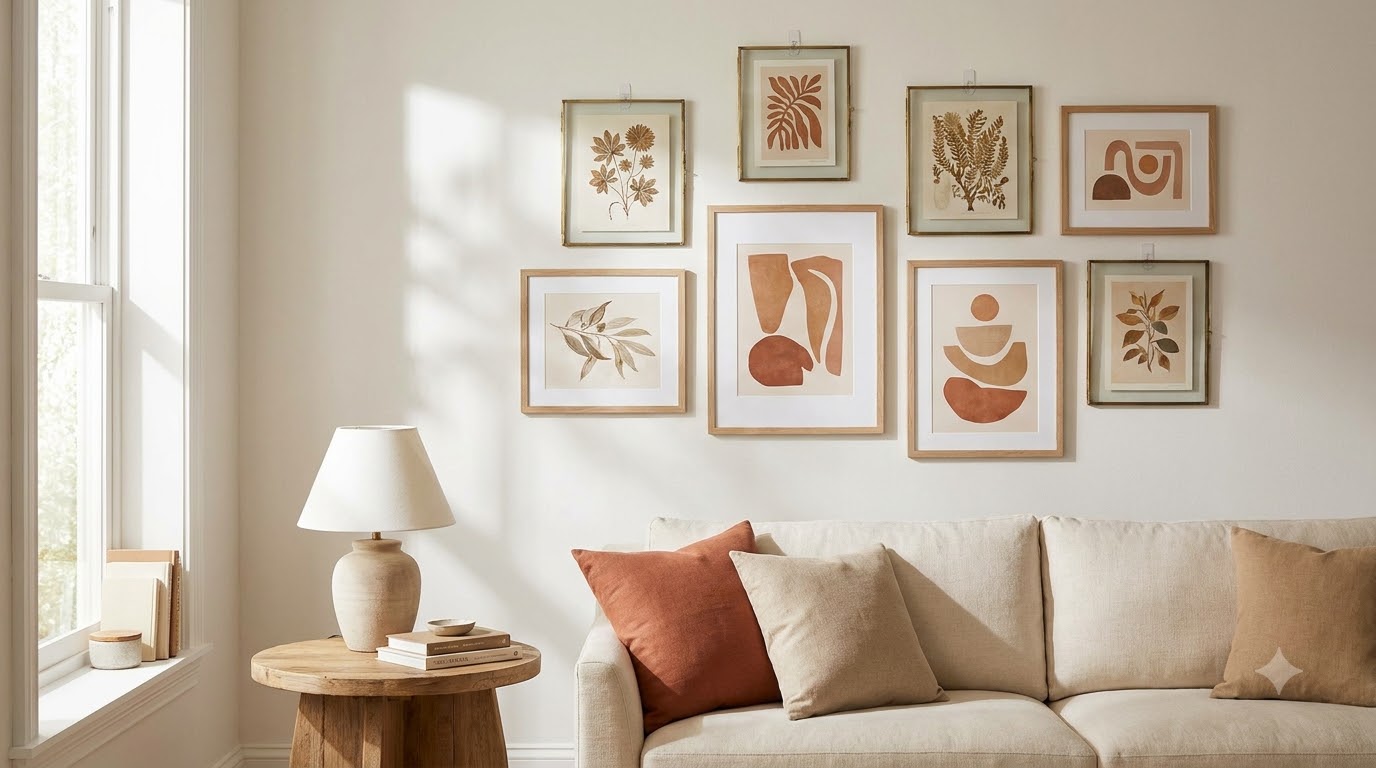
Mixing works when the wall has a repeated visual thread. Choose a palette of three to five colors, then keep most pieces inside that range. For example, cream, black, rust, olive, and pale blue can handle landscapes, portraits, typography, and travel photos without looking chaotic. If every piece has a different palette, frame style, and mood, the wall won’t read as one design.
Architectural Digest and The Spruce both highlight mixed-material gallery walls as a stronger alternative to basic framed print collections, and we agree. A small ceramic plate, woven piece, pressed flower frame, or vintage key can make the wall feel personal. The key is restraint. One or two objects are enough in a standard apartment living room.
Good Object Ideas for Renters
Try lightweight objects first. A small basket, flat woven fan, fabric swatch in a frame, postcard, or mini mirror can work with removable hooks. Heavier plates and mirrors may need hardware, so check your lease and wall type before installing them.
We like pairing a Pottery Barn Wood Gallery Frame ($59-$199 depending on size) with lower-cost surrounding frames because the better wood finish adds depth. If you’re building a memory wall, mix two family photos, one travel landscape, one small text piece, one sketch, and one object. That combination feels personal without turning into a cluttered photo board.
Use Renter-Friendly Hanging Methods That Actually Hold
Use removable hanging strips for most lightweight gallery walls, but match the strip size to the frame weight. Command Picture Hanging Strips cost about $13 for a large pack and usually list weight limits on the package. Don’t guess. If your frame has real glass, a heavy wood profile, or a large size, check both the frame weight and the strip rating before hanging.
Our team compared strips, adhesive hooks, and tiny nails across common rental wall types. Strips work best on clean, smooth painted drywall. They’re less reliable on textured walls, brick, damp bathrooms, or freshly painted surfaces. Clean the wall with isopropyl alcohol first, let it dry, and press each strip firmly for the time the package recommends.
Avoid Common Hanging Mistakes
Don’t hang frames immediately after attaching strips. Most brands recommend waiting before adding weight, and skipping that step can lead to frames sliding or falling. Also avoid placing strips over peeling paint. They’ll only hold as well as the surface underneath.
For heavier frames, use monkey hooks or small nails if your lease allows tiny holes. Many renters can patch small nail holes with DAP DryDex spackle ($7) before moving out, but adhesive damage can be harder to hide if you remove strips too fast. Pull tabs slowly downward, not away from the wall.
Style an Aesthetic Gallery Wall Above a Sofa
An aesthetic gallery wall above a sofa should feel connected to the furniture, not floating near the ceiling. Place the bottom edge of the lowest frame about 8 to 10 inches above the sofa back. If your sofa has tall cushions, you can go slightly higher, but don’t leave a huge gap. The whole arrangement should usually be narrower than the sofa.
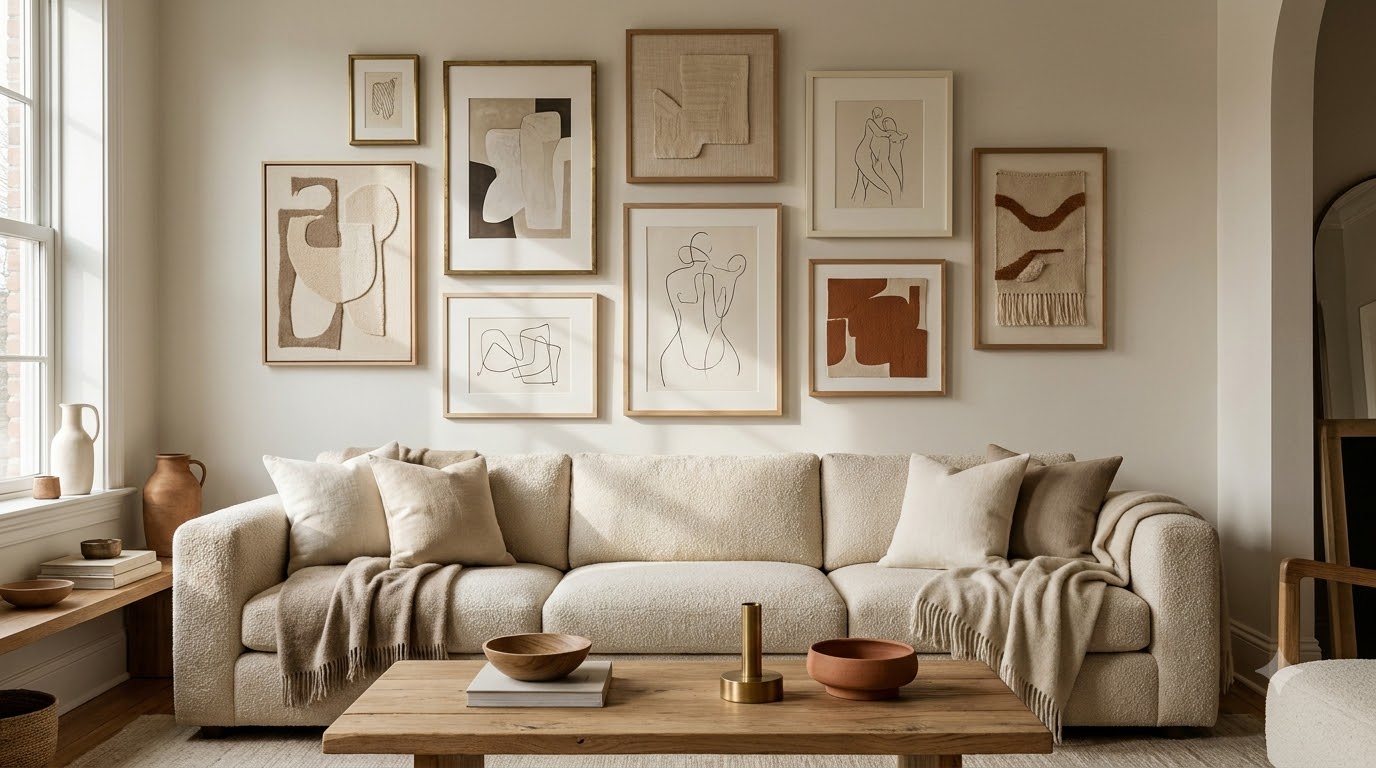
For a 72-inch sofa, try one 18×24 anchor print, two 11×14 pieces, two 8×10 frames, and one small object. This setup can cost around $160-$320 with IKEA or Target frames and downloaded art. If you use West Elm or Pottery Barn frames, expect closer to $350-$700.
Sofa Wall Layout Idea
Start with the 18×24 piece slightly left or right of center. Add an 11×14 frame on the opposite side, then fill with smaller frames. Keep the visual weight balanced, not mirrored. If one side has a dark print, balance the other side with a black frame or bold photo.
If your sofa wall shares space with a floor lamp, leave breathing room. Your gallery wall doesn’t need to run corner to corner. In smaller rentals, negative space can make the room feel calmer and more expensive.
For sofa-scale styling, you may also like our living room wall decor guide.
Create a Hallway Gallery Wall That Doesn’t Feel Crowded
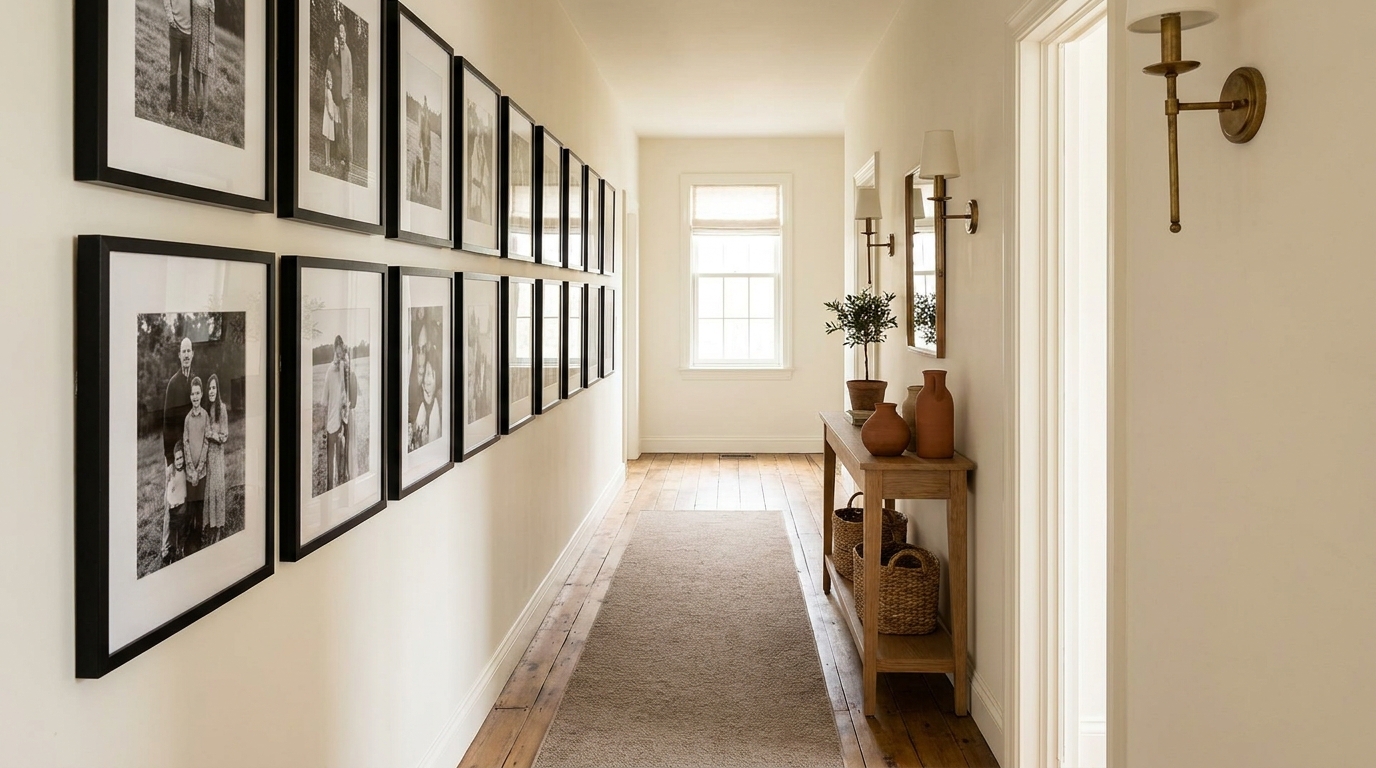
A hallway gallery wall works best with tighter spacing and slimmer frames. Since viewers stand closer, use smaller pieces, cleaner mats, and a simple line of movement. A straight horizontal row, staggered row, or narrow salon layout usually beats a huge mixed wall in a tight rental hallway. Keep frames about 2 inches apart so the wall feels intentional.
Hallways are perfect for family photos, travel prints, and black-and-white sets. Target’s 8×10 matted frames around $15 each work well here, or you can use an Amazon Basics set for a lower-cost photo grid. If you’re worried about bumps from bags or coats, avoid thick frames that stick out too far.
Best Hallway Heights
Hang the center of the arrangement around 57 to 60 inches from the floor, which aligns with common gallery hanging guidance. In a long hallway, you can create one continuous centerline so the eye moves smoothly from frame to frame.
For narrow walls, try six 11×14 frames in a line. For a stair-style hallway, follow the slope of the stairs with equal spacing. Use paper templates here because stair layouts are harder to judge by eye.
Make a Bedroom Gallery Wall Feel Calm
A bedroom gallery wall should support rest, so choose softer contrast, fewer pieces, and more negative space. The easiest formula is three to five pieces above the bed, with one larger center print and two smaller side pieces. Keep the palette close to your bedding: cream, taupe, sage, clay, gray-blue, or soft black. You’ll still get personality, but the room won’t feel visually loud at night.
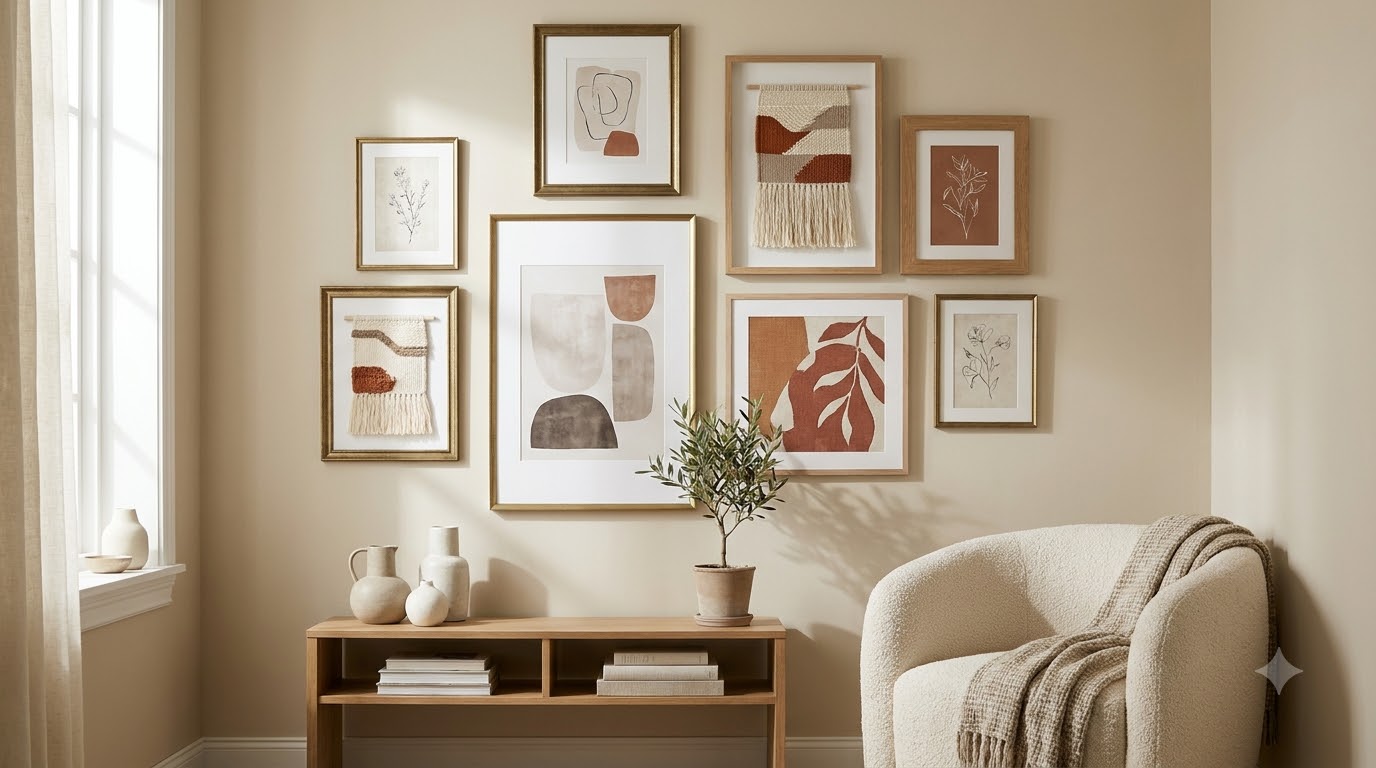
For renters, lightweight frames above a bed are important. We prefer acrylic fronts over glass for this location when possible. IKEA and Target both sell frames with plastic glazing in many sizes, which can be safer and lighter. Avoid heavy mirrors or ceramic objects directly above your head.
Bedroom Art Sources
Try Juniper Print Shop for downloadable landscapes, Etsy sellers for vintage-style public domain art edits, or museum open-access collections from The Met and the National Gallery of Art. Many public domain works are free to download, though you’ll still pay for printing.
H&M Home often has soft abstract prints and frames between $18 and $45. Pair one of those with personal photos or a small pressed botanical frame. If your room already has patterned bedding, choose quieter art. If your bedding is plain, add one piece with movement or color.
Work Around a TV With a Balanced Gallery Wall
A TV gallery wall looks best when the frames support the screen instead of competing with it. Treat the TV as the largest black rectangle in the arrangement. Add frames around it with enough breathing room, usually 6 to 10 inches from the TV edge. Use darker frames or black accents elsewhere so the TV doesn’t look like an awkward blank box.
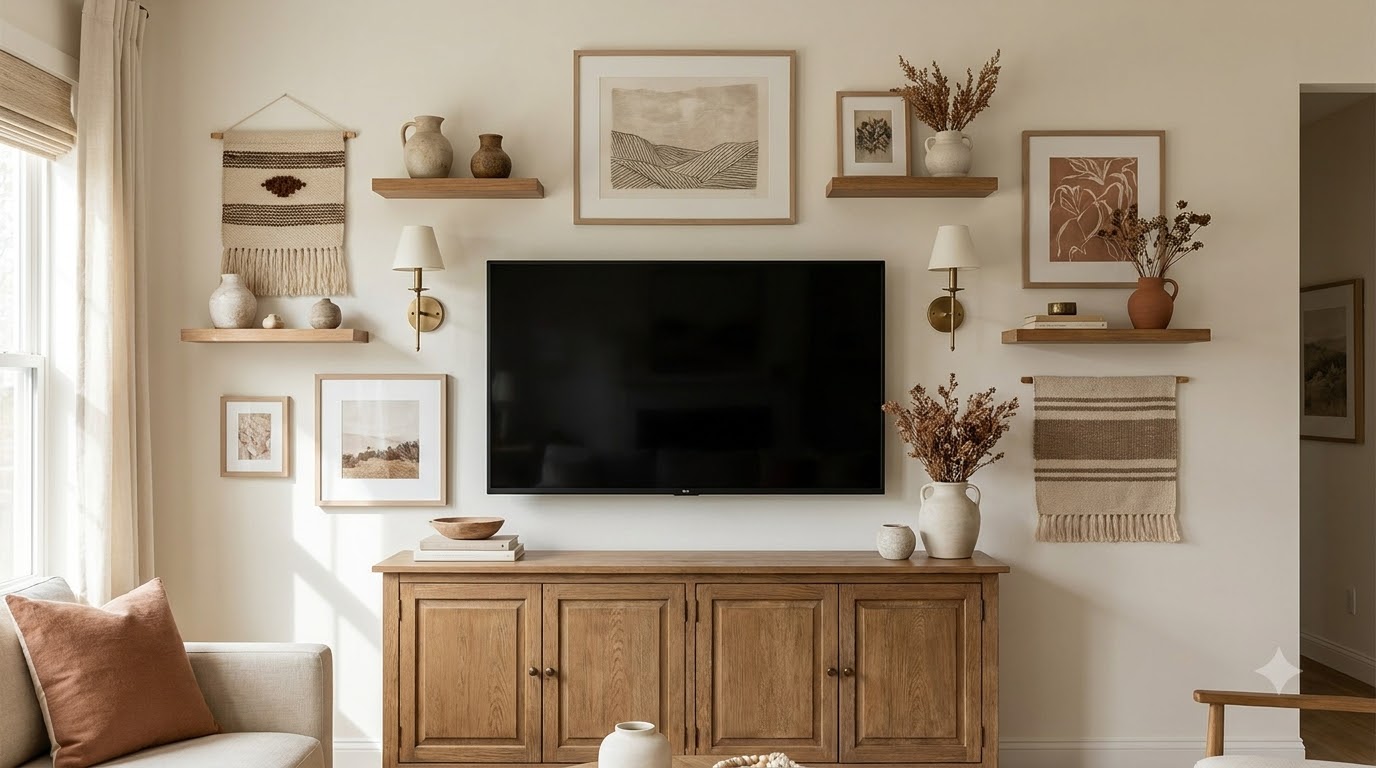
This setup works especially well in rentals where you can’t mount cabinetry or install built-ins. Use a media console below, then build a loose frame arrangement around the TV. Keep art less busy near the screen so it won’t distract during movies or sports.
TV Wall Product Picks
IKEA LOMMARP or BESTÅ media units, often around $180-$400 depending on configuration, create a strong base. Add IKEA RÖDALM frames in black or walnut and one small sconce-style plug-in light if you have an outlet nearby. A Target Threshold ceramic vase ($20-$30) on the console can repeat the wall palette below.
For more layout help around electronics, see our TV wall decor ideas for renters.
Choose a Ready-Made Gallery Wall Kit If You’re Short on Time
Choose a ready-made kit if you want the look without sourcing every frame and print separately. Framebridge sells gallery wall sets with custom framing, and prices often run several hundred dollars depending on size and layout. Pottery Barn’s gallery frame collections can range from about $199 to over $1,000, especially for larger wood sets. They’re not the cheapest route, but they solve the size and finish problem quickly.
For a more affordable version, create your own semi-kit. Buy one Amazon Basics frame set for around $45, add two larger IKEA frames for about $50 total, and print a coordinated art set for $20-$60. You’ll get a similar planned feel for far less.
When Kits Are Worth It
Kits make sense if you’re decorating a main living room, you’re short on time, or you want matching frames without comparing finishes across stores. They’re less useful if you love vintage pieces, family photos, or a more layered look.
Before buying, check whether the kit includes mats, hardware, templates, and actual art. Some sets include only frames. That’s fine, but the final cost changes once you add prints.
Add Personal Pieces Without Losing the Aesthetic
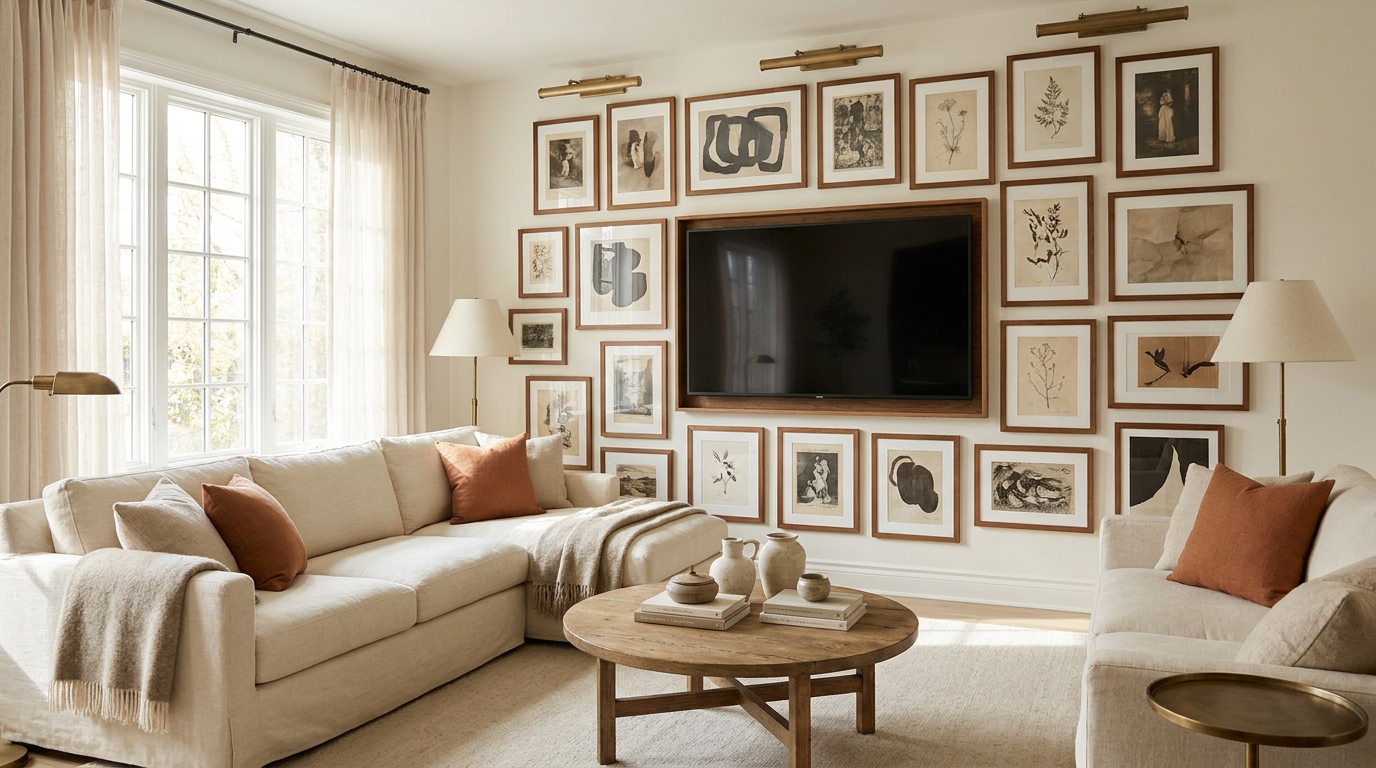
Add personal pieces by editing them like art. Not every meaningful photo needs to go on the wall. Choose images with similar tones, crop them consistently, and print them in black-and-white or warm color if the originals clash. This keeps your aesthetic gallery wall personal and polished at the same time.
Memory walls rank well across Pinterest-style searches because people want decor that says something about their lives. The best versions include breathing room. Use one wedding photo, one travel image, one family snapshot, and then balance them with art prints, sketches, or landscapes. You’ll get the emotion without the wall feeling like a yearbook page.
Easy Personal Additions
Frame a handwritten recipe, a postcard from a trip, a small concert ticket, or a map section from a favorite neighborhood. Use a shadow box only if it’s light enough for your hanging method. Target and Michaels often carry shadow boxes around $20-$35.
If you rent with a partner or roommates, choose shared memories for common areas and keep more personal pieces in bedrooms or offices. It’s a small choice, but it makes shared spaces feel considered.
Avoid These Gallery Wall Mistakes in 2026
Avoid buying art before you know the wall size, because that’s how you end up with tiny frames floating on a huge blank wall. Scale is the biggest issue we see in first apartments and starter homes. A single 8×10 print over a sofa won’t do much. Either go larger or group several pieces within a clear boundary.
Also avoid using too many quotes. One text-based piece can add personality, but five quote prints can make a wall feel dated quickly. In 2026, cleaner typography, personal documents, and artful postcards feel fresher than generic sayings.
Quick Fixes for a Wall That Feels Off
If your gallery wall feels messy, repeat one frame color. If it feels flat, add one wood frame or one textured object. If it feels too small, expand outward with two medium frames instead of several tiny ones. If it feels too high, lower the whole arrangement closer to the furniture.
And if you’re unsure, take a photo in black-and-white. This helps you see whether the visual weight is balanced without being distracted by color.
Frequently Asked Questions
What is the best size for an aesthetic gallery wall?
For most apartments, aim for a finished gallery wall width of 48 to 60 inches above a sofa or console. Use at least one large piece, such as 16×20 or 18×24, so the arrangement doesn’t feel scattered. Smaller walls can use three to five frames.
Can renters hang a gallery wall without nails?
Yes, renters can use removable picture hanging strips for lightweight frames on smooth painted drywall. Check weight limits, clean the wall first, and remove strips slowly according to the package directions. For heavy frames, ask your landlord about small nails or approved hardware.
How do you make cheap frames look better?
Use mats, choose consistent finishes, and upgrade the largest frame first. IKEA and Target frames look cleaner when you stick to standard sizes and repeat one color. Matte prints also help budget frames look more refined than glossy photo paper.
Should every frame match in a gallery wall?
No, but something should repeat. You can mix black, wood, and brass frames if the art palette stays consistent. Or you can mix colorful art if the frames match. Repetition keeps the wall from looking like a random collection.
Where can we find affordable art for a gallery wall?
Try museum open-access collections, Etsy digital downloads, Juniper Print Shop, Target, H&M Home, and printable photography shops. You can also frame postcards, fabric, handwritten notes, or personal photos. Printing locally often keeps the total cost lower than buying finished art.
Conclusion
Aesthetic gallery wall setups in 2026 are more personal, warmer, and easier to adapt than the perfect grids we saw everywhere a few years ago. You don’t need a massive budget or permanent changes. Start with one style direction, choose standard frame sizes, and plan the layout with paper templates before you hang anything.
If you’re renting, keep the install method as important as the art. Lightweight frames, removable strips, and flexible layouts will save you stress when it’s time to move. Build slowly if you need to. A gallery wall can start with three strong pieces and grow over time.
Next, compare layouts and frame combinations in our guide to renter-friendly gallery wall ideas so you can choose the setup that fits your room before you buy.
Related reading
- Gallery Wall vs Accent Wall vs Statement Art: Which One?
- Bedroom Gallery Wall Ideas 2026: 15 Layouts That Actually Work Above the Bed