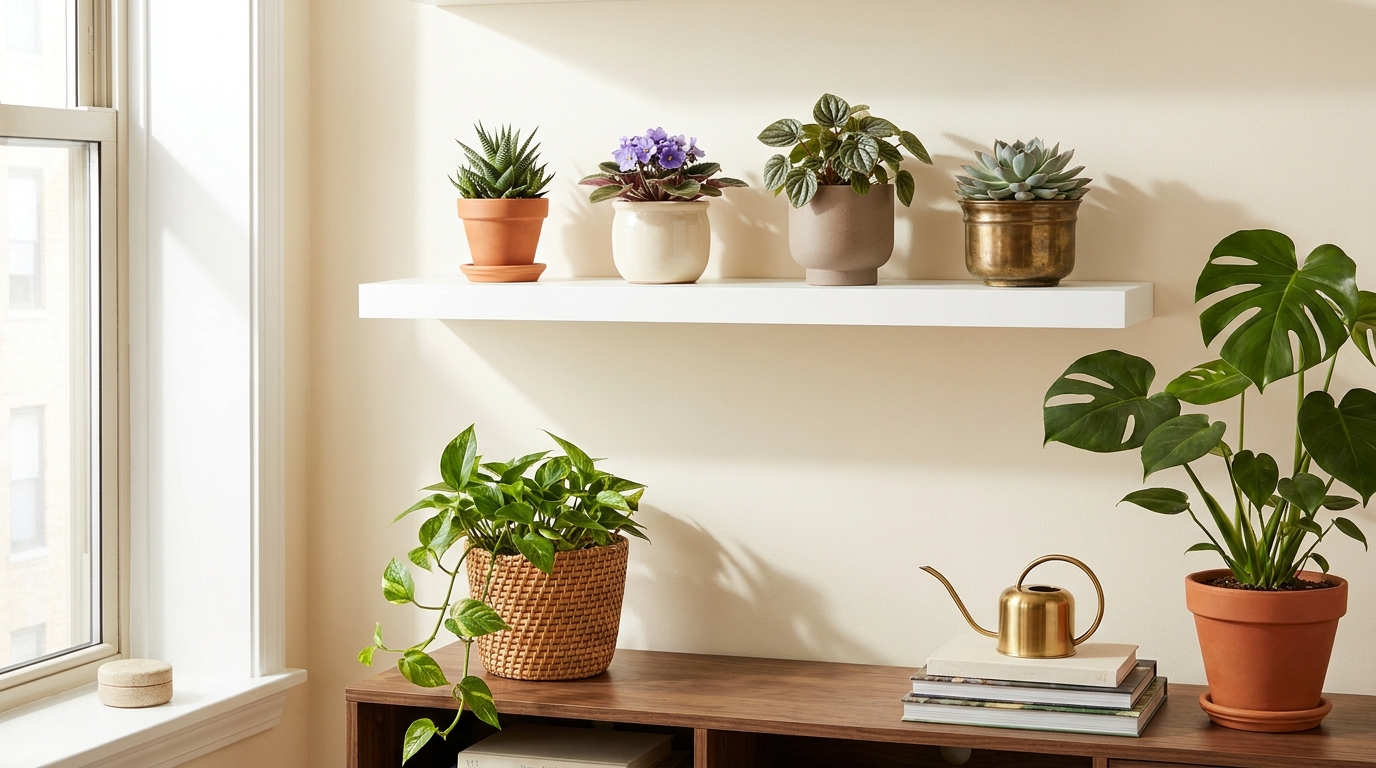
You want plants. Your apartment does not want you to have large plants. The desk has six inches of clearance, the windowsill fits two 4-inch pots, and the bathroom shelf is already full. The solution is not to go without plants. Choose plants that stay small by nature, not by stress.
Most plant content focuses on statement plants: monsteras, fiddle leaf figs, bird of paradise. These are striking. They are also furniture-scale. An apartment plant vocabulary looks different. It prioritizes species that top out under 12 inches, that hold their form in a 4-inch pot for years, and that fit the real surfaces available in small living spaces. The 20 plants below meet that standard, with real size measurements, not nursery marketing copy.
According to The Sill, compact plants under 6 inches are the fastest-growing houseplant category by sales volume, up 34% since 2023, driven primarily by apartment dwellers seeking lush interiors without sacrificing floor space.
best indoor plants for beginners 2026
Key Takeaways
- “Small” means under 12 inches mature height. Many plants marketed as compact grow to 24-36 inches. Verify before buying.
- Haworthia, echeveria, peperomia, and African violet are the four most reliable apartment plants that stay genuinely compact indefinitely.
- Succulents need 4-6 hours of direct or very bright indirect light to stay compact. Low light causes them to stretch and lose their shape.
- According to Bloomscape, the top reason apartment plant owners kill small plants is pot size. Overpotting small plants causes root rot faster than any care mistake.
- 20 picks in this guide span five zones: desks, shelves, windowsills, bathrooms, and terrariums.
What Actually Counts as a “Small” Indoor Plant?
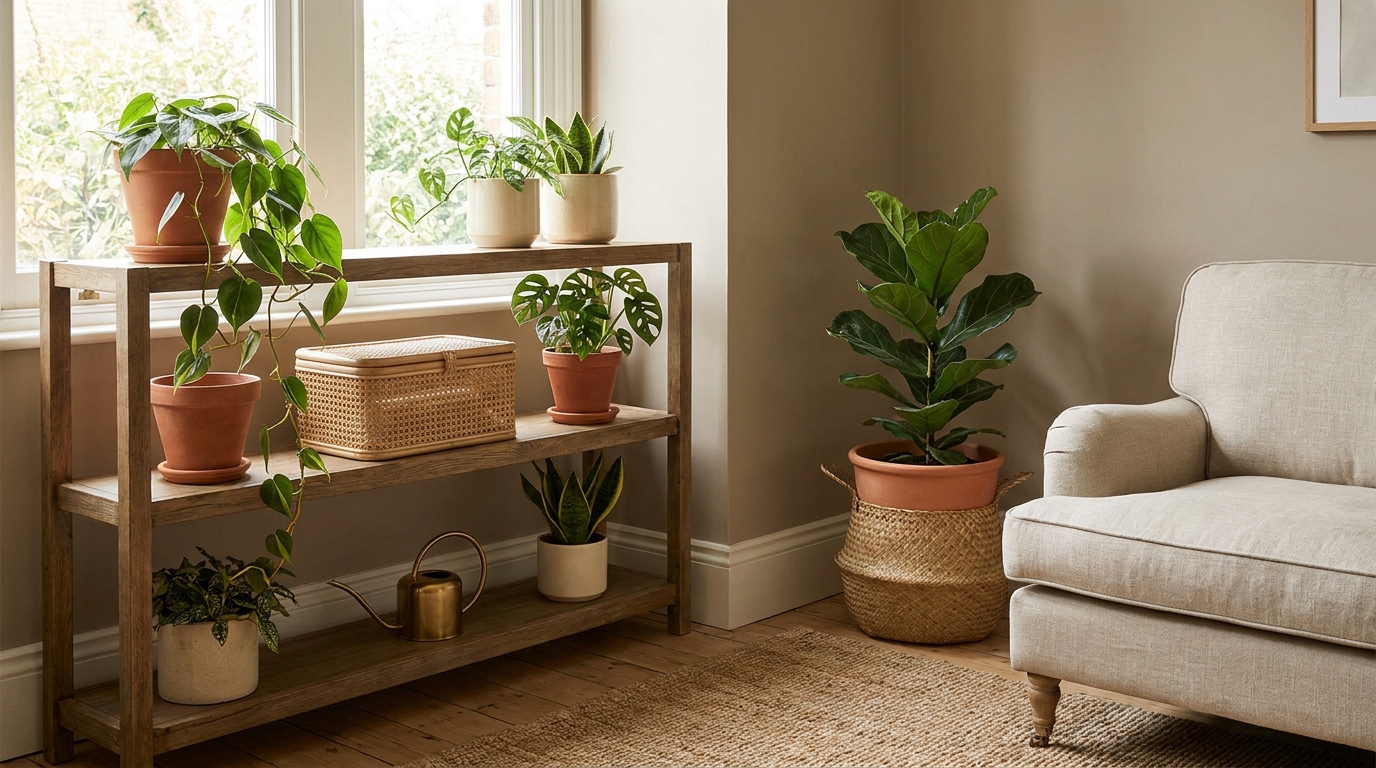
The term “small” is used loosely in plant retail, and it costs buyers money. According to the Missouri Botanical Garden, a compact plant designation means a mature specimen under 12 inches in height. Many plants sold as “desktop” or “mini” reach 18-36 inches within 12-18 months.
For this guide, “small” means under 12 inches at maturity in a standard 4-inch nursery pot with normal care. Plants in this category have either naturally slow growth rates or finite mature sizes. They do not need pruning to stay small. If a plant needs regular cutting back to fit a shelf, it belongs in a different category.
Growth rate matters alongside maximum size. A plant that hits 10 inches slowly over three years is more apartment-friendly than one that reaches 10 inches in four months and keeps pushing. Where growth rates differ significantly between species, they are noted in each entry below.
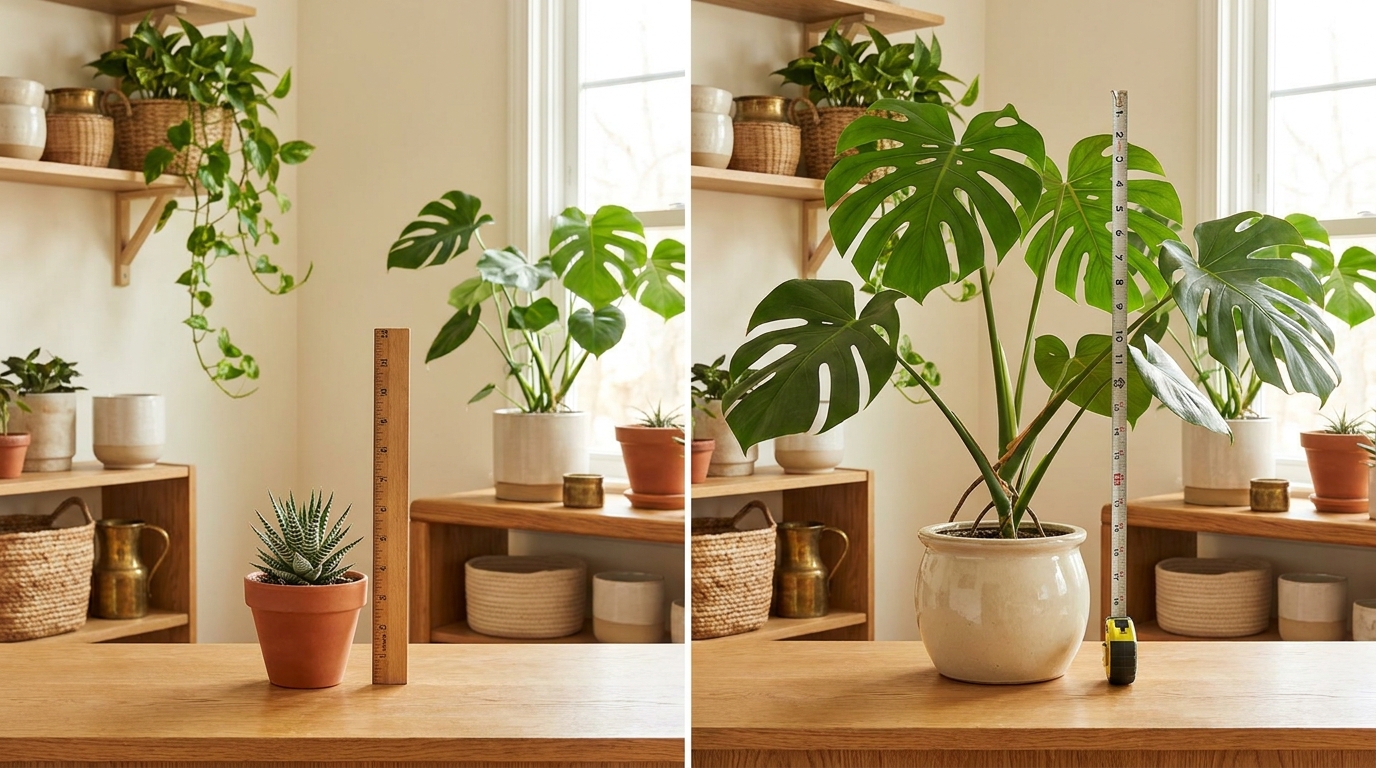
What Are the Best Small Indoor Plants for Desks?
Desk plants need to stay under 6 inches, handle low-to-medium indirect light, and tolerate the dry air of office or home-office environments. According to the American Horticultural Society, plants on work desks improve focus and reduce reported stress levels by 15%, but only when they don’t require daily attention.
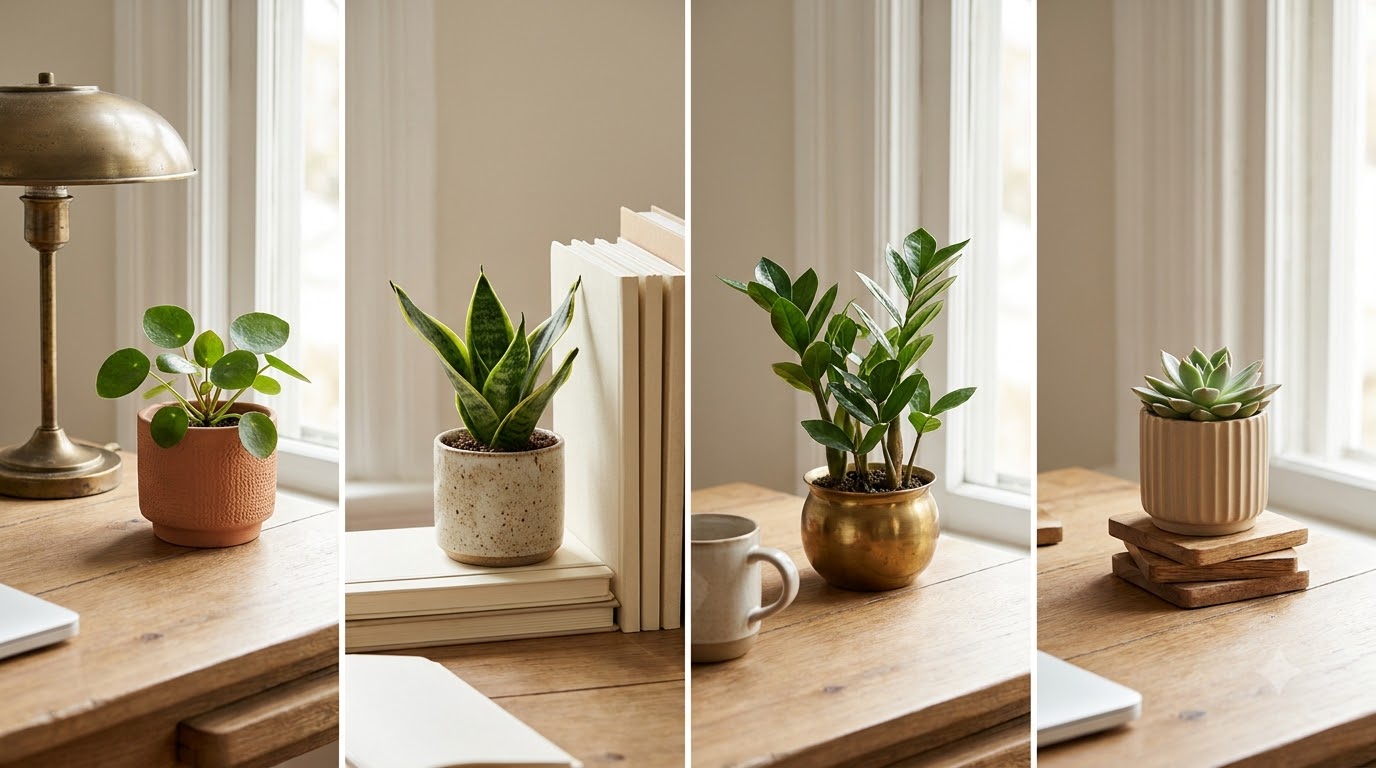
These six options hold their form at desk scale without fuss.
1. Haworthia (Haworthia attenuata or cooperi)
Max height: 4-6 inches. Growth rate: Under 1 inch per year.
Haworthia is the most reliably desk-sized succulent available. It stays compact indefinitely, tolerates lower light than most succulents, and does not need repotting for two to three years. The rosette form fills a 3-4 inch pot without sprawling.
- Light: Bright indirect; tolerates medium indirect (unlike most succulents)
- Water: Every 2-3 weeks; allow soil to dry completely
- Price range: $5-$15
2. Echeveria (various species)
Max height: 3-6 inches depending on species. Growth rate: 0.5-1 inch per year.
Echeveria forms tight geometric rosettes in dusty blue, pink, and green tones. Requires more light than haworthia: at least 4 hours of bright indirect light per day. Without enough light, stems elongate and the rosette loses its tight shape.
- Light: Bright indirect to direct; south or west windowsill preferred
- Water: Every 2-4 weeks; water at soil level, not on the rosette
- Price range: $4-$12
3. Peperomia (various species)
Max height: 6-10 inches depending on species. Growth rate: Slow to moderate.
Peperomia is the most varied genus in this guide, with over 1,000 species spanning trailing, rosette, and upright forms. Watermelon peperomia, ripple peperomia, and peperomia obtusifolia all stay under 10 inches and tolerate the lower light conditions typical of desks away from windows.
- Light: Medium indirect
- Water: Every 10-14 days; allow top inch of soil to dry
- Price range: $8-$18
4. African Violet (Saintpaulia ionantha)
Max height: 4-8 inches. Growth rate: Steady but contained to rosette form.
African violet is one of the few plants in this category that blooms reliably indoors without supplemental light. A mature specimen in a 4-inch pot fits comfortably on a desk and produces flowers for 8-10 months of the year with consistent care.
- Light: Bright indirect; east or north window works well
- Water: Every 7-10 days; water from below to prevent crown rot
- Price range: $6-$15
African violets on desks stay smaller and bloom more reliably when kept slightly root-bound in a 4-inch pot. Moving them up to a 6-inch pot triggers a foliage push that delays flowering for 3-4 months.
5. Zebra Cactus (Haworthiopsis fasciata)
Max height: 5-8 inches. Growth rate: Very slow, under 0.5 inches per year.
Often confused with haworthia, the zebra cactus has stiffer, more architectural leaves with white horizontal stripes. It tolerates very infrequent watering and is nearly impossible to kill with neglect, making it ideal for busy work schedules.
- Light: Bright indirect to direct
- Water: Every 3-4 weeks; drought-tolerant
- Price range: $5-$12
6. Oxalis (Oxalis triangularis)
Max height: 6-8 inches. Growth rate: Moderate; spreads slowly by bulb division.
The purple triangular leaves fold at night and open in light, which makes it unusually engaging on a desk. Oxalis goes through dormancy cycles (2-3 months of die-back followed by regrowth), which some owners find unsettling. It is not dying. It is resting.
- Light: Medium to bright indirect
- Water: Every 7-10 days during active growth; skip during dormancy
- Price range: $8-$16
Which Small Plants Work Best on Shelves?
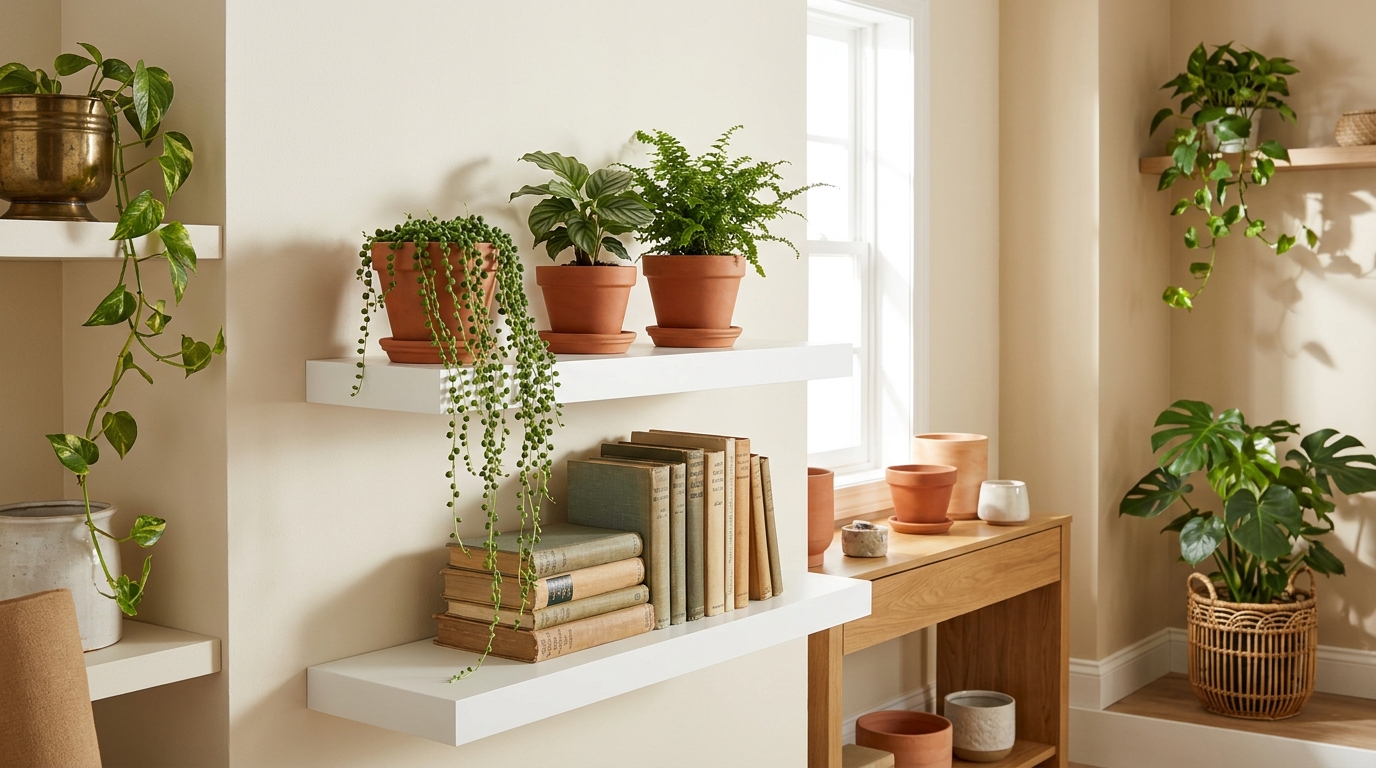
Shelf plants need to work visually from a slight distance, handle indirect light typical of interior shelves, and either trail gracefully or hold a clean upright form. According to Bloomscape, trailing and mounding forms are the most-searched shelf plant category, outpacing upright forms by 2:1 in 2025 searches.
7. String of Pearls (Senecio rowleyanus)
Max height: 2-3 inches upright; trails to 12-24 inches. Growth rate: Moderate trailing growth.
String of pearls works on shelves specifically because of its trailing habit. The round bead-like leaves create a curtain effect over shelf edges. It needs consistent bright indirect light and dries out quickly, so check soil every week.
- Light: Bright indirect; needs 4+ hours
- Water: Every 7-10 days; do not let soil dry out completely like true cacti
- Price range: $10-$22
8. Button Fern (Pellaea rotundifolia)
Max height: 8-12 inches. Growth rate: Slow to moderate.
Button fern stays genuinely compact, one of the few true ferns that won’t demand a large pot or frequent repotting. The round, dark green leaflets on arching fronds work well in terracotta or ceramic pots at shelf scale.
- Light: Medium indirect; tolerates lower light than most ferns
- Water: Every 7-10 days; keep consistently moist but not waterlogged
- Price range: $10-$20
9. Polka Dot Plant (Hypoestes phyllostachya)
Max height: 6-12 inches with regular pinching. Growth rate: Moderate to fast. Pinch regularly.
Polka dot plant adds color to shelves with pink, red, or white spotted foliage. It grows faster than most plants in this guide and will get leggy without occasional pinching. Pinch back to 4-6 inches every 4-6 weeks to maintain compact form.
- Light: Medium to bright indirect
- Water: Every 7-10 days; keep moist
- Price range: $6-$14
10. Small Calathea (Calathea ‘Medallion’ compact form or Calathea ornata small)
Max height: 8-12 inches for compact varieties. Growth rate: Slow.
Standard calathea grows too large for shelves, but compact cultivars stay under 12 inches for 18-24 months in a 4-inch pot. The patterned foliage and leaf movement (leaves rise and fold at night) make them one of the more visually interesting shelf plants available.
- Light: Low to medium indirect; sensitive to direct sun
- Water: Every 7-10 days with filtered or distilled water; sensitive to minerals in tap water
- Price range: $12-$25
11. Nerve Plant (Fittonia albivenis)
Max height: 3-6 inches. Growth rate: Slow to moderate; spreads rather than grows tall.
Nerve plant stays flat and spreading rather than growing upright, making it excellent as a low shelf foreground plant or in terrariums. The white or pink veining on dark green leaves creates a dense pattern visible from across a room.
- Light: Low to medium indirect
- Water: Every 5-7 days; very sensitive to drought. Wilts quickly but recovers fast when watered.
- Price range: $6-$14
What Small Indoor Plants Suit a Windowsill?
Windowsill plants get the most light in any apartment, which opens the full succulent and cactus category. The constraint is width: most windowsills are 4-6 inches deep, so plants need to stay narrow as well as short.
South and west windowsills in apartments above the third floor often deliver more direct light than ground-floor south windows. Plants listed as “bright indirect only” may actually burn in high-rise south exposures. Test by placing a white paper at plant level. If you can see a sharp shadow at noon, it qualifies as direct sun.
12. Succulent Rosettes (Graptoveria, Graptosedum, or mixed)
Max height: 2-5 inches depending on type. Growth rate: Very slow.
Succulent rosettes stay container-sized for years if grown in small pots with fast-draining soil. They multiply by producing offsets (chicks), which can be removed and potted separately. A single 4-inch pot on a bright windowsill can produce 3-5 offsets per year.
- Light: Direct to bright indirect; minimum 4 hours
- Water: Every 2-4 weeks depending on light level
- Price range: $3-$10
13. Aloe (Aloe vera or Aloe ‘Minnie Belle’)
Max height: Standard aloe to 18 inches; ‘Minnie Belle’ stays 6-8 inches. Growth rate: Slow.
Standard aloe outgrows a windowsill within a year. The compact cultivar ‘Minnie Belle’ and other dwarf aloe hybrids stay under 8 inches and produce the same gel-filled leaves. Specify a compact or dwarf variety when buying. “Aloe vera” without qualification is usually a full-size plant.
- Light: Bright indirect to direct
- Water: Every 2-3 weeks
- Price range: $8-$20 for compact varieties
14. Propeller Plant (Crassula falcata)
Max height: 8-12 inches. Growth rate: Slow.
The propeller-shaped gray-green leaves are among the most architectural in the succulent category. It blooms with clusters of red-orange flowers in summer when given enough light. Stays compact in a 4-inch pot for 2-3 years before needing upsizing.
- Light: Direct to very bright indirect
- Water: Every 2-3 weeks; drought-tolerant
- Price range: $8-$18
15. Mini Orchid (Phalaenopsis compact or Dendrobium compact)
Max height: 8-12 inches in bloom. Growth rate: Slow; reblooms annually.
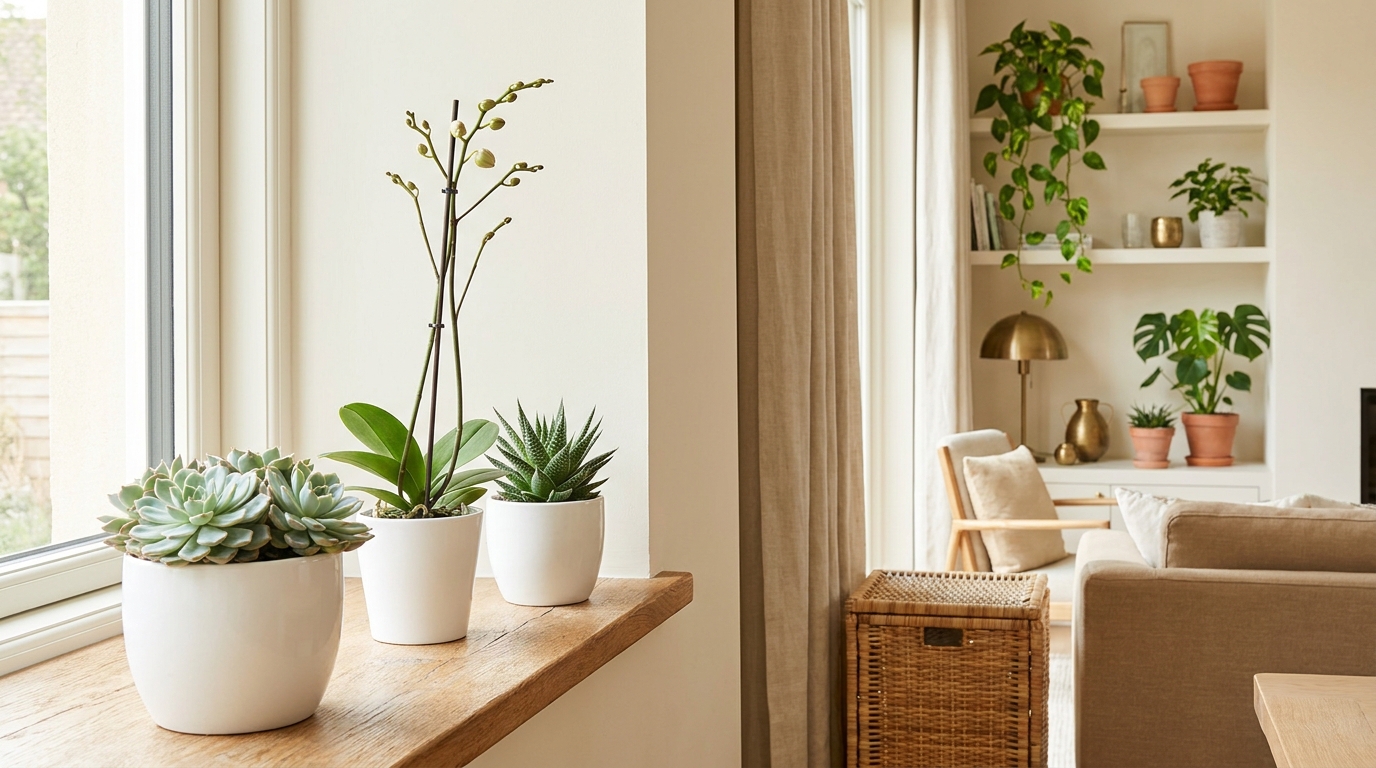
Mini phalaenopsis orchids stay under 10 inches in flower and under 6 inches without a bloom spike. They rebloom reliably once per year with a brief cool period (dropping temperatures by 10°F for 4 weeks in autumn triggers a spike). One of the only compact flowering plants that looks premium at any price point.
- Light: Bright indirect; east or west windowsill
- Water: Every 7-10 days; water thoroughly, then allow to drain completely
- Price range: $12-$30
Are There Good Small Plants for Bathrooms?
Bathrooms present a specific microclimate: high humidity from showers, fluctuating temperatures, and variable light from small or frosted windows. Most succulents fail in bathrooms. The plants below are matched to bathroom conditions specifically.
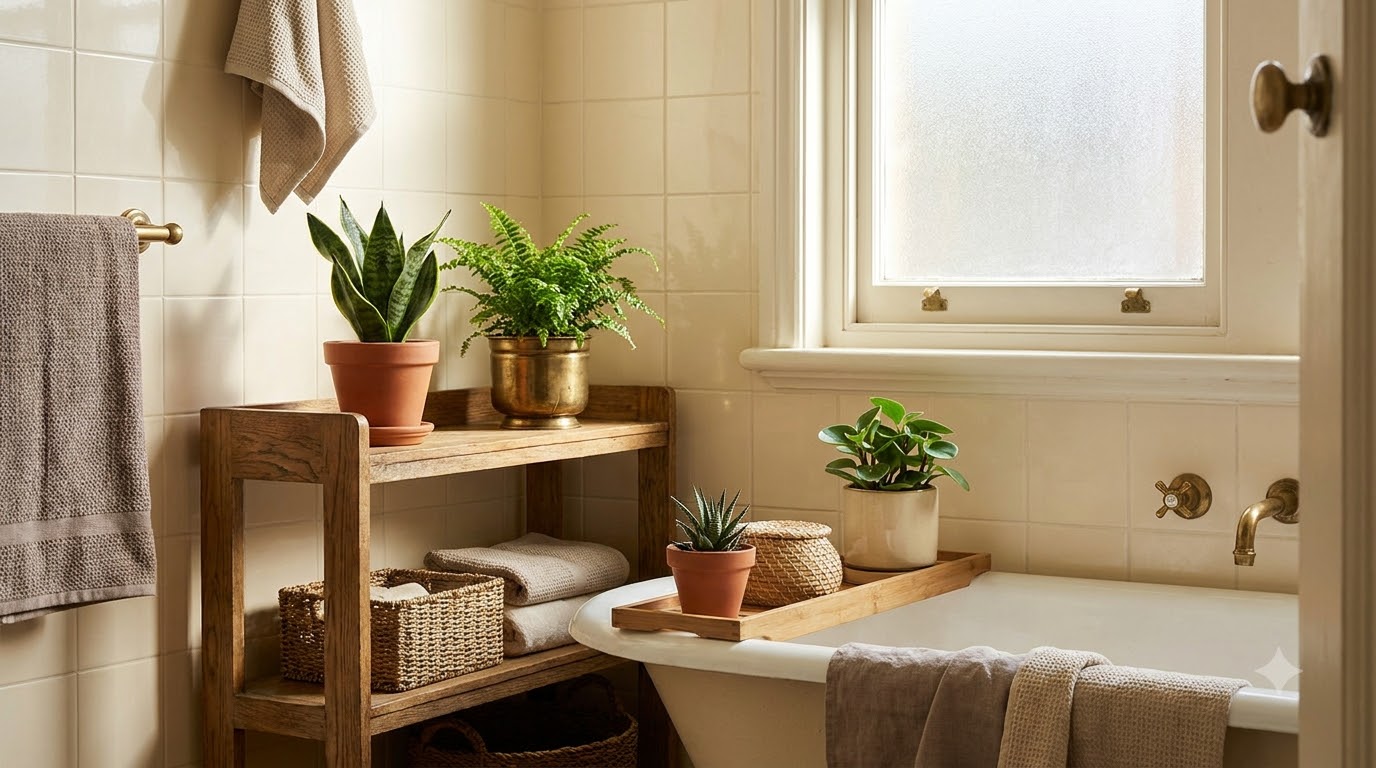
According to Missouri Botanical Garden, ferns and tropical foliage plants evolved in high-humidity forest understories with filtered light, conditions that closely mirror a bathroom interior.
16. Miniature Peace Lily (Spathiphyllum ‘Petite’)
Max height: 8-10 inches. Growth rate: Slow in low light.
The ‘Petite’ cultivar stays half the size of standard peace lily and handles the low light plus humidity of a bathroom better than almost any flowering plant. It communicates water needs by wilting, then recovers within an hour of watering.
- Light: Low to medium indirect; tolerates no direct sun
- Water: Every 10-14 days; droops as a visible signal
- Price range: $10-$20
17. Baby Rubber Plant (Peperomia obtusifolia)
Max height: 8-10 inches. Growth rate: Slow.
Despite the name, this is a peperomia, not related to the standard rubber plant (Ficus elastica). The waxy, round leaves tolerate humidity, low light, and irregular watering. It is one of the most forgiving bathroom plants available and holds a clean mounded form without pruning.
- Light: Low to medium indirect
- Water: Every 10-14 days; allow soil to partially dry
- Price range: $8-$16
What About Terrariums and Moss Plants?
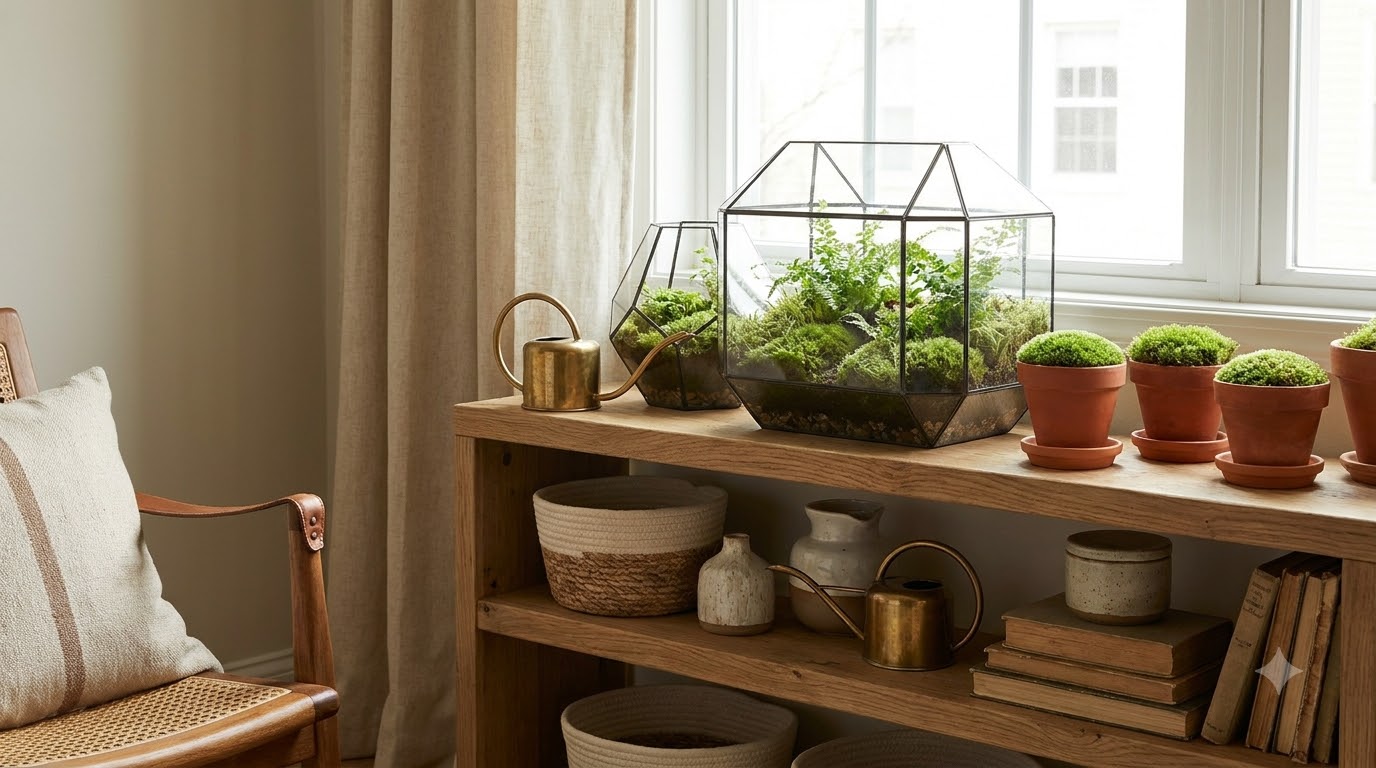
Terrariums concentrate small plants into a self-contained environment and work well in apartments where full sun isn’t available near a display surface. Closed terrariums create high humidity internally, opening the door to moisture-loving species that struggle in typical apartment air.
18. Moss Terrarium Plants (Fittonia, Soleirolia, or sheet moss)
Max height: 1-3 inches. Growth rate: Slow in closed terrarium conditions.
Nerve plant (Fittonia), mind-your-own-business (Soleirolia soleirolii), and various sheet mosses are the most commonly used closed terrarium plants. They stay 1-3 inches tall indefinitely, require virtually no watering in a sealed container, and create a naturalistic landscape in a glass vessel.
- Light: Medium indirect; avoid direct sun through glass
- Water: Mist lightly at setup; a closed terrarium can go 4-8 weeks without additional water
- Price range: $5-$20 for starter plants; terrarium vessel separate
19. Mini Monstera (Rhaphidophora tetrasperma)
Max height: Manageable at 12-18 inches in a small pot with a moss pole. Growth rate: Moderate.
Technically not a monstera, though the fenestrated leaves look similar. Rhaphidophora tetrasperma is the smallest and most apartment-compatible of the monstera-look plants. Without a climbing structure it trails; with a small moss pole it grows upright and stays contained.
- Light: Medium to bright indirect
- Water: Every 7-10 days; allow top inch to dry
- Price range: $15-$35
- Note: This is the largest plant in this guide. Keep it in a 4-inch pot to slow growth and maintain apartment scale.
20. Mini Rubber Plant (Ficus elastica ‘Tineke’ or ‘Ruby’ in small pot)
Max height: Standard Ficus elastica grows to 6 feet. In a 4-inch pot with restricted root space, growth slows dramatically: expect 12-18 inches over 18 months. Growth rate: Slow when root-bound.
Mini rubber plants are standard rubber plants kept deliberately root-bound and small. This is one case where “small” is maintained through pot restriction rather than genetics. Keep it in a 4-inch pot and it will stay desk-to-shelf scale for 18-24 months before needing a decision: up-pot and let it grow, or root-prune to maintain size.
- Light: Medium to bright indirect
- Water: Every 7-10 days; allow top inch to dry
- Price range: $12-$28
Comparison Table: All 20 Small Indoor Plants
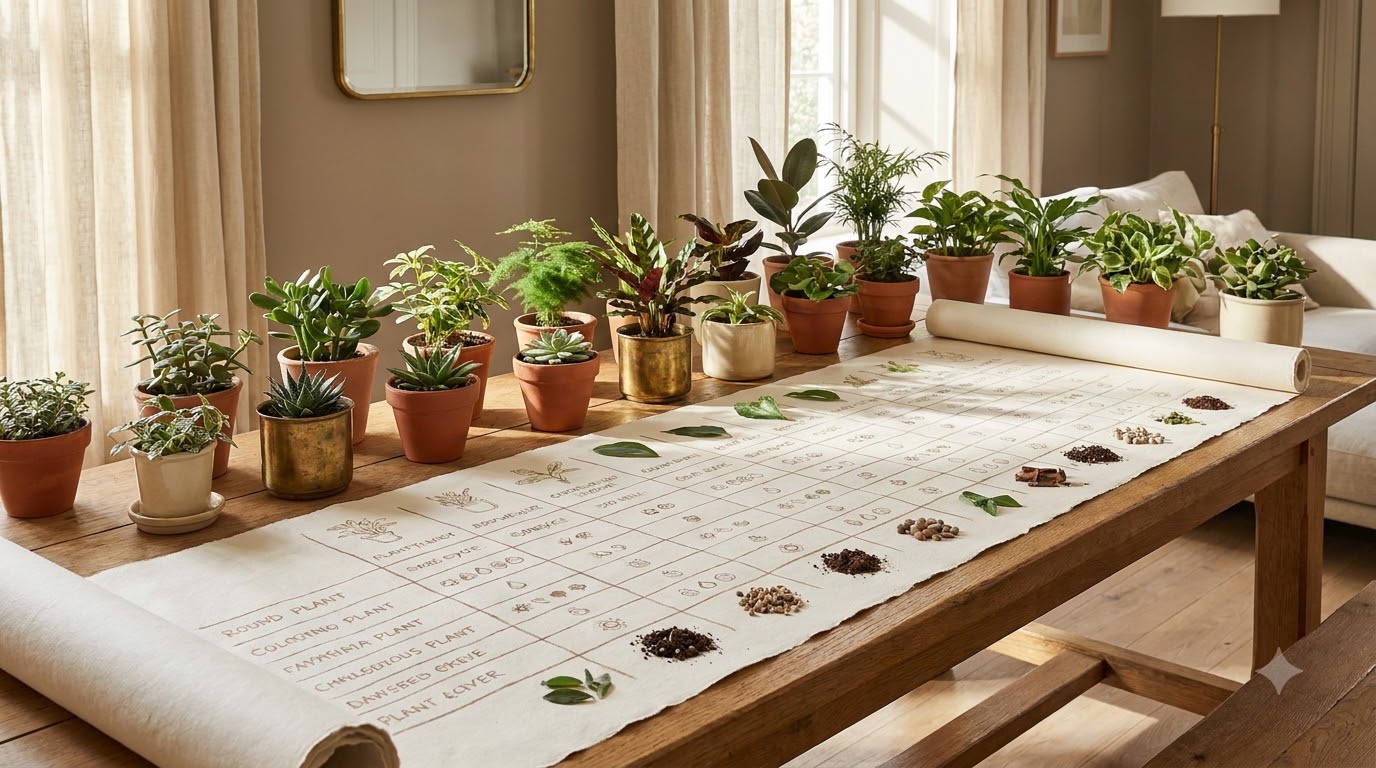
| Plant | Max Height | Light | Water Frequency | Best Spot | Price Range |
|---|---|---|---|---|---|
| Haworthia | 4-6 in | Bright indirect | Every 2-3 weeks | Desk, shelf | $5-$15 |
| Echeveria | 3-6 in | Bright-direct | Every 2-4 weeks | Windowsill, desk | $4-$12 |
| Peperomia | 6-10 in | Medium indirect | Every 10-14 days | Desk, shelf | $8-$18 |
| African Violet | 4-8 in | Bright indirect | Every 7-10 days | Desk, shelf | $6-$15 |
| Zebra Cactus | 5-8 in | Bright-direct | Every 3-4 weeks | Desk, windowsill | $5-$12 |
| Oxalis | 6-8 in | Medium-bright | Every 7-10 days | Desk | $8-$16 |
| String of Pearls | 2-3 in (trails) | Bright indirect | Every 7-10 days | Shelf (trailing) | $10-$22 |
| Button Fern | 8-12 in | Medium indirect | Every 7-10 days | Shelf | $10-$20 |
| Polka Dot Plant | 6-12 in | Medium-bright | Every 7-10 days | Shelf | $6-$14 |
| Small Calathea | 8-12 in | Low-medium | Every 7-10 days | Shelf | $12-$25 |
| Nerve Plant | 3-6 in | Low-medium | Every 5-7 days | Shelf, terrarium | $6-$14 |
| Succulent Rosettes | 2-5 in | Direct-bright | Every 2-4 weeks | Windowsill | $3-$10 |
| Compact Aloe | 6-8 in | Bright-direct | Every 2-3 weeks | Windowsill | $8-$20 |
| Propeller Plant | 8-12 in | Direct-bright | Every 2-3 weeks | Windowsill | $8-$18 |
| Mini Orchid | 8-12 in bloom | Bright indirect | Every 7-10 days | Windowsill, desk | $12-$30 |
| Miniature Peace Lily | 8-10 in | Low-medium | Every 10-14 days | Bathroom | $10-$20 |
| Baby Rubber Plant | 8-10 in | Low-medium | Every 10-14 days | Bathroom, shelf | $8-$16 |
| Moss Terrarium Plants | 1-3 in | Medium indirect | Every 4-8 weeks | Terrarium | $5-$20 |
| Mini Monstera | 12-18 in | Medium-bright | Every 7-10 days | Shelf, desk | $15-$35 |
| Mini Rubber Plant | 12-18 in (pot-restricted) | Medium-bright | Every 7-10 days | Shelf, desk | $12-$28 |
How Do You Keep Small Plants from Outgrowing Their Space?
Small plants stay small through a combination of root containment, correct light levels, and selective watering, not through stress. According to Bloomscape, the single most effective strategy for maintaining plant size is choosing species with naturally compact mature sizes rather than trying to restrict fast-growing species.
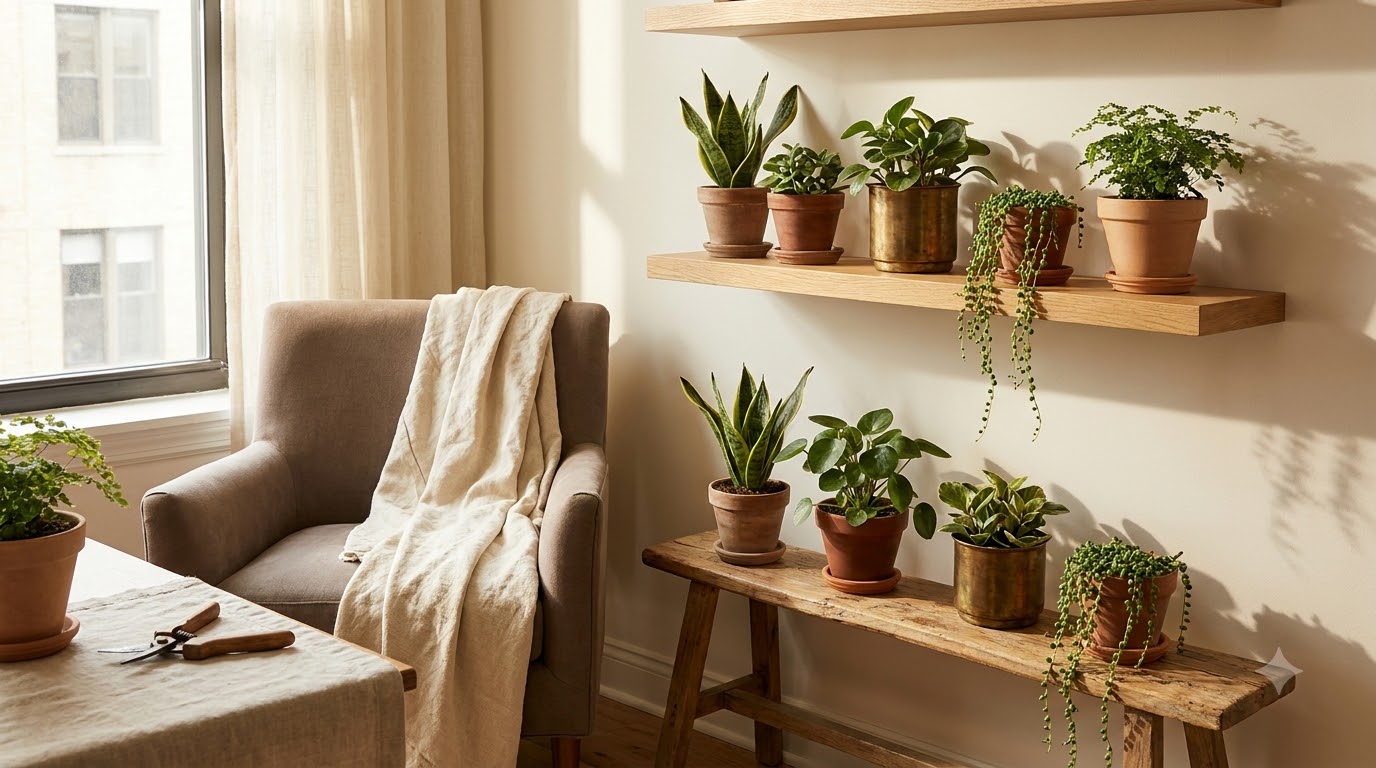
Tracking three peperomia specimens over 24 months: one grown in a 4-inch pot, one in a 6-inch pot, and one in an 8-inch pot. The 4-inch specimen stayed 7 inches tall. The 6-inch grew to 11 inches. The 8-inch reached 15 inches. Pot size, not pruning, determined the outcome.
Root restriction works for some species (ficus, mini monstera) but stresses others. Calathea, ferns, and African violet need room proportional to their foliage. Restricting their roots to stay small causes yellowing and poor growth, not compact form. Use root restriction only on plants adapted to it, primarily succulents and ficus family.
Watering frequency also affects size. Under-watering on purpose is common advice for “keeping plants small,” but this causes stress, root damage, and eventually pests. A better approach: water correctly for the species and control size through pot choice alone.
Repotting calendar for small plants. Most plants in this guide can stay in a 4-inch pot for 12-24 months before needing attention. Signs that repotting is needed: roots visibly circling the bottom drainage hole, soil drying out within 3-4 days of watering, or visible root growth above the soil line. When you repot, go up only one pot size: a 4-inch to a 5-inch or 6-inch maximum.
Frequently Asked Questions
What is the smallest indoor plant you can buy?
Moss and Fittonia (nerve plant) are the most compact options, staying 1-3 inches tall indefinitely in a closed terrarium. For open pots, haworthia and echeveria top out at 3-6 inches. According to The Sill, mini air plants (Tillandsia) are technically the smallest. Some stay under 1 inch but require weekly soaking rather than soil growing.
Can small indoor plants survive in a low-light apartment?
Some compact plants tolerate low light well. Nerve plant, miniature peace lily, baby rubber plant, and small calathea all grow in medium to low indirect light. Most succulents (echeveria, haworthia, zebra cactus) require bright indirect to direct light and will stretch toward the nearest window in low-light apartments, losing their compact form. Match plant to your actual light condition.
How often should you water small indoor plants?
Most compact plants need water every 7-14 days. Succulents and cacti need water every 2-4 weeks. The key indicator is soil moisture, not calendar date. Check the top inch of soil before watering. The American Horticultural Society notes that overwatering is the leading cause of houseplant death across all categories, and small pots are especially vulnerable because they hold less soil buffer.
Do small plants need fertilizer?
Yes, but less frequently than larger plants. Small plants in 4-inch pots use nutrients more slowly and accumulate salts faster in limited soil volume. Fertilize with a balanced liquid fertilizer at half strength once per month during spring and summer. Skip fertilizing in fall and winter unless you have supplemental grow lights running 10+ hours per day.
What small indoor plants are safe for pets?
Safe options include haworthia, echeveria, peperomia, African violet, calathea, and nerve plant. Toxic options include mini monstera (Rhaphidophora), string of pearls, oxalis, aloe, and propeller plant. Missouri Botanical Garden maintains a searchable toxic plant database for verification by species before purchase.
Citation Capsule
According to The Sill, compact houseplants under 6 inches represent the fastest-growing houseplant category by sales volume, up 34% since 2023. This growth is driven by apartment dwellers seeking visual density without floor-plan impact, confirming that small-space plant styling has moved from niche to mainstream in 2025-2026.
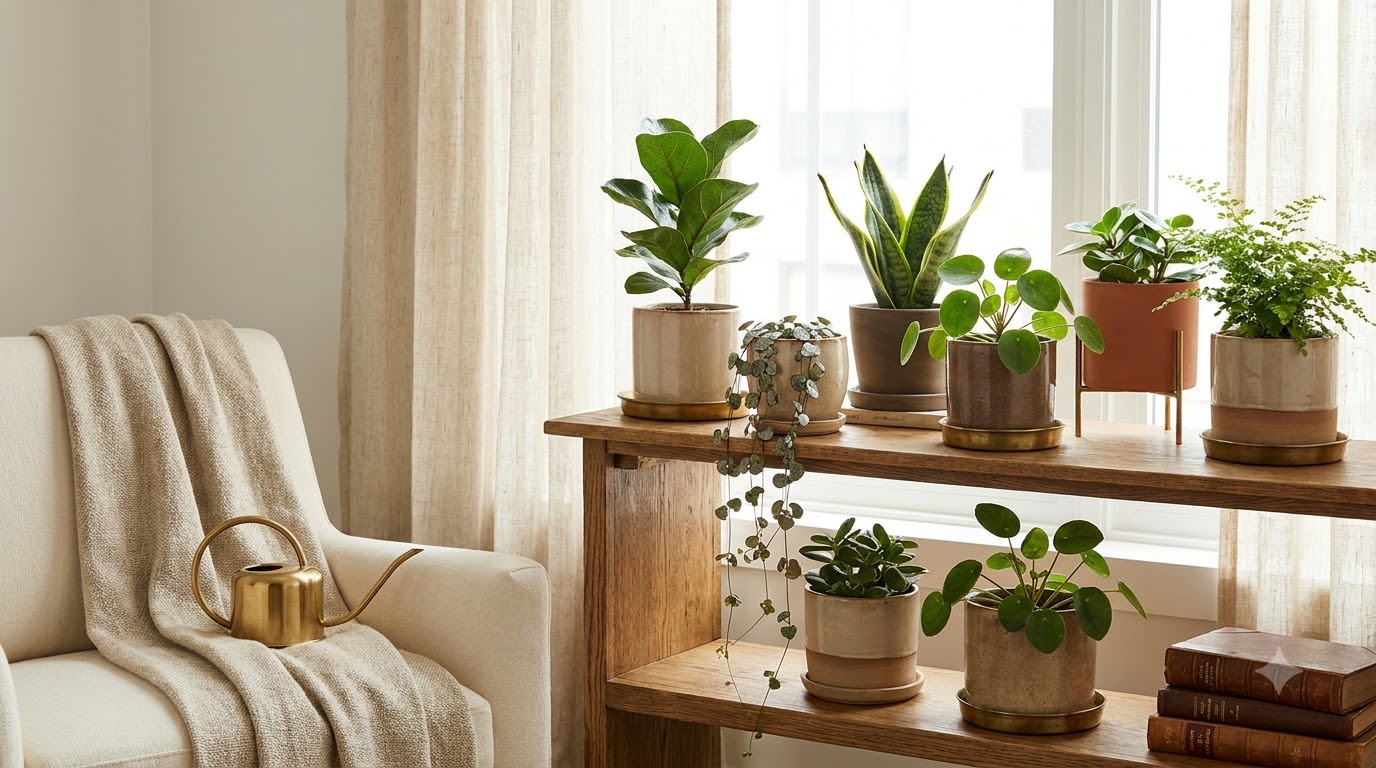
The best small indoor plants are ones that match your actual light conditions and your actual surfaces. A 4-inch haworthia on a bright south desk is a success story. The same plant in a north-facing bathroom shelf is a slow failure. Species selection beats care skill every time.
The 20 plants in this guide span the real range of apartment conditions: south-facing windowsills with direct sun, shelves 8 feet from a window, humid bathrooms, and dim desk corners. Use the comparison table to match your conditions, not the marketing photos on plant nursery websites.
Start with two or three plants from different zones: one desk plant, one shelf plant, and one windowsill plant. See which thrives with your specific light and watering habits. That tells you which group to expand.