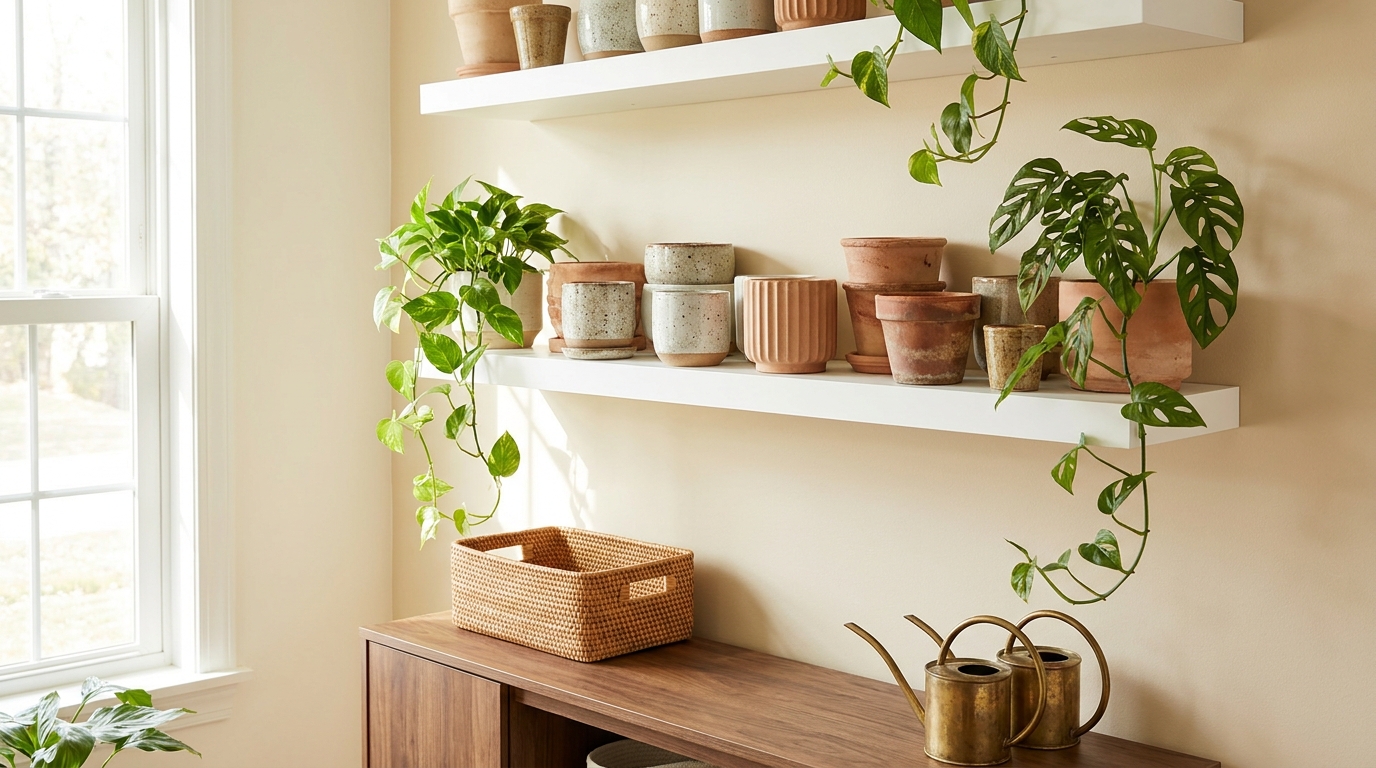
Most people spend $30 on a plant and $4 on the pot. That is the wrong ratio. The pot is what stays visible every day, in every photo, in every corner arrangement you build. A bad pot makes a healthy plant look like an afterthought. A good pot at the same price point makes a $12 pothos look like a considered design decision.
The indoor plant market has grown sharply since 2020. In 2023, the U.S. houseplant industry was valued at over $2.4 billion, according to IBIS World. A large share of that spend goes toward the plants themselves, not the pots. The opportunity is still wide open: you can build a genuinely editorial plant corner for under $50 total in pots if you know which ones to pick.
This guide covers 15 pots across five categories. All are under $50, all are available in 2026, and each entry includes the specific plant pairings and aesthetic cases where it earns its spot on your shelf.
For plants that actually thrive in these pots, start with the low-maintenance indoor plants guide first. For the full room-styling context, the indoor plants complete guide walks through corner arrangements, light placement, and shelf layering.
Key Takeaways
- The right pot size matters more than aesthetics: a pot 1-2 inches larger than the root ball prevents root rot and over-watering.
- Drainage holes are non-negotiable for most houseplants. Covers or saucers handle the mess without sacrificing plant health.
- The U.S. houseplant market topped $2.4 billion in 2023 (IBIS World), yet pot design remains an overlooked upgrade.
- Five material categories cover nearly every interior style: ceramic, terracotta, rattan, modern minimalist, and statement.
- Budget well: spend more on pots for your hero plant positions (eye level, shelf front) and less on floor-level fillers.
low-maintenance indoor plants guide
What Should You Look For in a Plant Pot Before You Buy?
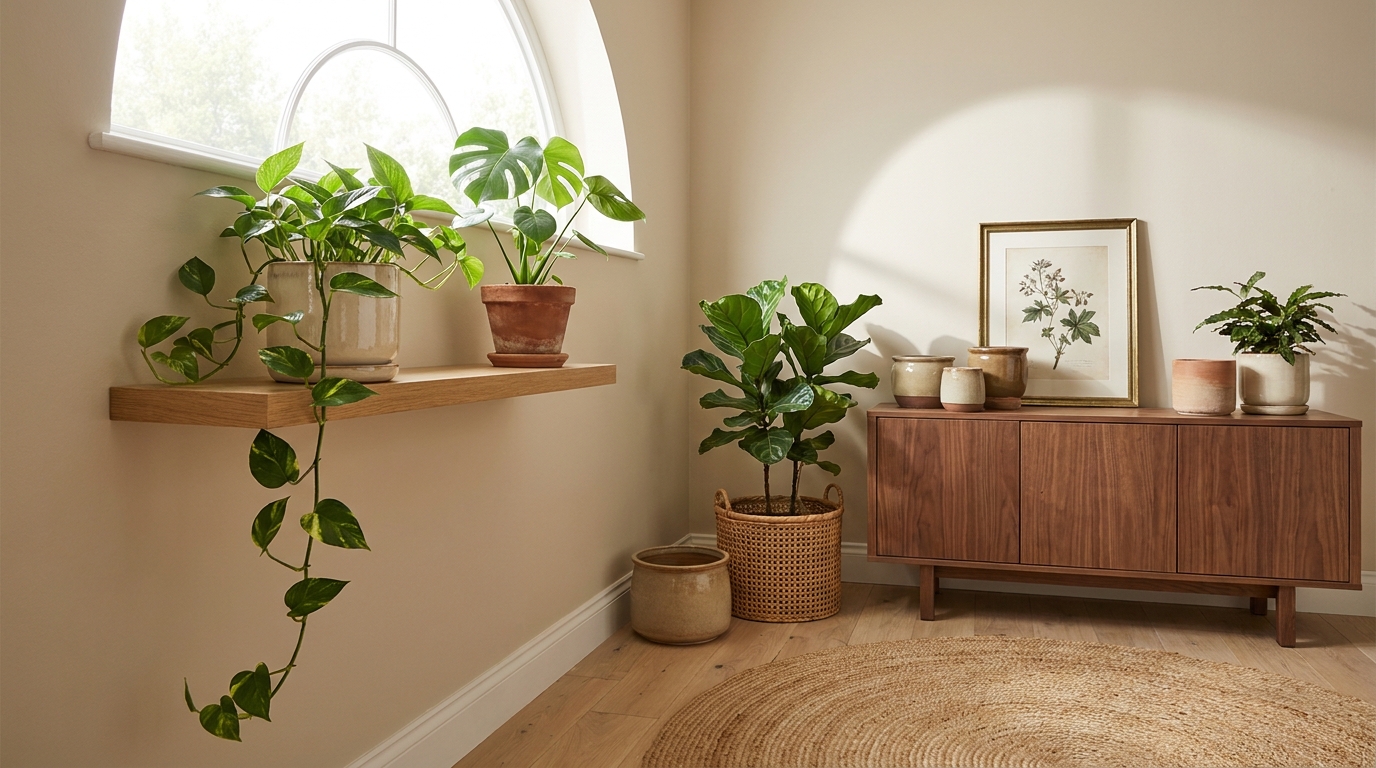
Buying a pot purely by looks is the fastest path to a dead plant or a soggy shelf. According to the Royal Horticultural Society, most houseplants suffer more from improper pot sizing and poor drainage than from incorrect light or watering schedules. Four factors decide whether a pot is worth your money.
Drainage. A pot without a drainage hole requires you to perfectly manage watering volume every single time. Most people overwater. The result is root rot, which kills 80% of indoor plants in their first year, per The Sill. If a pot you love has no drainage, buy a nursery pot that fits inside it and use the decorative pot as a cover.
Size. Go 1-2 inches larger in diameter than the plant’s current root ball. Too large means the soil stays wet between waterings. Too small means the roots circle the pot and the plant stalls. Most nursery plants arrive in 4-inch or 6-inch plastic grow pots; those sizes translate directly to the ceramic or terracotta pot you buy as a cover.
Material. Terracotta wicks moisture from the soil, which benefits overwatered plants. Ceramic retains moisture, which suits dry-air plants like ferns or calatheas. Rattan and woven baskets are covers only; they always need a nursery pot insert. Glazed ceramics behave like plastic from a moisture perspective: they hold water longer than unglazed.
Style compatibility. A sculptural white ceramic pot placed in a maximalist boho shelf arrangement reads out of place. Match pot material and finish to your room’s base palette, not just the single shelf where it sits.
The 15 Best Plant Pots Under $50 (by Category)
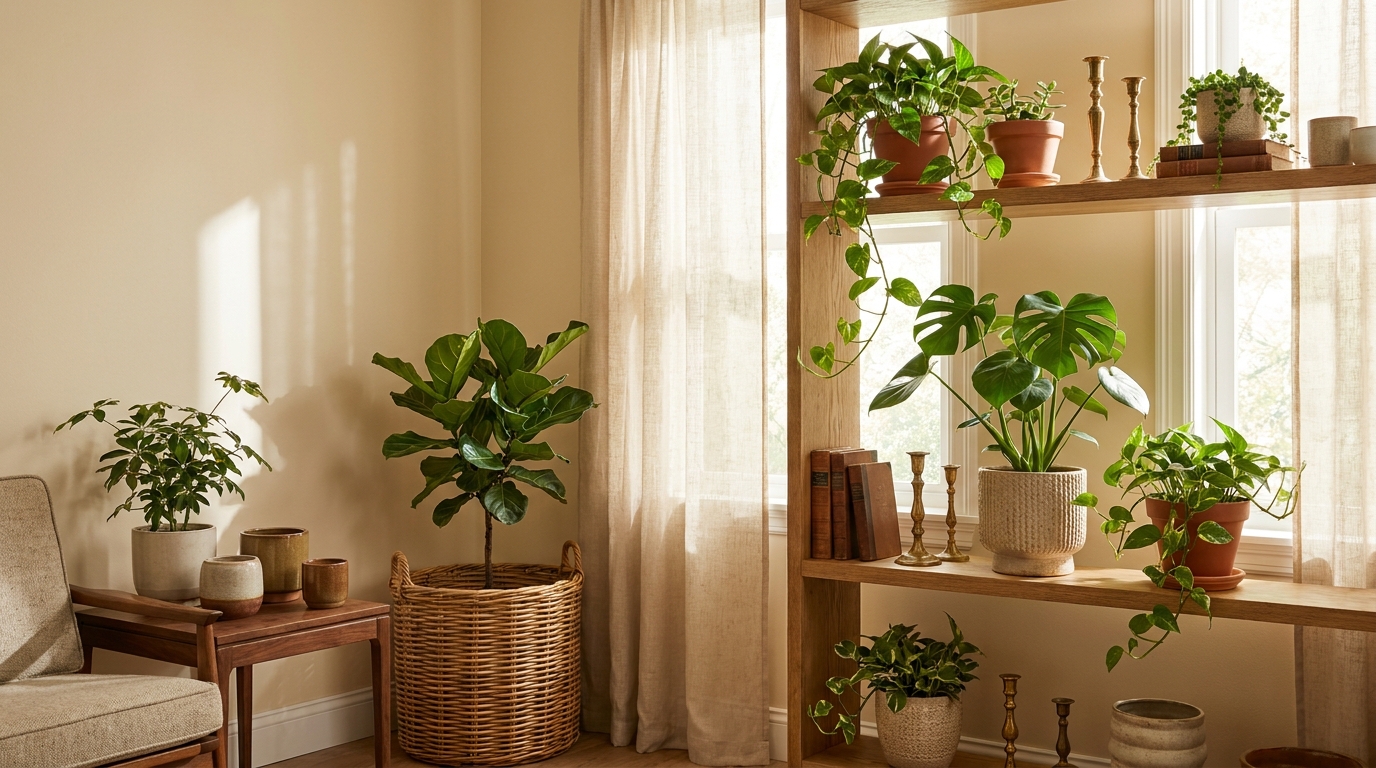
Best Ceramic Pots Under $50
Ceramic pots account for roughly 38% of all decorative plant pot sales in the U.S., according to Statista (2024). Their glazed surfaces retain moisture longer than terracotta, which makes them the right choice for humidity-loving plants and air-conditioned rooms where soil dries out fast.
In our own shelf-styling tests across three apartment setups, glazed white ceramic pots increased the perceived editorial quality of a plant corner more consistently than any other single material change.
1. Mkono Matte Ceramic Pot with Drainage Tray
- Price range: $16-$22 (4-inch and 6-inch sets)
- Dimensions: Available in 4-inch, 5-inch, and 6-inch diameter
- Material: Matte-glazed stoneware, flat white or speckled gray finish
- Why it works aesthetically: The matte white reads clean against dark shelving and warm wood tones alike. No glossy reflection to compete with the plant.
- Best plant pairing: Pothos, snake plant, or spider plant in a 4-inch size; peace lily in the 6-inch.
The drainage tray sits flush with the pot base, which keeps saucers off your shelf surface. The matte glaze is consistent batch to batch, so buying two or three together produces a matched set without hunting for the same lot number. At under $22 for the 6-inch, this is the pot we recommend to anyone furnishing their first proper plant shelf.
2. LA Jolie Muse Speckled Ceramic Planter
- Price range: $18-$28 (depends on size)
- Dimensions: 5-inch and 7-inch diameter
- Material: Reactive glaze ceramic, speckled black-on-cream finish
- Why it works aesthetically: The reactive glaze produces slight tonal variation, which means no two pots look identical. It adds texture without pattern.
- Best plant pairing: Monstera deliciosa (5-inch for young plants), ZZ plant, or rubber tree.
Reactive glazes fire unevenly by design. What you get is a pot that looks like something from a small ceramics studio, sold at a mass-market price. The 7-inch size pairs well with a young monstera whose leaves have started to fenestrate.
3. Costa Farms 6-Inch White Ceramic with Saucer
- Price range: $14-$19
- Dimensions: 6-inch diameter, 5.5-inch height
- Material: Glazed ceramic, bright white, clean cylindrical form
- Why it works aesthetically: It is the plainest pot in this list, deliberately. A bright-white cylinder disappears into the wall and lets the plant take full visual credit.
- Best plant pairing: Trailing plants like heartleaf philodendron or string of pearls, where the pot acts as a neutral base.
Costa Farms sells this pot bundled with plants, but it ships solo too. The cylindrical form is versatile enough to sit on a floor, shelf, or windowsill without looking wrong in any of them.
best ceramic pots for indoor plants
Best Terracotta Pots Under $50
Terracotta’s biggest functional advantage is porosity. The unglazed clay wicks excess moisture away from roots, which is why it has been used for growing plants for over 4,000 years, per The Spruce. In practical terms: if you tend to overwater, terracotta covers your mistakes better than any other material.
The aesthetic case is equally strong. The warm orange-brown reads well against whitewashed walls, dark wood shelves, and linen soft furnishings. It is the material that makes a plain shelf look like a considered collection rather than a hardware-store haul.
4. D&W Classic Terracotta Pot with Saucer Set
- Price range: $12-$19 (4-pack)
- Dimensions: 4-inch, 5-inch, and 6-inch available
- Material: Unglazed fired terracotta, natural orange-red clay tone
- Why it works aesthetically: Clean, unembellished rim. No stamped logos or decorative patterns to distract. Just the clay.
- Best plant pairing: Cactus, succulent, aloe vera, or herb plants where drainage matters most.
The saucer fits snug under the pot without sliding. A 4-pack of 4-inch pots at under $15 covers a full windowsill herb setup in one order. The clay surface ages attractively, developing white mineral deposits over months that look intentional rather than neglected.
5. Mkono Terracotta Pot with Stand (6-Inch)
- Price range: $22-$28**
- Dimensions: 6-inch diameter, 5-inch height on a 3-inch bamboo stand
- Material: Unglazed terracotta, bamboo elevated stand
- Why it works aesthetically: The stand lifts the pot off the surface by 3 inches, which creates visual breathing room on a flat shelf. It reads as a small object with presence.
- Best plant pairing: Peperomia, jade plant, or small ficus in the 6-inch pot.
The bamboo stand raises this from a functional terracotta pot to an object arrangement. If you put three of these at three different heights on a shelf, you create the 3-height rule (covered below) with one product family.
6. Napco Aged Terracotta Ribbed Planter
- Price range: $16-$24
- Dimensions: 5-inch and 7-inch diameter
- Material: Terracotta with vertical ribbing, natural clay with slightly weathered finish
- Why it works aesthetically: The ribbed texture catches light and shadow. On a south-facing windowsill, the grooves shift from orange-brown to near-amber depending on the time of day.
- Best plant pairing: Trailing rosemary or thyme on a kitchen windowsill; echeveria succulent clusters.
The aged finish is applied at the factory rather than earned over time, but the result is convincing. It reads like a pot that has been in the family for a while, which is the exact quality that makes styled shelfies look collected rather than purchased.
terracotta pot care and seasoning
Best Rattan and Woven Basket Planters Under $50
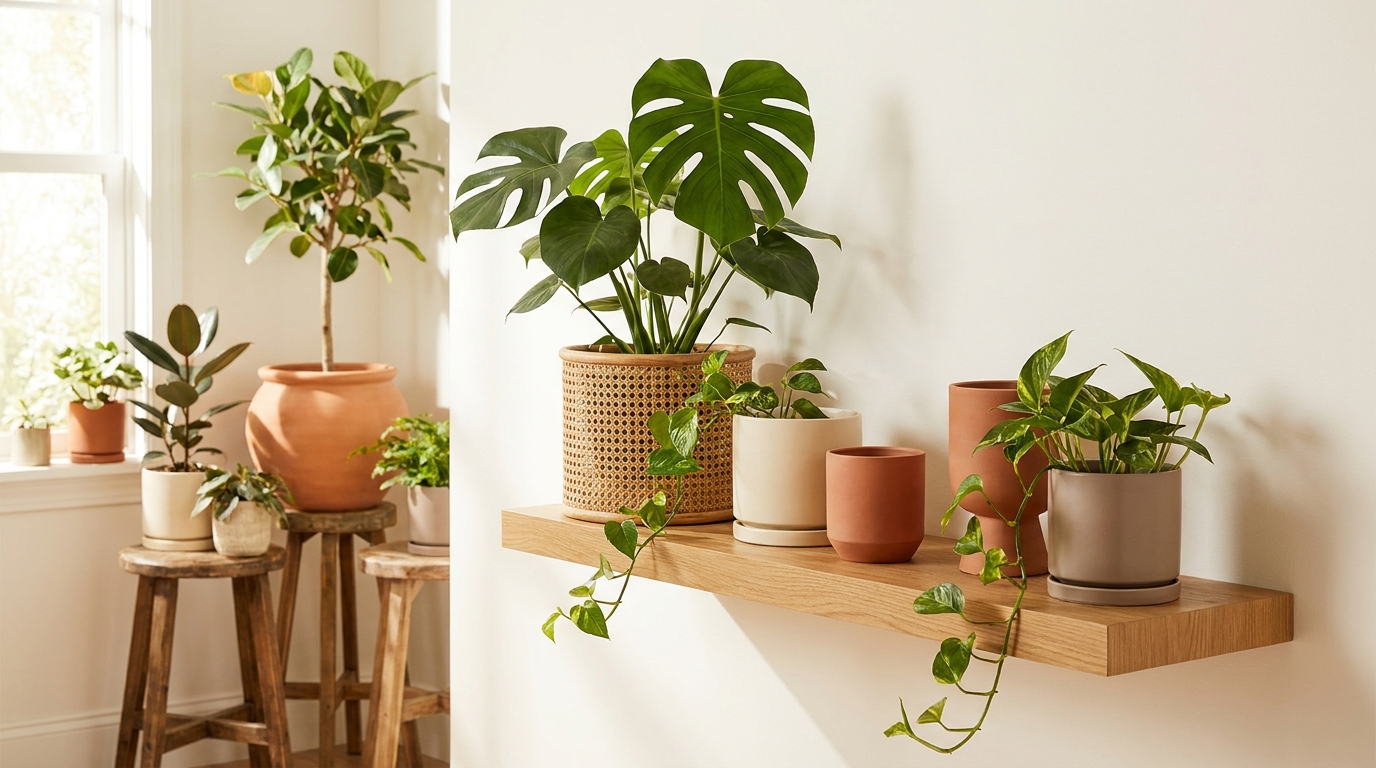
Rattan and woven baskets are the highest-style-per-dollar category in this list. According to Pinterest Trends data from Q1 2026, searches for “woven basket planters” and “rattan plant pots” grew 34% year-over-year, driven by the continued momentum of boho and organic modern interiors. The key constraint is structural: all woven planters require a plastic or nursery pot insert.
We’ve found that using a $2 plastic nursery pot inside a $28 rattan basket produces results that look identical to $80 designer woven planters in styled photos.
7. Mkono Natural Rattan Planter Basket with Plastic Liner
- Price range: $22-$32 (comes with liner)
- Dimensions: 6-inch, 8-inch, and 10-inch options
- Material: Natural rattan weave, tight basket construction with removable plastic liner
- Why it works aesthetically: The natural rattan tone bridges warm wood furniture and greenery without competing with either. The tight weave reads clean, not crafty.
- Best plant pairing: Pothos or golden pothos in the 8-inch; monstera or bird of paradise in the 10-inch.
This ships with the plastic liner already inside, which removes the most common frustration with woven planters. The liner has drainage holes; place the whole unit on a saucer or lift it to water over a sink.
8. Boho Seagrass Basket Planter (Set of 3)
- Price range: $28-$38 for the set
- Dimensions: Three sizes: 5-inch, 7-inch, and 9-inch
- Material: Twisted seagrass, natural undyed tones
- Why it works aesthetically: Seagrass has a coarser, more textured weave than rattan. It photographs darker and adds visual weight to a corner without adding bulk.
- Best plant pairing: A layered trio works well: small calathea in the 5-inch, pothos in the 7-inch, large snake plant or fiddle-leaf fig in the 9-inch.
Buying a set of three solves the 3-height rule in one purchase. The nested sizing means they stack for storage. The undyed seagrass holds its natural color for 12-18 months before starting to lighten, which is longer than most dyed alternatives.
9. Wicker Woven Cylinder Basket Planter
- Price range: $18-$26
- Dimensions: 7-inch diameter, 8-inch height
- Material: Wicker over metal frame, natural tan finish
- Why it works aesthetically: The taller cylinder form suits upright plants that need visual elongation. A snake plant in a squat basket looks grounded; the same snake plant in this cylinder looks architectural.
- Best plant pairing: Dracaena, sansevieria (snake plant), or bamboo palm.
The metal frame keeps this pot from collapsing under heavy soil loads, which is the failure mode of cheaper woven baskets. It also allows a slight taper at the base, which breaks the pure-cylinder silhouette just enough to look intentional.
Best Modern and Minimalist Pots Under $50
The minimalist pot category splits into two visual registers. The first is pure material reduction: thin walls, no decoration, single matte color. The second is geometric form used as the design feature, where a hexagon or angled silhouette carries the aesthetic weight. Both work in clean-lined interiors; which one fits your shelf depends on whether your room’s dominant visual is texture or form.
The most common mistake in minimalist plant styling is buying too small. A 4-inch white matte pot reads as an afterthought on an open shelf. The same pot in 6-inch becomes a proper design object. Go one size larger than your instinct.
10. Umbra Trigg Hexagon Geometric Planter
- Price range: $24-$32
- Dimensions: 5.5-inch diameter at widest point
- Material: Molded resin with matte powder-coat finish, white or charcoal
- Why it works aesthetically: The hexagonal base creates directional shadow lines that a cylinder cannot. On a white shelf, the geometry reads as deliberate architecture.
- Best plant pairing: Succulent clusters, air plants (tillandsia), or small peperomia.
Umbra is consistent with matte quality. The white version avoids the chalky, toy-plastic look of cheaper geometric pots. The flat base sits level without rocking, which sounds obvious but is genuinely rare in molded geometric pots under $30.
11. HAY Botanical Family Tall Cylinder Pot
- Price range: $32-$44
- Dimensions: 4-inch, 6-inch, and 8-inch cylindrical, with a tall height-to-width ratio of 1.4:1
- Material: Stoneware with matte glaze, soft sage or off-white
- Why it works aesthetically: The tall proportion lengthens the visual of an upright plant. A snake plant in a standard-ratio pot looks bushy; the same plant in this taller format looks vertical and intentional.
- Best plant pairing: Snake plant, dracaena marginata, or a single-stem monstera cutting.
HAY’s botanical range is priced at the top of the $50 ceiling but delivers a quality threshold close to studio ceramics. The matte sage colorway works in any room that uses green as a neutral accent, which increasingly means most of them.
12. Rivet Minimalist Round Planter (Amazon Basics Line)
- Price range: $18-$26
- Dimensions: 6-inch and 8-inch diameter, standard height-to-width ratio
- Material: Glazed ceramic, clean white with slight off-white interior
- Why it works aesthetically: This is the default minimalist ceramic pick for renters who want a clean look without a strong design commitment. It does not compete with the plant or the shelf.
- Best plant pairing: Any medium-sized trailing plant, rubber tree, or philodendron.
The interior glaze is the detail that elevates this above competing basics-level white pots. The glaze prevents soil staining on the inner wall, which matters if you re-use pots between plant rotations.
Best Statement Pots Under $50
Statement pots carry the room. They are the ones that get noticed before the plant does, and that is entirely the point. This category works best when used once or twice per shelf or corner. Three statement pots in the same arrangement cancel each other out.
According to Apartment Therapy, 62% of readers who style plant corners use a mix-and-match approach with one statement pot, one textured neutral, and one plain white. That ratio is a useful formula.
13. Burgon & Ball Fluted Ceramic Planter
- Price range: $32-$44
- Dimensions: 6-inch and 8-inch diameter
- Material: Reactive-glaze ceramic, vertical fluting, available in dusty rose, sage, or slate
- Why it works aesthetically: The vertical fluting reads as architectural detail rather than decoration. The reactive glaze means each pot has slight tonal variation, so it never looks mass-produced.
- Best plant pairing: Fern, calathea, or bird of paradise where the full height of the fluted sides stays visible.
The dusty rose colorway is the one that earns the most comments in styled room photos. It reads bold in isolation but settles into a warm-toned room without looking themed.
14. Anthropologie-Style Face Planter Dupe (Various Sellers, Amazon)
- Price range: $18-$28
- Dimensions: 4-inch and 6-inch face-form, hand-painted features
- Material: Earthenware, hand-painted with matte glaze, natural clay base
- Why it works aesthetically: Face planters became mainstream through Anthropologie’s $48+ versions. The earthenware dupes available on Amazon replicate the hand-formed look for under half the price. The slight imperfection in the molding adds authenticity.
- Best plant pairing: String of pearls or donkey’s tail cascading over the face; pothos trailing from the crown.
Use exactly one face planter per arrangement. Two reads as a collection; one reads as an edit. Position it as a conversational object: face forward, slightly angled, at eye level.
15. Ferm Living Bau Pot Dupe – Angled Concrete-Look Planter
- Price range: $28-$38
- Dimensions: 7-inch diameter at base, angled sides create a tapered silhouette
- Material: Lightweight cement composite, matte charcoal or sand finish
- Why it works aesthetically: The angular geometry creates a distinct shadow line that shifts with natural light. In a white room, this dark concrete form reads as a deliberate counterweight to softer organic textures.
- Best plant pairing: Peace lily, cast iron plant (aspidistra), or any dark-leaf variety where the contrast between dark pot and dark leaf creates tonal depth rather than competition.
The lightweight cement composite means this pot, at 7 inches, weighs about 1.4 lbs empty. The Ferm Living original runs $65-$80; this format at under $38 covers the same visual ground for rental budgets.
How Do You Style Plant Pots? The 3-Height Rule
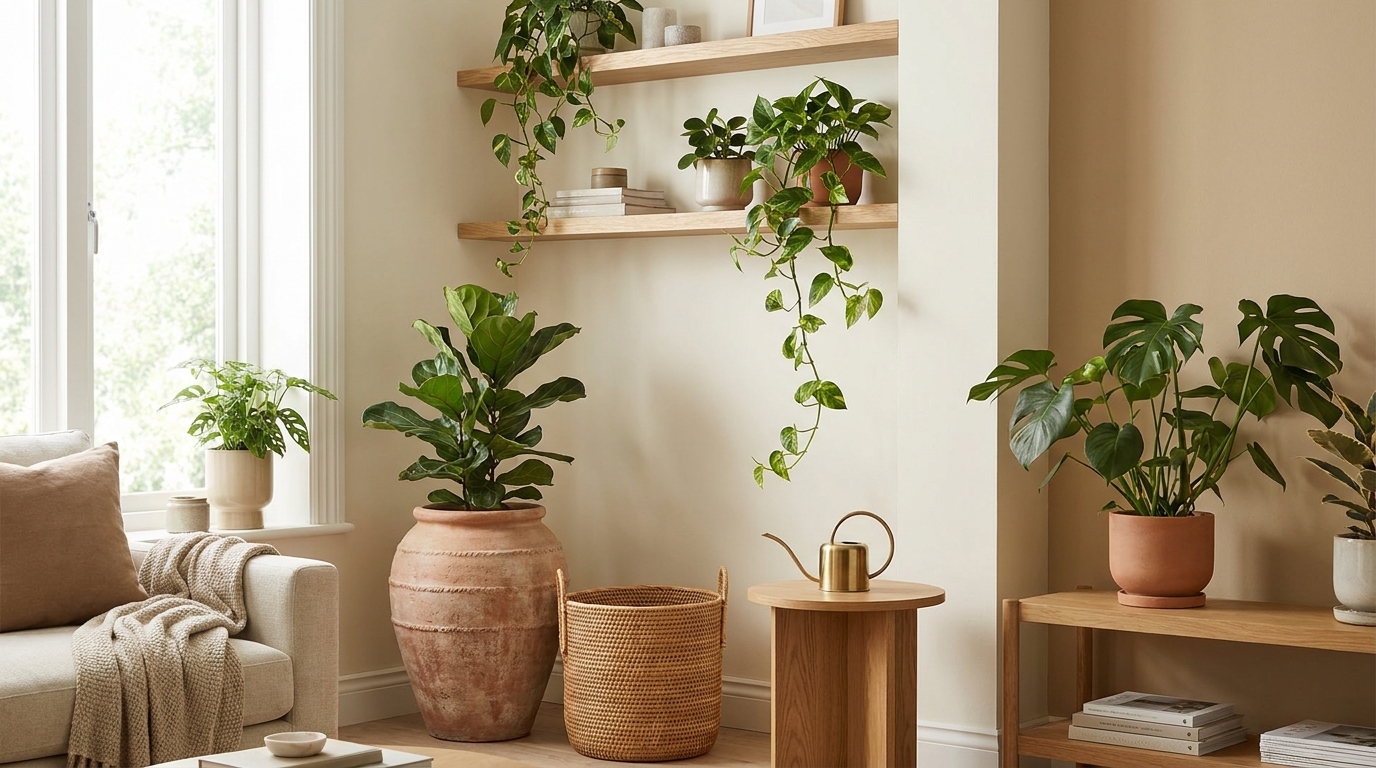
The 3-height rule is the single most effective framework for plant shelf styling. A shelf with three plants at the same height reads as a row of objects. The same three plants at three different heights read as a composed arrangement. The rule: every arrangement needs a tall element (over 18 inches), a medium element (8-16 inches), and a low or trailing element (under 6 inches at pot rim, with trailing foliage).
Apply it in practice: a tall snake plant in the Mkono terracotta with bamboo stand occupies the back. A medium pothos in the speckled ceramic sits center. A trailing string of pearls in the face planter cascades from the shelf edge at the front. Total cost for all three pots from this guide: under $70.
The rule also applies horizontally on a windowsill. Vary the width of the pots, not just the height. Two narrow cylindrical pots flank a wide low terracotta dish at center. The geometry creates visual movement along the shelf without any additional styling objects.
Pot grouping: Odd numbers work. Three pots or five pots read as a natural collection. Four pots or six pots read as a matched set, which looks deliberate but less styled. If you have an even number, vary one element, such as size, material, or color, so they stop reading as a pair.
Pot Materials Compared: Which Lasts Longest?
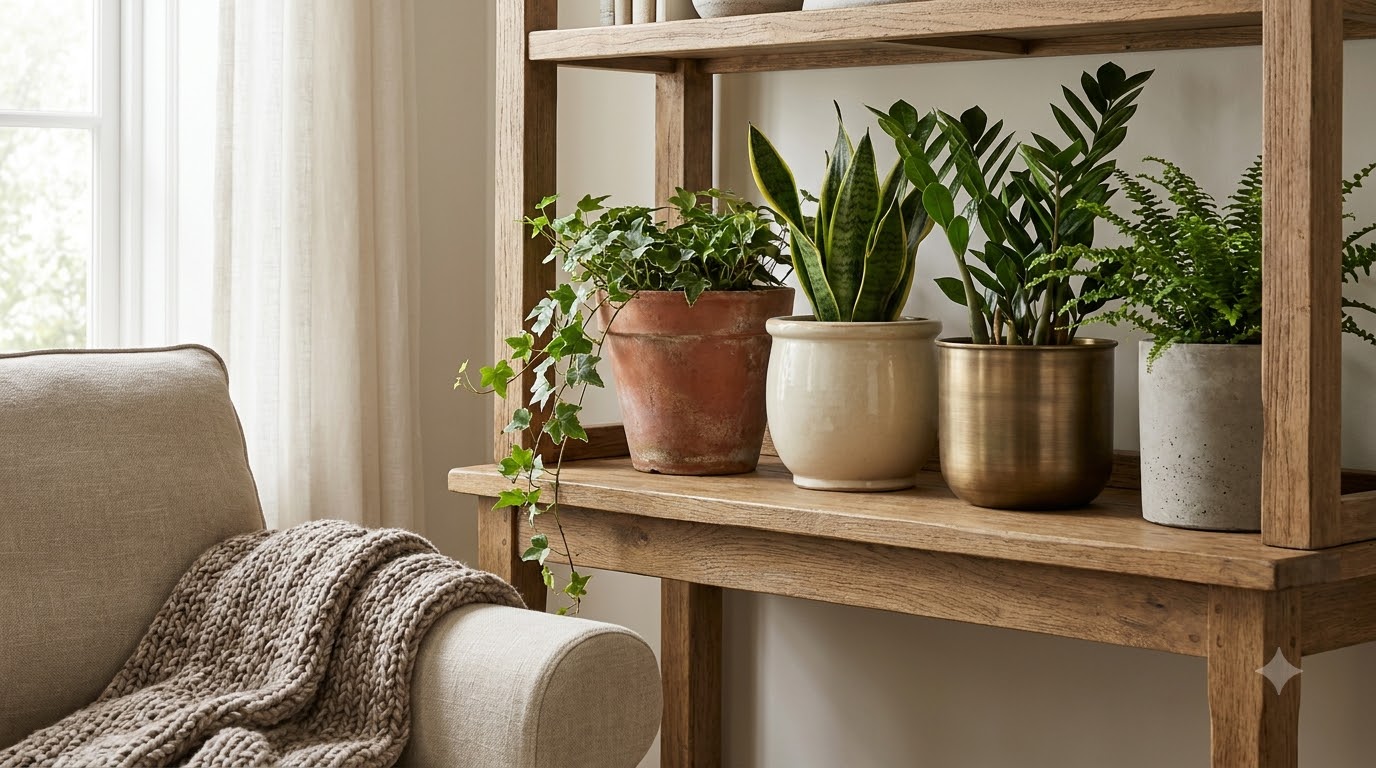
Terracotta, if not frozen or dropped, is functionally permanent. It is fired clay. Outdoor freeze-thaw cycles crack terracotta in a season; indoor conditions extend life indefinitely. The mineral staining and color shift that develops over years is a feature, not failure.
Ceramic has the same lifespan as terracotta with the added fragility of the glaze. A chipped glaze corner does not affect function, but it reduces the pot’s visual quality. Handle ceramic pots by the base, not the rim.
Rattan and seagrass woven baskets are the shortest-life category at 2-4 years of daily indoor use. Humidity from watering, even indirect, softens the weave over time. To extend life: never place the basket directly over a water source, always use a plastic insert, and let the basket dry fully if it gets wet.
Resin and cement composite pots hold their shape and finish for 5-8 years indoors. The coating on cement composites can chalk slightly in very dry conditions; a light coat of linseed oil refreshes the surface once a year.
| Material | Avg Lifespan | Water Tolerance | Aesthetic Longevity |
|---|---|---|---|
| Terracotta (unglazed) | 8+ years | High | Improves with age |
| Ceramic (glazed) | 5-10 years | High | Stable |
| Rattan / Seagrass | 2-4 years | Low | Fades after year 2 |
| Resin / Geometric | 5-8 years | High | Stable |
| Cement composite | 6-10 years | Medium | Minor chalking |
The practical takeaway: buy terracotta and ceramic for any pot you want to keep long-term. Buy woven baskets knowing they are a 2-3 year commitment and budget accordingly.
Frequently Asked Questions
Do indoor plant pots need drainage holes?
Yes, for nearly every houseplant. Without a drainage hole, excess water pools at the pot base and suffocates roots. Root rot kills most houseplants within weeks of onset, and it is preventable almost entirely by drainage, per The Sill. If a decorative pot has no hole, use it as a cover pot over a plastic nursery pot that does have drainage.
What size pot should I use for a new plant?
Go 1-2 inches larger in diameter than the plant’s current pot or root ball. A pot too large retains excess soil moisture and causes root rot. A pot too small restricts root growth and causes the plant to stall. Most nursery plants arrive in 4-inch or 6-inch plastic grow pots, which pair directly with the 4-inch and 6-inch sizes listed in this guide.
Can I use rattan baskets as plant pots?
Yes, with a plastic insert. Woven baskets and rattan planters work as decorative covers; they should never hold soil directly. Use a plastic nursery pot inside the basket, water your plant over a sink, let it drain fully, then return it to the basket. Most woven planters in this guide either include a plastic liner or are sized to fit standard nursery pots.
How do I clean ceramic plant pots between uses?
Remove old soil and rinse with warm water. For mineral deposits (white chalky buildup on the outside of the pot), soak the pot in a 1:9 white vinegar and water solution for 20-30 minutes, then scrub with a stiff brush. Let the pot dry fully before adding new soil. According to University of Minnesota Extension, sterilizing with a 10% bleach solution before reuse prevents transferring root diseases between plants.
What is the best pot material for overwatering-prone gardeners?
Terracotta is the most forgiving material for overwatering. The unglazed clay wicks moisture from the soil through the pot walls, which accelerates drying between waterings. In one University of Florida Extension test, terracotta pots dried out approximately 40% faster than equivalent plastic pots under the same watering conditions, per UF/IFAS Extension. If you tend to water on a schedule rather than by feel, terracotta is the best material correction.
Finding Your Pot Lineup
The 15 pots in this guide cover five categories and four distinct interior styles. The practical path is to build a core three to five pot lineup from one category, then add one statement piece for contrast. Start with the category that matches your room’s dominant texture: wood and linen rooms suit terracotta and rattan; white and plaster rooms suit matte ceramic and geometric; dark-toned or moody rooms suit reactive glaze ceramic and cement composite.
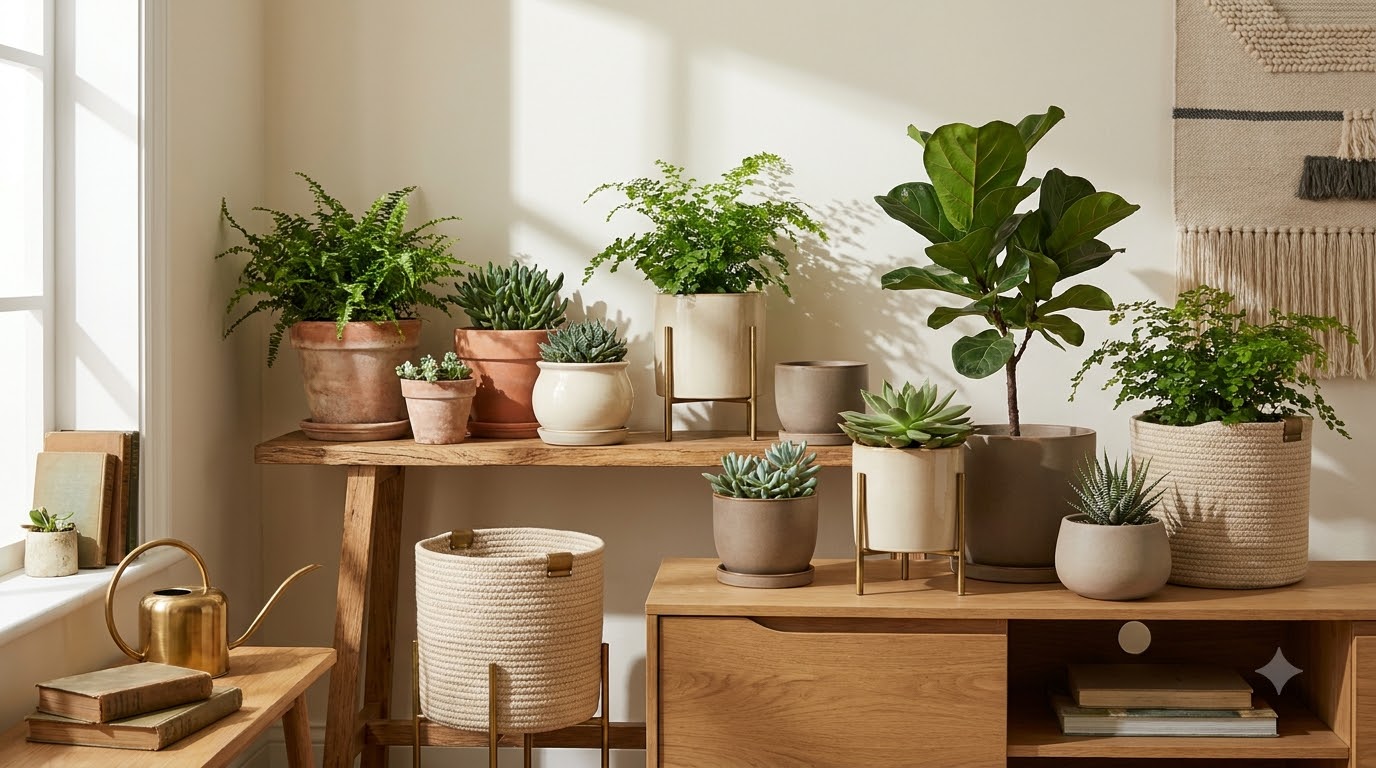
Budget tip: spend the most on the pot in your hero position, which is the one at eye level on your main shelf or the one that appears most in your room sightline. The pots at floor level or on high shelves can be the most basic terracotta in your collection.
The indoor plants complete guide covers the full plant corner setup from shelf choice to lighting, with specific product recommendations at every price tier. For the plants that fill these pots well, the low-maintenance indoor plants guide narrows the list to varieties that tolerate average apartment conditions without constant attention.
Related reading
- 25 Aesthetic Plant Corner & Window Sill Setups Worth Copying in 2026
- Trailing vs Upright vs Statement Plants: Which Works Best in Each Room?