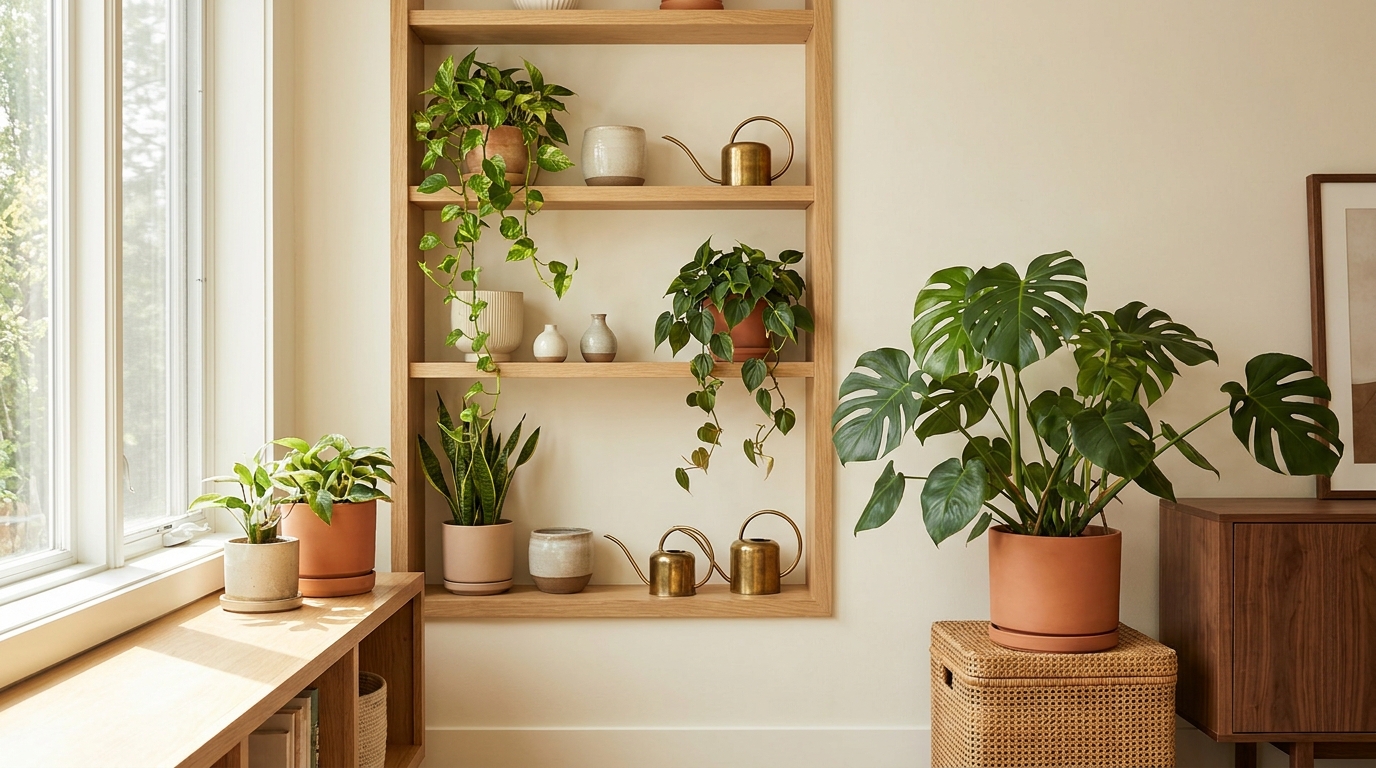
Most beginners kill their first houseplant within 60 days, and it’s almost never from neglect. It’s from overwatering. Three low-maintenance indoor plants survive genuine neglect better than anything else on the market: the snake plant (water every 2-3 weeks, tolerates near-darkness), the pothos (water when soil dries out, thrives in almost any light), and the ZZ plant (water once a month, nearly indestructible). What separates these three from everything else at the garden center isn’t marketing. It’s biology. They evolved in conditions where water was scarce and light was inconsistent. That history is exactly why they thrive in the conditions most apartments actually provide.
indoor plants home decor guide
Key Takeaways
- Overwatering, not underwatering, kills the majority of indoor plants. Most beginners water 2-3 times more than any houseplant needs.
- Snake plant, pothos, and ZZ plant are the three best starting points for beginners in 2026 because they tolerate both low light and irregular watering.
- A pot without drainage holes is a death trap for even the hardiest species. This single factor causes more plant deaths than anything else.
- Houseplant ownership rose to 66% of U.S. households in 2023 (National Gardening Association, 2023), making indoor plant care one of the most searched home topics online.
- “Easy with one rule” plants (aloe, monstera, string of pearls) are only easy if you follow that one rule. Skipping it kills them fast.
Why Do Most Indoor Plants Die Before Month Three?
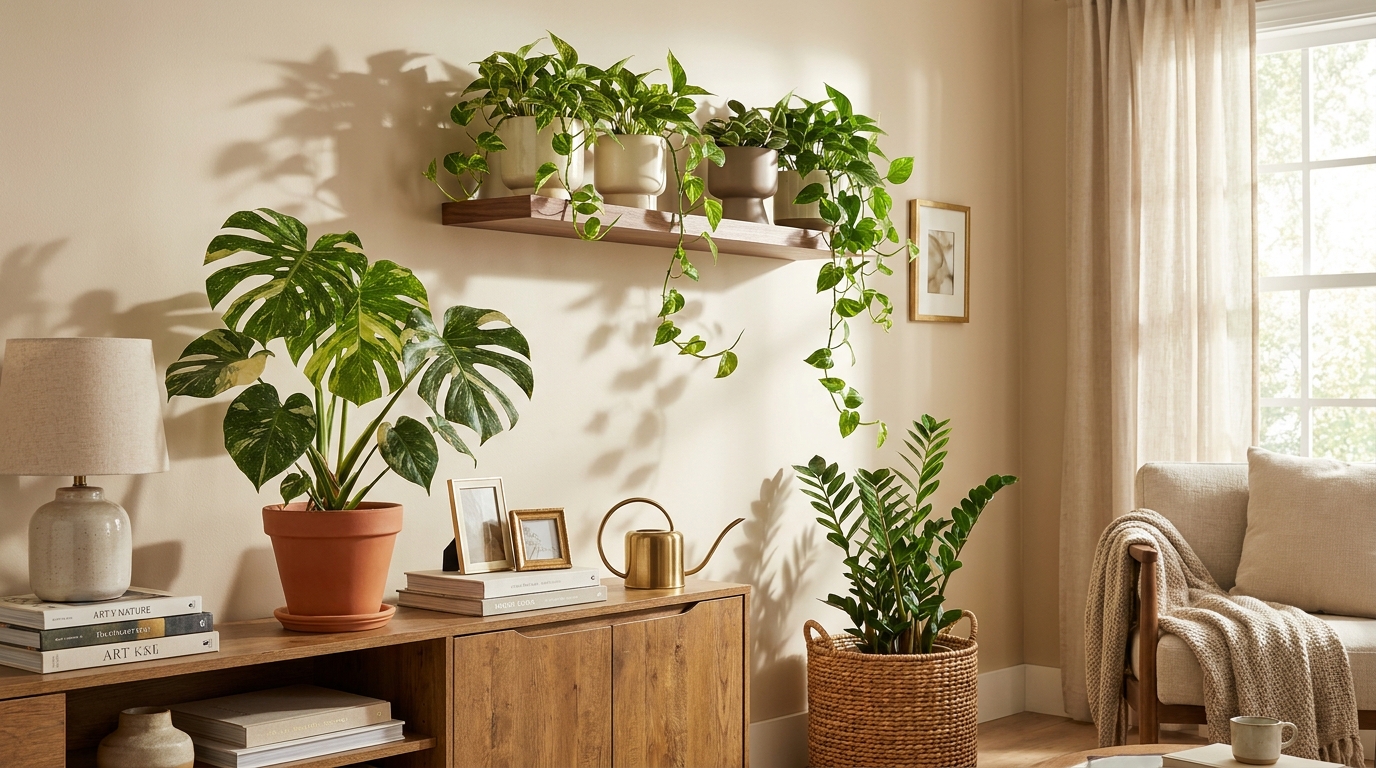
Indoor plant deaths spike in the first 60 days of ownership, and overwatering is the primary cause in most cases. The National Gardening Association reports that 66% of U.S. households now own at least one houseplant (National Gardening Association, 2023), but beginner retention is low. Most first-time plant owners water on a calendar schedule rather than a soil-check schedule, which suffocates roots faster than any drought ever would.
Citation Capsule: According to the National Gardening Association’s 2023 data, 66% of U.S. households owned houseplants, making indoor gardening one of the most widely adopted home hobbies in the country. The same survey identified overwatering as the most common cause of beginner plant failure, ahead of low light and incorrect soil.
Overwatering Kills More Plants Than Drought
Root rot from overwatering is irreversible. Once roots suffocate in waterlogged soil, the plant cannot recover even if you correct the watering schedule immediately. The tell is yellowing lower leaves combined with soggy soil that smells slightly sour. By the time you see those signs, the damage is usually done. The correct approach is to check soil moisture before every single watering, not to water on a set day.
The soil check is simple. Push your finger one to two inches into the soil. If it’s damp at that depth, wait. If it’s dry, water thoroughly until water flows from the drainage hole. That’s the entire watering method for the majority of low-maintenance indoor plants listed below.
Wrong Light Level Is the Second Biggest Mistake
“Bright indirect light” is the most misunderstood phrase in plant care. It does not mean a windowsill with direct afternoon sun streaming across the leaves. It means a spot within 5-8 feet of a window where light is bright but diffused, such as behind a sheer curtain or to the side of a south-facing window. Direct sun through glass concentrates heat and can scorch leaves in hours. Most houseplants labeled “indirect light” will burn within days on a south-facing sill without any diffusion.
“Thrives on Neglect” Is a Real Biological Category
Plants described as “hard to kill” aren’t just marketing copy. They belong to a real ecological group: CAM (Crassulacean Acid Metabolism) plants and shade-adapted forest understory plants. CAM plants (succulents, aloe, ZZ plant) store water in their tissues and open their stomata only at night to minimize water loss. Understory plants (pothos, snake plant, cast iron plant) evolved under forest canopies where light was filtered and soil dried between rain events. These two groups genuinely have lower water and light requirements built into their biology, not just tolerance for poor care. Choosing from these two categories stacks the odds in a beginner’s favor from day one.
What Are the 12 Best Low-Maintenance Indoor Plants for Beginners?
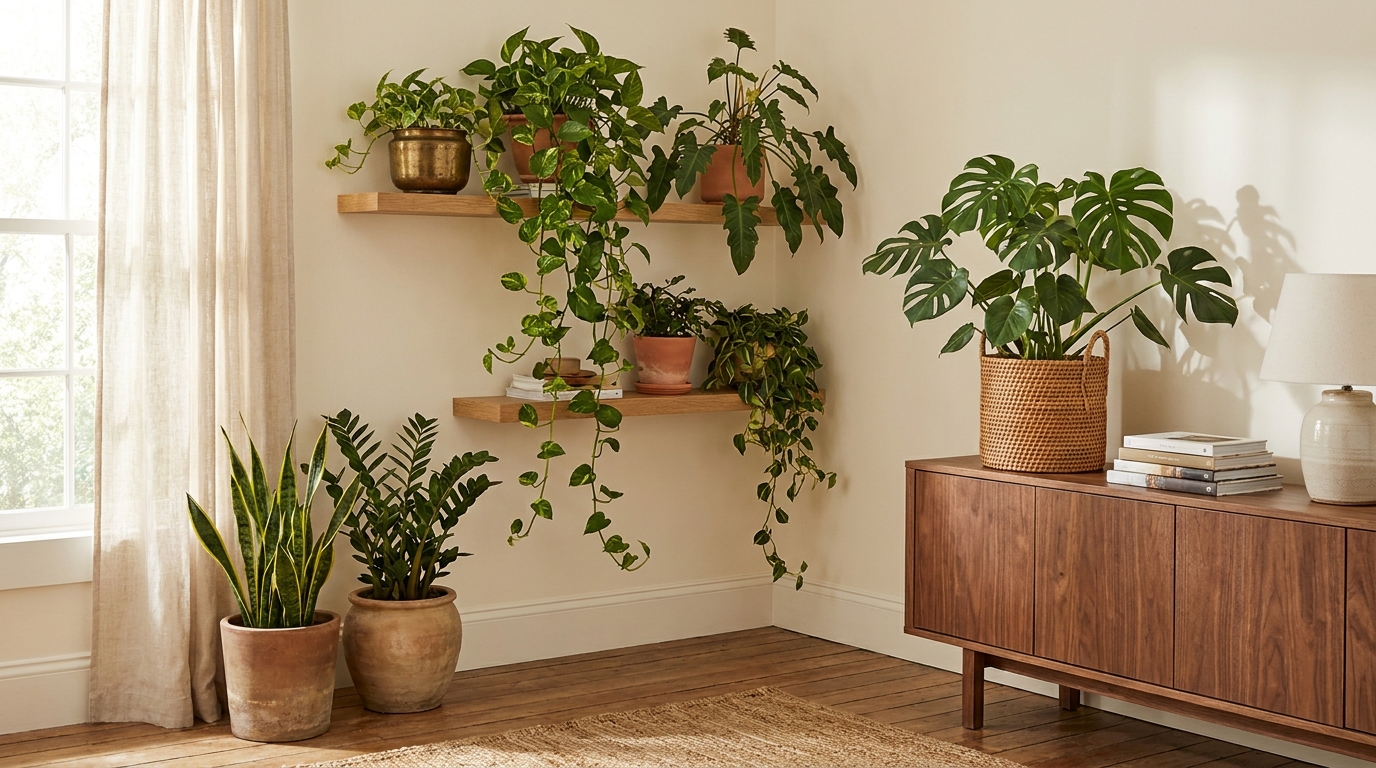
The 12 plants below are ranked by difficulty, from nearly impossible to kill down to easy with one rule. Apartment Therapy’s houseplant guides consistently rank snake plant, pothos, and ZZ plant as the top three picks for beginners, citing their tolerance for irregular care schedules and low light (Apartment Therapy, 2025). Each plant entry below includes water schedule, light requirement, toxicity note, and the honest difficulty context.
Citation Capsule: Apartment Therapy’s 2025 houseplant coverage identifies snake plant, pothos, and ZZ plant as the three most consistently recommended beginner plants across hundreds of reader submissions, citing their ability to survive weeks of missed watering and low indoor light conditions that would kill most other species.
Nearly Impossible to Kill (4 Plants)
Snake Plant (Sansevieria / Dracaena trifasciata)
The snake plant is the most forgiving houseplant a beginner can own. Water every 2-3 weeks in spring and summer, and cut back to once a month or less in winter. It tolerates low light remarkably well, though it grows faster in bright indirect light. The upright, sword-shaped leaves make it a strong vertical accent in corners, on shelves, or beside furniture. Important: snake plant is toxic to cats and dogs if ingested. Keep it out of reach in pet households.
Honest difficulty note: the only reliable way to kill a snake plant is to overwater it in a pot without drainage, or to place it in a completely lightless room. Both are avoidable.
ZZ Plant (Zamioculcas zamiifolia)
The ZZ plant waters approximately once a month and does not complain about low light. Its rhizomes (underground storage structures) hold water reserves, making it drought-tolerant by design. The glossy dark green leaves add a structured, architectural look that works in modern and minimalist interiors. Growth is slow, but the plant will not die from slow growth. Toxicity note: ZZ plant sap is an irritant and is toxic to pets and humans if ingested. Wash hands after handling.
Honest difficulty note: if you tend to over-care for plants, this one will punish you. It actively prefers being ignored between waterings.
Pothos (Epipremnum aureum)
Pothos is the most versatile low-maintenance indoor plant for beginners because it tolerates almost any light level, from low office fluorescent light to bright indirect natural light. Water when the top inch of soil is dry, which works out to every 7-14 days depending on pot size and season. The trailing vines look excellent in hanging planters, on top of shelves, or trained along a wall with small hooks. Pothos is mildly toxic to pets and humans if ingested. Keep out of reach of cats and dogs.
Honest difficulty note: it communicates thirst by wilting slightly, then bounces back within hours of watering. That feedback loop makes it easy to learn the correct watering rhythm.
Cast Iron Plant (Aspidistra elatior)
The name is accurate. The cast iron plant survives low light, infrequent watering, temperature fluctuations, and dust on its leaves. Water every 2-3 weeks and place it in any spot with indirect or even dim light. Growth is very slow. This is not a starter plant if you want fast results, but it’s the best choice for a dark corner or a frequently-forgotten spot. Non-toxic to pets, making it a safe choice for cat and dog households.
Honest difficulty note: the slow growth can feel discouraging, but it’s normal and healthy. Don’t interpret slow growth as a problem and start changing conditions.
Very Easy (4 Plants)
Spider Plant (Chlorophytum comosum)
Spider plants are fast-growing, produce baby “spiderettes” that hang from long stems, and tolerate a wide range of light conditions (bright indirect is ideal, but they handle lower light). Water when the top inch of soil is dry, roughly every 7-10 days. One of the few houseplants confirmed pet-safe by the ASPCA, making it an excellent choice for homes with cats or dogs. The arching green-and-white striped foliage looks best in a hanging planter where the offshoots have room to trail.
Honest difficulty note: very easy, but brown leaf tips are common in dry indoor air or when tap water fluoride is high. Switch to filtered water if browning persists.
Rubber Plant (Ficus elastica)
The rubber plant’s large, glossy dark leaves (often deep burgundy in the “Burgundy” variety) make a dramatic visual statement with minimal effort. Water every 1-2 weeks when the top 2 inches of soil are dry. It needs bright indirect light to maintain its color and prevent leggy growth. Avoid drafts and cold windowsills. Toxic to pets if ingested. This is a plant that rewards a slightly better spot: give it a bright corner and it will grow into a striking indoor tree over two to three years.
Honest difficulty note: tolerant but not indestructible. Overwatering causes root rot and leaf drop. Dramatic leaf drop is usually a reaction to being moved. Let it settle for 2-3 weeks after repositioning.
Peace Lily (Spathiphyllum wallisii)
The peace lily has a built-in alert system that most plants lack. When it needs water, the leaves droop visibly. Water it, and it recovers within a few hours. This feedback makes it ideal for beginners who struggle to gauge when to water. It thrives in low to medium indirect light and will even produce white spathe flowers in reasonable conditions. The Sill rates peace lily as one of the top 5 beginner houseplants for this reason (The Sill Plant Care Guides, 2025). Toxic to pets and humans if ingested.
Honest difficulty note: it prefers higher humidity, so it performs better in bathrooms or kitchens than in dry bedrooms near heating vents.
Citation Capsule: The Sill’s 2025 plant care guides rank peace lily among the top five plants for beginner indoor gardeners specifically because of its self-signaling behavior: leaves droop noticeably when water is needed and recover within hours of watering, creating a feedback loop that teaches beginners to read plant signals rather than water on a fixed schedule.
Dracaena (Dracaena marginata / fragrans)
Dracaena species are drought-tolerant, tolerate medium indirect light, and have a sculptural, upright form that works well in modern, boho, and minimalist interiors. Water every 2-3 weeks, less in winter. Avoid fluoride in tap water (dracaena is sensitive to it and develops brown leaf tips). Non-toxic to humans but toxic to cats and dogs. The Dracaena marginata (dragon tree) with its thin, red-edged leaves and the Dracaena fragrans (corn plant) with its broad, corn-like foliage are the two most widely available varieties.
Honest difficulty note: brown tips are common and usually cosmetic, caused by fluoride or dry air. Trim them with clean scissors and switch to filtered water.
Easy With One Rule (4 Plants)
Aloe Vera (Aloe barbadensis miller)
Aloe vera is genuinely easy, but only if you follow the one rule: never let it sit in wet soil. Water deeply every 3-4 weeks in spring and summer, and once every 6-8 weeks in winter. Place it in bright direct or bright indirect light. A south or east-facing windowsill is ideal. Aloe stores water in its thick leaves, so it punishes overwatering fast. The practical bonus: snap a leaf and apply the gel directly to minor burns or skin irritation. Toxic to pets if ingested.
Honest difficulty note: put it in the sunniest spot you have and water it far less than feels natural. That’s the entire care protocol.
String of Pearls (Senecio rowleyanus)
String of pearls is visually striking (cascading strands of bead-like leaves) and genuinely low-maintenance, but it demands the same rule as aloe: water sparingly. Water every 2-3 weeks in growing season, roughly once a month in winter. It needs bright indirect to some direct light and fast-draining succulent soil. Overwatering causes the pearl-like leaves to burst and rot quickly. House Beautiful lists string of pearls among the most popular trailing houseplants for its distinctive look (House Beautiful, 2025). Toxic to pets and humans.
Honest difficulty note: a hanging planter near a bright window is its natural habitat. In low light, the pearls shrink and the strands go sparse. Light is as important as watering here.
Monstera (Monstera deliciosa)
The monstera is the most social media-photographed houseplant of the decade, and it earned that status partly because it’s forgiving. Water when the top 2 inches of soil are dry, roughly every 1-2 weeks. It needs bright indirect light to produce the characteristic split leaves (fenestrations). In low light, it will survive but the new leaves won’t develop splits. Mildly toxic to pets and humans. Provide a moss pole or wooden stake as it grows to support the climbing habit.
Honest difficulty note: the one rule is drainage. Monstera in a pot without drainage holes will develop root rot within a few months regardless of how carefully you water.
Heartleaf Philodendron (Philodendron hederaceum)
The heartleaf philodendron grows quickly, trails beautifully, and forgives irregular care better than almost any plant in the “easy with one rule” category. Water when the top inch of soil is dry. It tolerates low to bright indirect light, though it grows faster with more light. The rule here is the same as the others: drainage. It doesn’t want wet feet. Toxic to pets and humans if ingested. The fast growth rate makes it satisfying for beginners who want visible progress.
Honest difficulty note: genuinely one of the most forgiving houseplants available. The main failure mode is overwatering in a pot that holds water. Get that right and it’s nearly foolproof.
What Is the One Mistake That Kills Even the Hardiest Plants?
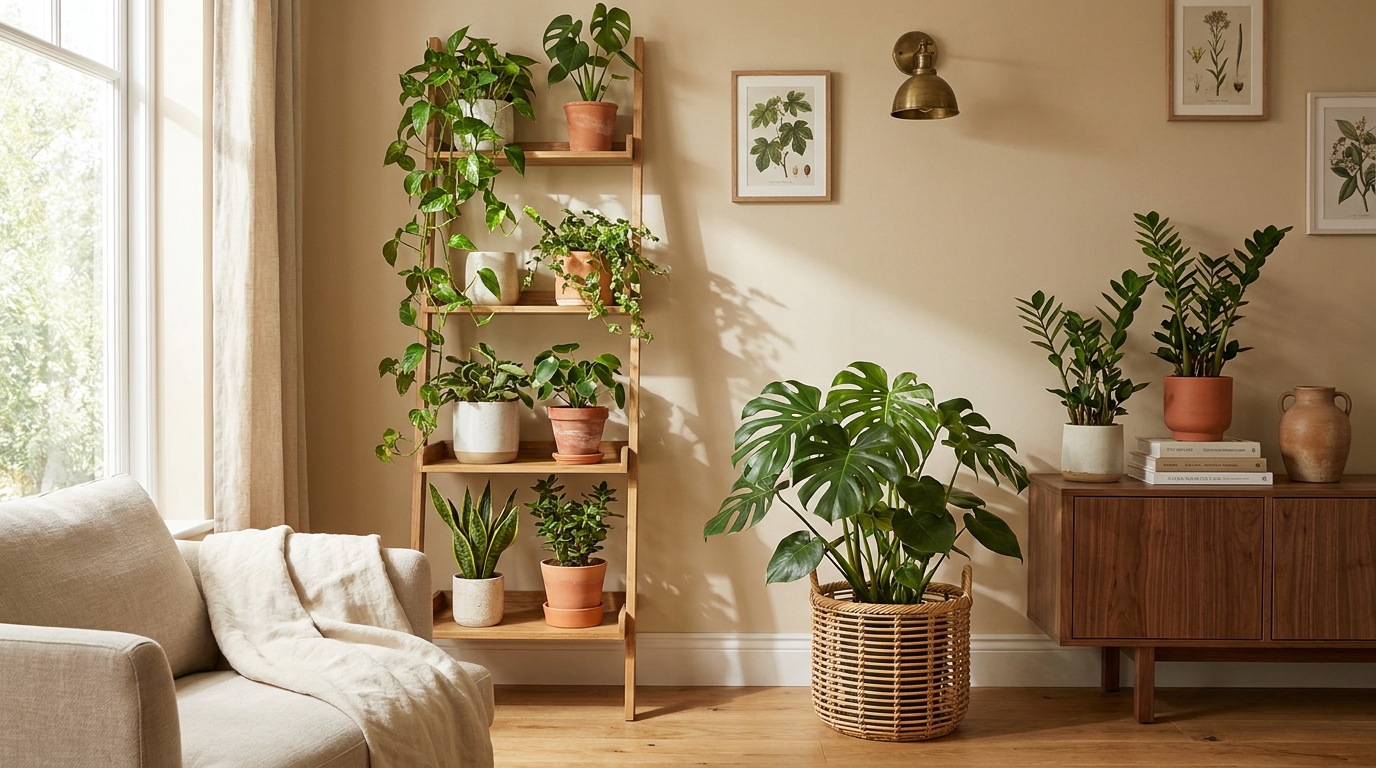
The single most consistent plant killer across all categories is a pot without drainage holes, regardless of species. Even snake plants and ZZ plants, which can survive weeks of drought, will develop fatal root rot in as little as 4-6 weeks if planted in a sealed decorative pot with no drainage. Water has nowhere to go, the soil stays saturated, and roots suffocate. It’s not a slow decline. It happens fast and there is no recovery once root rot sets in at scale.
We killed a snake plant this way. A snake plant. The plant that every list, including this one, describes as nearly impossible to kill. It came home in a plastic nursery pot, which we dropped into a ceramic decorative pot that had no drainage hole. We watered it every two weeks exactly as recommended. Six weeks later the leaves were yellowing and mushy at the base. By the time we pulled it from the pot, the roots were brown and rotted through. The problem wasn’t the watering schedule. It was the sealed pot holding all that water with nowhere to drain. We’ve been strict about drainage ever since.
How to Fix the Drainage Problem
The simplest solution is the nursery pot method. Leave your plant in the plastic nursery pot it came in. Place that nursery pot inside the decorative ceramic, wicker, or planter of your choice. After watering, lift the nursery pot out, let it drain completely over a sink, and set it back inside the decorative outer pot. You get the aesthetic you want without the drainage risk. The second solution is to drill a drainage hole in any ceramic pot using a tile-and-glass drill bit. It takes 3-4 minutes and solves the problem permanently.
Beginner Plant Care Cheat Sheet
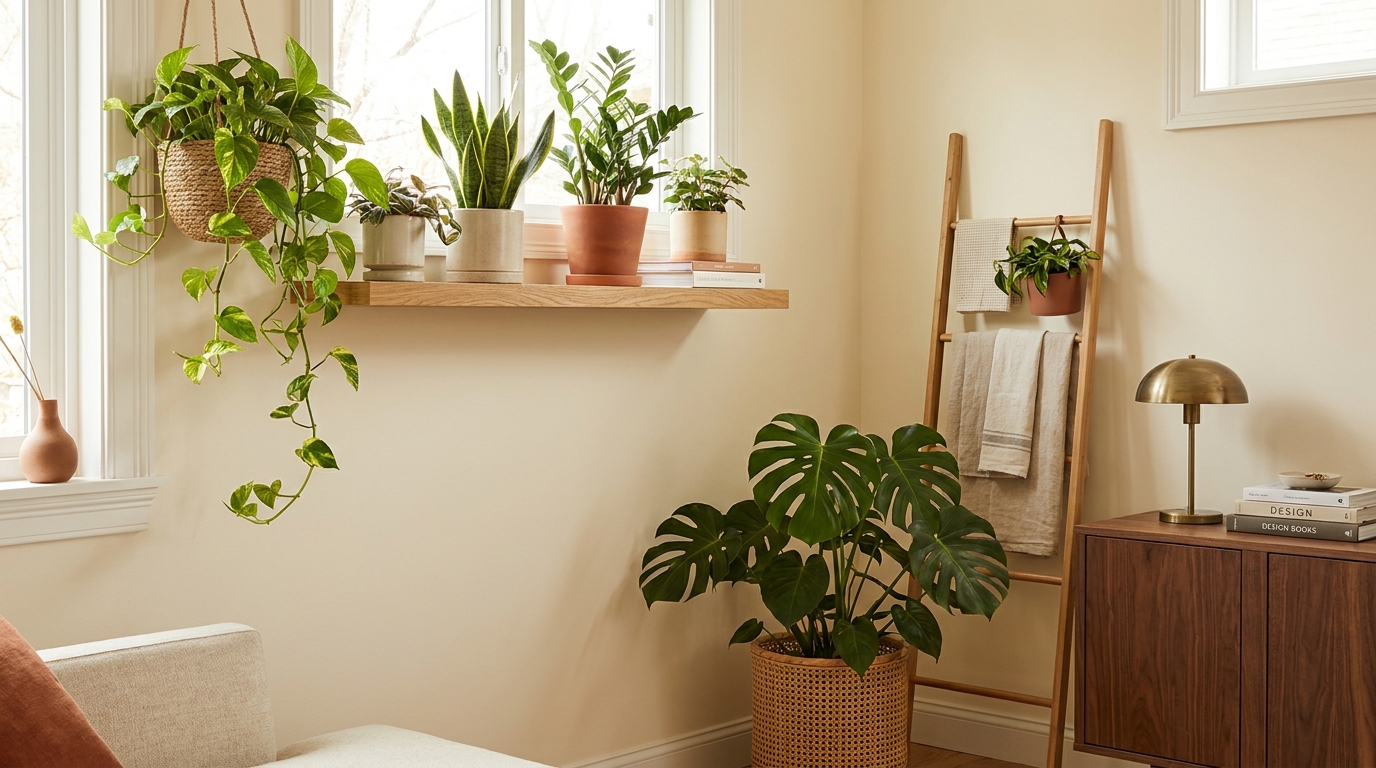
The table below covers all 12 plants from this guide. Use it as a quick reference before watering. The “signal to water” column is the most important: always check the soil or look for the plant’s own signal before adding water.
| Plant | Water Frequency | Light | Signal to Water | Pet Safe? |
|---|---|---|---|---|
| Snake Plant | Every 2-3 weeks | Low to bright indirect | Soil bone dry 2 inches down | No |
| ZZ Plant | Monthly | Low to medium indirect | Soil completely dry | No |
| Pothos | Every 7-14 days | Low to bright indirect | Top inch dry, slight wilt | No |
| Cast Iron Plant | Every 2-3 weeks | Low to medium indirect | Soil dry 2 inches down | Yes |
| Spider Plant | Every 7-10 days | Bright indirect | Top inch dry | Yes |
| Rubber Plant | Every 1-2 weeks | Bright indirect | Top 2 inches dry | No |
| Peace Lily | Every 7-10 days | Low to medium indirect | Leaves droop | No |
| Dracaena | Every 2-3 weeks | Medium indirect | Soil dry 2 inches down | No (pets) |
| Aloe Vera | Every 3-4 weeks | Bright direct/indirect | Soil bone dry, leaves slightly soft | No |
| String of Pearls | Every 2-3 weeks | Bright indirect | Soil dry, pearls slightly shrunken | No |
| Monstera | Every 1-2 weeks | Bright indirect | Top 2 inches dry | No |
| Heartleaf Philodendron | Every 7-10 days | Low to bright indirect | Top inch dry | No |
Frequently Asked Questions About Low-Maintenance Indoor Plants
Are Any of These Plants Safe for Cats and Dogs?
Two plants on this list are confirmed pet-safe by the ASPCA: the spider plant and the cast iron plant. The spider plant is one of the most widely recommended pet-safe houseplants and adds bonus visual interest with its trailing spiderettes. The cast iron plant is slower-growing but equally safe. All other plants on this list are toxic to pets to varying degrees, from mild irritants (pothos, monstera) to more serious concerns (ZZ plant, peace lily). The ASPCA Animal Poison Control Center maintains a searchable database of plant toxicity at aspca.org/apcc for specific species confirmation.
How Often Should a Total Beginner Water Indoor Plants?
Less often than feels natural. Most beginners water 2-3 times more than their plants need. The correct frequency varies by plant and season, but the method is always the same: check the soil first. Push your finger 1-2 inches into the soil. Water only if it’s dry at that depth. For the 12 plants on this list, watering ranges from monthly (ZZ plant) to weekly (spider plant in a dry, warm room). Stick to the soil-check method and you’ll water at the right time regardless of the calendar.
Do Low-Maintenance Plants Actually Improve Indoor Air Quality?
The frequently cited NASA Clean Air Study (1989) found that certain houseplants filter airborne toxins like benzene, formaldehyde, and trichloroethylene in controlled lab conditions. However, more recent research published in the Journal of Exposure Science and Environmental Epidemiology (2019) found that you would need roughly 100 plants per 10 square feet of floor space to replicate those air-cleaning effects in a real room. The air quality benefit in a typical home is minimal. Houseplants are worth having for mental health benefits, humidity adjustment, and aesthetic reasons, but air purification should not be the primary reason to buy one.
The Short Version Before You Start
Pick one plant from the “nearly impossible to kill” list. Put it in a pot with a drainage hole. Place it within 5-8 feet of a window. Water it only when the soil is dry at one to two inches down. That’s it. You don’t need a green thumb to keep a snake plant or a pothos alive. You need drainage and the discipline not to overwater.
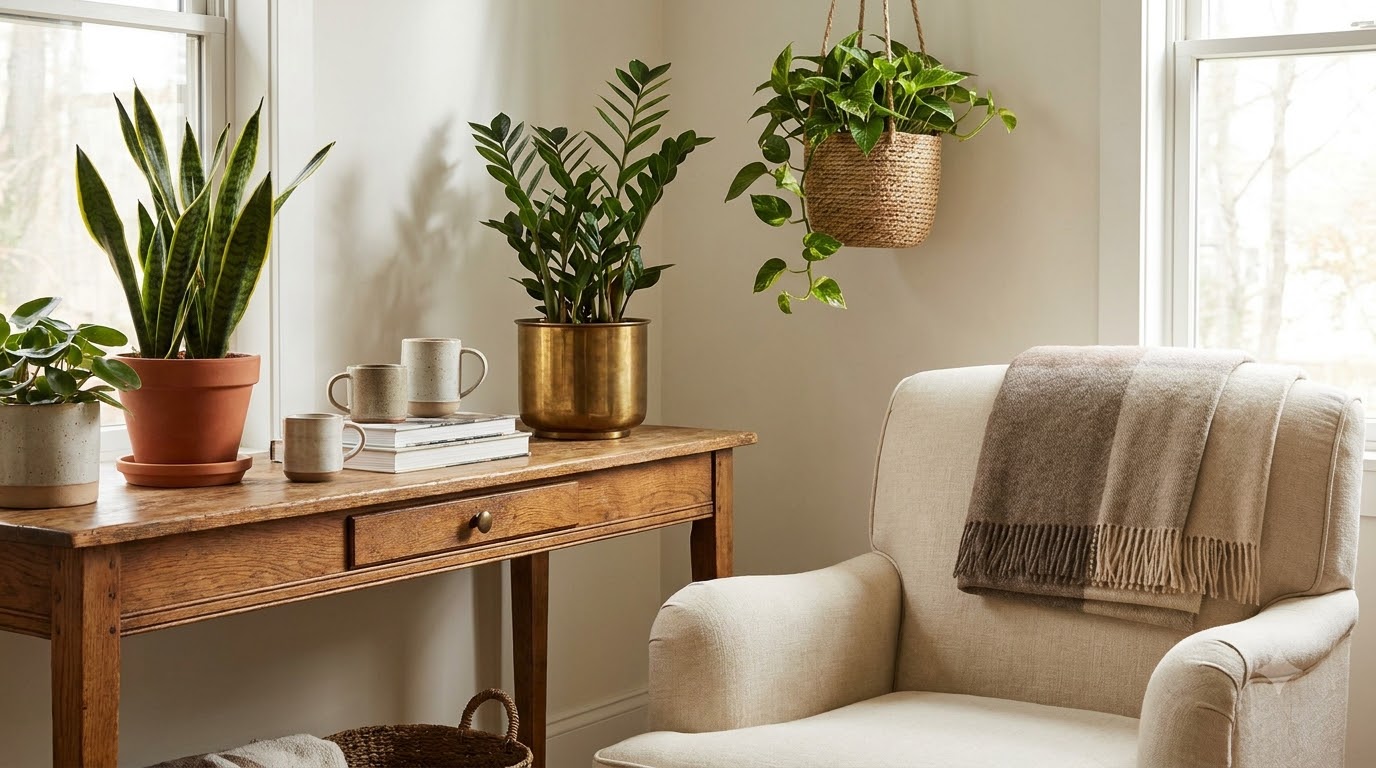
Once that first plant survives its first 90 days, your confidence will be accurate rather than aspirational. That’s when the rest of the list starts making sense. Add a second plant from the “very easy” category. Check the table for its care schedule. Repeat. Most people who describe themselves as bad at plants are actually just overwatering in poorly draining pots. Fix those two things and the plants take care of the rest.
indoor plants home decor guide
The DecorNote Team covers indoor plant styling, home decor ideas, and practical room-by-room setup guides for renters and homeowners.
Related reading
- Rare Indoor Plants Worth Buying in 2026: 15 Stunning Varieties You Can Actually Find
- Best Self-Watering Pots for Indoor Plants: 10 Picks Under $60 That Actually Work (2026)