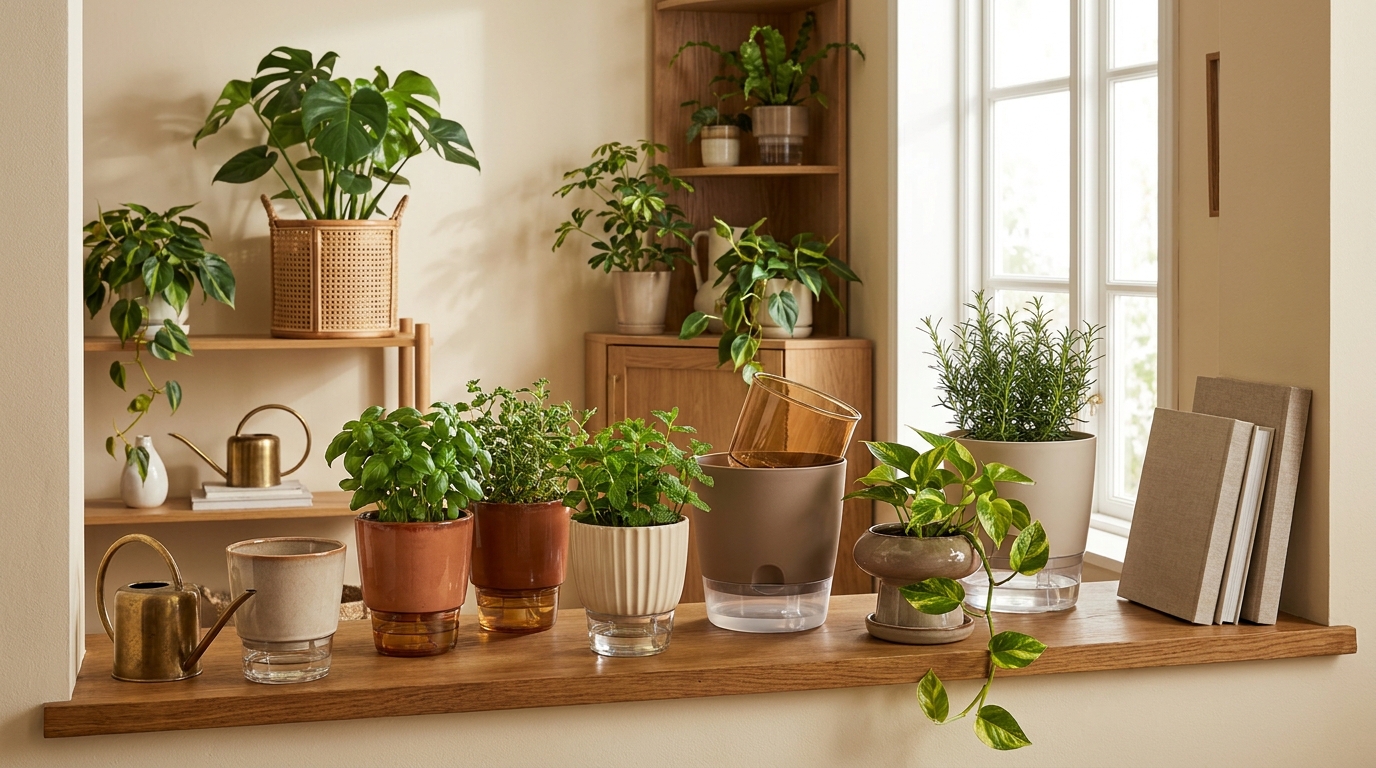
The most common plant death in American homes is overwatering. Not underwatering — overwatering. Self-watering pots solve the wrong end of that problem if used carelessly (they can still waterlog roots if the reservoir never empties), but when matched to the right plants and used correctly, they reduce watering frequency by 50–70% and keep plants healthier than inconsistent hand-watering does.
The global smart plant accessories market, which includes self-watering planters, reached $2.1 billion in 2024 according to Grand View Research, driven by urbanization and the growth of people who want indoor plants without high-maintenance schedules. Self-watering pots are the most functional segment of that market — not a gadget, but a system that genuinely changes plant care behavior.
This guide covers how self-watering systems actually work, which plants benefit and which are harmed, and the 10 best options under $60 for different plant types and room styles.
Key Takeaways
- Self-watering pots use a wicking system, sub-irrigation, or a water reservoir with a float to deliver water from below rather than from above.
- They work best for moisture-loving plants (pothos, peace lily, herbs, calathea) and worst for drought-tolerant species (succulents, snake plant, ZZ plant).
- A good self-watering pot extends watering intervals to 1–2 weeks from daily or every-few-days schedules.
- The reservoir window (seeing water level) matters — opaque reservoirs make it easy to accidentally leave the reservoir empty or let it overflow.
- Ceramic self-watering pots look better but cost more; plastic models are cheaper and lighter for large floor plants.
How Self-Watering Pots Actually Work
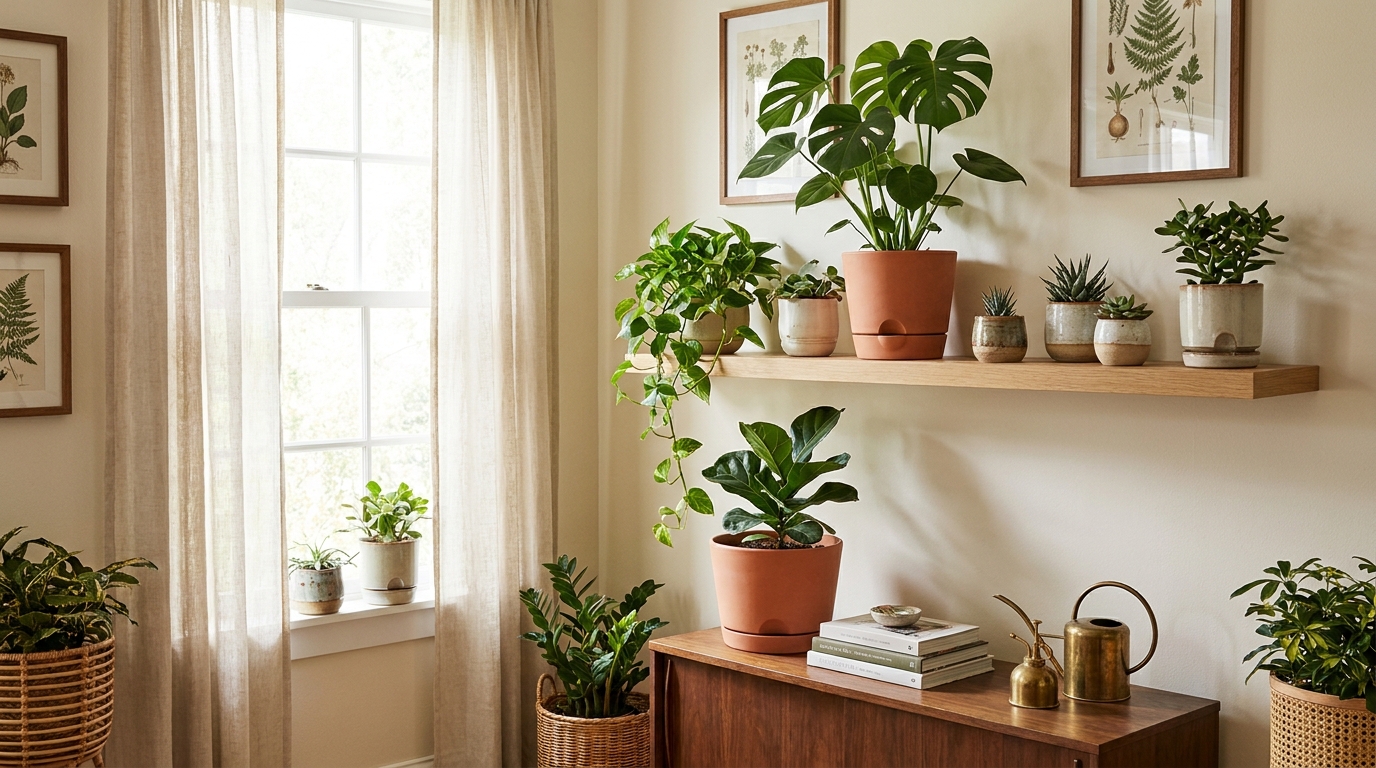
There are three main mechanisms, and understanding them helps you choose correctly:
Wicking system. A rope or felt wick connects the soil to a water reservoir below. Capillary action draws water upward as the soil dries. Most affordable self-watering pots ($10–$30) use this system. It works best for smaller pots and moisture-loving plants; it can be too slow for large or fast-growing plants.
Sub-irrigation (false bottom). The pot has an inner container that sits above a water reservoir. Plant roots grow downward into the reservoir area over time, drawing water directly. This is the most effective system for longer-term plant health — roots adapt to the water source. Most mid-range to premium self-watering pots ($30–$60) use this design.
Float/indicator system. A float or gauge shows water level in the reservoir. Some pots combine sub-irrigation with a visible indicator, making it easy to know when to refill. This is the clearest system for people who want zero guesswork.
According to The American Horticultural Society, sub-irrigation systems maintain a more consistent moisture gradient in the root zone than overhead watering — reducing the wet-dry cycling that stresses many tropical plants.
Which Plants Benefit (and Which Don’t)
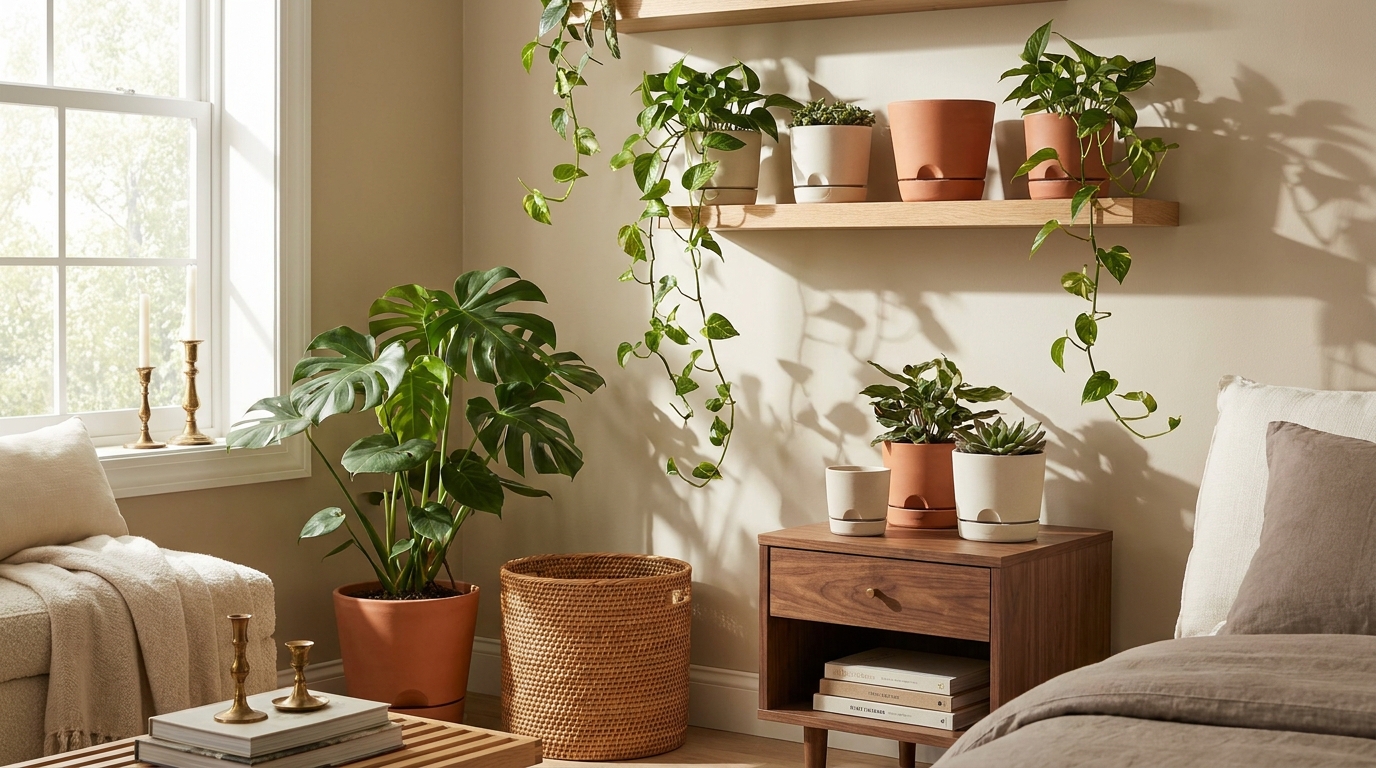
Best candidates for self-watering pots:
- Pothos — benefits from consistent moisture at the root level
- Peace lily — sensitive to drought; self-watering prevents the visible wilting stress
- Herbs (basil, mint, parsley) — high water demand suits the reservoir system
- Calathea — needs consistent moisture; self-watering reduces the variability that causes brown tips
- African violet — bottom-watering (the principle behind self-watering pots) is the preferred care method
- Spider plant — consistent moisture supports the fast-growing root system
Not suitable for self-watering pots:
- Succulents and cacti — need complete dry-out between waterings; a reservoir keeps roots too wet
- Snake plant and ZZ plant — both store water in their structure and rot quickly in consistently moist conditions
- Orchids — require specialized growing media that doesn’t wick water the same way as potting soil
- Most Mediterranean herbs (rosemary, lavender, thyme) — need dry conditions that self-watering prevents
The 10 Best Self-Watering Pots Under $60
Best Under $20
1. LECHUZA ELHO Basic Self-Watering Planter (Small)
- Price: $12–$18
- Size: 4–6 inch diameter
- System: Sub-irrigation with water level indicator
- Reservoir capacity: Approximately 5 oz
- Best plants: Small pothos, herbs, African violets
- Why it works: Elho’s basic line uses a genuinely functional sub-irrigation design at a low price point. The indicator window shows remaining water clearly. Good for windowsill herbs or small trailing plants.
2. Mkono Plastic Self-Watering Planter Set (3-pack)
- Price: $15–$20 for a set of 3
- Size: 5.5 inch diameter
- System: Wicking rope
- Best plants: Herbs, small pothos, spider plant offshoots
- Why it works: Cost-effective for people setting up multiple plants at once. Wicking system is adequate for herbs and small moisture-lovers. Minimalist design with drainage holes works as a travel-watering solution as well.
Best $20–$35
3. Santino ELHO Classico Self-Watering Planter (Medium)
- Price: $22–$30
- Size: 8–10 inch diameter
- System: Sub-irrigation with removable water indicator
- Reservoir capacity: Approximately 20 oz
- Best plants: Medium pothos, peace lily, calathea
- Why it works: The sub-irrigation design is meaningfully better than wicking at this size — the inner pot sits above the reservoir and roots can grow downward over time. Available in muted neutral colors that work in most interior styles.
4. Umbra Trigg Hanging Planter with Reservoir
- Price: $25–$32
- Size: 5 inch diameter
- System: Wicking with drainage control
- Best plants: Trailing pothos, heartleaf philodendron, string of hearts
- Style note: The Umbra Trigg has a wall-mount option and a hanging option — the clean geometric design works in modern and minimal interiors. The reservoir extends watering intervals to 10–14 days for trailing plants.
5. LECHUZA Classico Color (Large, Round)
- Price: $28–$38
- Size: 10 inch diameter
- System: Sub-irrigation with water level gauge
- Reservoir capacity: Approximately 25 oz
- Best plants: Peace lily, calathea, large pothos, spider plant
- Why it works: One of the most reliable self-watering systems at the mid-range price. The gauge is visible and accurate. The sub-irrigation design extends watering intervals to 2–3 weeks for moisture-loving plants. Available in clean matte colors.
Best $35–$60
6. Scheurich BEWASSERUNGSSET Ceramic Self-Watering Pot (Medium)
- Price: $35–$45
- Size: 6–8 inch diameter
- Material: Ceramic outer pot with plastic inner reservoir
- Best plants: Herbs, African violet, medium calathea
- Style note: Ceramic construction reads as decorative rather than functional — a significant aesthetic upgrade over plastic options. The ceramic outer pot can be removed and replaced, which means the reservoir system can be paired with decorative pots you already own.
7. LECHUZA PURO Color Self-Watering Planter
- Price: $40–$52
- Size: 10–12 inch diameter
- System: Sub-irrigation with precision water level indicator
- Reservoir capacity: Approximately 35 oz
- Best plants: Large peace lily, philodendron, monstera (small to medium)
- Why it works: At this size, the reservoir holds enough water to genuinely extend care intervals to 2–4 weeks. The precision water level indicator prevents both under-filling and overflow. LECHUZA’s build quality is among the highest in this price range.
8. Crescent Garden TruDrop Self-Watering Planter (Medium-Large)
- Price: $38–$55
- Size: 10–16 inch diameter
- System: Sub-irrigation with drain plug
- Best plants: Large pothos, small monstera, ferns
- Key feature: The drain plug allows you to drain excess water during seasonal transitions when the plant needs drier conditions — a useful safeguard against root rot in changing seasons.
Best for Herbs
9. Bloem Aqua Rite Self-Watering Herb Planter
- Price: $22–$30
- Format: Three-cell planter (ideal for multiple herb varieties)
- System: Wicking with connected reservoir
- Best plants: Basil, parsley, cilantro, mint
- Why it works: The connected reservoir spans all three cells — a single refill waters three herb varieties. The design is specifically sized for a windowsill. Herbs need more consistent moisture than most houseplants; the self-watering system prevents the daily watering demand that causes most kitchen herb gardens to fail.
10. Cole & Mason Herb Garden Keeper (Indoor, Self-Watering)
- Price: $30–$42
- Format: 3–5 slot countertop planter with reservoir drawer
- Best plants: Kitchen herbs — basil, thyme, mint, chives
- Style note: Designed to look like a kitchen accessory rather than a plant pot. Stainless steel or bamboo housing options. The reservoir drawer slides out for refilling without moving the plants — relevant for a busy kitchen counter where convenience drives whether herbs actually get watered.
best indoor plant pots under 50
Self-Watering Pot Setup and Common Mistakes
Fill the reservoir, not the top. Most self-watering pots have a fill opening separate from the main pot top. Always fill via the reservoir opening, not by pouring water over the soil — overhead watering defeats the purpose and can over-saturate the soil.
Let the reservoir empty between refills. Allow the reservoir to run down completely once or twice per season. This prevents mineral buildup and keeps the root zone from becoming permanently waterlogged. Empty reservoirs also tell you the plant is actively using water — full reservoirs after two weeks suggest the plant isn’t transpiring normally (often a sign of overwatering or low light).
Don’t use self-watering pots in winter for slow-growing plants. In winter, growth slows and water demand drops. A self-watering pot that was perfect in summer can keep soil too wet for a winter-dormant plant. Remove the reservoir water or switch back to a conventional pot for the coldest months.
Choose the right soil. Standard potting mix works adequately. Avoid very coarse, chunky mixes (like cactus mix) that don’t wick water effectively. A fine- to medium-textured potting mix with some perlite gives the right balance.
The 10 pots above represent the best overlap of reservoir function, price, and aesthetics available in 2026. Match to your plant’s moisture requirements and your aesthetic, and you’ll reduce plant care time by more than any other single product change.