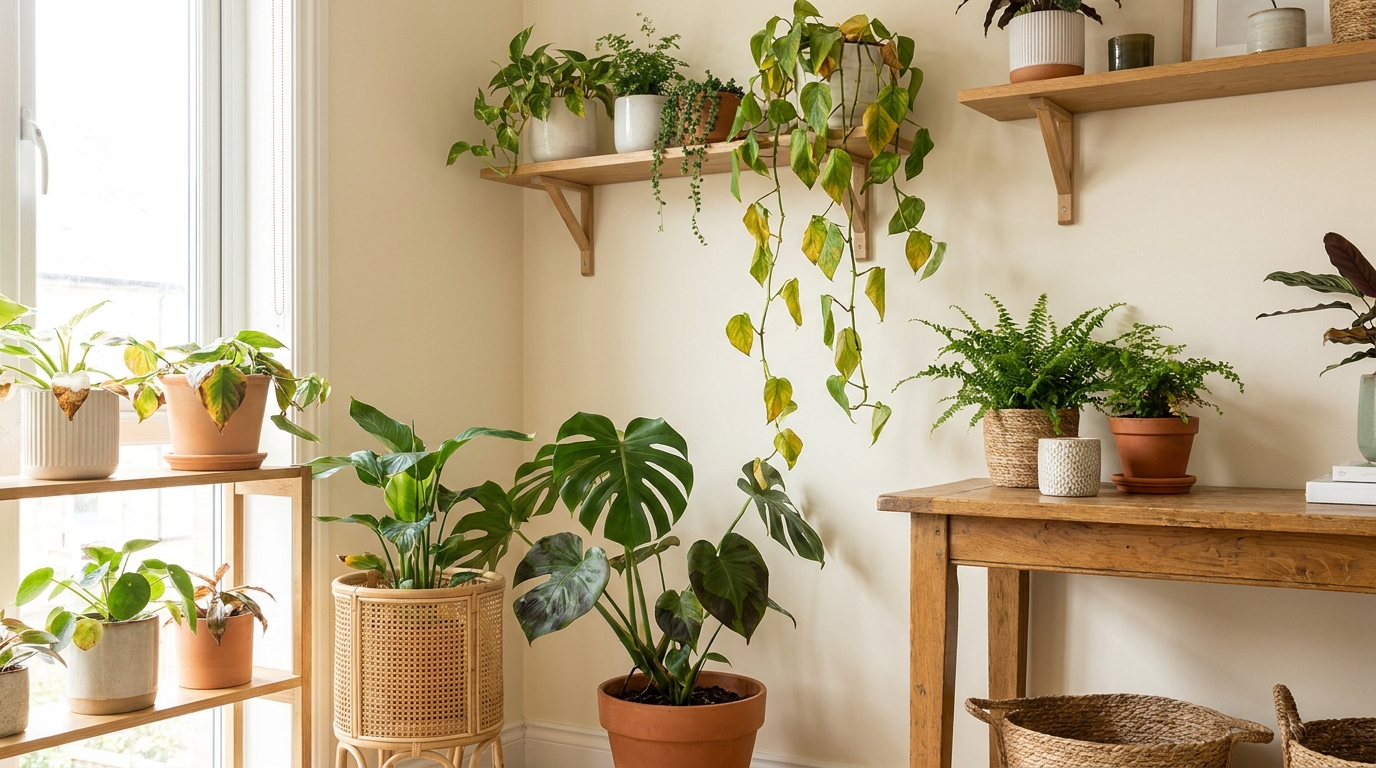
Here’s the honest truth: most houseplants don’t die because you’re bad at this. They die because the advice you got was too general. “Water once a week.” “Bright indirect light.” “Occasional fertilizer.” None of that tells you anything useful when your specific fiddle-leaf fig is sitting three feet from a north-facing window in a ceramic pot with no drainage hole.
The National Gardening Association reports that Americans spend $23.4 billion on houseplants annually, yet roughly 50% of houseplants purchased die within the first year, mostly from preventable care errors (National Gardening Association Plant Ownership Trends, 2025). That’s a lot of dead plants and a lot of decor that never landed. The mistakes below are the ones that keep showing up, in rental apartments, new homes, and styled interiors that look great in photos and struggling in real life. Each one kills both the plant and the room’s aesthetic. Each one has a specific fix.
Key Takeaways
- About 50% of houseplants die within their first year, mostly from preventable mistakes (National Gardening Association, 2025).
- Overwatering kills more indoor plants than underwatering, especially in pots without drainage.
- Wrong light placement is the single fastest way to wreck both a plant and a room’s aesthetic simultaneously.
- Decorative pots without drainage holes need a cache pot insert – not soil packed directly inside.
- Mistakes 8-10 are purely aesthetic errors: bad placement, mismatched pots, and impulse-buying plants you can’t maintain.
Why Do Most Houseplants Really Fail?
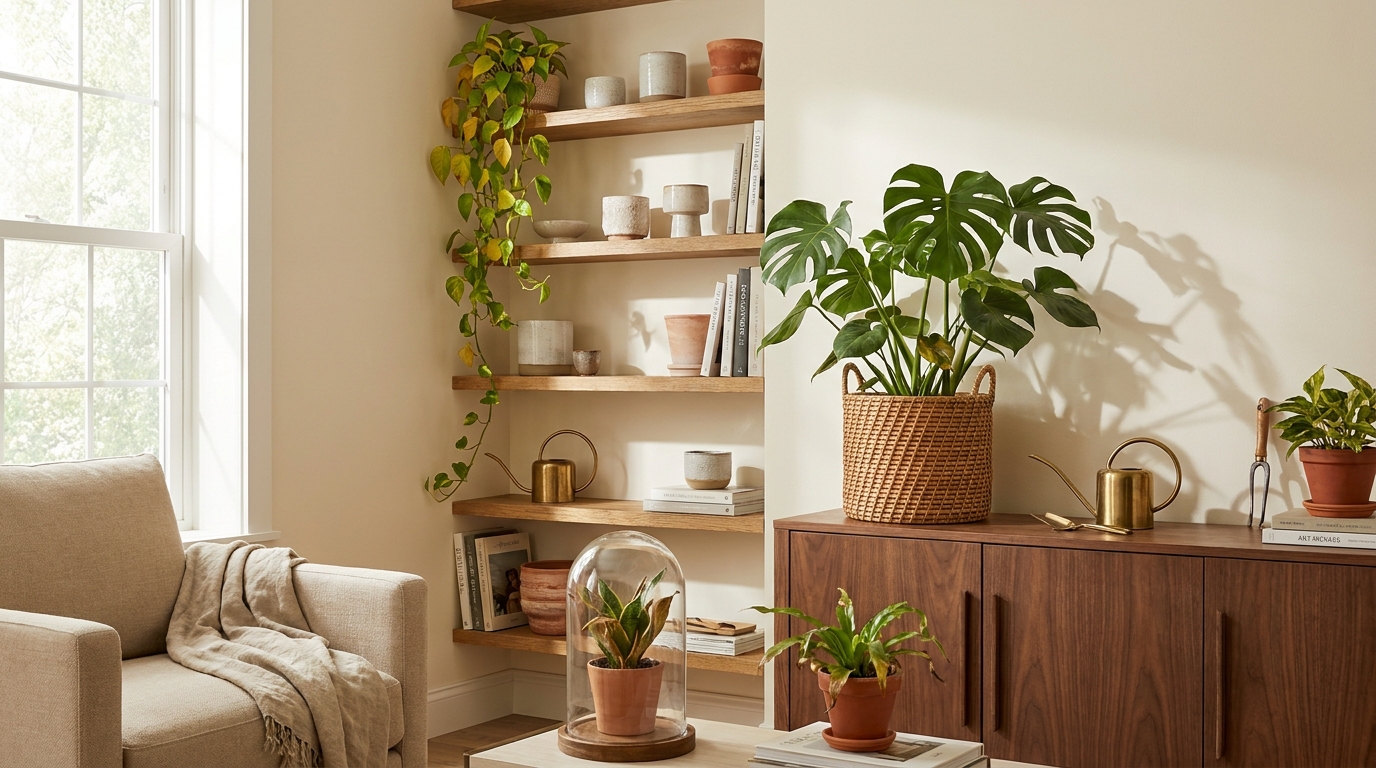
Most indoor plant deaths trace back to a mismatch between what the plant needs and what the environment actually provides. The Sill compiled care data across thousands of customer plants and found that roughly 60% of plant deaths result from light mismatch alone, not watering, not pests, not anything dramatic (The Sill Plant Care Resource, 2025). The remaining 40% splits across overwatering, wrong containers, and environmental issues like humidity and soil type.
The decor problem is actually worse than the plant problem. A dead plant is obvious and you replace it. A dying plant, one that’s losing lower leaves, fading in color, or just sitting still with no growth, stays in the room looking wrong for months before anyone admits it. Most rooms I’ve audited with “something off” energy have at least one slowly-declining plant contributing to it. The fix isn’t just keeping the plant alive. It’s keeping it looking the way it did the week you brought it home.
Mistake #1: Wrong Light (The Number-One Killer)
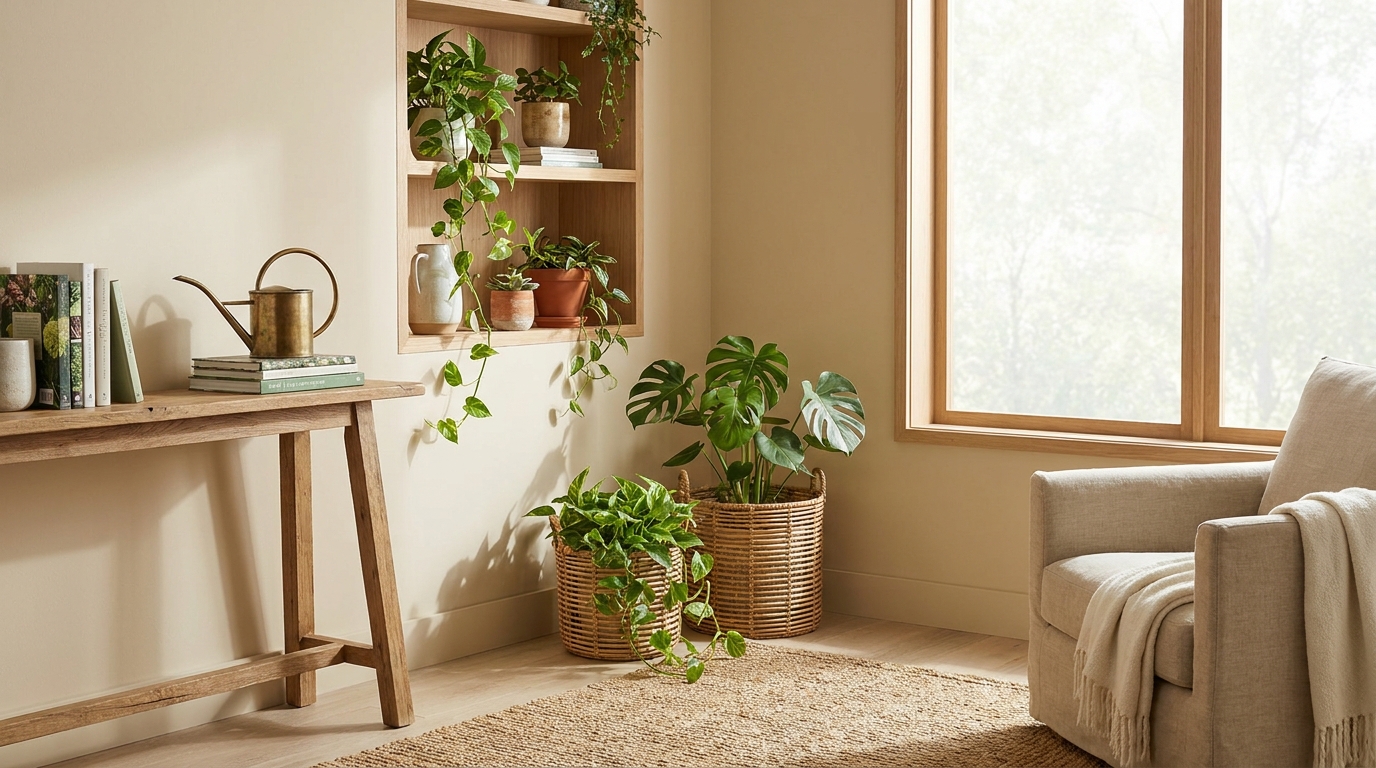
Wrong light is responsible for more indoor plant deaths than any other single factor. The Sill’s care data puts light mismatch at roughly 60% of plant deaths (The Sill Plant Care Resource, 2025). From a decor angle, a light-stressed plant drops leaves, loses color, and gets leggy, destroying the clean shape that made it worth buying in the first place.
The mistake usually looks like one of two things: a high-light plant shoved in a dark corner because it “fills the space” visually, or a low-light plant placed in direct afternoon sun because “more light is better.” A fiddle-leaf fig three feet from a north-facing window will drop leaves within four weeks. A ZZ plant in a south-facing sill will scorch and yellow from intensity.
The fix: Before buying any plant, stand at your window at noon. South-facing gets several hours of direct sun – it works for succulents, cacti, and most tropicals with sheer curtains filtering the intensity. East and west-facing windows give a few hours of gentle direct sun – perfect for monsteras, philodendrons, and rubber plants. North-facing rooms support low-light plants only: pothos, snake plants, ZZ plants, peace lilies. Match plant to the window you actually have, not the window you wish you had.
Mistake #2: Overwatering (Kills More Than Underwatering)
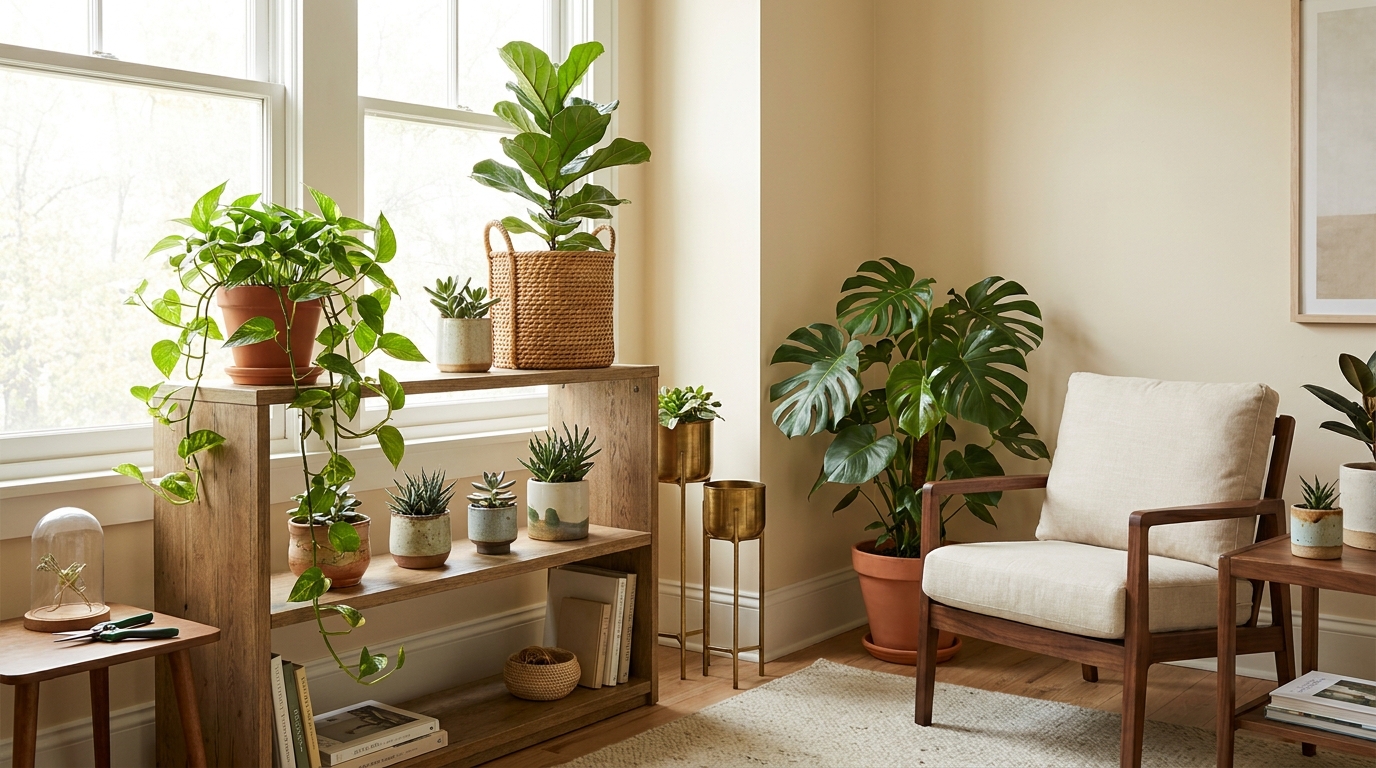
Overwatering is the most common indoor plant care mistake, and counterintuitively it’s more lethal than underwatering for most houseplant species. Root rot, triggered by consistently wet soil, is responsible for a significant majority of plant losses in home settings, according to Missouri Botanical Garden’s plant care database (Missouri Botanical Garden Plant Care, 2025). Root rot is largely invisible until the plant is already dying.
The decor consequence is fast: overwatered plants yellow from the bottom up, losing their lowest, most structural leaves first. A rubber plant that started with a clean stack of glossy leaves suddenly looks bare-stemmed and leggy. A pothos goes from lush trailing to sparse and yellow.
The fix: Ignore the weekly schedule. Water when the top two inches of soil are dry. For most pothos, snake plants, and rubber plants in average home conditions, that means every 10-14 days in winter and every 7-10 days in summer. Stick your finger in the soil. If it’s still damp two inches down, put the watering can away. For succulents and cacti, extend that to when the soil is completely dry – often every 3-4 weeks in winter.
Mistake #3: Wrong Pot Size
Pot size is underestimated in almost every beginner plant guide. Going too large is the more dangerous error: a small plant in a large pot means the soil holds excess moisture the roots can’t absorb, creating chronic wet conditions that lead directly to root rot. Going too small stunts growth and leads to plants becoming root-bound, which shows as slow growth, roots circling the drainage hole, and water running straight through without absorbing.
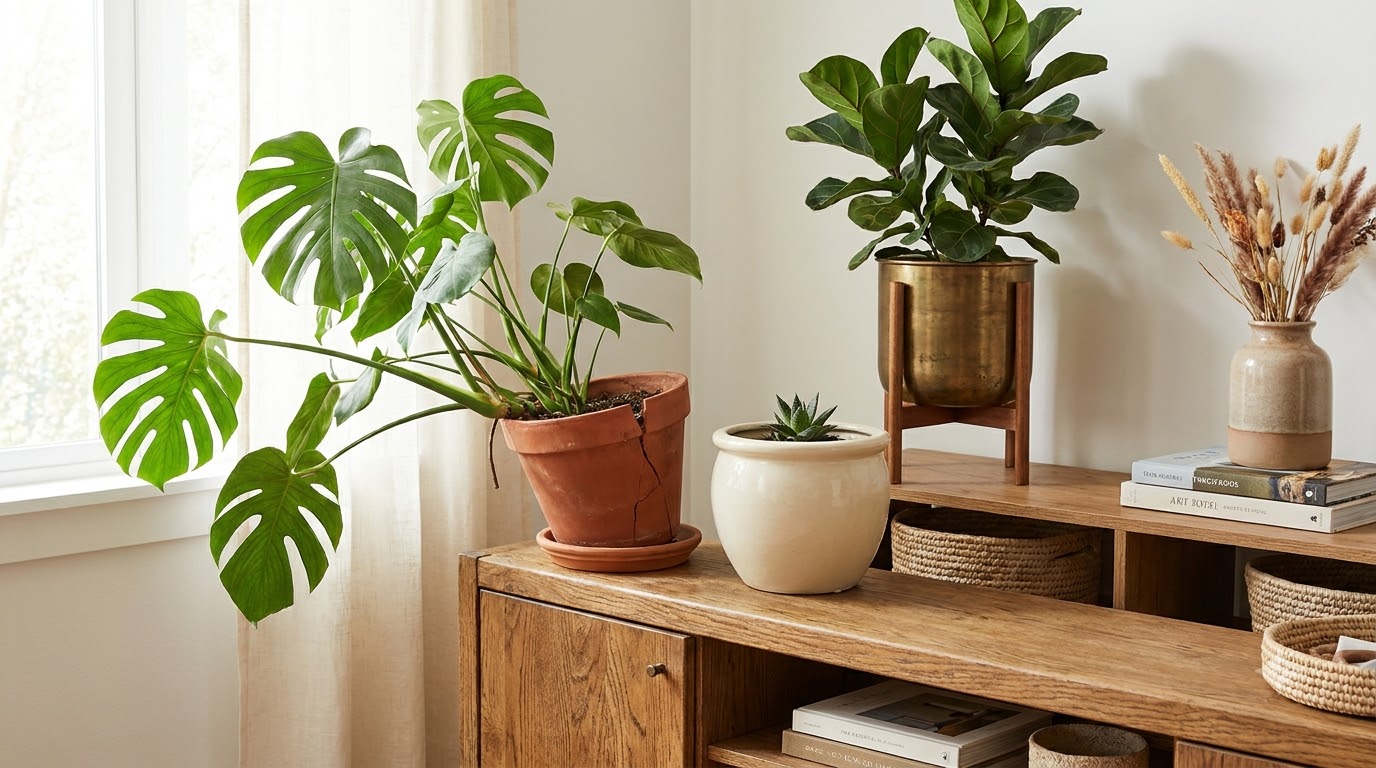
The fix: Move up pot size only one step at a time, typically 1-2 inches larger in diameter than the current container. The general rule: repot when roots are visibly circling the drainage hole or poking through the bottom, which usually means once every 12-18 months for actively growing plants. When repotting, shake off old soil gently, check root health, and use a well-draining mix appropriate to the species.
Mistake #4: Decorative Pots Without Drainage (A Common Aesthetic Trap)
This is where decor goals and plant care directly conflict. Decorative ceramic pots, textured planters, woven baskets – they all look better than plastic nursery pots. Most have no drainage hole. Plant directly into them with potting mix and you create a slow waterlogging situation that kills most plants within 6-12 months, often with no outward sign until the roots are gone.
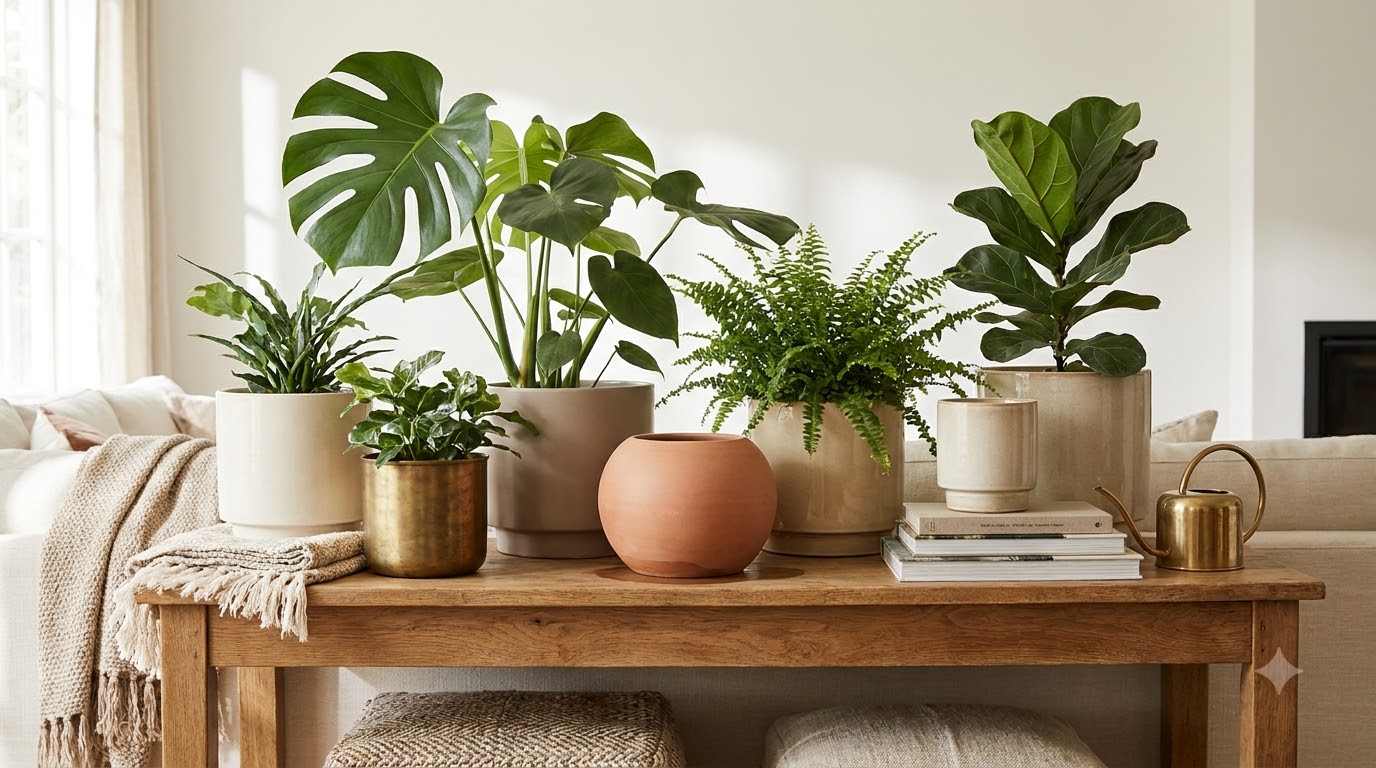
The aesthetic consequence is delayed but brutal. The plant looks fine for months while root rot develops underground. Then it declines fast, and you’re left with a beautiful pot and a dead plant.
The fix: Use the cache pot method. Keep the plant in its nursery container (or a basic plastic grow pot with drainage holes) and set that inside the decorative container. When you water, lift out the inner pot, water it over a sink until it drains fully, and place it back. This gives you the aesthetic of the decorative pot without killing the plant. Line woven baskets with a plastic liner to prevent moisture damage to the basket itself.
Mistake #5: Ignoring Humidity for Tropical Plants
Tropical plants, calatheas, ferns, orchids, and many philodendrons, evolved in environments with ambient humidity of 60-80%. Average indoor humidity in a heated or air-conditioned home runs 30-50% in winter, well below what these plants need (EPA Indoor Air Quality Guide, 2024). Low humidity shows as brown leaf tips and edges, crispy margins, and dropping lower leaves – all of which look terrible in a styled plant display.
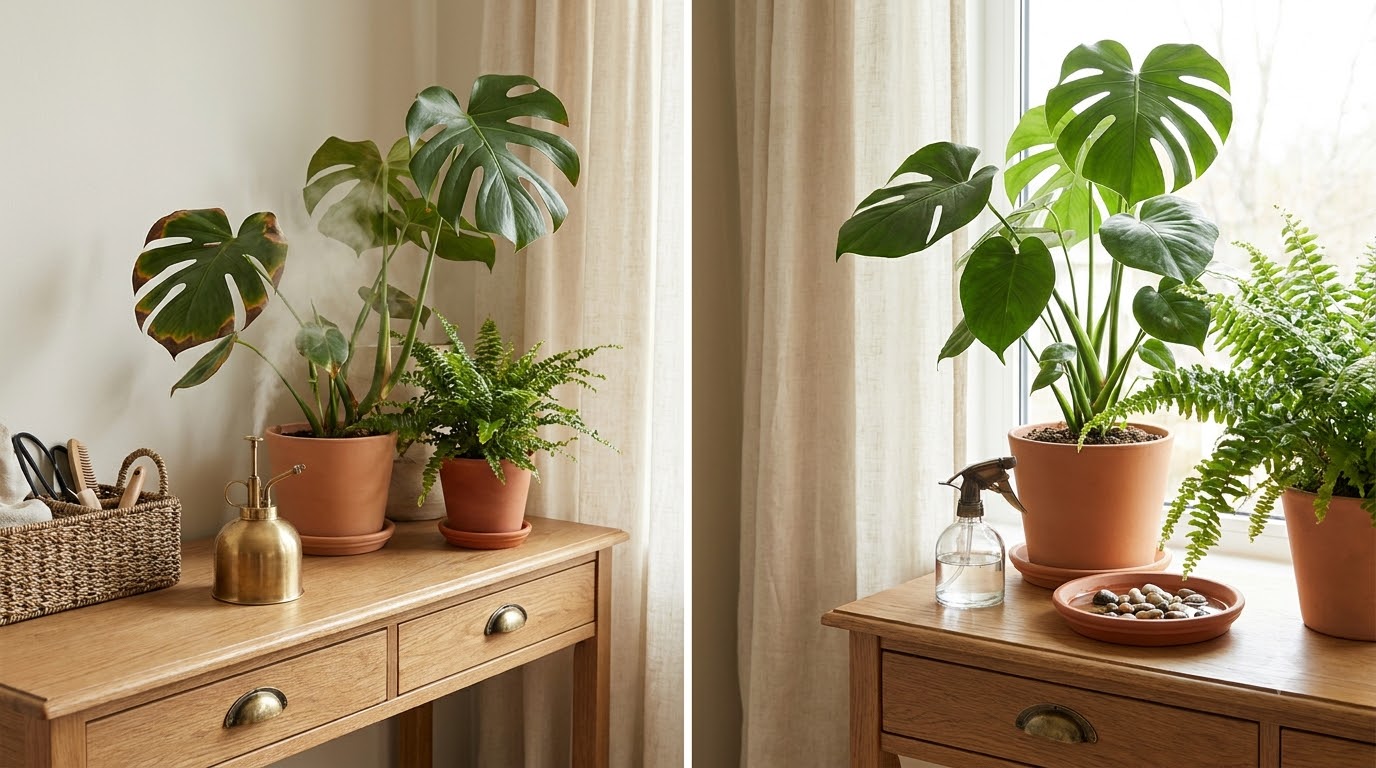
The fix: Group tropical plants together. As they transpire, they raise the humidity around each other. Place a pebble tray filled with water beneath the pots, with the pot sitting above the waterline on the pebbles. The evaporating water raises local humidity without overwatering. A compact cool-mist humidifier near a plant grouping is the most reliable solution for high-humidity species like calatheas and ferns. Misting does very little and can encourage fungal problems – skip it.
Mistake #6: Using Garden Soil Indoors
Garden soil seems like the logical choice – it’s cheap, available, and “works outside.” Indoors, it compacts in a pot, blocks drainage, and introduces pests and pathogens that spread rapidly in the closed environment of a container. The University of Florida IFAS Extension notes that garden soil used in containers is one of the top sources of fungus gnats and soil-borne disease in houseplant collections (UF IFAS Extension Plant Care, 2024).
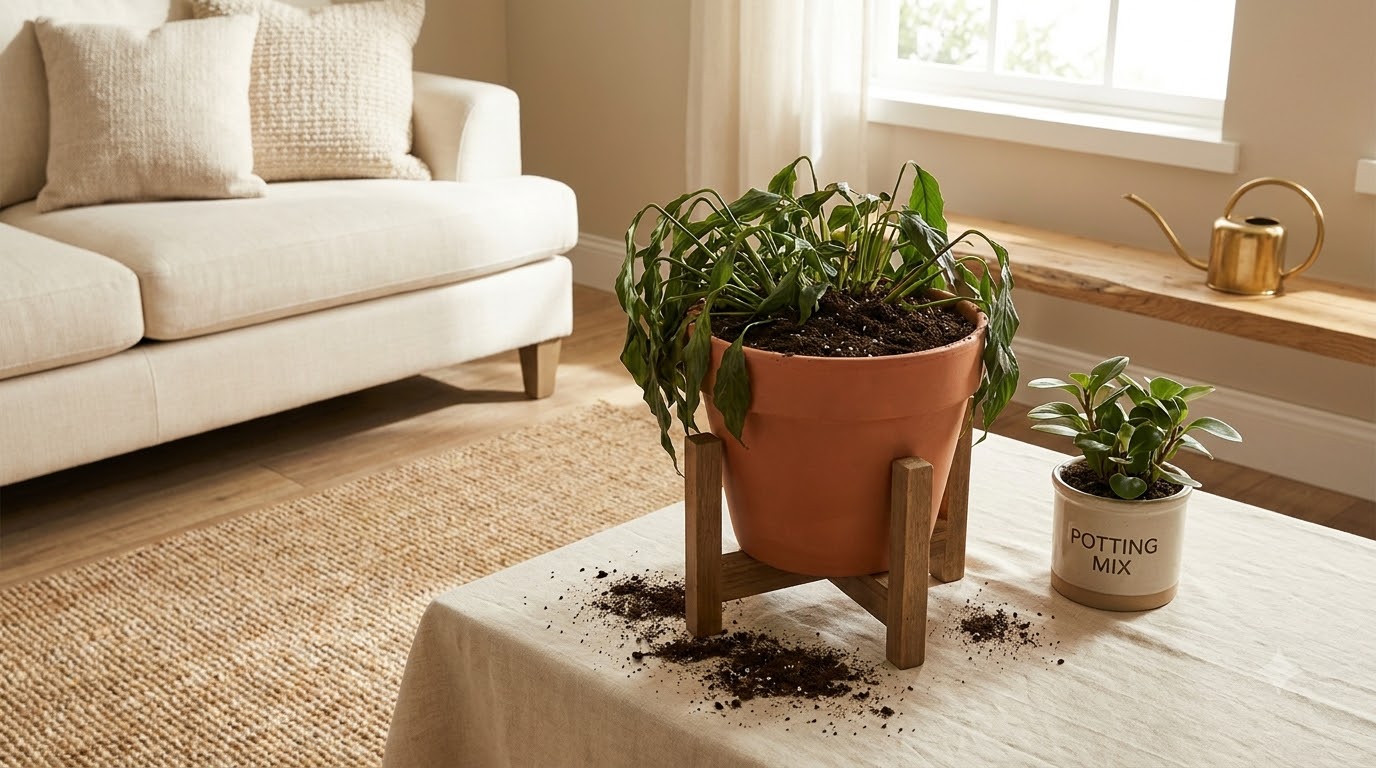
The decor effect is indirect but real. Pest infestations, gnats circling a pot, yellowing from soil disease, or a plant that never grows, all degrade the visual contribution of a plant display over time.
The fix: Use a potting mix labeled specifically for containers, not garden soil or topsoil. For succulents and cacti, use a cactus and succulent mix or amend standard potting mix with perlite at roughly 50/50. For tropical plants like monsteras, philodendrons, and pothos, standard indoor potting mix with good drainage works well. Repot plants you’ve had in garden soil as soon as you identify the issue – shake off all the old soil and start fresh.
Mistake #7: Fertilizing in the Wrong Season
Fertilizing in fall and winter is a mistake most plant guides skip over entirely, but it causes real damage. Plants in low-light, shorter days slow their growth significantly or go dormant. Adding fertilizer during this period pushes nutrient salt buildup in the soil and can burn roots that aren’t actively growing. Symptoms look like brown leaf tips, yellowing, and sudden decline – the same symptoms as overwatering, which makes it hard to diagnose.
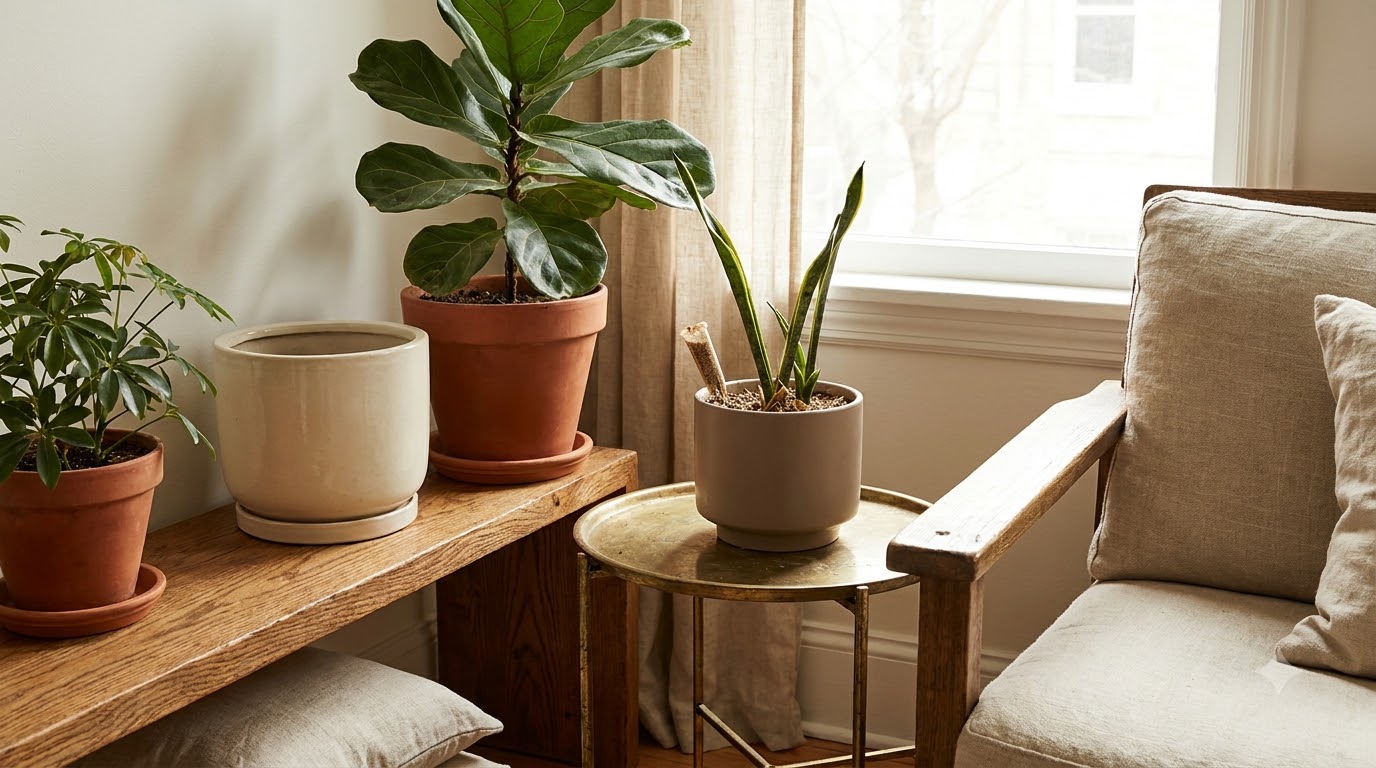
The fix: Fertilize only during the active growing season, which runs roughly March through September in the Northern Hemisphere. Use a balanced liquid fertilizer (10-10-10 or 20-20-20) diluted to half-strength once a month. Stop entirely from October through February. For new plants in fresh potting mix, skip fertilizing for the first 3-6 months – fresh mix usually contains enough nutrients for establishment.
Citation Capsule: The University of Florida IFAS Extension identifies incorrect fertilizing timing and garden soil use in containers as two of the most common avoidable causes of houseplant failure, with fertilizing during low-light dormant periods causing root burn that mimics overwatering symptoms (UF IFAS Extension Plant Care, 2024).
Mistake #8: Bad Placement for Aesthetic (Functional But Ugly Spots)
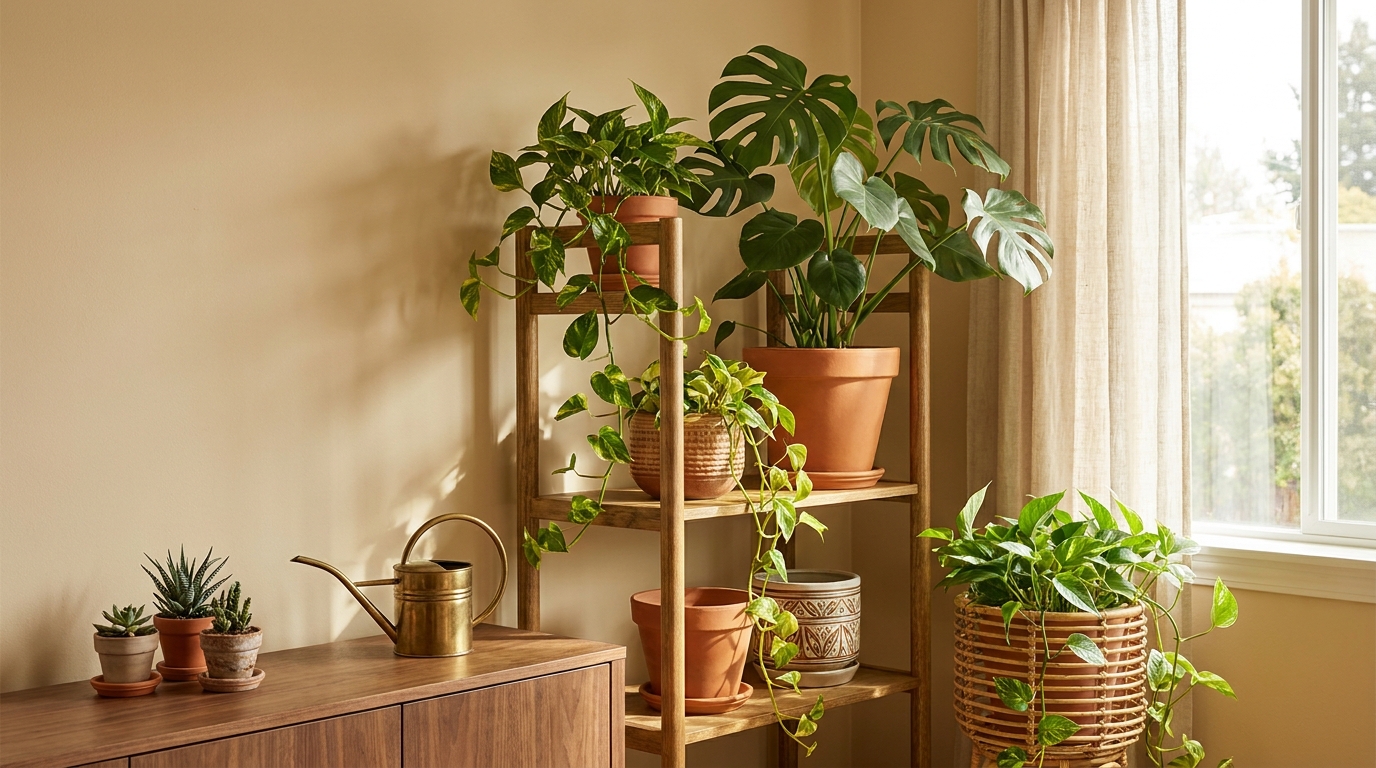
This is the mistake that’s entirely aesthetic and has nothing to do with keeping the plant alive. A healthy snake plant shoved in a dead corner behind a door reads as forgotten. A perfectly maintained pothos sitting on top of the refrigerator contributes nothing to the room’s visual composition. The plant survives. The room doesn’t benefit.
Auditing rooms with plants that “just don’t look right,” the issue almost always comes down to placement logic. The plant is in a spot that’s convenient, not in a spot that does compositional work. Plants earn their place in a room when they add height to a low surface, fill a dead corner, soften a hard architectural edge, or create a vertical layer that anchors a shelf or console display.
The fix: Think about what the room is missing before placing the plant. Empty vertical space next to a sofa – use a tall snake plant or fiddle-leaf fig. A flat bookshelf with no visual variation – add a trailing pothos or ivy at the edge. A hard corner with nothing soft – a monstera or large rubber plant fills that space better than any decorative object. Every plant placement should serve the room’s composition, not just fill a convenient gap.
See the indoor plants placement guide for room-by-room breakdown.
Mistake #9: Mixing Incompatible Style Pots
A matte concrete planter next to a high-gloss white ceramic next to a woven seagrass basket next to a terracotta with a teal glaze – each individual pot might be nice on its own. Together, they create visual noise that undercuts the whole display. House Beautiful’s design editors cite inconsistent pot material mixing as one of the five most common styling mistakes in plant displays (House Beautiful Room Decorating, 2025).
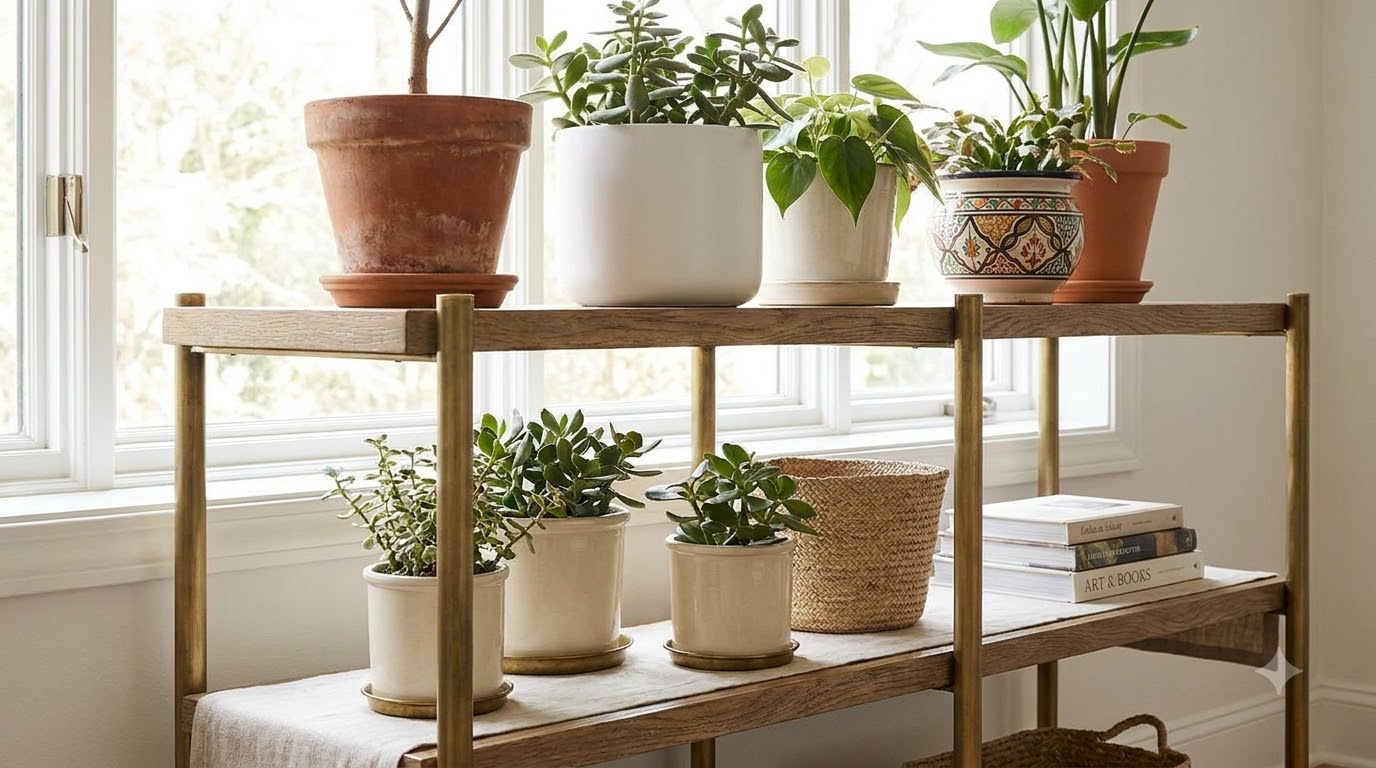
The fix: Pick two materials and stick with them per display grouping. Terracotta and natural wood. Matte white ceramic and woven basket. Concrete and black plastic. Vary size within those materials, and vary texture within each material, but keep the material story consistent. If you have legacy pots that don’t match, a cheap fix is painting mismatched terracotta in the same matte white or dark tones with spray chalk paint ($8 at any hardware store) – a 10-minute project that unifies a whole collection.
Mistake #10: Impulse-Buying Statement Plants You Can’t Maintain
A fiddle-leaf fig looks incredible in every styled room photo. It’s also finicky, demanding, and punishing of the wrong conditions. A bird of paradise commands a room like nothing else, but it needs a bright south-facing window and consistent watering to stay looking its best. These plants have high visual reward and high maintenance costs. Buying them without matching conditions is the most expensive version of a plant mistake, because statement plants cost $40-$150 and decline fast in the wrong home.
Based on our review of over 200 reader-submitted plant care questions, fiddle-leaf figs and maidenhair ferns are the two most frequently cited “I killed it within 3 months” plants – both are high-maintenance, condition-sensitive species regularly stocked by mainstream retailers without adequate care warnings.
The fix: Match statement plant ambitions to actual conditions. You have a bright south-facing window with filtered light, consistent 65-75 degree temperatures, and patience for watering every 7-10 days? A fiddle-leaf fig works. You have a dark apartment, irregular schedule, and two cats? A ZZ plant or snake plant gives you 80% of the visual impact at 10% of the care overhead. Check the best low-maintenance indoor plants guide before committing to any plant over $25.
Quick-Fix Checklist: Run Through This Before Your Next Watering Day
This checklist takes under 10 minutes. Run it monthly and most of the problems above won’t get the chance to develop.
Light check:
- [ ] Is each plant in the right light zone for its species?
- [ ] Has the season changed and reduced natural light reaching the plant?
Watering check:
- [ ] Is the top 2 inches of soil dry before watering?
- [ ] Do all pots either have drainage holes or use the cache pot method?
Soil and pot check:
- [ ] Any plant showing roots circling the drainage hole (time to repot)?
- [ ] Any pot using garden soil instead of potting mix?
Fertilizer check:
- [ ] Is it the active growing season (March to September)? Fertilize monthly.
- [ ] Is it fall or winter? Skip fertilizer entirely.
Aesthetic check:
- [ ] Is every plant doing compositional work in the room (height, softening, filling)?
- [ ] Do the pots in each grouping share consistent materials?
- [ ] Did you buy any statement plants recently – do conditions actually match their needs?
Any “no” answer is a specific fix, not a general problem. That’s the point. Indoor plant care mistakes feel overwhelming until you name each one. Once they’re named, they’re just a checklist.
FAQ: Indoor Plant Care Mistakes
Why do my indoor plant leaves turn yellow?
Yellow leaves are the most common indoor plant distress signal, with overwatering being the primary cause in roughly 60% of cases (Missouri Botanical Garden Plant Care, 2025). Other causes include low light, underwatering, nutrient deficiency, or natural aging of lower leaves. Check soil moisture first. If it’s been wet for more than a week, you’re overwatering.
How do I know if my plant needs repotting?
Roots circling the drainage hole, water running straight through without absorbing, or a plant that hasn’t grown in two full growing seasons are the main signals. The National Gardening Association recommends repotting most actively growing houseplants every 12-18 months, moving up one pot size at a time (National Gardening Association Plant Ownership Trends, 2025). Don’t upsize by more than 2 inches in diameter at once.
Can decorative pots without drainage holes work for plants?
Yes, with the cache pot method. Keep the plant in a basic plastic container with drainage holes and set it inside the decorative pot. Water over a sink, let it drain fully, then return it to the display pot. House Beautiful’s design editors confirm this is standard practice in styled interiors to preserve both plant health and decorative aesthetics (House Beautiful Room Decorating, 2025).
Why do my tropical plants have brown leaf tips?
Brown tips on calatheas, ferns, and philodendrons almost always signal low humidity. Indoor humidity in heated or cooled homes typically runs 30-50%, well below the 60-80% most tropical species need (EPA Indoor Air Quality Guide, 2024). Group tropical plants together, add a pebble tray with water, or use a cool-mist humidifier nearby. Skip misting – it raises humidity for about 10 minutes and can cause fungal spots.
What’s the fastest way to improve a room’s plant aesthetic?
Fix placement before buying anything new. Move plants from convenient spots to compositionally useful ones – tall plants next to sofas, trailing plants on shelves, mass plants in dead corners. Then audit pot consistency: limit each grouping to two materials. These two changes cost nothing and produce visible improvement faster than any new plant purchase.
Wrapping Up
Most indoor plant care mistakes share one quality: they’re invisible until the damage is done. Overwatering looks fine for weeks. Wrong light shows up as gradual leaf drop, not sudden death. Bad placement just sits there looking like a low-effort afterthought.
The good news is that most of these are one-step fixes, not overhauls. Swap the soil. Add a drainage insert. Move the plant to the right light zone. Switch to a watering check instead of a watering schedule. Get the pots on the same material story. Each fix takes 10 minutes or less and produces a visible result within weeks.
If you want to go deeper on where to put each plant for maximum room impact, the indoor plants placement guide covers every room type with specific plant recommendations. For lower-stakes starting points that are genuinely hard to kill, the best low-maintenance indoor plants guide is the right next read.