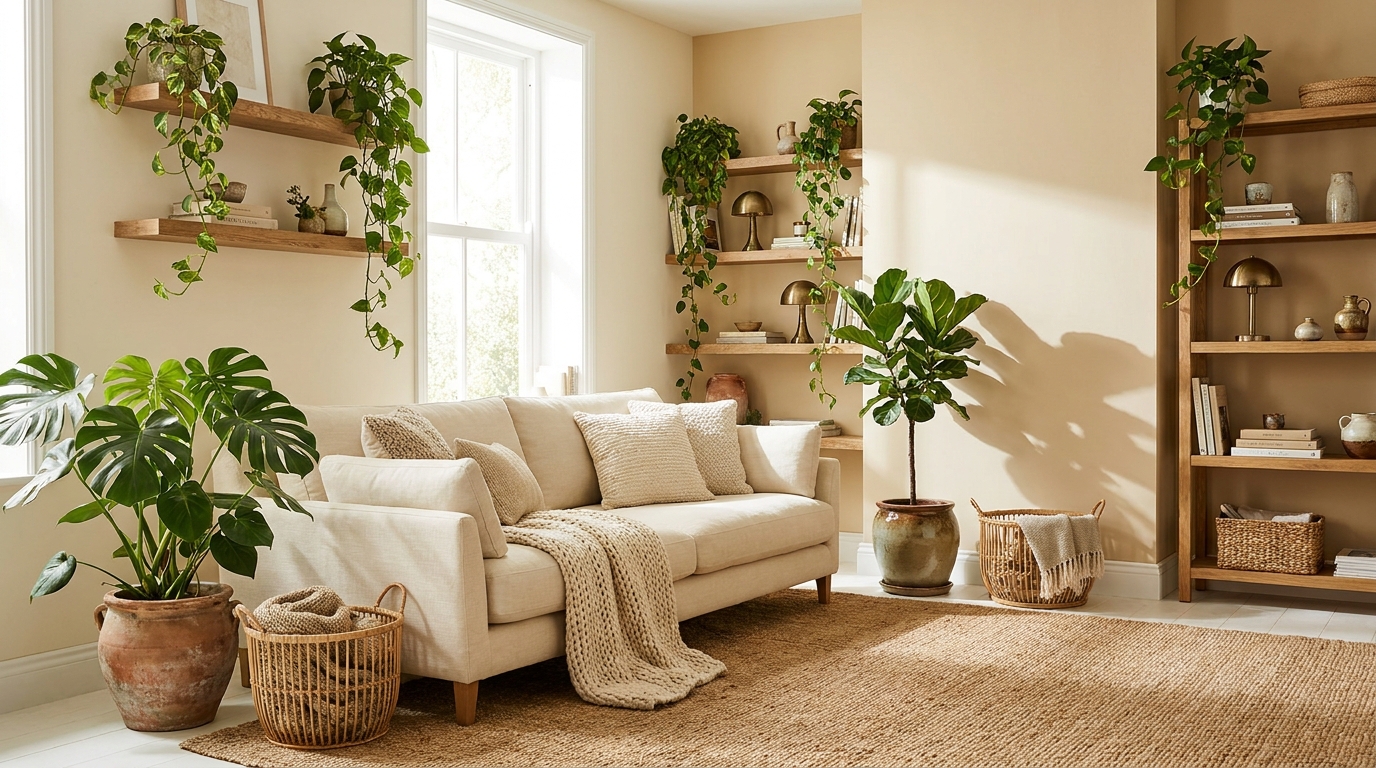
The living room is where most people make their biggest plant mistakes. They buy a large dramatic plant because it looks amazing at the nursery, put it in a corner that receives 100 fc of indirect light, and wonder why it starts dropping leaves or refusing to grow. The plant isn’t the problem — the placement is.
Living rooms are also the most varied plant environment in most homes. A south-facing window can produce 500–1,000 fc within 3 feet, dropping to 50–100 fc at the back wall of the same room. Getting 15 plants right for a space with that much light variation requires thinking in zones rather than treating the room as one environment.
This guide covers 15 plants organized by their role in the room — statement anchor plants, mid-room focal points, shelf and surface accents, and trailing fillers — with light requirements matched to real living room conditions.
Key Takeaways
- Living rooms typically have 3–5 distinct light zones. Map them before buying.
- Statement plants (monstera, fiddle leaf fig, bird of paradise) need 300–600 fc — within 4–6 feet of a south or east window.
- Low-light corners at 50–100 fc work well for ZZ plant, snake plant, and cast iron plant.
- The single most common mistake is buying plants for aesthetics before checking light.
- Overwatering kills more living room plants than incorrect light, especially for floor plants in lower-light positions.
Map Your Living Room Light Zones First
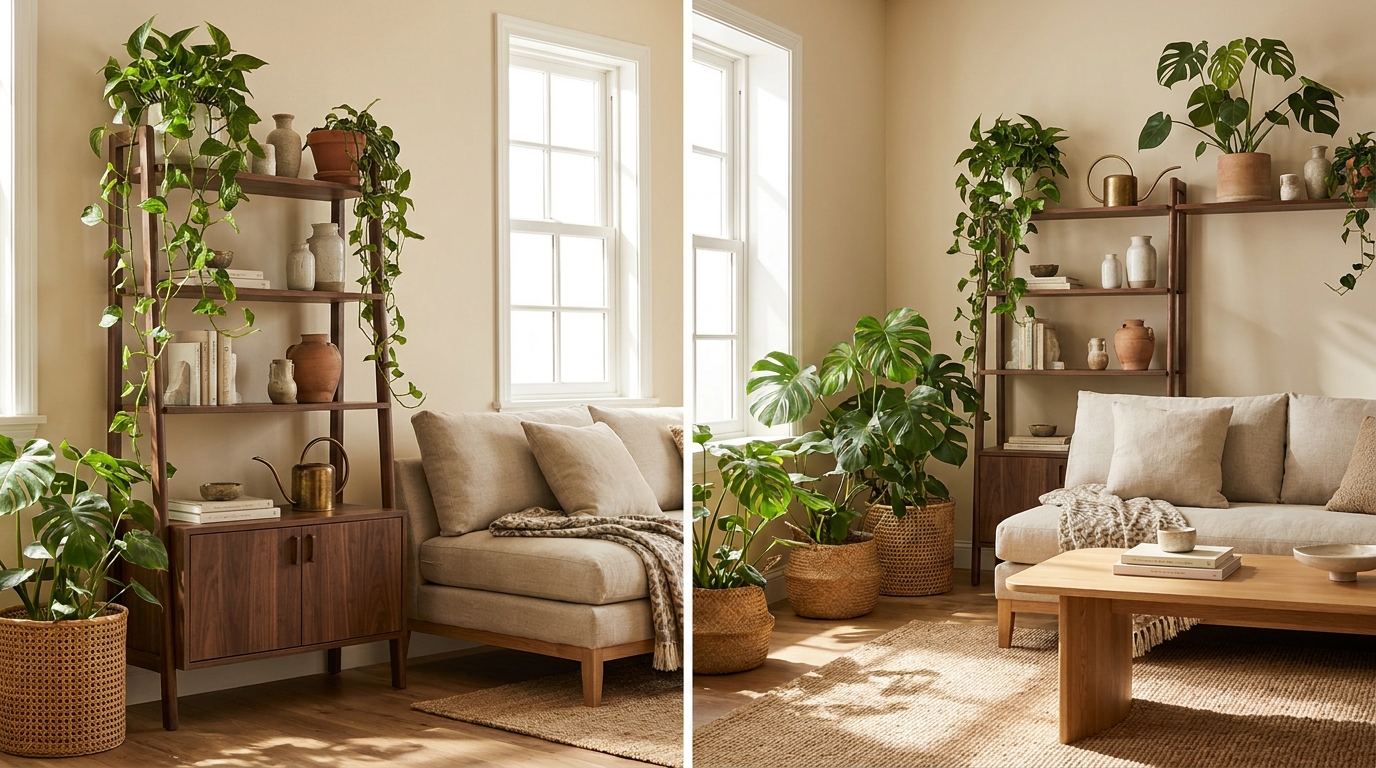
Before selecting plants, measure light in the zones where you plan to put them. A free lux meter app (Lux Light Meter, iOS or Android) takes 30 seconds and prevents expensive mismatches.
| Zone | Typical Location | Foot-Candles |
|---|---|---|
| Bright | Within 3–4 feet of south/east window | 400–1,000 fc |
| Medium-bright | 4–8 feet from window, or west window | 200–400 fc |
| Medium | Interior wall, 6–10 feet from window | 100–200 fc |
| Low | Back of room, north-facing, behind furniture | 25–100 fc |
Most living rooms have all four zones. The picks below are organized so you can match them to your actual measurements.
Statement Anchor Plants (Bright Zones: 300–600 fc)
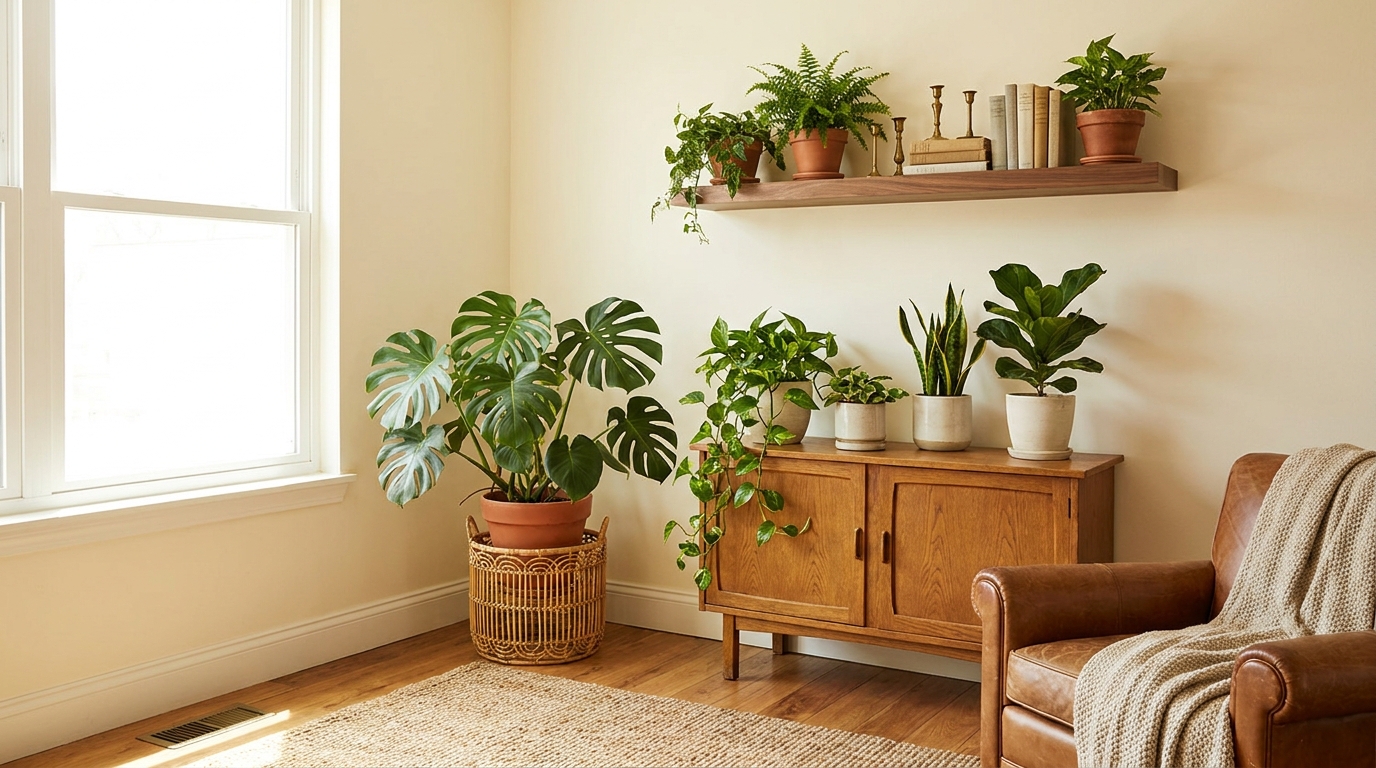
These plants need to be within 4–6 feet of a large south or east window. They are the visual centerpiece of the room and need adequate light to maintain their form and produce new growth.
1. Monstera deliciosa
The most popular living room plant of the past five years for good reason — its fenestrated leaves (the signature splits and holes) are visually unlike anything else available and scale beautifully in larger living rooms. According to Bloomscape, monstera in optimal conditions (400+ fc) can produce one to two new leaves per week during growing season.
- Light: 300–600 fc (indirect)
- Maintenance: Water when top 2 inches of soil dry out — about every 1–2 weeks
- Best placement: Floor level, beside a south or east window; give it room to spread (mature leaves reach 18–24 inches)
- Style matches: Tropical, boho, maximalist, mid-century modern, and surprisingly, minimal Japandi (single monstera as statement piece)
A monstera moved from a 200 fc position to a 450 fc spot near an east window produced six new leaves in 8 weeks. Same care schedule, same pot, same soil — the light difference was everything.
2. Fiddle Leaf Fig (Ficus lyrata)
The most photographed plant in living room design content for the past decade. It offers a strong architectural silhouette — tall trunk with large paddle-shaped leaves — that reads clearly in styled room photography. It is also notoriously sensitive to environmental changes.
- Light: 400–800 fc — needs a consistently bright spot and resents being moved
- Maintenance: Moderate-high — sensitive to overwatering, root disturbance, and cold drafts; water every 10–14 days and don’t move it once placed
- Best placement: Fixed corner near a south or east window; choose the spot carefully before buying
- Style matches: Modern, minimalist, contemporary; its clean trunk-and-canopy silhouette suits edited interior styles
3. Bird of Paradise (Strelitzia reginae or nicolai)
The most dramatic statement plant on this list. White bird of paradise (S. nicolai) can reach 6 feet indoors, with paddle leaves up to 2 feet long. Its tropical scale transforms a corner into a visual anchor point.
- Light: 500–800 fc — one of the higher-light requirements in this category; needs direct morning sun or consistently bright indirect light
- Maintenance: Water every 1–2 weeks; allow soil to dry partially; wipe dust from leaves monthly to maintain their gloss
- Best placement: Bright corner beside a south-facing window; needs space to spread both laterally and vertically
- Style matches: Tropical, coastal, California modern, maximalist
4. Rubber Plant (Ficus elastica)
More forgiving than fiddle leaf fig with a similarly strong architectural presence. Rubber plant is available in dark burgundy (Burgundy cultivar), deep green, or variegated (Ruby, Tineke), giving it a wider aesthetic range. It handles lower light than most statement plants and tolerates more irregular watering.
- Light: 200–500 fc
- Maintenance: Water every 2–3 weeks; tolerates irregular schedules better than most ficus species
- Best placement: Medium-bright zone near a window, or as a floor accent in a well-lit living room
- Style matches: Any interior style — dark burgundy reads moody and modern, variegated reads bright and eclectic
Mid-Room Focal Points (Medium Zones: 100–300 fc)
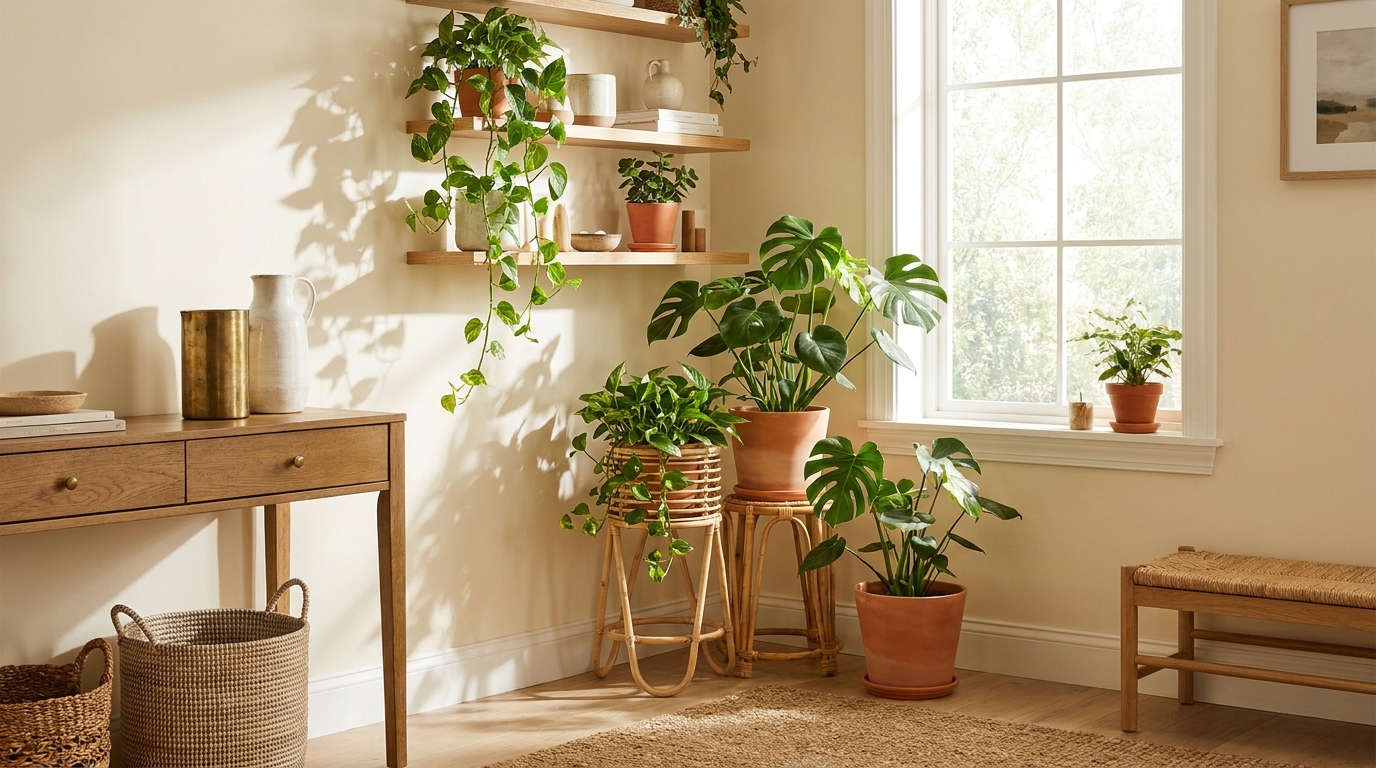
These plants work well on plant stands, in corners that receive indirect light, or in the medium-brightness zone between the window and the back wall.
5. Pothos (Epipremnum aureum)
Pothos is the most versatile plant on this list. It works as a shelf trailer, a hanging plant, a tabletop specimen in a small pot, or a climbing plant with a moss pole. Its light tolerance range (50–400 fc) makes it placeable almost anywhere in a living room.
- Light: 50–400 fc
- Maintenance: Water every 1–3 weeks depending on light level
- Best placement: High shelf where vines can trail down 2–4 feet; above bookshelves is a classic living room placement
6. Philodendron (Heartleaf or Brasil)
Heartleaf philodendron and its variegated cultivar, Brasil, offer softer trailing growth than pothos with slightly different leaf texture and coloring. Brasil has yellow-green variegation that adds color to a shelf arrangement.
- Light: 100–300 fc
- Maintenance: Water when top inch of soil dries; relatively forgiving
- Best placement: Bookshelf, side table, or hanging planter in a medium-light zone
7. Dracaena (Marginata or Fragrans)
Dracaena marginata’s slender red-edged leaves on a bamboo-like trunk create a unique silhouette — it looks distinctly architectural without requiring as much space or light as monstera or bird of paradise. Dracaena fragrans (corn plant) has broader, darker leaves and a more tropical feel.
- Light: 75–250 fc
- Maintenance: Water every 2–3 weeks; sensitive to fluoride (use filtered water if leaves show brown tips)
- Best placement: Floor-level beside a side table or TV unit; its height (2–4 feet for standard nursery specimens) fills vertical space
8. Chinese Evergreen (Aglaonema)
Available in more color combinations than nearly any other indoor plant — from silver-brushed deep green to hot pink and red. Green and silver varieties handle the lowest light; more colorful varieties need medium-bright conditions to maintain their color.
- Light: 75–250 fc (green varieties); 200+ fc for colorful varieties
- Maintenance: Water every 2–3 weeks; extremely adaptable
- Best placement: Coffee table, console table, or side table — medium-sized specimens make ideal tabletop focal points
9. Peace Lily (Spathiphyllum)
One of the few plants that flowers in medium-low light. Peace lily’s white blooms (produced in spring and summer) add a soft elegance to a living room without requiring the high light levels of most flowering plants.
- Light: 75–200 fc
- Maintenance: Self-indicating — droops visibly when thirsty; water every 1–2 weeks
- Best placement: Console table, bookshelf, or floor level in a corner; works well near a north-facing window
best indoor plants for low light
Shelf and Surface Accents (Any Light Level)
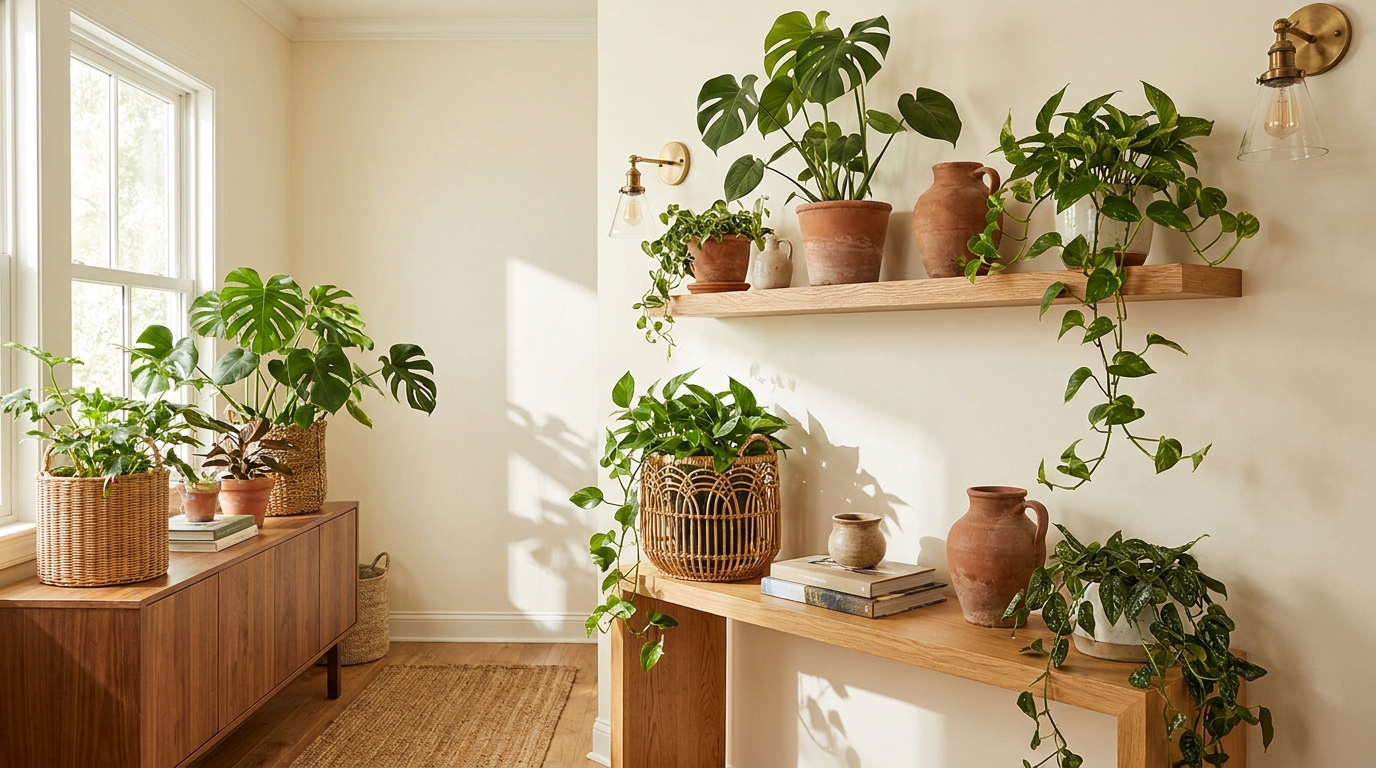
10. Snake Plant (Sansevieria / Dracaena trifasciata)
The ultimate utility player. Snake plant works on a living room shelf, at floor level in a dim corner, or as a tabletop accent in a small pot. Its vertical form adds height in spaces where round or mounding plants would blend in.
- Light: 25–400 fc
- Maintenance: Water every 3–6 weeks; the most drought-tolerant plant on this list
11. ZZ Plant (Zamioculcas zamiifolia)
ZZ plant’s glossy dark leaves contrast well against light-colored walls and furniture. It works in dim living room corners where no other plant would reliably survive, and its architectural stem clusters read as sculptural rather than simply botanical.
- Light: 25–200 fc
- Maintenance: Water every 3–4 weeks; do not overwater
12. Calathea / Maranta (Prayer Plant)
For a living room shelf, calathea’s patterned foliage works as a visual accent piece — its markings are specific enough to hold attention up close. The movement behavior (leaves fold in the evening) is a conversation piece.
- Light: 100–200 fc
- Maintenance: Moderate — prefers filtered water and consistent moisture; not as forgiving as others on this list
Trailing Fillers
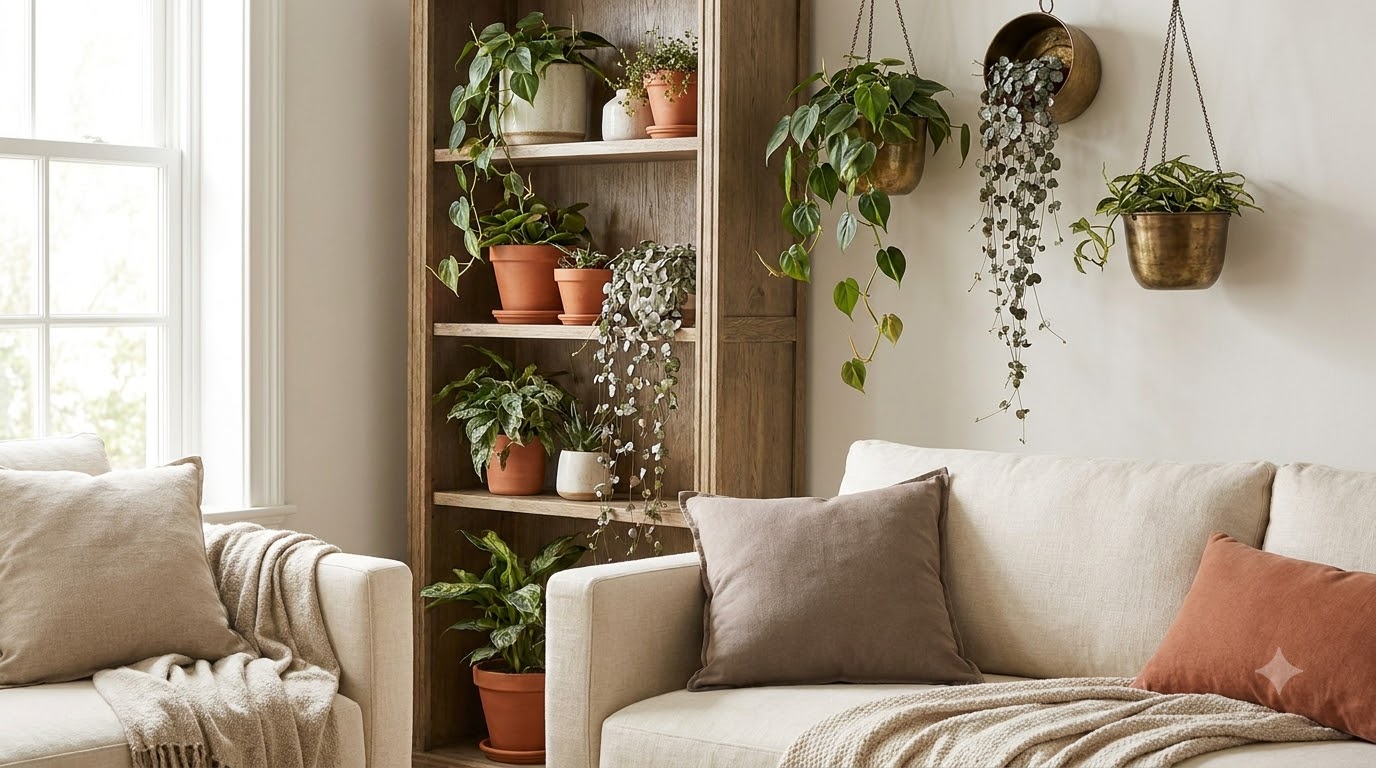
13. String of Pearls (Senecio rowleyanus)
For a bright living room shelf near a window, string of pearls is among the most visually distinctive trailing options. The pearl-like succulent leaves cascade from a pot in a way no other plant replicates.
- Light: 300–500 fc — needs bright indirect light; not for dim shelves
- Maintenance: Water every 2–3 weeks; allow soil to dry completely; drought-tolerant
14. Wandering Dude / Tradescantia
Fast-growing, vivid purple-and-green foliage that tolerates lower light than string of pearls. Tradescantia zebrina produces trailing stems with distinctive silver and purple striped leaves that work well in colorful or eclectic living rooms.
- Light: 100–300 fc
- Maintenance: Water every 1–2 weeks; trim occasionally to keep tidy
15. Heartleaf Philodendron (as a trailer)
Versatile enough to appear in multiple categories. As a standalone trailer at the end of a shelf or bookcase, heartleaf philodendron’s soft green vines add a lived-in, lush quality that styled shelving benefits from.
- Light: 75–250 fc
- Maintenance: Water when top inch dries; tolerates irregular watering
Building a Living Room Plant Arrangement
Rather than placing plants randomly, a three-scale arrangement — one tall anchor, one medium mid-level, one small trailing — creates a complete composition in any zone of the room.
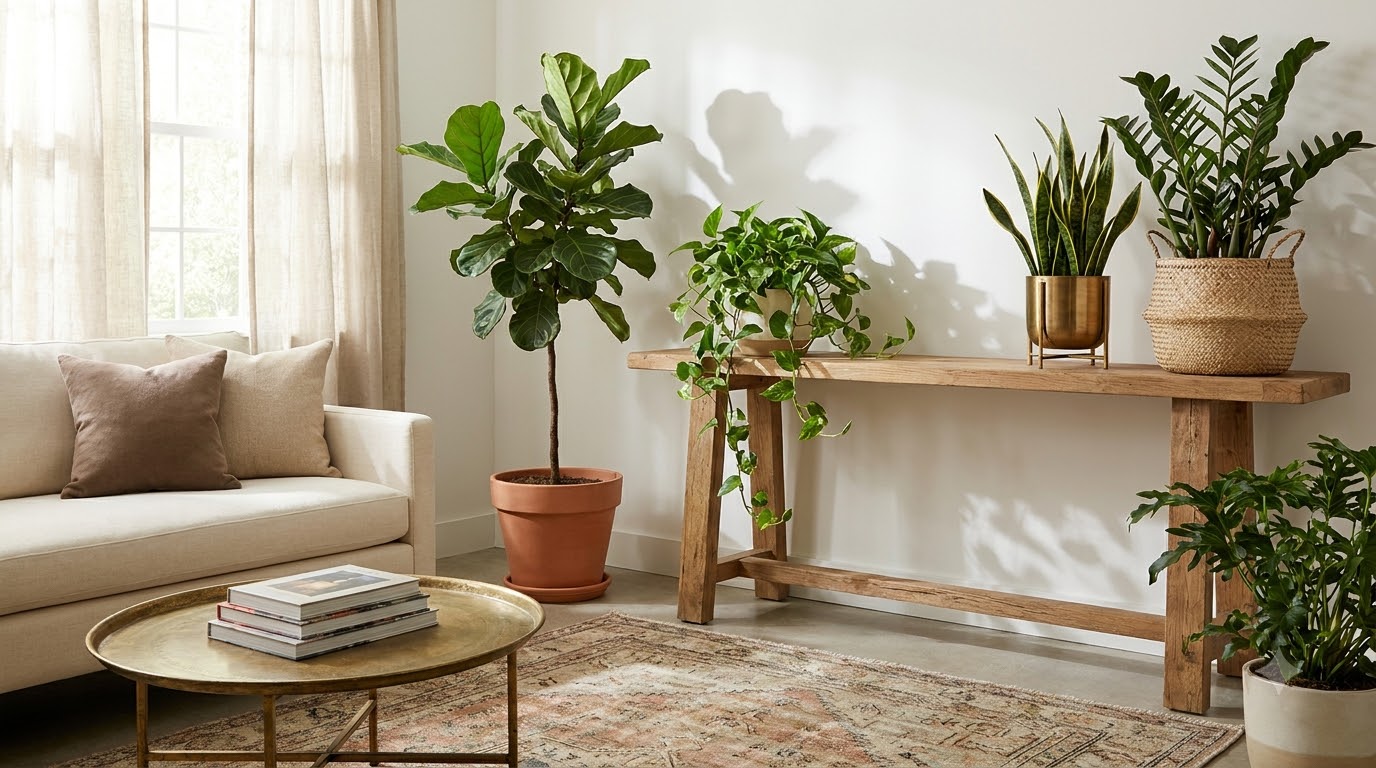
Bright corner (south window): Monstera or bird of paradise at floor level + medium dracaena on a stand + trailing pothos on the bookshelf above
Medium-light wall: Rubber plant at floor level + Chinese evergreen on console + heartleaf philodendron trailing from a high shelf
Dim corner (back of room): ZZ plant or snake plant (floor) + peace lily on a side table + pothos in a small hanging planter
Each arrangement uses three light-appropriate plants that don’t compete visually — one takes the primary role, one supports it, and one adds texture or movement.
The 15 plants above cover the full range of living room conditions. Start with your light measurements, identify your zones, and select one plant per zone before expanding. A living room with three well-placed, healthy plants is more compelling than one with eight struggling specimens scattered without intention.