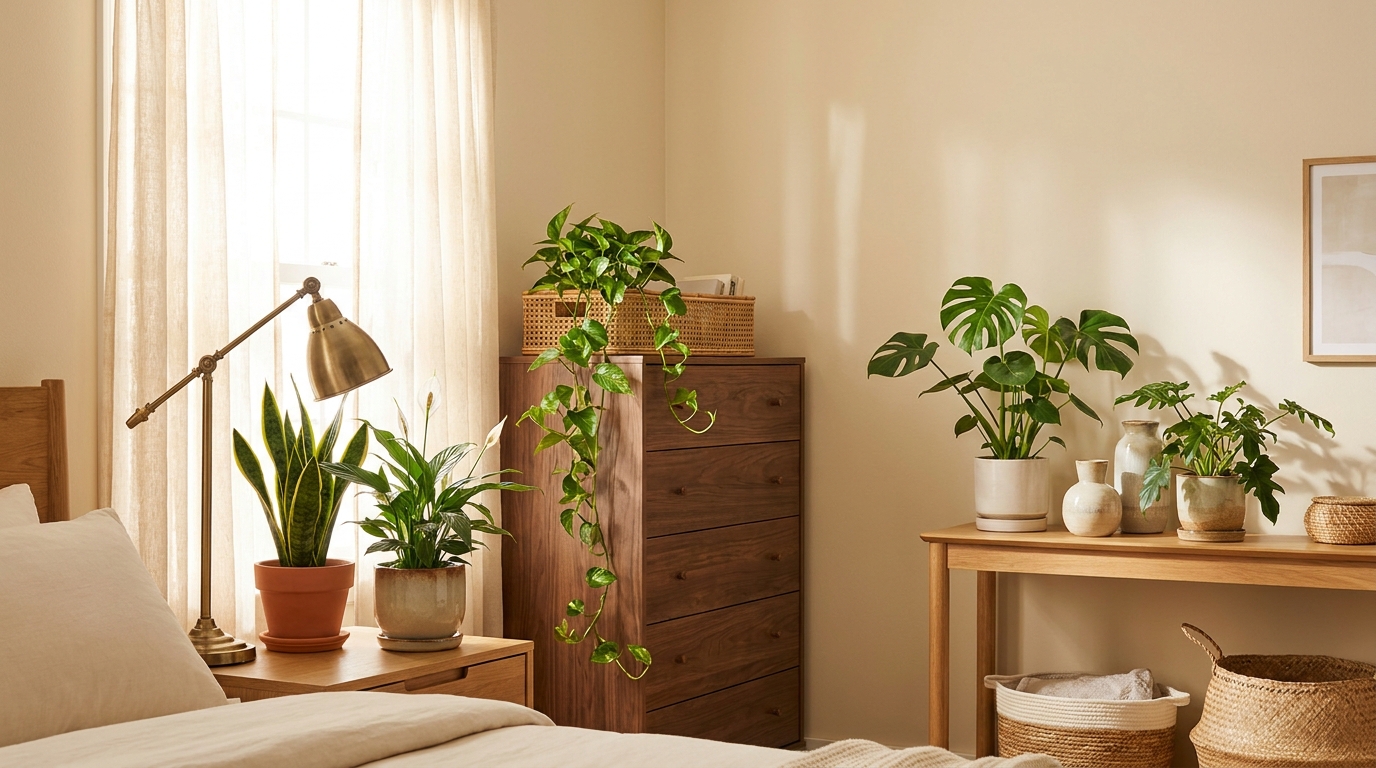
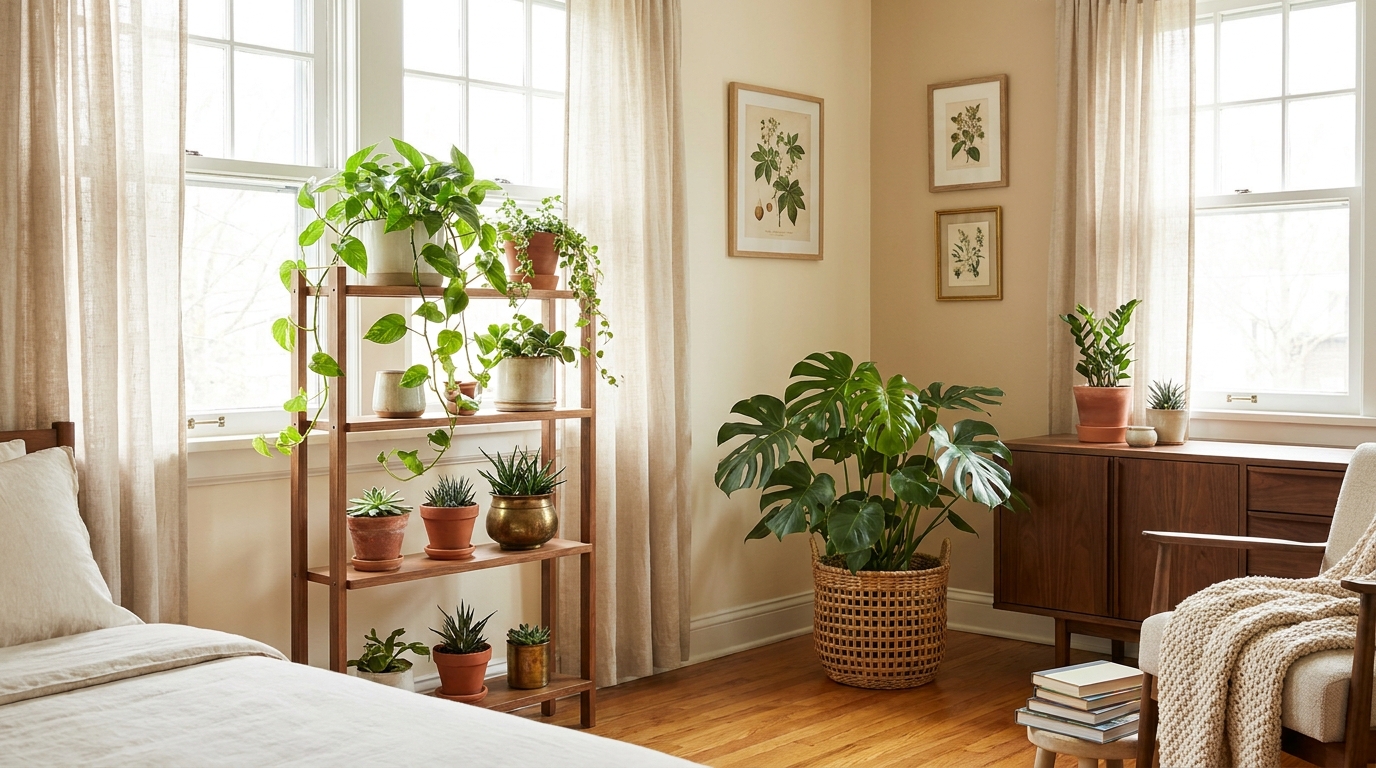
Bedrooms get the short end of the plant placement stick. Most people put their best plants in the living room and leave their bedroom bare or populated with whatever survived the window drought. The result is a room that feels functional but not restorative.
The right bedroom plants pull double duty: they add the visual softness that makes a bedroom feel like a retreat, and several species documented in peer-reviewed research contribute measurable improvements to indoor air quality in enclosed sleeping spaces. The 12 picks below were chosen specifically for bedroom conditions — typically lower light than main living areas, need for minimal maintenance, and suitability for the one room in the house where you spend 7–9 hours with your respiratory system fully engaged.
Key Takeaways
- Bedrooms typically receive 50–200 fc of natural light — adequate for low-to-medium light species.
- NASA research identified several houseplants that remove benzene, formaldehyde, and trichloroethylene from enclosed air. Snake plant and peace lily are among them.
- Avoid plants with strong scents (gardenias, jasmine in large quantity) near sleeping areas — fragrance can disrupt sleep in sensitive individuals.
- Low-maintenance plants that survive irregular watering are ideal for bedrooms — most people don’t want plant care as part of their morning routine.
- Toxic plants (peace lily, pothos, snake plant) are safe for adults in a bedroom but should be placed out of reach of children and pets.
Why Bedroom Plant Selection Is Different
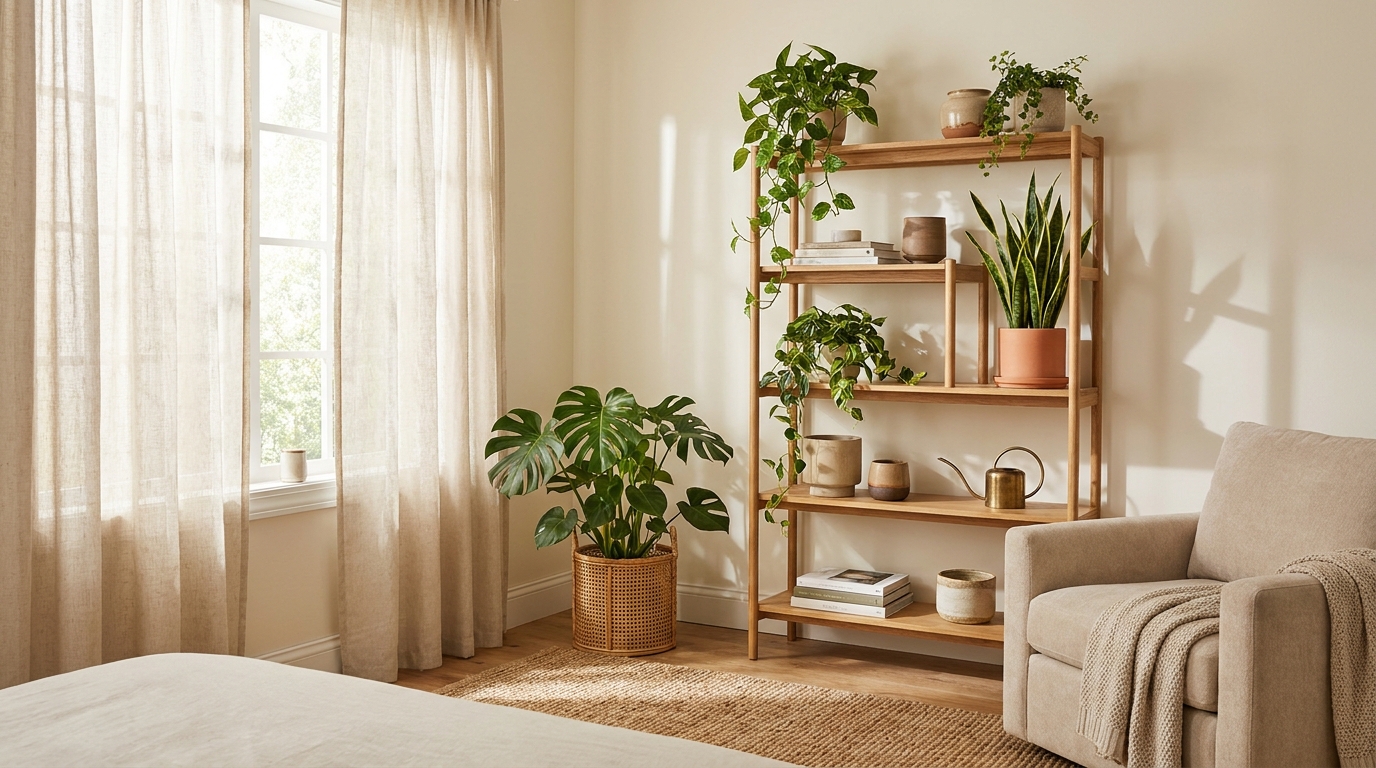
Bedrooms have specific requirements that most plant guides ignore:
Lower and more variable light. Blackout curtains, north-facing windows, and furniture placement often create 25–100 fc conditions. Many “easy” plants like monstera or bird of paradise won’t sustain themselves here.
Minimal maintenance expectation. You water bedroom plants when you think of it, which is less frequently than kitchen or living room plants. Species that handle drought and irregular schedules are essential.
Enclosed overnight air. You breathe bedroom air for 7–9 hours with minimal ventilation in many homes. The NASA Clean Air Study tested houseplants in sealed chambers and documented removal of VOCs at rates meaningful for small enclosed rooms.
Aesthetic priority. Bedrooms are styled for calm — strong graphic plants like banana trees or cacti can read as too activating. Softer, more flowing plant forms work better in sleeping spaces.
The 12 Best Bedroom Plants
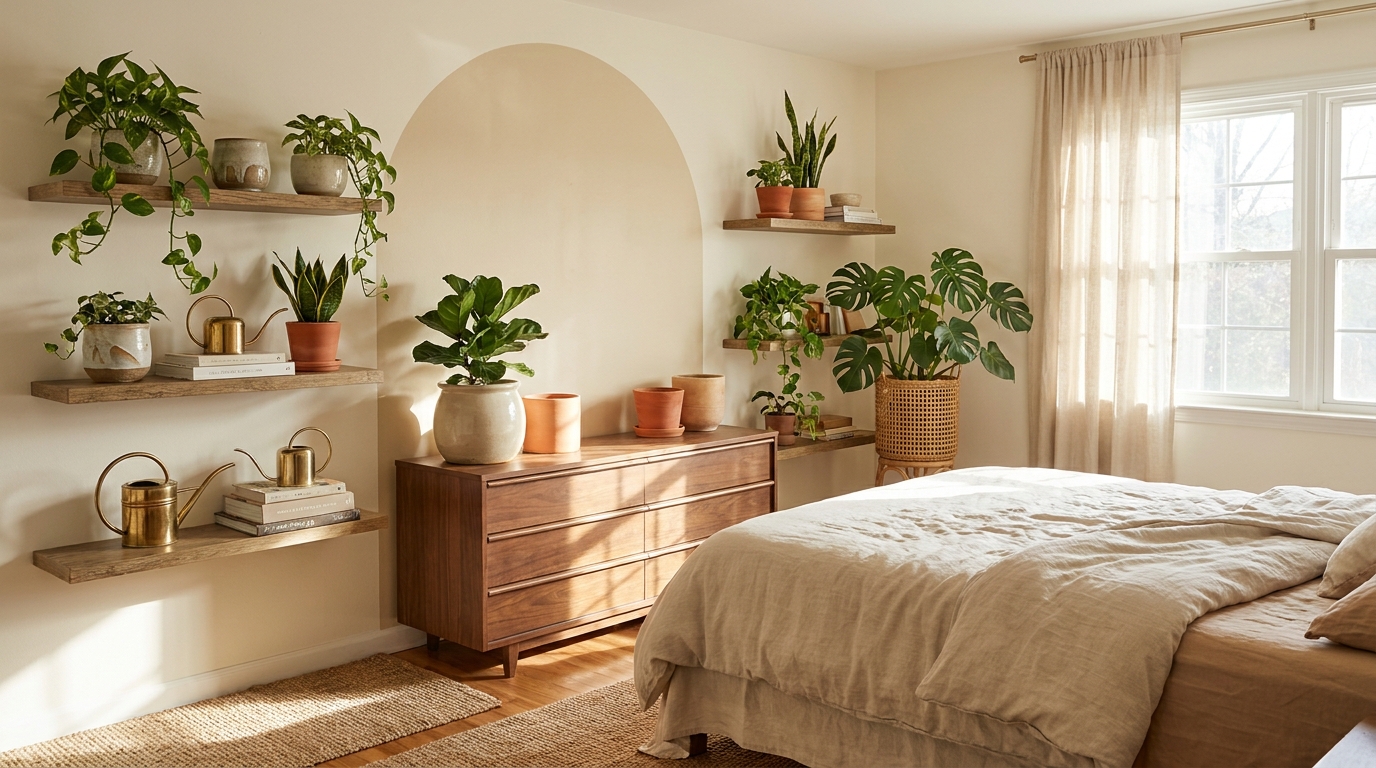
1. Snake Plant (Sansevieria / Dracaena trifasciata)
The most recommended bedroom plant across horticultural and interior design sources. Snake plant is one of a small number of plants that perform crassulacean acid metabolism (CAM) — it absorbs CO₂ at night rather than during the day. In a sealed bedroom, this means the plant is technically working at night when you need it most.
- Light: 25–200 fc — tolerates near-dark conditions
- Maintenance: Water every 4–6 weeks; virtually indestructible
- Best placement: Floor-level beside the bed or in a dim corner — its vertical silhouette adds height without taking up floor space
- Style note: Laurentii (gold-edge) adds warmth; Moonshine (silver-grey) reads cooler and more modern
2. Peace Lily (Spathiphyllum)
The top-performing plant in the NASA study for removal of acetone, benzene, and formaldehyde. Peace lily also transpires moisture, acting as a natural humidifier — beneficial in bedroom environments dried by air conditioning or heating.
- Light: 50–150 fc — tolerates lower light, flowers with slightly more
- Maintenance: Self-indicating — droops noticeably when thirsty, perks back up quickly after watering
- Best placement: On a dresser or low shelf where its large leaves and white blooms are visible from the bed
- Caution: Mildly toxic to pets. Keep elevated if animals access the bedroom.
3. Pothos (Epipremnum aureum)
The bedroom workhorse. Pothos tolerates the variable light conditions of most bedrooms — it handles both the dim corner by the door and the slightly brighter area near the window without complaint. Its trailing growth is visually calming and works on bookshelves, hanging planters, and nightstand edges.
- Light: 30–200 fc
- Maintenance: Water every 2–3 weeks; allow soil to dry completely
- Best placement: High shelf or hanging planter where vines can trail — golden pothos with yellow-green coloring adds warmth to a neutral bedroom
- Style tip: A 3–4 foot trailing pothos on a bedside shelf reads as a decorative element rather than a plant in a pot. Let it grow long.
4. English Ivy (Hedera helix)
One of the most effective plants for reducing airborne mold and allergens. A study published in HortScience found that English ivy reduced airborne mold by 60% within 12 hours in a sealed test chamber — relevant for people with allergies or asthma who sleep in enclosed rooms.
- Light: 100–200 fc — needs slightly more light than snake plant or ZZ
- Maintenance: Keep soil evenly moist; allow surface to dry between waterings
- Best placement: Hanging planter near a window, or a tall shelf where vines can hang
- Caution: Toxic if ingested. Keep out of reach of pets and children.
5. ZZ Plant (Zamioculcas zamiifolia)
The second-best low-light option after snake plant. ZZ plant’s deep green, glossy leaves work beautifully against neutral bedroom walls and wood furniture. It is effectively impossible to kill through neglect — its rhizome stores water and nutrients to survive extended dry periods.
- Light: 25–150 fc
- Maintenance: Water every 3–4 weeks; even less in winter
- Best placement: Floor corner, or on a stand beside a dresser — pairs well with dark wood furniture for a grounded, editorial look
- Style note: The new Raven ZZ has near-black foliage — excellent for dark-toned bedrooms or maximalist decor.
best indoor plants for low light
6. Aloe Vera
Like snake plant, aloe vera is a CAM plant — it releases oxygen at night. It also has the most immediate practical application of any bedroom plant: a leaf broken open provides instant gel for minor burns, cuts, or skin irritation. On a bedside table, it doubles as decor and first-aid kit.
- Light: 200–500 fc — needs more light than most plants on this list; best near a bedroom window
- Maintenance: Water every 3–4 weeks; cannot tolerate overwatering (well-draining soil required)
- Best placement: Windowsill or bedside table near a south- or east-facing window
- Note: Aloe vera gel is safe for topical use; the latex beneath the outer leaf (yellow substance) is a laxative and should not be ingested.
7. Lavender
The exception to the “no strong scents” rule. Lavender’s fragrance is documented in multiple clinical studies as having a mild anxiolytic (anxiety-reducing) and sleep-promoting effect. A study in Chronobiology International found that lavender aroma increased slow-wave sleep in healthy adults. The caveat: lavender needs direct sun and dries out quickly — it is a higher-maintenance choice.
- Light: 500+ fc — requires a south or west window with direct sun for at least 4 hours
- Maintenance: Water when soil is completely dry; poor drainage kills it faster than drought
- Best placement: Windowsill with maximum sun exposure; keep a small pot rather than a large specimen
- Note: Dried lavender bunches have the same documented sleep benefit without the maintenance demands of a live plant.
8. Chinese Evergreen (Aglaonema)
Among the most forgiving plants in the bedroom context. Chinese evergreen handles low to medium light and tolerates the dry indoor air common in climate-controlled bedrooms. Its variegated foliage — available in silver, green, and for brighter rooms, red and pink tones — adds color without requiring the maintenance of flowering plants.
- Light: 50–200 fc (green varieties); 150+ fc for colorful varieties
- Maintenance: Water every 2–3 weeks; allow top inch of soil to dry
- Best placement: Dresser top, nightstand, or a bookshelf — medium-sized specimens with bushy growth make good tabletop focal points
9. Calathea (Prayer Plant)
The most aesthetically complex option on this list. Calathea foliage features intricate patterning — burgundy undersides, silver-brushed tops, striped markings — that reads as deliberately decorative rather than simply planted. Its movement behavior (leaves fold up at night, open in the morning) is calming to observe and aligns with bedroom circadian themes.
- Light: 75–200 fc — prefers indirect, filtered light
- Maintenance: Moderate — sensitive to chlorinated tap water; prefers filtered or rainwater, and consistent soil moisture
- Best placement: Beside the bed or on a nightstand where its leaf movement is visible
10. Spider Plant (Chlorophytum comosum)
One of the most effective plants in the NASA study for removing formaldehyde (a common off-gassing compound in furniture, carpeting, and adhesives — exactly the materials in a typical bedroom). Spider plants produce cascading offshoots that can hang from a planter, adding movement and visual texture.
- Light: 100–250 fc
- Maintenance: Low — water when soil dries out; produces plantlets that can be removed and propagated
- Best placement: Hanging planter near a window, or a high shelf with adequate light
11. Rubber Plant (Ficus elastica)
A statement plant for bedrooms with enough space. Rubber plant’s large, glossy leaves — available in dark burgundy, deep green, or variegated — create a sculptural anchor point. It tolerates the lower light of most bedrooms better than other ficus species (like fiddle leaf fig, which is notably finicky).
- Light: 150–300 fc — needs a reasonably bright spot; not for north-facing rooms without supplemental light
- Maintenance: Water every 2–3 weeks; avoid cold drafts (away from air conditioning vents)
- Best placement: Floor-level accent beside a dresser or wardrobe — its height (it can reach 6 feet indoors) fills vertical space in large bedrooms
12. Heartleaf Philodendron
The friendlier cousin of pothos. Heartleaf philodendron has softer, more heart-shaped leaves that trail and cascade similarly to pothos but with a slightly different texture. It tolerates lower light than most philodendrons and forgives irregular watering better than most tropical plants.
- Light: 75–200 fc
- Maintenance: Water every 2–3 weeks; tolerates occasional missed waterings
- Best placement: On a bookshelf or nightstand where vines can trail; pairs well with woven or ceramic pots for a softer aesthetic
Bedroom Plant Placement Strategy
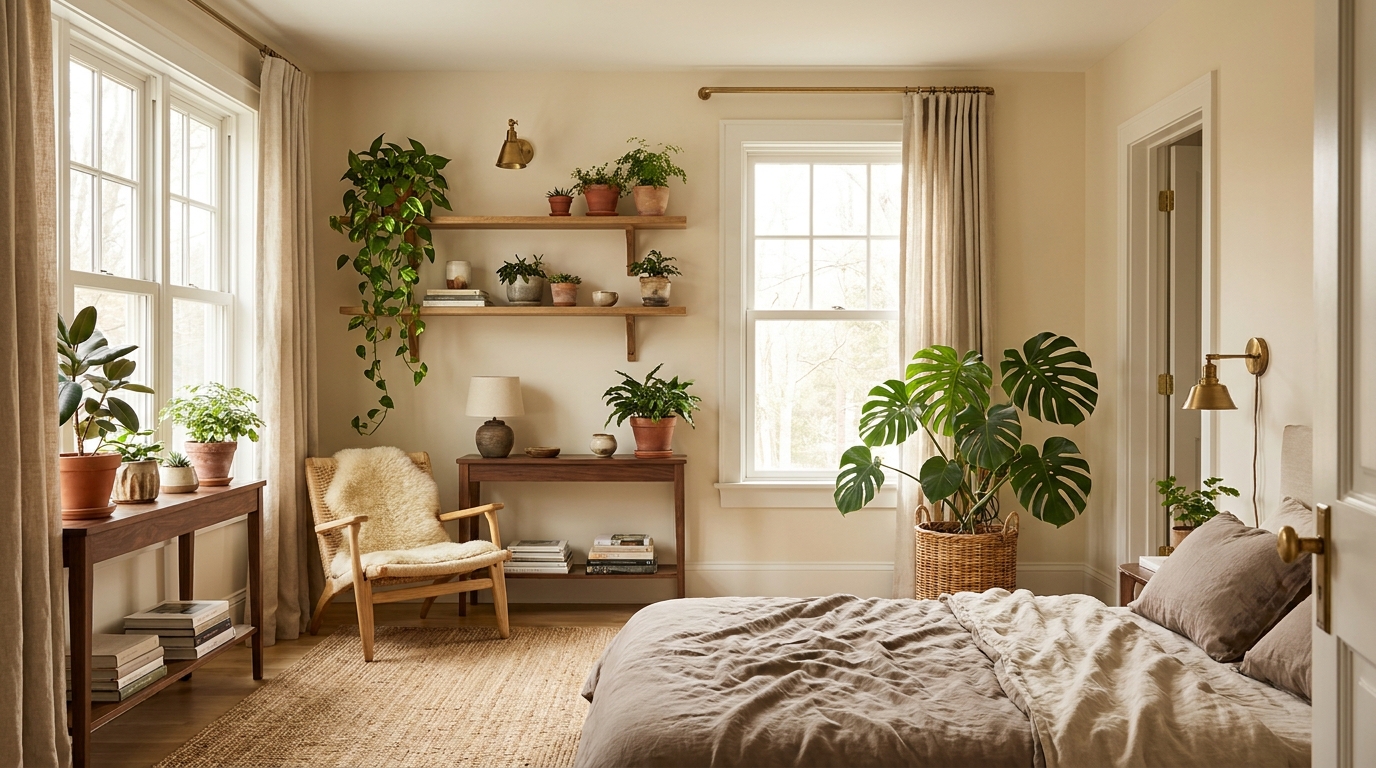
Three zones work well for bedroom plant placement:
The bedside zone. One to two small plants on a nightstand or beside the bed. Best choices: snake plant, aloe vera, small ZZ, or heartleaf philodendron in a small pot. Keep plants that need regular watering (peace lily, calathea) here so you notice them daily.
The dresser or shelf zone. A medium plant anchoring the dresser top or a shelf cluster. Best choices: Chinese evergreen, rubber plant, ZZ plant, or a trailing pothos in a hanging planter above.
The floor zone. For bedrooms with enough space, one tall floor plant creates a focal point. Snake plant, ZZ plant, or rubber plant are the most reliable options for bedroom floor placement.
Avoid clustering too many plants near the bed itself — one or two is enough for the immediate sleeping area. More plants work well in corners or on furniture away from the bed.
What to Avoid in Bedrooms
Strong fragrance in large quantities. A large jasmine or gardenia near the bed can disrupt sleep for fragrance-sensitive sleepers. Lavender is the exception — its fragrance is documented as sleep-promoting in clinical doses.
Overwatered soil. Soggy soil in an enclosed room promotes mold growth. Ensure pots have drainage holes and that saucers are emptied within 24 hours of watering.
Plants that shed frequently. Ficus benjamina (weeping fig) drops leaves in response to air movement and light changes — not ideal for a bedroom floor. Stick with species that hold their leaves reliably.
High-maintenance species. The bedroom is not where you want to manage a finicky fiddle leaf fig or a misting-dependent orchid. Save high-maintenance plants for rooms where you spend more active time.
The 12 plants above represent the highest overlap of aesthetic quality, air quality benefit, low-light tolerance, and low maintenance — optimized for how people actually live in their bedrooms rather than how they’d like to.