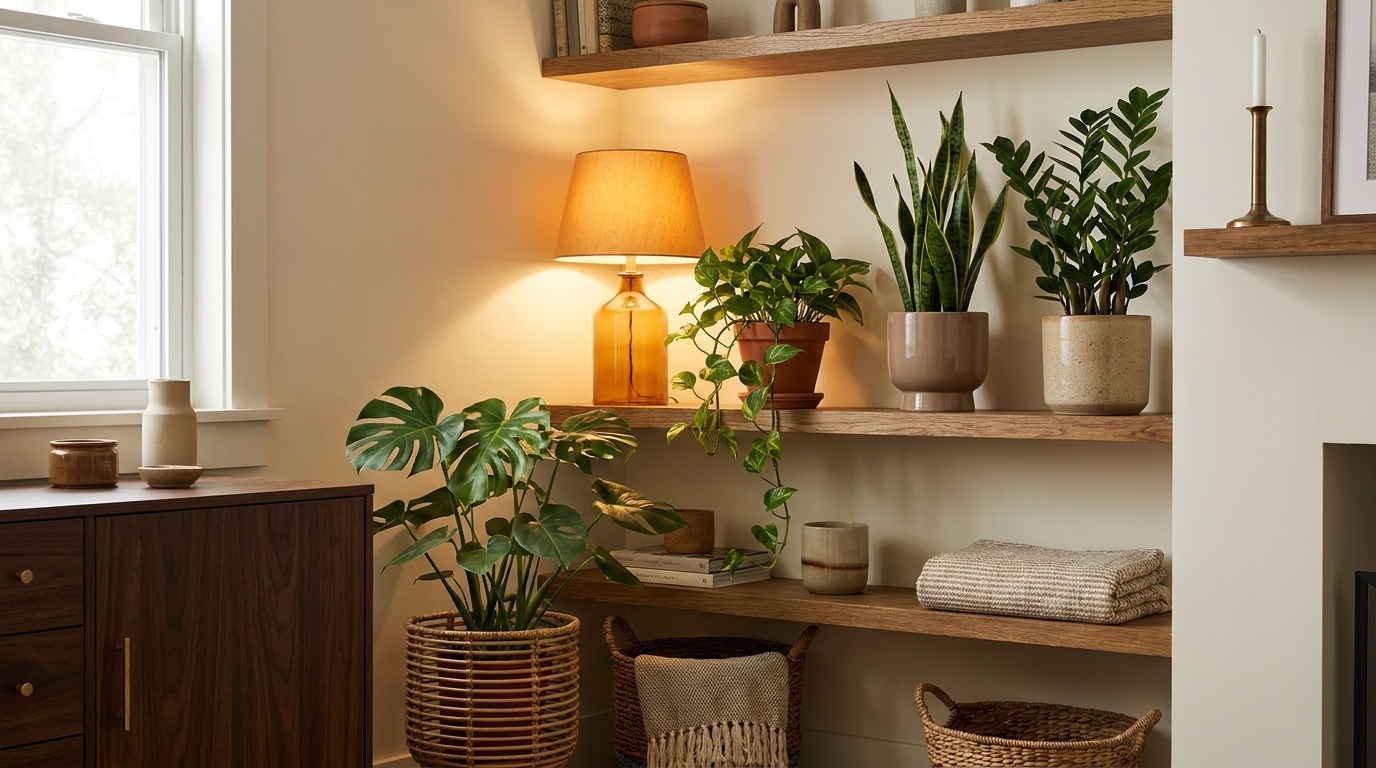
Most plant advice assumes you have a bright south-facing window. If you don’t, the guidance falls apart. You buy a monstera, put it in your north-facing bedroom, watch it stall for six months, and assume you have a black thumb. You don’t. You have a low-light room, and you need plants matched to that reality.
Low light is not the death sentence for plant styling that most guides imply. A north-facing hallway, a bathroom with one frosted window, a living room where the sofa blocks the only window — these spaces have their own plant vocabulary. The 20-plus species below genuinely thrive in indirect or filtered light. A further group tolerates low light without requiring it. The guide also covers what “low light” actually means in measurable terms, because most plants labeled “low light tolerant” were photographed in a well-lit studio.
According to The Sill, the most returned houseplant category in 2025 was bright-light plants placed in low-light rooms — the mismatch accounts for more plant deaths than overwatering or neglect. Matching plant to light condition is the highest-leverage decision in plant care.
Key Takeaways
- “Low light” means 25–100 foot-candles (fc). Direct sun is 10,000+ fc. Most homes measure 50–200 fc away from windows.
- Plants labeled “low light tolerant” often mean they survive, not that they thrive. This guide distinguishes the two categories.
- Snake plant, ZZ plant, pothos, and cast iron plant are the four most reliably low-light performers across multiple peer-reviewed studies.
- Overwatering kills more low-light plants than low light does — reduced light means reduced water uptake.
- North-facing rooms, interior bathrooms, and hallways can be styled beautifully with the right species selection.
What “Low Light” Actually Means
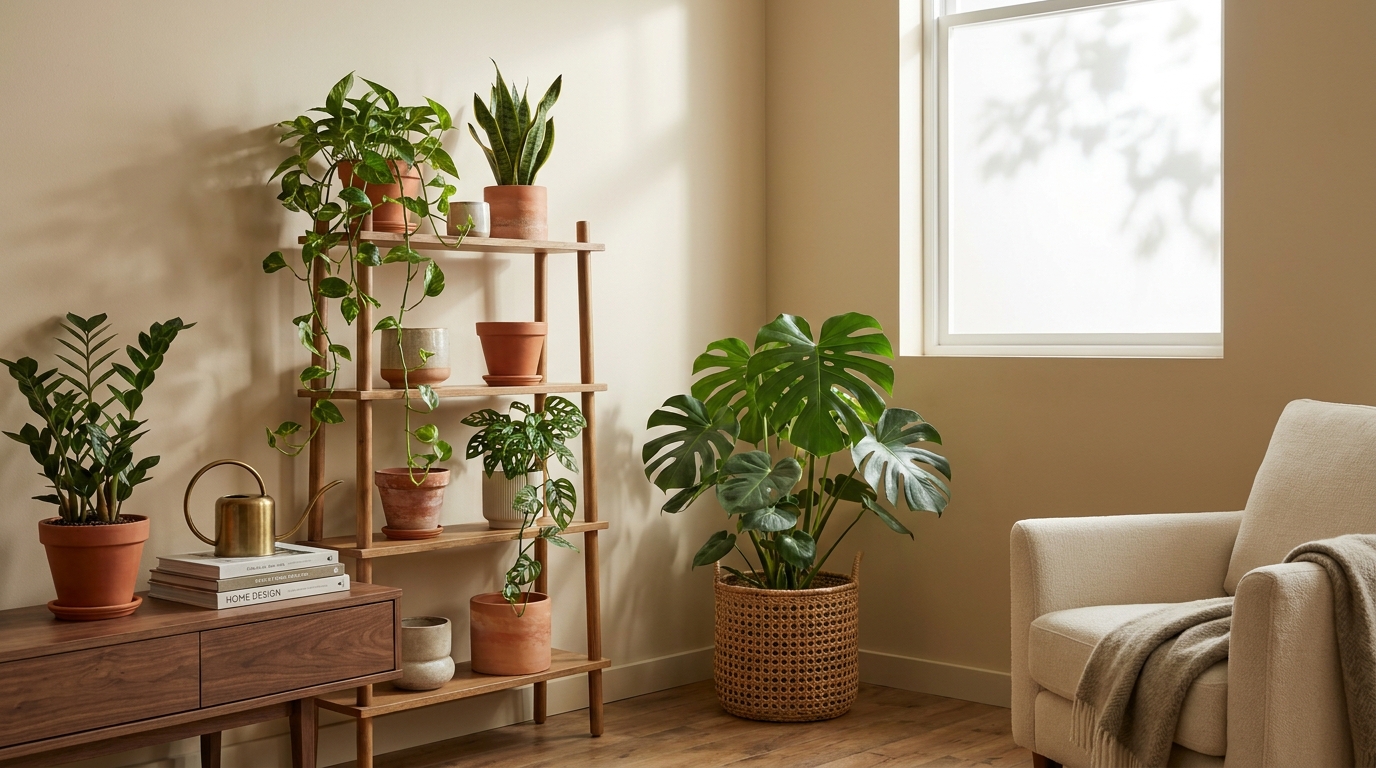
Before picking plants, you need to understand what you’re working with. Light is measured in foot-candles (fc) or lux (1 fc = 10.76 lux).
| Light Level | Foot-Candles | What It Looks Like |
|---|---|---|
| Direct sun | 5,000–10,000+ fc | South window at noon, no shade |
| Bright indirect | 500–1,000 fc | Within 3 feet of a south/east window |
| Medium indirect | 200–500 fc | 4–8 feet from a window, or filtered |
| Low light | 25–100 fc | North window, interior wall, dim corner |
| Very low light | Under 25 fc | Typical hallway, interior bathroom |
Most homes without supplemental lighting measure 50–200 fc in areas more than 6 feet from a window. A free light meter app (like Lux Light Meter on iOS or Android) gives you a real reading in 30 seconds. Take the measurement mid-morning on an overcast day for a conservative estimate — that is the worst-case your plant will regularly experience.
According to The University of Vermont Extension, most foliage plants need a minimum of 75–150 fc to maintain growth and a minimum of 25–50 fc to survive without actively declining. Plants at survival threshold drop lower leaves, stop producing new growth, and become susceptible to root rot from reduced water uptake.
Low Light Plants That Actually Thrive (Not Just Survive)
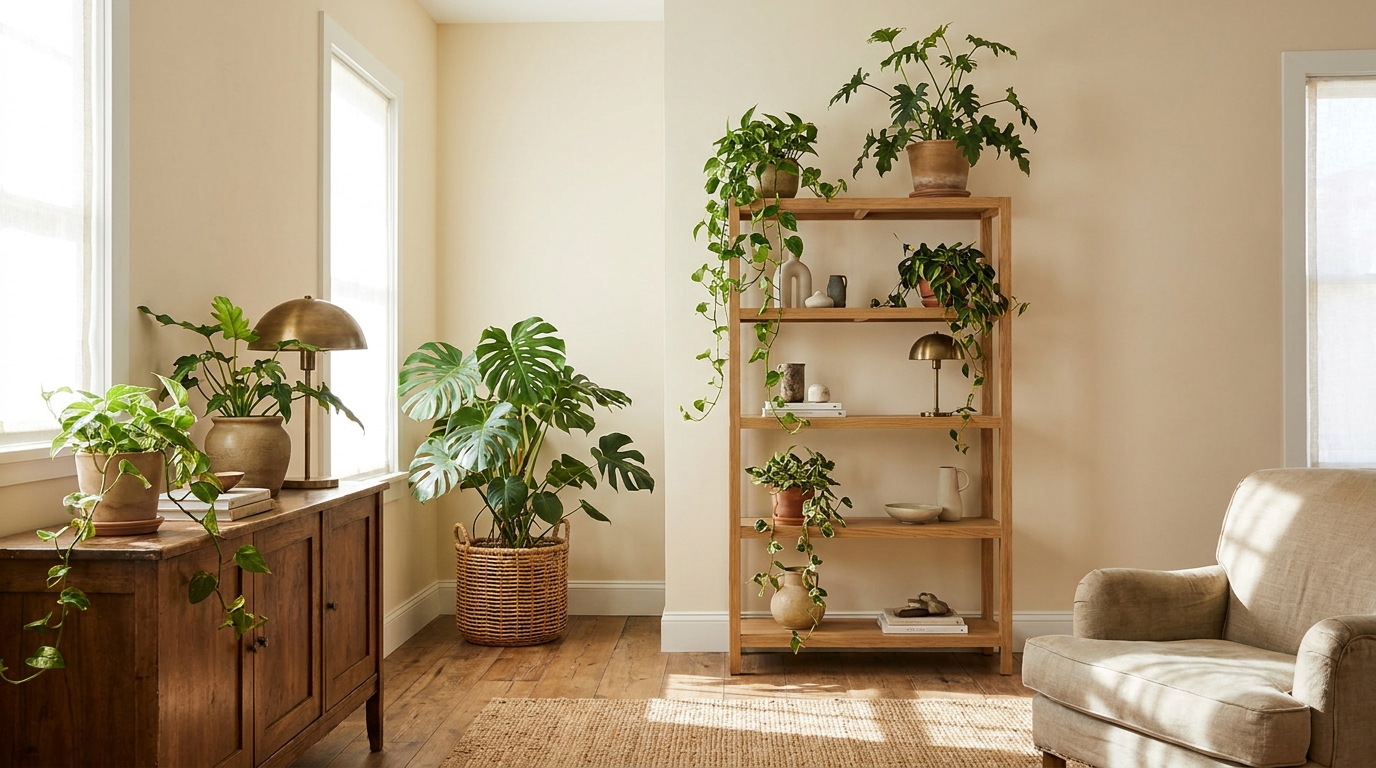
These plants show positive growth rates and maintain healthy foliage at 50–150 fc. They are not suffering — they are genuinely adapted to low-light conditions.
1. ZZ Plant (Zamioculcas zamiifolia)
The most reliable low-light plant available. ZZ plants evolved on the forest floors of eastern Africa where canopy cover reduced light to under 5% of surface levels. Its rhizome root system stores water and starch, allowing it to tolerate irregular watering and dim conditions simultaneously.
- Light minimum: 25 fc
- Growth in low light: Slow but consistent — one to two new stems per month in spring/summer
- Watering in low light: Every 3–4 weeks; less frequent than most guides recommend because low light reduces transpiration
- Style match: Architectural, graphic foliage on glossy dark green stems. Works in modern, minimalist, Japandi interiors.
- Caution: All parts are toxic to pets and children.
A ZZ plant placed in a north-facing hallway receiving about 40 fc pushed out four new stems over 12 months. No supplemental light, no special soil. The key was reducing watering to every 28 days and accepting that growth would be slow but steady.
2. Snake Plant (Sansevieria / Dracaena trifasciata)
Among the most studied low-light plants in horticultural research. A NASA Clean Air Study cited snake plant as one of twelve plants that remove airborne toxins (benzene, formaldehyde) in enclosed spaces — relevant in rooms with low ventilation.
- Light minimum: 25–50 fc
- Growth in low light: Slow vertical growth, 2–4 new leaves per growing season
- Watering in low light: Every 4–6 weeks; the most common killer of snake plants is overwatering in low light
- Style match: Vertical line adds height to dim corners. Works in any style — architectural enough for minimal spaces, natural enough for boho rooms.
- Varieties for different aesthetics: Cylindrica (tall spikes) for modern/industrial; Laurentii (yellow edge) for eclectic/boho; Moonshine (silver-green) for Japandi/minimal
3. Pothos (Epipremnum aureum)
The most forgiving plant in this list. Pothos tolerates low light better than nearly any other vining plant and continues growing, albeit more slowly. Golden pothos in particular is documented surviving under fluorescent office lighting at under 30 fc.
- Light minimum: 30–50 fc
- Growth in low light: Slower vining, smaller leaf development, potential reversion (loss of variegation in highly variegated cultivars)
- Watering in low light: Every 2–3 weeks; allow soil to dry completely between waterings
- Style match: Trailing growth creates movement on shelves, in hanging planters, and down bookshelves. Best low-light option for adding softness and texture.
- Low-light specific tip: Golden and neon pothos retain color better in low light than marble queen or n-joy, which require more light to maintain their white variegation.
4. Cast Iron Plant (Aspidistra elatior)
Named for its near-indestructibility. Cast iron plant tolerates the lowest light levels of any common houseplant, thriving in conditions that would kill most other species. It was a Victorian favorite specifically because it survived dimly lit parlors heated by coal fires.
- Light minimum: 15 fc (the lowest of any flowering plant)
- Growth in low light: Extremely slow — one to two new leaves per year is normal
- Watering in low light: Monthly; one of the few plants that can go longer without water than without light
- Style match: Dark green, strap-like leaves create a lush, architectural base planting. Best used in clusters or as floor-level anchor plants.
5. Peace Lily (Spathiphyllum)
Peace lily is one of the few plants that flowers in low light. It needs 75–150 fc to bloom, but maintains healthy foliage at lower levels. It is also one of the most dramatic low-light plants available in terms of leaf size and visual impact.
- Light minimum: 25–50 fc (foliage only); 75–100 fc for flowering
- Growth in low light: Active foliage growth, though flowers require slightly more light
- Watering in low light: Peace lily communicates — it wilts visibly when thirsty, then recovers quickly when watered. Water every 10–14 days in low light.
- Style match: Large glossy leaves and white blooms work in modern, minimal, and tropical interior styles.
- Caution: Toxic to pets. Keep elevated if you have cats or dogs that chew plants.
Plants That Tolerate Low Light (But Prefer Medium)
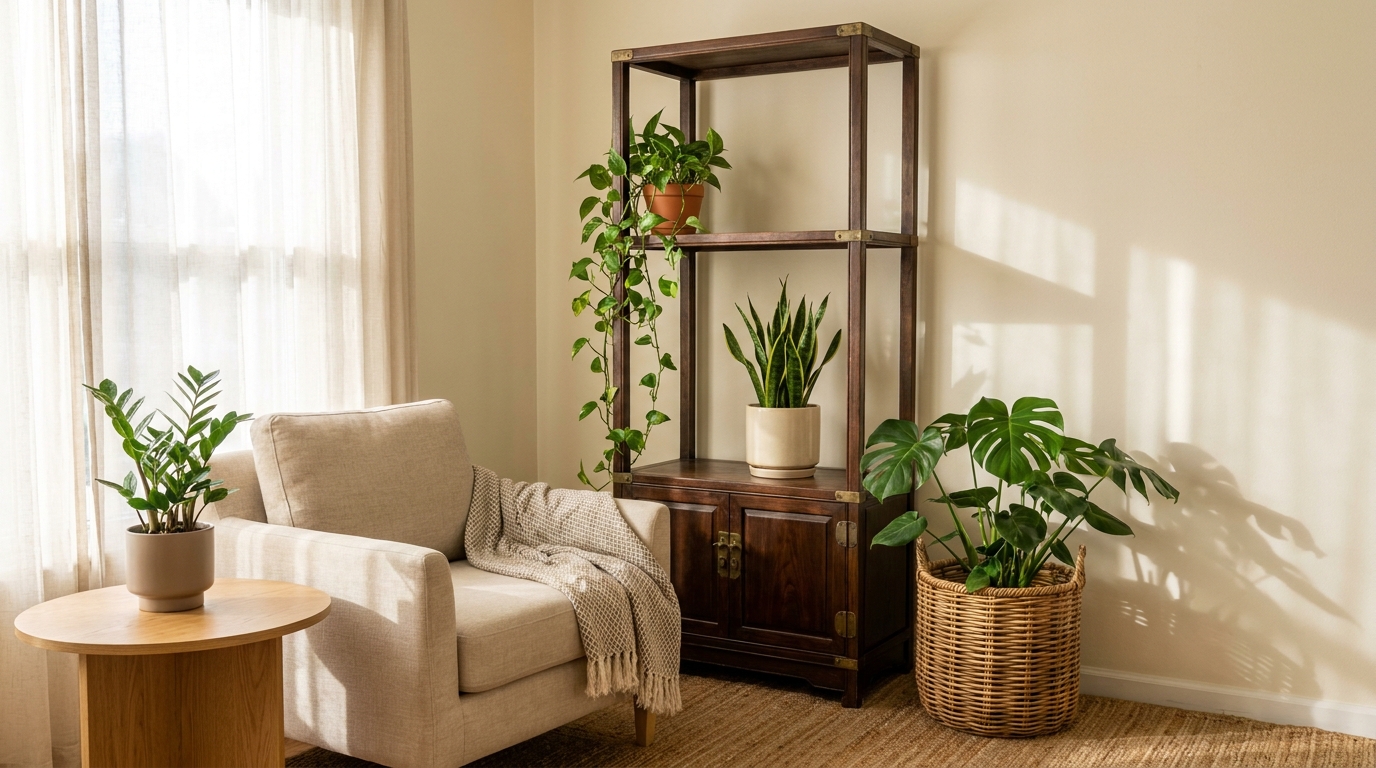
These plants survive well at 100–200 fc but will not thrive below 50 fc. They are often mislabeled as “low light” plants.
Heartleaf Philodendron
Often confused with pothos in plant stores. Handles lower light than most philodendrons, but needs at least 75 fc to maintain growth rate. Below that threshold, it will survive but grow very slowly and produce smaller leaves.
Chinese Evergreen (Aglaonema)
Available in dozens of color varieties from solid green to pink and red. The darker green varieties (Silver Bay, Maria) tolerate the lowest light — down to about 75 fc. The highly colorful red and pink varieties need 200+ fc to maintain their color.
Dracaena (various species)
Dracaena marginata, fragrans, and deremensis tolerate 75–150 fc well. Below 50 fc they maintain health but stop growing. Good for creating height in medium-low light rooms without the maintenance demands of tropical plants.
Room-by-Room Low Light Styling
North-Facing Rooms
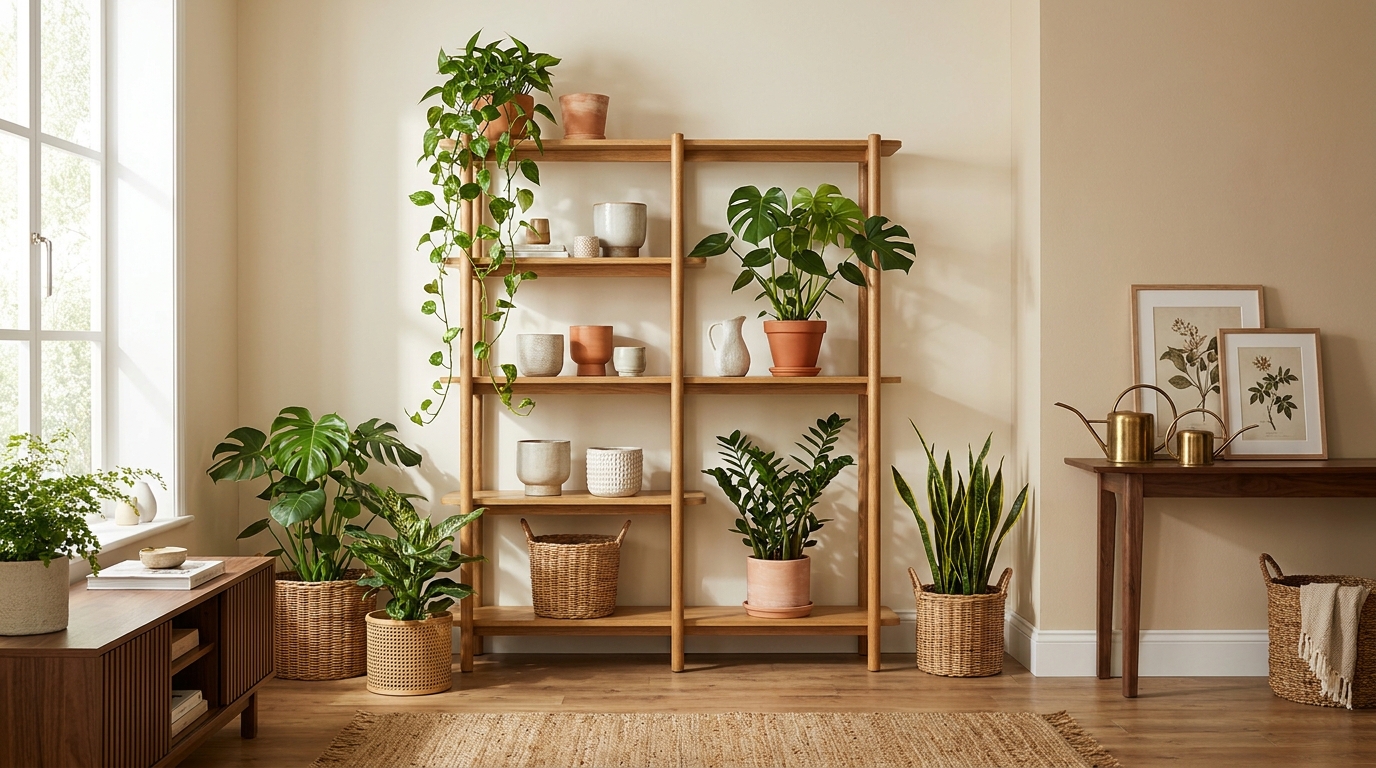
North rooms receive the least direct light year-round in the northern hemisphere. In winter, north rooms may drop to 20–40 fc — survivable only for ZZ, snake plant, and cast iron plant. In summer, reflected and indirect light brings levels to 50–100 fc, enabling a broader plant selection.
Best plants: ZZ plant (primary anchor), snake plant (vertical accent), cast iron plant (floor level), pothos (shelf trailing)
Styling approach: Use 3–4 species maximum. Focus on varied heights — a tall snake plant, a medium ZZ on a stand, and trailing pothos on a high shelf creates a complete composition without requiring bright light for any element.
Interior Bathrooms (No Window)
Interior bathrooms present a special challenge: no natural light at all, plus humidity fluctuations from showers. The humidity is actually beneficial — tropical low-light plants appreciate it. The light problem requires supplemental lighting or accepting a rotation approach.
Rotation approach: Keep plants in low-light bathroom for 2–3 weeks, then move to a brighter space for 1–2 weeks. This simulates seasonal variation and keeps plants healthy long-term.
Supplemental light option: A small grow light (even 10W) running 8–10 hours per day can supplement near-zero natural light to a functional level. The best grow lights for indoor plants guide covers options under $50.
Best plants for bathrooms: Peace lily (handles humidity), pothos (tolerates both low light and high humidity), snake plant (handles both conditions with reduced watering)
Hallways and Entryways
Hallways are typically 30–80 fc. The main challenge is usually narrow floor space rather than light. Floor-standing plants with a narrow footprint or wall-mounted planters maximize visual impact without blocking passage.
Best plants: Snake plant (narrow, vertical), ZZ plant (architectural, self-contained), cast iron plant in a tall planter (adds height without footprint)
Living Rooms Far from Windows
A north-facing sofa wall or a corner 12+ feet from the nearest window typically measures 50–150 fc. This is actually the most workable of the low-light scenarios — enough for a broader plant selection and enough light to appreciate foliage colors.
Best arrangement: Use a cluster of three plants at different heights — tall snake plant or dracaena at the back, medium ZZ or aglaonema mid-level, trailing pothos or heartleaf philodendron at the front edge of a coffee table or shelf.
Low Light Plant Care: The Key Differences
Low light significantly changes care requirements — following standard plant care advice in a dim room is one of the most common causes of plant death.
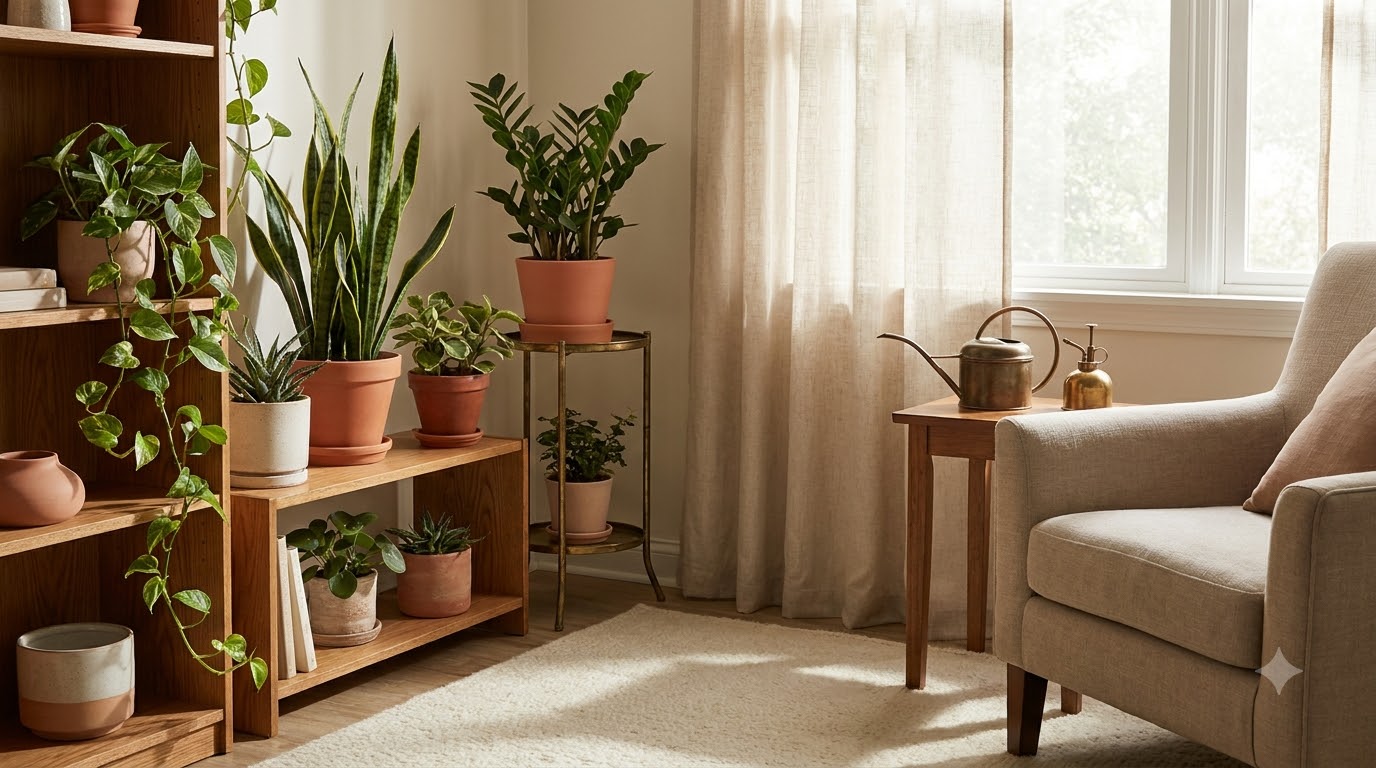
Water less, not more. Low light reduces photosynthesis, which reduces water demand. A snake plant that needs water every 2 weeks in a bright room may only need water every 4–6 weeks in a north-facing corner. The soil must be completely dry before re-watering in low light.
Skip heavy fertilizing. Low-light plants grow more slowly and use fewer nutrients. Fertilizing on a standard schedule leads to nutrient buildup in soil, which causes root burn. Fertilize at half strength, once in spring and once in early summer — skip fall and winter entirely.
Watch for etiolation. When a plant reaches for light, stems elongate and become pale — this is called etiolation. It signals the plant needs more light, not more water. Move it to a brighter spot or add a grow light before the stem becomes weak and damaged.
Accept slower growth. A ZZ plant in low light is not failing if it produces three leaves over six months. That is its healthy growth rate at that light level. Comparing it to the same plant in a bright room will make low-light care feel unsuccessful when it is not.
Low Light vs Grow Lights: When to Supplement
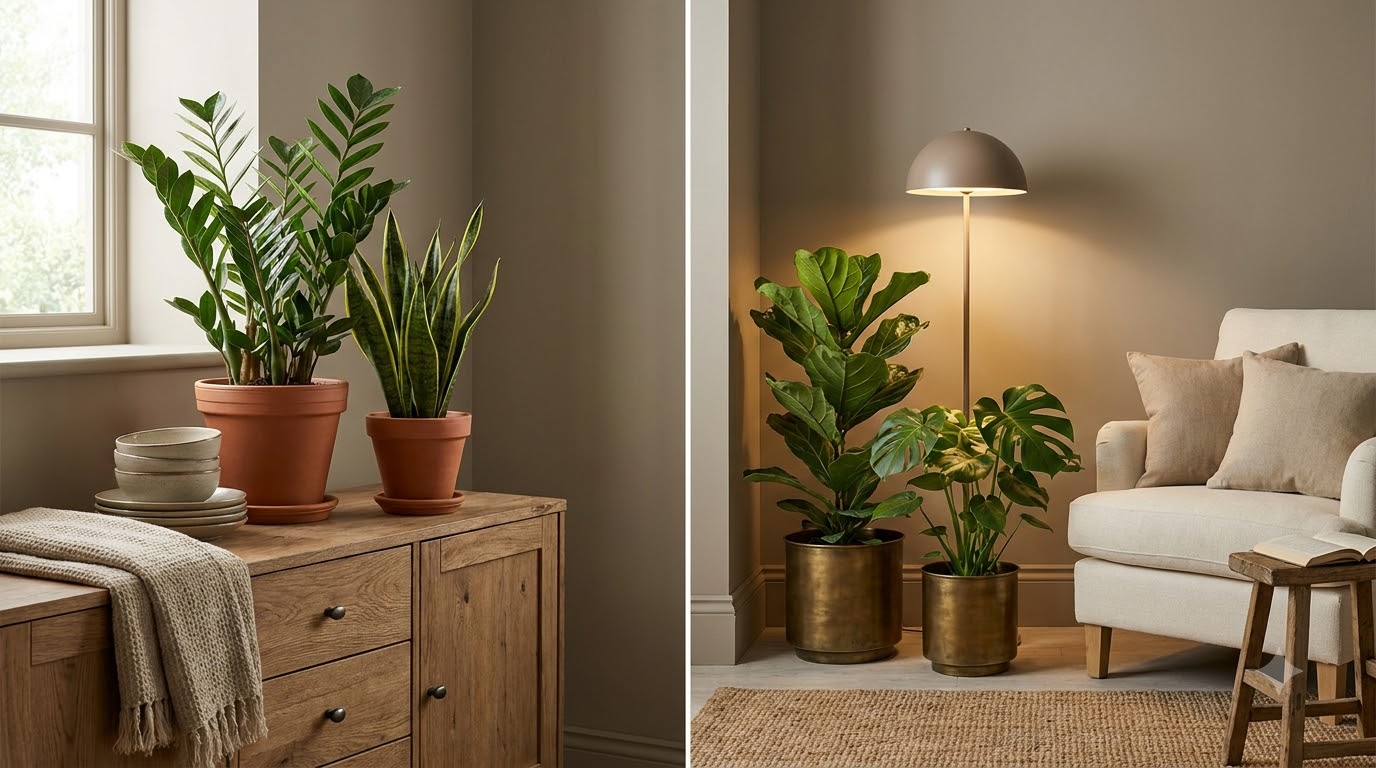
If your space measures below 25 fc consistently, natural low-light plants will struggle even with optimal care. A simple grow light running 8–10 hours per day raises effective light levels to 75–150 fc, enabling a much broader plant selection.
Signs you need supplemental light:
- Plants produce new leaves, but they are pale, small, or misshapen
- Stems lean sharply toward a distant light source
- Soil stays wet for more than 3 weeks after watering
- Plants lose lower leaves faster than they gain new onesA basic LED grow bulb ($15–$25) that fits a standard light socket is enough for one to three plants in a dark corner. For more options, the grow lights guide covers the most effective setups under $50.
Summary: Best Low Light Plants by Situation
| Situation | Best Choice | Minimum Light |
|---|---|---|
| North room, no supplemental light | ZZ plant, Snake plant | 25 fc |
| Interior bathroom | Rotating pothos + peace lily | 30 fc + rotation |
| Hallway, narrow footprint | Snake plant, Cast iron plant | 25 fc |
| Dark living room corner | ZZ plant cluster, Aglaonema | 50 fc |
| Low shelf below eye level | Pothos (trailing), Heartleaf philodendron | 40 fc |
| Near bathroom humidity | Peace lily, Calathea | 50–75 fc |
Low light rooms reward patience and right plant selection more than any other growing condition. The species above have proven track records in homes — not just in laboratory conditions or nursery greenhouses. Match species to your actual light reading, water on a conservative schedule, and the difficult corners of your home become the most interesting ones.