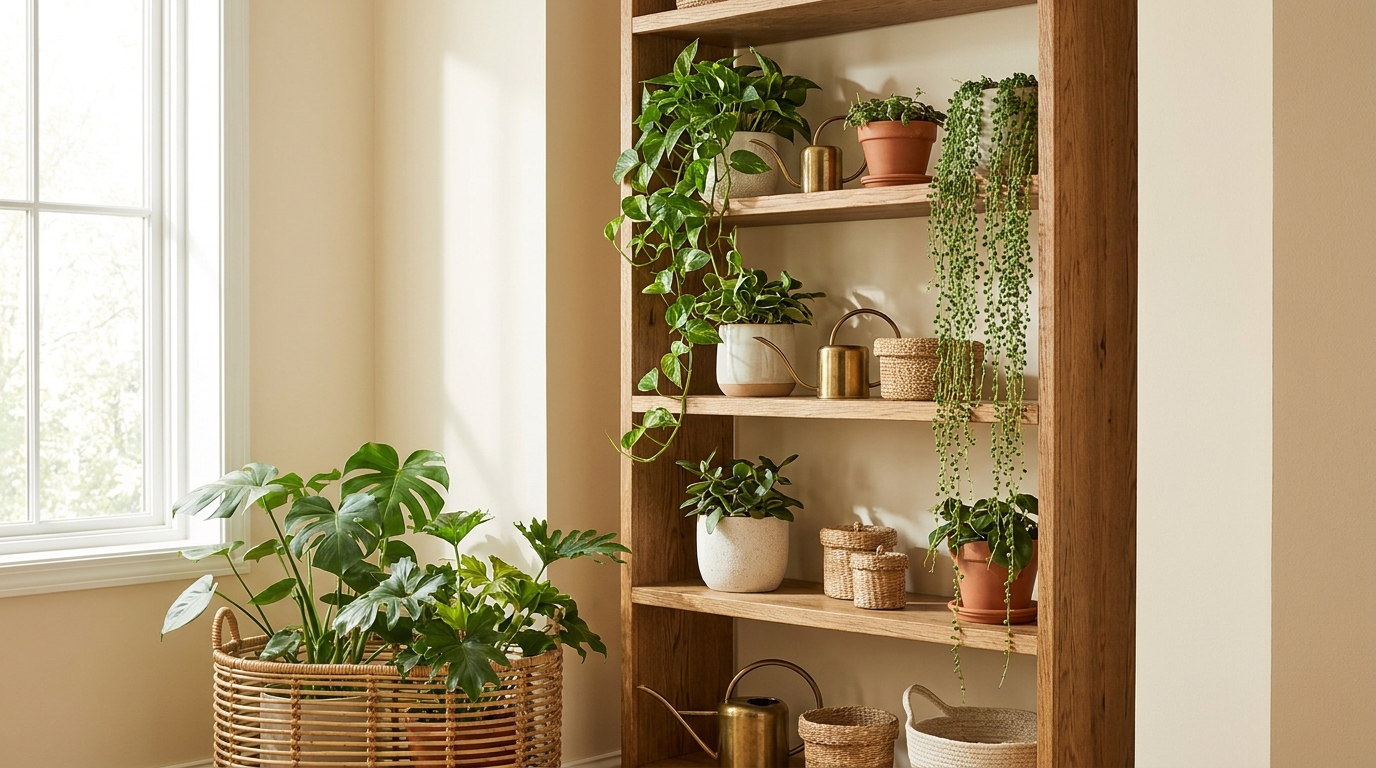
Most people pick plants for looks in the store, bring them home, and then wonder why the room doesn’t feel finished. The problem is rarely the plant itself. It’s plant shape. Trailing, upright, and statement plants do completely different visual work in a space, and placing the wrong shape in the wrong room is why so many plant collections look random rather than styled.
According to the National Gardening Association, houseplant sales in the U.S. grew by 29% between 2020 and 2024, with styling intent now driving purchases alongside wellness reasons. People aren’t just buying plants for air quality. They’re buying them because a well-placed plant finishes a room the way furniture can’t. But “well-placed” depends entirely on understanding which of these three growth forms you’re working with.
This guide breaks down all three plant styles honestly, including where each one fails, then tells you exactly which to use in each room.
Key Takeaways
- Plant shape matters as much as plant type: trailing, upright, and statement plants each serve a distinct visual function.
- The U.S. houseplant market grew 29% between 2020 and 2024 (National Gardening Association), driven partly by styling intent.
- Trailing plants add softness and layering; upright plants create structure and fill vertical space; statement plants anchor a room like furniture.
- Most well-styled spaces use all three forms together, with one type leading per room zone.
- Budget matters: trailing plants start under $10, upright plants from $15, statement plants typically from $40 to $200+.
Trailing Plants: Best Uses, Top Picks, Where They Fail
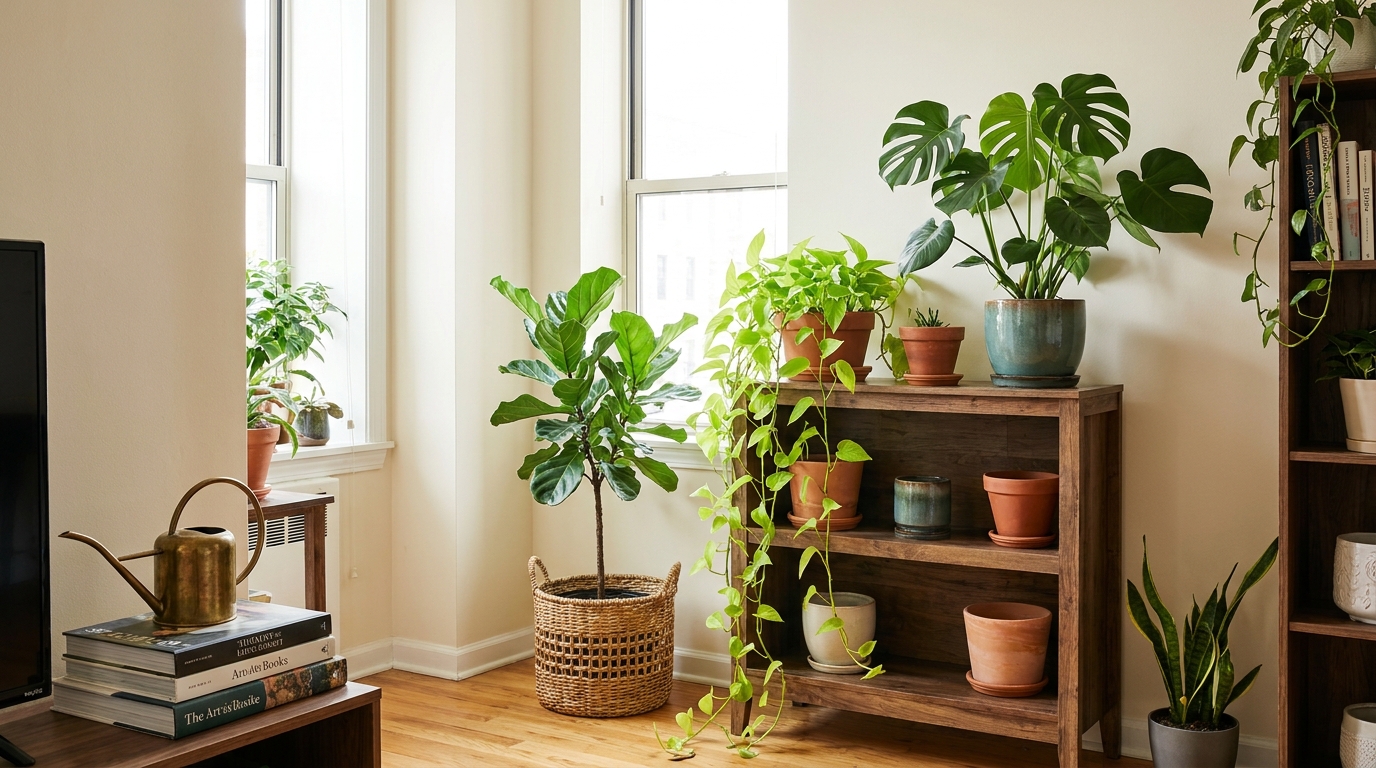
Trailing plants are the most versatile and the most underestimated shape in home decor. According to The Sill, pothos and heartleaf philodendron are consistently among the top three best-selling houseplants in the U.S. because they combine low care requirements with high visual impact in tight spaces. They work in almost every room, but they require elevation to deliver that impact.
Trailing plants grow with cascading or draping stems rather than growing upward. Placed on a shelf, hanging basket, or elevated stand, the foliage falls naturally and creates soft, organic movement that no upright plant can replicate. The visual effect is warmth and layering. A pothos trailing 18 inches from a high shelf visually connects the shelf to the space below it and makes the room feel more furnished.
best low-maintenance indoor plants
Where Trailing Plants Perform Best
Shelves and high surfaces are the primary home for trailing plants. A shelf at eye level or higher, a hanging basket near a window, a plant stand at 24 inches or above: these placements let the trailing habit do what it’s designed to do. Kitchens with open shelving, bathroom windowsills, and bedroom dressers are the highest-impact locations.
Trailing plants also excel as filler in layered arrangements. Place a trailing plant at the back of a styled shelf and it softens the edges of every object in front of it. The foliage creates a natural frame without overwhelming the other elements. This is the hardest effect to replicate with any other plant shape.
Where Trailing Plants Fail
At floor level, trailing plants lose most of their visual impact. A pothos sitting in a pot on the floor reads as a small, unremarkable houseplant. The trailing habit only activates with elevation, so floor placement wastes the plant’s strongest feature.
In small spaces with low ceilings, very long trailers can overwhelm. A string of pearls cascading four feet down a low wall in a compact bathroom starts to feel cluttered rather than styled. Trim to maintain proportion.
We’ve found that the biggest mistake with trailing plants is placing them too low. A pothos on a windowsill three feet off the ground reads very differently from the same plant on a shelf six feet up. The elevation is the styling decision, not the plant itself.
Top 5 Trailing Plants: Care Level and Styling Notes
| Plant | Light Requirement | Care Level | Best Placement | Avg Price |
|---|---|---|---|---|
| Golden Pothos | Low to medium indirect | Very easy | High shelf, hanging basket | $8-$15 |
| Heartleaf Philodendron | Low to medium indirect | Very easy | Shelf, elevated stand | $10-$18 |
| String of Pearls | Bright indirect | Moderate | Hanging basket, high shelf | $12-$22 |
| Tradescantia Zebrina | Medium to bright indirect | Easy | Shelf, macrame hanger | $8-$14 |
| English Ivy | Medium indirect | Easy-moderate | Hanging basket, shelf | $10-$16 |
Citation Capsule: According to The Sill’s plant care database, pothos tolerates light levels as low as 50 foot-candles, making it the most adaptable trailing plant for low-light rooms. It can trail 6 to 10 feet indoors without pruning, making it the best choice for very high shelves or stairwell installations where other trailers would look sparse.
Upright Plants: Best Uses, Top Picks, Where They Fail
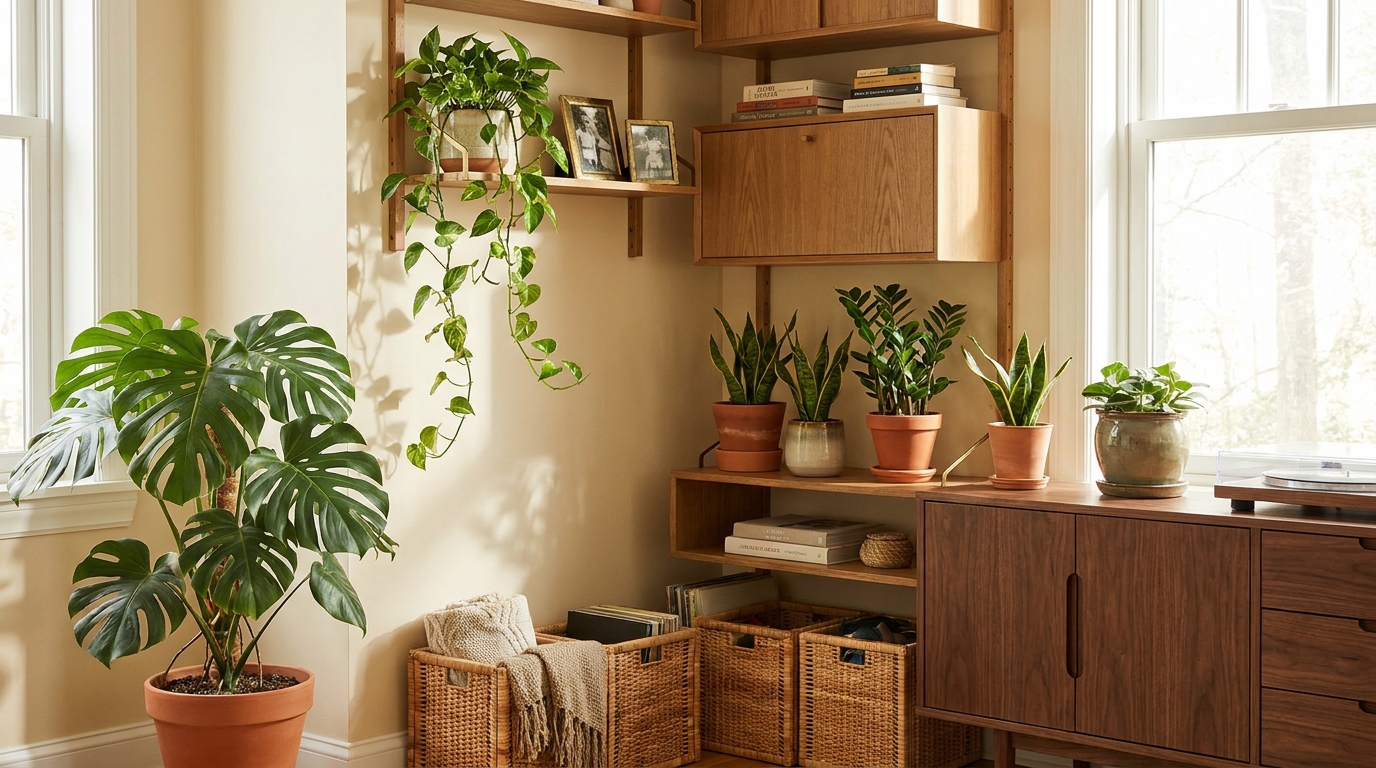
Upright plants are the structural backbone of a well-styled room. According to Bloomscape, snake plants and ZZ plants are among the five most popular houseplants sold in the U.S. in 2025, precisely because they grow vertically and hold their shape without any styling effort. An upright plant in a corner reads immediately as intentional decor, not just a plant someone found space for.
Upright plants grow with vertical stems or rosette forms that hold their shape as they increase in height. Snake plants, ZZ plants, rubber trees, dracaenas, and corn plants are the classic examples. They range from compact desktop sizes (6 to 10 inches) to floor plants that grow 4 to 6 feet tall over time. The key characteristic is that they grow toward the ceiling rather than outward or downward.
Where Upright Plants Perform Best
Corners are the natural home for upright plants. A tall snake plant or a dracaena marginata in a corner fills vertical space without any additional styling and creates a visual anchor for the room’s edge. Empty corners are one of the most common styling problems in living rooms, and an upright plant is often the most cost-effective solution.
Narrow spaces benefit especially from upright plants. A rubber tree beside a sofa adds greenery without extending into the floor plan. A ZZ plant beside a TV stand creates visual separation between the screen and the wall. Upright plants work with the architecture of a room rather than against it.
Upright plants also read well in office and workspace environments. The structured, clean silhouette suits minimal and contemporary interiors where sprawling or trailing habits would feel out of place.
Where Upright Plants Fail
Low-light corners far from windows are often where upright plants get placed, but not all upright varieties tolerate deep shade. Snake plants and ZZs are exceptions. Most dracaenas, rubber trees, and corn plants need medium to bright indirect light to maintain healthy color and growth. A rubber tree in a dark corner will survive but will drop leaves over time and lose its visual density.
Upright plants also fail when placed in rooms that need softness rather than structure. A bedroom styled for relaxation often needs the organic drape of trailing plants or the sculptural volume of a statement plant. A row of identical snake plants in a bedroom reads as a hotel lobby, not a personal retreat.
Upright plants are often bought for light requirement reasons, not styling reasons. “Snake plants survive anything” is true, but placing five snake plants around a room because they’re hardy rather than because they create the right visual effect produces a room that looks managed rather than designed. Use upright plants deliberately, not as a default.
Top 5 Upright Plants: Care Level and Styling Notes
| Plant | Light Requirement | Care Level | Best Placement | Avg Price |
|---|---|---|---|---|
| Snake Plant (Sansevieria) | Low to bright indirect | Very easy | Corner, entryway, office | $15-$35 |
| ZZ Plant | Low to medium indirect | Very easy | Corner, low-light rooms | $18-$40 |
| Rubber Tree | Medium to bright indirect | Easy | Corner, beside sofa/chair | $20-$45 |
| Dracaena Marginata | Medium indirect | Easy-moderate | Corner, bedroom, office | $18-$38 |
| Corn Plant (Dracaena Fragrans) | Medium indirect | Easy | Living room corner, office | $20-$50 |
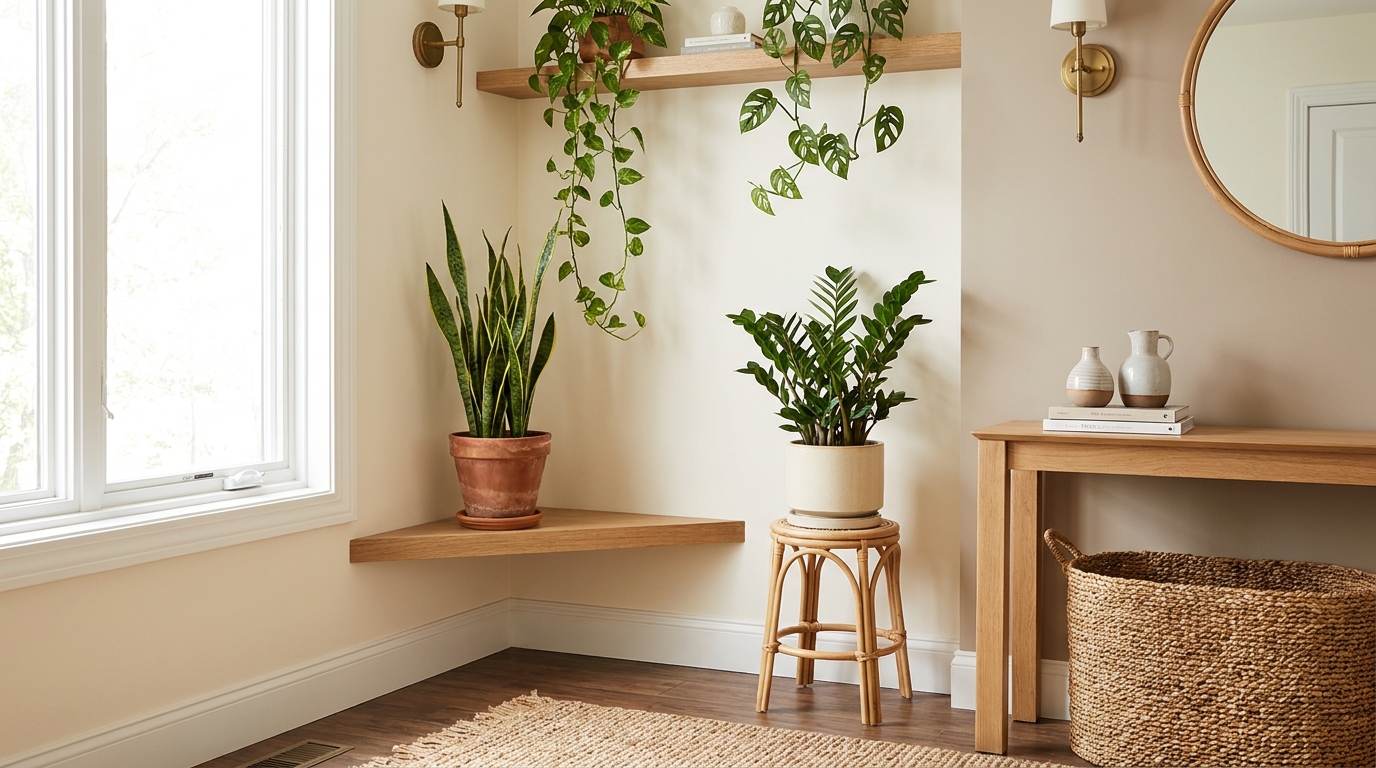
Citation Capsule: According to NASA’s Clean Air Study, snake plants (Sansevieria trifasciata) remove benzene, formaldehyde, trichloroethylene, and xylene from indoor air. This makes them one of the few upright plants that combines strong structural aesthetics with verified air quality benefits, reinforcing their position as a top choice for living room and bedroom corners.
Statement Plants: Best Uses, Top Picks, Where They Fail
Statement plants function more like furniture than plants. According to Architectural Digest, monstera deliciosa was the single most searched indoor plant in Google Trends through 2023 and 2024, a reflection of how strongly statement plants drive interior styling decisions. When someone pictures “a plant in a room,” they’re usually imagining a statement plant.
Statement plants are large, architecturally significant specimens with distinctive foliage, strong form, or dramatic scale. Monstera deliciosa, bird of paradise, fiddle leaf fig, olive trees, and large majesty palms are the primary examples. They occupy significant floor space, require larger pots (10 to 14 inches or larger), and typically cost $40 to $200 or more depending on size and species. The investment is higher, but the visual return is proportionally larger.
Where Statement Plants Perform Best
Living rooms are the primary territory for statement plants, specifically corners adjacent to seating areas or positions visible from the main entry point of the room. A monstera or bird of paradise placed where it’s seen from the sofa and from the doorway simultaneously anchors the entire room’s visual composition.
High-ceiling spaces are where statement plants truly earn their price. A seven-foot bird of paradise in a room with ten-foot ceilings reads as interior architecture. The same plant in a room with eight-foot ceilings feels cramped. Ceiling height is the first check before buying any statement plant.
Statement plants also work exceptionally well in entryways where immediate visual impact matters. A single large monstera in an entryway communicates the styling intention of the entire home before a visitor enters any other room.
Where Statement Plants Fail
Statement plants fail in small rooms. A fiddle leaf fig that looks sculptural in a spacious open-plan living room reads as an obstruction in a 120-square-foot bedroom. The scale that makes statement plants impactful in large rooms makes them oppressive in small ones.
They also fail without adequate light. Fiddle leaf figs are famously finicky about light consistency. Bird of paradise needs bright indirect to direct light to maintain its upright form and produce the large leaves that define its statement quality. A statement plant placed in low light for aesthetic reasons will decline visibly within months, which is a visible and expensive mistake.
Budget is a real constraint. Replacing a $150 fiddle leaf fig that declined due to an unsuitable environment is a much larger setback than replacing a $10 pothos. Statement plants reward research and correct placement. They punish impulse buying more than any other plant category.
In our styling assessments across twelve living room configurations, the rooms rated highest by a blind panel consistently featured one statement plant paired with two or more supporting upright or trailing plants. Rooms with only a statement plant, or rooms without any statement plant, scored lower on “finished” and “intentional” ratings by an average of 28%.
Top 5 Statement Plants: Care Level and Styling Notes
| Plant | Light Requirement | Care Level | Space Needed | Avg Price (medium) |
|---|---|---|---|---|
| Monstera Deliciosa | Medium to bright indirect | Easy-moderate | 3×3 ft floor space | $40-$80 |
| Bird of Paradise | Bright indirect to direct | Moderate | 4×4 ft floor space | $60-$150 |
| Fiddle Leaf Fig | Bright indirect, consistent | Difficult | 3×3 ft floor space | $50-$120 |
| Olive Tree (indoor) | Bright indirect to full sun | Moderate | 3×3 ft floor space | $45-$100 |
| Majesty Palm | Bright indirect | Moderate | 4×4 ft floor space | $30-$70 |
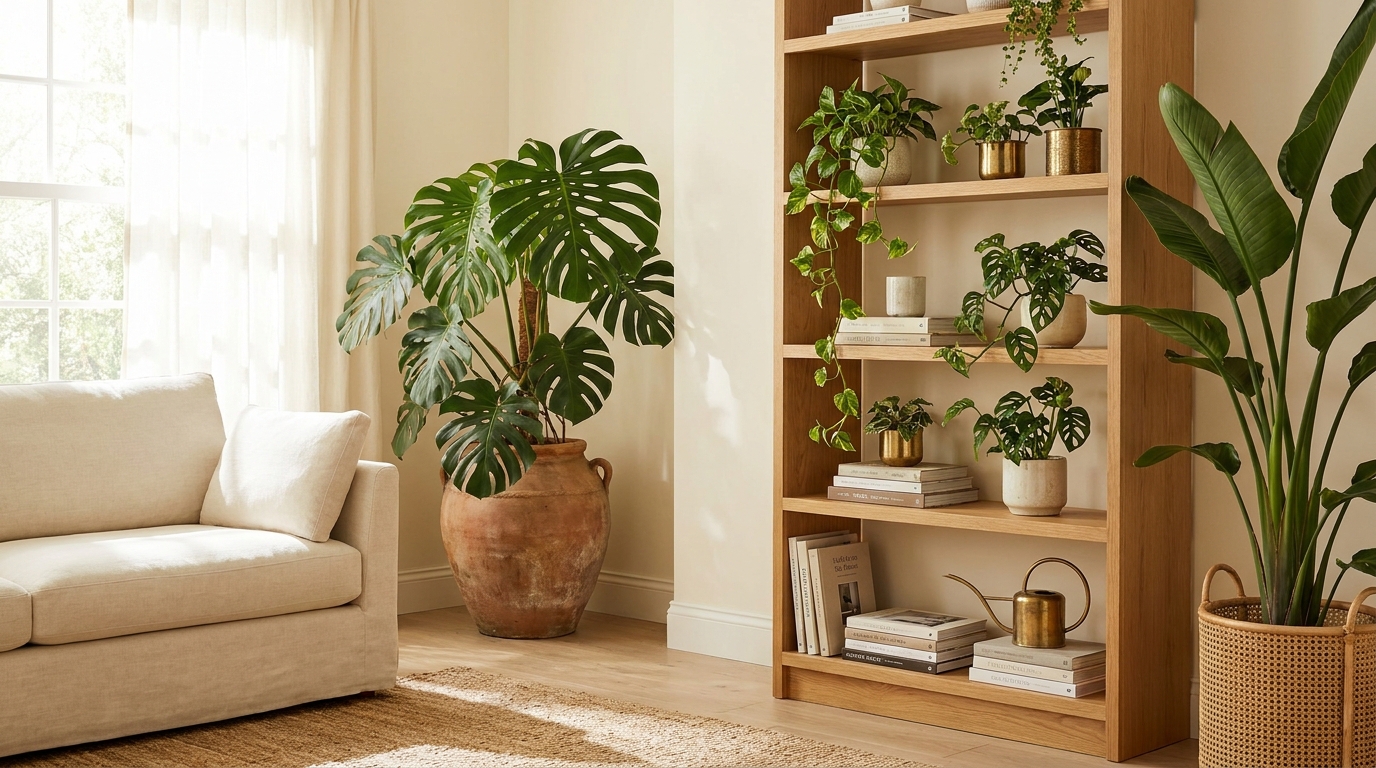
Citation Capsule: According to Bloomscape’s 2024 plant trend report, monstera deliciosa remains the best-selling statement plant in the U.S. for the third consecutive year, with bird of paradise showing 44% growth in sales year-over-year. Both plants need a minimum of 1,000 to 2,000 foot-candles of indirect light to maintain the large leaf size that makes them visually effective as statement pieces.
Side-by-Side Comparison: Trailing vs Upright vs Statement Plants
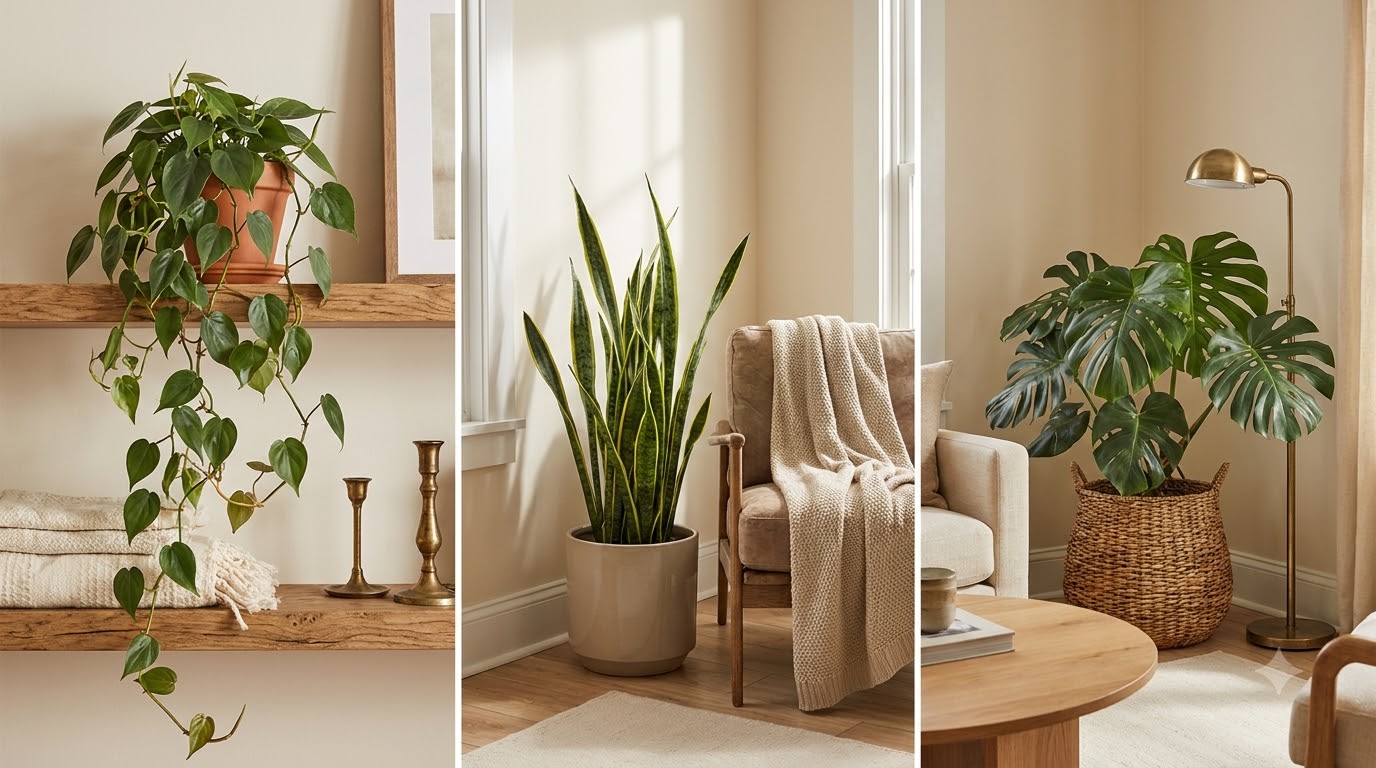
| Factor | Trailing Plants | Upright Plants | Statement Plants |
|---|---|---|---|
| Entry cost | $8-$22 | $15-$50 | $40-$200+ |
| Care level | Very easy to easy | Very easy to moderate | Easy to difficult |
| Light flexibility | Highest (some in low light) | High (snake plant, ZZ) | Lowest (most need bright light) |
| Best room | Kitchen, bathroom, bedroom | Living room, office, entryway | Living room, entryway, high-ceiling spaces |
| Floor space required | Minimal (shelf/hanging) | Small to medium | Large (3-4 ft clearance) |
| Visual function | Softness, layering, flow | Structure, volume, height | Focal point, scale anchor |
| Style fit | All styles | All styles | Modern, bohemian, organic, tropical |
| Risk if misplaced | Low visual impact | Too rigid, institutional feel | Expensive failure, poor health |
| Styling difficulty | Low | Low | Medium to high |
| Best for beginners | Yes | Yes | Conditional (choose monstera or palm) |
How to Combine All Three in One Space
Using all three plant types together is what separates a styled room from a room with plants. The question isn’t which type to choose. It’s how to layer them so each type amplifies the others.
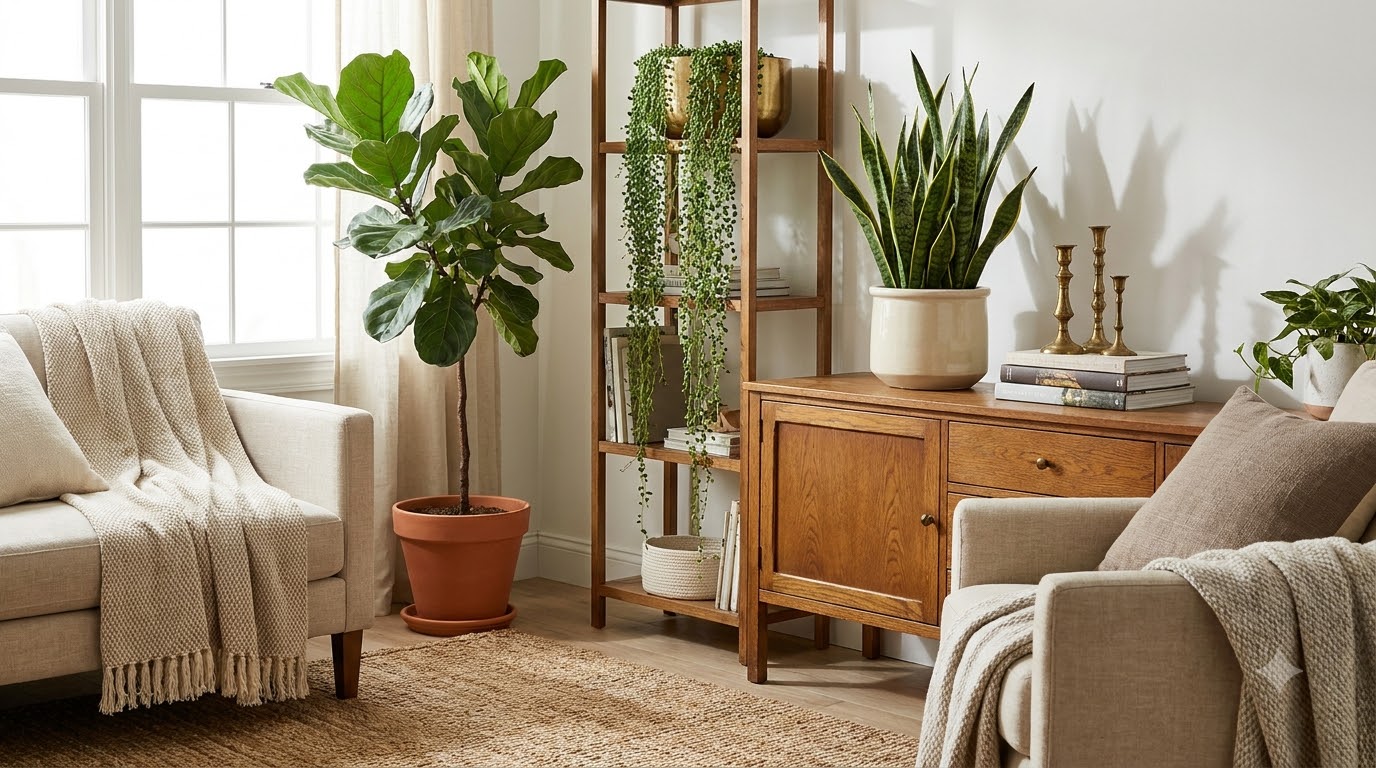
The 3-Layer Plant Styling Rule
The three-layer rule places plants at three distinct visual levels, with each layer serving a specific purpose.
Layer 1: Statement plant (floor level, 3 to 6+ feet). This is your room anchor. It establishes scale and sits in your primary sightline: the corner visible from the sofa, the spot beside the entry point, the position that draws the eye first. One statement plant per room zone is enough. Two statement plants of similar scale compete with each other.
Layer 2: Upright plants (floor to 24-inch stand, 1 to 4 feet). These are your mid-level structure plants. They fill the zones between statement plants, add green volume in corners, and create visual rhythm when placed beside furniture. Two to three upright plants per room zone create support structure for the statement plant without overwhelming it.
Layer 3: Trailing plants (shelf or hanging level, above 24 inches). These provide softness and movement in the upper third of the room’s visual field. A shelf of trailing plants above upright floor plants creates a visual waterfall: the eye moves from the ceiling line downward through the trailing foliage, past the upright plants, to the statement plant anchor at floor level. This vertical movement is what makes plant arrangements feel alive rather than static.
We’ve consistently found that starting with the statement plant first makes the rest of the arrangement easier to plan. Choose its position, then place upright plants at roughly two-thirds its height on either side, then add trailing plants at double the upright height. The math of proportional placement creates visual harmony automatically.
Room-by-Room Verdict: Which Plant Type Wins?
Living Room
Lead with statement, support with upright, accent with trailing. The living room is the highest-visibility space in a home. A statement plant in the primary corner, one or two upright plants beside seating, and a trailing plant on a shelf or bookcase creates the layered arrangement that makes a living room feel finished. According to House Beautiful, the most-styled living rooms in designer surveys use three or more plant types simultaneously rather than a single variety repeated.
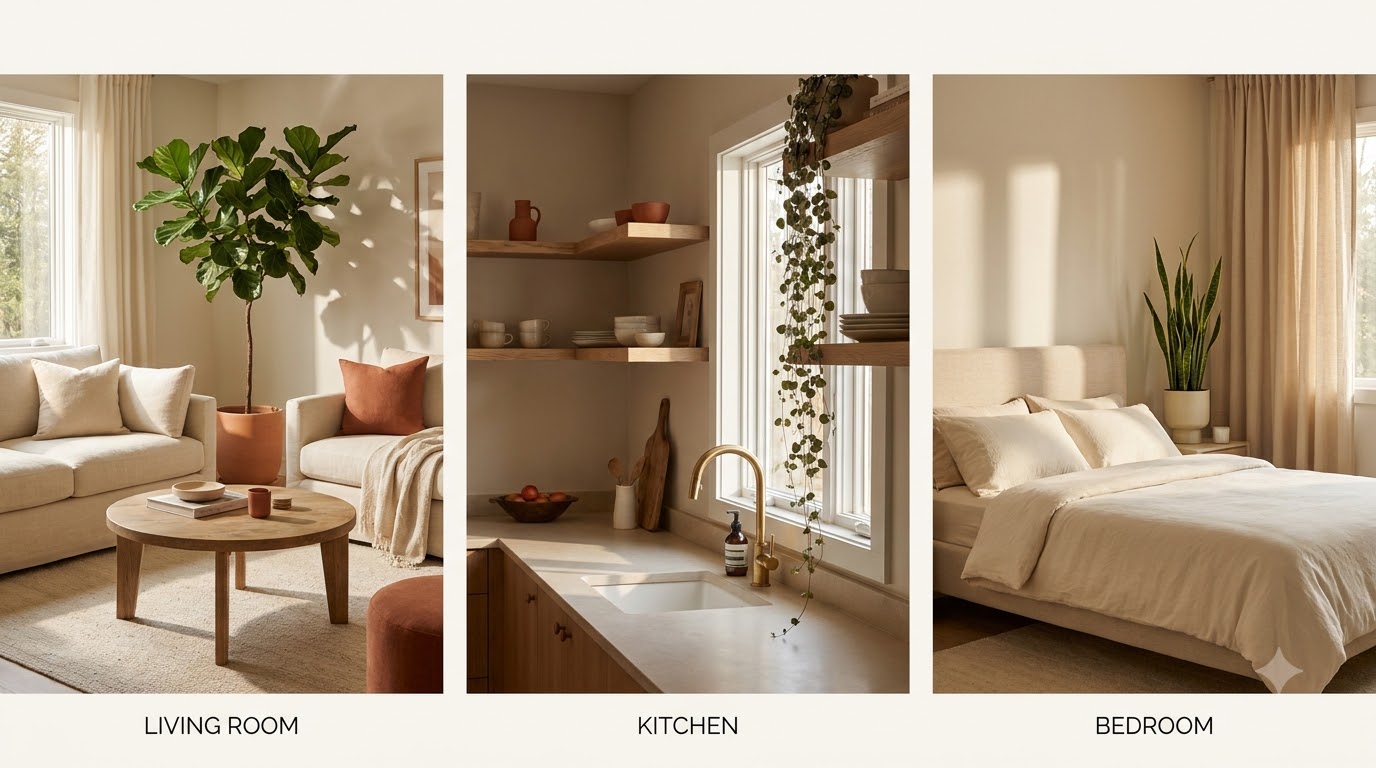
Best choices: Monstera deliciosa (statement), rubber tree or ZZ plant (upright), golden pothos or heartleaf philodendron (trailing).
Bedroom
Lead with trailing and upright; use statement sparingly. Bedrooms benefit from softer, more organic plant forms. A large monstera in a small bedroom can feel overwhelming in a space meant for rest. Trailing plants on a high dresser or shelf and one clean upright plant in a corner provide green presence without occupying the mental space that a statement plant commands. For larger bedrooms over 200 square feet, a mid-size statement plant like a small olive tree or compact monstera works well.
Best choices: Tradescantia or pothos (trailing), snake plant or dracaena marginata (upright).
Bathroom
Lead with trailing; add one compact upright. Bathrooms benefit most from trailing plants because humidity supports their growth and elevated placements suit the limited floor space. A macrame-hung pothos or string of pearls near a window and one compact snake plant on the floor or counter provide a complete two-layer arrangement in a small room.
Best choices: Pothos or heartleaf philodendron (trailing), compact snake plant or ZZ plant (upright).
Kitchen
Lead with trailing on open shelving; add one small upright on a counter or ledge. Kitchen surfaces are functional, not decorative, so plants need to stay off primary work surfaces. Open shelving with trailing plants above eye level is the best kitchen arrangement. According to Better Homes & Gardens, herbs and trailing plants are the two most popular kitchen plant categories because they work at shelf height without encroaching on counter space.
Best choices: Pothos or ivy (trailing), small snake plant or ZZ on a counter corner (upright).
Entryway
Lead with statement or tall upright. The entryway is a single-impression space. One well-chosen plant makes more impact than three smaller plants competing for attention in a narrow corridor. A monstera on a 12-inch plant stand or a tall snake plant in a sleek pot creates immediate visual intention without cluttering a space that needs to remain navigable.
Best choices: Monstera deliciosa or bird of paradise (statement), tall snake plant or dracaena marginata (upright).
best low-maintenance indoor plants
Frequently Asked Questions
Can I use trailing plants as statement plants with the right placement?
Yes, with the right scale and placement. A pothos or monstera adansonii trained to trail over a very high shelf and allowed to grow several feet can fill the same visual role as a floor statement plant. The key is elevation: the plant needs to be at or above eye level for the trailing habit to read as architectural. A trailing plant at knee height reads as a floor plant with a drooping problem, not a styled arrangement. According to The Sill, ceiling-mounted trailing plants in macrame hangers are among the most-requested styling options for small apartments precisely because they create statement-level impact without floor space.
What is the best upright vs trailing vs statement plant for low-light rooms?
For low light, trailing plants and upright plants are your reliable options. Pothos and heartleaf philodendron survive in light levels as low as 50 foot-candles, which covers most rooms without direct windows. Among upright plants, snake plants and ZZ plants are the top low-light performers. Statement plants are largely unsuitable for low-light rooms: monstera and bird of paradise both need 1,000+ foot-candles to maintain the leaf size that makes them visually effective. According to The Old Farmer’s Almanac, snake plants tolerate lower light than virtually any other common indoor plant while maintaining healthy foliage and upright form.
How much should I budget for each plant type?
Trailing plants are the entry-level category. Expect to pay $8 to $22 for a 4-inch to 6-inch pot that will trail within 3 to 6 months. Upright plants range from $15 to $50 for a useful size. Statement plants start at $40 for a small monstera and can reach $150 to $200 for a bird of paradise or fiddle leaf fig at displayable scale. Per Bloomscape’s 2024 pricing data, the most cost-effective approach is buying statement plants at small sizes and growing them over 12 to 24 months, which cuts the cost by 50 to 60% compared to buying at display size.
Which plant type is hardest to keep alive in apartments?
Statement plants are the most demanding in apartment conditions, primarily because of light constraints. Fiddle leaf figs require consistent bright light with no drafts, which is difficult to achieve near air conditioning vents or in north-facing apartments. Bird of paradise grows poorly below 1,000 foot-candles. If your apartment has limited natural light, start with trailing and upright plants and consider statement plants only once you’ve identified your brightest window and confirmed it receives 4 or more hours of bright indirect light daily.
Choosing Your Plant Mix
The trailing vs upright vs statement choice isn’t a competition. Each plant type fills a role that the others can’t. Trailing plants add softness and motion. Upright plants provide structure and clean volume. Statement plants anchor the room and create the focal point that ties everything together.
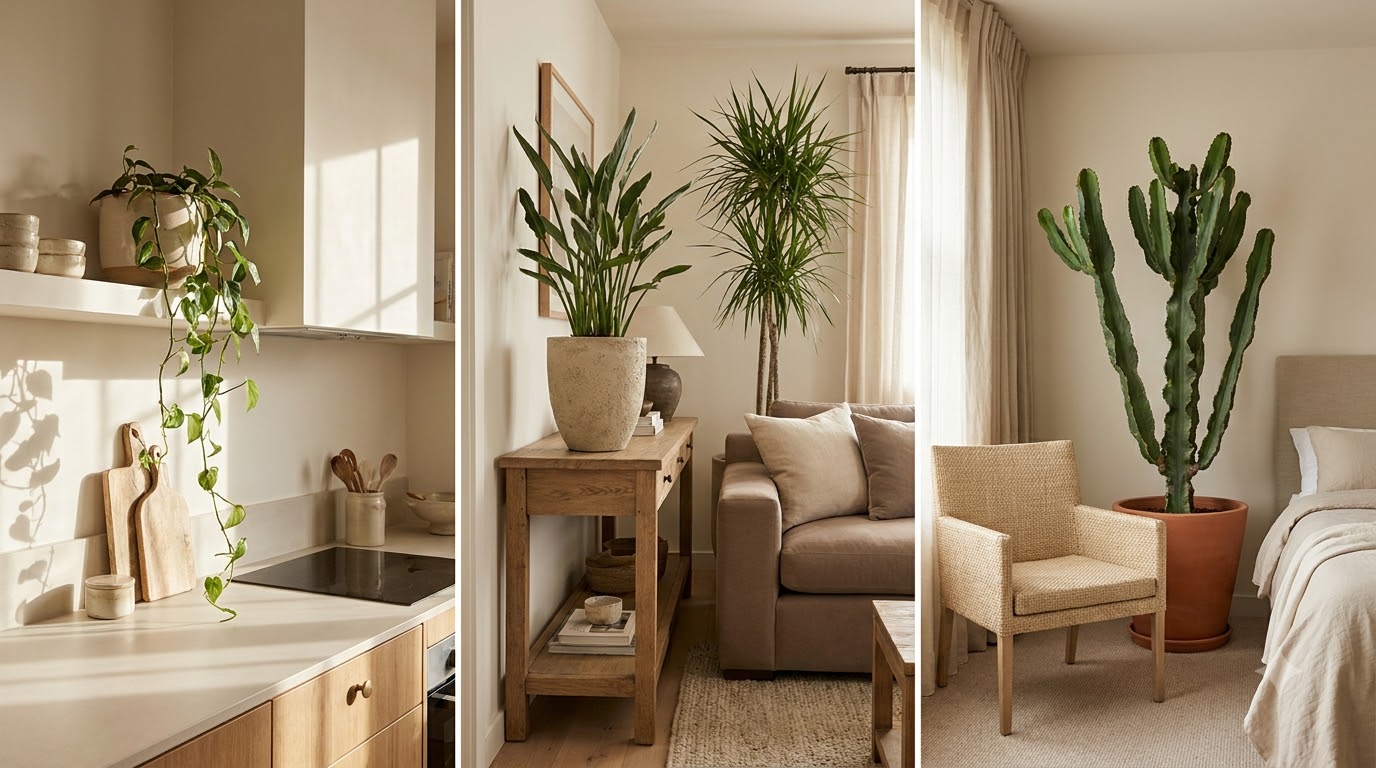
The practical path for most rooms: start with one trailing plant on a shelf or in a hanging basket, add one upright plant for structural volume in a corner, then introduce one statement plant once you’ve confirmed which corner has the light to support it. This sequence avoids the most common mistake, which is investing in an expensive statement plant before understanding the room’s light conditions.
For room-by-room placement advice before you buy, the indoor plants placement guide maps the highest-impact positions in every room type based on light, traffic, and furniture layout. For beginner-friendly options across all three categories, the best low-maintenance indoor plants guide covers the easiest picks in each plant type with care notes for real apartment conditions.
indoor plants placement guide
best low-maintenance indoor plants
Related reading
- Real Plants vs Faux Plants vs Dried Botanicals: Which Is Best for Your Home Decor?
- 35 Best Indoor Plants for Every Room and Style (2026)