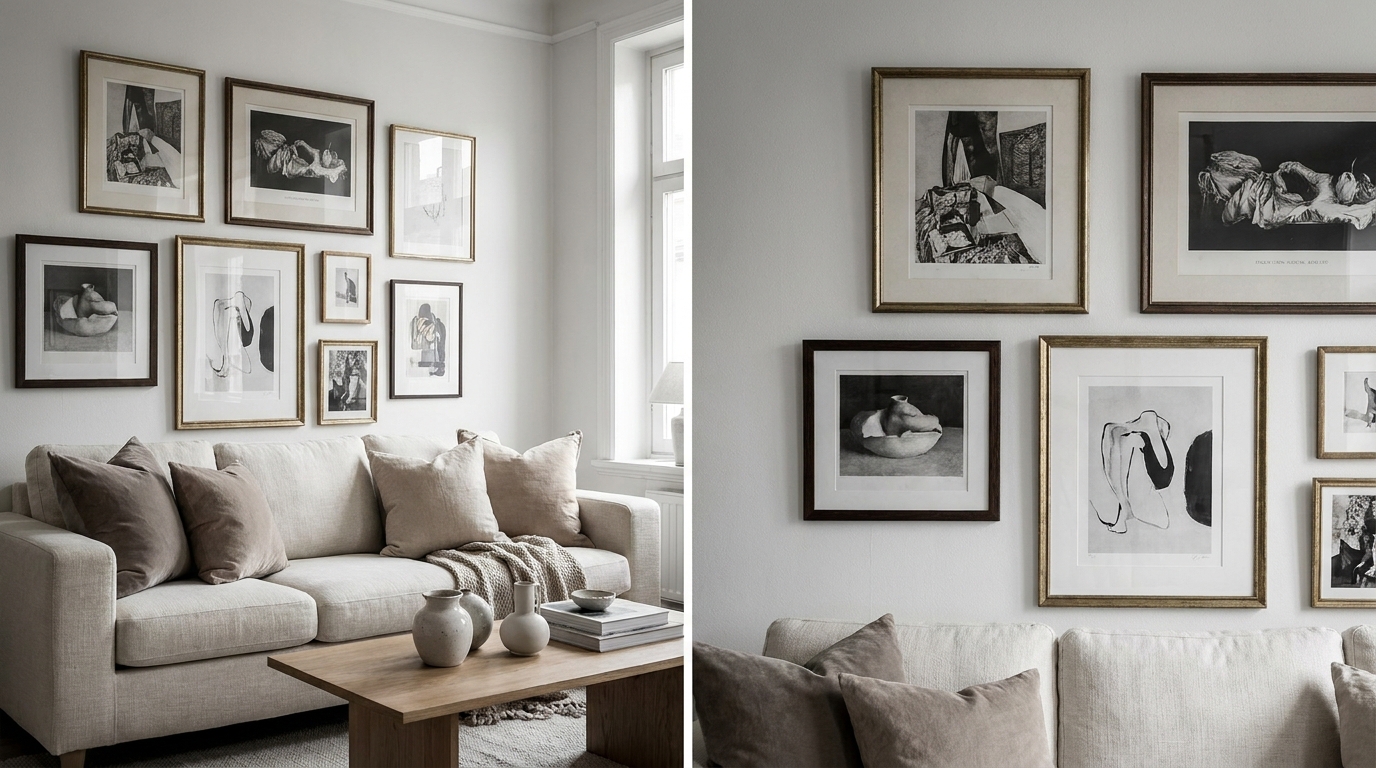
A black and white gallery wall is one of the easiest ways to make a rental feel intentional without repainting, drilling into every stud, or buying one giant piece of expensive art. It works because the palette does the heavy lifting: family photos, abstract prints, line drawings, typography, architecture shots, and vintage-style posters can all sit together without the wall feeling chaotic. For renters, that’s useful. You can build it slowly, swap prints when your taste changes, and use Command Picture Hanging Strips instead of permanent hardware.
In 2026, we’re seeing black and white walls move away from perfectly matched print sets and toward a more collected look: mixed frame widths, oversized mats, sculptural sconces, and personal photography. Our team compared ready-made sets from Desenio, Amazon, Etsy, Target, and Juniper Print Shop, then styled layouts in a small apartment living room and a narrow hallway. The best versions had three things in common: strong spacing, at least one oversized piece, and frames that matched the room’s existing finishes. Below, we’ll walk through renter-safe layouts, art combinations, real product picks, and the measurements that keep the whole wall looking finished.
Key Takeaways
- Plan 2–3 inches between frames for a polished gallery wall; 3–4 inches works better for oversized layouts in large rooms.
- Command Large Picture Hanging Strips cost about $14 for a 14-pair pack and hold up to 16 pounds per framed piece when used as directed.
- Black and white art keeps visual clutter low, which helps in open-plan rentals where living, dining, and work zones share one room.
- A strong black and white gallery wall usually includes at least three art types: photography, abstract work, and personal prints.
- Framing can cost more than the art, so budget for IKEA RIBBA frames from about $10–$25, Target Room Essentials frames from about $8–$22, or custom Framebridge options from about $75.
How Do You Start a Black and White Gallery Wall Without Overbuying?
Start with the wall size, not the art. Measure the width and height of the area you want to fill, then map a rough rectangle that feels balanced with the furniture below it. Above a sofa, we like a gallery wall that spans about two-thirds of the sofa width. Above a console, the art can run almost the full width. This keeps you from buying nine tiny prints when what you really need is one large anchor piece and four smaller supporting frames.
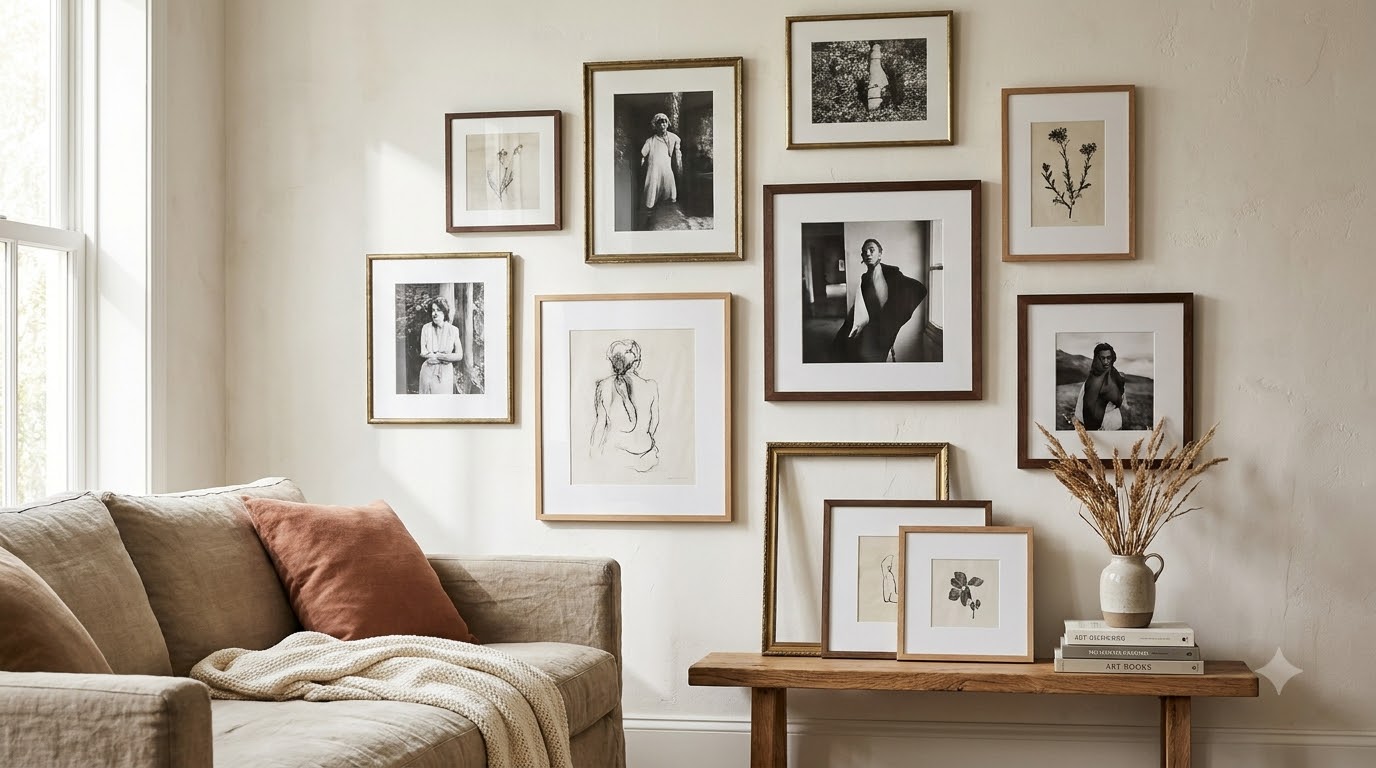
For renters, we’d avoid buying a full print set until you know your layout. Sets can look convenient, but many use the same scale and style, which can make the wall feel flat. Instead, choose one anchor: a 24-by-36-inch black and white city photograph, a large abstract print, or an oversized family portrait. Then build around it with 8-by-10, 11-by-14, and 16-by-20-inch pieces.
A simple starter budget looks like this:
- IKEA RIBBA 16-by-20-inch frames: about $15 each
- Target Room Essentials 8-by-10-inch frames: about $8 each
- Amazon Basics gallery frames, set of 7: about $45
- Digital Etsy print download: about $5–$12
- Local drugstore black and white photo prints: about $2–$8 each
If you’re starting from scratch, expect to spend $120–$250 for a medium wall using budget frames and printable art. If you want upgraded wood frames, custom mats, or fine art photography, the same wall can land closer to $400–$800.
For more layout basics before you buy, see our guide to gallery wall layout ideas.
What Is the Best Layout for a Black and White Gallery Wall?
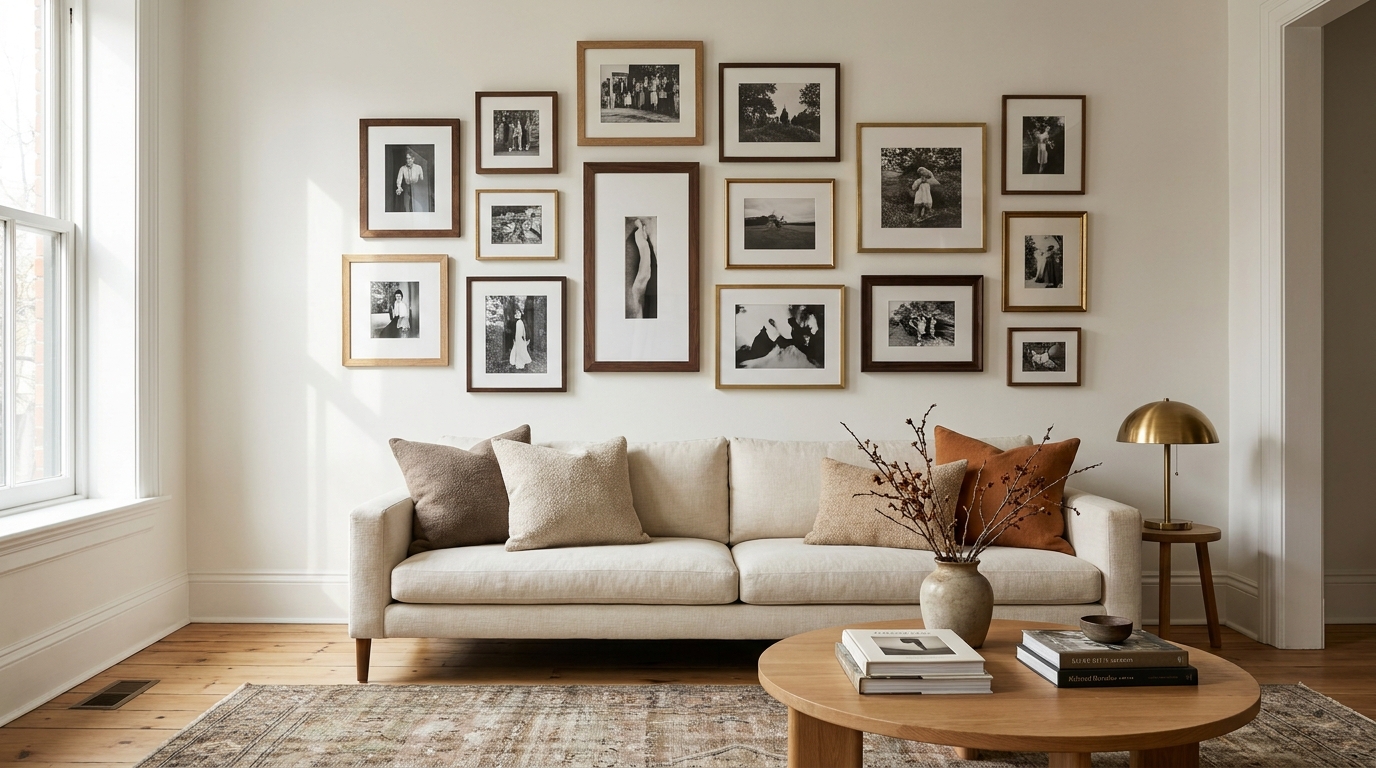
The best layout depends on the room, but a loose grid is the safest choice for renters and first-time homeowners. It gives you structure without looking too corporate. A strict grid works well in hallways, dining nooks, and home offices, while an organic salon layout suits living rooms and bedrooms. In our experience styling rental living rooms, black and white art looks strongest when the outside edges form a clean shape, even if the interior pieces vary.
Try a Loose Grid Over a Sofa
A loose grid uses frames of different sizes but keeps the outer border tidy. Place the largest piece slightly off-center, then balance it with two medium frames on the opposite side. Keep spacing consistent at 2–3 inches. This layout works with IKEA HOVET mirror-style black frames, Target thin metal frames, or affordable Amazon Basics frames.
Use a Tight Grid in Hallways
Hallways usually need calm repetition. Six 11-by-14-inch black frames with white mats can turn a narrow pass-through into a proper moment. We like Framebridge’s black gallery frames for a higher-end option, though at about $75 and up per frame, they’re best for personal photos you’ll keep for years.
Go Organic for Collected Art
Organic layouts work when your pieces vary: one old concert photo, two line drawings, a vintage architecture print, and a family photo. The trick is to repeat something. Use all black frames, all white mats, or all black and white art so the arrangement still connects.
How Do You Mix Black and White Art Without It Looking Random?
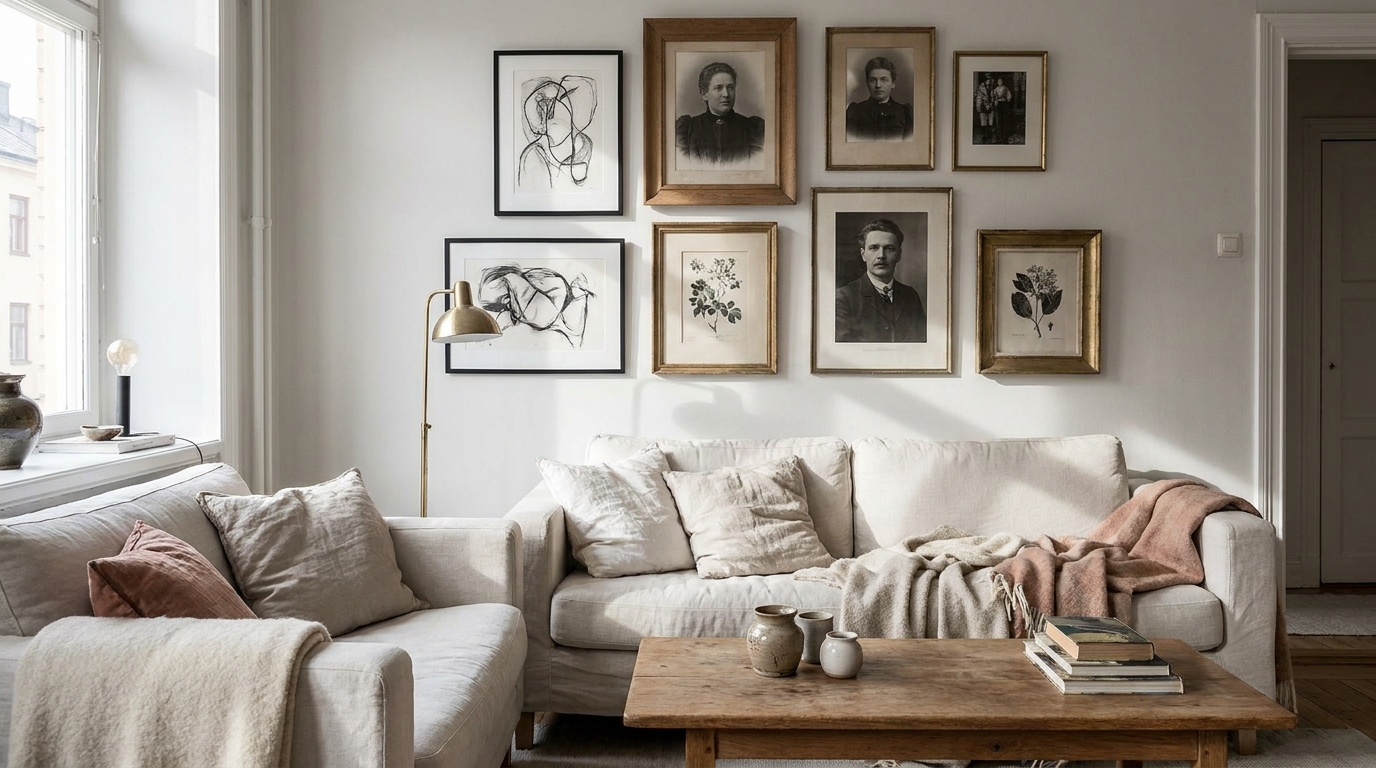
Mix art by subject, scale, and contrast. A black and white gallery wall can include a lot of different pieces, but it needs rhythm. If every print is a close-up portrait, the wall can feel intense. If every print is a thin line drawing, it can feel unfinished. The strongest walls pair dark, graphic pieces with lighter, quieter ones so the eye has places to rest.
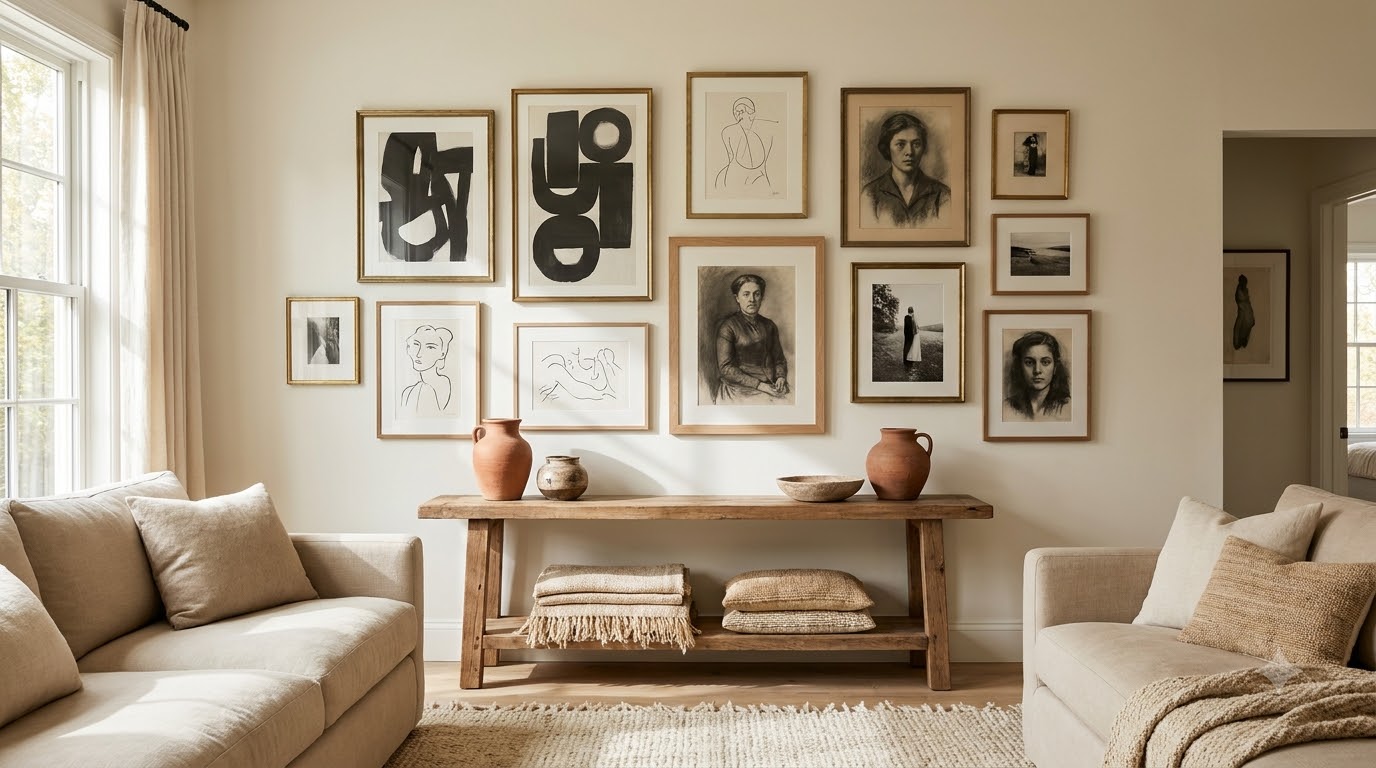
We recommend using this simple mix:
- 1 oversized anchor photograph or abstract print
- 2 medium pieces with strong contrast
- 2–4 quieter prints with white space
- 1 personal photo or meaningful item
- 1 small typography, map, or sketch
Art.com and Desenio have broad black and white photography collections, with many prints around $15–$60 depending on size. Etsy is better for digital downloads, especially vintage exhibition posters, botanical sketches, and architecture prints. Juniper Print Shop offers larger black and white prints around $20–$40 for digital files and higher prices for printed pieces.
We tested a nine-piece Amazon black and white gallery print set priced around $20. It worked best when we removed two of the more generic prints and mixed in personal photography. That’s often the difference between a wall that looks like a kit and one that feels personal.
If you want a more polished apartment style, pair your wall with ideas from our neutral living room decor guide.
What Frames Work Best for Black and White Gallery Walls?
Black frames are the most versatile, but they’re not the only good choice. White frames create a softer look, natural wood warms up the palette, and silver or brass frames can connect to lighting and hardware. The frame should echo something already in the room: black curtain rods, a white media console, oak floors, chrome lamps, or brass cabinet pulls.
For budget-friendly frames, IKEA RIBBA and LOMVIKEN are still strong options in 2026. RIBBA frames start around $10 for smaller sizes and run about $25 for larger formats. Target’s Threshold and Room Essentials frames usually sit around $8–$30. H&M Home often carries slim black and wood frames around $18–$35, depending on size. For a more elevated look, West Elm gallery frames run around $39–$129.
Should You Use Matching Frames?
Matching frames are best when your art varies a lot. If you’re using family photos, travel shots, architecture prints, and typography, matching black frames will calm the mix. They’re also easier to install because the frame depths and hanging points are consistent.
Should You Mix Frame Finishes?
Mixed frames work when the room already has layered finishes. Try 70% black frames, 20% natural wood, and 10% metal. That balance keeps the wall from looking accidental. We’d avoid mixing too many frame profiles in a small rental, especially if the wall sits near open shelving or a TV.
How Can Renters Hang a Black and White Gallery Wall Without Drilling?
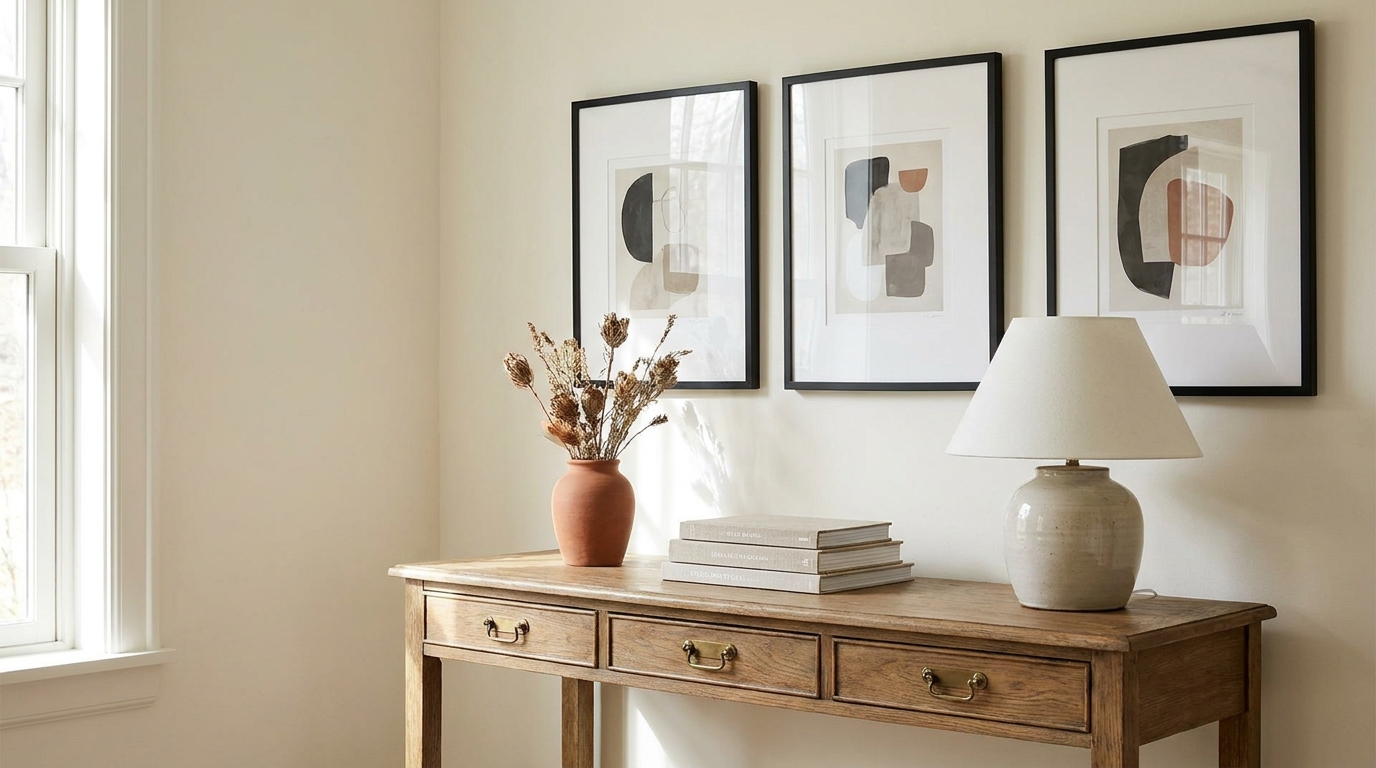
Use removable picture hanging strips for lightweight frames and renter-safe hooks for heavier pieces. Command Picture Hanging Strips are the easiest option for most gallery walls, and the large size costs about $14 for a 14-pair pack. They can hold up to 16 pounds per frame when used correctly, but we still suggest weighing your framed art before installing. Cheap frames are often lighter than they look; glass-front frames can surprise you.
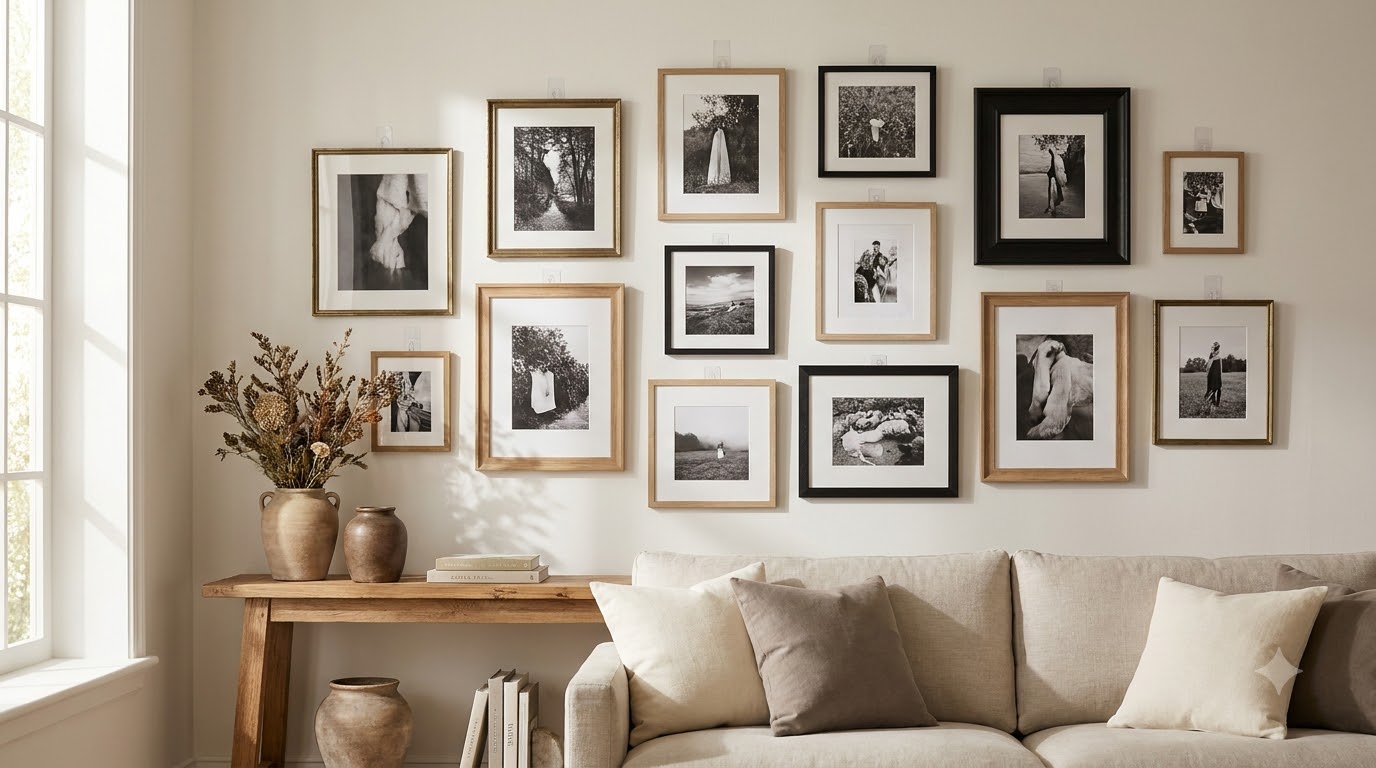
Clean the wall with rubbing alcohol first, let it dry, and press each strip firmly for the full recommended time. Don’t skip the wait time before hanging. We’ve tested Command strips in apartment bedrooms, hallways, and painted drywall, and the failures usually came from dusty walls, humid bathrooms, or frames that were too heavy.
For textured walls, removable strips may not bond well. In that case, use existing picture rails if your apartment has them, or lean art on a console, dresser, or picture ledge. IKEA MOSSLANDA picture ledges cost about $15–$20 and create a layered gallery effect, but they do require screws. If you can’t drill, try a tall leaning arrangement using a large framed print on the floor with smaller frames layered on a cabinet.
What Black and White Gallery Wall Ideas Work in a Living Room?
For living rooms, go larger and bolder than you think. Small frames can look scattered above a sofa, especially on a wide blank rental wall. A strong living room black and white gallery wall usually needs at least one 24-by-36-inch piece, two 16-by-20-inch pieces, and several smaller accents. The wall should feel connected to your sofa, rug, coffee table, and lighting rather than floating alone.
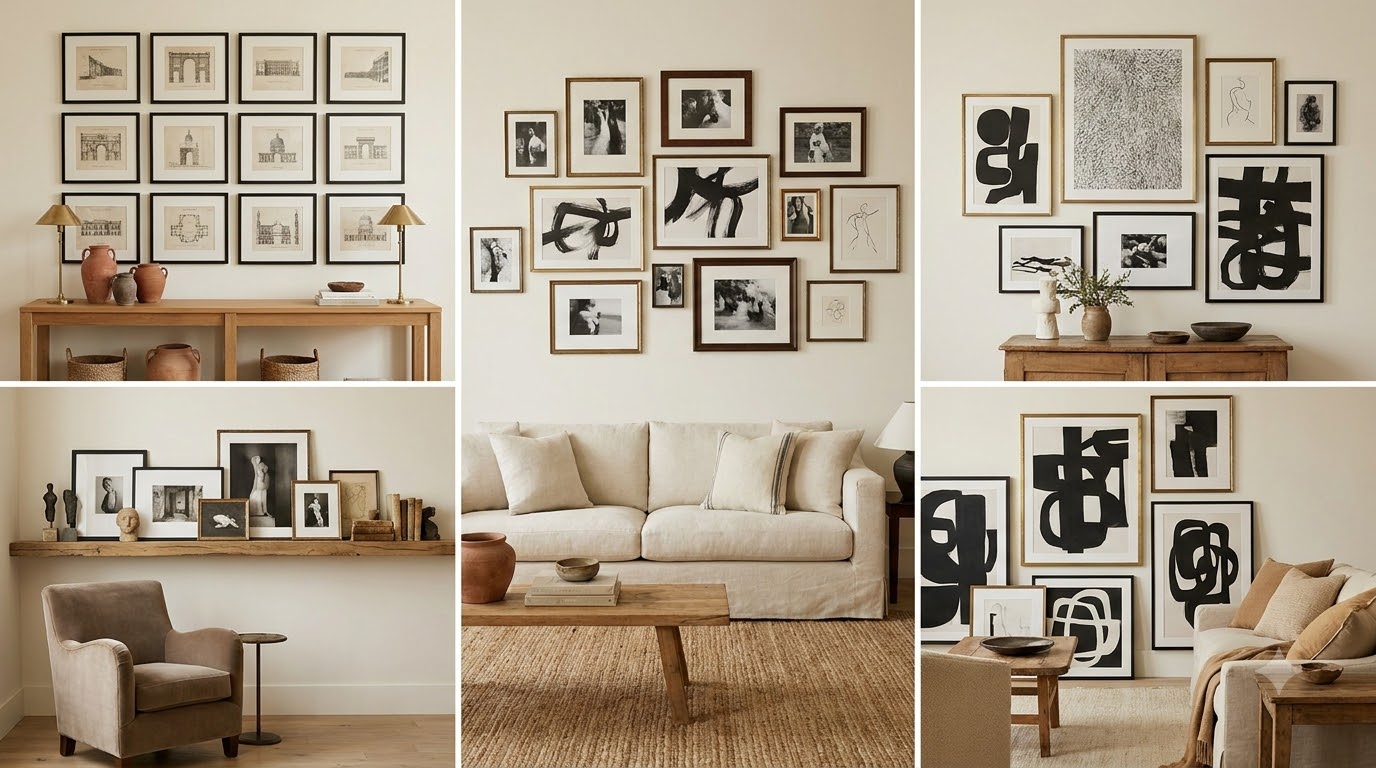
Try one of these combinations:
The City Apartment Wall
Use black and white street photography, architecture prints, and one abstract piece. Pair with black metal frames and white mats. This works well with a CB2 Peekaboo acrylic coffee table, West Elm Mid-Century sofa, or IKEA KIVIK sofa.
The Family Photo Wall
Print family photos in black and white so different lighting, outfits, and locations feel cohesive. Use identical frames for a cleaner look. Mpix, Artifact Uprising, and Walgreens all offer black and white photo printing, with small prints starting around $1 and larger sizes around $10–$35.
The Minimal Abstract Wall
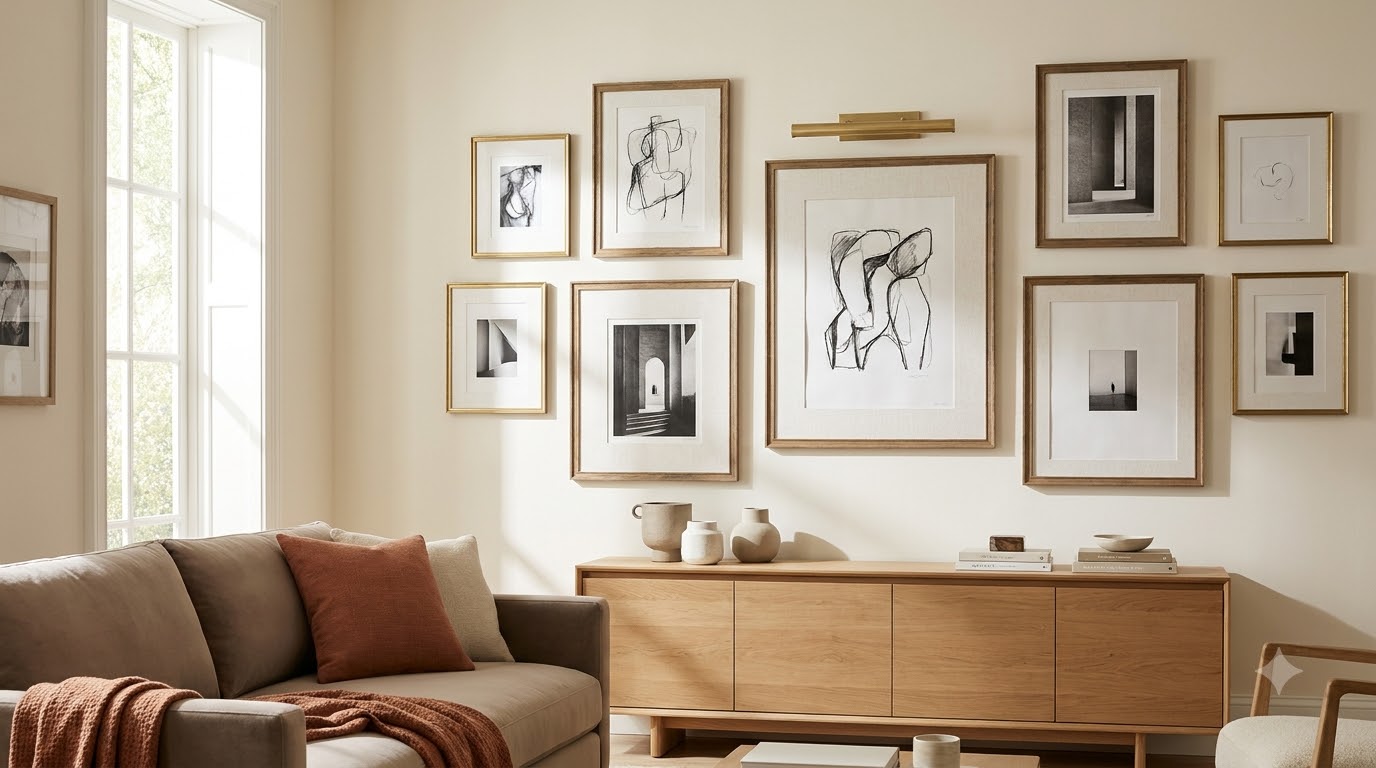
Choose line drawings, ink-wash shapes, and tonal photography. This works in rooms with beige sofas, light oak furniture, and textured rugs. Add one darker print to prevent the wall from disappearing.
A black and white palette also helps if your living room includes a TV. The art can soften the screen without competing with it. For more TV-wall solutions, read our renter-friendly living room ideas.
How Do You Style a Black and White Gallery Wall in a Hallway?
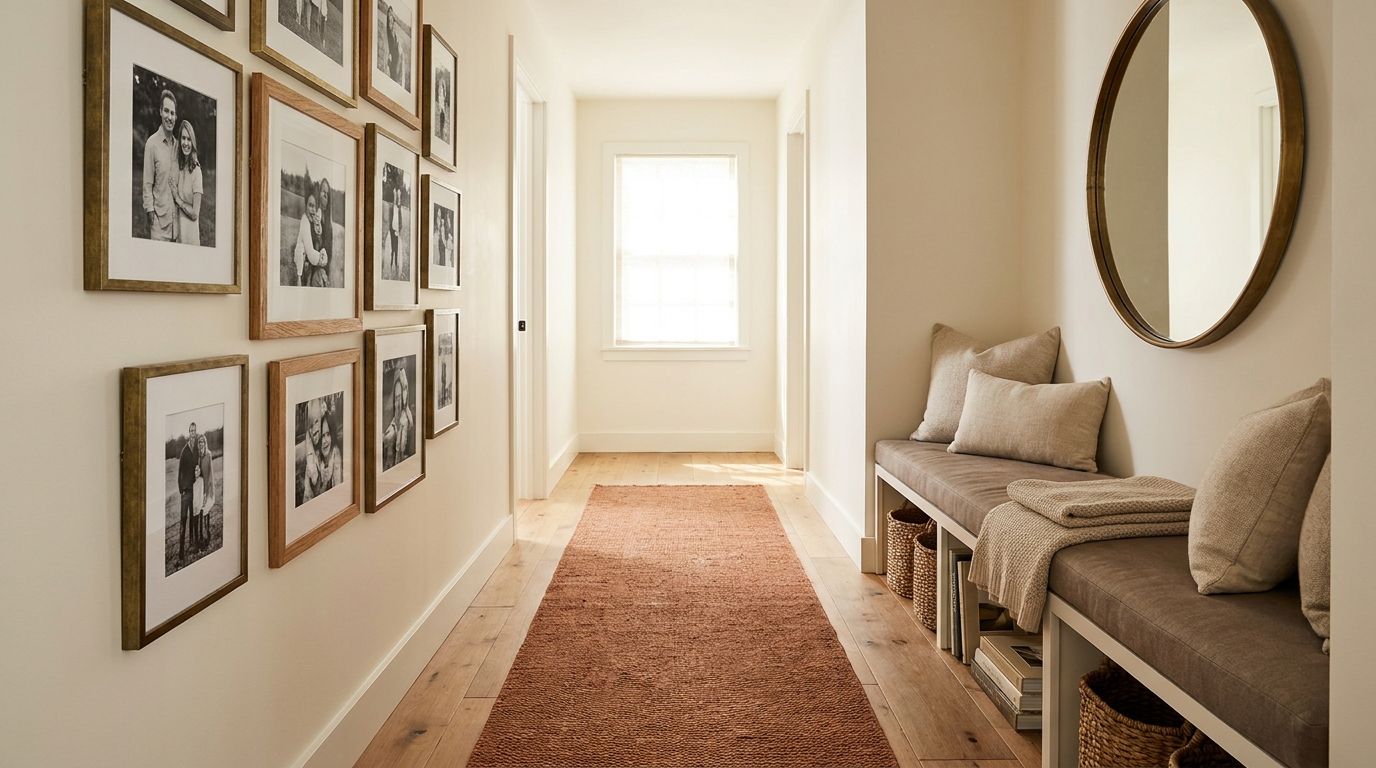
Use repetition, strong lighting, and a narrow layout. Hallways don’t give you much viewing distance, so oversized salon walls can feel crowded. A grid of four, six, or eight frames works better. We like 11-by-14-inch frames with 8-by-10-inch prints for apartment hallways because they add presence without making the space feel tight.
Black and white family photos are especially good here. They turn a pass-through into something personal, and the monochrome edit keeps the hallway calm. If your hallway is dark, add battery-operated picture lights or plug-in sconces. Taryn Whiteaker’s popular hallway gallery wall used personal black and white photos with wireless-style lighting, and that idea still works well for rentals if you choose adhesive or plug-in options.
Try these renter-safe lighting options:
- Amazon battery-operated picture light: about $30–$50
- IKEA VATTENSTEN LED light strip: about $15
- Target Threshold plug-in wall sconce: about $60
- Pottery Barn rechargeable picture light: about $129
Place the center of the gallery at about 57–60 inches from the floor, which aligns with common museum hanging guidance. If your ceilings are low, stay closer to 57 inches.
What Are the Best Black and White Gallery Wall Ideas for a Bedroom?
Keep bedroom gallery walls softer, lower contrast, and slightly more personal. Bedrooms usually need rest, not visual noise, so skip harsh typography and overly busy collage sets. Use black and white landscapes, quiet portraits, botanical sketches, or abstract forms with plenty of white space. Over a bed, a symmetrical layout feels calm. Over a dresser, you can go more layered and casual.
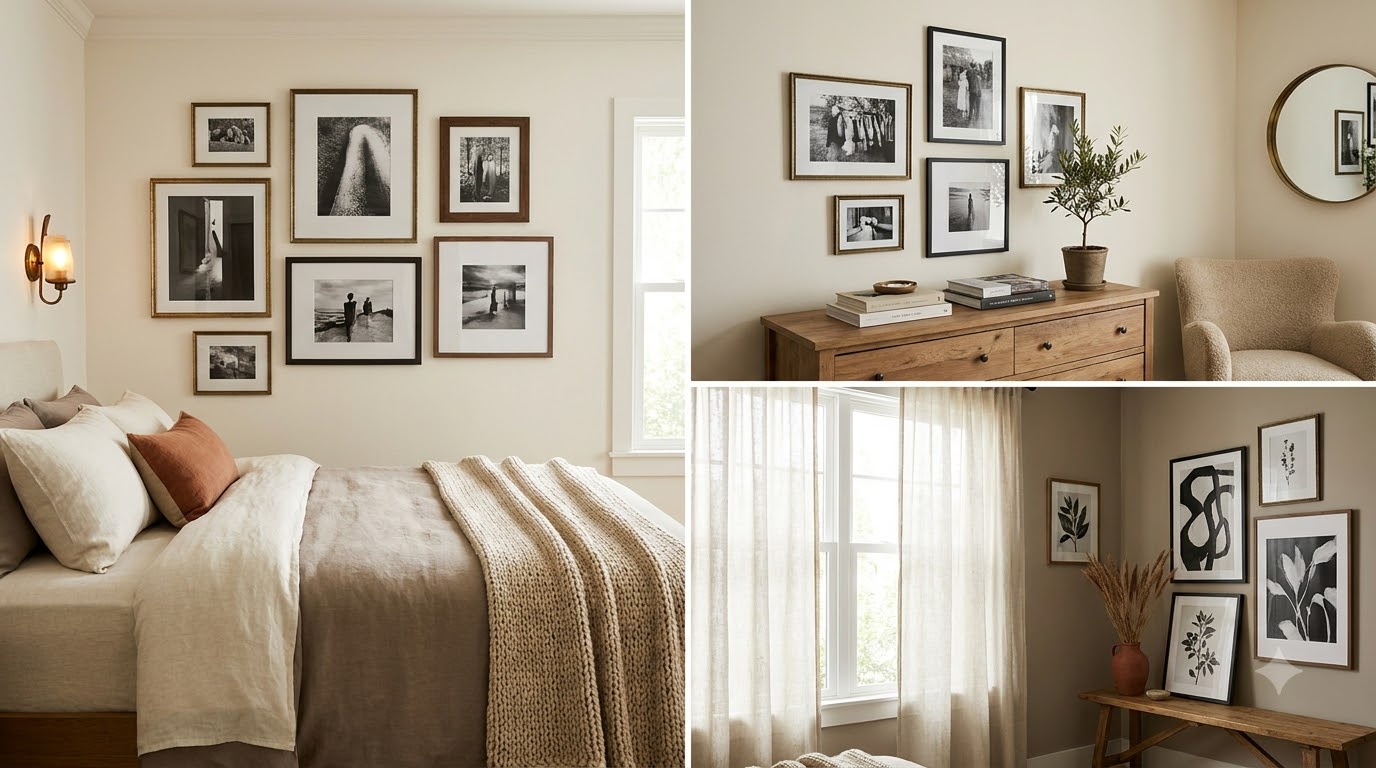
Above a queen bed, try three 16-by-20-inch frames in a row, or one large 24-by-36-inch print flanked by two smaller pieces. If you rent, lightweight acrylic-front frames are safer above the bed than heavy glass-front frames. IKEA LOMVIKEN and Target lightweight poster frames are useful here.
For bedside styling, connect the wall to your textiles. A black metal lamp, white linen duvet, charcoal throw, or striped pillow can make the art feel built into the room. H&M Home has striped cushion covers around $10–$20, and IKEA’s SANELA cushion covers are about $10. If the room feels too stark, bring in wood nightstands, a jute rug, or warm white bulbs.
Our team compared black, white, and oak frames in a small bedroom setup. Oak frames made the wall feel warmer, while black frames looked sharper and more architectural. White frames worked only when the bedding and walls were also light.
How Can You Make a Black and White Gallery Wall Look Expensive?
Use larger mats, fewer tiny pieces, and better spacing. Expensive-looking gallery walls aren’t always expensive, but they usually avoid visual clutter. A $12 digital print can look high-end in a good frame with a wide mat. A $90 art print can look cheap if it’s squeezed into the wrong size frame. Scale matters more than the logo on the frame.
Here’s where to spend and save:
Spend on the Anchor Piece
One large art print gives the wall weight. Look at Juniper Print Shop, Minted, Artfully Walls, or Society6 for black and white pieces in larger sizes. Expect about $35–$120 for many prints before framing.
Save on Supporting Frames
Use IKEA, Target, or Amazon Basics for smaller frames. If the frames hang together and use consistent mats, they’ll read as one arrangement.
Upgrade the Mat
A wider white mat instantly elevates black and white art. Many budget frames include thin mats, but you can order custom mats from Matboard Plus or local frame shops for about $10–$30 each.
Edit the Art
If the wall feels busy, remove one or two pieces. Negative space can look more expensive than filling every inch.
Interior design reports continue to show strong interest in personalized, meaningful spaces rather than showroom-perfect rooms (Houzz 2024). A black and white wall fits that shift because it can include your own photos without looking messy.
What Size Should a Black and White Gallery Wall Be?
Size the gallery to the furniture below it and the room’s sightlines. Above a sofa, the gallery should usually be 60–75% of the sofa width. Above a console, keep the outer edges a few inches inside the furniture width. On a blank hallway wall, let the length of the hallway guide the arrangement, but leave at least 6–10 inches from door trim and light switches.
A few reliable dimensions:
- 72-inch sofa: gallery width around 44–54 inches
- 84-inch sofa: gallery width around 50–63 inches
- 48-inch console: gallery width around 36–44 inches
- Queen bed: gallery width around 45–60 inches
- Narrow hallway: frames spaced 2 inches apart in a straight grid
Before hanging, tape the full arrangement on the wall with painter’s tape. Then cut paper templates for each frame. It takes 20 minutes and saves your wall from a lopsided layout. We’ve found this step especially helpful in rentals with uneven floors, older plaster walls, or low ceilings.
If you’re working with a small apartment, check our small apartment wall decor ideas for more scale-friendly options.
Where Should You Buy Black and White Gallery Wall Art in 2026?
Buy based on how personal you want the wall to feel. If you want fast and affordable, Amazon and Target print sets are easy. If you want a more personal wall, combine Etsy downloads, family photos, and one larger print from Minted or Juniper Print Shop. If you want polished photography, Art.com, Sonic Editions, and Getty Images Gallery have stronger options, though prices rise quickly with size and framing.
Good sources to compare:
- Desenio: Coordinated black and white posters, often about $10–$50
- Etsy: Digital downloads from about $5–$15
- Amazon: 6–12 piece print sets around $15–$35
- Target: Framed wall art around $20–$80
- Juniper Print Shop: Digital and printed art, many files around $20–$40
- Minted: Independent artist prints, often about $30–$250 depending on size
- Art.com: Photography and classic prints, broad range from about $20 to several hundred dollars
- Framebridge: Custom framing from about $75 and up
Pinterest searches continue to favor personal gallery walls, black and white photography, and mixed-frame arrangements across home decor categories (Pinterest Predicts 2026). That doesn’t mean you should copy a board exactly. Use it to identify what you keep saving: grids, oversized mats, vintage portraits, city photography, or abstract shapes.
Avoid These Black and White Gallery Wall Mistakes
Avoid tiny art, inconsistent spacing, and too many generic prints. Black and white is forgiving, but it won’t fix poor scale. The most common mistake we see is a gallery wall that’s too small for the furniture below it. The second is using nine prints from one set with no personal element. The third is hanging everything too high, which makes the wall feel disconnected from the room.
Watch for these issues:
Frames Are Too Far Apart
More than 4 inches between small frames can make the layout feel scattered. Keep most spacing around 2–3 inches unless you’re working with oversized art.
The Wall Has No Anchor
Every gallery wall needs a visual lead. One large dark piece, one portrait, or one bold abstract print can anchor the arrangement.
The Art Is Too Similar
Nine line drawings may match, but they can also feel thin. Mix close-up, wide shot, textural, and graphic pieces.
The Frames Fight the Room
If your room has warm wood, rattan, and cream textiles, all-black glossy frames may feel harsh. Try matte black or oak instead.
You Forgot the Lighting
Black and white art can disappear in a dim corner. Use a floor lamp, plug-in sconce, or rechargeable picture light to bring out the contrast.
How Do You Refresh a Black and White Gallery Wall Seasonally?
Refresh the wall by swapping prints, not frames. That’s the benefit of a monochrome palette. You can replace a beach photo with a winter landscape, switch a quote print for an abstract sketch, or add a new family photo without rebuilding the layout. Keep the frames and spacing in place, then rotate the contents every few months.
For an easy 2026 refresh, try one of these swaps:
- Add one black and white travel photo from your phone camera roll
- Replace a generic print with a scanned handwritten recipe or note
- Swap a thin line drawing for a bolder charcoal-style abstract
- Add a small black frame to echo black hardware or lighting
- Change mats from bright white to warm white for a softer look
We like keeping extra prints in a flat storage envelope under a bed or behind a dresser. It’s low effort, and it means your apartment can shift with the season without buying new furniture. If you move, wrap the art in kraft paper, label each frame by room, and reuse the same layout in your next place.
Frequently Asked Questions
Are black and white gallery walls still in style for 2026?
Yes, but the best ones feel personal rather than matchy. In 2026, we’re seeing more family photography, architectural prints, oversized mats, and mixed frame finishes. The palette stays classic, while the content makes the wall feel current and specific to your home.
Should all photos in a gallery wall be black and white?
They don’t have to be, but converting photos to black and white creates a cleaner look. It’s especially helpful when you’re mixing photos from different years, lighting conditions, and locations. If you include color, keep it limited to one or two muted pieces.
Can you make a gallery wall without nails?
Yes. Use Command Picture Hanging Strips for lightweight frames, adhesive hooks for small pieces, or lean framed art on a console. Always check weight limits and wall texture first. Removable strips work best on smooth, clean painted drywall, not brick, textured plaster, or humid bathroom walls.
What color frames look best with black and white art?
Black frames are the easiest choice, but white, oak, walnut, brass, and silver can also work. Match the frame finish to something else in the room. Black frames feel graphic, oak feels warmer, white feels soft, and metal frames add a more formal look.
How many pieces should be in a black and white gallery wall?
Most medium walls look good with 5–9 pieces. A hallway grid may need 6 or 8 matching frames, while a living room wall can use one oversized anchor and 4–6 supporting pieces. Scale matters more than the number of frames.
Conclusion
A black and white gallery wall works because it gives you structure and flexibility at the same time. You can start with budget frames, print family photos in black and white, add one larger piece, and still get a wall that feels thoughtful. You don’t need to drill, repaint, or commit to one art style forever.
Before you buy, measure your wall, choose an anchor piece, and decide whether your room needs sharp black frames, warm wood, or soft white mats. Then mock up the layout with paper templates. It’s the least exciting step, but it’s the one that keeps the final wall from looking uneven.
If you’re planning more art beyond one wall, start with our full guide to gallery wall layout ideas and build a system you can reuse from room to room.
Related reading
- Hidden Amazon Gallery Wall Finds Under $30: 17 Budget Picks That Look Expensive
- Best Photo Frames for Gallery Walls Under $25 Each (2026)