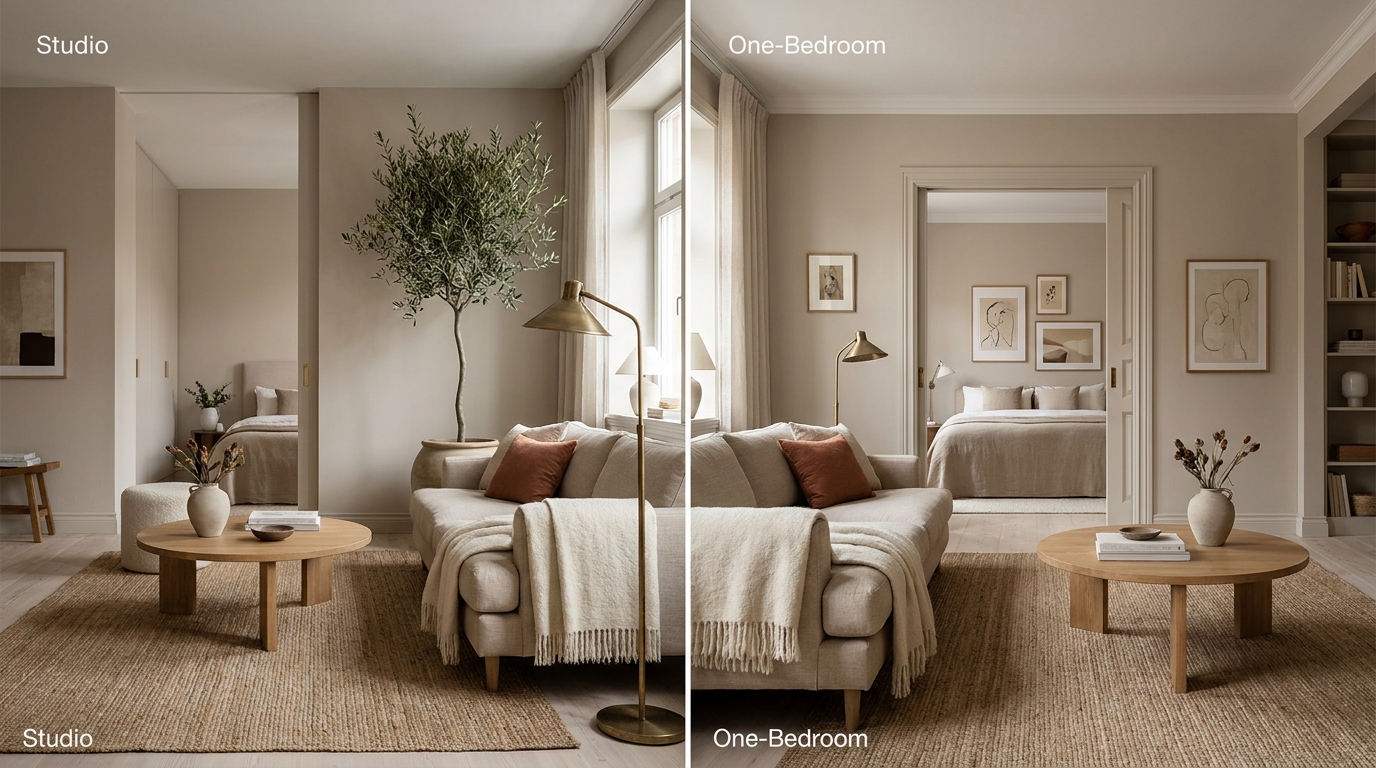
Quick answer: A studio apartment is a single open room (typically 400-600 sq ft) where sleeping, living, and cooking share one space, while a one bedroom apartment (typically 650-900 sq ft) has a separate, door-enclosed bedroom. Studios cost roughly 20-30% less in rent and utilities, but one bedrooms offer privacy, dedicated sleep zones, and far more decor flexibility. Pick a studio if budget and location matter most; pick a one bedroom if you work from home, host guests, or share the space with a partner.
Key Takeaways
- Size gap: One bedrooms average 250-350 more square feet than studios
- Cost gap: Studios rent for ~22% less than one bedrooms in major US metros (2026 data)
- Decor freedom: One bedrooms allow distinct styling per room; studios require zoning tricks
- Best for: Studio = solo renters under $70k income; one bedroom = couples, remote workers, hosts
- Resale of furniture: One-bedroom furniture is easier to repurpose if you move up
What’s Actually the Difference Between a Studio and a One Bedroom?
The legal and architectural distinction comes down to one thing: interior walls.
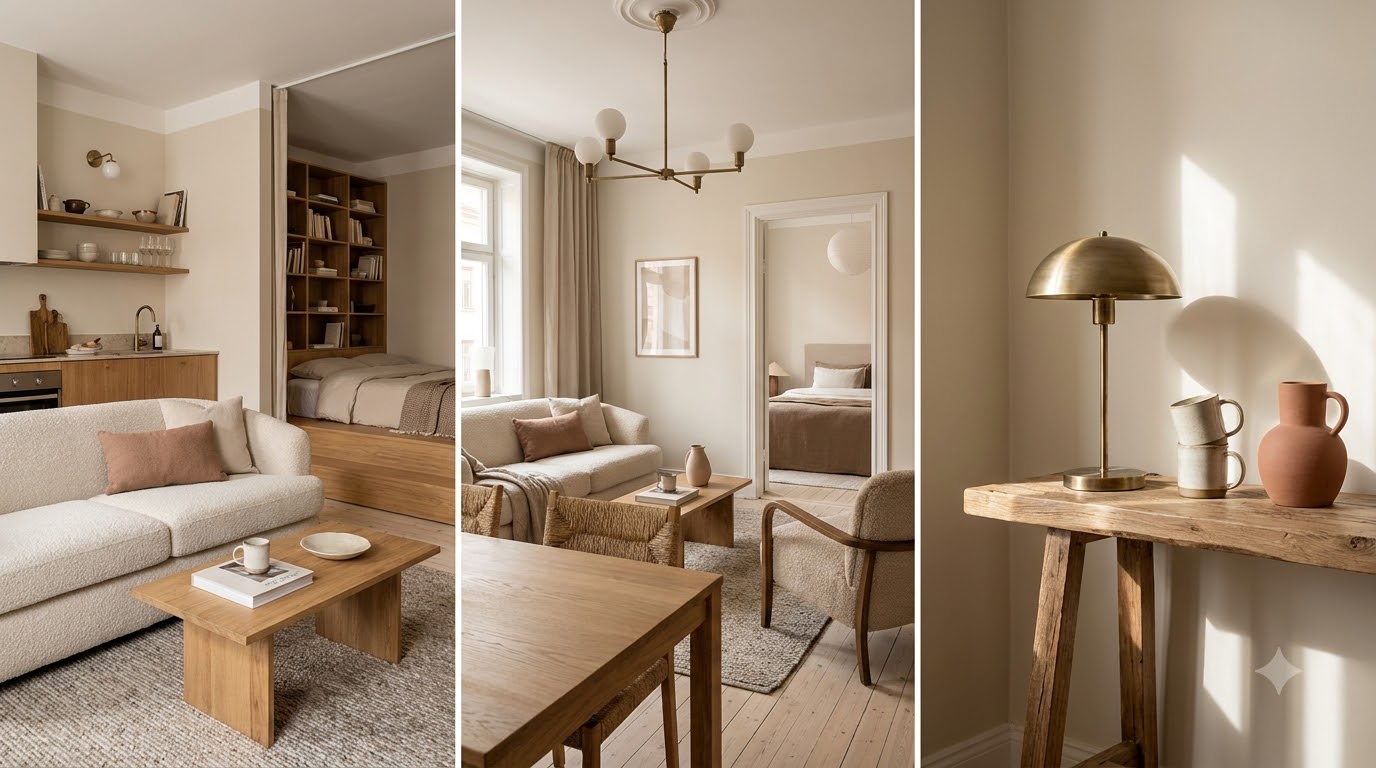
A studio apartment is a self-contained living unit where the sleeping area, living area, and (usually) kitchen exist in a single undivided room. The only enclosed space is the bathroom. Some studios add an “alcove” or half-wall to suggest a bedroom zone, but no full-height wall or door separates the bed from the couch.
A one bedroom apartment has at least one room — the bedroom — fully enclosed by walls and a door, separated from the living/kitchen area. That single architectural detail changes nearly every aspect of daily life and decor strategy.
The 4 Subtypes You’ll See on Listings
| Type | Average Size (sq ft) | Layout |
|---|---|---|
| Classic studio | 400-500 | One open room + bathroom |
| Alcove studio | 500-600 | One open room with a partial-wall sleep nook |
| Convertible/Junior 1BR | 550-700 | Studio with space large enough to wall off |
| True one bedroom | 650-900 | Separate bedroom with door |
Information gain: Many “junior one bedroom” listings are actually large studios — the bedroom is created by the tenant using bookshelves or curtains, not real walls. Check the floor plan, not the headline.
Studio vs One Bedroom: The Cost Comparison in 2026
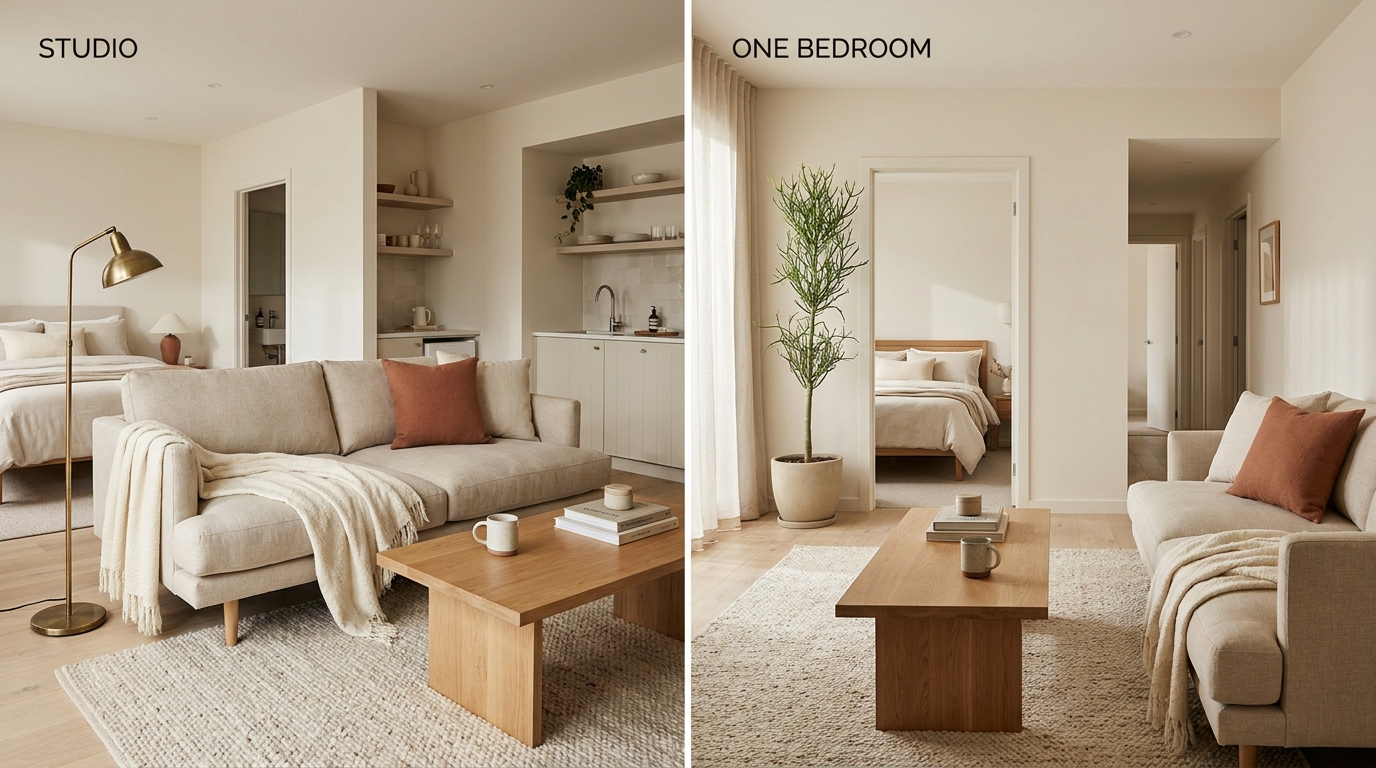
Rent is the headline number, but it’s not the only cost gap.
Rent: National Averages (June 2026)
Based on aggregated listing data across the 50 largest US metros:
- Median studio rent: $1,485/month
- Median one bedroom rent: $1,910/month
- Average gap: $425/month, or roughly 22% more for the one bedroom
The gap widens in expensive coastal markets (NYC, SF, Boston, DC) where one bedrooms can cost 35-45% more, and narrows in midsize Midwest and Sun Belt cities (Columbus, Indianapolis, Phoenix) where it’s closer to 12-18%.
Utilities: The Hidden Multiplier
A one bedroom uses more energy simply because there’s more space to heat, cool, and light. Expect:
- Studio average utilities: $95-$130/month (electric, gas, water, internet bundle)
- One bedroom average: $140-$190/month
That’s another $45-$60/month, or about $600/year, on top of the rent gap.
Furniture: The Setup Cost
Here’s where renters get surprised. A studio’s “everything in one room” reality means you can furnish a livable home for less:
- Studio starter furniture budget: $1,200-$2,200 (bed, sofa or sleeper, small table, storage)
- One bedroom starter furniture budget: $2,400-$4,000 (separate bedroom set + living room set + dining)
If you’re a first-time renter starting from zero, the studio’s lower furniture floor matters as much as rent.
The Real Annual Cost Difference
Adding rent + utilities + amortized furniture over a 12-month lease, the one bedroom costs roughly $6,000-$7,500 more per year. That’s the price of privacy, and for many renters it’s worth every dollar.
Square Footage and Layout: What You’re Really Getting
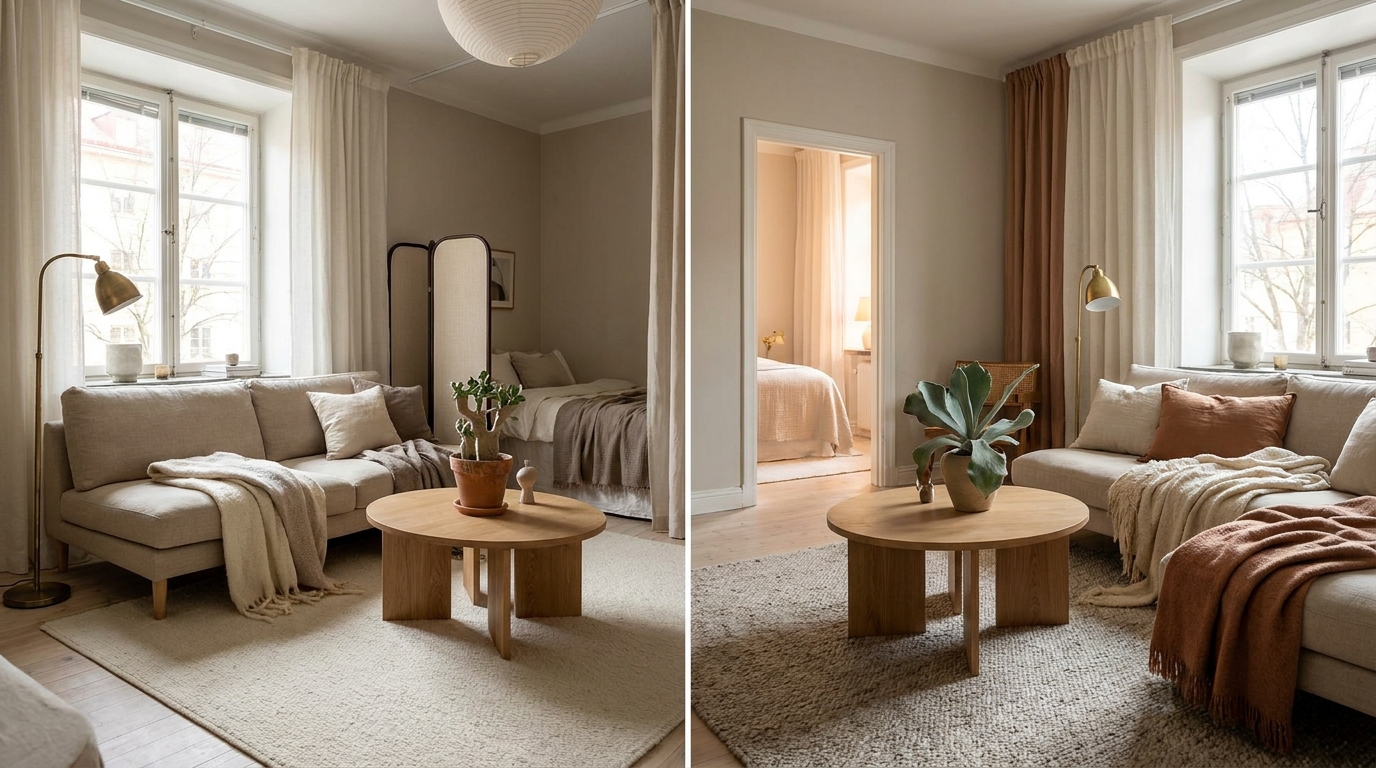
Studio Floor Plans You’ll Encounter Most
The Rectangle Studio (most common, ~450 sq ft)
A long rectangular room with the kitchen at one short end and a window at the other. The challenge: defining a “bedroom” zone far from the kitchen. The opportunity: a clear traffic flow from door to window.
The L-Shape Studio (~500 sq ft)
The kitchen sits in a recessed leg of the “L,” leaving the main room cleaner for furniture arrangement. Easier to zone visually.
The Alcove Studio (~550 sq ft)
A partial-height wall or a small recessed area creates a “sleep alcove.” This is the most decor-friendly studio — the alcove almost works as a bedroom.
One Bedroom Layouts You’ll Encounter Most
The Galley One Bedroom (~700 sq ft)
A narrow living room flows into a hallway, with bedroom and bathroom off the hall. Common in pre-war buildings.
The Open Plan One Bedroom (~800 sq ft)
Living room, dining, and kitchen flow together; only the bedroom is closed off. The modern default in new construction since ~2015.
The Split One Bedroom (~900 sq ft)
The bedroom is on the opposite side of the unit from the living room, often with the bathroom between them. Best sound isolation. Premium price.
Decor Strategy: Studio vs One Bedroom
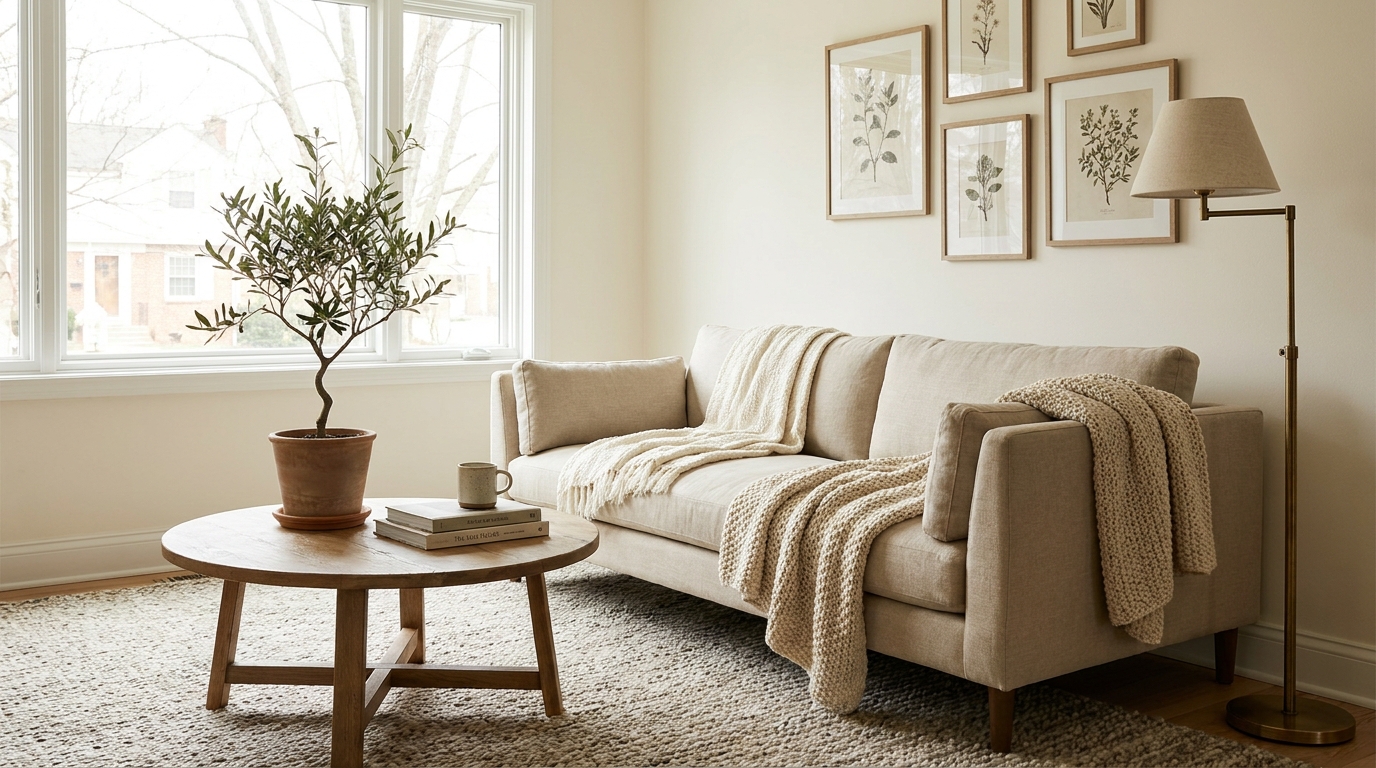
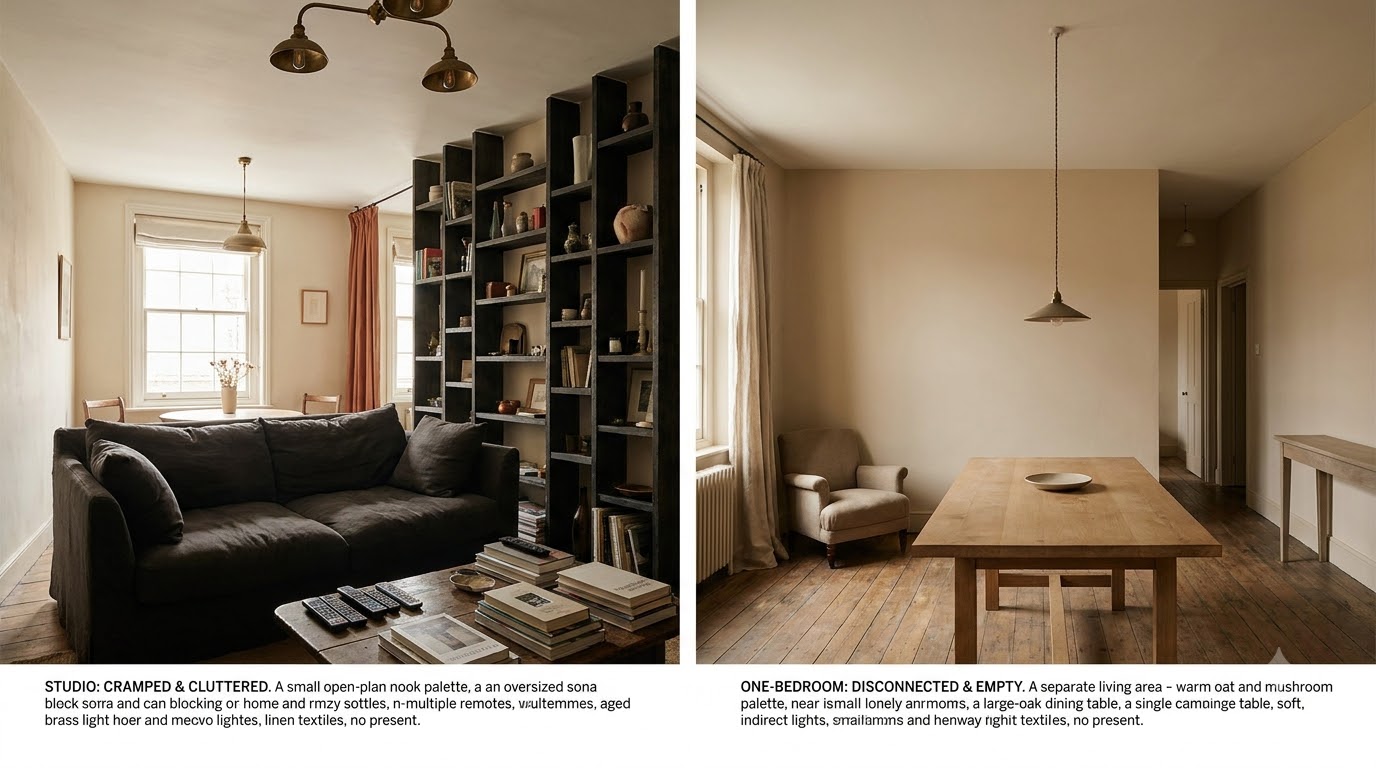
This is where the two layouts diverge most dramatically. Studios demand a unified decor philosophy. One bedrooms reward variety.
How to Decorate a Studio Apartment
The number one rule: zone the space, don’t divide it. Walls (even temporary ones) make a studio feel smaller. Visual cues make it feel intentional.
The 5-zone studio framework:
-
Sleep zone — Bed positioned against the wall farthest from the door, ideally near a window
-
Living zone — Sofa or loveseat with its back creating a soft “divider” from the bed
-
Work zone — A narrow desk (24-30 inches deep) on a wall, or a wall-mounted drop-leaf table
-
Dining zone — A small bistro table for 2, or a counter-height ledge near the kitchen
-
Storage zone — Vertical: floor-to-ceiling shelving on the wall opposite the bed
Studio decor moves that actually work in 2026:
- One color palette across the entire room (3 colors max). Splitting palettes by “zone” creates visual chaos in 450 sq ft.
- A single area rug under the living zone, not multiple small rugs. Multiple rugs chop the floor visually.
- Mid-height furniture only (under 36 inches). Tall pieces in a studio kill the ceiling line.
- Curtains hung at ceiling height, not window height — instantly adds vertical scale.
- One statement piece, not three. A bold sofa OR a bold headboard OR a bold art wall. Never all three.
What to avoid in a studio:
- Full-height room dividers (they cut your light and air)
- Bunk beds or loft beds (they feel dorm-y; only worth it if your ceiling is over 9 ft)
- Dining tables for 4+ (use a bistro table; entertain on the sofa)
- Heavy drapery or dark accent walls in rooms under 500 sq ft
How to Decorate a One Bedroom Apartment
One bedrooms give you a powerful design lever: two distinct rooms can have two distinct moods, as long as a common thread ties them together.
The “anchor + accent” approach:
- Pick one anchor color that appears in both rooms (often a neutral: warm white, greige, soft charcoal)
- Pick one accent material that repeats in both rooms (brass, blackened oak, natural rattan)
- Then let the bedroom go moody (deeper colors, layered textiles) while the living room stays bright and social
Bedroom decor priorities in a one bedroom:
-
Bed as the centerpiece — Headboard against the wall opposite the door
-
Blackout window treatment — Critical for sleep; you finally have a separate room, use it
-
One reading chair if space allows — A small accent chair near the window
-
Closed storage — Dressers, not open shelves (clutter visible from the doorway is a mood killer)
Living room decor priorities in a one bedroom:
-
Sofa scaled to the room — Not too big; leave 30 inches of walkway on at least one side
-
A real coffee table — You have the floor space now, use it
-
One TV setup OR one fireplace focal point — Pick one
-
Layered lighting — Overhead + lamp + accent (you have multiple wall outlets now)
Decor Cost Comparison
A reasonable mid-range decor budget breaks down roughly like this:
STUDIO (one room to furnish)
Bed + mattress + frame …….. $600-$900
Sofa or sleeper …………… $400-$800
Storage/shelving ………….. $200-$400
Lighting (2-3 pieces) ……… $150-$300
Rug + textiles ……………. $200-$400
Decor accents …………….. $150-$300
TOTAL: $1,700-$3,100
ONE BEDROOM (two rooms + entry)
Bed + mattress + frame …….. $700-$1,100
Dresser + nightstands ……… $400-$700
Sofa + chair ……………… $800-$1,400
Coffee + side tables ………. $200-$400
Storage/shelving ………….. $300-$500
Lighting (4-6 pieces) ……… $300-$500
Rugs (2) + textiles ……….. $400-$700
Decor accents …………….. $300-$500
TOTAL: $3,400-$5,800
Lifestyle Fit: Who Should Choose Which?
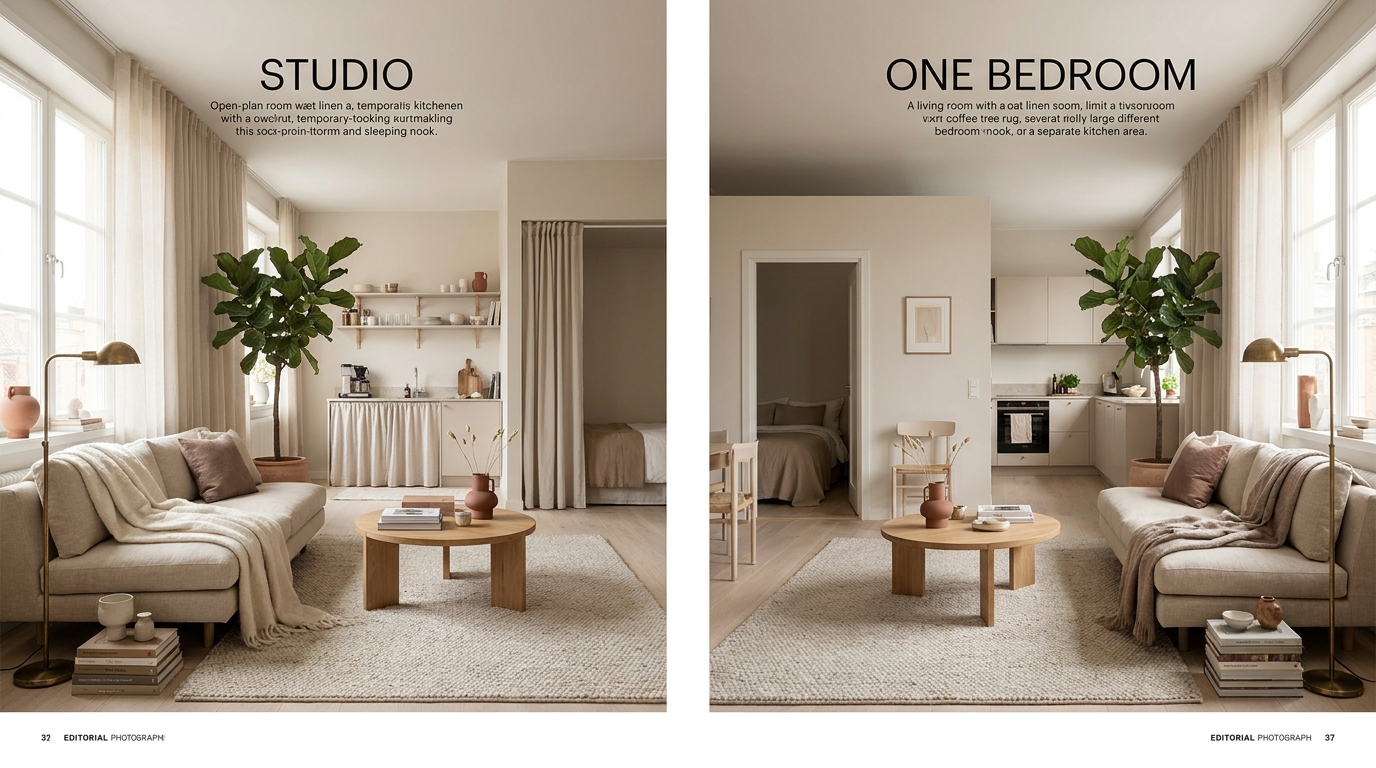
The decor question matters, but it sits on top of a bigger lifestyle question.
Choose a Studio If…
- Your monthly take-home is under $4,200 and rent shouldn’t exceed 30% of it
- You’re rarely home during waking hours (commute-heavy job, frequent traveler, social calendar)
- You live alone with no plans to cohabitate in the next 12 months
- You prioritize location over space (walkable neighborhood, transit access, lower commute)
- You’re new to a city and want a lower-commitment first apartment
- You’re a minimalist by preference, not by force
Choose a One Bedroom If…
- You work from home more than 3 days per week (a closed bedroom door is a real productivity tool)
- You share the apartment with a partner, and one of you keeps different hours
- You host guests regularly (overnight visitors fit far better)
- You own furniture and stuff from a previous home that you don’t want to purge
- You exercise at home (yoga mat, weights, Peloton — the living room can absorb gear)
- You value a real morning routine with a separate dressing/grooming flow
- You’re saving up to buy a home and want a one-bedroom rental as your “training space” for furniture and decor decisions
The Gray Area: Couples in Studios
Couples in studios is the most common decor-disaster scenario. If you’re considering it:
- The unit needs at least 550 sq ft (preferably alcove-style)
- You need staggered schedules OR matching schedules — not one early bird + one night owl
- Two work-from-home jobs in a studio almost never works; one of you will be miserable by month three
- Budget extra for noise-canceling headphones, blackout curtains, and a real partition (open bookshelf, not a wall)
Pros and Cons at a Glance
Studio Apartment
Pros
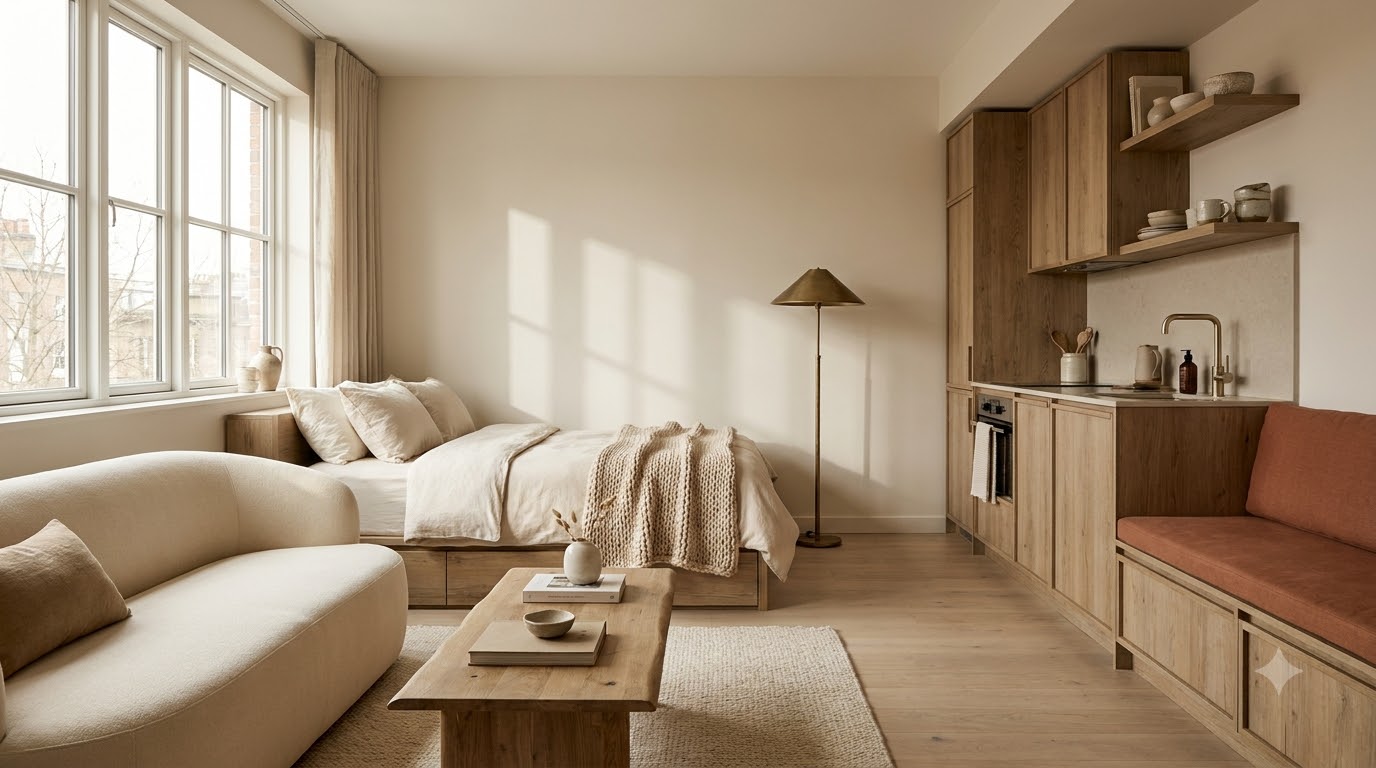
- Lower rent (~22% less than 1BR on average)
- Lower utility bills
- Faster to clean
- Forces you to own less stuff
- Often available in premium locations where 1BRs are unaffordable
- Easier to keep warm in winter
Cons
- No physical separation between sleep and life
- Hard to host overnight guests
- Cooking smells permeate the whole space (including your bed)
- Limited furniture flexibility
- Resale value of studio-scaled furniture is poor if you upgrade later
- Working from home is mentally exhausting without a door to close
One Bedroom Apartment
Pros
- Real privacy and a closing door
- Two rooms to decorate distinctly
- Works for couples without compromise
- Guests fit comfortably
- WFH-friendly
- Cooking smells stay in the kitchen
- Furniture transitions to future homes
Cons
- 20-45% higher rent
- Higher utilities
- More to furnish (and to clean)
- Less likely to be in premium walkable zones at the same price point
- More tempting to over-collect stuff
How to Test-Drive Each Layout Before You Sign
Renters routinely sign 12-month leases after a 15-minute walk-through. Don’t.
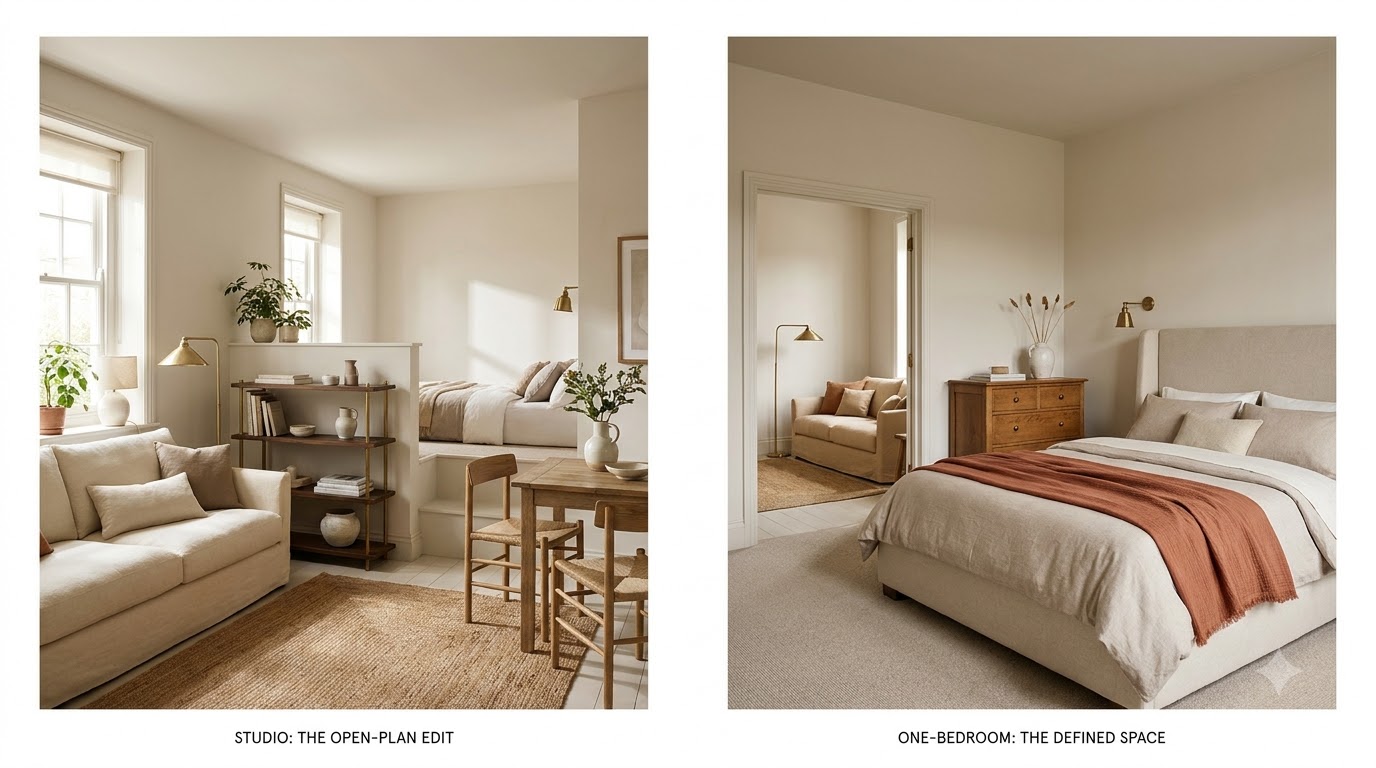
The 30-minute studio test:
-
Stand by the front door. Can you see the entire apartment from here? If yes, that’s both the appeal and the limit.
-
Walk from the bed location to the kitchen sink. Count steps. Under 8 steps = real studio life.
-
Open every window. Listen for street noise and smell for kitchen exhaust patterns.
-
Sit on the floor where the sofa would go. Look at the bed location. Can you mentally separate the two? If not, this floor plan will frustrate you.
The 30-minute one bedroom test:
-
Close the bedroom door. Stand in the living room. Is it still bright? Or did closing the door darken the living space?
-
Lie on the bedroom floor where the bed will go. Is there a window in your sightline? Is the closet on the right wall?
-
Walk from bedroom to bathroom in bare feet. Count steps. Under 6 = great. Over 10 = annoying at 3am.
-
Open the bedroom window AND the living room window. Cross-ventilation? Critical in summer.
Decor Mistakes That Make Each Layout Worse
Top 5 Studio Decor Mistakes
-
Buying a sectional sofa. It eats 30% of the room. Get a loveseat or a small 3-seater instead.
-
Putting the bed in the middle of the room. Always against a wall. Floating beds need 600+ sq ft.
-
Using more than 3 colors. Visual chaos in tight spaces.
-
Hanging art at “standard” height. In a studio, hang art slightly higher to lift the ceiling perception.
-
Skipping a rug. A single 8×10 rug under the living zone defines the room better than any divider.
Top 5 One Bedroom Decor Mistakes
-
Treating the bedroom as storage. It becomes a closet with a bed in it. Keep it minimal.
-
Matching everything across rooms. You have two rooms now — let them breathe.
-
A coffee table that’s too small. Now that you have room, get one that’s at least two-thirds the sofa length.
-
Ignoring the entry zone. Most 1BRs have a small foyer area; a console + hook + mirror transforms first impressions.
-
Overlooking the bedroom door swing. A door that swings inward and hits the bed makes the room feel half its size.
Frequently Asked Questions
Is a studio cheaper to furnish than a one bedroom?
Yes, significantly. A studio can be fully furnished for $1,700-$3,100, while a comparable mid-range one bedroom runs $3,400-$5,800. The studio also needs fewer pieces (one bed, one sofa, one small table) versus a one bedroom’s two-room setup with dedicated bedroom and living furniture.
How small is too small for a one bedroom?
Below 550 square feet, a “one bedroom” is essentially a studio with a wall — you’ll struggle to fit a real bedroom set plus a sofa, dining surface, and storage. A functional one bedroom starts at 600 sq ft, with 700-800 sq ft being the sweet spot for most solo renters and couples.
Can two people live comfortably in a studio?
Comfortably is a stretch. Two people can survive in a studio if the unit is at least 550 sq ft, the layout is alcove-style, and the couple has compatible schedules. Two work-from-home professionals in a studio is almost always a mistake — one of you will be in the bathroom on Zoom calls by month two.
Is a one bedroom worth the extra rent?
For roughly $6,000-$7,500 more per year, a one bedroom gives you a closing bedroom door, dedicated living space, and decor flexibility. If you work from home, host regularly, or live with a partner, the math works. If you’re rarely home and live alone, the studio savings can fund travel, savings, or a better location.
Do studios appreciate as decor projects?
Studios offer dramatic before-and-after transformations because every decor choice is visible in a single frame. They’re excellent first decor projects for renters learning their style. The downside: studio-scaled furniture (loveseats, twin beds, narrow desks) often doesn’t transfer to a future larger home.
Which layout has better resale value for landlords?
One bedrooms hold and grow value better in nearly every US market. Studios depreciate faster in rent growth during market downturns because the renter pool is narrower (only solo renters in their 20s and early 30s). One bedrooms appeal to couples, downsizers, and remote workers — a wider demand base.
What’s the best layout for a remote worker?
A true one bedroom, full stop. The closing bedroom door doubles as a workday boundary: bedroom = work-free zone, living room = work zone (or vice versa). Studios force WFH into your sleep space, which research consistently links to worse sleep and higher burnout.
The 2026 Bottom Line
The studio vs one bedroom apartment decision isn’t really about square footage — it’s about which trade-offs match your life right now.
Choose a studio if your priorities are: location, savings, simplicity, and lower commitment. Decorate it with restraint, one color story, and vertical thinking.
Choose a one bedroom if your priorities are: privacy, WFH productivity, partner cohabitation, or future-proofing your furniture investments. Decorate it with two distinct moods tied by one anchor element.
Both layouts can become great homes. The mistake is choosing the larger space because you think you “should,” or the smaller space purely on price without considering how you actually live. The right answer is the one that matches your schedule, your work, your relationships, and your decor ambitions — in that order.
Whichever you pick, your first decor decision is the most important: one cohesive palette, one statement piece, and one piece of furniture you genuinely love. The rest builds from there.
For more inspiration, see our complete hub guide. For more inspiration, see our complete hub guide. For more inspiration, see our complete hub guide.
Related reading