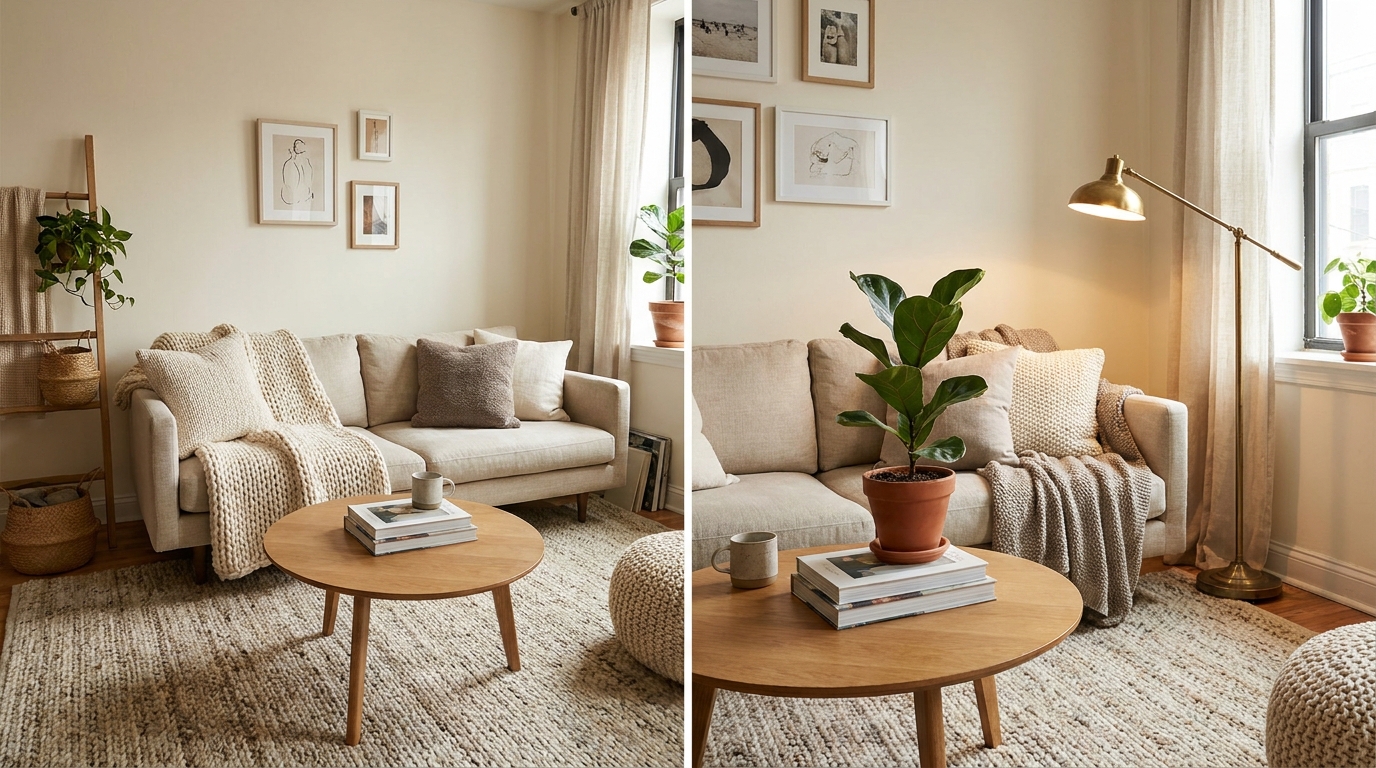
The fastest way to make a small apartment kitchen feel bigger is to pick the right layout for your footprint, then build storage up instead of out. Whether you have a single-wall galley in a Brooklyn walk-up or an awkward L-shape in a Toronto condo, the 18 ideas below work in rentals (no drilling required for most) and stack with each other.
Key Takeaways
- One-wall layouts suit kitchens under 70 sq ft; galley layouts maximize 70–100 sq ft footprints.
- Vertical storage (rails, pegboards, over-fridge bins) can add 30–40% more usable space without a renovation.
- Rolling carts and drop-leaf tables replace bulky islands in apartments under 600 sq ft.
- Light, reflective surfaces (white, glass, mirror backsplashes) visually expand kitchens by up to 20%.
- Most renter-friendly upgrades on this list cost under $75 and require zero permanent modification.
Small kitchens are the norm now, not the exception. The average new U.S. apartment built in 2024 measured 908 square feet — the smallest since RentCafe began tracking in 2014 — and kitchens shrank along with it. Below, we break down the six layout templates, then 12 idea categories that work with any of them.
The 6 Best Layouts for a Small Apartment Kitchen
Before you buy a single organizer, identify which layout you actually have. The wrong layout strategy is why most “small kitchen hacks” feel cluttered three weeks in.
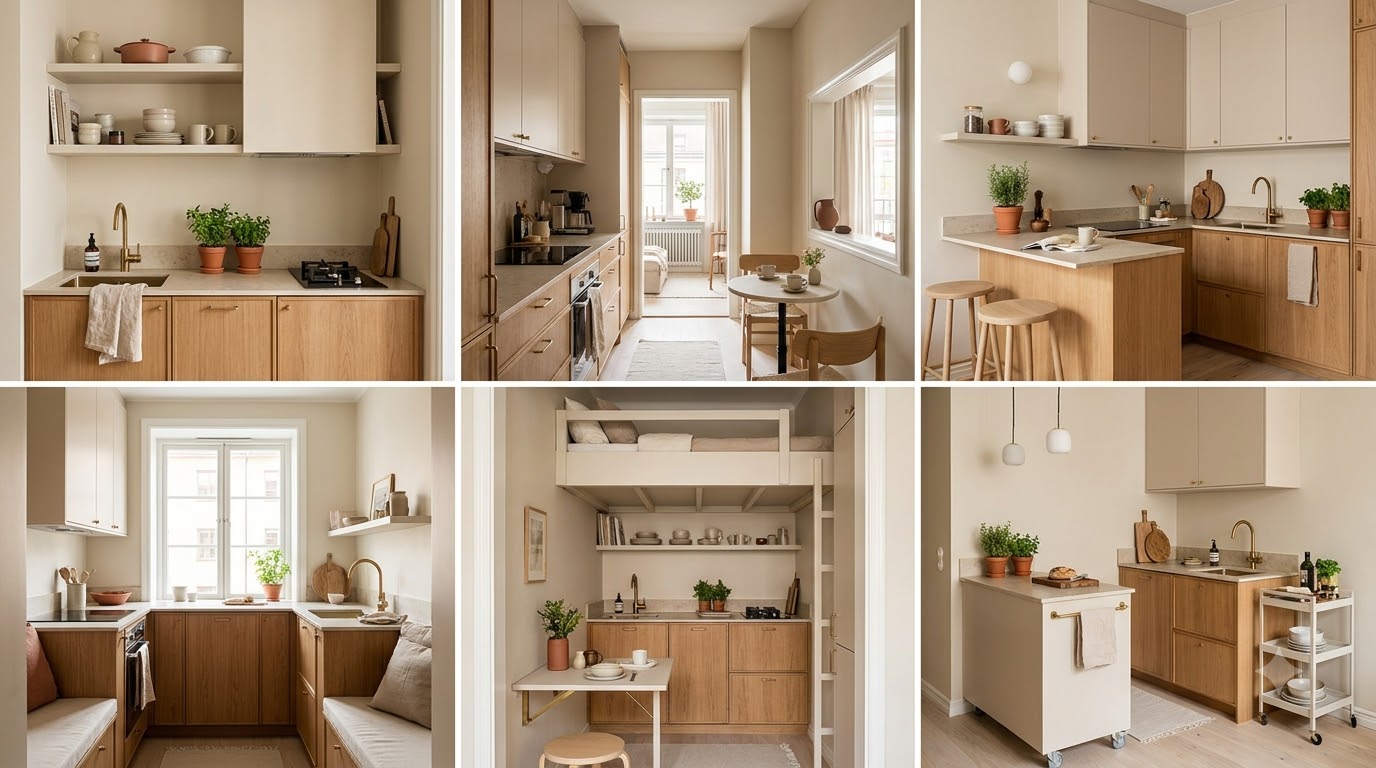
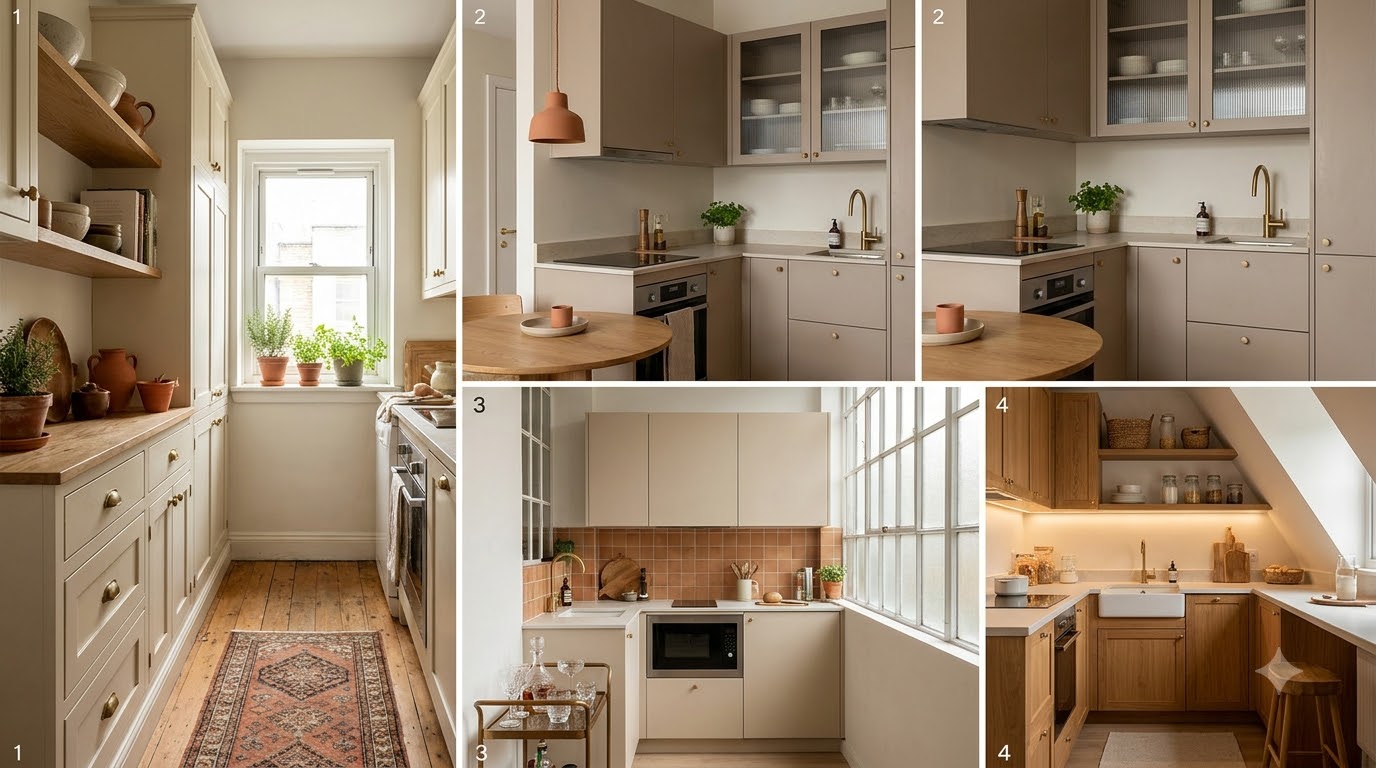
1. One-Wall (Single-Wall) Layout
All appliances and cabinets line up on a single wall. This is the default in studios, micro-apartments, and converted lofts.
Best for: Kitchens under 70 sq ft with limited floor depth.
The trick: Hang a floating shelf or pegboard above the standard upper cabinets to capture the dead 18 inches of wall most renters ignore.
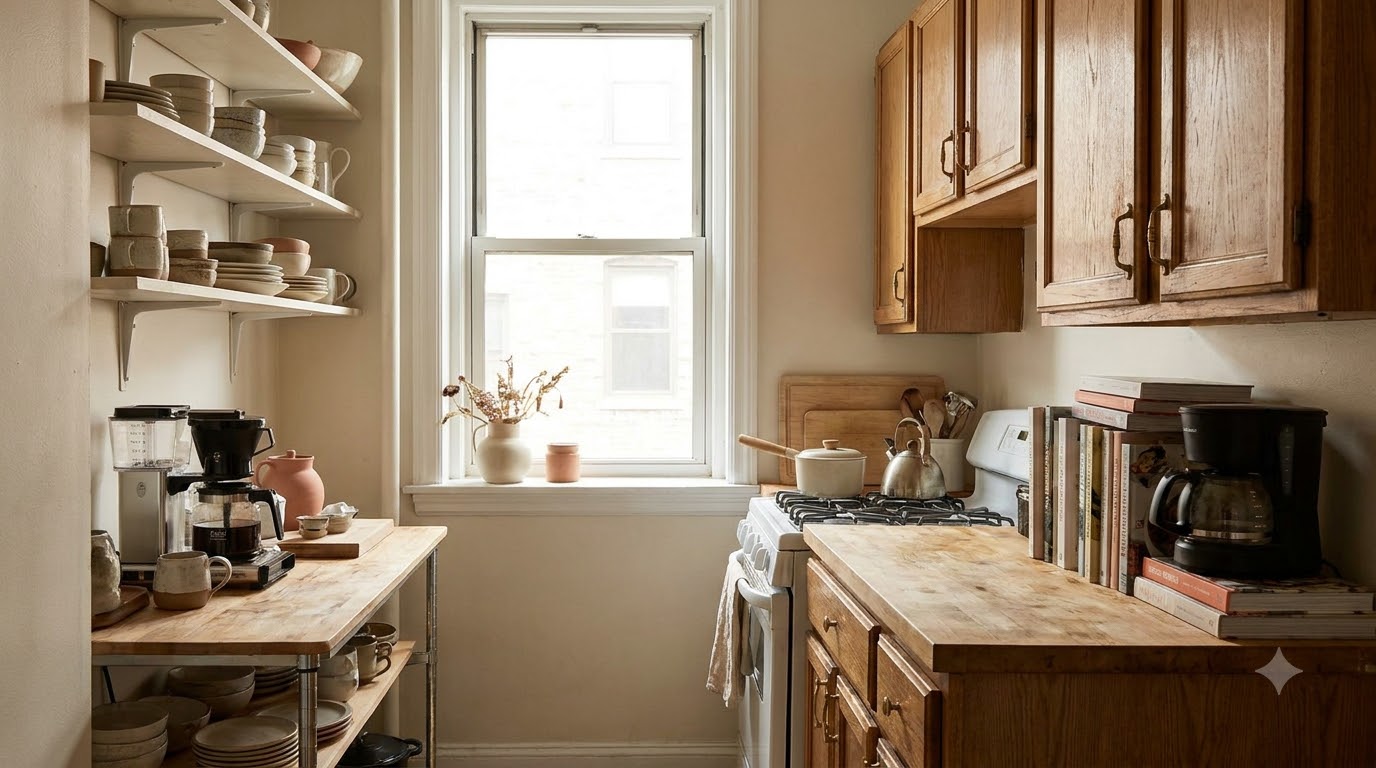
2. Galley (Corridor) Layout
Two parallel walls with a walkway between. Common in pre-war NYC and London apartments.
Best for: Long, narrow footprints with 3.5–5 ft of walkway clearance.
The trick: Reserve one wall for “wet” tasks (sink, dishwasher, prep) and the other for “dry” tasks (stove, pantry, coffee bar). This eliminates the constant turning that makes galleys feel cramped.
3. L-Shape Corner Layout
Two perpendicular walls form an L. The most common layout in 1-bedroom apartments built between 2010 and 2025.
Best for: 70–110 sq ft kitchens that open to a living area.
The trick: A lazy Susan or pull-out corner shelf reclaims the dead corner where two cabinet runs meet — typically 6–9 cubic feet of lost storage.
4. U-Shape Pocket Layout
Three walls of cabinets, often tucked into an alcove. Rare but excellent when you find it.
Best for: Closed-off kitchens with a single entry point.
The trick: Use the wall opposite the entry as a tall pantry zone — full-height cabinets here don’t block sightlines from any other room.
5. Peninsula Layout
An L-shape extended with a counter that juts into the living area, replacing a true island.
Best for: Open-plan studios where a freestanding island won’t fit.
The trick: Mount a 12-inch deep counter extension as a breakfast bar. It doubles as prep space without adding floor footprint.
6. Floating Cart Layout
Not a permanent layout, but a renter’s hack: a rolling kitchen cart becomes your island, prep zone, and storage tower.
Best for: Any rental where you can’t modify the existing layout.
The trick: Buy a cart with a butcher-block top and locking wheels — it rolls out for prep, then tucks against the wall when you’re not cooking.
12 Compact Kitchen Ideas That Work in Any Layout
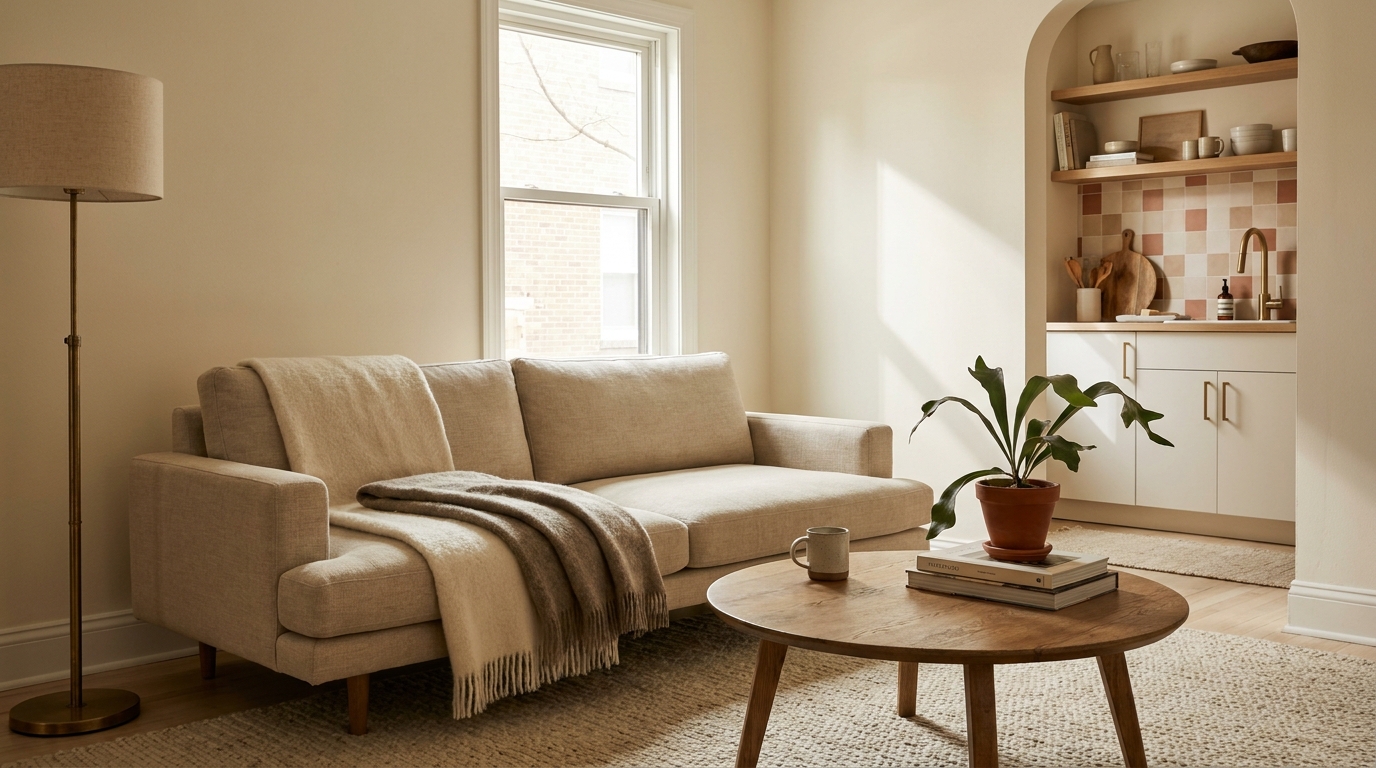
7. Use a Rolling Cart Instead of an Island
A 30-inch rolling cart (around $80–$150 at IKEA, Wayfair, or Target) gives you 3+ cubic feet of storage, a prep surface, and built-in towel bars. Choose one with a butcher-block top for actual cutting and a lower shelf wide enough for a stand mixer or small appliance.
8. Install a Drop-Leaf Wall Table
For kitchens under 80 sq ft, a wall-mounted drop-leaf table folds down to 4 inches deep when not in use. Some renter-safe versions install with adhesive mounting strips rated for 30+ pounds. Folded up, it’s a shelf; folded down, it seats two for dinner.
9. Add an Over-the-Sink Cutting Board
A solid bamboo or silicone board that spans your sink instantly adds 200+ square inches of prep space. Look for ones with built-in colander insets — you can rinse and chop in the same square foot.
10. Build a Vertical Wall Rail System
A 24-inch stainless rail with S-hooks (IKEA’s KUNGSFORS, Hubsch’s brass version, or generic Amazon equivalents) holds utensils, measuring cups, mugs, and small pots. This single hack frees up roughly one full drawer.
11. Use a Magnetic Knife Strip
Wall-mounted magnetic strips replace a 12-inch knife block — that’s a square foot of counter you get back. Most peel-and-stick versions hold up to 8 knives plus a few metal spice tins.
12. Add Tension Rods Under Cabinets
A $4 tension rod mounted under an upper cabinet creates a hanging rod for dish towels, cleaning sprays (sprayed bottles hang by the trigger), or even a roll of paper towels. No drilling.
13. Use Stackable Shelf Risers Inside Cabinets
Cabinets typically waste 40–50% of their vertical space because plates and bowls don’t fill the gap. Wire or bamboo risers double your stacking capacity per shelf. Buy them by the pack of four.
14. Open Shelving Above the Counter
Two floating shelves between your upper cabinets and ceiling (or above a single-wall layout) display everyday glasses and mugs while keeping them within reach. Use removable adhesive brackets if you’re renting.
15. Add a Toe-Kick Drawer
If you own (or have a flexible landlord), the 4-inch gap below base cabinets fits ultra-shallow drawers — perfect for baking sheets, cooling racks, and platters that nothing else stores well. Pre-built kits run $40–$80 per drawer.
16. Mount Cabinet Door Organizers
The inside of every cabinet door is wasted real estate. Over-the-door wire baskets hold foil rolls, plastic wrap, sponges, or spice jars. A medicine-cabinet style fits inside lower cabinets for cleaning supplies.
17. Install a Pull-Out Pantry
If you have a 6–9 inch gap between your fridge and a wall, a rolling pantry tower fits there and holds 20+ cans, oils, and dry goods. Even narrow studio kitchens usually have one of these slots.
18. Use a Mirror or Glass Backsplash
A mirrored or high-gloss backsplash visually doubles the depth of a small kitchen. Peel-and-stick mirror tiles (under $40 for a 10-tile pack) achieve this without renovation. Stylist Velinda Hellen, featured on Style by Emily Henderson, uses glazed Zellige tiles for the same light-bouncing effect in rental kitchens.
How Big Should a Small Apartment Kitchen Be?
There’s no official threshold, but designers generally use these brackets:
| Kitchen Size | Square Footage | Best Layout |
|---|---|---|
| Micro | Under 50 sq ft | One-wall + rolling cart |
| Small | 50–80 sq ft | One-wall or galley |
| Compact | 80–110 sq ft | L-shape or galley |
| Standard small | 110–150 sq ft | L-shape with peninsula |
If your kitchen is under 50 sq ft, prioritize removable storage and foldable furniture — you literally cannot afford permanent fixtures that take up floor space.
Color and Light Strategies That Make Small Kitchens Look Bigger
Stick to Light, Reflective Surfaces
White, off-white, soft sage, and pale blue all reflect light back into the room. According to a 2024 Houzz Kitchen Trends study, 31% of small-kitchen renovators chose white cabinetry specifically to make the space feel larger — the single most-cited reason for that color choice.
Add Under-Cabinet Lighting
A $25 set of battery-powered or USB-rechargeable LED strips eliminates the dark counter shadow that makes small kitchens feel like caves. Stick-on versions take 90 seconds to install and lift with a clean hand when you move out.
Choose One Statement Color, Not Three
In small kitchens, more than one accent color creates visual chaos that reads as clutter. Pick a single accent — terracotta, brass, deep green, or matte black — and repeat it three times (a kettle, a cutting board, and a set of dish towels, for example).
Use Glass-Front Cabinets or Open Shelving
Solid upper cabinets make ceilings feel lower. Replace one or two cabinet doors with glass inserts (or remove them entirely for open shelving). Even one glass section breaks up a wall of cabinetry and adds visual depth.
Renter-Friendly Upgrades That Won’t Cost Your Deposit
Every idea in this section installs without drilling, screws, or permanent adhesive.
Peel-and-Stick Backsplash
Modern peel-and-stick tiles (subway, herringbone, terrazzo) cost $5–$15 per square foot and remove cleanly with a hair dryer. They cover ugly landlord-special backsplashes in 30 minutes.
Contact Paper Countertops
For tile or laminate counters you can’t replace, marble-look contact paper (about $20 for a 6 ft roll) buys you 1–2 years of a cleaner look. Replace it before you move out.
Removable Cabinet Hardware
Sliding a new knob or pull onto an existing cabinet screw takes 30 seconds and visually upgrades the whole room. Save the original hardware in a labeled bag.
Over-the-Door Hooks
Behind every door — pantry, closet, even the bathroom — is wasted hook space. Over-door hook racks hold aprons, oven mitts, brooms, and reusable bags.
Adhesive Mounting Strips
3M Command and similar brands now sell strips rated to 20+ pounds. They handle floating shelves, hooks, and even small pegboards in a rental.
Common Mistakes That Make Small Kitchens Feel Smaller
Mistake 1: Too many small appliances on the counter. If you use it less than three times a week, store it. A blender, toaster, and coffee maker on display in a 60 sq ft kitchen reads as clutter even when it’s organized.
Mistake 2: Heavy dark cabinets up high. Dark uppers visually lower the ceiling. If you can’t paint them (renters: you usually can’t), at least swap out solid doors for glass-front inserts or open the top one.
Mistake 3: Rugs that are too small. A 2×3 ft kitchen rug in front of the sink shrinks the floor visually. Either go without a rug or use a long runner that spans the full walkway.
Mistake 4: Forgetting the ceiling. Painting the ceiling white (or even a half-shade lighter than the walls) adds perceived height. Some designers in tiny European apartments paint the ceiling glossy white to bounce light.
Mistake 5: Buying organizers before measuring. Roughly half of all kitchen organizers returned to retailers come back because they didn’t fit. Measure cabinet interiors — including the depth — before clicking buy.
Real Small Kitchens: What Works in Different Apartment Types
Studio (Under 400 sq ft)
Prioritize a one-wall layout with a rolling cart, magnetic knife strip, and drop-leaf table. Skip the dish rack — use a roll-up over-sink drying mat that stores in a drawer.
Pre-War 1-Bedroom (Galley Kitchen)
Galley kitchens often have great vertical space wasted above the cabinets. Add a second tier of storage — baskets or boxes — for items you use less than monthly.
Modern 1-Bedroom (L-Shape)
The L-shape’s biggest sin is the dead corner. A lazy Susan or pull-out corner unit reclaims 6–9 cubic feet of storage you’re currently writing off.
Co-living / Micro-Apartment
Everything must be modular. Use a rolling cart that doubles as a bar cart in the living room when you’re not cooking. Folding bistro tables stash behind the fridge.
FAQ: Small Apartment Kitchen Ideas
What’s the best layout for a tiny apartment kitchen?
A one-wall layout paired with a rolling cart is the most versatile for kitchens under 70 sq ft. It keeps the floor clear, allows multiple cooks, and works with any apartment shape.
How do I add storage to a small kitchen without drilling?
Use tension rods inside and under cabinets, adhesive mounting strips for shelves and pegboards, over-the-door wire racks, and stackable shelf risers inside existing cabinets. None require permanent installation.
What color makes a small kitchen look bigger?
White, off-white, soft sage, and pale blue all reflect the most light. White cabinetry is the single most popular choice among small-kitchen renovators because it visually expands the room.
Is open shelving practical in a small kitchen?
Yes, but limit it to everyday items (mugs, glasses, plates you use daily). Decorative-only open shelves collect grease and dust in small kitchens where steam has nowhere to escape.
How much should I spend on small kitchen upgrades?
You can dramatically improve a rental kitchen for under $200: a rolling cart ($80), magnetic knife strip ($15), wall rail with hooks ($30), peel-and-stick backsplash ($40), and under-cabinet LEDs ($25). Skip anything you can’t take to your next apartment.
Do small kitchens need an island?
No. In any kitchen under 150 sq ft, a rolling cart or peninsula counter extension serves the same purpose without permanently consuming floor space.
Next read: If you’re working on the whole apartment, see our Small Apartment Living Room Ideas and Studio Apartment Storage Hacks guides — both cluster with this article under the Small Apartment hub.
For more inspiration, see our complete hub guide.