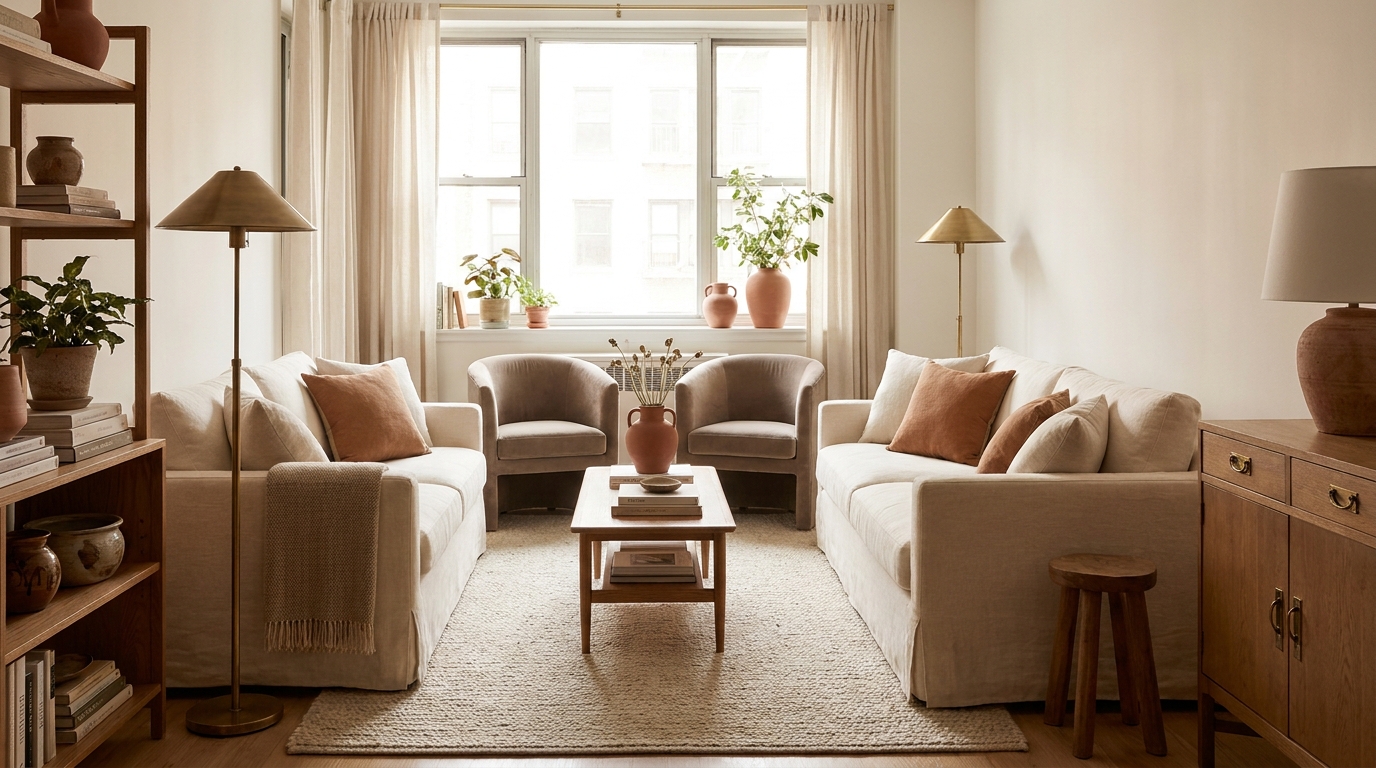
The fastest way to make a small apartment feel bigger is to lift the eye line: hang curtains 6-12 inches above the window frame, use a single light wall color, and choose furniture with visible legs. These three moves alone can make a 500-square-foot studio feel closer to 700. Everything else — storage, layout, lighting, color — builds on that foundation.
This guide pulls together every small-space decorating rule that actually works in real rentals, organized by the order you should tackle them. Whether you’ve just signed a lease on a 380-square-foot studio in Brooklyn or a 600-square-foot one-bed in Manchester, the framework is the same.
Key Takeaways
- Vertical space wins. Going up — with curtains, shelves, and tall lamps — reads as bigger than spreading out.
- Lighter palettes feel larger, but a single dark accent wall can actually deepen perceived space when used correctly.
- Multi-functional furniture pays for itself in apartments under 700 sq ft. Storage ottomans, lift-top coffee tables, and folding desks recover 15-20% of floor area.
- Three light sources per room (ambient + task + accent) replaces the overhead-only setup that flattens small rooms.
- Renter-friendly upgrades like peel-and-stick wallpaper, tension rods, and Command hooks can transform a space without losing your deposit.
- Room-by-room priorities differ. Studios need zoning. One-beds need flow. Galley kitchens need wall storage.
Why Small Apartments Need Their Own Decorating Rulebook
Decorating advice written for 1,800-square-foot suburban homes does not scale down. In a small apartment, every square foot performs at least two jobs, every visual decision is amplified, and almost every renter is working around someone else’s beige walls, builder-grade fixtures, and a security deposit they want back.
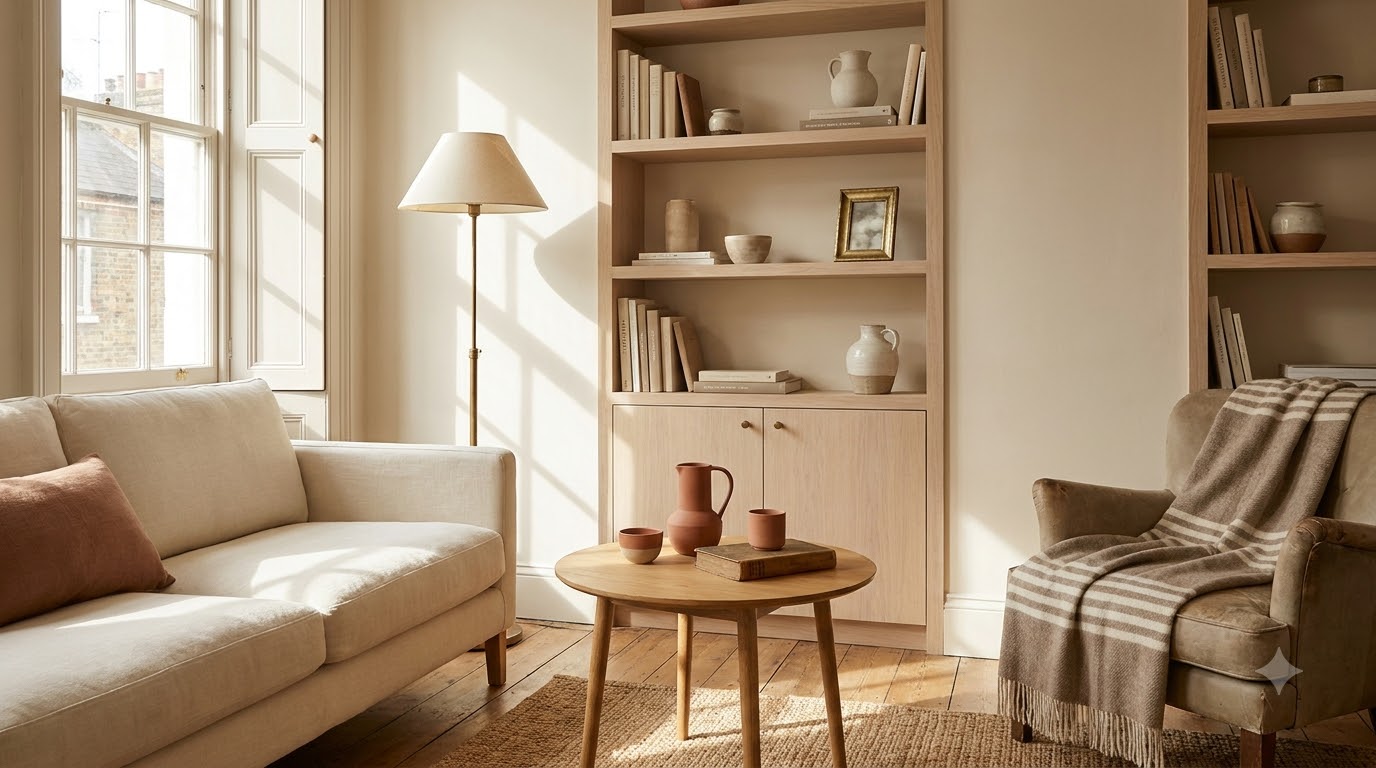
The average new apartment in the US measured roughly 887 square feet in 2024, with urban studios frequently sitting between 350 and 500 square feet. UK and Canadian rentals trend even smaller in city centers. In London, the average rented one-bed flat is about 484 square feet; in Toronto, downtown studios commonly hover near 400. Inside those constraints, the wrong sofa can swallow half a living room and the wrong rug can shrink it.
Small-space decorating is, more than anything, an editing discipline. You’re not adding — you’re choosing what earns its footprint.
Step 1: Plan Before You Buy Anything
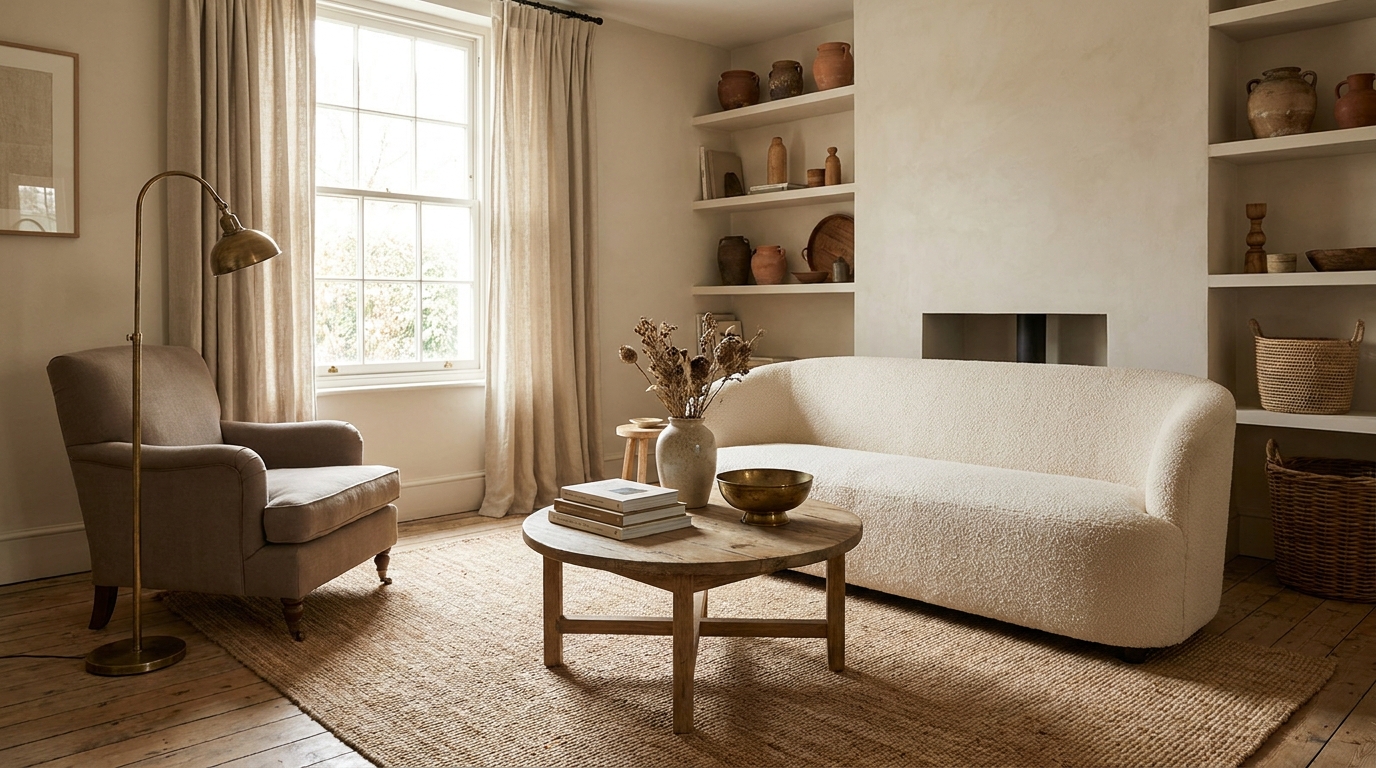
The single most expensive mistake renters make is buying furniture before measuring. Returns on bulky items often cost $80-$150 in restocking and freight, and that’s assuming the retailer accepts the return at all.
Measure twice, sketch once
Before any purchase, you need three numbers for every room:
- Wall length (each wall, in inches)
- Ceiling height
- Doorway and stairwell clearance for delivery
Sketch the floor plan on graph paper or use a free app like Magicplan or RoomSketcher. Mark windows, radiators, outlets, switches, and any built-in features. Then cut paper rectangles to scale for each piece of furniture you’re considering and slide them around.
This sounds tedious. It is. It also prevents the most expensive errors.
Identify your traffic paths
Walk through the apartment and note how you move. Front door to kitchen. Bedroom to bathroom. Couch to fridge. These paths need at least 24-30 inches of clearance to feel natural. Furniture that blocks a path — even slightly — will quietly drive you insane within a month.
Set a “one job per piece” minimum
In a small apartment, every piece of furniture should pull at least one weight. Coffee tables that don’t store, ottomans that don’t open, and side tables that don’t function as a nightstand are taking up space they haven’t earned.
Step 2: Choose a Color Palette That Expands the Room
Color is the cheapest tool you have. A gallon of paint runs $35-$60. Peel-and-stick wallpaper covers an accent wall for under $80. The visual return on either dwarfs almost anything else you can buy.
The light-with-one-anchor rule
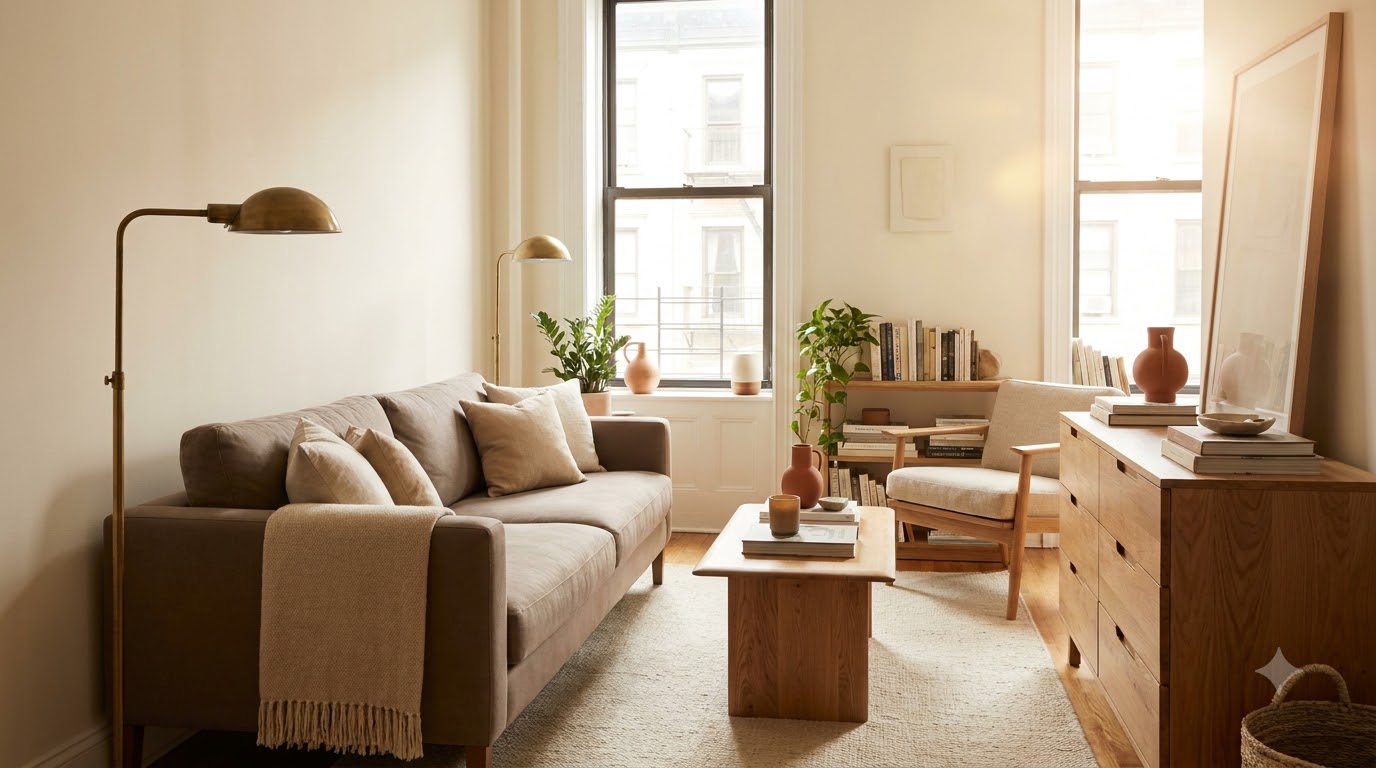
The most reliable small-apartment palette uses one light dominant color across 60-70% of visible surfaces (walls, large furniture, rugs), one mid-tone supporting color across 20-30%, and one deeper accent across the remaining 10%.
Examples that work consistently in rentals:
- Warm neutral base: oat walls, oak furniture, terracotta accents
- Cool neutral base: bone white walls, dove gray sofa, deep navy accents
- Soft modern: warm white walls, natural linen upholstery, sage green accents
Avoid more than three color families in a small apartment. Visual noise reads as clutter, which reads as smaller.
When dark colors actually help
Counterintuitively, a single deep wall — behind the bed or in a dining nook — can make a room feel larger by collapsing the wall’s perceived distance and adding depth. The trick is to use it on the wall furthest from the main light source and keep the surrounding walls light.
Renters can do this temporarily with removable wallpaper or peel-and-stick murals, both widely sold by brands designed around the no-paint rental market.
Step 3: Furniture That Earns Its Footprint
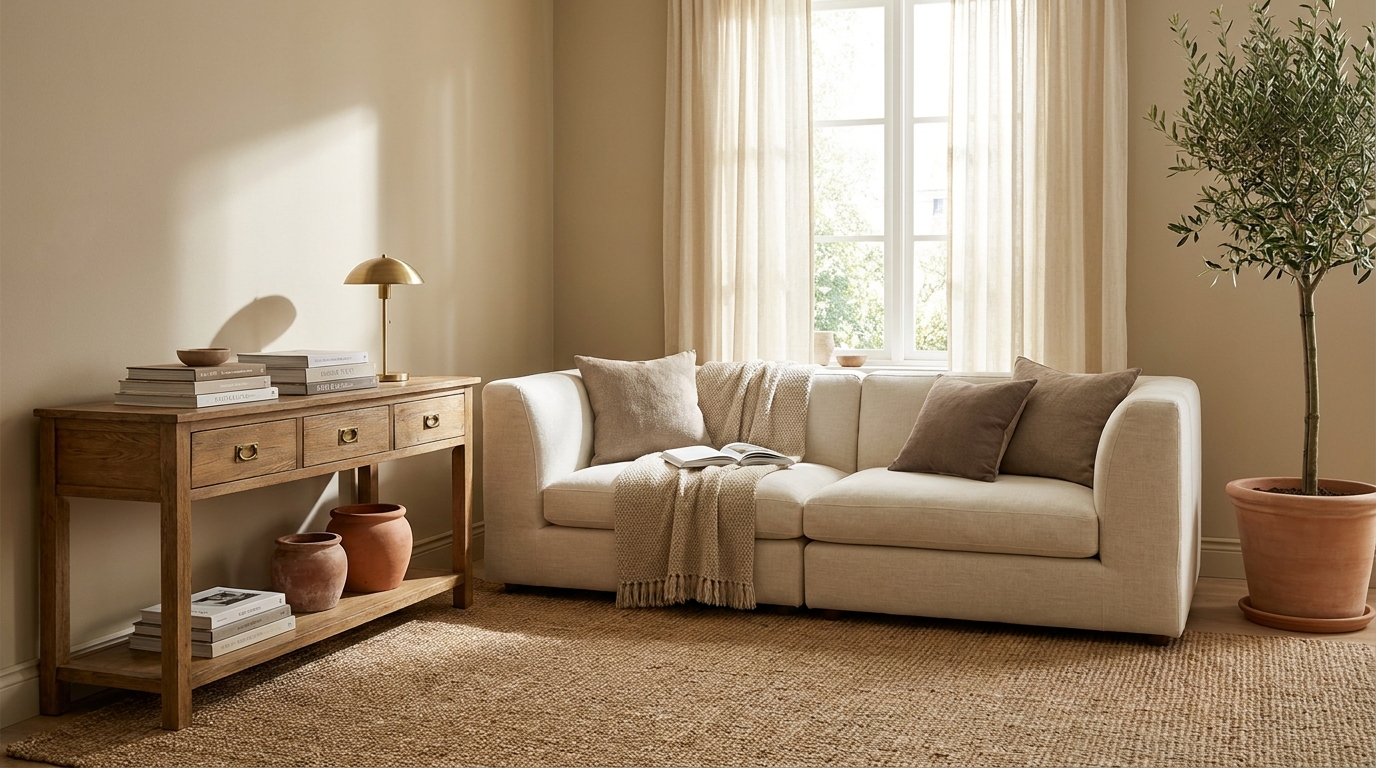
Small-apartment furniture rewards three traits: visible legs, multifunctionality, and right-sized scale.
Look for visible legs
Furniture that sits directly on the floor — skirted sofas, box-bottom dressers, solid bed frames — visually anchors and blocks light. Pieces with exposed legs let the floor read continuously underneath, which the brain interprets as more space.
This is why mid-century modern continues to dominate small-apartment design: the silhouette is built around tapered legs and lifted bases.
Multi-functional pieces worth the spend
Not all “multifunctional” furniture is good. Some of it is genuinely transformative. Some is junk. The reliable winners:
- Storage ottomans (replace a coffee table, hold blankets/throws, double as guest seating)
- Lift-top coffee tables (working surface for laptop dinners and WFH)
- Sleeper sofas with thick mattresses (skip thin pull-outs; they’re unsleepable)
- Murphy beds and wall beds (in studios under 450 sq ft, these recover 30-40 sq ft of daytime floor)
- Nesting side tables (expand for guests, tuck away daily)
- Drop-leaf or extending dining tables (essential if you host occasionally)
- Beds with under-bed storage drawers (replace a dresser in tight bedrooms)
Right-size, don’t miniaturize
A common error: buying apartment-scale furniture so small it looks like dollhouse pieces. The goal isn’t tiny furniture. It’s correctly proportioned furniture.
A good test: your sofa should fill roughly two-thirds of the longest wall, your dining table should leave at least 36 inches behind chairs for pulling out, and your bed should leave at least 18-24 inches of walking space on each side (or one side if pushed against a wall).
Step 4: Storage That Doesn’t Look Like Storage
The defining feature of a small apartment that feels good is hidden storage. Visible bins, exposed wires, and “organization” systems read as clutter no matter how organized they actually are.
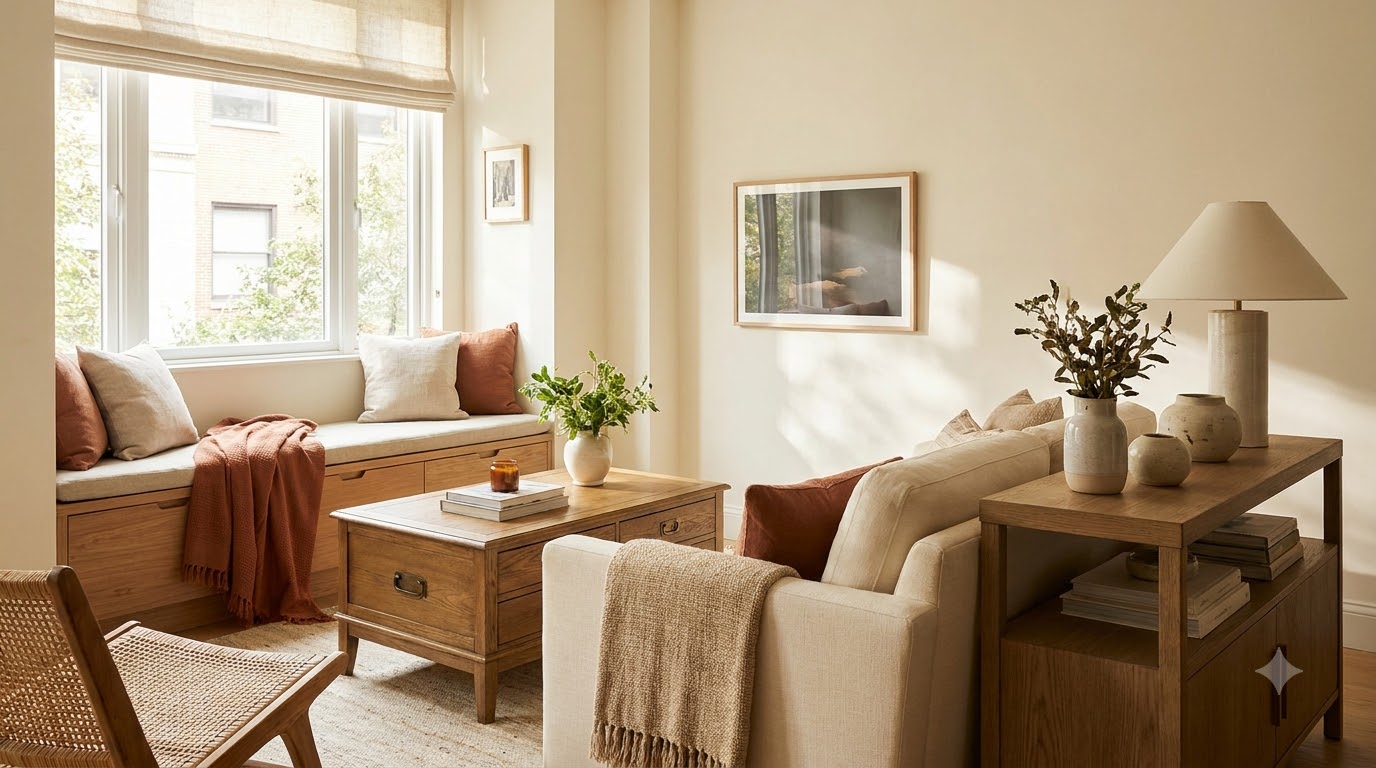
Vertical storage is non-negotiable
You have walls. Use them.
- Floor-to-ceiling bookshelves make rooms feel taller and store roughly 5x what waist-height shelves do
- Tall narrow cabinets (12-16 inches deep) fit in corners and dead spaces
- Wall-mounted shelves above doors add 6-10 linear feet of stash space most renters never use
- Pegboards in kitchens and offices clear counter and desk surfaces
- Over-the-door organizers add hidden storage in closets and bathrooms without drilling
Under-bed storage
A standard queen bed yields 30-35 cubic feet of under-bed space. Most renters waste this entirely. Low-profile rolling bins or zippered fabric containers convert this into seasonal-clothing, shoe, or linen storage without any visual cost.
If your bed sits low to the floor, bed risers add 3-9 inches of clearance and are universally landlord-friendly.
Furniture with built-in storage
Coffee tables with lift tops, beds with drawers, ottomans that open, benches with hinged seats, and console tables with cabinet bases all hide what would otherwise sit on the floor. In an apartment under 600 sq ft, every piece you bring in should be evaluated against an internal-storage version of itself.
Step 5: Light Like a Designer, Not a Landlord
Builder-grade overhead lighting is the enemy of small apartments. A single ceiling light flattens every surface, casts harsh shadows, and reveals dust, scuffs, and rental wear.
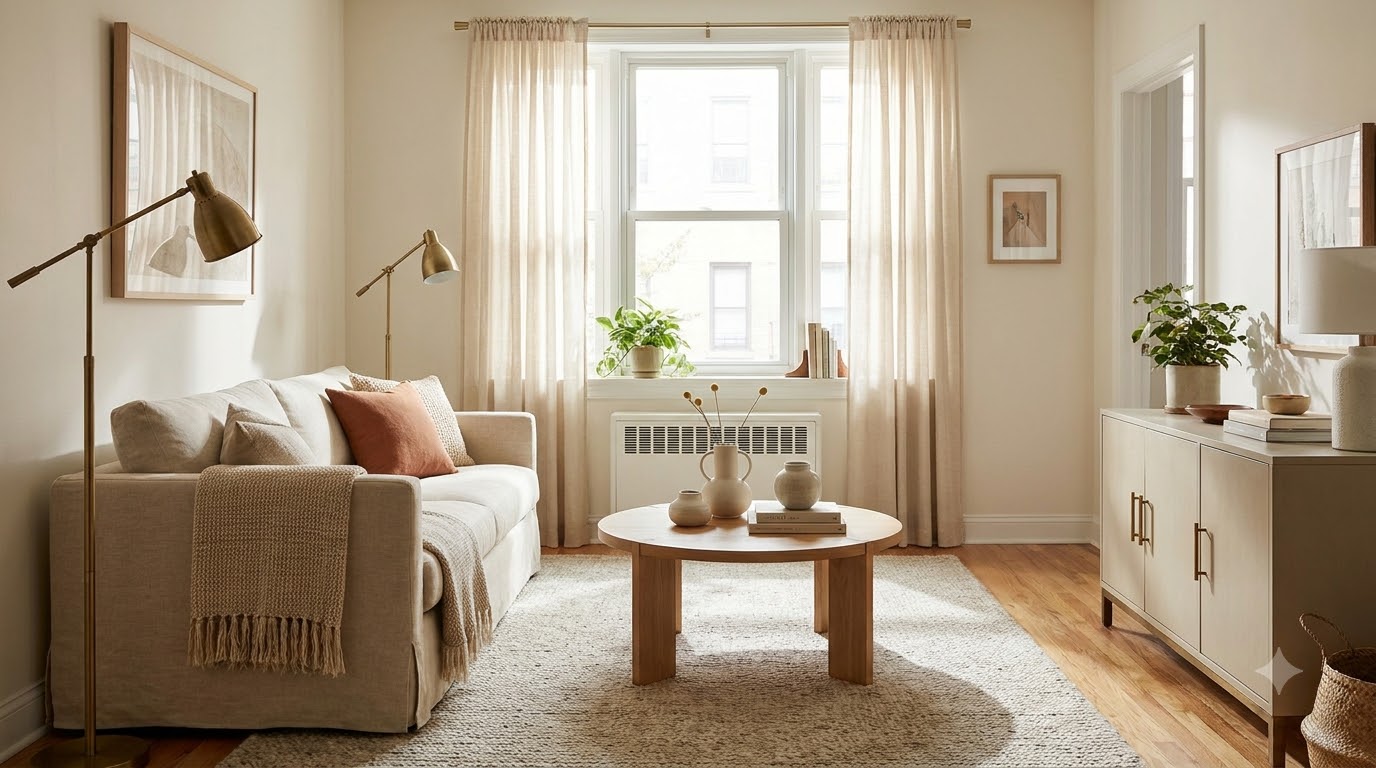
The three-source rule
Every room should have at least three light sources at three different heights:
- Ambient (overall room light — ceiling, large floor lamp)
- Task (focused light for working — desk lamp, reading lamp, under-cabinet)
- Accent (mood and depth — table lamp, sconces, picture lights, string lights)
Layered lighting is the single biggest perceptual difference between a “rental apartment” and a “designed home.” It costs less than $200 to retrofit an entire small apartment with floor and table lamps, and the upgrade is dramatic.
Renter-friendly lighting upgrades
Most renters can’t rewire. They don’t have to.
- Plug-in wall sconces (look hardwired but plug into the nearest outlet)
- Smart bulbs in existing fixtures (adjust color temperature from cool daytime to warm evening)
- Cordless rechargeable lamps (place anywhere — bookshelves, kitchen counters, bedside)
- LED strip lights (hide behind headboards, under cabinets, behind TVs — adds depth for under $30)
- Floor lamps with multiple bulbs (replace a missing ceiling fixture entirely)
Mirrors are lighting
A well-placed mirror opposite or perpendicular to a window roughly doubles the natural light entering a small room. A large leaning mirror (48 inches or taller) is the single highest-impact decor purchase most small-apartment dwellers can make.
Step 6: Walls That Work Harder
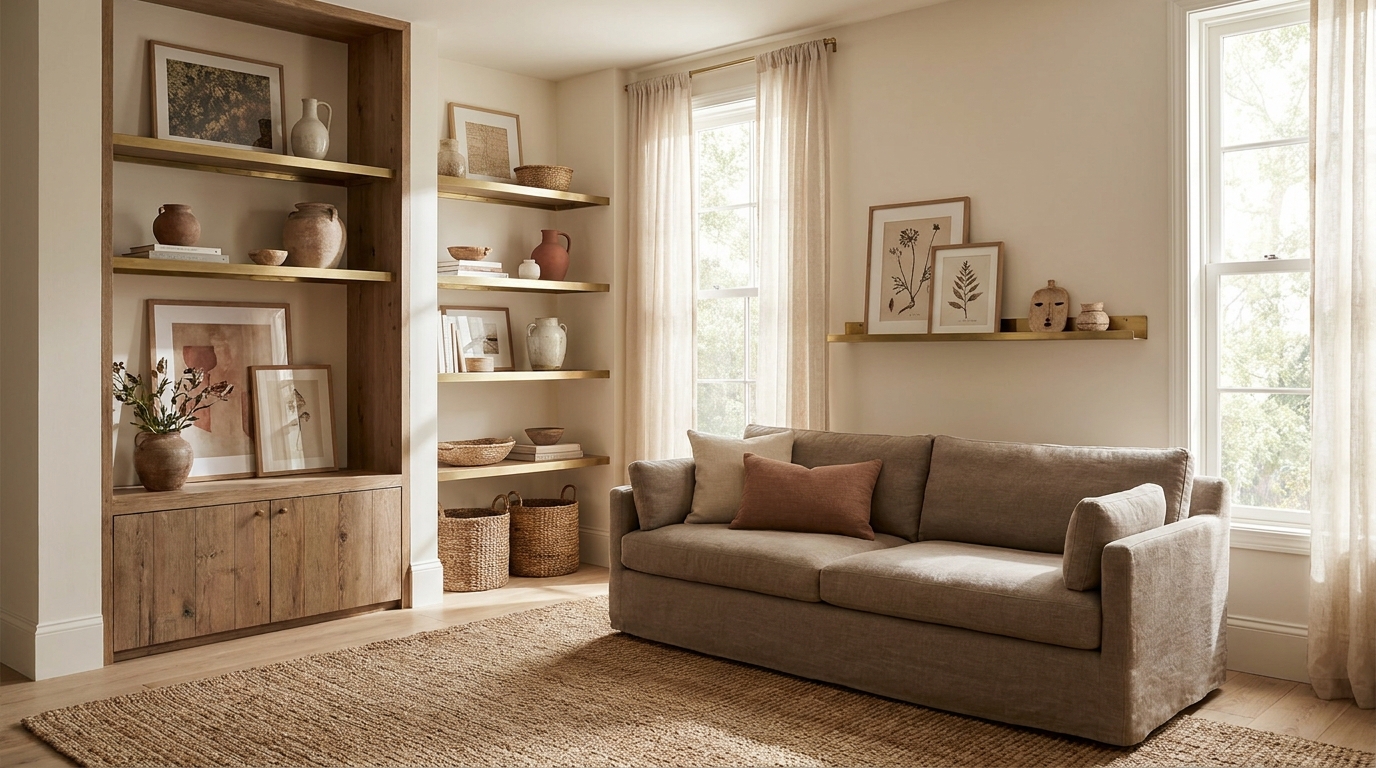
Small apartments lose decorating opportunities to bare walls and cluttered surfaces. The fix: move decor up and onto walls, off counters and floors.
Gallery walls that don’t feel chaotic
The most successful gallery walls follow one of two formulas:
- Grid layout: 4-9 frames of identical size, evenly spaced
- Anchored cluster: one large piece with 3-5 smaller pieces orbiting it
Mix frame finishes sparingly. Mix subjects sparingly. The eye should land on the wall as a single composition, not 12 individual decisions.
Renter-safe hanging
Command Strips rated for the weight class of your frames hold for years and remove cleanly. For heavier mirrors and shelves, use J-hooks or Monkey Hooks rated for drywall — they leave a hole the size of a sewing needle.
If you do nail or screw, fill holes at move-out with toothpaste or spackle and touch up with a sample-sized paint pot matched to the wall color. Most landlords won’t notice.
Removable wallpaper and decals
The peel-and-stick wallpaper category has matured dramatically. Modern options use a removable adhesive that lifts cleanly from rental walls and offers prints comparable to traditional wallpaper. Use it on:
- A single accent wall in the bedroom or dining area
- The back of a bookshelf (instantly elevates a basic Ikea piece)
- Closet interiors (free dopamine every morning)
- Stair risers, kitchen backsplashes, and bathroom walls (in some cases)
Step 7: Rugs, Curtains, and Soft Goods
Textiles are where small apartments either feel like a home or feel like a furnished sublet.
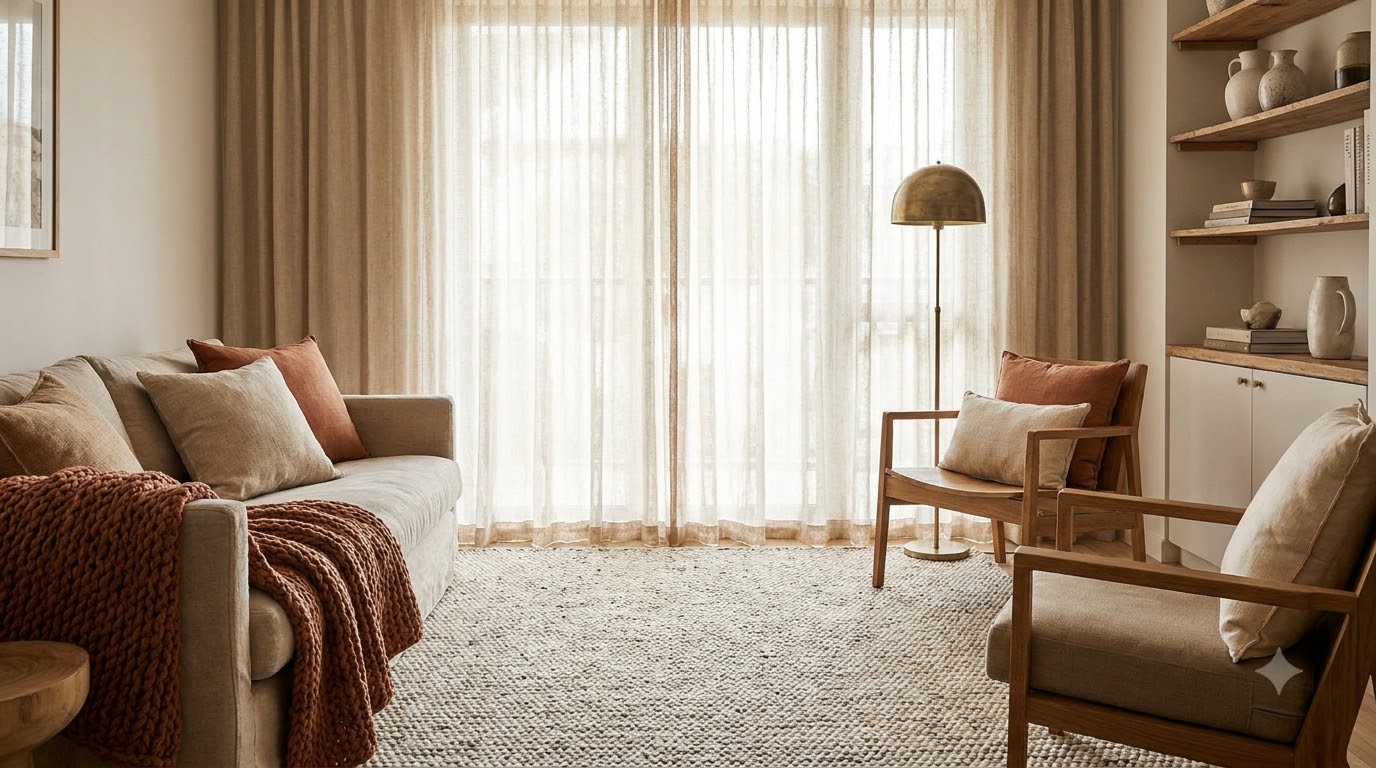
Sizing a rug correctly
The most common small-apartment rug mistake is a rug too small. A 5×7 rug floating in the middle of a living room reads as a postage stamp.
The rule: front legs of all major upholstered pieces should sit on the rug. In a 10×12 living area, that means an 8×10 rug, not a 5×8. In a bedroom, the rug should extend at least 18-24 inches past the sides of the bed.
If a properly sized rug is over budget, layer a smaller patterned rug over a larger inexpensive jute or sisal base. The look is intentional and reads as designed, not budget.
Curtains that lift the ceiling
Hang curtain rods 6-12 inches above the window frame, and extend the rod 4-8 inches beyond each side. Curtains should brush or slightly puddle on the floor. This single move makes ceilings feel 8-12 inches taller and windows feel proportionally larger.
For renters: tension rods inside the window frame work if drilling isn’t allowed, but the outside-mount version with a 3M Command hook adapter looks dramatically better.
Layered textures
Soft goods are how you add warmth without adding clutter. A small apartment with three different throw textures (chunky knit, linen, faux fur) and two pillow textures feels designed. The same apartment with a single smooth cotton sofa and no layering feels unfinished.
Stick to a unified palette and let the textures do the visual work.
Step 8: Plants and Greenery
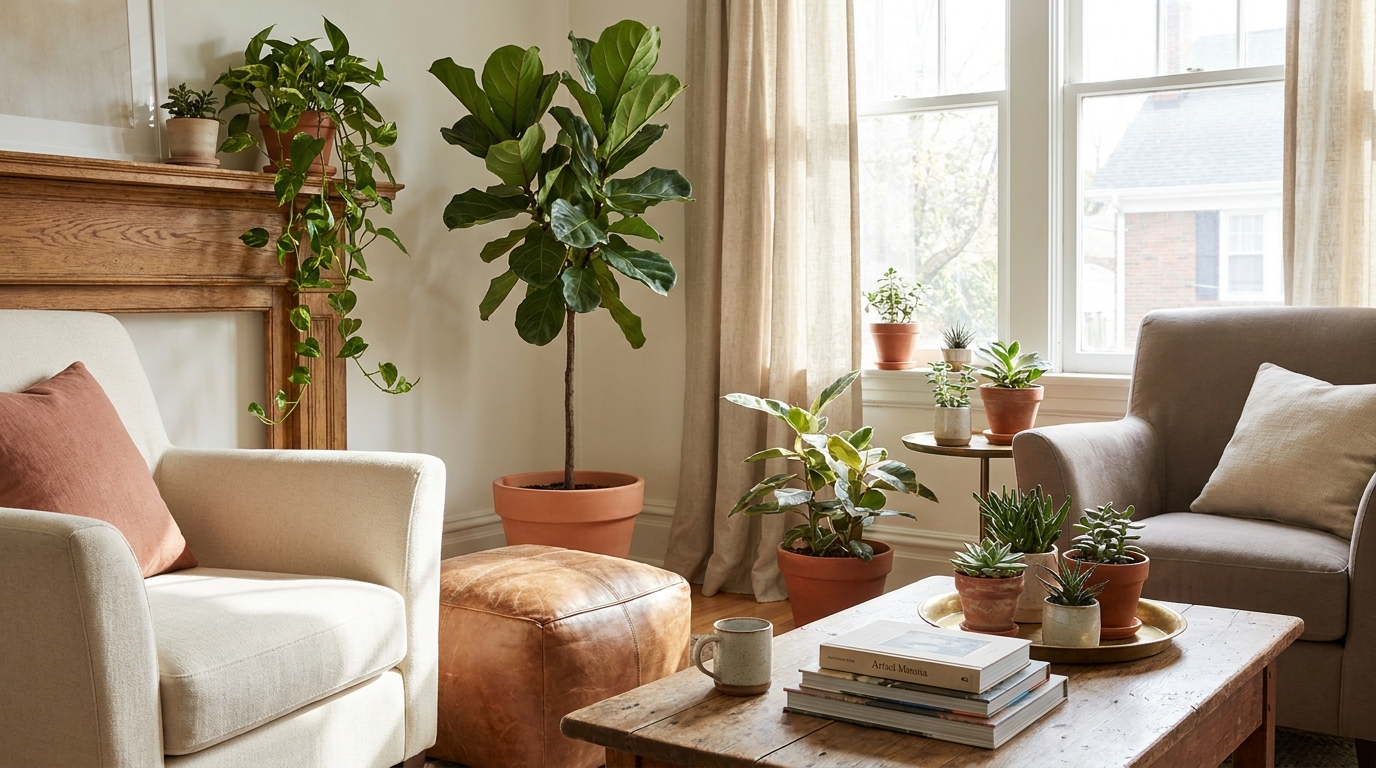
Live plants do something synthetic decor cannot: they soften hard architectural lines, improve air quality, and add the only true “natural” element most rentals have.
Plants that survive renter life
If you travel, work long hours, or have north-facing windows, choose forgiving plants first:
- Snake plant (tolerates almost everything, including neglect)
- Pothos (trails dramatically from shelves and hanging planters)
- ZZ plant (low light, infrequent water)
- Monstera (statement floor plant for medium light)
- Rubber tree (sculptural, structural)
For darker apartments, supplement with realistic faux options. The quality of artificial greenery has improved significantly, and a tasteful mix of real and faux reads as a fully planted home with one-tenth the maintenance.
Use plants to zone and frame
A tall floor plant flanking a sofa visually extends the seating arrangement. A trailing pothos on top of a tall bookshelf softens the corner where the shelf meets the ceiling. A small herb garden on a kitchen windowsill turns dead counter space into something you actually use.
Room-by-Room Strategy
The principles above apply universally. How you weight them changes by room.
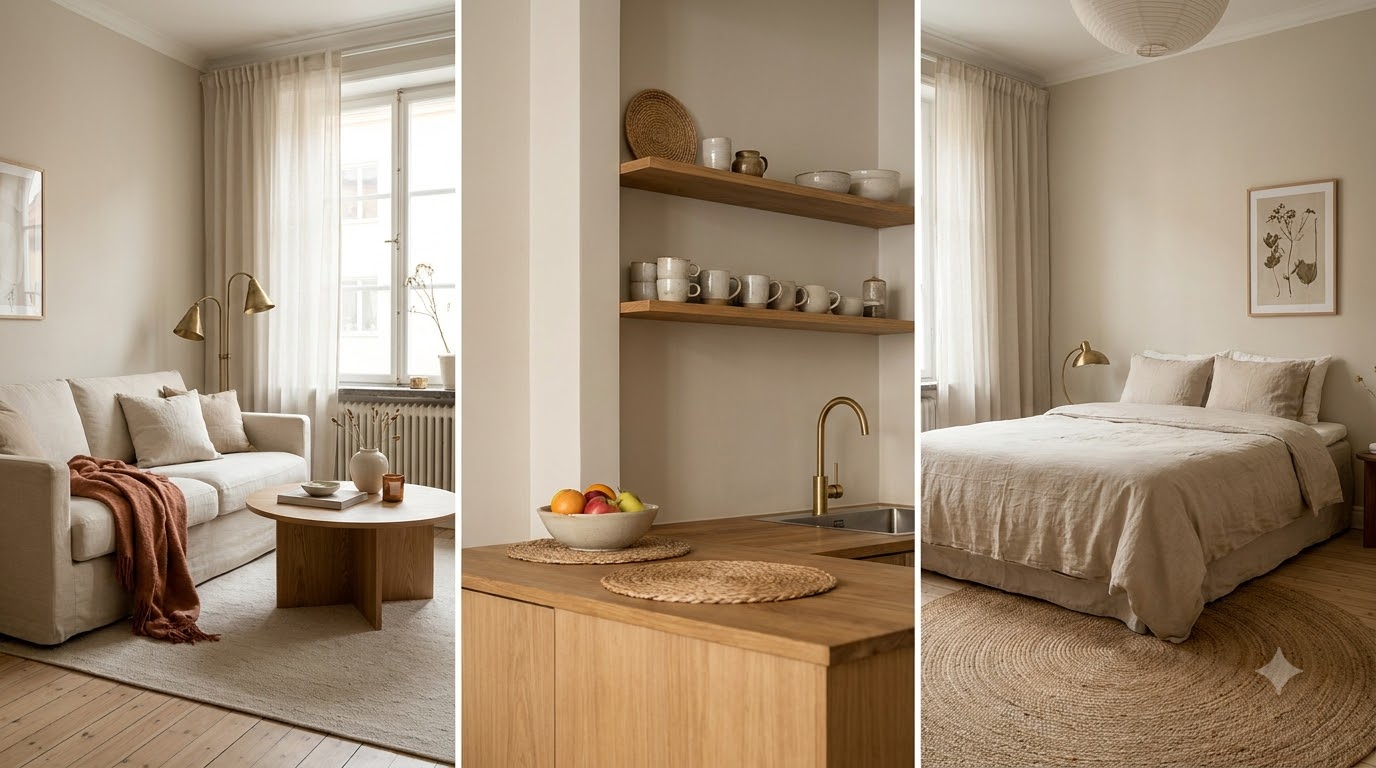
Studio apartments
Zoning is everything. The single biggest perceptual problem in a studio is that the bed, sofa, and dining area all live in one room. Define zones with:
- Rugs (a different rug under the bed and under the sofa creates two rooms)
- Open bookshelves used as room dividers (storage on both sides, light still passes through)
- Curtain rods on the ceiling to create a separable bedroom nook
- Folding screens (renter-friendly, instant zone definition)
In studios under 400 sq ft, a Murphy bed or daybed configuration is often worth the investment.
One-bedroom apartments
Flow is the priority. The living room, kitchen, and bedroom usually connect through narrow doorways or hallways. Keep furniture proportional, traffic paths clear, and visual sight lines consistent.
The bedroom door should not open onto a wall of clutter. The living room should have one clear focal point (TV, sofa, fireplace if you have one — pick one).
Galley and small kitchens
Small kitchens win on vertical and concealed storage. Magnetic knife strips, under-cabinet mug racks, over-the-sink shelves, and tension-rod hanging systems multiply usable space without renovation.
If counter space is the constraint, a rolling kitchen cart adds 4-6 square feet of work surface and tucks against a wall when not in use.
Compact bathrooms
The biggest small-bathroom upgrade is replacing the rental shower curtain and rod with a high-arch curved rod (gives an inch of elbow room and reads as a hotel detail), a tall fabric shower curtain hung from ceiling height, and a single quality bath mat in a color that complements rather than matches the tile.
Add over-the-toilet shelving, an over-the-door towel rack, and a small standalone storage cart. Done.
Renter-Friendly Upgrades That Don’t Risk Your Deposit
A short list of upgrades almost no lease prohibits:
- Peel-and-stick wallpaper
- Removable contact paper on counters and backsplashes
- Peel-and-stick floor tiles over outdated linoleum
- Tension rods for curtains, closet dividers, shower curtains
- Command hooks, strips, and rail systems
- Plug-in sconces and pendant cords
- Slipcovers over landlord-provided furniture (in furnished units)
- New cabinet hardware (save originals, swap back at move-out)
- New shower head (save original, swap back at move-out)
- Smart bulbs in existing fixtures
- Stick-on smart switches (no rewiring required)
Each of these can be reversed in under an hour at move-out. Combined, they transform a generic rental into a home.
Common Small-Apartment Decorating Mistakes
Five mistakes that show up in nearly every small apartment that doesn’t quite work:
- Pushing all furniture against the walls. Counterintuitively, pulling the sofa 6-10 inches off the wall creates depth and looks more intentional.
- Buying a sectional in a 400 sq ft living room. Sectionals demand more space than most renters have. A loveseat plus a chair-and-a-half is almost always the better small-space configuration.
- Underlighting. Most rentals run on a single overhead bulb. Add three lamps minimum, immediately.
- Skipping window treatments entirely. Bare windows feel unfinished and amplify every street light at night. Even sheer curtains transform the room.
- Decorating before living in the space. Wait at least 30 days before buying anything large. You will discover where you actually need storage, where light falls, and where traffic flows. Buying on day three locks you into guesses.
Budget Allocation: Where to Spend, Where to Save
If you have $1,500 to outfit a small apartment from scratch, the rough allocation that works for most renters:
- $450 — Lighting (3 lamps, smart bulbs, plug-in sconces)
- $350 — Soft goods (rug, curtains, throw, pillows)
- $300 — Wall decor (one large mirror, framed prints, removable wallpaper for an accent wall)
- $250 — Storage and organization (ottoman, shelving, under-bed bins)
- $150 — Plants and small accessories
Furniture comes from secondhand markets (Facebook Marketplace, Kijiji, Gumtree, Craigslist), Ikea for the budget basics, and one or two “investment” pieces from West Elm, Article, or similar mid-tier brands if budget allows.
The most common spending mistake: pouring 70% of the budget into a single piece of furniture and leaving rooms unlit, unrugged, and unfinished. Lighting and textiles outperform expensive furniture for perceived quality in every small-apartment context.
Frequently Asked Questions
How do I make a 500-square-foot apartment feel bigger?
Lift the eye line with curtains hung high and wide, use a single light wall color, add a large mirror opposite the main window, choose furniture with visible legs, and add at least three light sources per room. These changes consistently make a 500 sq ft space feel 100-200 sq ft larger.
What colors make a small apartment look bigger?
Light warm whites, soft greiges, pale blues, and warm oat tones reflect the most light and visually expand the room. A single dark accent wall on the wall furthest from the window can add depth without shrinking the space.
Should I use a sectional in a small living room?
Usually not. Sectionals dominate small rooms and lock you into one layout. A loveseat with a chair or a chair-and-a-half offers more flexibility, more circulation, and roughly the same seating in a fraction of the footprint.
Is dark furniture okay in a small apartment?
Yes, if you balance it. Use one dark anchor piece (a navy sofa, a black-stained credenza) against lighter walls and floor, and keep secondary furniture in lighter tones. Avoid dark walls plus dark furniture plus dark floors — the room will close in.
How much should I spend decorating a small apartment?
Most renters can transform a one-bedroom for $800-$1,500 by allocating roughly 30% to lighting, 25% to soft goods, 20% to wall decor, 15% to storage, and 10% to plants and accessories. Spending more than $1,500 rarely produces proportional results in a space under 700 sq ft.
What’s the single highest-impact change I can make?
A large leaning mirror (48 inches or taller) placed opposite or perpendicular to the main window. It typically doubles perceived natural light and visually expands the room more than any other single purchase.
Can I decorate a rental without losing my deposit?
Yes. Peel-and-stick wallpaper, Command Strips, plug-in sconces, tension rods, swap-out hardware, and removable floor tiles all reverse cleanly at move-out. Keep originals (cabinet pulls, shower heads) and reinstall before the final walkthrough.
How do I store more without it looking cluttered?
Choose furniture with built-in storage (ottomans, lift-top coffee tables, beds with drawers), go floor-to-ceiling with shelving, use the inside of cabinet and closet doors, and exploit under-bed and over-door space. Visible storage should be limited to baskets and bins in a unified material and color.
Bringing It All Together
A small apartment is not a compromise. It’s a constraint, and constraints make decisions easier. Every piece earns its footprint, every color earns its share of the palette, and every wall earns its decor. Done well, a 500-square-foot apartment can feel more curated, more intentional, and more livable than a sprawling suburban home where nothing has to fight for its place.
Start with the plan. Get the palette right. Lift the eye line. Layer the light. Earn every square foot. The rest is detail — and the detail is where small apartments become homes.
Related reading
- Studio vs One Bedroom Apartment: Complete 2026 Decor Guide
- Best Small Apartment Kitchen Ideas: 18 Compact Layouts 2026