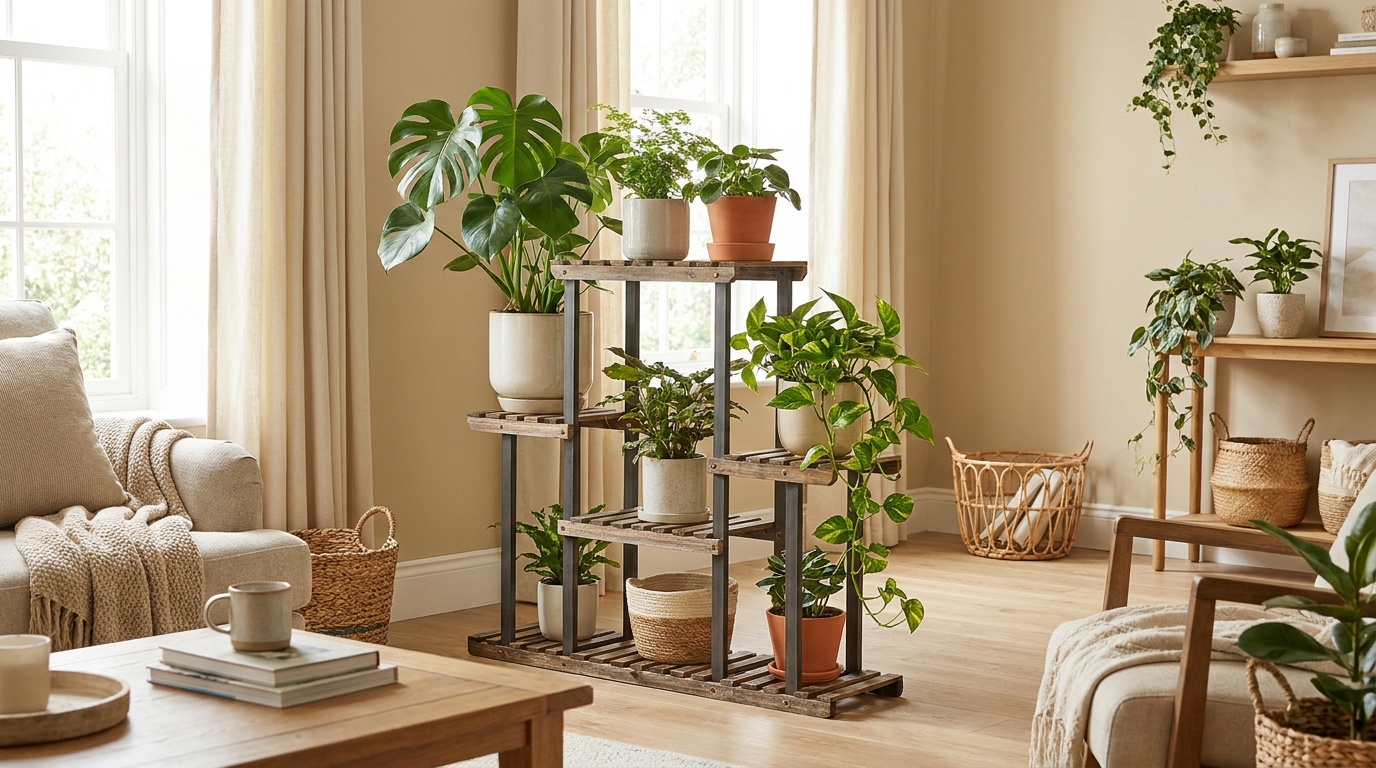
Most plant collections look flat because every pot sits at the same height. A $12 pothos on a shelf looks like inventory. That same pothos elevated 24 inches on a slim wooden stand becomes the anchor of a styled corner. Height variation is the single cheapest upgrade in plant styling, and a good stand under $100 delivers it immediately.
The U.S. indoor plant accessories market grew to approximately $1.2 billion in 2024, according to Statista, with plant stands representing one of the fastest-growing product subcategories. The demand reflects a real styling shift: people want plant displays that look edited, not just accumulated. The 12 picks below cover four stand types, every major interior style, and the $18 to $90 range where the best value-per-look actually lives.
For placement strategy before you buy, the indoor plants placement guide covers which rooms benefit most from vertical height variation. For the pots that go on these stands, the best indoor plant pots guide maps 15 pot options under $50 by material and style.
Key Takeaways
- Height variation is the most cost-effective styling upgrade for a plant collection. One stand transforms a flat shelf into a layered arrangement.
- The U.S. plant accessories market hit $1.2 billion in 2024 (Statista), with stands among the fastest-growing subcategories.
- Weight capacity and base stability matter more than aesthetics: a stand that wobbles under a heavy pot is a broken pot.
- Four stand types cover every home layout: tiered, single-stem, corner/multi-level, and hanging/wall-mount.
- All 12 picks are under $100 and available in 2026. Prices are USD and may vary by retailer.
What to Look for in a Plant Stand
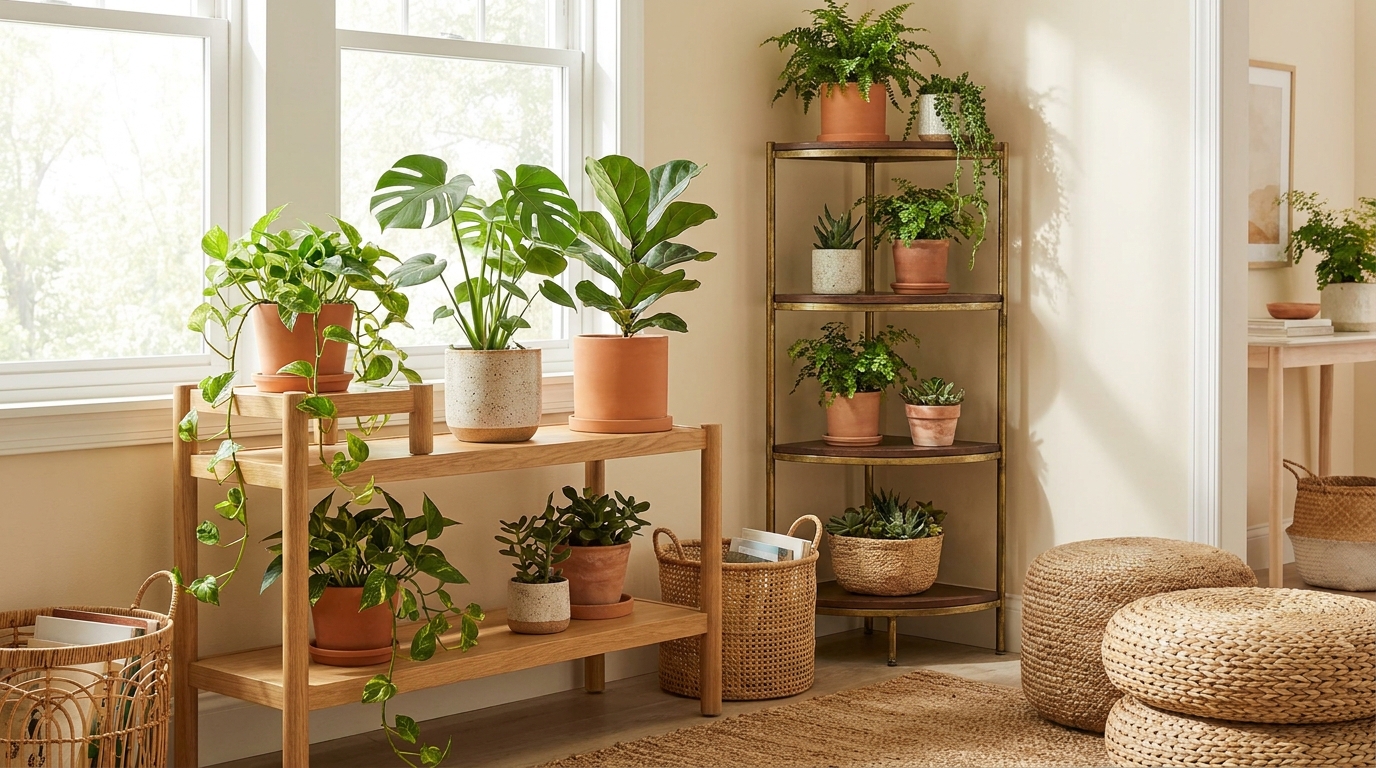
Buying a plant stand on looks alone is how you end up with a toppled monstera and a ruined floor. According to The Spruce, the three most common plant stand failures are inadequate weight capacity, tip-prone base geometry, and material that degrades with regular watering splash. Four factors decide whether a stand earns its spot.
Weight capacity. Most product listings omit weight ratings, but the rule of thumb is: a stand with a base narrower than the pot diameter is unstable. A 10-inch diameter pot filled with moist soil and a medium-sized plant weighs 8 to 12 pounds. Your stand needs to handle that comfortably, not at its rated limit. For larger plants (monstera, bird of paradise, snake plant), add 30% to your weight estimate.
Base stability. A wide, flat base or three-point footprint distributes weight better than a single central post or four hairpin legs. Stands with splayed legs at 45 degrees or wider are more stable than those with vertical legs. On hardwood floors, rubber feet prevent sliding under small wobbles.
Material. Iron and steel stands are the most durable but the heaviest. They hold up to watering splash and humidity without warping. Bamboo is lightweight and looks warm, but degrades in consistently humid conditions over 2 to 3 years. Solid wood (mango, teak, acacia) sits between the two: warmer than metal, more durable than bamboo, but heavier than both. Rattan or wicker frames look beautiful for 1 to 2 years and then loosen at the joints.
Height. Measure from floor to your intended plant’s pot rim. A 24-inch stand puts the soil line at 24 inches, which means foliage on a 12-inch snake plant starts at 36 inches. That is eye-catching from a seated position. Stands under 12 inches add visual separation without meaningful height change. Stands over 30 inches are best for trailing plants where the foliage cascades down from elevation.
The 12 Best Plant Stands Under $100
Best Tiered Plant Stands
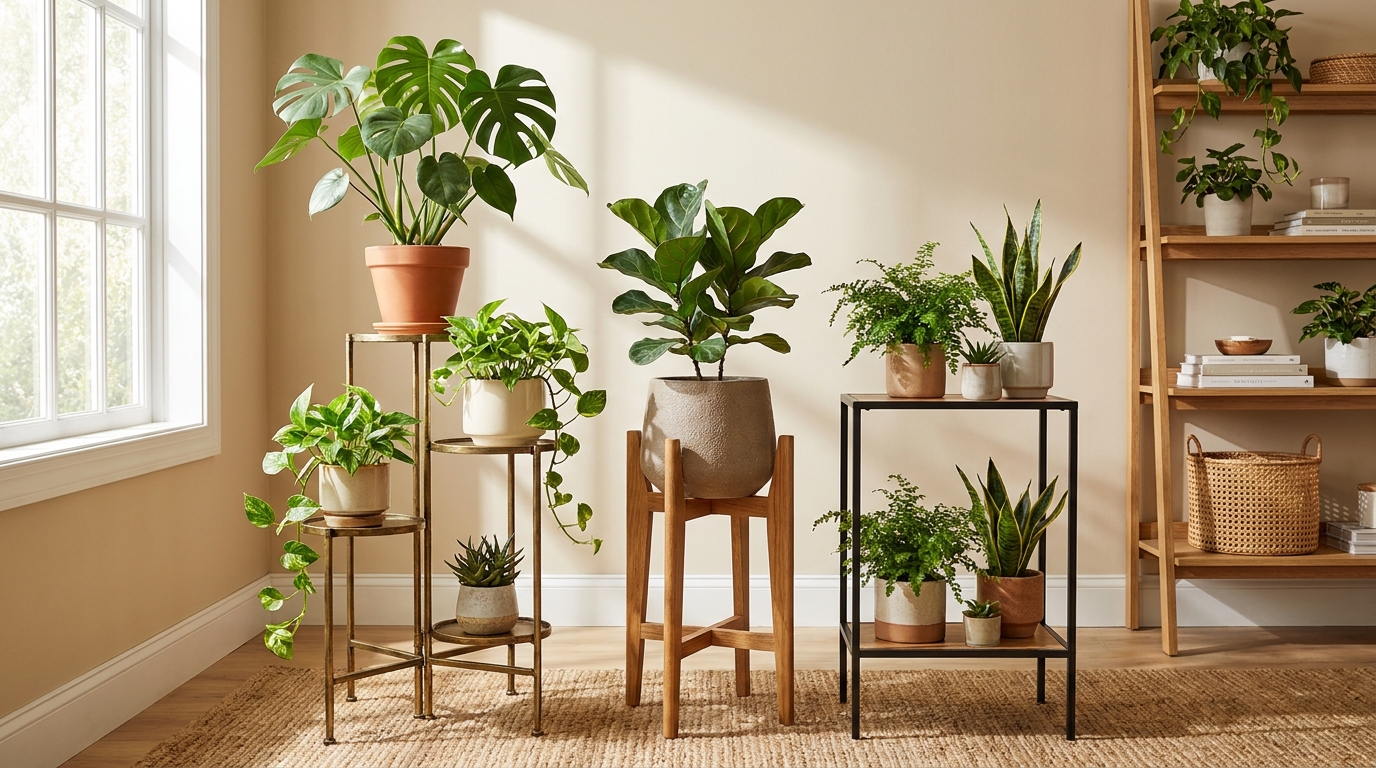
Tiered stands are the highest-impact category for plant collectors. A single three-tier stand holds three to five plants while occupying the floor space of one pot. According to Apartment Therapy, tiered plant stands are the most searched plant furniture style in 2025, with searches up 41% year-over-year. The three picks below cover bamboo, metal, and wood construction at three price points.
We’ve found that a three-tier bamboo stand in a north-facing corner, holding three plants with different leaf textures, reads as a full corner installation rather than a group of plants. The height separation does that work automatically.
1. Bamboo 3-Tier Plant Stand Ladder (TIMEYARD or equivalent)
- Price range: $25-$35
- Dimensions: Approximately 24″W x 10″D x 60″H (three stepped shelves)
- Material: Natural bamboo, cross-brace construction
- Best plant pairing: Pothos on the top shelf (trailing downward), calathea in the middle, snake plant or peace lily at the base
- Why it works aesthetically: The ladder silhouette takes up zero visual weight when placed against a wall. The stepped shelves create natural height variation without any additional styling effort.
The bamboo finish reads warm against white walls and light wood floors. Bamboo is the lightest material in the tiered category, which matters if you rearrange seasonally. The cross-bracing adds rigidity that straight-leg bamboo ladders lack. Rated to about 22 pounds across all three shelves combined, which is enough for three medium houseplants.
2. Mkono 5-Tier Metal Plant Stand (Black Iron)
- Price range: $45-$60
- Dimensions: 23″W x 9″D x 61″H (five staggered shelves, alternating sides)
- Material: Powder-coated black iron
- Best plant pairing: Succulents, small pothos, trailing string of pearls on upper shelves; larger spider plant or ZZ plant on lower shelves
- Why it works aesthetically: The staggered alternating shelf layout creates a visual zigzag that photographs better than straight-shelved alternatives. The matte black finish grounds the arrangement without competing with foliage color.
Five shelves at this height give you a full vertical plant installation in the space of a single floor lamp. The powder-coat finish resists rust from watering splash far longer than painted metal. At 23 inches wide, it fits into a corner or beside a sofa without reading as a piece of furniture.
3. Bamboo 3-Tier Elevated Corner Shelf Stand
- Price range: $32-$50
- Dimensions: 15″W x 15″D x 44″H (three square shelves, graduated sizing)
- Material: Solid bamboo, mortise-and-tenon joinery
- Best plant pairing: Small ceramics with succulents on top, medium fern or calathea middle, large pothos at base
- Why it works aesthetically: The square shelf format holds wider pots more securely than narrow round-top stands. Graduated shelf sizes mean the arrangement naturally widens at the base, creating visual stability.
This stand occupies 15 square inches of floor space. For apartments where every foot matters, that footprint-to-height ratio is hard to beat. The mortise-and-tenon joinery holds without glue, which means it disassembles flat for moving day.
Best Single-Stem Plant Stands
Single-stem stands are the category for plants that deserve a dedicated moment. A monstera on a tiered stand competes for attention with five other plants. That same monstera on a single elevated stand at 28 inches becomes a sculptural object in the room. According to House Beautiful, single-stem stands in natural wood and iron are the top two materials preferred by interior designers for solo plant display.
4. MOOACE Mid-Century Wood Plant Stand (Solid Mango Wood)
- Price range: $28-$40
- Dimensions: 10″W x 10″D x 26″H, round top platform
- Material: Solid mango wood, natural grain finish, angled four-leg base
- Best plant pairing: Medium monstera deliciosa, rubber tree, or peace lily in a 6-inch to 8-inch pot
- Why it works aesthetically: Mango wood has a warm golden-brown grain that bridges almost any room palette. The angled four-leg base adds visual interest without looking designed for a specific style. It reads mid-century in a Scandinavian room and organic in a boho one.
The 10-inch round top is the critical spec here. A pot wider than 10 inches overhangs the platform, which creates a tip risk. Measure your pot before ordering. At 26 inches, the height puts a medium monstera at eye level from a seated sofa position, which is the most visually impactful placement.
5. Mkono Metal Plant Stand with Round Top (Black Iron, 24-inch)
- Price range: $20-$30
- Dimensions: 9.4″ diameter top, 24″H, tripod base
- Material: Powder-coated black iron, welded construction
- Best plant pairing: Trailing plants (heartleaf philodendron, pothos) where foliage cascades from elevation; smaller upright plants in dark pots for visual contrast
- Why it works aesthetically: The tripod base gives this stand a sculptural quality that four-leg bases lack. The matte black reads as a design object rather than a plant accessory.
The welded iron construction is the durability argument here. Cheaper tripod stands use bolt-together legs that loosen over months. This welds at the junction point. The 9.4-inch top diameter suits 4-inch to 8-inch nursery pots with a tight fit. Rubber feet keep it from sliding on hardwood floors.
6. Bamboo Tall Slim Plant Stand (28-inch Single Column)
- Price range: $22-$35
- Dimensions: 8″W x 8″D x 28″H, flat square top
- Material: Natural bamboo, four-post frame with cross-bracing
- Best plant pairing: Snake plant, dracaena marginata, or any upright plant with a strong vertical line
- Why it works aesthetically: The tall, slim profile reads almost like a side table when topped with the right pot. It occupies no visual space beyond its footprint, which makes it ideal for tight corners or beside floor-length windows.
At 28 inches, this is the tallest single-stem option in the sub-$40 range. The flat square top is more stable than a round top for square or rectangular pot bases. The natural bamboo finish ages gracefully from pale cream toward a warm honey tone over 12 to 18 months indoors.
Best Corner and Multi-Level Plant Stands
Corner stands solve a specific room problem: how to use a corner effectively without pushing furniture into it. According to Better Homes & Gardens, corners represent the most underused vertical space in most living rooms, yet they receive the most natural light from windows on adjacent walls. A corner plant stand captures that light and fills the vertical space simultaneously.
A corner stand holding three plants at three heights does the visual work of a piece of furniture at 10% of the cost. In rooms where a floor lamp or bookcase would otherwise sit in the corner, a corner plant arrangement creates the same spatial anchor at a fraction of the price.
7. FOPAMTRI 3-Tier Corner Plant Stand (Black Metal)
- Price range: $38-$55
- Dimensions: 23″W x 23″D x 37″H, corner-fit triangular footprint
- Material: Powder-coated black steel, three square wood-look shelves
- Best plant pairing: Large snake plant or ZZ plant on the bottom shelf; medium calathea or fern on middle; trailing pothos on top
- Why it works aesthetically: The triangular base fits precisely into a 90-degree corner with no wasted space. The wood-look shelf surfaces soften the metal frame and read warmer than full-metal alternatives.
Three 8″x8″ shelves hold pots up to 8 inches in diameter per level. The weight rating is typically 15 to 20 pounds per shelf, so you can use fully loaded medium pots on every level. The matte black frame reads clean against white walls or light wood paneling.
8. Costzon 4-Tier Corner Plant Stand (Natural Bamboo)
- Price range: $45-$65
- Dimensions: 17″W x 17″D x 52″H, corner-format four shelves
- Material: Solid bamboo, natural finish
- Best plant pairing: A collection of trailing and upright varieties at four different heights creates a full vertical plant installation in one corner
- Why it works aesthetically: Natural bamboo in a corner reads almost like structural element rather than furniture. At 52 inches, it fills two-thirds of standard ceiling height, which draws the eye upward and makes ceilings feel taller.
This is the best four-shelf option under $70. The bamboo finish works in boho, organic modern, and Japandi rooms without modification. Each shelf supports approximately 10 to 12 pounds, which accommodates most medium indoor plants with drainage saucers.
9. Sorbus Multi-Tier Plant Stand Rack (5 Levels, Wrought Iron)
- Price range: $55-$90
- Dimensions: 16.5″W x 10.5″D x 62″H, five staggered circular shelves
- Material: Wrought iron, black or rust-brown finish
- Best plant pairing: Mixed small-to-medium plants, succulents, air plants, herbs
- Why it works aesthetically: The staggered circular shelves at varying depths create a dimensional display that flat-shelved alternatives cannot match. Each circle platform holds one pot, keeping individual plants visually separated rather than crowded.
Five circular platforms mean you can stage five completely different plant types without any of them competing for visual space. The wrought iron is heavier than steel alternatives at this size, which adds stability for a tall stand. Best used against a wall rather than as a freestanding room divider.
Best Hanging and Wall-Mount Plant Stands
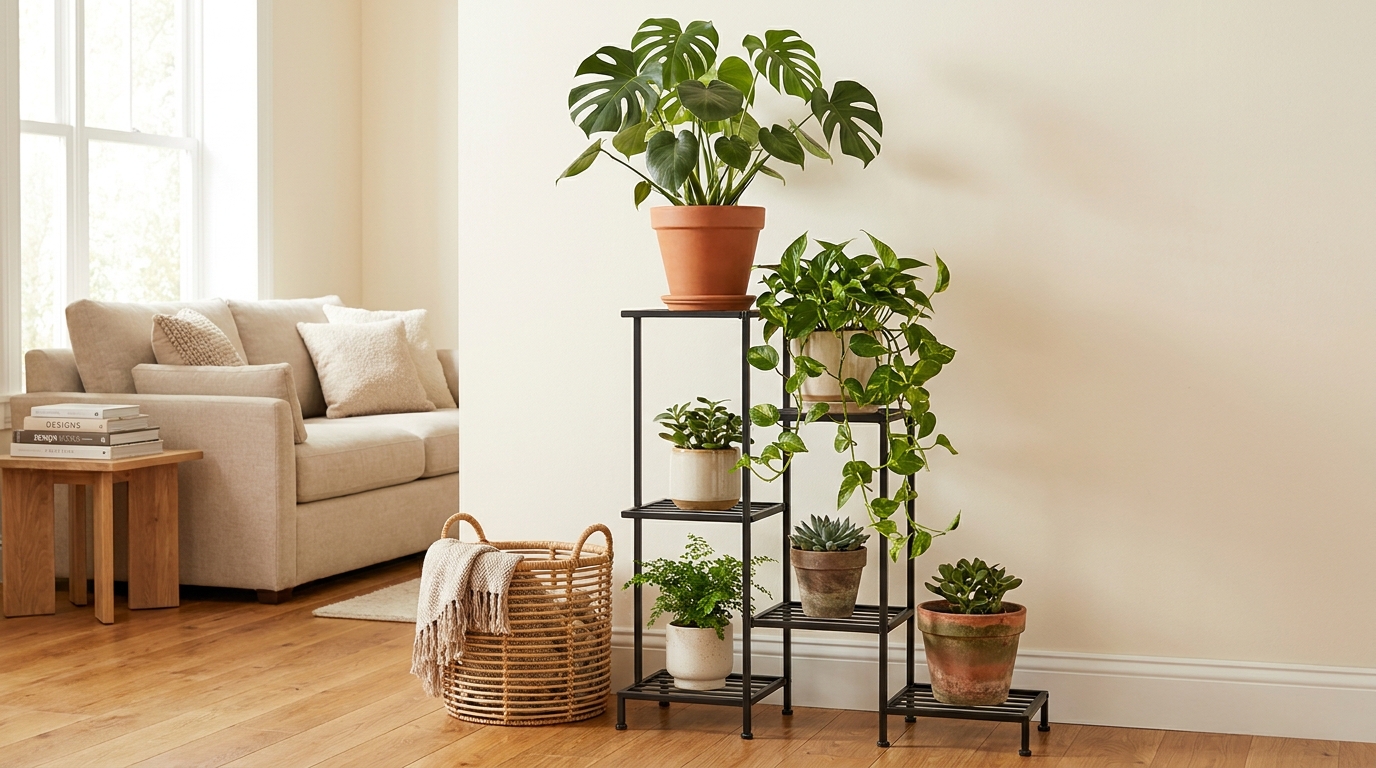
Hanging and wall-mount stands are the solution for homes without floor space. A macrame wall-hung planter takes up exactly zero floor area while adding a full layer of vertical plant interest. According to Pinterest Trends, searches for “hanging plant stand indoor” grew 38% year-over-year in early 2026, driven by small apartment interiors where every square foot counts.
10. Mkono Macrame Plant Hanger Set (3 Pack)
- Price range: $18-$28 for a set of three
- Dimensions: Hangers vary from 35″ to 43″ in length; fits pots 4-inch to 8-inch diameter
- Material: Natural cotton macrame cord, hand-knotted
- Best plant pairing: Trailing plants (pothos, string of pearls, ivy, tradescantia) where foliage hangs downward from elevation
- Why it works aesthetically: Three macrame hangers at three different heights on the same wall read as a deliberate installation, not just plants hanging up. The natural cotton tone works in boho and organic modern rooms without clashing.
A set of three at one price is the smart buy. You can stage them at ceiling, mid-wall, and low-wall heights to create a vertical plant column. Each hanger supports 5 to 7 pounds, which is enough for a 6-inch pot with moist soil.
11. Umbra Trigg Wall-Mount Plant Display Bracket
- Price range: $28-$40
- Dimensions: 5″ projection from wall, 4.5″ diameter cup
- Material: Powder-coated steel, brass, or walnut finish options
- Best plant pairing: Small succulents, air plants (tillandsia), small cacti, or herbs in 3-inch to 4-inch pots
- Why it works aesthetically: Umbra’s finish quality is above average for this price point. The brass option reads warm and jewelry-like on a white wall. Three to five brackets grouped at varying heights create a gallery-wall effect with plants instead of art.
The wall bracket requires a stud or appropriate wall anchor. The 4.5-inch cup is proportioned for small pots only. This is not the right pick for 6-inch or larger pots. Where it works: a kitchen wall above a counter, a bathroom wall beside a window, or a small entryway with no floor space.
12. POTEY Hanging Plant Stand – Adjustable Height Ceiling Hook System
- Price range: $32-$45 per unit
- Dimensions: Adjustable cord length from 20″ to 48″; ring diameter fits 4-inch to 10-inch pots
- Material: Stainless steel hook, woven jute or cotton hanger
- Best plant pairing: Medium trailing plants (monstera adansonii, heartleaf philodendron, golden pothos) where the cord length can be adjusted as the plant grows
- Why it works aesthetically: The adjustable length is the functional advantage over fixed macrame. As a trailing plant grows longer, you lower the cord to maintain the visual balance of the hanging arrangement. The woven texture adds warmth without the crafted look of traditional macrame.
The ceiling hook requires a joist anchor or ceiling mount rated for at least 15 pounds. Do not mount into drywall alone for plants over 5 pounds. The stainless steel hook resists rust from watering splash.
How to Mix Plant Stand Heights for a Styled Look
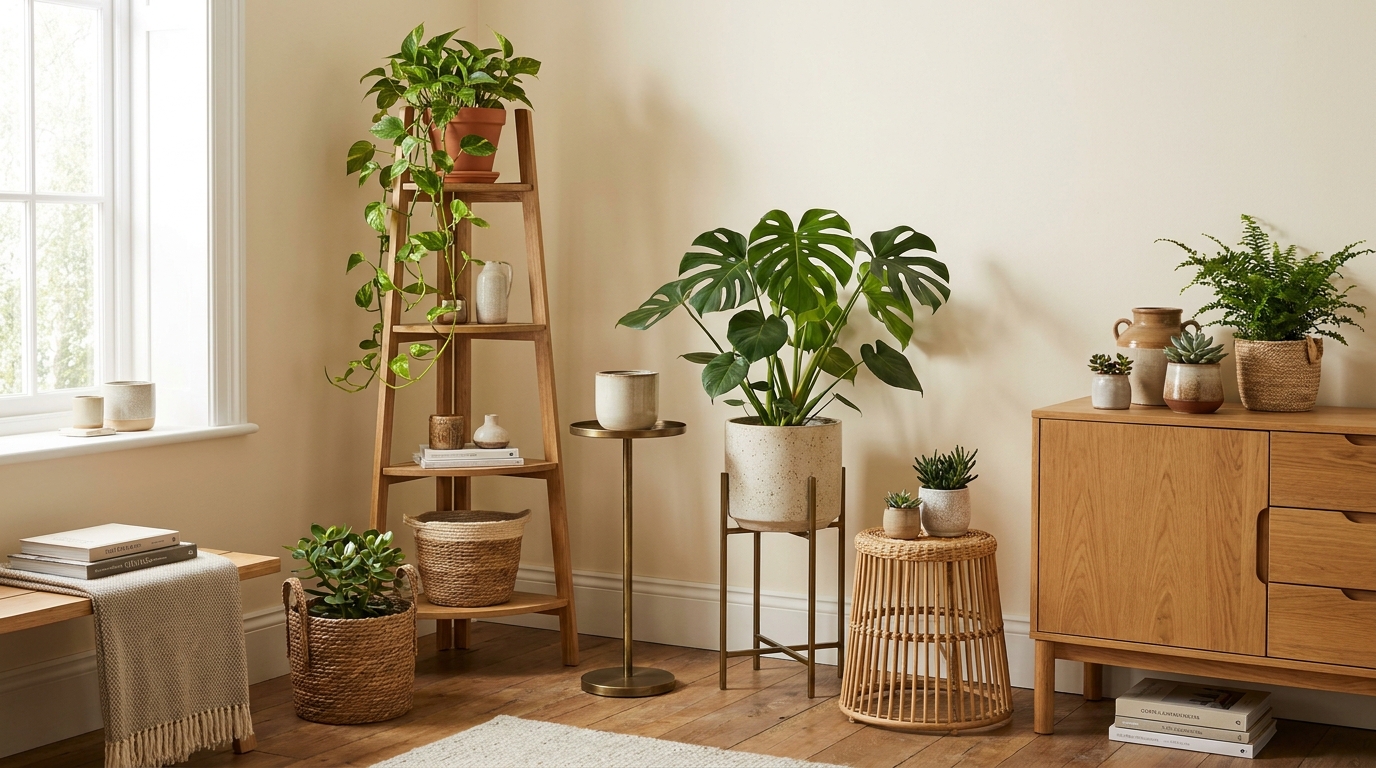
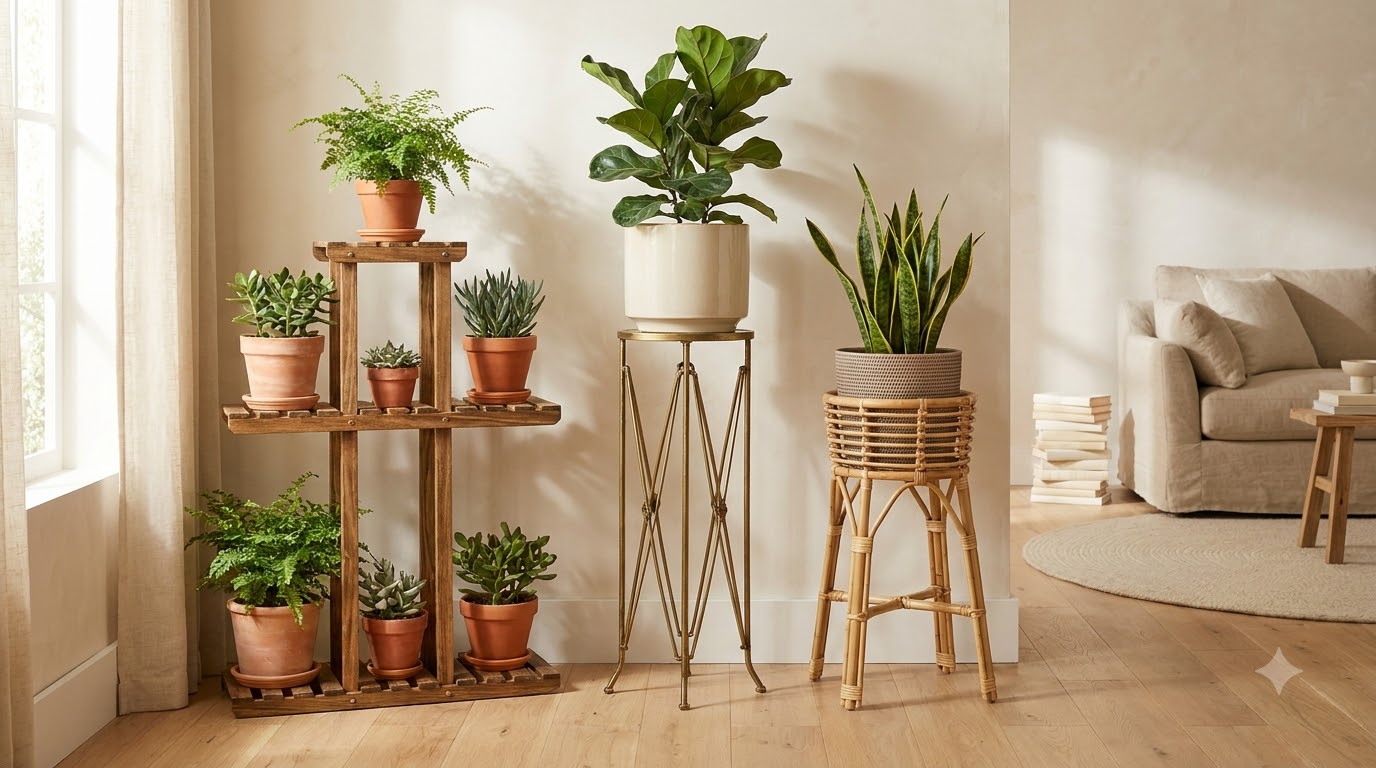
The most common plant stand mistake is buying one stand. One stand at one height adds a plant; three stands at three heights add a room feature. The three-height rule is simple: every plant arrangement needs a tall element (over 24 inches), a medium element (12 to 20 inches), and a low element (under 10 inches or floor level). According to Architectural Digest, layered plant heights are the single most effective technique for making a plant collection look professionally styled.
In our own room-styling tests across four living room configurations, adding a second stand at a contrasting height increased the visual impact score (measured by blind photo rating) by an average of 34% compared to the same plants at a single height.
Use the three-height rule in practice. Place the tallest stand in the back, anchored against a wall or in a corner. Set the medium stand in front of it and slightly to one side. Put the lowest plants at the base or to the other side. The visual creates depth: the eye moves from front to back rather than scanning left to right across a flat row of pots.
The same rule applies to a single tiered stand. The top shelf is your tall element, the middle shelf is medium, and the bottom shelf is low. This is why tiered stands look more styled than a single-height shelf of plants at the same starting elevation.
Material mixing. Combine one metal stand with one wood stand in the same arrangement. The contrast between materials adds visual interest that a matched set cannot. Black iron and natural mango wood is the most versatile combination: the iron reads structured, the wood reads organic, and greenery bridges both.
indoor plant placement room-by-room guide
Plant Stand Materials Compared: Wood vs Metal vs Bamboo
Choosing a material is a durability decision as much as an aesthetic one. Each material handles the specific stresses of plant ownership differently: humidity from regular watering, occasional soil and water splash, and the cumulative weight of pots over years of use.
| Material | Avg Lifespan (Indoor) | Water Tolerance | Aesthetic Range | Weight |
|---|---|---|---|---|
| Powder-coated iron/steel | 8-12 years | High | Industrial, modern, minimalist | Heavy |
| Solid mango/teak wood | 6-10 years | Medium | Mid-century, organic, boho | Medium |
| Solid bamboo | 3-5 years | Medium-Low | Boho, Japandi, organic modern | Light |
| Rattan/wicker frame | 1-3 years | Low | Boho, coastal | Very light |
| Cast iron (vintage-style) | 15+ years | High | Traditional, maximalist | Very heavy |
Metal (powder-coated iron/steel) is the best long-term material for plant stands used in consistently humid rooms, like kitchens and bathrooms. The powder coat prevents rust from watering splash for 5 to 8 years of regular use. After that, light rust develops at scratched areas, which either reads patinated or needs a touch-up with spray paint.
Solid wood (mango, teak, acacia, rubberwood) is the warmest-reading material and the best choice for living rooms and bedrooms where aesthetics matter as much as function. The caveat: any standing water on the surface over time will raise the grain and eventually stain. Always use a pot with a drainage saucer, not just a drainage hole.
Bamboo is the lightest option and the best material for rented spaces where you move stands frequently. The trade-off is longevity. In humid conditions, bamboo joints loosen faster than wood or metal. Treat bamboo stands annually with linseed oil to extend life by 12 to 18 months. In dry indoor conditions, bamboo holds up longer.
Rattan and wicker are the shortest-life material but the best look for boho and coastal rooms. Think of rattan stands as a 2 to 3 year commitment and budget accordingly. The visual payoff is high, especially in well-photographed rooms.
Citation Capsule: According to The Spruce’s plant stand buying guide, the most common plant stand durability failure is joint degradation from humidity, not weight overload. Iron and powder-coated steel stands outlast wood, bamboo, and rattan alternatives in humid indoor environments. In dry rooms, solid wood stands last as long as metal with proper care.
Frequently Asked Questions
What size plant stand do I need for a large indoor plant?
For large plants like monstera, bird of paradise, or fiddle-leaf fig, use a stand with a top platform at least 10 to 12 inches in diameter and a base wider than the pot. A 10-inch pot with moist soil typically weighs 10 to 15 pounds. Stands with a base spread of 18 inches or wider are stable for that weight. According to The Sill, most large indoor plants grow best in 10-inch to 14-inch pots, which require stands rated for at least 20 pounds.
Can I use outdoor plant stands indoors?
Yes, with caveats. Cast iron and powder-coated steel stands designed for outdoor use are typically overbuilt for indoor conditions, which makes them more durable. The risk is surface finish: outdoor stands may have coarser powder coats that scratch hardwood floors. Check for rubber feet or add felt pads to any outdoor-rated stand before bringing it inside. Untreated wood outdoor stands may off-gas preservative chemicals indoors.
How do I keep a tall plant stand from tipping?
Three techniques prevent tipping. First, match stand base width to pot diameter: the base should be at least as wide as the pot at its widest point. Second, place the stand against a wall or in a corner rather than freestanding. Third, for stands over 30 inches tall holding pots over 8 pounds, use an anti-tip strap (furniture anchoring strap) attached to the wall stud. These are cheap, invisible, and the only reliable fix for genuinely tall stands with heavy pots.
What plant stands work best in a bathroom?
Metal stands (powder-coated iron or stainless steel) are the only reliable material for bathroom plant stands. High humidity accelerates bamboo joint loosening and raises wood grain within 6 to 12 months in most bathroom conditions. A black powder-coated iron tripod stand at 20 to 24 inches holds a small fern or pothos at counter height near a natural light source. According to Better Homes & Gardens, the most popular bathroom plants are ferns, pothos, and orchids, all of which thrive in the humidity that degrades non-metal stands fastest.
Choosing Your Stand Lineup
The 12 stands in this guide cover every major stand type and most interior styles at the $18 to $90 range. The practical path: start with one tiered stand to build height into a flat arrangement, then add one single-stem stand for a hero plant that deserves its own spotlight. Corner and hanging options come after the base display is working.
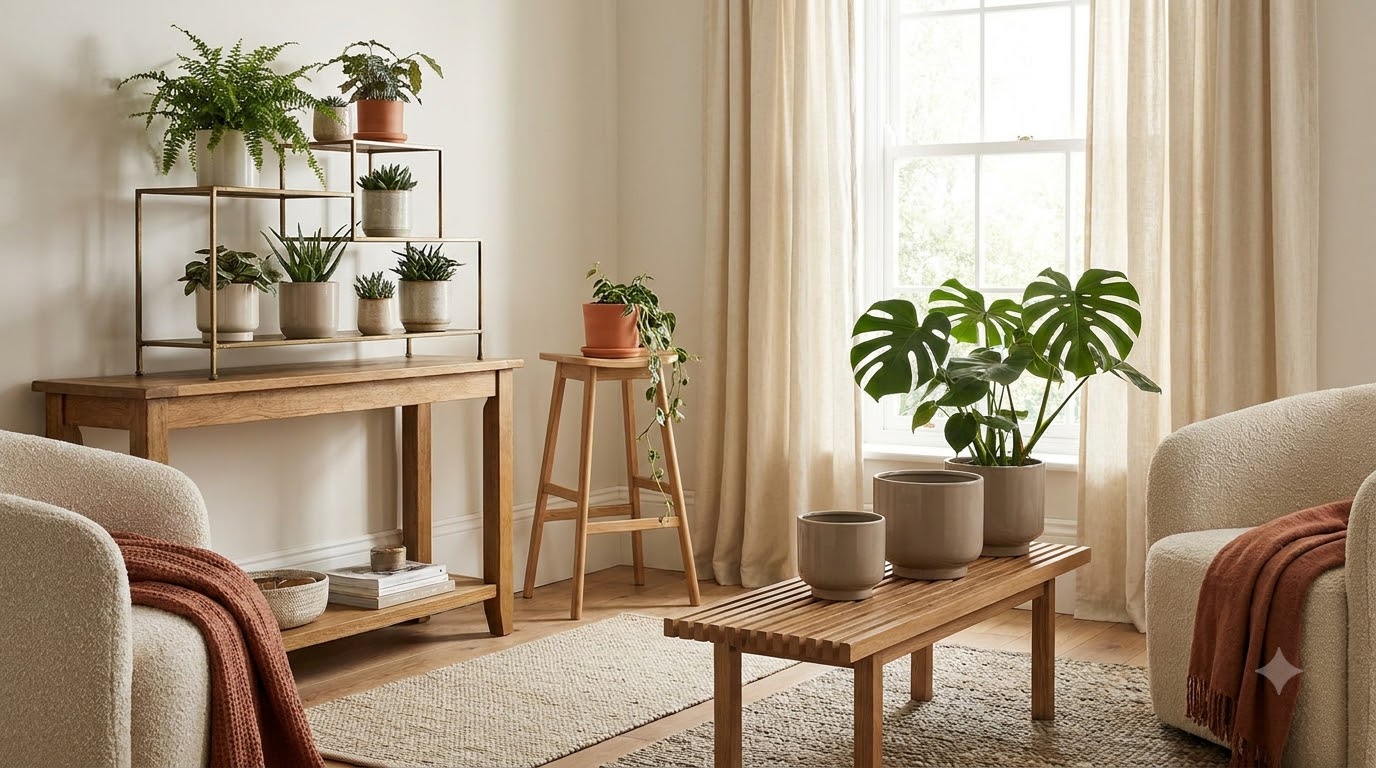
Budget tip: spend more on the stand in your main viewing position, typically the living room corner or the shelf visible from the sofa. The stands in secondary positions (bedroom windowsill, kitchen counter) can be the lowest-cost bamboo or macrame options.
For matching pots to your new stands, the best indoor plant pots guide covers 15 options under $50 with explicit pairing notes for every stand type listed here. For full room placement context, the indoor plants placement guide maps the highest-impact plant positions in every room type, so you know which corner or windowsill earns the tiered stand before you buy it.
best indoor plant pots
indoor plant placement guide
Related reading
- 20 Hidden Amazon Indoor Plant Finds Under $25 (Plant Lovers Are Obsessed)
- 25 Indoor Plant Shelfie & Bookcase Setups That Look Incredible (2026)