
If you want the short answer first: choose a cottage garden when you love a lush, romantic, informal look and you don’t mind two to four hours of hands-on tending each week. Choose a modern garden when you want clean lines, structure, and low maintenance you can knock out in under an hour. Pick by two things only: how much upkeep you’ll realistically do, and the vibe you want to come home to. Everything else, from plant spacing to hardscape, follows from that one decision.
Key Takeaways
- Cottage garden: lush, romantic, informal; dense planting, self-seeding perennials, 2-4 hours upkeep weekly; budget-friendly because plants fill in and multiply.
- Modern garden: clean, structured, geometric; repeated shapes, gravel and pavers, under 1 hour upkeep weekly; higher upfront cost for hardscape.
- Lower maintenance winner: modern, by a wide margin once it’s installed.
- Cheaper to start: cottage, especially from seed and cuttings.
- Renters and small spaces: both work in containers; cottage-style pots read softer, modern planters read sharper.
We’ve built both styles on our own patios and in a rented duplex yard, and we’ll be honest about what each one asks of you. This is the guide we wish we’d had before we bought a single plant. If you’re weighing cottage garden ideas against a sleeker modern scheme, here’s how the two actually compare, feature by feature.
What is a cottage garden?
A cottage garden is a densely planted, informal style that layers flowers, herbs, and edibles together with almost no bare soil showing. It descends from old English working gardens where every inch grew something useful or pretty. The look is abundant and a little wild on purpose: plants spill over paths, colors mingle, and the whole thing feels like it grew by happy accident even though it’s quietly planned.
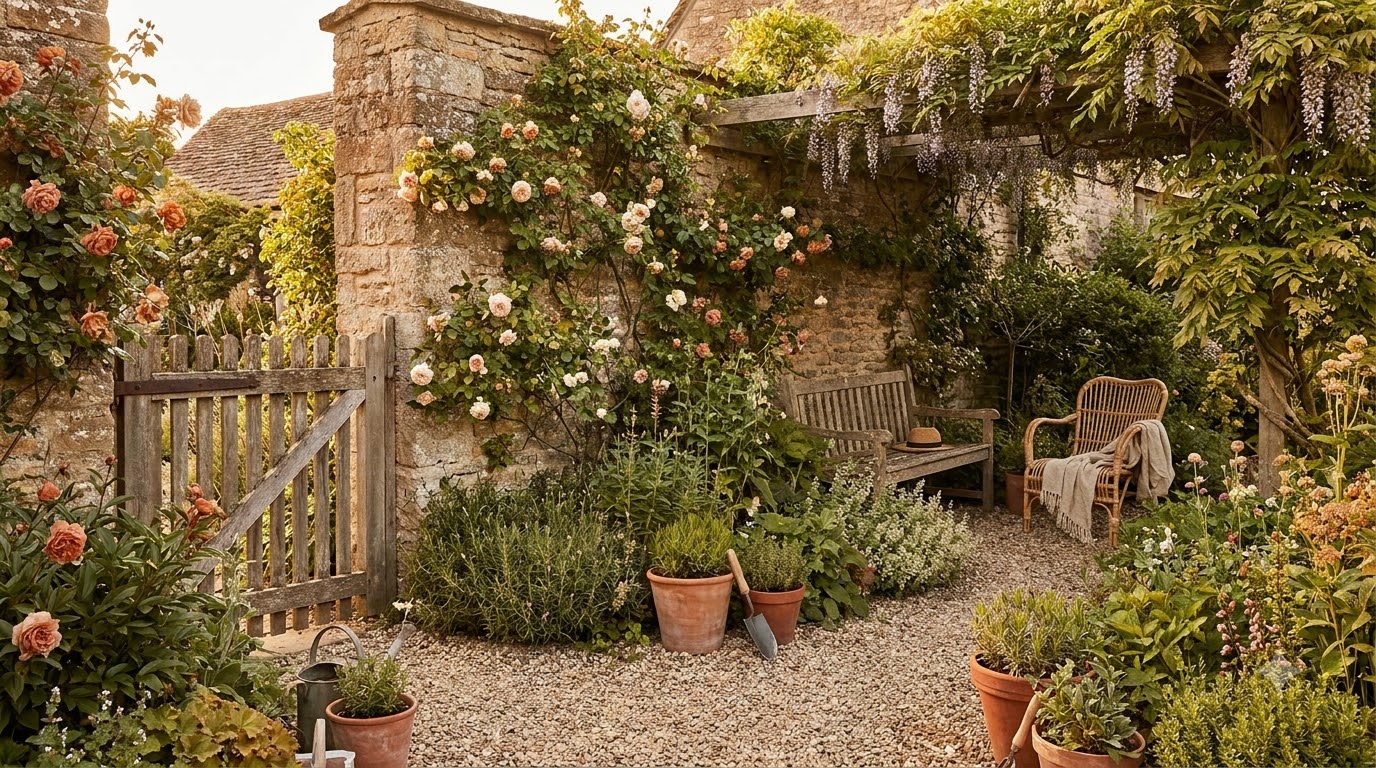
The signature move is close spacing. Where a modern bed leaves breathing room, a cottage bed packs plants tight so they knit into a living tapestry. That density is also what keeps costs down over time: many cottage staples are perennials or self-seeders that come back and multiply for free.
- Classic cottage plants: foxglove, delphinium, hollyhock, roses, lavender, catmint, salvia, cosmos, sweet pea, phlox, and daisies.
- Edible mixers: chives, thyme, sage, and dwarf tomatoes tucked between the flowers.
- Spacing: tight, roughly 6 to 12 inches apart, so beds fill in and self-seed.
- Feel: romantic, layered, ever-changing through the seasons.
If you’re starting small, this style adapts beautifully to pots. Our container garden ideas for beginners covers how to layer a cottage look into a few well-chosen planters without a yard at all.
What is a modern garden?
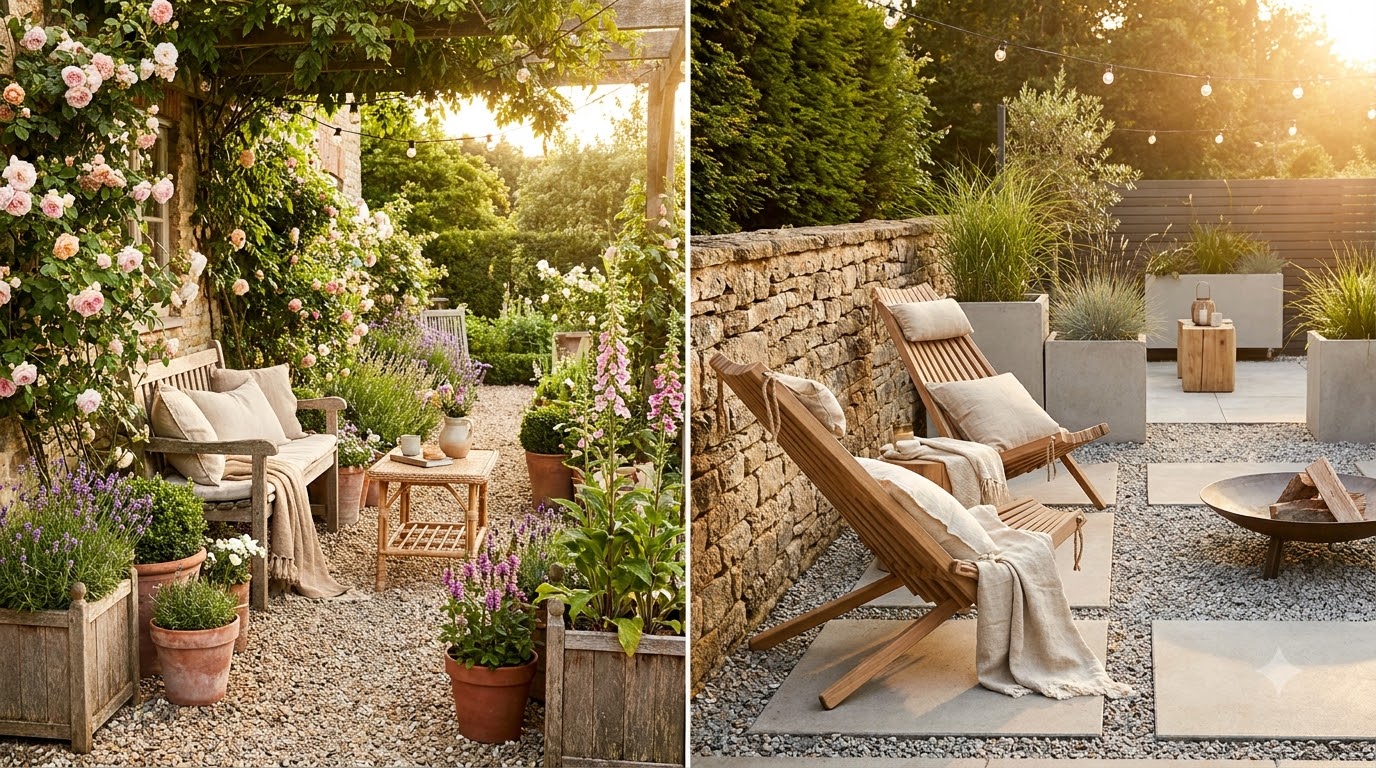
A modern garden is defined by structure, restraint, and repetition. Instead of a hundred kinds of flower, you might use three or four plants repeated in clean drifts. Straight lines, geometric beds, and generous hardscape do the heavy lifting, so the plants read as sculpture rather than a bouquet. The palette is usually tight: greens, silvers, and one accent color, set against gravel, concrete, or timber.

The trade-off is upfront cost. Hardscape and large architectural planters cost more than a packet of seeds. But once it’s in, a modern garden practically runs itself, which is why it wins on maintenance every time.
- Signature modern plants: ornamental grasses, boxwood, phormium, agave, sedum, hostas, and a single flowering accent like alliums.
- Hardscape materials: poured concrete pavers, large-format porcelain tile, pea gravel, corten steel edging, and horizontal timber screens.
- Spacing: wider and deliberate, roughly 18 to 36 inches, so each plant keeps its shape.
- Feel: calm, architectural, and consistent year-round.
Cottage garden vs modern garden: the full comparison
Here’s the side-by-side we mapped out before committing to either style. Scan the row that matters most to you first, whether that’s maintenance hours or the cost line.
| Feature | Cottage Garden | Modern Garden |
|---|---|---|
| Plants | Foxglove, roses, lavender, catmint, cosmos, salvia, herbs; many self-seeding perennials | Ornamental grasses, boxwood, agave, sedum, phormium; repeated in drifts |
| Layout | Informal, dense, curved edges; 6-12 in. spacing; plants spill over paths | Geometric, structured, straight lines; 18-36 in. spacing; open gravel or paving |
| Hardscape | Minimal: brick paths, reclaimed stone, gravel, timber arches | Central: concrete pavers, porcelain tile, corten steel, timber screens |
| Maintenance | 2-4 hours per week: deadheading, staking, dividing, weeding | Under 1 hour per week: occasional trim, rake, and edge |
| Cost to start (small yard/patio) | $150-$500 from seed, plugs, and cuttings | $800-$3,000 driven by hardscape and mature specimens |
| Best for | Romantics, pollinator lovers, hands-on gardeners, tight budgets | Busy people, minimalists, small tidy spaces, resale appeal |
Which garden style is lower maintenance?
Modern, clearly. Once the hardscape and structural plants are installed, a modern garden asks for under an hour a week: a light trim, a rake through the gravel, and a tidy of the edges. There’s no deadheading, staking, or dividing because the plants are chosen to hold their form on their own.
A cottage garden is a more affectionate relationship. We spend two to four hours most weeks in peak season keeping ours looking its best, and honestly, we enjoy it. But if the idea of weekly deadheading makes you tired, that’s your answer. Here’s the realistic weekly task load for each.
- Cottage weekly tasks: deadhead spent blooms, stake tall stems, pull weeds from tight beds, divide crowded clumps, water containers daily in summer.
- Modern weekly tasks: shear one or two shrubs monthly, rake gravel, sweep pavers, spot-weed the joints.
- Seasonal spikes: cottage peaks in late spring and midsummer; modern stays flat all year.
If low effort is your priority and you’re working with a compact yard, our guide to small backyard ideas on a budget leans heavily on modern, structured moves that stay tidy with almost no fuss.
Which style costs less to build?
Cottage wins on startup cost, especially if you’re patient. Because the style relies on perennials, self-seeders, and plants that divide easily, a modest $150 to $500 investment on a patio or small yard can fill out fully within two seasons. We started ours from seed packets and a few $4 plugs, then split the survivors the next spring for free.
Modern gardens carry their cost in hardscape. Pavers, porcelain tile, steel edging, and large architectural planters push a small modern install into the $800 to $3,000 range before you’ve bought a single plant. You’re paying for materials and structure that a cottage garden simply doesn’t need. Here’s how the money tends to break down.
- Cottage cost drivers: seeds and plugs ($4-$12 each), a few anchor perennials, compost, and stakes.
- Modern cost drivers: pavers or tile ($5-$15 per sq. ft.), gravel by the bag or ton, steel edging, and $80-$300 planters.
- Long-term: cottage gets cheaper as plants multiply; modern stays flat with minimal replacement.
Which is better for renters and small spaces?
Both translate to containers, which is exactly why renters can commit to either without touching the ground. The difference is entirely in the container and the plant shapes. Cottage-style pots overflow with mixed, soft planting; modern planters stay pared back with one bold specimen and clean geometry.
When we styled our rented duplex patio, we ran a cottage look in three galvanized tubs and it read warm and lived-in within a month. A friend two doors down did the modern version with three matching charcoal planters and boxwood balls, and hers looked polished on day one. Neither cost more than a weekend to set up.
- Cottage in pots: pack 3-5 kinds per container, let trailing plants spill, mix heights for that abundant look.
- Modern in pots: one specimen per planter, repeat the same planter in a row, keep the palette to two colors.
- Renter-friendly rule: everything lives in pots you take with you, no digging, no deposit risk.
For plant picks that thrive in containers either way, we lean on our roundup of the best outdoor plants and decor finds for 2026, which flags the low-fuss performers for both styles.
Can you blend cottage and modern styles?
Yes, and it’s our favorite approach for small US yards. The trick is to borrow structure from modern and softness from cottage: lay a clean paver path or gravel base with crisp steel edging, then let loose, romantic planting tumble against those hard lines. The structure keeps the abundance from reading messy, and the plants keep the hardscape from feeling cold.
- Keep from modern: a defined path, straight bed edges, repeated planters, a tight color palette.
- Keep from cottage: dense planting, self-seeders, pollinator flowers, and a little controlled overflow.
- Where to splurge: one good hardscape element you see every day; save on plants by starting from seed.
Lighting ties the whole hybrid together after dark. A few warm strands turn either style into an evening room, and our cozy outdoor string light ideas show how to hang them in a rented space without permanent fixtures.
Frequently asked questions
Is a cottage garden hard to maintain?
It’s moderate, not hard. Expect two to four hours a week in peak season for deadheading, staking, weeding, and dividing plants. The work is repetitive but rewarding, and it eases off in fall and winter. If weekly hands-on tending sounds like too much, a modern or blended layout will suit you far better.
What plants work for a modern garden in small spaces?
Reach for architectural, form-holding plants: boxwood, ornamental grasses, agave, sedum, and phormium. Choose one specimen per planter and repeat the same planter for rhythm. These plants keep their shape with minimal trimming, so a small modern balcony or patio stays sharp on under an hour of care each week.
Which garden style is cheaper to start on a budget?
Cottage is cheaper upfront. Because it relies on seeds, cheap plugs, and self-multiplying perennials, a small cottage patio can fill out for $150 to $500. Modern gardens cost more because hardscape, pavers, and large planters run $800 to $3,000 before plants. Over time, cottage gets even cheaper as plants divide for free.
Can I have a cottage garden as a renter?
Absolutely. Grow the entire thing in containers you take with you when you move. Pack three to five plant varieties per pot, mix heights, and let trailing stems spill over the edges for that abundant look. No digging means no deposit risk, and you keep every plant you’ve raised.
Which style adds more resale appeal?
Modern generally photographs cleaner and reads as move-in ready, which helps in listings. Its structure and low upkeep reassure buyers who don’t garden. That said, a well-kept cottage garden charms buyers who want character. If resale is a goal, lean modern or blended, and keep the beds tidy and defined.
Our verdict: which one should you plant?
Come back to the two questions we opened with. If you want a romantic, ever-changing garden and you’ll happily spend a few hours a week in it, plant cottage; it’s cheaper to start and only gets fuller. If you want structure, calm, and near-zero upkeep, plant modern and pay for that ease upfront in hardscape. And if you’re like us, borrow from both: modern bones, cottage heart. Whichever you choose, start with a few containers, learn what thrives in your light, and grow from there.