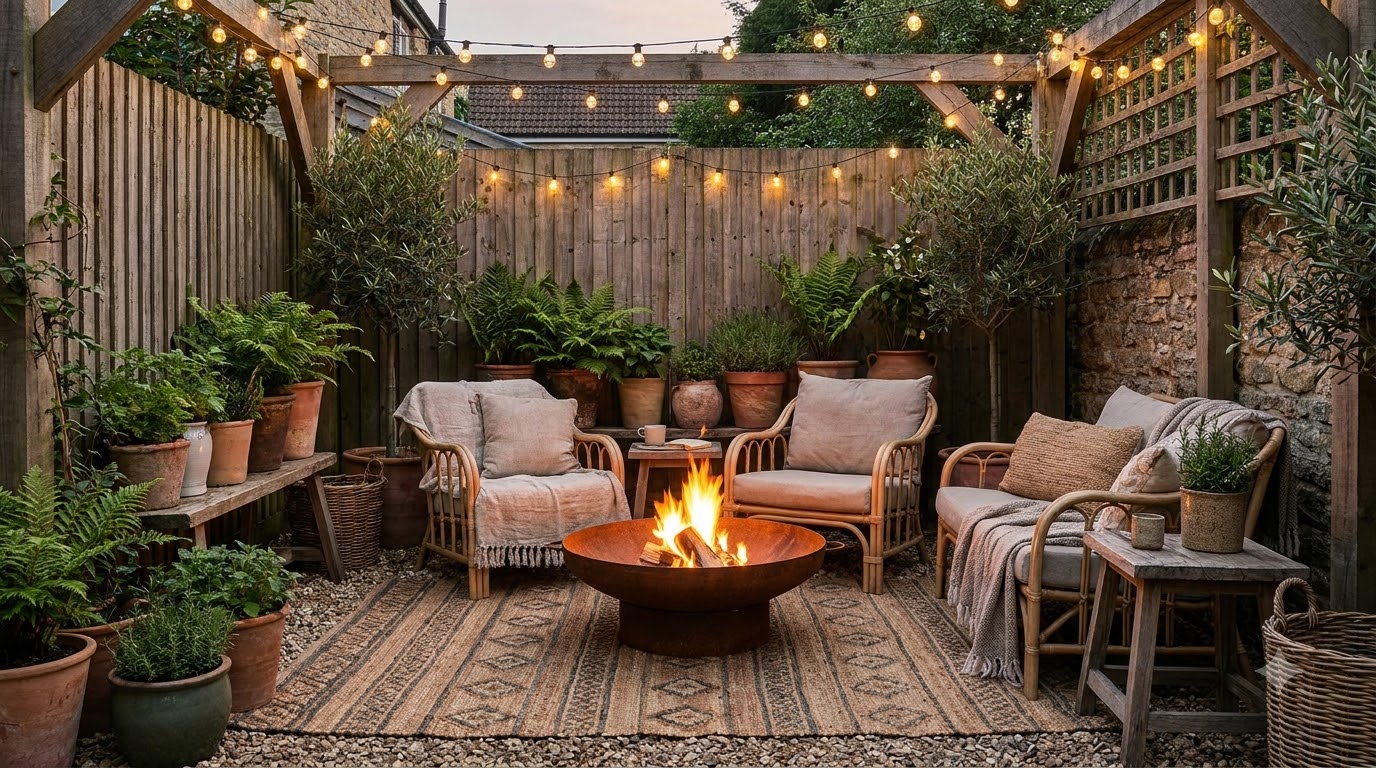
A small backyard is not a design problem — it is a budget opportunity. In 2025, homeowners spent an average of 11.7 hours a week outdoors, up 22% from 9.6 hours the year before, yet 77% of people say they underuse the outdoor space they already have (Talker Research, 2025; ICFA Outdoor Living Trend Report, 2025). The gap is rarely money. It is planning. This guide walks a tiny yard from bare to cozy on a renter-friendly budget — layout, ground cover, a fire pit under $100, string lights, and plants that actually survive.
Key Takeaways
- You do not need a pro. A full landscape upgrade returns about 100% of its cost at resale, but the budget version — gravel, containers, string lights — delivers most of the feeling for a fraction of the price (NAR, 2023).
- Ground cover is the biggest lever: pea gravel runs $1.50–$4.50/sq ft versus $8–$25 for pavers (Angi, 2026).
- A DIY fire pit costs $200–$500 in materials — or under $100 with a portable bowl — against an $850 average for a pro install (Angi, 2026).
- Lighting is the highest-impact buy: it is the #1 outdoor purchase (31% of shoppers) and sets the whole mood after dark (Houzz, 2026).
How Do You Plan a Small Backyard Layout on a Budget?
Start with one honest question: what will you actually do out here? In the Houzz 2026 Outdoor Trends Study, lounge and seating areas showed up in 83% of outdoor renovations, dining in 55%, and gardening in 49% (Houzz, 2026). Pick one primary use before you buy anything. A small yard punished for indecision looks cluttered; a small yard built around a single job feels intentional.
Sketch the space to scale on paper — even a rough box with measurements. Mark where the sun lands at 6pm, because that is when you will use it. Note the one ugly thing you want to hide (an AC unit, a fence, the neighbor’s window) and the one good thing you want to face. Everything else is decoration. This ten-minute exercise saves the most common budget mistake: buying furniture that does not fit.
How to Define Zones: Lounge, Dine, and Green
Zoning is what makes a 200-square-foot yard read as “designed” instead of “leftover.” You do not need walls — you need edges. An outdoor rug defines a lounge zone in one move. A cluster of three containers signals a green corner. A small bistro set claims a dining nook. Houzz found lounge areas in 83% of projects and dining in 55%, so most people want at least two zones even in tight space (Houzz, 2026).
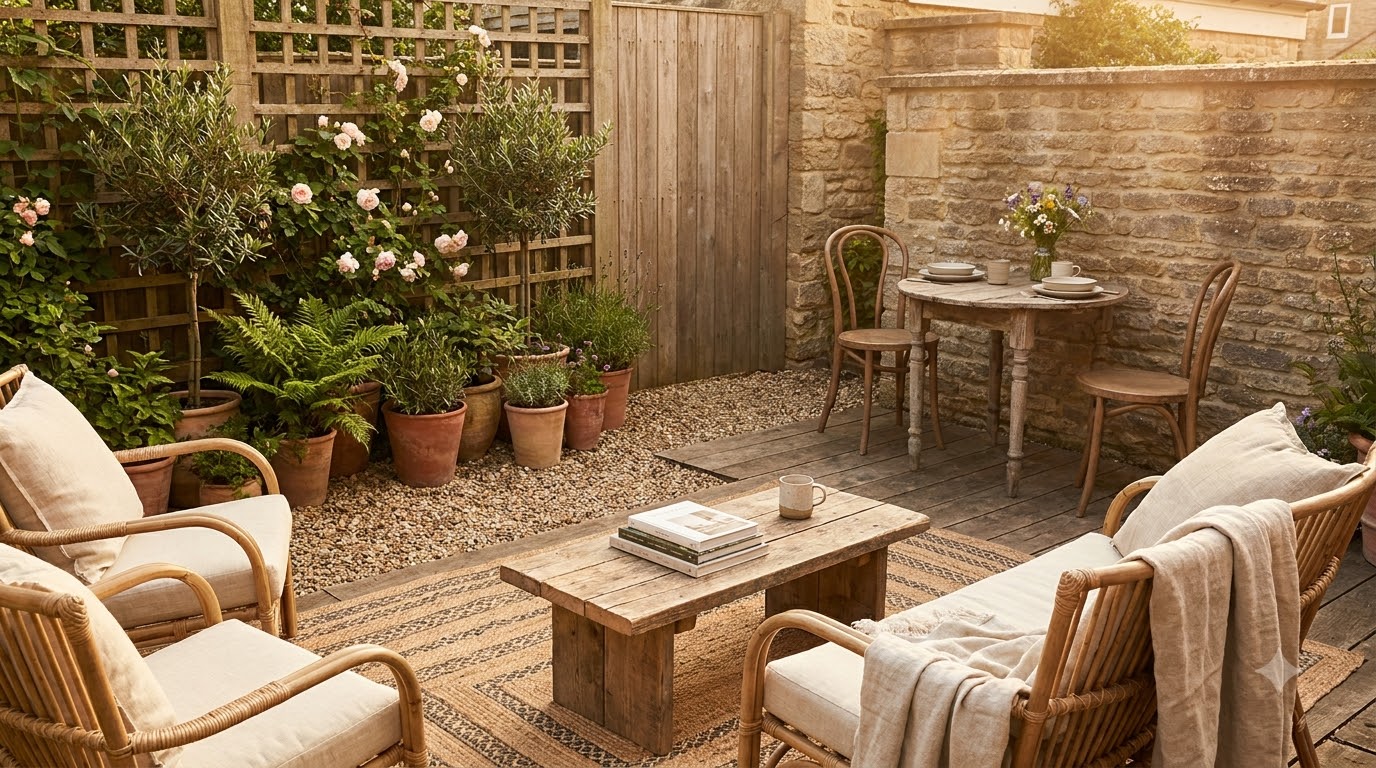
The renter trick is to zone with things you take with you: a weatherproof rug, folding chairs, and a few large pots. No drilling, no permanent changes, and it all moves to the next place. Keep pathways clear — leave at least 30 inches to walk between zones, or the space feels like an obstacle course instead of a retreat.
What Is the Cheapest Way to Cover the Ground?
Gravel wins on budget, full stop. Pea gravel or crushed stone runs roughly $1.50–$4.50 per square foot installed, against $6–$15 for a poured concrete patio and $8–$25 for pavers (Angi, 2026). For a small yard, gravel over a weed barrier is a weekend DIY that instantly makes bare dirt look finished — and it drains well, which matters for renters who cannot re-grade a lawn.
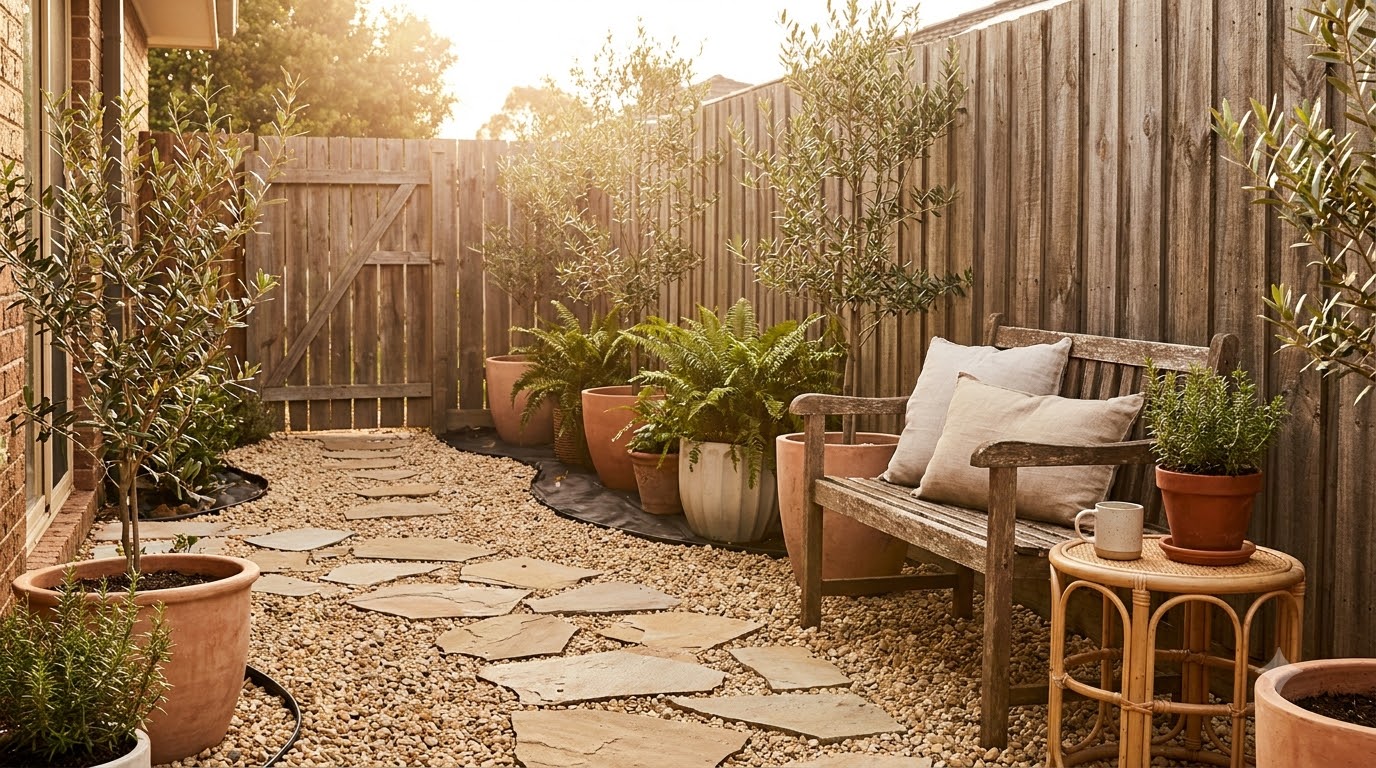
| Ground cover | Cost / sq ft (installed) | Best for |
|---|---|---|
| Pea gravel / crushed stone | $1.50–$4.50 | Tightest budgets, DIY, drainage |
| Poured concrete | $6–$15 | Clean modern look, permanent |
| Pavers | $8–$25 | Upscale finish, DIY-able in stages |
| Flagstone | up to $50 | High-end, natural texture |
One more budget note: natural grass lawns are on the way out, dropping to 63% of outdoor projects in 2026, down nine points, as people move toward lower-maintenance gravel, mulch, and hardscape (Houzz, 2026). Less lawn means less mowing, watering, and money — a rare win-win.
Can Vertical Gardening Save Space in a Tiny Yard?
When the floor is full, build up. Vertical gardening — wall planters, railing boxes, tiered plant stands, and a leaning ladder shelf — adds greenery without stealing the little floor space you have. A single trellis against a bare fence turns a dead wall into a living one, and it hides the fence you did not like anyway.
For renters, go no-drill: over-the-railing planters, freestanding trellises weighted in pots, and tension-rod hanging systems all come down clean. Group climbers like pothos, ivy, or star jasmine at the base and let them do the vertical work for you over a season. The same low-maintenance instincts that keep houseplants alive apply outside — see our low-maintenance plant picks for beginners for varieties that forgive a missed watering.
How Do You Build a DIY Fire Pit Under $100?
A fire pit is the single biggest “cozy” upgrade per dollar. A professional install averages about $850 and can reach $2,500, but a DIY build runs $200–$500 in materials — and a portable steel bowl or a paver-ring build comes in under $100 (Angi, 2026). Fire features landed in 48% of Houzz lounge-area projects for 2026, so you are far from alone in wanting one (Houzz, 2026).
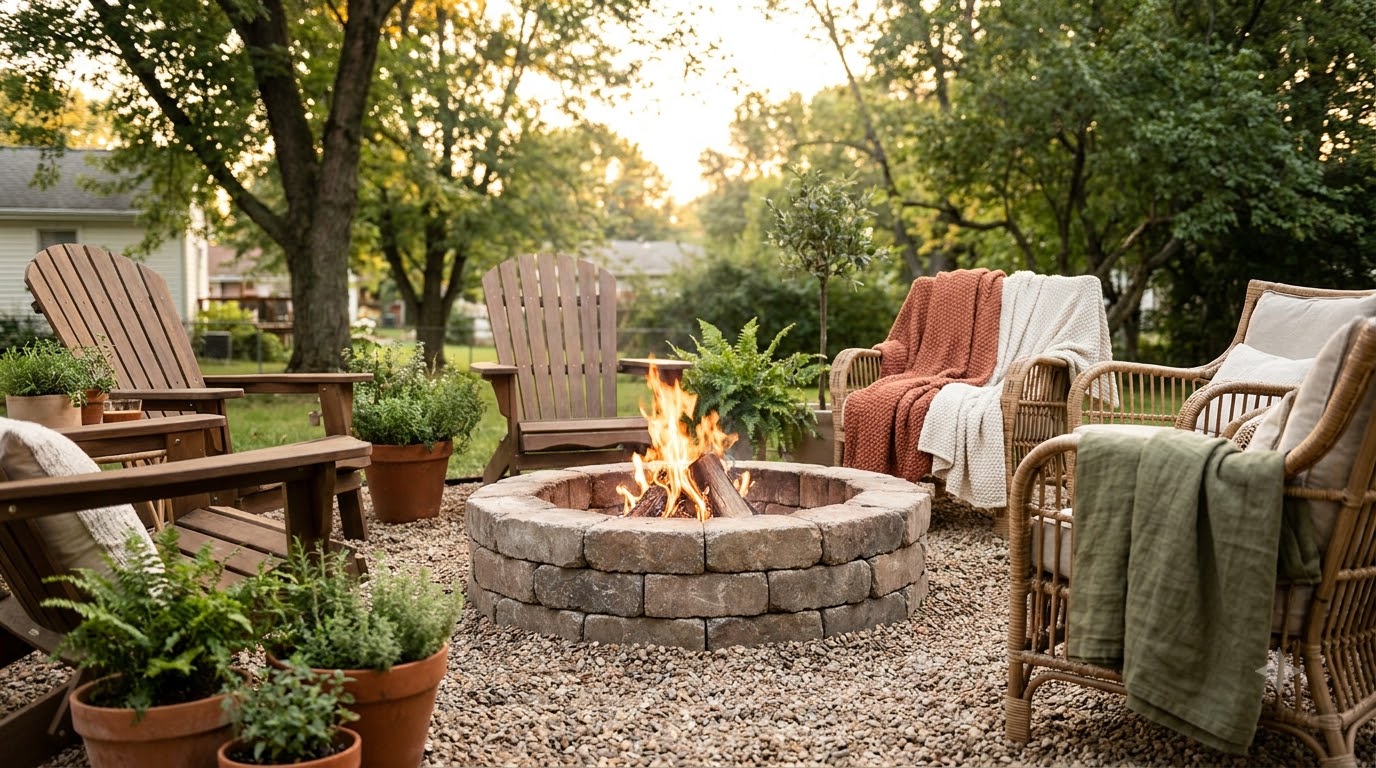
The cheapest permanent version: a single ring of concrete retaining-wall blocks — about 12 blocks, dry-stacked, no mortar — set on a gravel base. Total materials often land near $60–$80. For renters who cannot build anything permanent, a portable fire bowl or a tabletop bioethanol burner delivers the same flame-and-blanket evening and moves out with you. Always keep a fire pit at least 10 feet from structures and off wooden decks.
| Fire pit option | Typical cost | Renter-friendly? |
|---|---|---|
| Portable bowl / tabletop | $75–$500 | Yes — moves with you |
| DIY paver-ring (dry-stacked) | $60–$300 | Semi — no mortar, reversible |
| Pro-installed fire feature | ~$850 (up to $2,500) | No — permanent |
How Do String Lights Make a Backyard Feel Cozy?
Lighting is the highest-return purchase in the whole yard. Outdoor lighting is the #1 product people buy for their spaces — 31% of shoppers — and it appeared in 66% of Houzz outdoor renovations for 2026 (Houzz, 2026). Warm-white string lights strung in a zigzag or canopy overhead turn a plain patio into an outdoor room the moment the sun drops. A pro landscape-lighting install averages around $3,500, but a few strands of quality string lights cost under $50 and do 80% of the work.
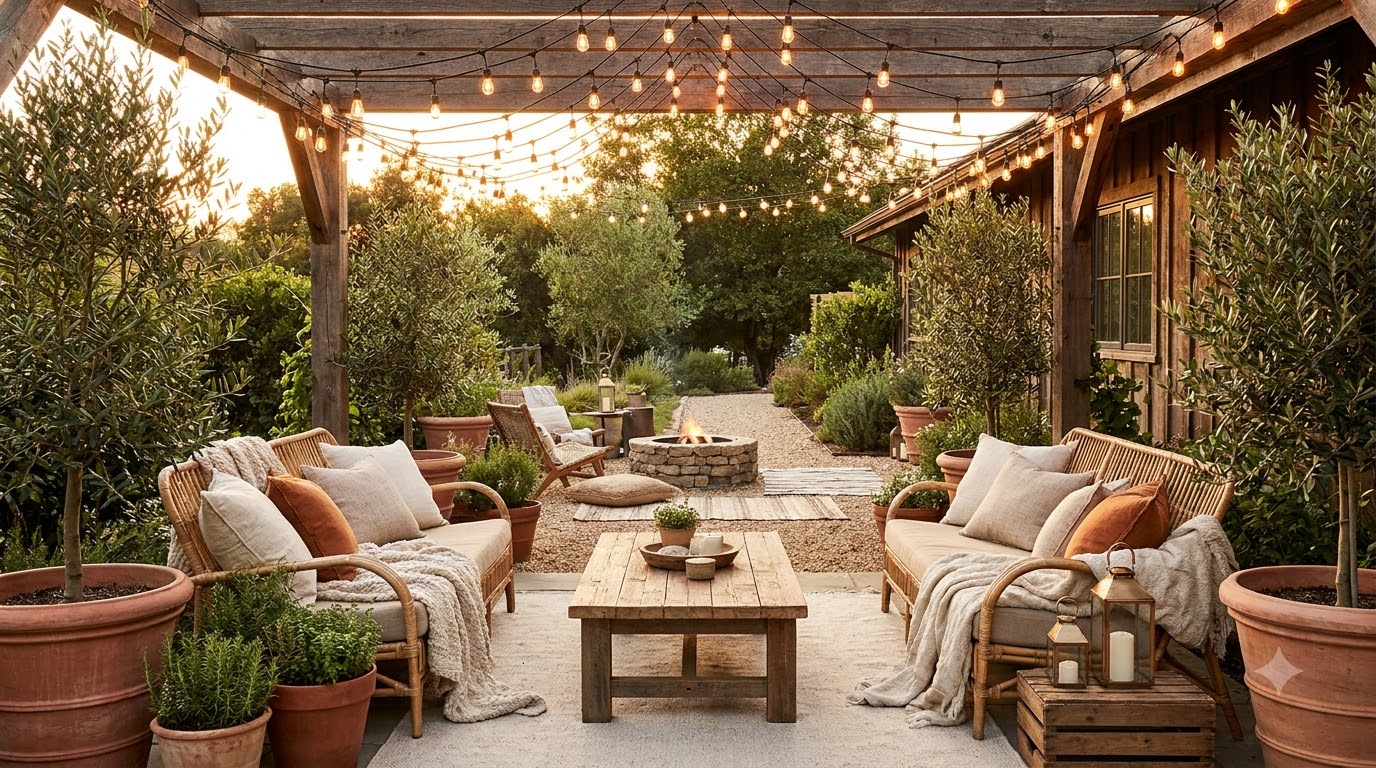
Choose warm bulbs (2200–2700K), not cool white — warmth is the entire point. Solar or plug-in both work; solar skips the cord problem for renters. Anchor strands to the fence, a pergola, or two tall poles set in weighted planters if you have nothing to attach to. Layer in a couple of flameless LED lanterns at ground level and the space reads intimate instead of lit-up.
Which Container Plants Actually Thrive Outdoors?
Containers are how renters garden. US households spent a record $79 billion on lawn and garden in 2025 — about $740 each — and pots let you take every dollar with you when you move (National Gardening Survey, 2026). The trick is matching the plant to your light and picking forgiving varieties: ornamental grasses, lavender, succulents, and herbs like rosemary and mint tolerate heat, skipped waterings, and cheap potting mix.
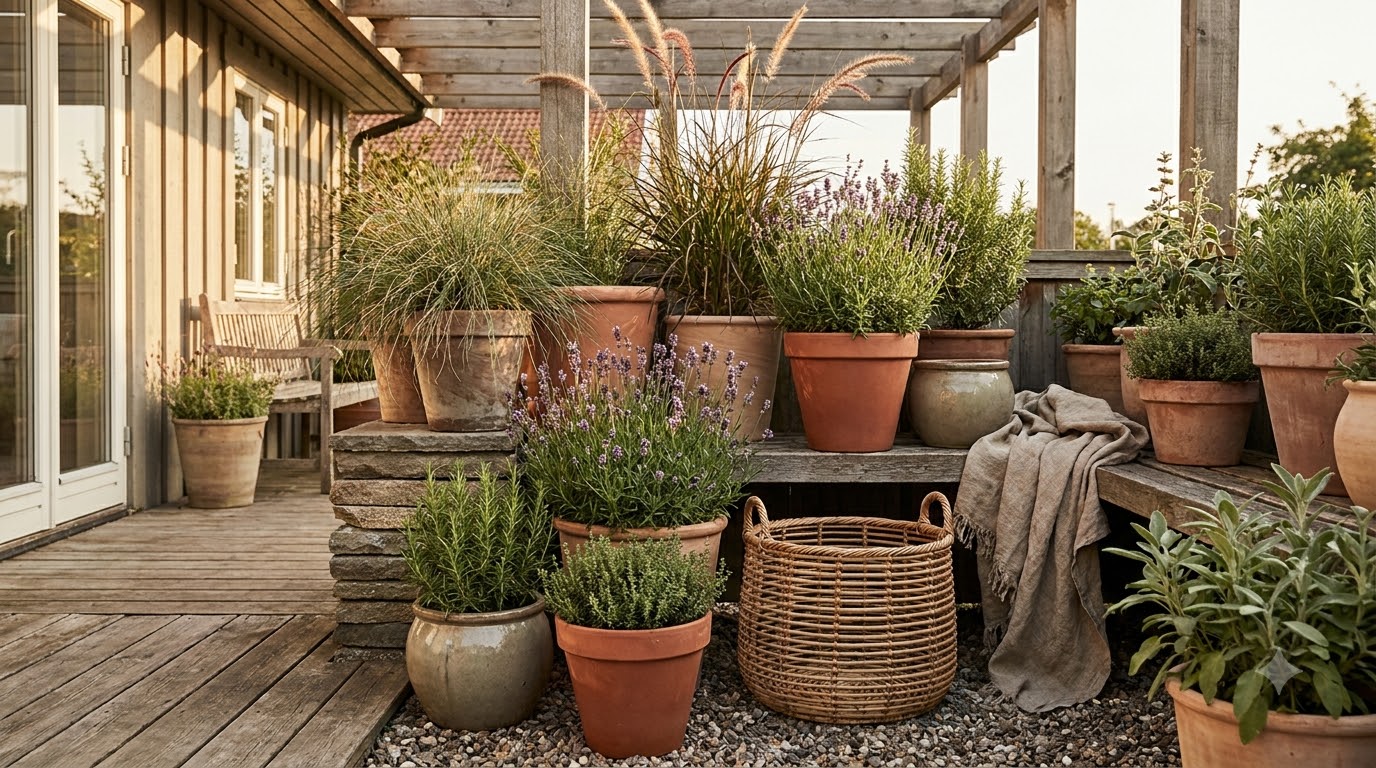
Use the “thriller, filler, spiller” formula in each pot — one tall focal plant, a few mid-height fillers, and something that trails over the edge. Group pots in odd numbers at varying heights for a lush look on a small footprint. Drainage is non-negotiable: every pot needs a hole, or the roots rot. For pot-buying and care specifics, our guide to plant pots under $50 covers drainage and material trade-offs that apply outdoors too.
What Does a Small Backyard Before and After Look Like?
The transformation is almost always the same four moves, in order: cover the ground, define one zone, add light, add green. A bare 150-square-foot concrete slab becomes a lounge by laying an outdoor rug, adding two chairs and a portable fire bowl, stringing lights overhead, and clustering five plants in the corner — often under $400 total. The “after” feeling comes from layering, not spending.
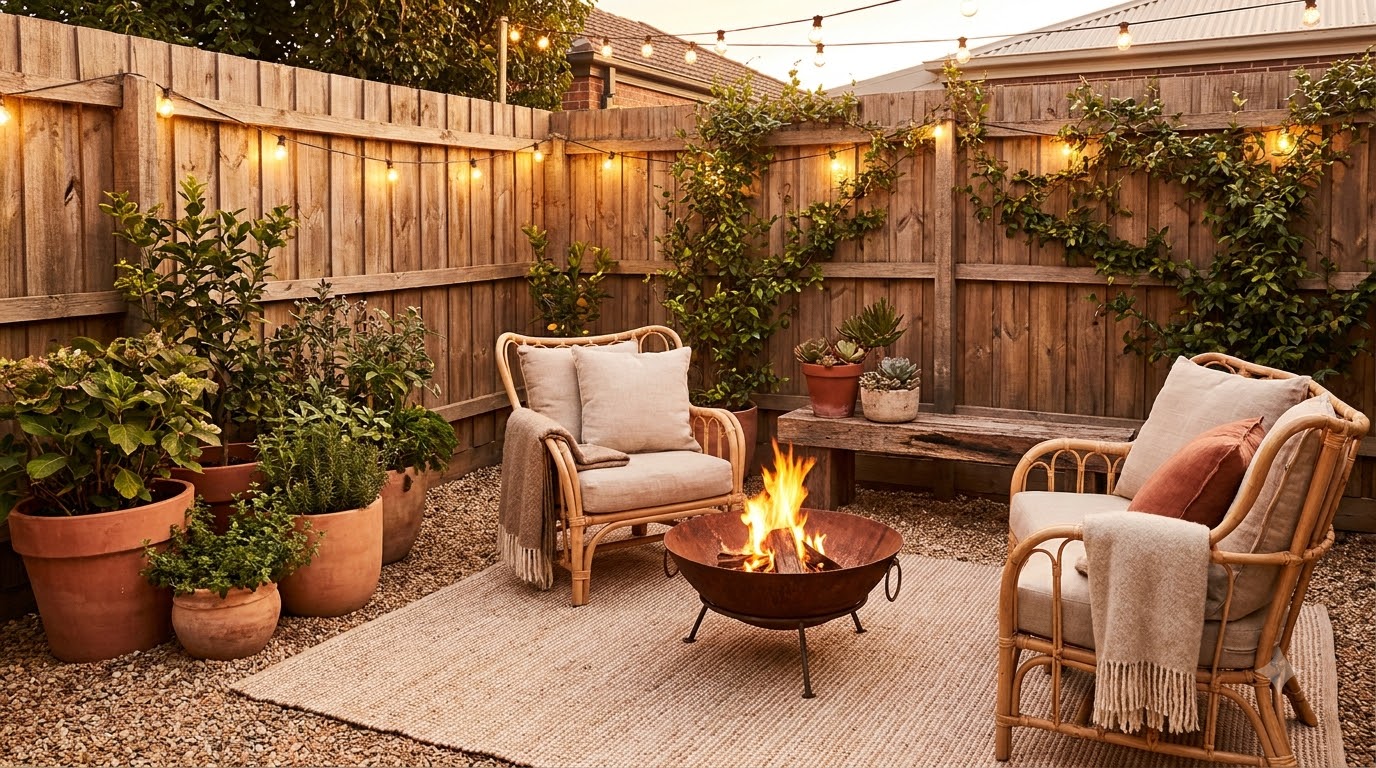
Motivation is shifting to back this up: in 2026, 25% of people renovate outdoor spaces for daily living versus just 15% for resale value (Houzz, 2026). You are building this for your own Tuesday evenings, not a future buyer — which is exactly why the budget version is the right version.
What Budget Mistakes Should You Avoid?
The most expensive mistake is buying furniture before measuring — oversized sets swallow small yards and force returns. The second is skipping the weed barrier under gravel, which turns a clean patio into a weed farm by midsummer. The third is cool-white lighting, which makes a cozy space feel like a parking lot.
- Over-scaling furniture: measure first; choose armless or folding pieces in tight zones.
- No weed barrier: always lay landscape fabric under gravel or pavers.
- Ignoring maintenance: 42% of people name upkeep as their top outdoor barrier — pick low-maintenance plants and hardscape (ICFA, 2025).
- Buying everything at once: build in phases; live in the space and add what it is missing.
Budget Small Backyard Shopping List
Here is where the money goes for a first cozy setup, ordered by impact. You can build the whole thing for roughly $250–$450 depending on what you already own, and add pieces over a season rather than all at once.
- Warm-white string lights (~$25–$50): the highest-impact buy. Look for shatterproof bulbs, 2200–2700K, and a rated outdoor cord length that reaches your anchor points.
- Weatherproof outdoor rug (~$40–$80): instantly defines the lounge zone. Flat-weave polypropylene handles rain and hoses off clean.
- Portable fire bowl or tabletop burner (~$60–$100): the cozy centerpiece; renter-safe and movable.
- Two folding or stackable chairs (~$60–$120): prioritize comfort and small footprint over a big set.
- Three to five containers + potting mix (~$40–$90): mix heights; make sure each pot drains.
- Pea gravel + landscape fabric (if covering dirt, ~$1.50–$4.50/sq ft): the budget ground-cover base.
Frequently Asked Questions
How much does it cost to redo a small backyard on a budget?
A cozy budget setup — rug, two chairs, a portable fire bowl, string lights, and a few containers — typically runs $250–$450. By comparison, a professional patio build averages about $4,005 and pro fire-pit installs average $850, so the DIY route saves thousands (HomeAdvisor, 2025).
What is the cheapest patio surface for a small yard?
Pea gravel or crushed stone is cheapest at roughly $1.50–$4.50 per square foot installed, versus $6–$15 for concrete and $8–$25 for pavers (Angi, 2026). Laid over landscape fabric, gravel is also the easiest weekend DIY and drains well in small spaces.
Can renters build a backyard they can take with them?
Yes — the whole setup can be no-drill and portable: weatherproof rugs, freestanding trellises, over-railing planters, a portable fire bowl, and solar string lights all move to the next place. This matters because 77% of people underuse their outdoor space, often because they assume renting rules it out (ICFA, 2025).
Is a backyard upgrade worth it for home value?
An overall landscape upgrade recovers about 100% of its cost at resale, and standard lawn care recovers 217%, the highest of any outdoor project (NAR, 2023). Even so, 92% of REALTORS suggest improving curb appeal before listing — the value is real, but the daily enjoyment is the better reason.
What is the best first purchase for a cozy backyard?
Warm-white string lights. Outdoor lighting is the single most-purchased outdoor product — 31% of shoppers — and appears in 66% of renovations because it transforms the space after dark for under $50 (Houzz, 2026). Start there, then add a rug and a fire bowl.
Sources
- HomeAdvisor, “How Much Does a Patio Cost to Build?”, retrieved 2026-08-02, https://www.homeadvisor.com/cost/outdoor-living/install-a-patio-or-pathway/
- Angi, “2026 Patio Cost to Build and Install” & concrete/paver cost pages, retrieved 2026-08-02, https://www.angi.com/articles/how-much-does-it-cost-install-patio.htm
- Angi, “How Much Does Fire Pit Installation Cost?”, retrieved 2026-08-02, https://www.angi.com/articles/how-much-does-it-cost-install-fire-pit.htm
- Angi, “How Much Does Landscape Lighting Installation Cost?”, retrieved 2026-08-02, https://www.angi.com/articles/landscape-lighting-costs.htm
- National Association of REALTORS, “Remodeling Impact Report: Outdoor Features”, March 2023, https://cms.nar.realtor/sites/default/files/documents/2023-03-remodeling-impact-outdoor-features-03-17-2023.pdf
- Houzz, “2026 U.S. Houzz Outdoor Trends Study”, July 2026, https://pro.houzz.com/pro-learn/blog/2026-houzz-outdoor-trends-report
- Talker Research, “Backyard Sanctuaries Top Outdoor Trends for 2025”, 2025, https://talkerresearch.com/backyard-sanctuaries-top-outdoor-trends-for-2025/
- ICFA (Wakefield Research), “2025 Outdoor Living Trend Report”, March 2025, https://www.icfanet.org/news/2025_trend_report/
- National Gardening Association / Garden Research, “National Gardening Survey 2026 Edition”, 2026, https://gardenresearch.com/view/national-gardening-survey-2026-edition/