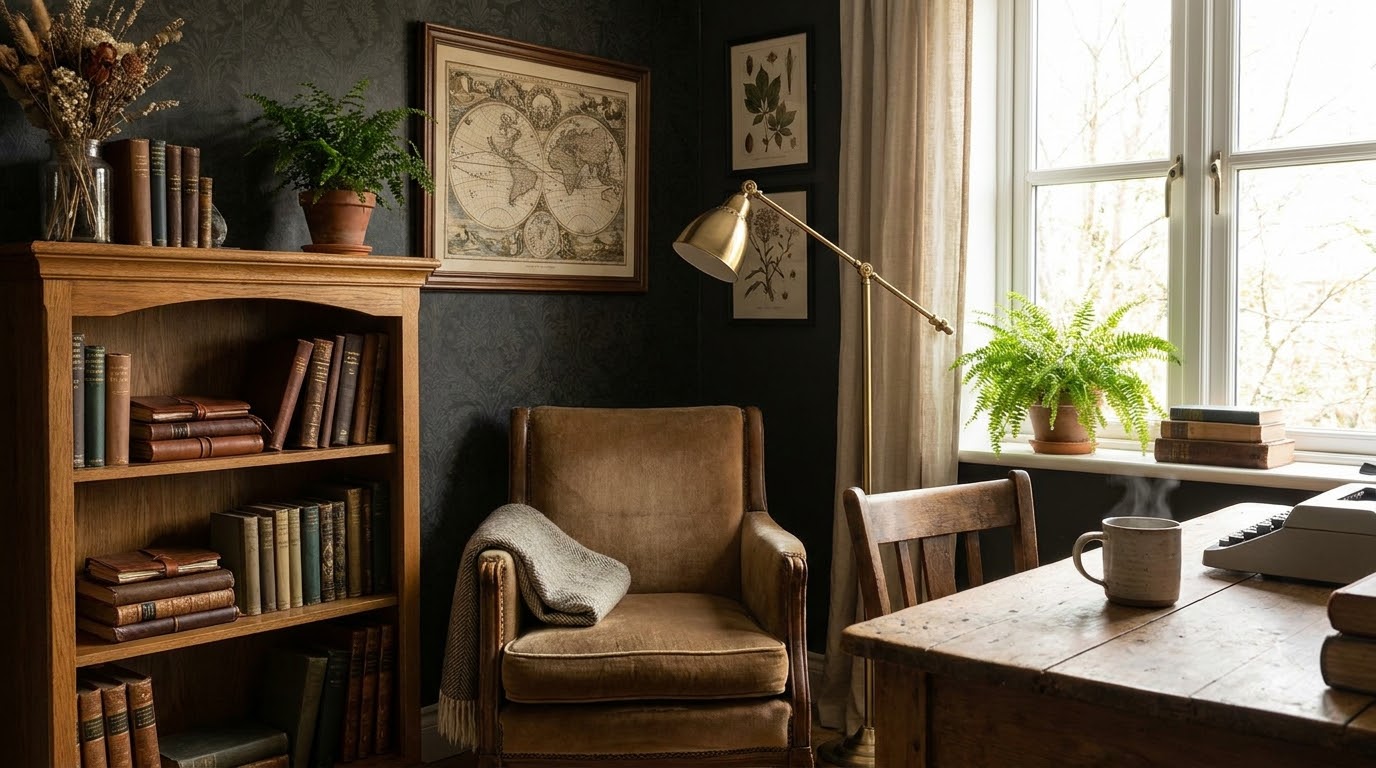
Dark academia room decor is a moody, scholarly look built on deep tones, warm wood, stacks of books, vintage finds, and soft lamplight instead of harsh overhead glare. Think a candlelit library corner rather than a bright dorm. The good news for renters and small-space dwellers: you can build the whole aesthetic with removable, layered pieces and a tight color palette, no drilling or big budget required. Below, we walk through the palette, the materials, and the exact renter-friendly moves we use to turn a plain rental into a room that feels like it has been reading late for a hundred years.
Key Takeaways
- Dark academia = moody, scholarly warmth: deep tones, natural wood, books, vintage objects, and low golden lamplight.
- Anchor everything to a five-color palette: espresso #3A2E23, forest #2E3D30, oxblood #6B2E2E, aged brass, and cream.
- Renters get the look with peel-and-stick wallpaper, plug-in wall sconces, and lamps with 2700K warm-white bulbs.
- Layer texture: leather or velvet, wool, and worn wood do more work than any single “statement” piece.
- A convincing corner runs about $120 to $350 secondhand, and you never need landlord permission.
What is dark academia decor?
Dark academia decor is an interior style that borrows the mood of old university libraries, rainy-window studies, and candlelit reading rooms. It leans into the romance of learning: leather-bound books, brass desk lamps, oil-portrait framing, and heavy, saturated color. Where a bright minimalist room asks you to keep things sparse, dark academia asks you to layer them, until a space feels lived-in, curious, and a little mysterious.
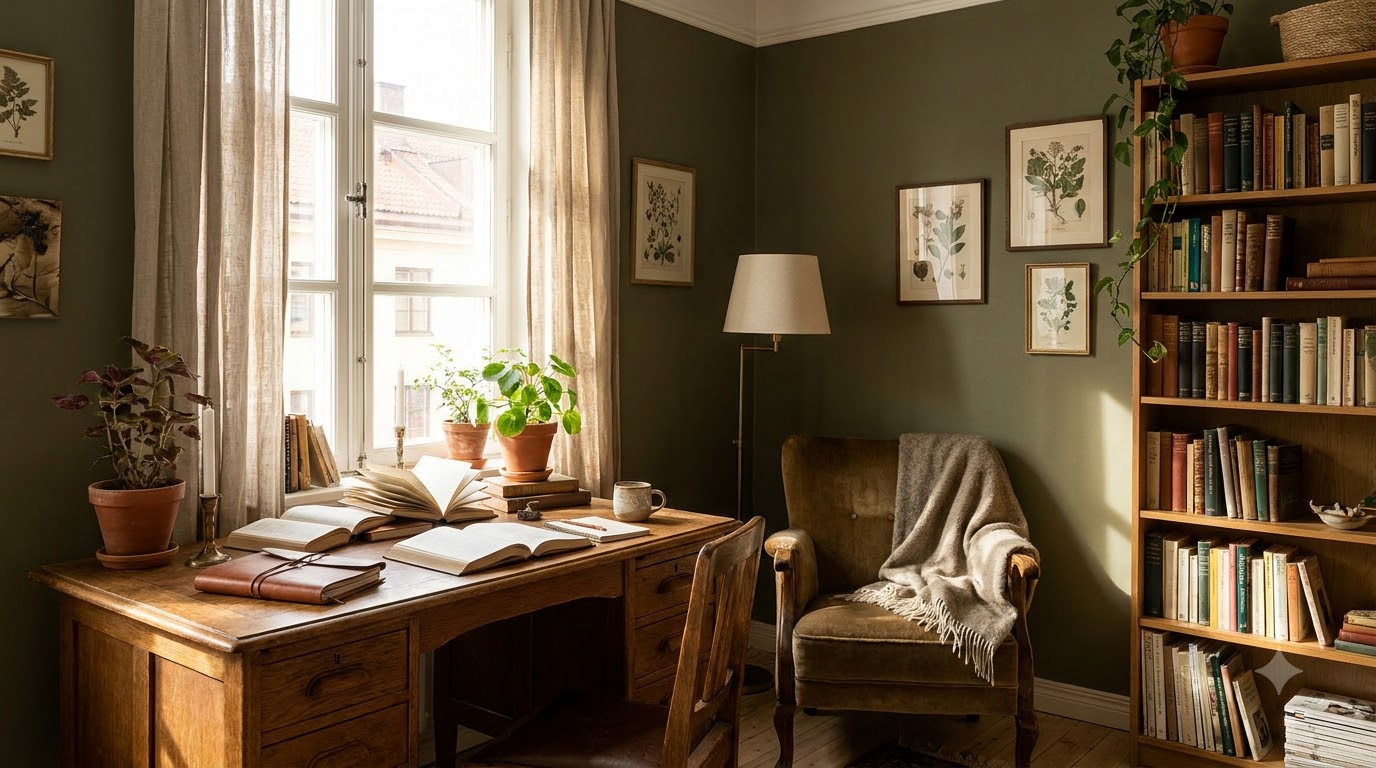
The style rests on a few recognizable pillars. Learn these and you can improvise the rest confidently:
- Deep, muted color. Espresso browns, forest greens, and oxblood reds instead of pastels or stark white.
- Natural wood and warm metal. Walnut and oak tones paired with aged brass or antiqued bronze.
- Books as decor. Stacked, shelved, and spine-out, they are the aesthetic’s signature texture.
- Vintage and antique objects. Globes, framed prints, brass clocks, and secondhand curiosities.
- Warm, low lighting. Table lamps and sconces at 2700K, never a single cold ceiling bulb.
When we first tested this look in our own rental, we made the classic mistake of buying one dramatic piece and calling it done. The room felt like a stage set. The fix was layering: once we added a second lamp, a wool throw, and a shelf of secondhand hardbacks, the corner finally read as a real study rather than a costume of one. If you love the cocooning quality here, our cozy living room ideas and layout guide shares the same layering logic for larger shared spaces.
What colors define the dark academia palette?
The palette is what makes dark academia read as intentional rather than just “dark.” We keep ours to five reliable values and repeat them across walls, textiles, and small objects so the room feels collected, not chaotic. Use these hex codes as your north star when shopping paint chips, peel-and-stick samples, and thrifted textiles:
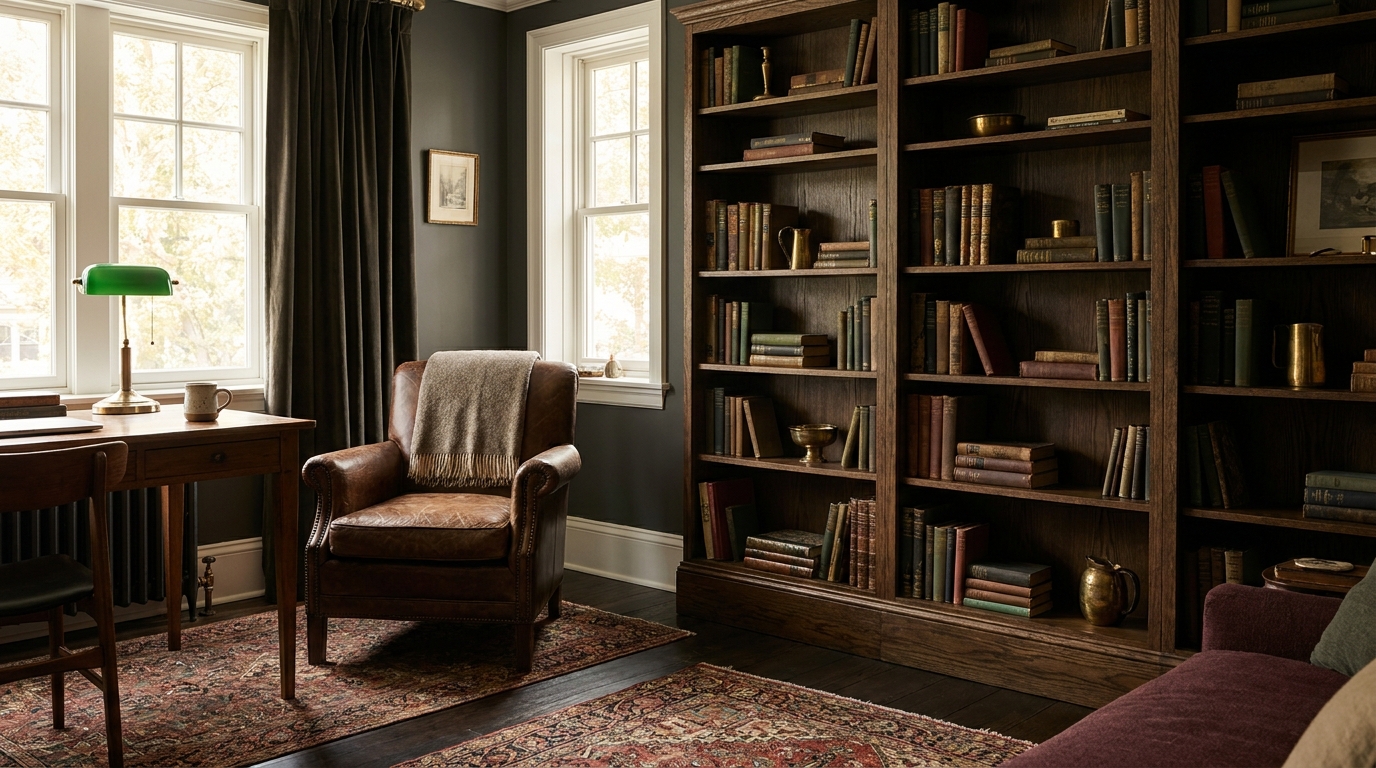
- Espresso #3A2E23 — the grounding brown for wood tones, leather, and larger furniture.
- Forest #2E3D30 — a deep green for an accent wall, velvet, or a reading chair.
- Oxblood #6B2E2E — a wine-red pop for pillows, book spines, and a single lamp.
- Aged brass — the warm metal that ties lighting, frames, and hardware together.
- Cream — the soft neutral that keeps deep tones from feeling like a cave.
The trick is proportion. Let espresso and cream do most of the heavy lifting, use forest as your one bold field of color, and treat oxblood and brass as accents you sprinkle in small doses. That balance keeps the room moody without swallowing the light, which matters enormously in a small rental with only one window.
How do renters get the dark academia look?
Renters get the dark academia look by adding moodiness through removable, reversible layers rather than paint and construction. Every move below comes off cleanly at the end of a lease and travels to your next place. We have used all of these across two apartments, and none of them cost us a security deposit.
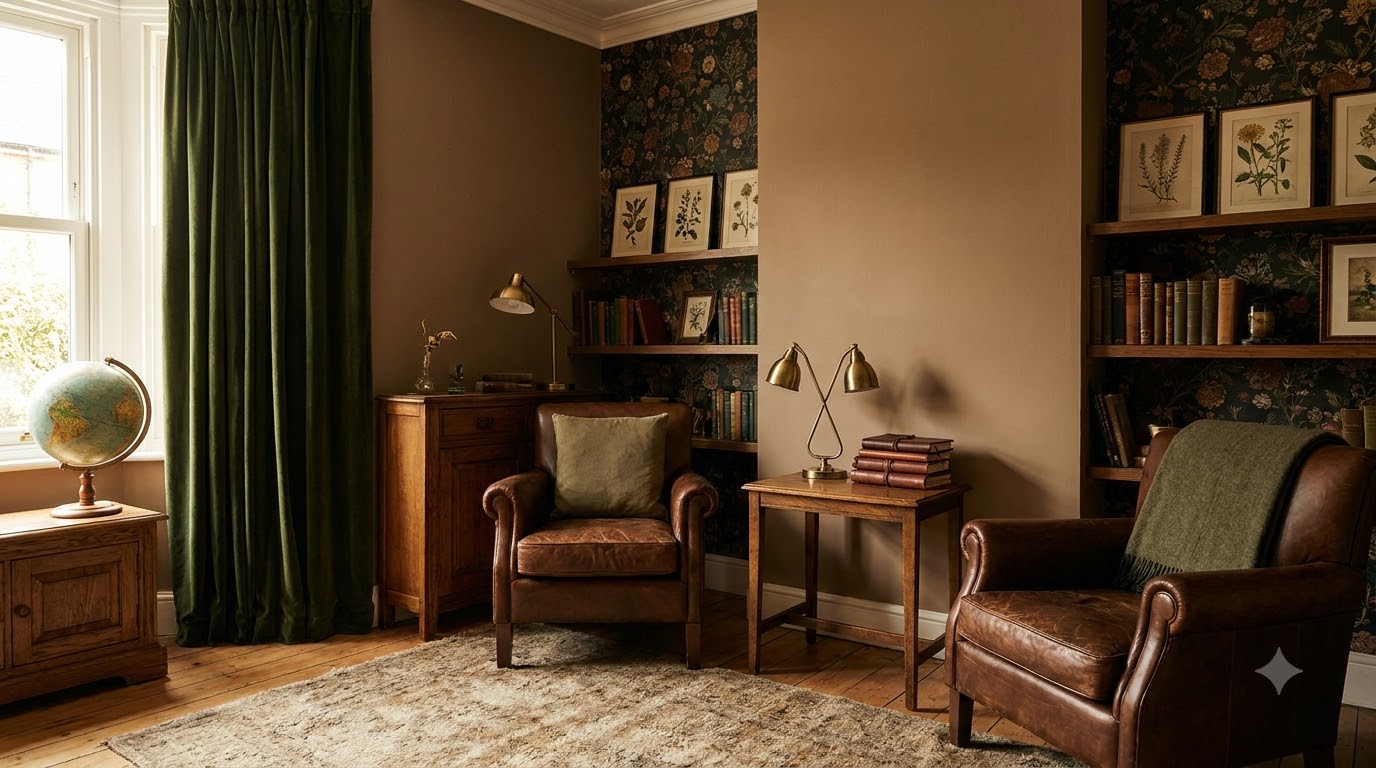
- Peel-and-stick wallpaper in a moody damask or dark botanical for one accent wall — expect $30 to $90 per roll and no wall damage.
- Plug-in wall sconces with cord covers, so you get that library glow without hardwiring — around $25 to $60 a pair.
- 2700K warm-white bulbs in every lamp to swap cold rental lighting for candle-like warmth — roughly $4 to $10 each.
- Tension rods and heavy curtains in forest or espresso to frame the window and soften daylight — about $20 to $50 per panel.
- Removable adhesive hooks to hang framed prints and small mirrors without a single nail hole.
Lighting is where renters win or lose the mood. A single overhead fixture at cool daylight temperature will flatten everything, so we ignore it after dark and light the room in pools instead: a desk lamp, a floor lamp in the corner, and a small sconce over the reading chair. Three warm sources at different heights is the whole secret, and it costs less than one designer fixture. For more removable, deposit-safe ideas that pair beautifully with this style, see our aesthetic bedroom ideas complete guide.
Which materials and textures matter most?
Dark academia is a texture story before it is a color story. The palette gives you the mood; the materials give you the depth. When a room in this style falls flat, it is almost always because every surface is the same smooth finish. Mix these and the space instantly gains that centuries-old, well-handled quality:
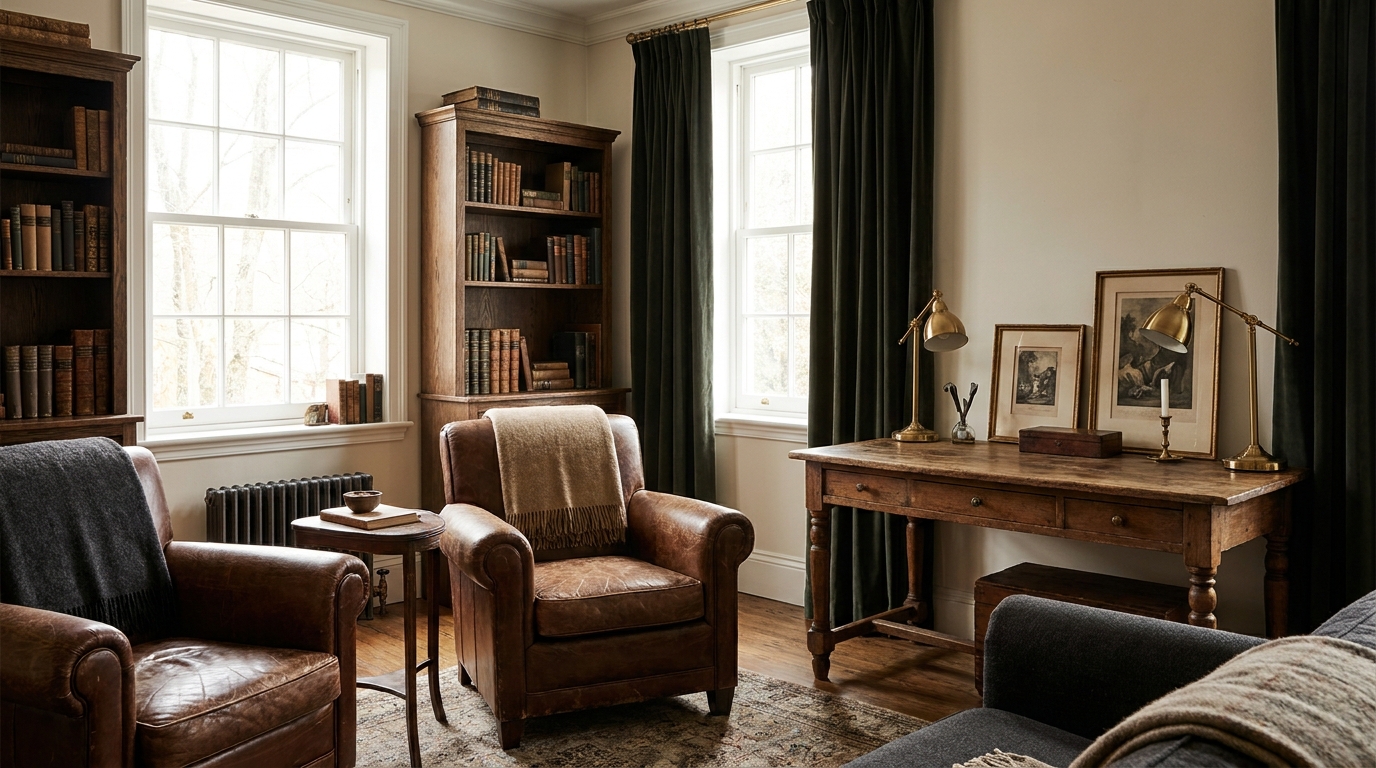
- Leather — a secondhand chair, a document box, or a book cover adds worn warmth and patina.
- Velvet — a forest or oxblood cushion catches lamplight and reads instantly luxurious.
- Wool and tweed — a nubby throw or a plaid blanket brings coziness and matte contrast.
- Aged wood — walnut, oak, or a thrifted piece with honest scratches beats anything glossy.
- Antique brass and glass — a lamp base, a magnifier, or an apothecary jar for quiet shine.
Our own favorite shortcut is the thrift-store hardback. A dozen worn books with cloth spines, stacked horizontally and vertically, deliver more dark academia texture per dollar than almost anything else in the room, usually for a dollar or two apiece. Turn a few spine-in for a muted, uniform look, or leave the aged titles proud to add character.
Dark academia picks by room element
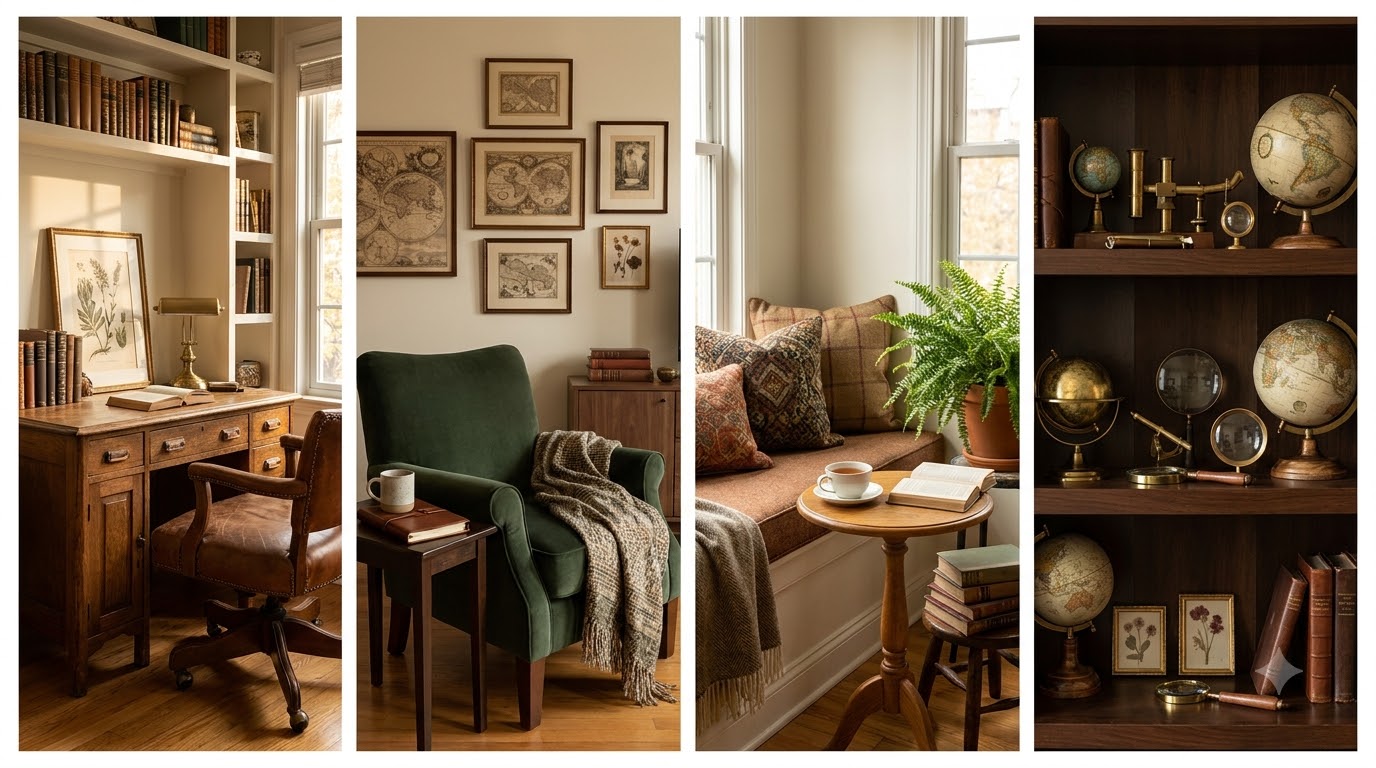
Use this table as a quick shopping map. It pairs each common room element with the dark-academia-appropriate choice and a realistic secondhand price range, so you can prioritize by budget:
| Room element | Dark academia pick | Typical cost (secondhand) |
|---|---|---|
| Walls | Peel-and-stick dark botanical or damask, one accent wall | $30–$90 |
| Main lighting | Table + floor lamps with 2700K bulbs, no overhead | $20–$70 |
| Accent lighting | Plug-in brass sconce with cord cover | $25–$60 |
| Seating | Worn leather or forest velvet armchair | $60–$180 |
| Textiles | Wool throw + oxblood velvet cushion | $15–$45 |
| Wall art | Vintage-style portrait or botanical prints, gold frames | $10–$50 |
| Objects | Thrifted books, globe, brass clock, apothecary jar | $5–$40 |
Notice how the biggest visual payoff, the walls and the seating, sits in the middle of the budget, not the top. You do not need a rare antique to sell the look; you need the right silhouette in the right tone.
How do you decorate the walls without damage?
Walls carry a huge share of the dark academia mood, and they are exactly where renters feel most restricted. The workaround is to treat the wall as a gallery of removable layers. Prints, framed portraits, small mirrors, and pressed botanicals all hang cleanly from adhesive strips rated for the weight, so you can build density without a drill.
- Group frames tightly in a cluster rather than spacing them evenly like a museum.
- Mix portrait prints, botanical studies, and a small vintage map for that collected feel.
- Stick to gold, brass, or dark wood frames to keep the palette disciplined.
- Add one larger print low behind a chair to anchor the arrangement.
- Lean a framed piece on a shelf instead of hanging it for an effortless, unfussy look.
If you want a full walk-through of arranging frames in a tight, layered cluster, our gallery wall ideas complete guide breaks down spacing and layout step by step. And when you want one commanding piece to anchor the whole wall, our roundup of the best large wall art prints under $80 is full of moody, vintage-leaning options that suit this palette.
How do you fit dark academia in a small space?
Small spaces actually flatter dark academia, because the style thrives on enclosure and intimacy. The concern is usually light: won’t deep tones make a tiny room feel smaller? In our experience the opposite happens when you do it right. A cocoon of warm color with a few glinting brass accents feels considered and calm, not cramped. The key is restraint and vertical thinking:
- Pick one moody wall, not four, so the room has depth without closing in.
- Go vertical with a tall, narrow bookcase to gain storage and drama on a small footprint.
- Use a slim floor lamp in the corner to add height and a second warm light source.
- Add one mirror in a brass or dark wood frame to bounce lamplight and stretch the space.
- Create a single defined nook — a chair, a lamp, a small stack of books — instead of scattering the theme.
A whole studio does not need the treatment. One well-built corner, a reading nook with a chair, a lamp, a throw, and a shelf, communicates the entire aesthetic and leaves the rest of the room breathing. That is also the most affordable way in: build the nook first, then expand only if you love living with it.
Frequently asked questions
Is dark academia expensive to decorate?
Not if you shop secondhand. Because the look celebrates worn wood, aged brass, and well-loved books, thrift stores and estate sales are your best friends. A convincing reading corner, chair, lamp, textiles, and books, typically runs about $120 to $350. Buying everything new pushes costs far higher for a less authentic, less characterful result.
Can I do dark academia without painting?
Absolutely, and most renters should. Peel-and-stick wallpaper on one accent wall delivers the moody backdrop with zero damage and peels off cleanly at move-out. Pair it with warm 2700K lamplight, deep-toned curtains on a tension rod, and layered textiles. The color and mood come from what you add to the room, not from the landlord’s walls.
What lighting works best for dark academia?
Warm, low, and layered lighting is essential. Swap cool bulbs for 2700K warm-white ones, skip the single overhead fixture after dark, and light the room in pools with a desk lamp, a floor lamp, and a small sconce. Three warm sources at different heights create the candlelit library glow the whole style depends on.
How do I keep a dark room from feeling gloomy?
Balance is everything. Let cream and warm wood soften the deep espresso and forest tones, and add aged brass or a framed mirror to catch and bounce light. Keep at least one bold color, like oxblood, as a small accent rather than a whole wall. Warm bulbs and a little shine turn moody into inviting.
Where should I start if I only have a small budget?
Start with lighting and books. A few 2700K bulbs and a secondhand lamp transform the mood for under $30, and a stack of thrifted hardbacks adds instant texture for a dollar or two each. Build one reading nook before you touch the rest of the room, then expand the palette outward as your budget allows.