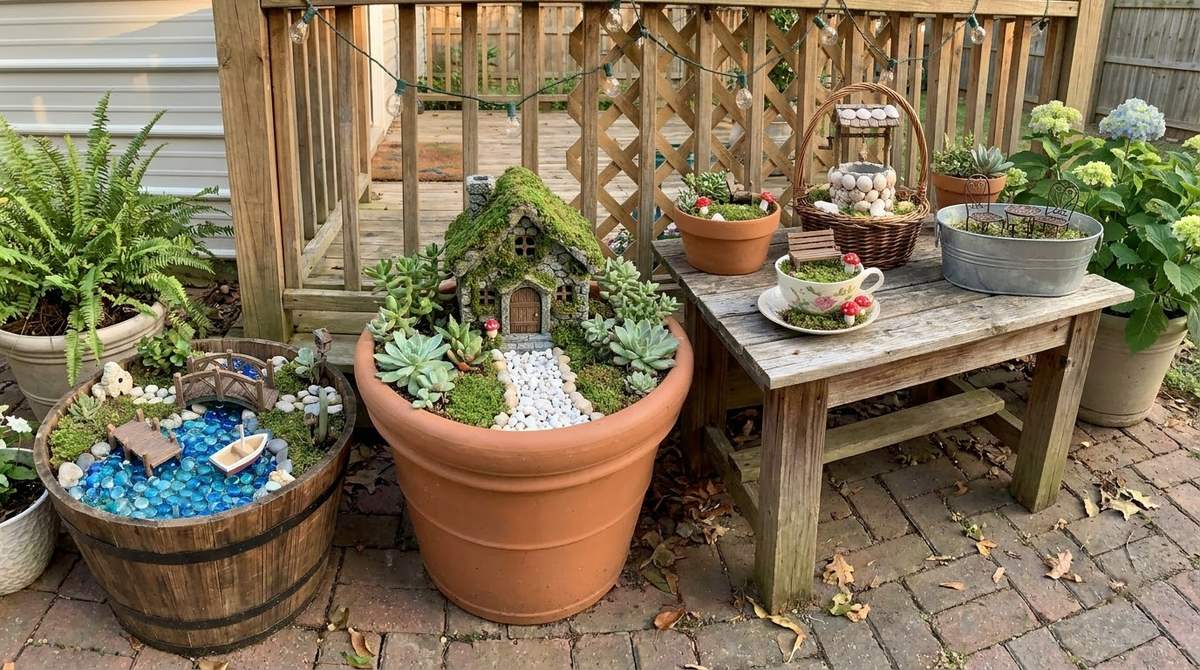
These 20 fairy garden ideas fit in pots as small as 3½ inches across, with scenes from about $3 to $25 each. Most use a single container, so a balcony corner, a patio table or a windowsill is all the space required, and nothing is nailed or planted in the ground.
Choose the container first, then plants that match your light, then tiny props.
| Idea group | Approx cost | Renter-safe |
|---|---|---|
| Pots and containers (1-5) | $7-$25 | Yes |
| Plants and ground cover (6-10) | $3-$20 | Yes |
| Paths, houses and props (11-15) | Free-$8 | Yes |
| Jars, light and seasons (16-20) | Free-$20 | Yes |
Key Takeaways
- Every container needs drainage holes; a scene in a pot without them rots from the bottom.
- Match the plants to the light: moss for shade, succulents and sedums for sun, never both in one pot.
- Keep props small: tiny scale is what makes a pot read as a village rather than a toy shelf.
- Terracotta pots, saucers, sticks and pebbles do most of the work for under $25.
- Small, movable containers can come indoors for winter; a wheelbarrow or crate makes that easy.
Pots and Containers That Hold a Whole Scene
The container sets the size, the budget and how easily you can move the garden.
1. A Single Terracotta Pot With a Saucer
One 4¾-inch terracotta pot with an attached saucer is the simplest start: soil, a plant, a tiny house and a pebble path fit in a space about the width of a mug. IKEA’s MUSKOTBLOMMA was $6.99. The saucer protects a balcony floor from drips.
Cost: ~$10-$15 · Renter-safe: Yes
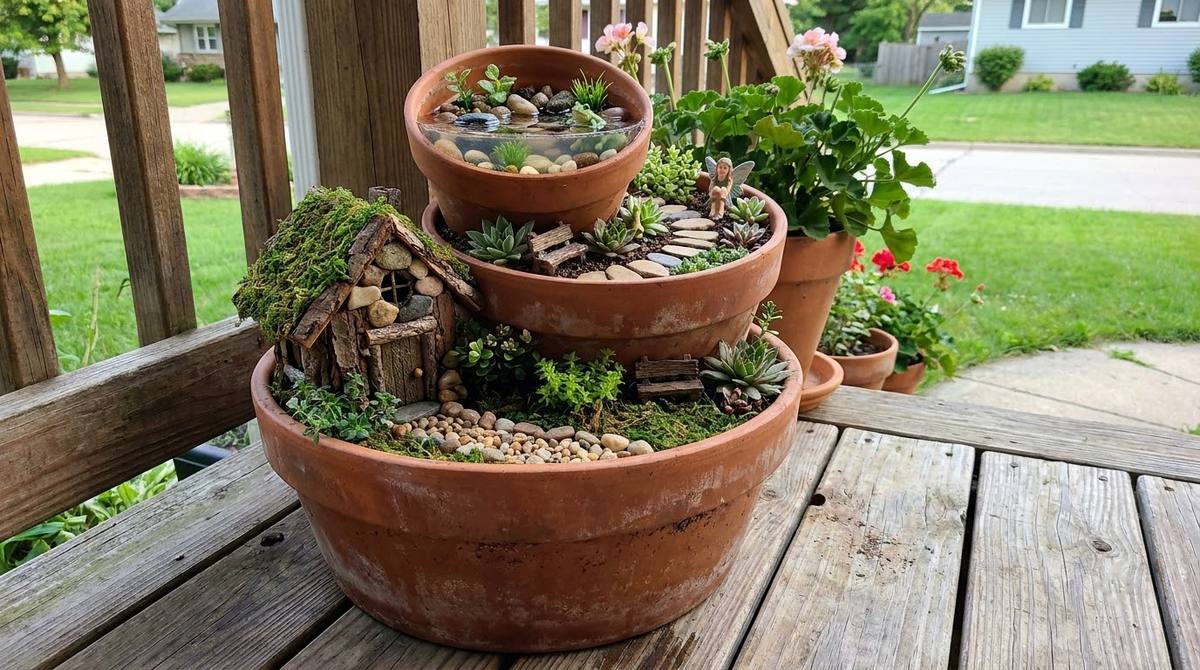
2. Three Pots Stacked as a Village
Set three pots in graduated sizes next to each other and give each a different job: a house in one, a garden path in another, a pond in the third. IKEA’s 3½-inch FÖRENLIG was $3.99, the 4¾-inch terracotta $6.99 and a 6-inch terracotta $9.99.
Cost: ~$21 · Renter-safe: Yes
3. A Wooden Crate on a Porch Table
A shallow wooden crate holds a spread-out garden of creeping plants and a small arbor, and slides aside when the table is needed. One blogger built a crate version in about 5 minutes. Line the crate with a pot or drill holes so water can drain.
Cost: ~$8-$15 · Renter-safe: Yes
4. A Wheelbarrow or Wagon Village
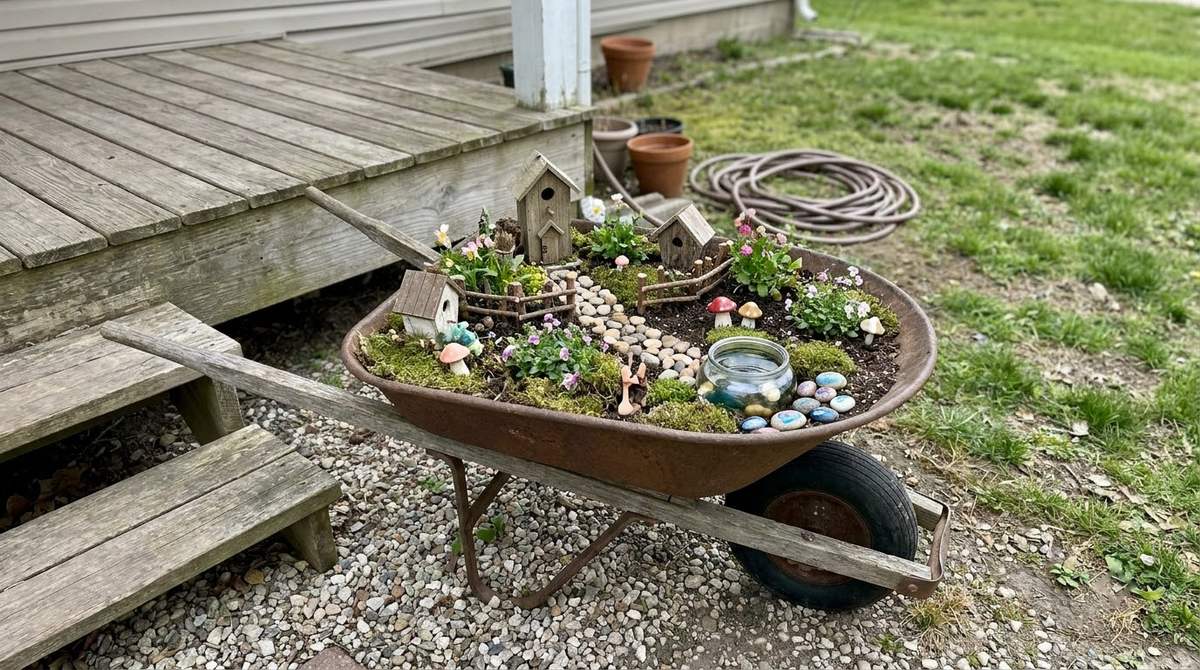
Garden fairy scenes sit well in found objects. Mississippi State Extension describes an old wagon holding tiny homes and a wheelbarrow village with a repurposed dish for a pond. A kid-size wheelbarrow rolls indoors at night. Secondhand, about $10-$25, an editorial estimate.
Cost: ~$10-$25 · Renter-safe: Yes
5. A Long Flower Box as a Village Street
A 22 x 7¾-inch flower box gives a long, narrow stage for a row of cottages along a gravel street. IKEA’s VITLÖK box was $19.99. Set it on a ledge or on the floor against a wall, with a tray beneath it so water does not mark the deck.
Cost: ~$20 · Renter-safe: Yes
Plants and Ground Cover That Stay Small
Plant choice decides whether the scene lasts a season or gets overgrown in a month.
6. A Moss Carpet for a Shady Corner
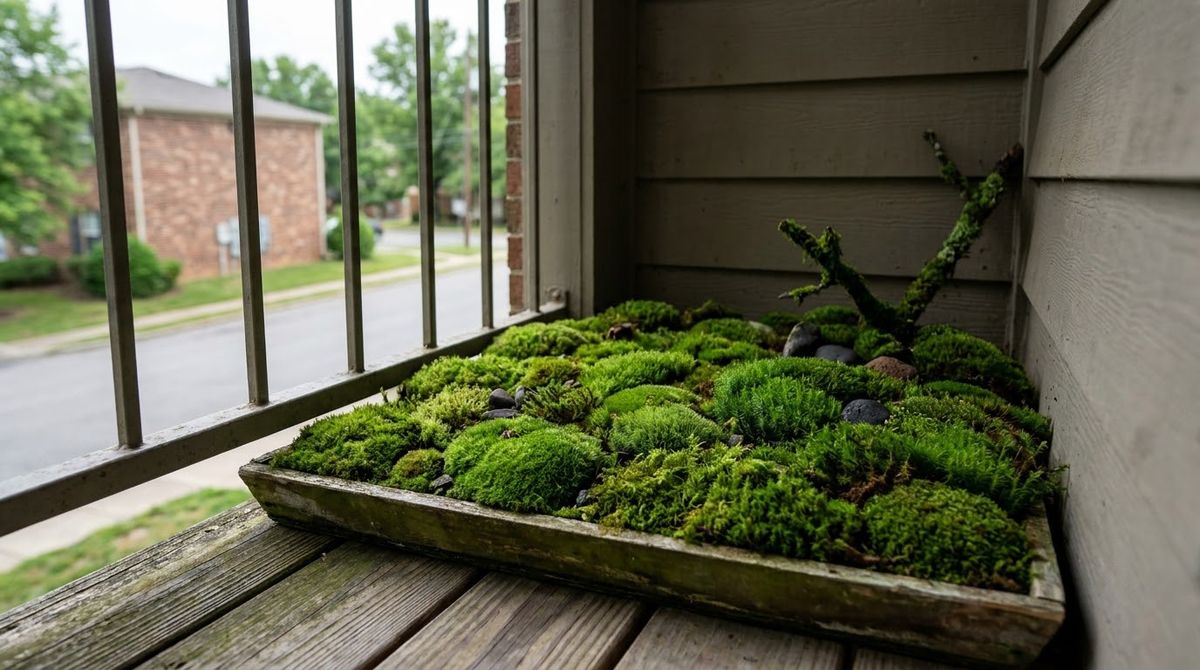
Moss suits north-facing balconies and covered porches where succulents would stretch. The Clemson Extension miniature garden fact sheet lists mosses and Irish moss among its small plants. Press sheet moss on damp soil and keep it moist. A bag costs about $5-$8, an editorial estimate.
Cost: ~$5-$8 · Renter-safe: Yes
7. Succulent Forest in a Sunny Pot
For a sunny rail, plant hens and chicks and small sedums close together so they read as tiny trees. Clemson’s fact sheet lists both. Use a succulent mix, which drains faster than regular potting soil, and water only when the mix has dried out. Small starter plants run about $3-$6 each, an editorial estimate.
Cost: ~$10-$20 · Renter-safe: Yes
8. Creeping Groundcover as a Tiny Lawn
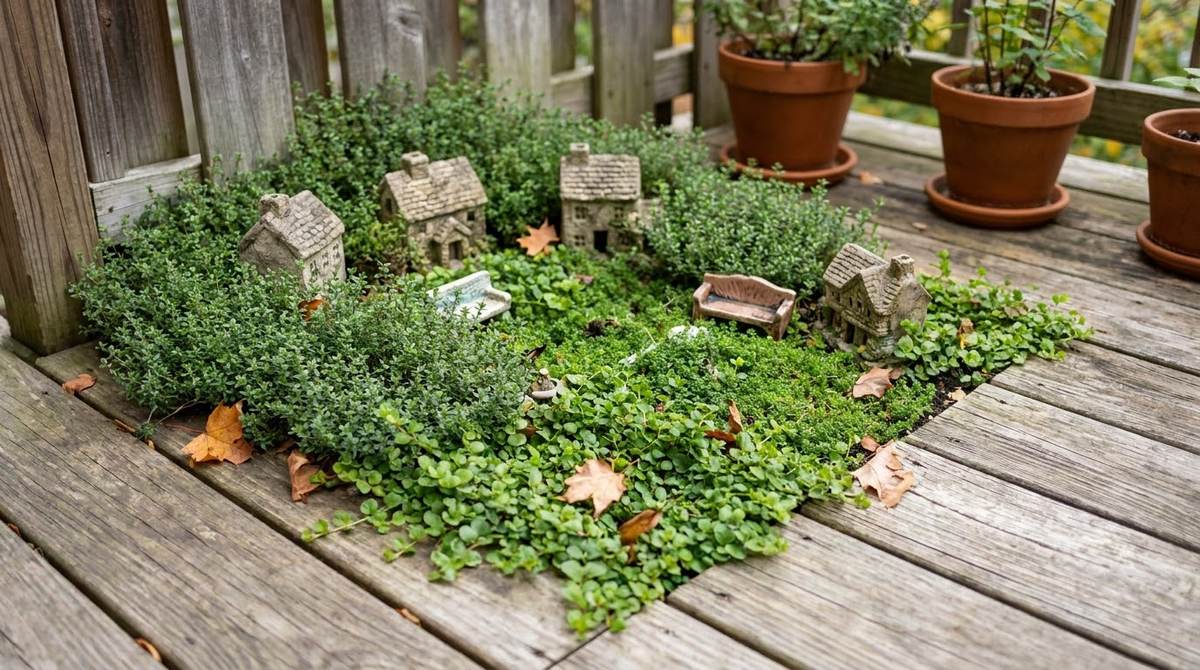
Low creeping plants make a lawn at the scale of a village: they hug the soil, spread slowly and tolerate light foot traffic from small hands. Space them an inch or two apart so the pot fills in. A flat of small starter plants costs roughly $5-$12, an editorial estimate.
Cost: ~$5-$12 · Renter-safe: Yes
9. A Dwarf Conifer as the Big Tree
A dwarf conifer gives the garden a real tree. Clemson names miniature juniper and dwarf mugo pine among its options, and dwarf plants there grow about 6 inches a year, so plan to trim or replant. Garden centers sell small ones for about $10-$20, an editorial estimate.
Cost: ~$10-$20 · Renter-safe: Yes
10. Faux Moss and Pebbles for a Dark Corner
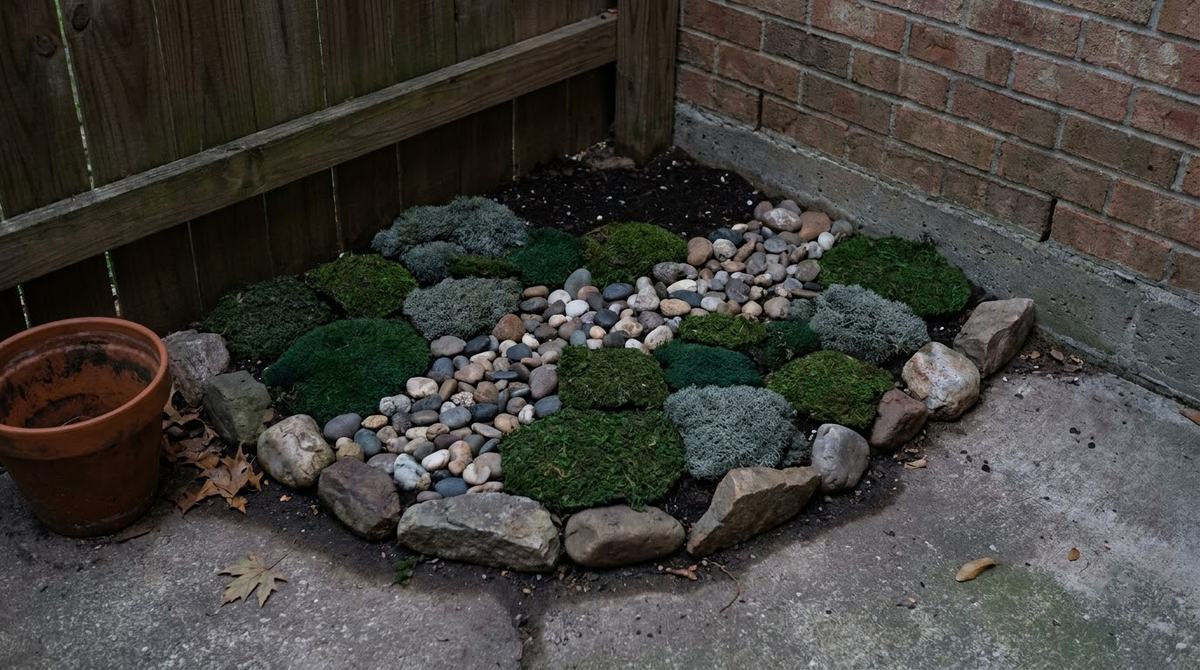
Where nothing living thrives, craft moss and pebbles keep the scene green all year and need no watering. Press the moss over a layer of gravel, and add a few real stems when a window gets more light. A bag of each runs about $3-$6, an editorial estimate.
Cost: ~$6-$12 · Renter-safe: Yes
Paths, Houses and Props
Props tell the story, and most of them cost almost nothing.
11. A Twig and Bark House
Lean sticks against each other in a cone, wrap with bark, and use a wedge of cork for a door. A house about 4 inches tall suits a 6-inch pot. Gather sticks off the ground rather than breaking living branches, and add a dot of non-toxic glue to hold.
Cost: Free · Renter-safe: Yes
12. A Pea Gravel Path With Stepping Stones
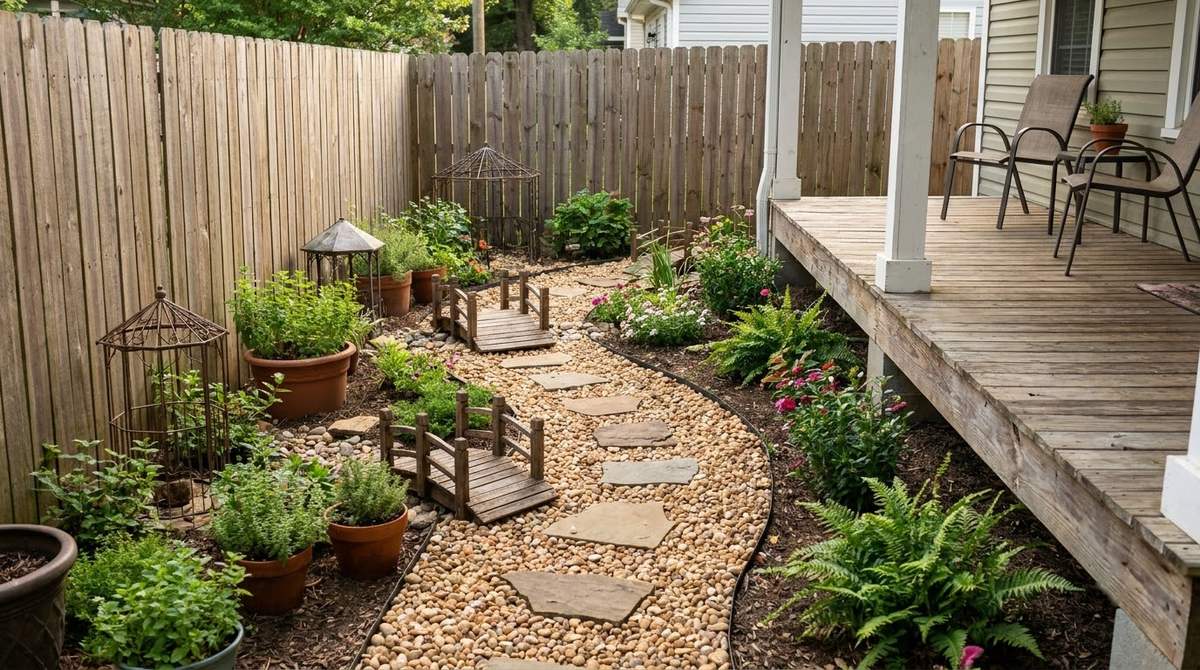
Mississippi State’s page describes pea gravel and rocks forming roads that wind past bridges and gazebos. In a pot, a path of pea gravel about an inch wide winds from the door to a flat stone. A small bag of pea gravel costs about $5, an editorial estimate.
Cost: ~$5 · Renter-safe: Yes
13. A Twig Table and Chairs for Tea
Glue craft sticks into a table about 2 inches tall and four chairs, and set them under a plant that acts as an umbrella. It is an afternoon of crafting for a child, and costs nothing if sticks are on hand. Seal the glue with a thin coat of clear sealer for outdoor use.
Cost: ~$6 · Renter-safe: Yes
14. A Saucer Pond With Tiny Lily Pads
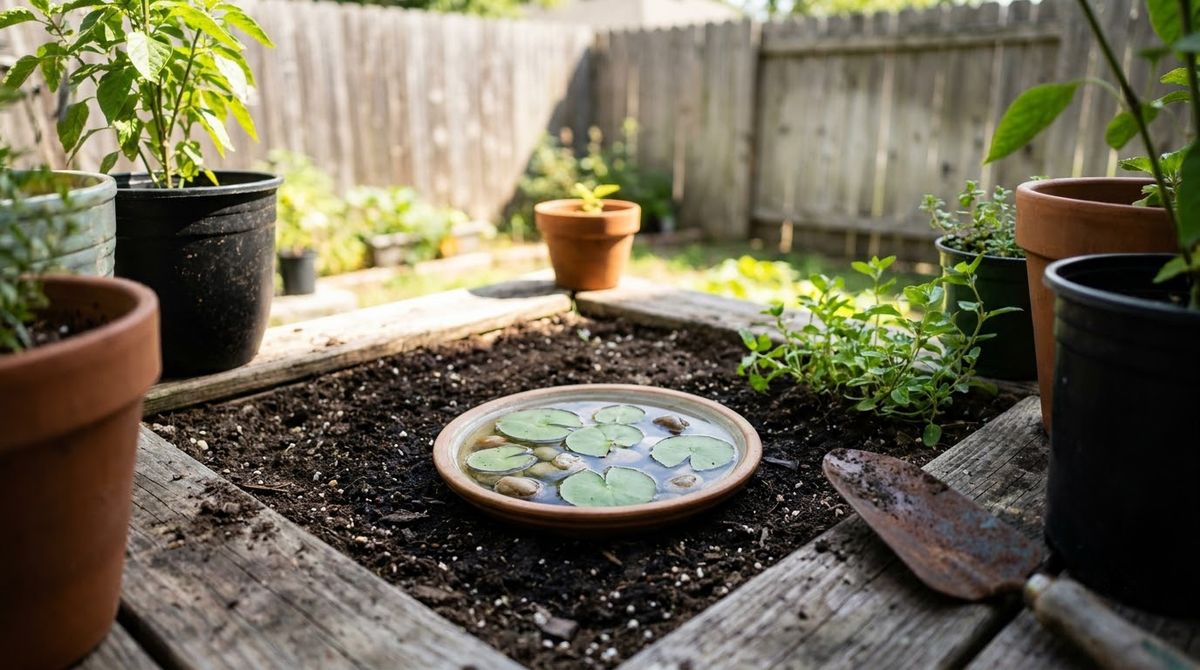
Sink a saucer into the soil, fill it with water and pebbles, and float a few lily pad cutouts. The pond adds a reflective surface and a focal point. Empty and refill it weekly so it does not turn green or breed mosquitoes. A saucer costs about $2-$5, an editorial estimate.
Cost: ~$2-$5 · Renter-safe: Yes
15. A Fairy Door at the Base of a Planter
A small door leaning against the rim of a large pot, or at the foot of a plant, tells the whole story in one prop. Pick a door about an inch tall for a medium pot. Painted wood or resin versions run about $3-$8, an editorial estimate, and a cut-out cork works for free.
Cost: ~$3-$8 · Renter-safe: Yes
Jars, Light and Seasonal Swaps
These ideas stretch a small garden across the year and into the evening.
16. An Open Glass Jar Moss Garden
For an open jar, Oregon State Extension suggests a 1 to 1½-inch layer of horticultural charcoal under 3 to 4 inches of soilless mix, not a layer of stones. IKEA’s 4-inch KORKEN jar was $2.99, so keep it to moss and one prop.
Cost: ~$9 · Renter-safe: Yes
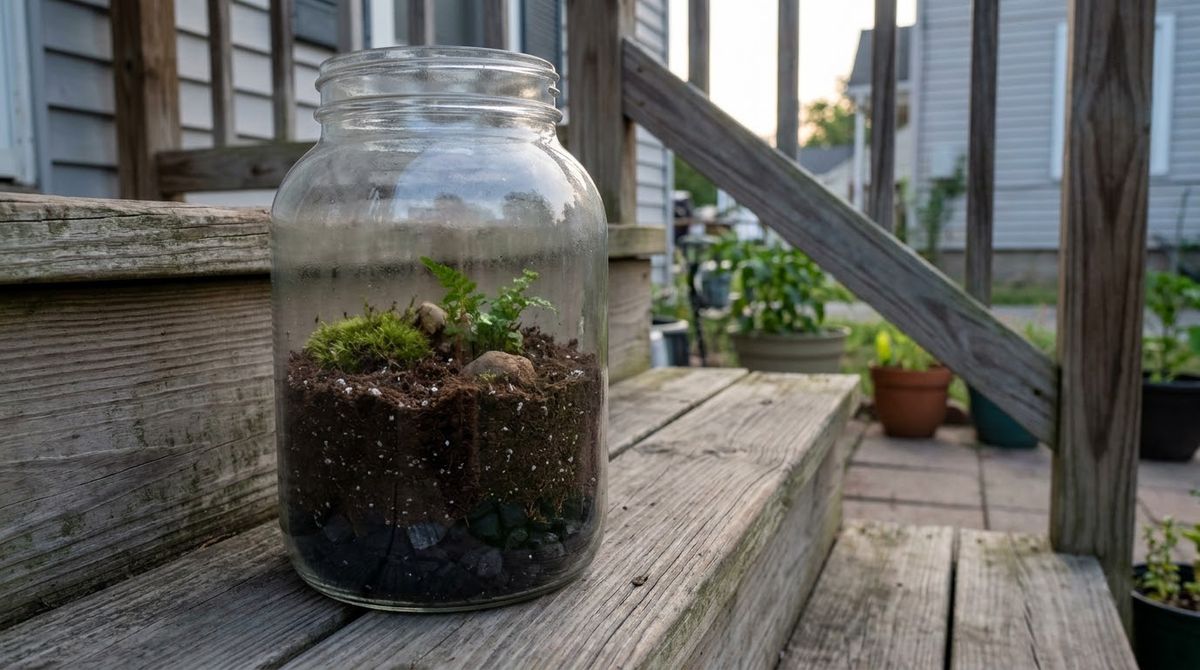
17. A Garden That Glows at Dusk
Drop a battery string of twelve lights, nearly 7 feet long, into a clear jar and set it behind the scene for a lantern glow. IKEA’s LEDFYR string was $6.99 and the KORKEN jar $2.99. The lights run on two AA batteries, so no outlet is needed on a balcony.
Cost: ~$10 · Renter-safe: Yes
18. Bring the Garden Inside for Winter
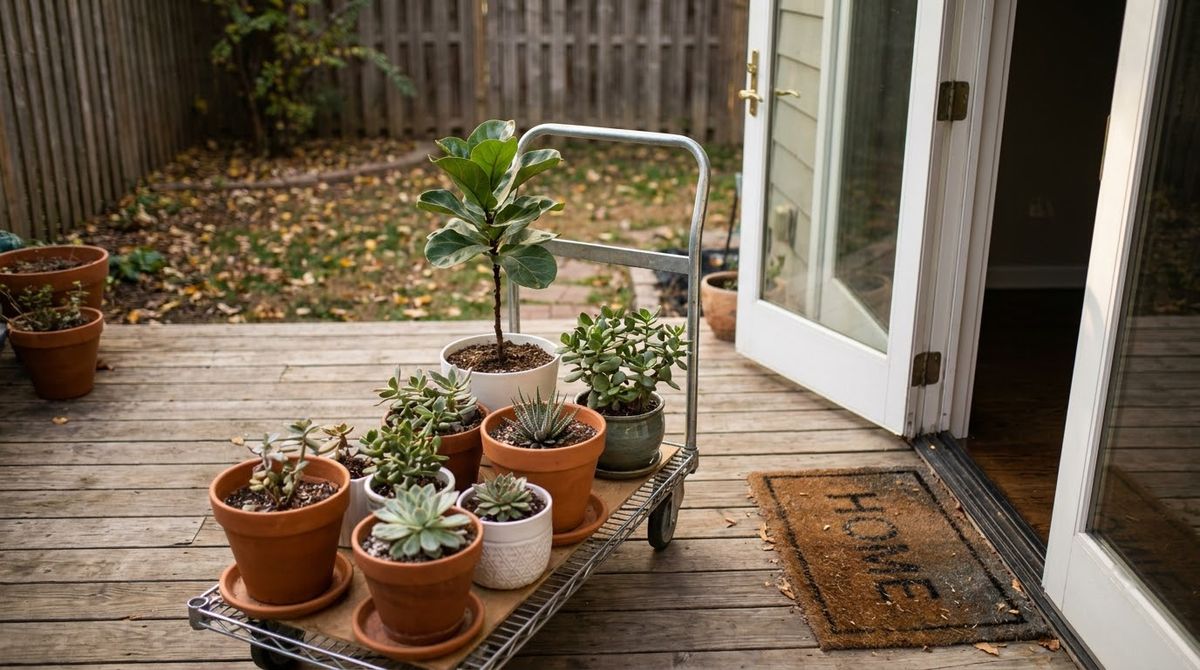
Clemson’s fact sheet advises bringing small or mobile containers indoors in winter and notes that some tropicals need a minimum of 60 degrees Fahrenheit year-round. A wagon or crate lets you roll the whole scene to a bright window. Pick a spot away from the heater.
Cost: Free · Renter-safe: Yes
19. Seasonal Prop Swaps
Keep the plants and change the props with the calendar: mini pumpkins in October, a cotton-ball snowdrift in January, tiny flags in July. Store the swapped pieces in a shoebox. The same pot looks new four times a year, for about $5 in craft supplies, an editorial estimate.
Cost: ~$5 · Renter-safe: Yes
20. A Patio Table Centerpiece
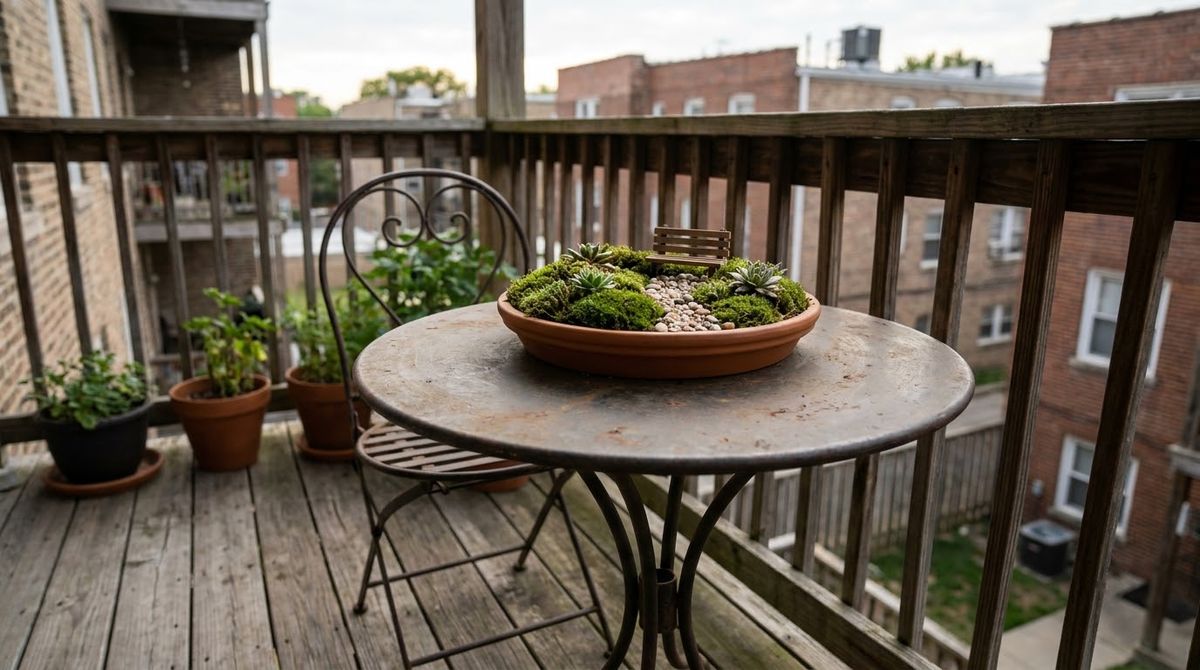
A 6-inch terracotta pot with a tiny scene makes a centerpiece that does not block conversation, and it lifts off in one move when dinner is served. Keep the plants low, under about 8 inches, so guests can see across the table. IKEA’s 6-inch MUSKOTBLOMMA was $9.99. For seating layouts see patio dining set ideas.
Cost: ~$15-$20 · Renter-safe: Yes
Fairy Garden Mistakes to Skip
- Skip a layer of gravel at the bottom of the pot. Oregon State Extension says a bottom layer of stones can let water pool and cause root rot, so fill the pot with mix.
- Skip mixing moss and succulents in the same pot. Moss usually needs more water than other plants, while succulents need the mix to dry out between waterings.
- Skip oversized props. Clemson suggests accessories scaled to the container, about 1 inch for large containers and a quarter inch for small ones.
- Skip pots with no holes. For a balcony setup, see balcony garden ideas for renters and container garden basics.
Frequently Asked Questions
What plants are best for a fairy garden?
Choose slow, small plants. Clemson Extension lists mosses, Irish moss, hens and chicks, miniature sedums and dwarf conifers for miniature gardens. Use moss in shade and succulents or sedums in sun, and keep each type in its own container. Pick the smallest plants you can find.
Do fairy garden pots need drainage holes?
Yes. The University of Florida gardening guide says containers need enough drainage holes so plants are not left standing in wet soil. A pot without holes can hold moss only if watering is very light, so drill holes where the material allows.
How do you water a miniature garden?
Check the soil with a finger first. Oregon State Extension advises watering once a week or less and checking that the soil is dry to the first knuckle, about 1 inch, before adding more. Succulent mixes need water about once a month or less. A turkey baster reaches tight spots.
Can a fairy garden live on a small apartment balcony?
Yes. A single 4 to 6-inch pot fits on a ledge or on a small table, needs no drilling and can come inside in winter. Pick plants for the light you have, and place the pot where wind will not tip it. Vertical garden ideas add more room.
How big should a fairy garden be?
Start small. Clemson’s fact sheet classes containers of 2 to 4 inches as small, 10 inches or less as medium, and larger than that as large. A 6-inch pot is enough for a house, a path and one plant, and it is easy to lift and carry.