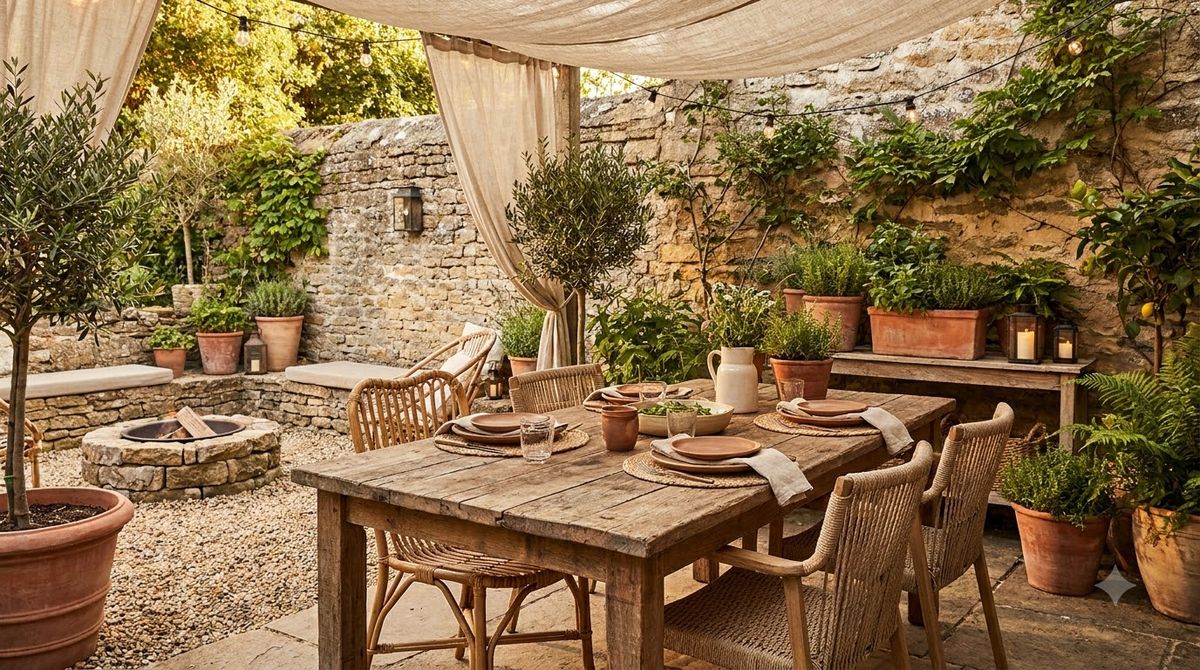
A great patio dining area comes down to four things working together: a right-sized table, weatherproof seating, an overhead light, and a little shade. Nail those four, and even a slim balcony or a rented concrete slab turns into the spot where dinner runs long. A well-chosen patio dining set is the anchor, but the magic is in how it fits your square footage, your budget, and the way you actually eat outside.
This guide is built for small rentals, where nothing can be drilled, everything has to move, and the budget is real. Below you’ll find table sizes by party count, the clearances that keep chairs from banging the railing, and the weatherproof materials that survive a season without babysitting.
Key Takeaways
- A complete patio dining area = right-sized table + weatherproof seating + overhead light + shade.
- Match table to party: a 24-30 in bistro for 2, a 48 in round for 4, and rectangular tops for 6 or more.
- Leave 36 in of clearance around the table so chairs pull out without hitting walls or railings.
- Prioritize weatherproof materials: powder-coated aluminum, HDPE, teak, or all-weather wicker over a rust-prone frame.
- Budget sets run roughly $150-$400; add a $40-$120 umbrella or string lights for the overhead layer.
- Renters win with foldable, stackable, and no-drill pieces that store flat in the off-season.
What makes a patio dining area actually work?
The difference between a table shoved outside and a dining area you crave is layering. Think of it as four jobs, each handled by one part of the setup. Skip one and the space feels unfinished; you’ll sit down, notice the glare or the wobble, and drift back indoors within a week.
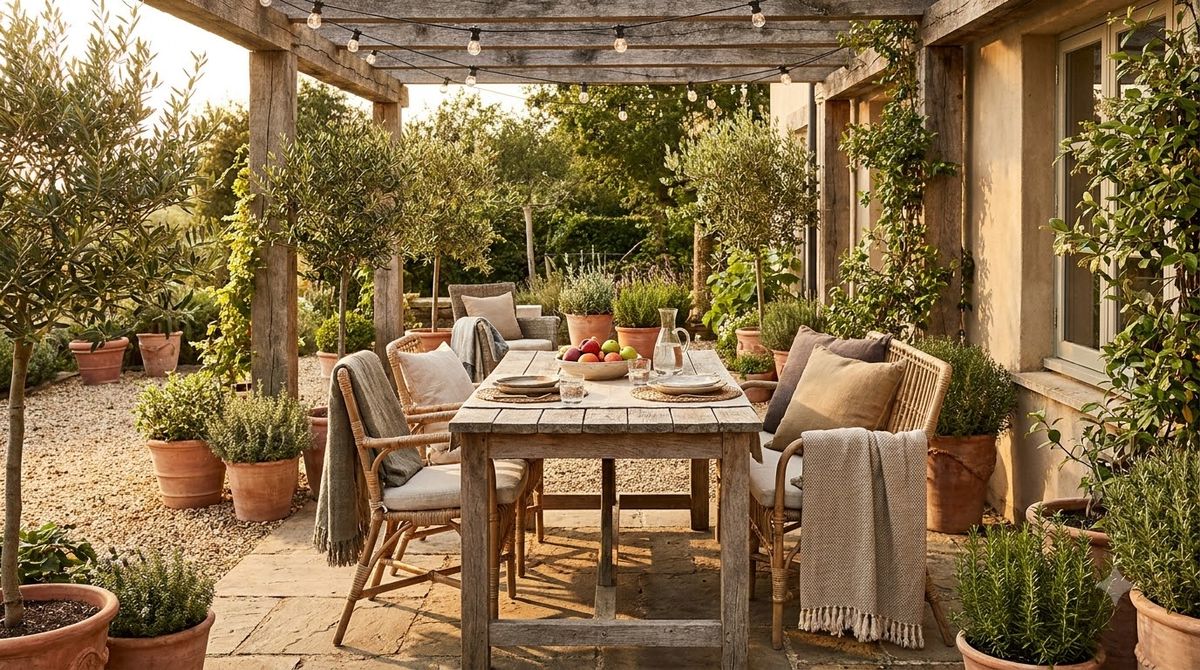
- The surface: a table sized to your party and your footprint, not the biggest one that fit in the car.
- The seating: weatherproof chairs or a bench that shrug off rain and sun without fading to gray dust.
- The light: an overhead layer so dinner can outlast the sunset, from string lights to a solar lantern.
- The shade: an umbrella, sail, or wall of greenery that makes a west-facing slab usable at 6 p.m.
A common balcony mistake is owning the table and chairs but nothing overhead, so dinners end abruptly the second the sun drops behind the next building. A single strand of warm string lights along the railing can do more for the space than a new table, and it costs less than a takeout order.
What size patio table for a small space?
Size your table to the number of people you actually host most weeks, not the holiday crowd you feed twice a year. For two, a bistro table with a 24-30 in top is plenty and leaves room to breathe. For four, a 48 in round is the sweet spot, comfortable elbows without hogging the floor. Round tables tuck into corners better and let you squeeze in one extra chair; rectangles seat more per square foot along a wall or railing.
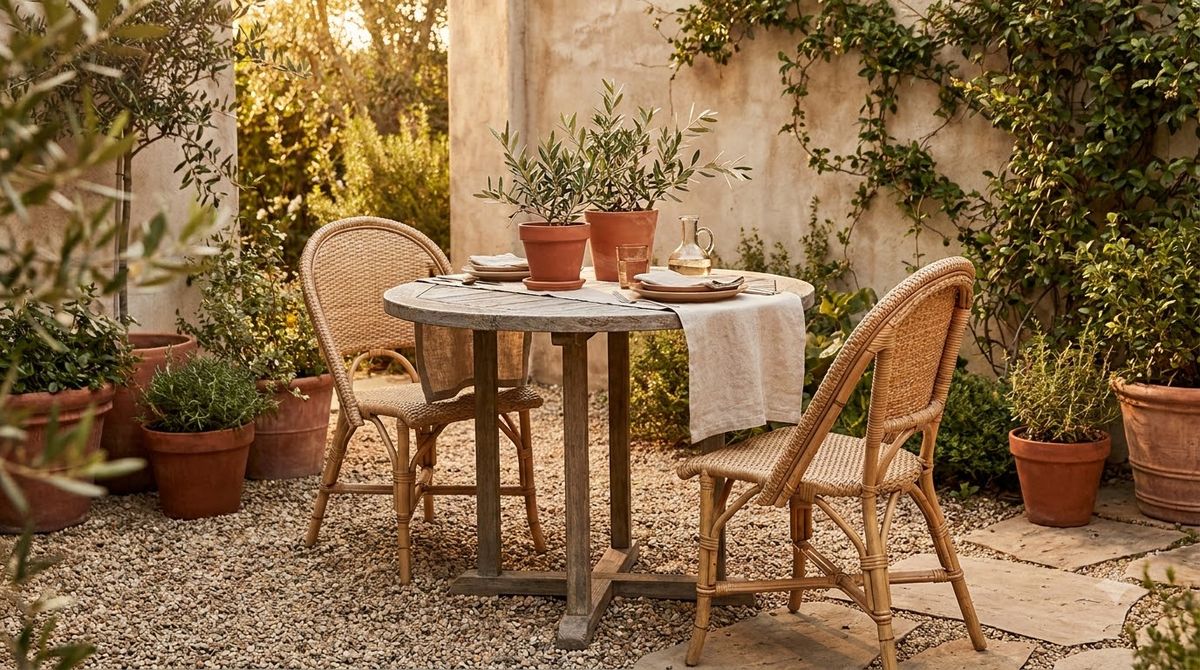
The measurement people forget is clearance. You want 36 in of space from the table edge to any wall, railing, or planter so chairs slide out and people walk behind them. On a tight balcony, measure your usable floor first, subtract 36 in on each seating side, and let that number cap your tabletop. Skipping this step is how a table that looks right online turns a balcony into an obstacle course.
| Party size | Recommended table size | Best shape |
|---|---|---|
| 2 people | 24-30 in bistro | Round or square |
| 3-4 people | 36-48 in | Round |
| 4-6 people | 48-60 in | Rectangular or oval |
| 6-8 people | 72 in or longer | Rectangular |
If you’re working with a truly tiny footprint, a drop-leaf or folding table earns its keep. Keep it collapsed against the wall for morning coffee, then open it to full size when friends come over. That flexibility is the single best trick for renters and anyone squeezing a dining area onto a balcony. For more ways to make a compact outdoor spot feel intentional, our guide to patio decor ideas for small spaces pairs well with the sizing math here.
How do you set up an outdoor dining area?
Setup is less about buying and more about sequencing. Build a patio dining area from scratch in this order so nothing gets bought twice.
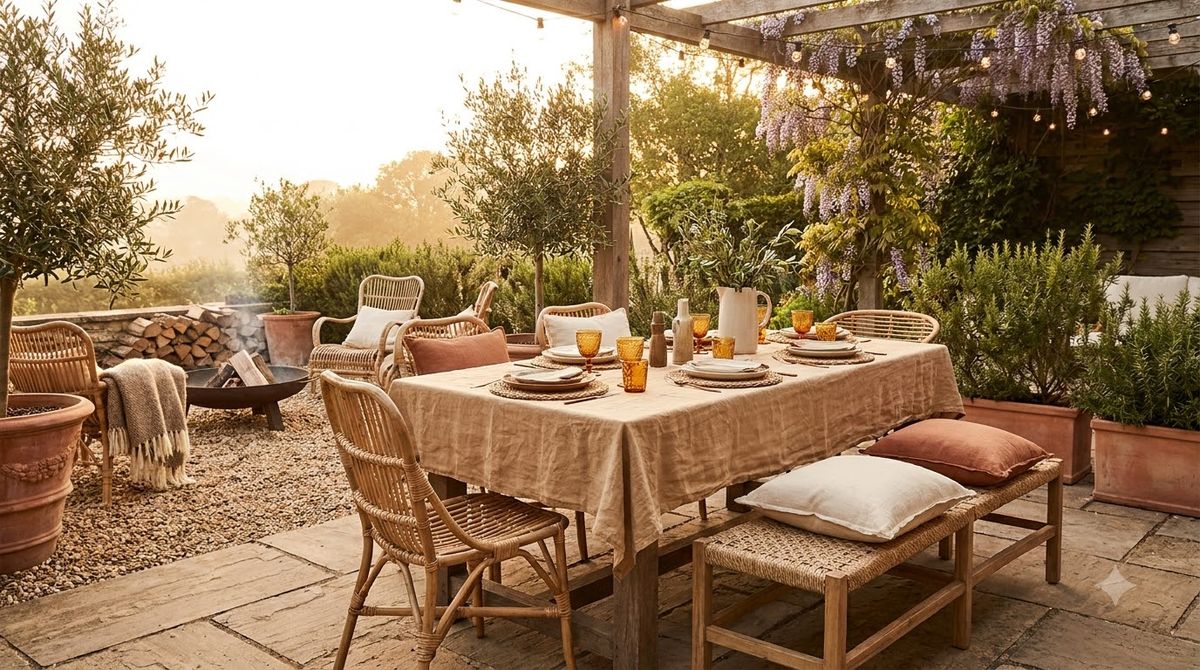
- Measure the usable floor, then mark a 36 in clearance ring where chairs will pull out.
- Choose the table shape that fits that ring, round for corners, rectangular for walls.
- Add weatherproof seating that stacks or folds so you can store or rearrange it fast.
- Layer in shade, an umbrella through the table hole, a wall-mounted sail, or tall potted plants.
- Hang the overhead light, string lights, a plug-in lantern, or solar bulbs on a shepherd’s hook.
- Anchor the zone with an outdoor rug so the area reads as a defined room, not leftover floor.
That last step surprises people. An indoor-outdoor rug under the table visually walls off the dining zone and softens hard concrete or decking underfoot. If your patio backs onto a small yard, the same layering logic scales up beautifully; our small backyard ideas on a budget walks through stretching a modest space without a renovation.
Which materials survive the weather?
A budget set is only a bargain if it lasts more than one summer. The frame and the top matter most, because that’s where rust, warping, and fading show up first. Here’s how the common options actually hold up when you leave them out through a season.
- Powder-coated aluminum: lightweight, rust-proof, and easy to move, a strong pick for renters and balconies.
- HDPE / poly-resin: recycled-plastic lumber that shrugs off rain and sun; heavier but nearly maintenance-free.
- Teak and eucalyptus: naturally weather-resistant hardwoods that silver gracefully or stay golden with occasional oil.
- All-weather wicker: resin over an aluminum frame; check that the core is aluminum, not rust-prone steel.
- Tempered glass or slatted tops: slatted lets rain drain through, glass wipes clean but needs a cover in hail.
Whatever you choose, a simple fitted cover extends the lifespan for around $20-$40 and keeps a $200 aluminum table looking new for more seasons. Skip raw steel frames unless you love repainting, and avoid untreated softwood tops that swell and crack after the first hard rain.
How do you light and shade a patio dining area?
Light and shade are the two layers people cut to save money, and they’re the two that decide whether the space gets used after 6 p.m. The good news: both are cheap. Shade keeps a west-facing slab from becoming an oven during dinner, and an overhead glow extends the evening without a single power tool.
- Umbrella: a 7.5-9 ft market umbrella through the table hole is the fastest shade; roughly $40-$120.
- Shade sail or wall-mount: ideal for renters who can’t drill a base; hooks onto existing railings or a fence.
- String lights: a warm 24-48 ft strand zig-zagged overhead is the single biggest ambiance upgrade.
- Solar or plug-in lanterns: no wiring, no landlord conversation; set them on the table or a side ledge.
- Living shade: tall potted grasses or a trellis vine block low sun and add privacy at once.
For the overhead layer specifically, string lights are hard to beat, and our cozy outdoor string light ideas covers no-drill hanging tricks for balconies and rentals. To soften the edges with greenery instead of more furniture, the seasonal picks in our best outdoor plants and decor finds for 2026 round-up are a good place to start.
What does a budget patio dining set cost?
You can build a genuinely nice patio dining area without spending like it’s a kitchen remodel. Prices swing with material and seat count, but the ranges below are typical for small-space, renter-friendly setups.
- Bistro set for 2: roughly $80-$200 for a table and two chairs in aluminum or steel.
- 4-seat set: roughly $150-$400 depending on material; aluminum and resin sit at the lower end.
- 6-seat set: roughly $400-$800, often where teak and premium wicker begin.
- Overhead layer: $40-$120 for an umbrella, or $15-$40 for a string-light strand.
- Finishing touches: $30-$80 for an outdoor rug, plus $20-$40 for a protective cover.
A good rule for renters: spend on the pieces that move and store easily, and save on everything decorative. A folding aluminum table and stackable chairs cost more up front than the flimsiest option, but they survive moves, tuck away for winter, and don’t need to be replaced next spring. That’s the cheapest version over three years, even if it isn’t the cheapest on day one.
Frequently asked questions
What is the best patio dining set for a small balcony?
For most small balconies, a foldable bistro set for two in powder-coated aluminum wins. It’s rust-proof, light enough to move alone, and folds flat for storage. If you occasionally host more, add two stackable chairs rather than sizing up to a table that eats your whole floor and blocks the door.
How much clearance do I need around a patio table?
Leave 36 in between the table edge and any wall, railing, or planter. That gap lets chairs pull out fully and gives people room to stand and walk behind seated guests. On tight balconies, seat chairs on only one or two sides and push the table against the railing to reclaim floor space.
Can renters set up an outdoor dining area without drilling?
Absolutely. Freestanding pieces do all the work: a market umbrella in a weighted base, string lights on adhesive hooks or a shepherd’s hook, and tall potted plants for shade and privacy. Everything sits on the floor or clips to existing railings, so you leave zero holes and take it all with you when you move.
What material lasts longest for a patio dining set?
Powder-coated aluminum and HDPE poly-resin last longest with the least fuss, since neither rusts nor rots. Teak lasts for years too but needs occasional oiling to stay golden. Whatever you pick, a fitted cover between uses extends the lifespan and keeps a budget set looking new for several seasons.
How do I make a concrete patio feel cozy?
Layer texture over the hard surface. Start with an indoor-outdoor rug under the table to define the zone, add warm string lights overhead, and bring in a few potted plants at varying heights. Those three moves turn a bare slab into a room that feels intentional, and none of them require permission or tools.
Build the four layers in order, size the table to the party you actually host, and give yourself that 36 in of breathing room. Do that, and your patio dining area stops being a place you pass through and becomes the place everyone wants to stay.