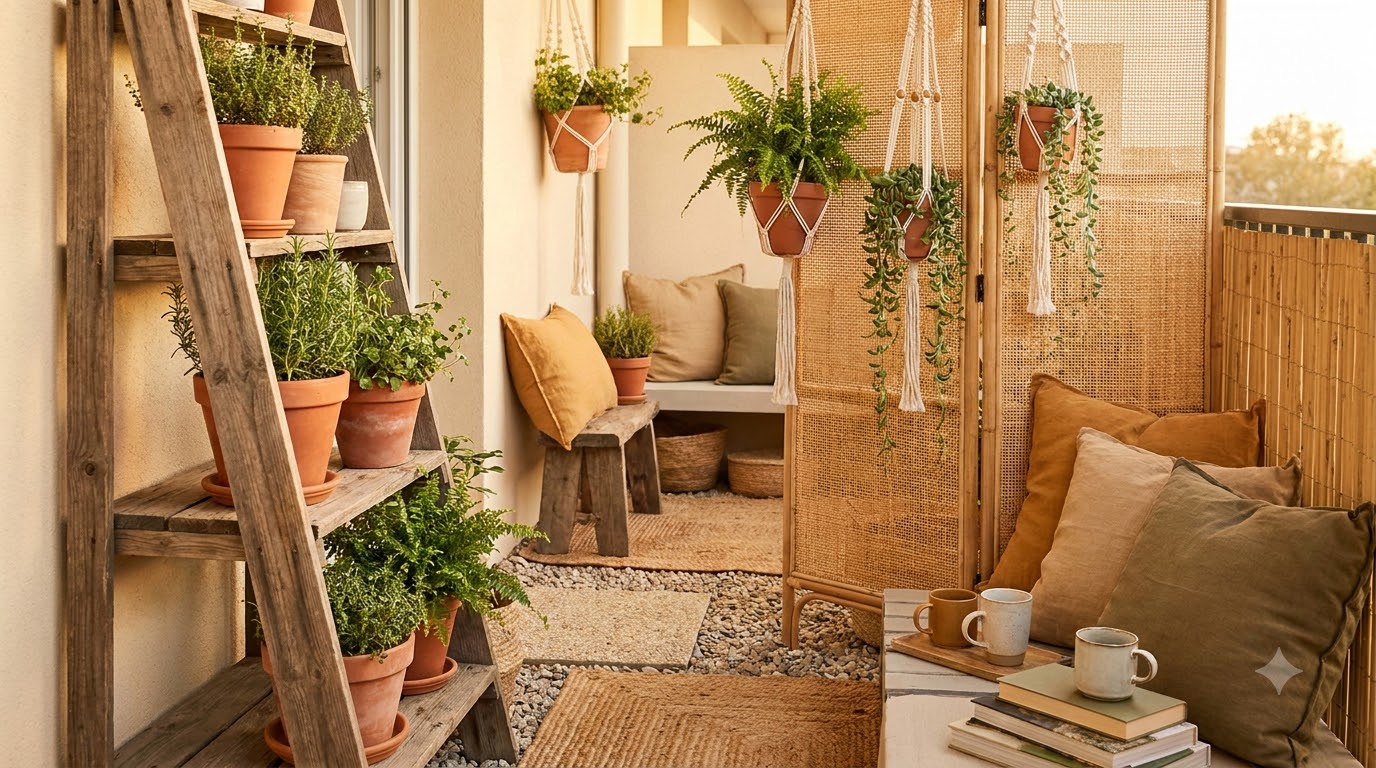
The best vertical garden ideas for small spaces all share one trick: grow up, not out. When floor space is scarce, you turn the wall, railing, or a single square foot of balcony into planting real estate using wall planters, trellises, tiered stands, hanging baskets, and pocket planters. Most of these work with no drilling at all, which makes them ideal for renters, tiny patios, and balconies where the landlord frowns on holes. In our own testing, a three-tier plant stand held nine pots in the footprint of a single large planter, and a railing trellis added two feet of usable height without touching the wall.
Key Takeaways
- Grow vertically with wall planters, trellises, tiered stands, hanging baskets, and pocket planters to multiply capacity without floor space.
- Go no-drill using tension rods, over-the-rail hooks, adhesive hooks rated to 4-16 lbs, and freestanding stands to protect your deposit.
- A three-tier stand holds about 9 pots in the footprint of one large planter, roughly 14 to 18 inches square.
- Pick forgiving plants like pothos, herbs, and strawberries that thrive in shallow 4 to 6 inch pockets.
- Budget realistically: pocket planters run $15-$40, tiered stands $30-$90, and railing trellises $20-$60.
How do you make a vertical garden in a small space?
You make a vertical garden in a small space by choosing one surface to build on: a wall, a railing, or a single patch of floor you can build upward from. From there, the method follows the space. Blank walls take pocket planters or mounted rails; railings take over-the-rail boxes and railing trellises; a bare corner takes a tiered stand that stacks pots skyward. We started our first balcony garden with a single over-the-rail box and a five-dollar bag of potting mix, then added height in layers as we learned what actually got enough sun.
Here is the sequence we use every time we set up a new small-space garden, and it keeps the whole project under an afternoon:
- Measure your surface. Note railing width (most are 2 to 6 inches), wall height, and how many hours of direct sun the spot gets.
- Match a method to the surface. Railing to over-the-rail box, wall to pocket planter, floor corner to tiered stand.
- Choose no-drill mounts. Tension rods, S-hooks, adhesive hooks, and freestanding frames leave zero holes.
- Fill with lightweight mix. Use a peat-free potting blend so mounted planters stay light and drain well.
- Plant top-down. Trailing plants up high, upright herbs at eye level, thirstier crops down low where water collects.
- Water and check weight. Wet soil is heavy, so confirm every mount holds before you walk away.
If you are just getting your bearings on containers and soil before you go vertical, our guide to container garden ideas for beginners covers pot sizes and drainage in plain language.
The five vertical methods that work in tight spots
Every small-space vertical garden we have built comes down to five reliable methods. Each solves a different problem, so most balconies end up using two or three together.
Wall planters and mounted pockets
Wall planters turn a blank vertical surface into a living panel. Individual mounted pots typically hold 4 to 6 inches of soil, enough for herbs and trailing greenery. Renters can skip the drill entirely with adhesive-mount planters rated to hold 4 to 8 pounds each, or lean a freestanding ladder planter against the wall instead.
Trellises for climbers
A trellis gives climbing plants a highway upward. Railing-mounted trellises usually add 2 to 3 feet of height, while freestanding panel trellises run 4 to 6 feet tall and slot straight into a large floor pot. They are perfect for peas, beans, and trailing flowers that want to sprawl but have nowhere to go but up.
Tiered plant stands
This is the highest-yield trick for the smallest footprint. A three-tier corner stand holds around 9 pots while occupying a base of just 14 to 18 inches square, roughly the same floor space as one oversized planter. We keep our herb rotation on a tiered stand by the kitchen door so the most-used greens sit at hand height.
Hanging baskets and rail hooks
Hanging planters use airspace nothing else can reach. Over-the-rail S-hooks and ceiling hooks need no drilling, and a standard 10 to 12 inch hanging basket suits trailing pothos, strawberries, or cascading flowers. Hang at staggered heights so each basket gets its own pocket of light.
Pocket planters and fabric walls
Felt pocket planters hang like a shoe organizer and pack the most plants into the least wall. A typical panel offers 6 to 12 pockets, each holding a shallow 4-inch root ball. They hang from a tension rod or two adhesive hooks and roll up for storage when the season ends.
Here is a quick way to shortlist a method before you buy anything:
- Have a blank wall? Start with pocket planters or adhesive wall pots.
- Have a railing? Use over-the-rail boxes plus a railing trellis.
- Have one bare corner? A tiered stand gives you the most pots per square foot.
- Have overhead space? Add hanging baskets to fill the airspace.
- Renting and drill-shy? Combine freestanding stands with tension-rod mounts.
Which vertical garden method fits your space?
Use this table to match the method to what you actually have. It maps each vertical approach to what it does best and the minimum space it needs.
| Vertical method | Best for | Space needed |
|---|---|---|
| Wall planters / mounted pockets | Herbs and trailing greenery on a blank wall | Bare wall, 2 sq ft |
| Trellis | Climbers like peas, beans, and vines | 1 floor pot or a railing |
| Tiered plant stand | Maximum pots in the smallest footprint | 14-18 in. corner |
| Hanging baskets | Trailing plants using overhead airspace | Ceiling or rail hook |
| Pocket / fabric planter | Packing many small plants into one panel | Bare wall, 3 x 2 ft |
What plants are best for a vertical garden?
The best plants for a small-space vertical garden are forgiving, shallow-rooted, and happy in 4 to 6 inches of soil. Pothos, herbs, and strawberries top our list because they tolerate the uneven watering and limited root depth that mounted planters create. We killed a rosemary plant our first summer by crowding it into a tiny pocket, so now we match root depth to container depth before anything goes in.
These are the performers we reach for again and again on balconies and patios:
- Pothos: nearly unkillable, trails beautifully from hanging baskets and top-row pockets in low to medium light.
- Herbs: basil, mint, thyme, parsley, and chives thrive in 5-inch pots at eye level for easy snipping.
- Strawberries: ideal for pockets and hanging baskets, with fruit that dangles clear of the soil.
- Lettuce and salad greens: shallow roots and fast harvests make them perfect for pocket walls.
- Trailing flowers: petunias and nasturtiums spill over rail boxes for instant color.
If you would rather keep it simple with greenery that forgives a missed watering, our roundup of the best low-maintenance indoor plants for beginners pairs well with a shaded vertical setup, and apartment dwellers short on light can borrow ideas from the best small indoor plants for apartments in 2026.
No-drill mounting for renters
The whole point of a rental-friendly vertical garden is leaving no trace. Every mount below installs and removes without a single hole, so your deposit stays intact. We have moved apartments twice with the same tension-rod pocket wall, and each time it came down in under ten minutes with nothing left behind.
- Tension rods: wedge between two walls or inside a balcony alcove to hang pocket planters and light baskets.
- Over-the-rail hooks and boxes: drape over railings 2 to 6 inches wide with no hardware at all.
- Adhesive hooks: choose ones rated 4 to 16 pounds and mount only to clean, smooth surfaces.
- Freestanding stands and ladders: lean or stand them anywhere, zero wall contact required.
- S-hooks on existing structures: hang baskets from pergolas, awnings, or rail tops you already have.
One safety note we learned the hard way: soil gets heavy when wet. A 12-inch hanging basket can double in weight after watering, so always check that adhesive hooks and rods are rated well above the dry weight. For a full walk-through of railing setups and deposit-safe fixes, see our guide to balcony garden ideas for renters.
What does a small vertical garden cost?
A starter vertical garden costs less than a nice dinner out. You can build a productive setup for well under $100, and scale up only once you know which corner gets the sun. Here is roughly what each piece runs so you can plan a budget before you shop:
- Fabric pocket planters: $15 to $40 for a 6 to 12 pocket panel.
- Tiered plant stands: $30 to $90 depending on tiers and material.
- Railing trellises: $20 to $60 for a rail-mounted or freestanding panel.
- Over-the-rail boxes: $15 to $35 each, often sold in pairs.
- Hanging baskets and hooks: $10 to $25 per basket with S-hooks included.
Add a bag of peat-free potting mix for about $10 to $15 and a handful of starter plants, and a full corner garden lands comfortably in the $60 to $120 range. Starting small also lets you learn your light before committing, which saved us from over-buying more than once.
Frequently asked questions
Can I build a vertical garden without drilling holes?
Yes, and it is the most common setup for renters. Tension rods, over-the-rail hooks, adhesive hooks rated to 4 to 16 pounds, and freestanding tiered stands all mount without a drill. We have run full balcony gardens for years this way, and everything comes down cleanly at move-out with no wall damage and no lost deposit.
How much sun does a vertical garden need?
It depends on the plants. Herbs and strawberries want 6 or more hours of direct sun, while pothos and leafy greens do fine in 3 to 4 hours or bright shade. Track your balcony’s light for a day before planting, then stack sun-lovers on the top tiers where they catch the most light.
How many plants fit in a small vertical garden?
More than you would expect. A three-tier stand holds about 9 pots in a 14 to 18 inch footprint, and a fabric pocket panel adds 6 to 12 more plants on a single wall. Combine a stand, a pocket wall, and two hanging baskets and a modest balcony corner can support 20 plus plants.
What is the easiest vertical garden for a beginner?
A tiered plant stand paired with pothos and herbs is the gentlest start. The stand needs no mounting, the plants forgive irregular watering, and you can rearrange pots as you learn your light. We recommend beginning with three to five pots, then expanding upward once you see which spots your plants like best.
Will a vertical garden damage my balcony railing?
Not if you distribute the weight and protect the surface. Over-the-rail boxes and hooks rest without fasteners, and a strip of felt padding prevents scuffs. Just confirm your railing can bear the wet soil weight, since a filled rail box can reach 15 to 20 pounds once watered, and space boxes evenly along the rail.