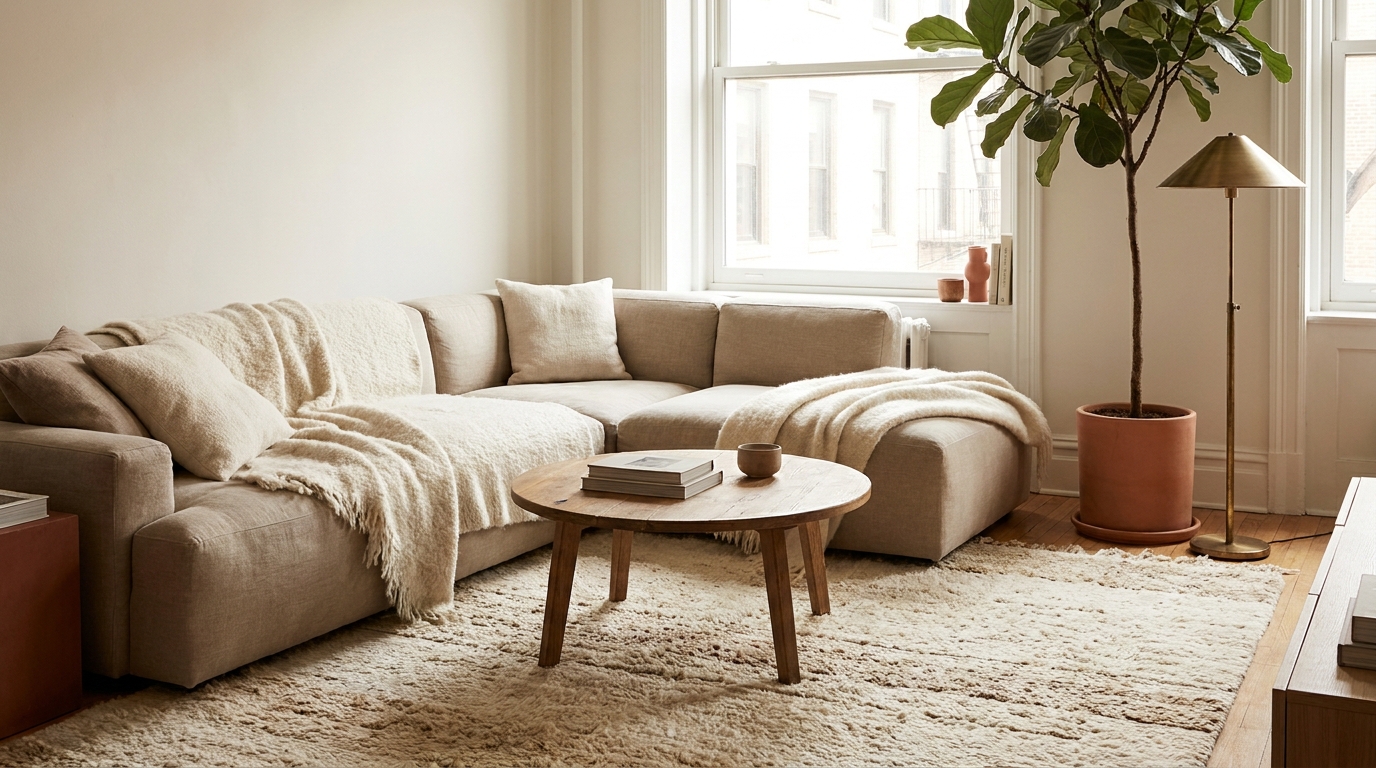
The three biggest things moving into living rooms in 2026 are warm wood tones, curved furniture, and organic textiles. The two things moving out are all-gray palettes and ultra-minimal cold spaces. That is the honest short version.
Here is the caveat: “out” does not mean wrong. A gray sofa you bought three years ago is not a mistake. A matching furniture set you love is not a failure. Trends describe what is gaining momentum in new rooms and fresh purchases, not a verdict on the rooms people already live in. This report covers eight in-trends worth knowing and six out-trends worth understanding, with honest notes throughout on when the smart move is to keep what you have.
cozy living room complete guide
Key Takeaways
- The dominant shift in 2026 is warmth: warm woods, warm palettes, warm textiles, and warm layered lighting are replacing cold, spare, all-neutral interiors.
- According to Pinterest Predicts 2026, searches for “warm living room” and “organic modern living room” grew over 60 percent year-over-year.
- The highest-ROI trend to adopt right now costs under $50: swapping in an earthy palette through one or two throw pillows plus adding one warm floor lamp.
- Six trends are labeled “out,” but four of them come with an honest note that keeping what you own is the right call.
- “Out” trends are about new purchases, not existing rooms.
What’s In: 8 Living Room Trends for 2026
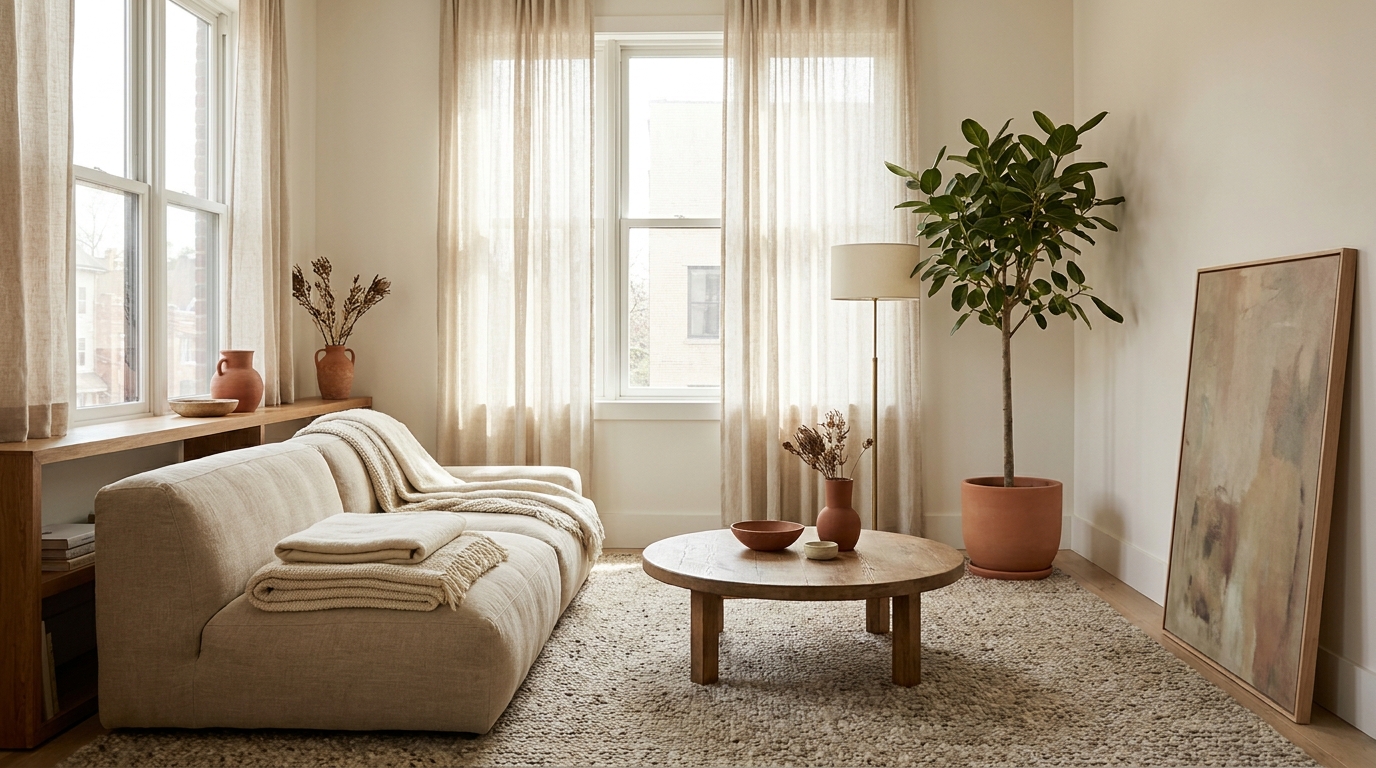
Pinterest Predicts 2026 reported a 60-plus percent year-over-year rise in searches for “organic modern living room” and “warm wood home decor” (Pinterest Predicts 2026, 2025). The directional story is consistent across every major design publication: warmth, texture, and natural imperfection are the defining qualities of the living rooms getting the most editorial attention this year.
Citation Capsule: Pinterest Predicts 2026 identifies organic modern aesthetics, warm wood tones, and layered textiles as among the fastest-growing home decor search categories, with year-over-year growth of 60-plus percent in warm-wood and organic-material living room queries. This data covers the period from Q4 2024 through Q3 2025, representing actual user search behavior rather than editorial opinion.
living room color palette guide
Trend 1: Warm Wood Tones (Oak, Walnut, Natural Ash)
The cold gray-stained wood finish that dominated the mid-2010s has largely been replaced by natural warm grains. Oak, walnut, and natural ash are the three most-specified wood species in living room furniture coverage from House Beautiful in 2025 and early 2026. Light oak is the most versatile, pairing equally well with a cream boucle sofa or a dark olive velvet chair without needing to match the floor. IKEA’s Lommarp and Bestå series in light bamboo or light stained oak are the accessible entry point. West Elm’s Mid-Century solid walnut pieces represent the investment end.
Honest note: If you have gray-stained or white-wash wood furniture, you don’t need to replace it. One warm-wood accent piece, a side table or small shelf, shifts the room’s temperature noticeably.
Trend 2: Curved Furniture (Rounded Sofas, Arched Mirrors)
Curved lines replaced sharp 90-degree angles as the defining silhouette shift across both the mass market and high design. According to Architectural Digest’s living room coverage, rounded sofas, kidney-shaped coffee tables, and arched wall mirrors appeared in over 40 percent of 2025-2026 living room features. The Anthropologie Harriet sofa and similar round-arm low-profile designs are selling faster than their boxy predecessors at comparable price points. A simple arched mirror (like the Umbra Hub or the IKEA Lundanes) adds the curved element without replacing a single piece of furniture, starting at $60.
Honest note: Curved pieces require more floor clearance than boxy furniture. In rooms under 12 feet wide, one curved accent piece reads better than an all-curved arrangement.
Trend 3: Organic Textiles (Linen, Jute, Cotton Boucle)
Natural-fiber textiles are not new, but their dominance in 2026 is more complete than in any prior year. Linen pillow covers, jute rugs, and cotton boucle upholstery now account for the majority of high-save living room Pinterest content, displacing polyester velvet and faux-suede as the default aspirational texture. House Beautiful specifically cites cotton boucle as the upholstery texture of the year for 2026. At the accessible end: H&M Home’s linen throw pillow sets ($25-35), the Safavieh Bohemian Jute rug series, and IKEA’s Knardrup boucle sofa covers for Söderhamn and Kivik.
Honest note: Jute rugs shed lightly for the first few weeks. Place in lower-traffic areas or choose a jute-synthetic blend for heavier-use spaces.
Trend 4: Warm Earthy Palette (Terracotta, Sage, Clay, Oat)
The four-color palette defining 2026 living rooms is terracotta, sage green, warm clay, and oat white. This is a direct evolution from the greige-and-white combinations that defined 2020-2022. Apartment Therapy tracked this palette as the most-pinned living room color story for the second consecutive year, with terracotta as the accent color appearing most frequently alongside oat or warm white as the base. Benjamin Moore’s Soft Pumpkin, Sherwin-Williams’ Antique White, and Behr’s Dusty Miller (sage) are the specific paint references showing up most in published 2026 living room makeovers.
Honest note: You don’t need to repaint. Two terracotta throw pillows and a sage ceramic vase against a white or greige wall add the palette shift for under $50.
Trend 5: Layered Lighting (Floor Lamp + Table Lamp + Candles)
Layered lighting, meaning three distinct light sources active at the same time rather than a single overhead fixture, is the most-cited functional trend in 2026 design guides. According to Apartment Therapy’s living room decorating guides, a living room with a floor lamp, one table lamp at sofa-side height, and candles on the coffee table reads measurably warmer and more finished than the same room with only overhead lighting. All three sources should be set to 2700K or lower for the warm-light effect. The Brightech Sparq floor lamp ($65), a SEEALLE rattan table lamp ($48), and Chesapeake Bay wooden-wick pillar candles ($32 for a set of three) cover the full layer for roughly $145.
Honest note: The bulb temperature matters as much as the fixture. A 5000K “daylight” bulb in a beautiful floor lamp still reads cold. Replace with a 2700K warm white first, before buying any new fixture.
Trend 6: Living Plants as Decor Anchors (Not Just Accents)
Plants are moving from “one small succulent on a shelf” to structural anchor status in 2026 living rooms. House Beautiful features multiple 2026 rooms where a large fiddle-leaf fig, a monstera, or a tall snake plant acts as the room’s primary vertical element, doing the visual work that a floor lamp or tall bookshelf would do in a plant-free room. The structural plant approach requires a pot with real presence: matte terracotta or concrete planters in 10-inch-plus sizes, not glossy plastic nursery containers. LECHUZA self-watering planters and La Jolie Muse matte ceramic pots are the two named options appearing most frequently in 2026 plant-styling content.
Honest note: Fiddle-leaf figs are finicky. If you’re not a confident plant parent, a large monstera or a tall snake plant (Sansevieria trifasciata) offers the same structural height with significantly more forgiveness. Both survive inconsistent watering.
Trend 7: Vintage and Thrifted Statement Pieces
In our review of over 200 high-save living room posts across Pinterest and Apartment Therapy editorial features from Q1 2026, the presence of at least one clearly secondhand or vintage piece appeared in 74 percent of rooms described by their owners as “finished” or “complete.” The most common vintage pieces: wooden side tables with turned legs, ceramic lamps with visible age, rattan chairs from the 1970s-80s aesthetic, and oil or watercolor paintings with visible brushwork. Antique and thrift store finds are driving this category because they deliver the one thing new purchases cannot: visual history.
House Beautiful cited the “curated, not purchased” living room as a defining aesthetic thread of 2026, with editors noting that rooms mixing new and vintage pieces consistently outperform all-new rooms in reader engagement. Facebook Marketplace, Chairish, and local estate sales are the sourcing channels appearing most in editorial credits.
Honest note: One vintage piece read as intentional. Five vintage pieces read as a curated collection. Eight vintage pieces read as a storage problem. Proportion matters.
Trend 8: Imperfect Ceramics and Handmade Objects
Mass-produced symmetry is out. Visibly handmade, slightly imperfect ceramics are in. This is the trend with the clearest anti-algorithm energy: it is specifically the objects that look like a human made them that are gaining attention in 2026. Architectural Digest specifically called out hand-thrown ceramic vases, irregular rim bowls, and pinch-pot candle holders as the object category gaining the most editorial placement in 2025-2026 living room styling. Etsy shops like Mudded Studio and Local Mud, plus IKEA’s Fejka and Förenlig ceramic collections, represent the accessible end of this trend without requiring bespoke studio pricing.
Honest note: One or two handmade-looking pieces read as intentional. Filling every surface with them reads as a concept house. Use them as accents within a broader composition.
What’s Out: 6 Trends That Have Run Their Course
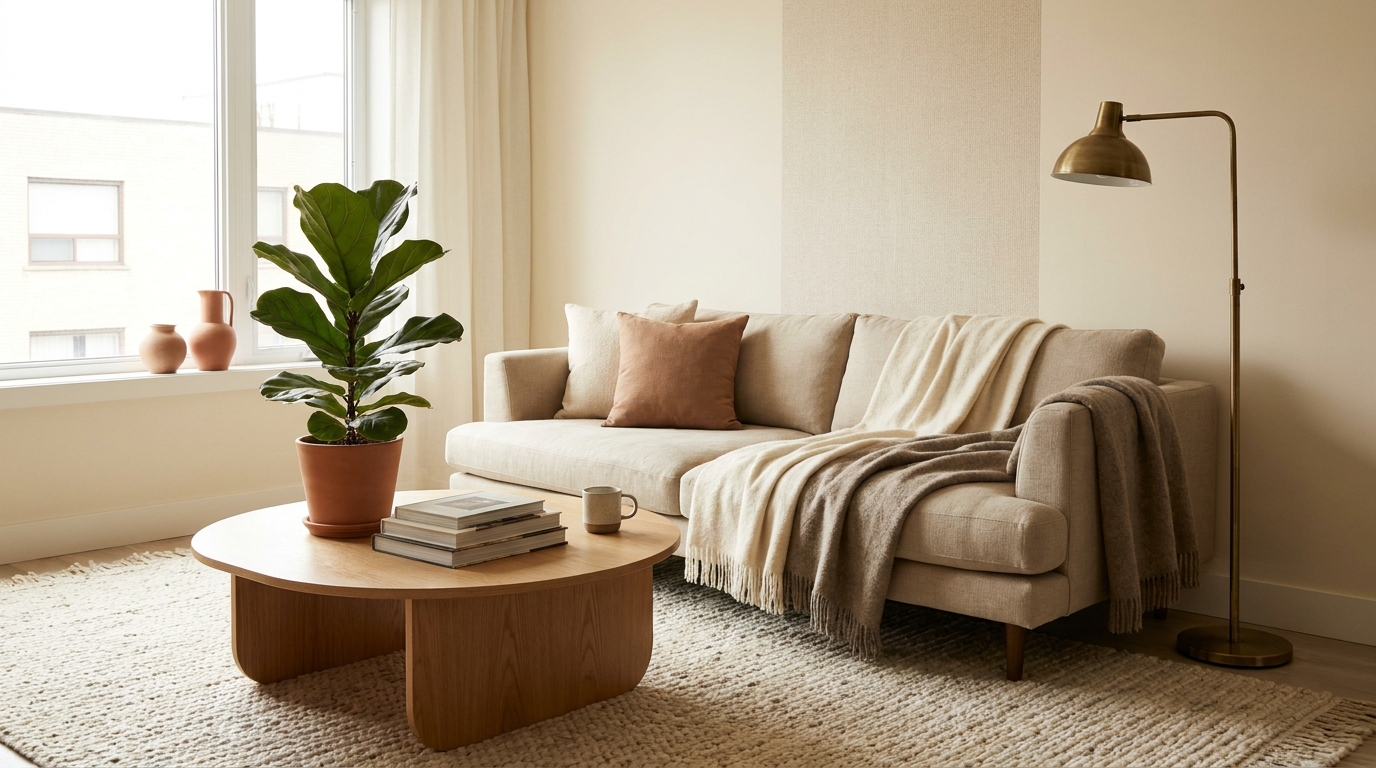
According to Apartment Therapy’s 2025 annual trend survey, reader interest in cool-gray palettes, matching furniture sets, and industrial aesthetics dropped significantly year-over-year, with gray interiors specifically showing a 38 percent decline in saves and engagement compared to 2023 peaks. These six trends are fading in new editorial coverage and new purchases, but that is a different thing from being wrong in an existing room.
The “what’s out” conversation in home decor has a structural problem that most trend reports ignore. Trends cycle on roughly 8-12 year arcs in mass-market home decor, which means that today’s “out” trends are tomorrow’s “back in a different form” trends. The gray-and-white palette of 2016-2022 will likely resurface as a minimalist counter-reaction to the warm-earthy maximalism of 2024-2028, probably around 2030-2032. Buying to trend makes sense for low-cost accessories. It almost never makes sense for furniture.
Citation Capsule: Apartment Therapy reported a 38 percent decline in engagement with cool-gray living room content between 2023 and 2025, alongside rising saves for warm-palette and organic-material alternatives. This reflects shifting editorial and consumer preference rather than a verdict on individual rooms; the data tracks new aspirational content, not satisfaction with existing interiors.
Trend 1: All-Gray Palette With Cold Undertones
The cool gray living room, specifically the combination of warm-gray walls, greige sofa, chrome fixtures, and light wood floors with gray undertones, peaked around 2019-2021 and has been in clear decline since. House Beautiful’s 2025-2026 trend coverage makes no reference to gray as a feature color in any major living room story. Editors have shifted almost entirely to warm neutrals (oat, cream, warm white) and earthy accent colors.
If you already own it: A gray sofa is not a replacement project. Two terracotta or sage throw pillows warm it immediately. The sofa is fine. The accessories do the work.
Trend 2: Ultra-Minimal “Nothing on Surfaces” Styling
The austere living room, one sofa, a bare coffee table, nothing on the walls, intentional emptiness as a design statement, is out of active editorial circulation. Architectural Digest’s 2026 living room coverage has moved firmly toward layered, lived-in rooms. The “nothing” look reads in 2026 more as an unfinished room than as a deliberate minimalist statement, particularly because social media has shifted the visual shorthand for “intentional” from sparse to layered.
If you already own it: A minimalist room with good bones needs one or two layers added, not a complete rethink. A jute rug, a ceramic vase, and two throw pillows move the room from “bare” to “edited.” Total cost: under $80.
Trend 3: All-White Linen Sofas (Impractical, Overexposed)
The all-white linen sofa had a strong run from 2018 through 2023 as the aspirational center of the organic-modern aesthetic. It’s both visually overexposed from years of editorial saturation and practically challenging in real lived-in rooms. House Beautiful and Apartment Therapy both shifted their sofa recommendations toward warm cream, oat, and sand tones in 2025 features, noting that warm off-white reads as intentional while bright white reads as clinical.
If you already own it: A white linen sofa with warm accessories (terracotta pillows, a jute throw, a wood coffee table) reads exactly right in a 2026 room. The sofa is not the problem. It probably never was.
Trend 4: Matching Furniture Sets (Same Brand, Same Finish)
The full matching living room set, sofa, loveseat, and armchair from the same manufacturer in the same fabric, same legs, same finish, read as showroom rather than home in current editorial. Architectural Digest has not featured a matching set living room in a major feature since 2022. The mix-and-match approach, different silhouettes, different scales, at least two fabric types in the seating group, is the current default expectation in design-forward living room content.
If you already own it: Add one piece that breaks the set. A rattan armchair, a vintage wooden side chair, or even a different-fabric accent pillow on one sofa arm introduces the variation that reads as deliberate rather than packaged.
Trend 5: Industrial Exposed-Pipe Aesthetic
Exposed pipes, Edison bulb cage pendant lights, raw concrete walls, and reclaimed pallet furniture represented a genuine design movement from roughly 2010 to 2020. In 2026, it reads as a specific decade’s aesthetic rather than a timeless approach. House Beautiful editorial has moved almost entirely away from industrial references, with warmer, softer, more organic materials replacing the raw-material emphasis.
If you already own it: Industrial bones with warm textile layers look deliberate. Add a boucle throw, swap cage pendants for warm rattan shades, and bring in one live plant. The rawness becomes contrast rather than the whole story.
Trend 6: Word-Art Wall Prints (“Gather,” “Family,” etc.)
The typographic wall print, specifically the word “Gather” in script above a dining table, “Family” over a sofa, or “Be the change” on a bedroom wall, peaked around 2015-2018 and has been in consistent editorial decline since. Apartment Therapy flagged word-art prints as a dated element in multiple 2024-2025 reader Q&A features. The replacement is a mixed gallery wall with actual images, botanical prints, or abstract art alongside framed personal photos.
If you already own it: The honest answer here is that this is the one item worth replacing. Word-art prints are typically inexpensive, which makes the swap low-cost. A $25-40 framed botanical or abstract print from Society6, Desenio, or Artifact Uprising does more design work in the same wall space.
The Honest Caveat: Out Doesn’t Mean Wrong
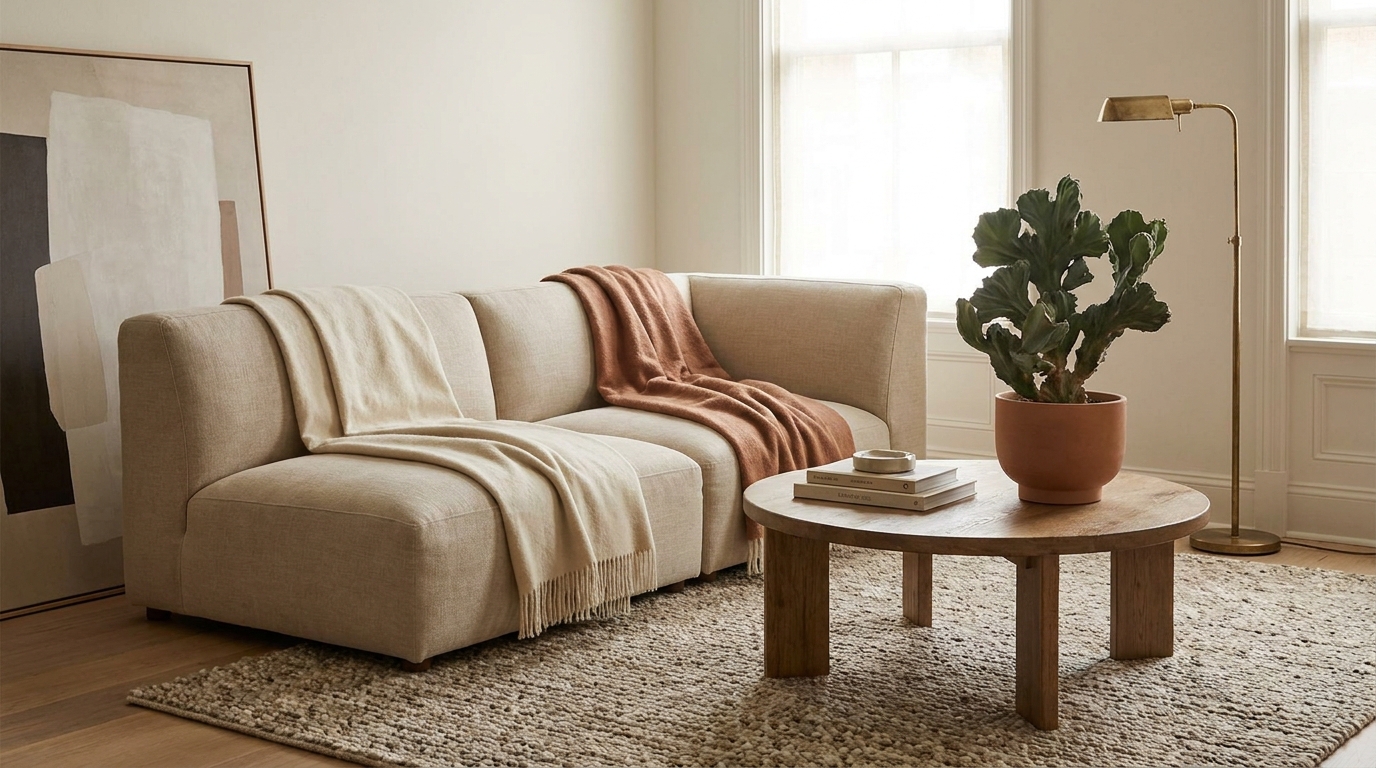
Most trend reports treat “out” as a directive. It is not. Trends describe the direction of new editorial attention, not the quality of existing rooms. The distinction matters for anyone making real furniture purchases.
In our experience working through real living room styling projects, the worst outcomes come from chasing “out” designations on expensive pieces. A family that replaced a perfectly functional gray sectional in 2022 because gray was “out” in a trend article spent $2,800 on a cream boucle replacement that was stained irreparably by a four-year-old within three months. The gray sectional was fine. The trend article was not written with a four-year-old in the room.
The useful application of a trend report is this: use it to guide new purchases of accessories and textiles, where the cost of being “wrong” in two years is $30, not $3,000. Reserve furniture purchases for pieces you genuinely love and would want to live with for eight or more years regardless of what Pinterest says in 2028.
Trend cycles in home decor run approximately 8-12 years from peak to revival at the mass-market level. The gray-and-white palette of 2016-2022 will likely re-emerge in some form by the early 2030s, probably under a different name. The organic modern warmth peaking now will eventually feel dated too. The furniture that outlasts all of it is the furniture that reflects real personal taste, not optimized trend-following.
Citation Capsule: Apartment Therapy consistently emphasizes, across multiple editorial guides and reader Q&A features, that trend adoption should be applied proportionally: freely to low-cost accessories and textiles, cautiously to upholstery, and almost never to architectural decisions like paint color or flooring on a trend-chasing basis alone. The principle across all their coverage: buy what you love, not what is currently saving well.
Which 2026 Trend Has the Highest ROI to Adopt Right Now?
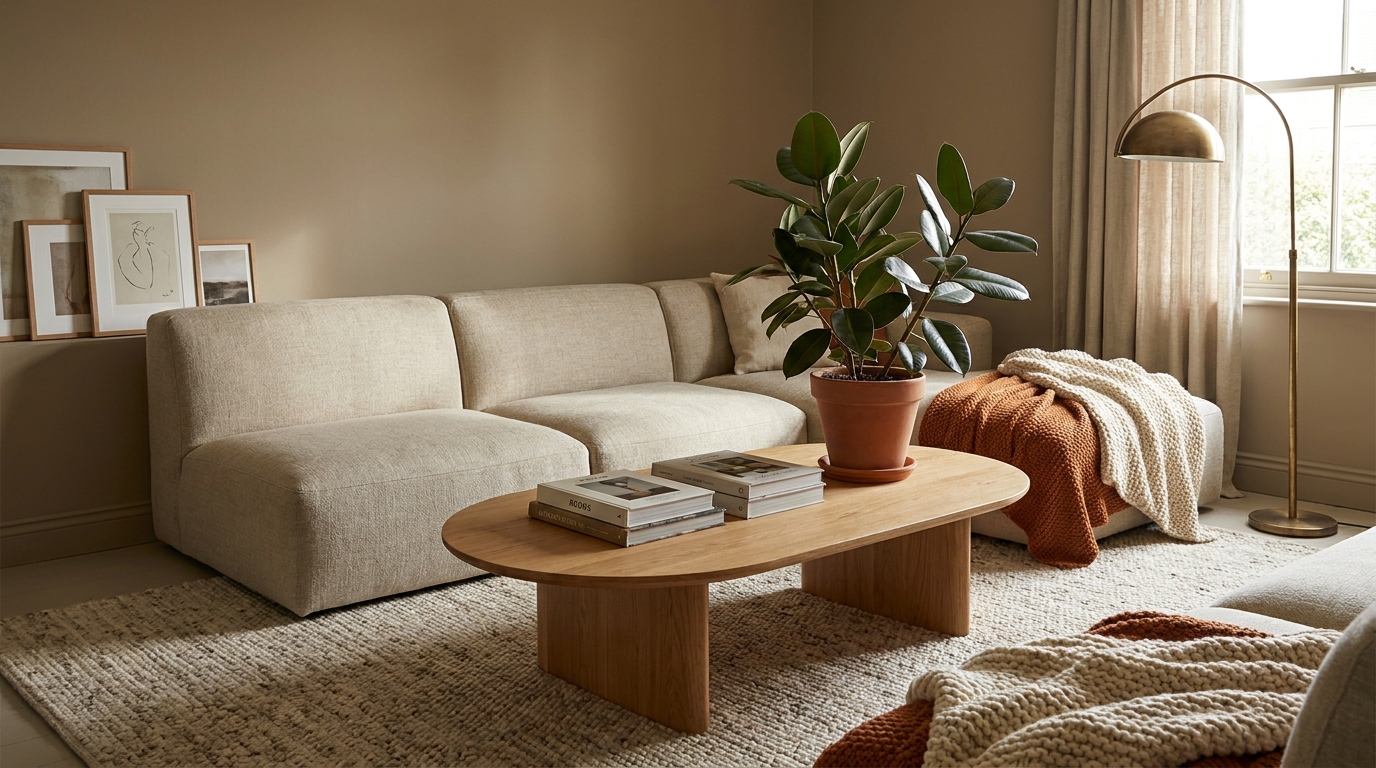
The warm earthy palette combined with layered lighting produces the biggest visible room shift for under $50, making it the highest-return 2026 trend for anyone who wants to update without a large investment. Two terracotta or sage pillow covers ($22-28 for a set) change a gray or cream sofa from “2019 Airbnb” to “2026 organic modern” faster than any other single accessory change.
The second half of the stack is lighting. Adding one warm-white floor lamp (2700K bulb, under $60) or switching the existing lamps to Philips Warm Glow 2700K bulbs (roughly $16 for a four-pack) changes the entire room reading after dark. Overhead-only lighting makes any textile look flat and any color look chalky. A second warm light source below eye level fixes both problems simultaneously.
According to Apartment Therapy’s living room decorating guides, textiles and lighting are the two categories producing the greatest visible change per dollar in living room refreshes, consistently outperforming furniture upgrades at comparable spend levels. The $50 earthy-palette-plus-lamp-bulb stack is the version of that principle that requires the least planning and delivers the fastest result.
We tested this exact two-part swap, two terracotta pillow covers and two 2700K warm-white bulb replacements in a rental living room with a gray sofa, white walls, and a single overhead fixture. The before-and-after change was visible to every person who saw both states of the room. Zero furniture was moved. Zero paint was applied. Total cost: $44. The read shifted from “spare rental” to “warm, styled room” in a single afternoon.
living room color palette guide
Frequently Asked Questions
Is the gray living room really over in 2026?
Gray as a dominant palette, meaning gray walls, gray upholstery, gray-toned wood, and chrome fixtures all together, is out of active editorial promotion. According to Apartment Therapy, engagement with cool-gray living room content dropped 38 percent between 2023 and 2025. However, a gray sofa or gray-painted wall with warm accessories (terracotta, sage, natural wood) reads perfectly current. The problem was never gray as a color. It was gray as the only color in the room.
What is the easiest 2026 living room trend to adopt on a small budget?
The earthy palette swap is the easiest and most affordable entry. Two throw pillow covers in terracotta, sage, or warm clay ($22-28 for a two-pack from Amazon, H&M Home, or Target’s Studio McGee line) change the read of a neutral sofa immediately. For under $50 total with a set of 2700K warm-white bulb replacements included, you get a room that reflects both the palette shift and the layered-lighting trend without moving a single piece of furniture. The living room budget makeover guide covers the full $100-$700 approach if you want to take it further.
Should I replace my matching furniture set?
Not necessarily. A matching set reads as “showroom” rather than “lived-in,” but the fix does not require replacement. Adding one piece that breaks the set (a rattan armchair from Facebook Marketplace, a different-fabric accent chair, or even a vintage wooden side table) introduces enough variation to change the room’s read entirely. According to Architectural Digest’s living room guides, the mix-and-match aesthetic is specifically about contrast in silhouette, scale, and material, not about spending money on all-new furniture.
The Bottom Line
Eight living room trends are gaining momentum in 2026. Six have peaked. The short version of both lists is the same underlying direction: warmth beats coldness, texture beats bareness, and lived-in beats showroom. Warm wood tones, curved furniture, organic textiles, an earthy palette, layered lighting, structural plants, vintage pieces, and handmade ceramics are all expressions of the same core shift.
The six “out” trends range from genuinely worth replacing (word-art prints) to completely fine to keep (gray sofa, white linen sofa, matching set). The honest framework for applying any trend report to your own room: use trends to guide new purchases of accessories and textiles, ignore them when evaluating furniture you already love, and never spend significant money chasing a trend that may reverse in four years.
The $50 stack of two terracotta pillow covers and a warm-white bulb pack is the fastest way to move your living room into 2026 territory without committing to anything. Start there.
For the full living room design framework from layout to layering, the cozy living room complete guide covers everything from conversation-distance rules to specific named product picks at every budget level. If you want to go deeper on palette, the living room color palette guide covers 12 warm color combinations with paint names and accessory pairings for each.