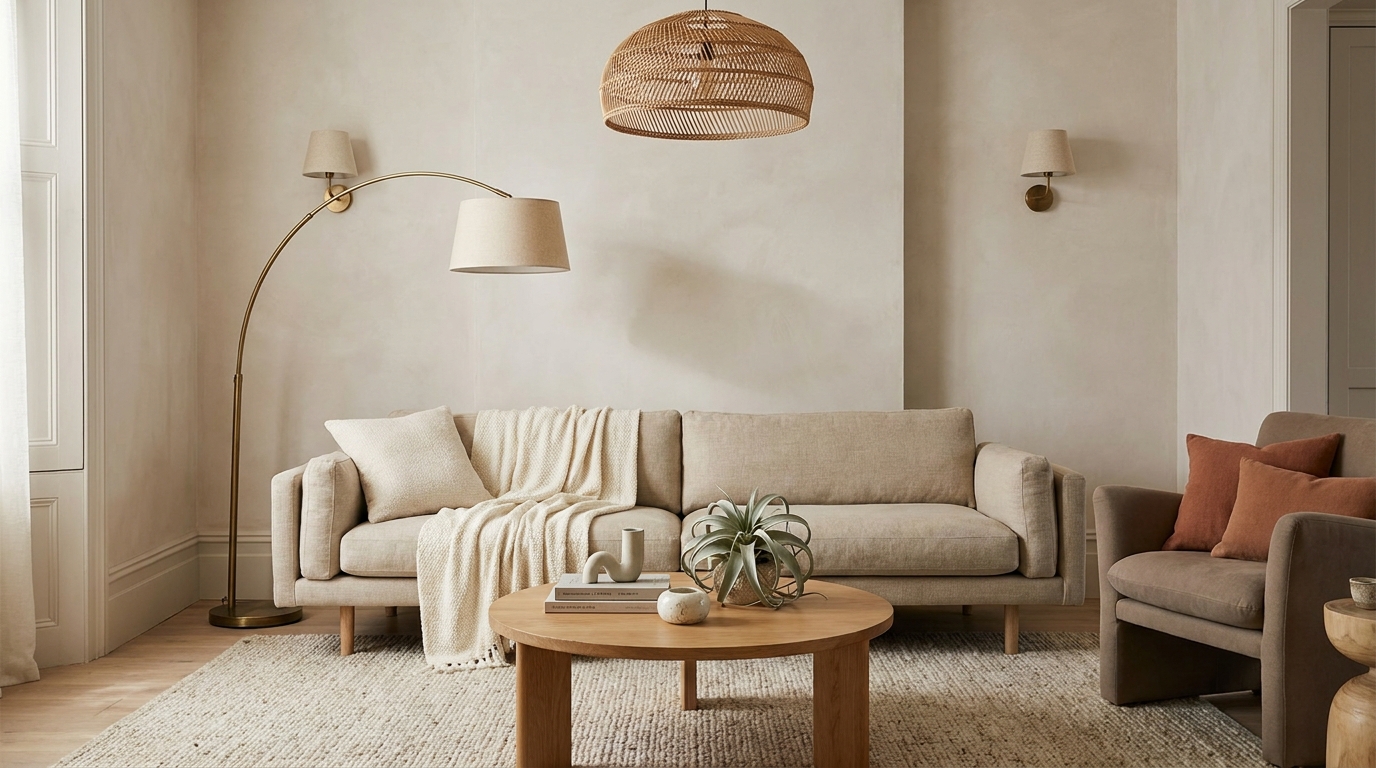
Living room lighting is one of the most skipped-over decisions in a full room refresh, and one of the most consequential. The single biggest mistake people make is relying on a single overhead fixture. One source flattens shadows, erases depth, and makes a room feel more like a waiting area than a place to live in. The fix is straightforward: use at least three light sources at different heights, from different directions.
That three-source minimum is the layering rule that separates rooms that photograph well from rooms that feel good to sit in. Ambient light fills the room. Task light serves a function – reading, working, looking for the remote. Accent light adds depth and draws the eye to corners and shelves. Every well-lit living room runs all three simultaneously. The picks below cover all three categories with named options under $200, including which ones are renter-safe and which require an electrician. For how lighting fits into the full room design, the cozy living room ideas guide covers the complete layout sequence.
cozy living room full design context
Key Takeaways
- Use a minimum of three light sources in a living room: ambient, task, and accent. One overhead fixture is never enough.
- 2700K bulb temperature is the correct default for living rooms – it reads warm and flattering without going orange.
- Floor lamps are the fastest lighting upgrade: no electrician, immediate impact, renter-safe.
- Plug-in sconces and pendants exist at every price point, making renters no longer dependent on hardwired fixture placement.
- The Philips Warm Glow 2700K LED is the single best bulb upgrade for any living room fixture in 2026.
What Is the 3-Layer Living Room Lighting Formula?
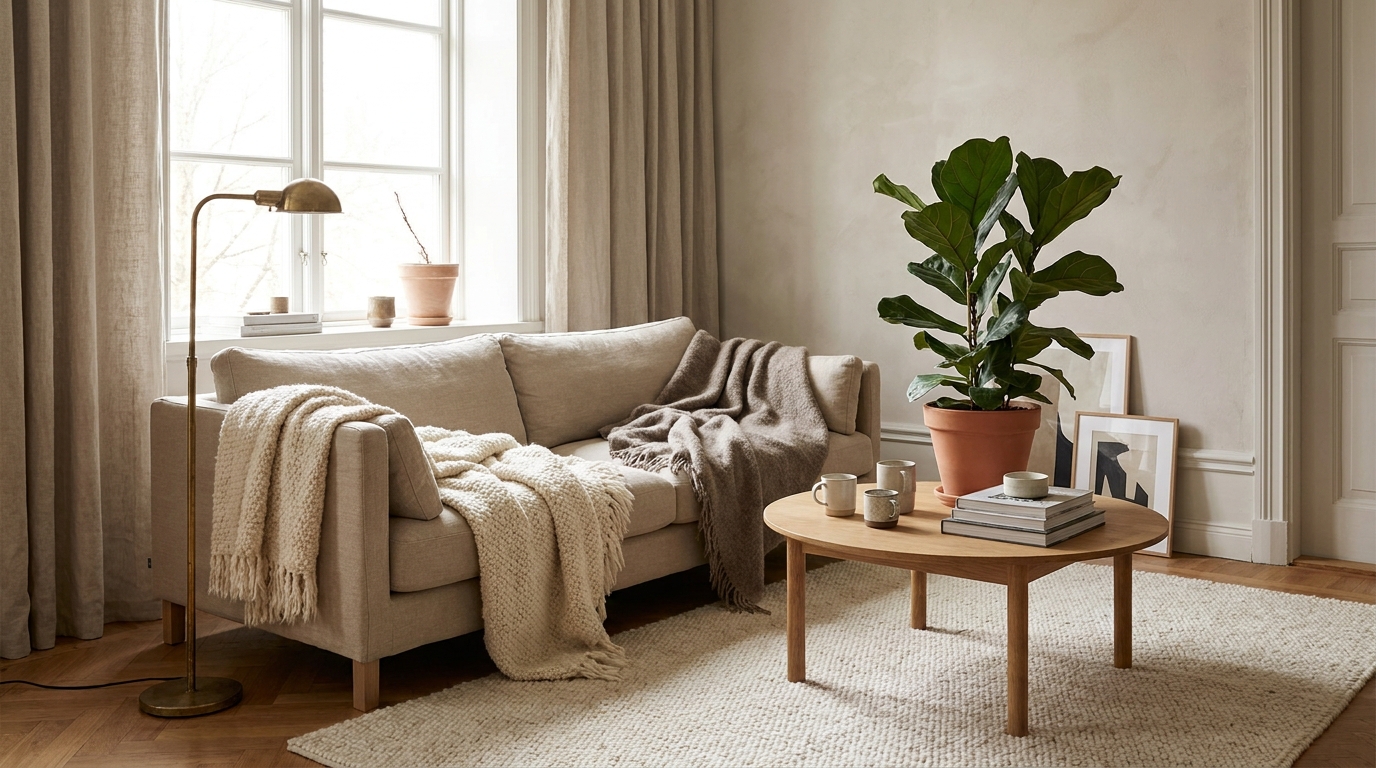
Three-layer lighting is not a design trend. It’s the standard professional lighting designers apply to every residential space. According to Architectural Digest’s living room design coverage, layered lighting from multiple sources is cited as one of the top five transformative changes a homeowner can make to a living room without touching the furniture.
Ambient light is the room’s base illumination. It comes from ceiling fixtures, recessed cans, or tall torchiere floor lamps that throw light upward and let it bounce off the ceiling. It needs to be dimmable. Full-bright ambient light is for cleaning, not living.
Task light points at a specific area where something happens. A reading lamp beside a chair. A floor lamp arching over a sofa corner. A table lamp next to a notebook-and-coffee spot. Task light is directional, focused, and usually the brightest concentrated source in the room.
Accent light adds dimension. Wall sconces flanking a fireplace or a gallery wall, a lamp tucked into a bookshelf, a low table lamp that fills a dark corner. Accent light isn’t there to help you see. It’s there to stop the room from looking flat.
Why does one source flatten a room? A single overhead fixture creates one angle of illumination. Shadows all fall the same direction. Corners go dark. Objects on shelves lose their three-dimensionality. Faces in conversation look harsh. The room looks correct in the daytime and wrong at night. Three sources from three heights fix all of that.
Citation Capsule: Architectural Digest’s living room design coverage identifies layered lighting from multiple sources as one of the five highest-impact changes in any living room redesign. The standard formula – ambient, task, accent – requires a minimum of three simultaneous light sources at different heights to achieve professional-quality illumination.
full living room design sequence
What Are the Best Floor Lamps for Living Rooms Under $200?
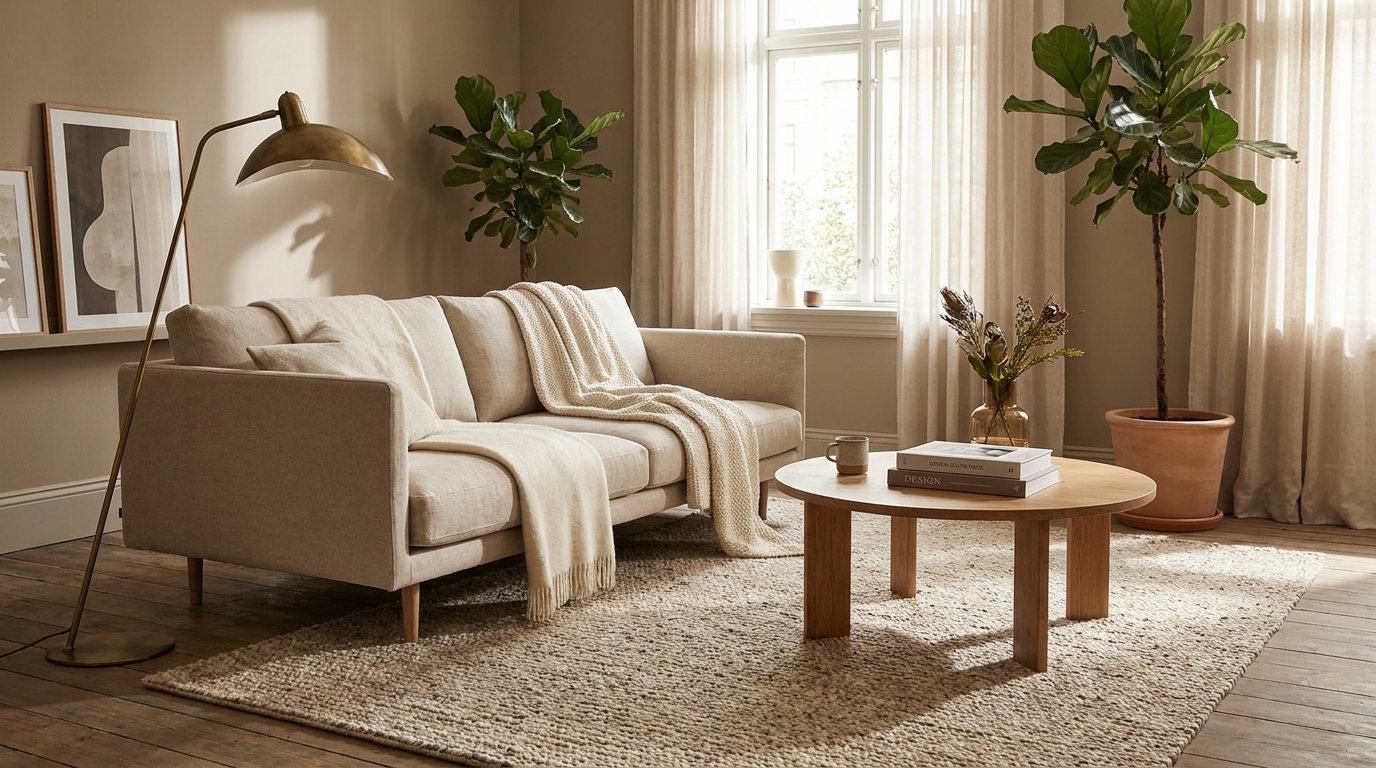
Floor lamps are the most renter-friendly lighting upgrade available. No electrician, no drilling, no landlord conversation. Plug into a wall outlet and move it whenever the room changes. According to House Beautiful’s living room coverage, floor lamps are the most common single-item lighting upgrade readers report making after a room refresh, because the impact is immediate and fully reversible.
All five picks below are renter-safe. They require only a standard outlet and can leave with you when you move.
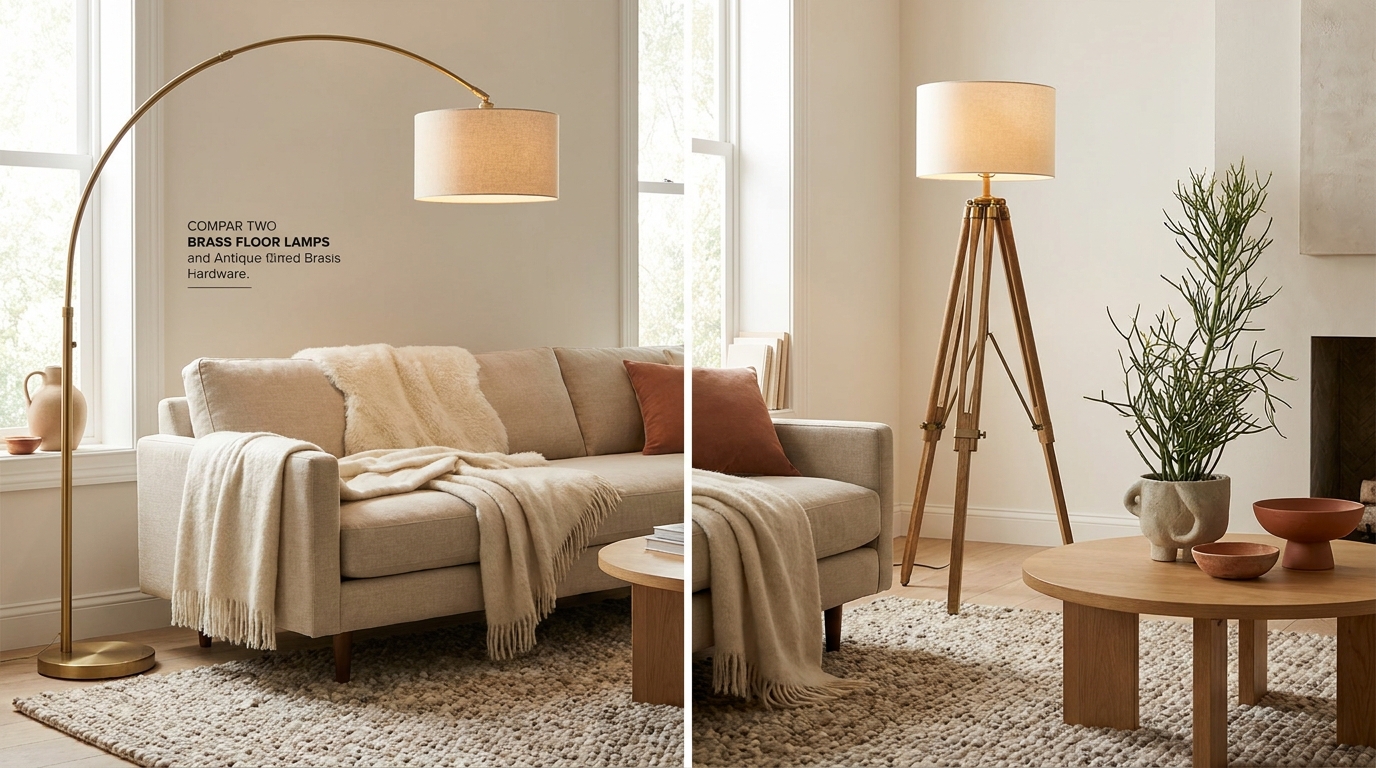
IKEA HEKTAR Floor Lamp ($70) – Best Budget Arc
The IKEA HEKTAR is a classic dark-metal arc lamp with a wide, downward-facing shade that throws directional task light over a sofa or reading chair. Height: adjustable up to 68 inches. Best for: sofa reading, arching over a sectional corner, or filling the role of task light in a small living room. Bulb type: E26 socket, takes any standard LED bulb – pair with a 2700K warm white for best results. At $70, it’s the single best value arc lamp in 2026. Renter-safe. No electrician required.
Brightech Sparq LED Arc Floor Lamp ($80) – Best Built-In LED
The Brightech Sparq is an LED arc lamp with a built-in 3000K LED module, no bulb-swapping required. Height: 72 inches at full arc. Best for: living rooms where you want a warm ambient glow without thinking about bulb replacement. The built-in LED is rated for 20,000-plus hours of use. Bulb type: integrated LED, non-replaceable – this is the trade-off. At $80, the longevity and clean arc profile make it a better long-term value than many $150 options. Renter-safe. No electrician required.
Built-in LED floor lamps like the Brightech Sparq solve one of the most overlooked maintenance issues in living room lighting: people buy an arc lamp, lose track of the bulb spec, and either run it on an incorrect color temperature or let it burn out and stop using the lamp entirely. A sealed LED module removes that failure point entirely for the cost of a slightly higher upfront price.
West Elm Sculptural Floor Lamp ($149) – Best Design Statement
The West Elm Sculptural Floor Lamp is a slim-stem task lamp with a minimal shade and a matte finish in brass or black. Height: 58 to 65 inches depending on configuration. Best for: living rooms where the lamp itself is part of the design – visible from multiple angles, not tucked in a corner. Bulb type: E26 socket, 60W max equivalent. At $149, it’s the pick when design identity matters as much as light output. Pairs best with mid-century, organic modern, or minimal living rooms. Renter-safe. No electrician required.
CB2 Arched Floor Lamp ($179) – Best Arc for Large Rooms
The CB2 Arched Floor Lamp is a weighted-base arc lamp with a longer arc span than most floor lamps in this price range, making it the correct pick for arching over a sectional or large sofa in a room over 250 square feet. Height: 75 inches at full arc extension. Best for: large living rooms where shorter arcs don’t reach center cushions. Bulb type: E26 socket, takes up to 100W equivalent. At $179, the longer reach and heavy base justify the price over cheaper arc options. Renter-safe. No electrician required.
Amazon Brightech Sparq LED ($65) – Best Under-$70 Option
The Brightech Sparq at its Amazon pricing is often available at $65, placing it below the IKEA HEKTAR in price while delivering a comparable built-in LED arc profile. Height: 72 inches. Best for: renters who want an immediate upgrade without a significant spend. Bulb type: integrated LED, 3000K color temperature. At $65 to $80 depending on sale timing, it’s the most cost-efficient floor lamp on this list and a reasonable first floor lamp for a new living room setup. Renter-safe. No electrician required.
Citation Capsule: House Beautiful’s living room room guides note that floor lamps are the most frequently cited single-item lighting upgrade by homeowners and renters, because the installation barrier is zero: a standard outlet is the only requirement. Arc lamps, at 68 to 75 inches, cover the widest sofa span and double as both task and ambient sources.
What Are the Best Pendant Lights for Living Rooms Under $200?
Pendant lights work differently in living rooms than in kitchens. They’re rarely the room’s primary light source. In a living room, a pendant over a reading nook, side table, or seating corner adds visual weight and a ceiling-to-floor design line that floor lamps can’t replicate. Four picks cover the most common styles under $200.
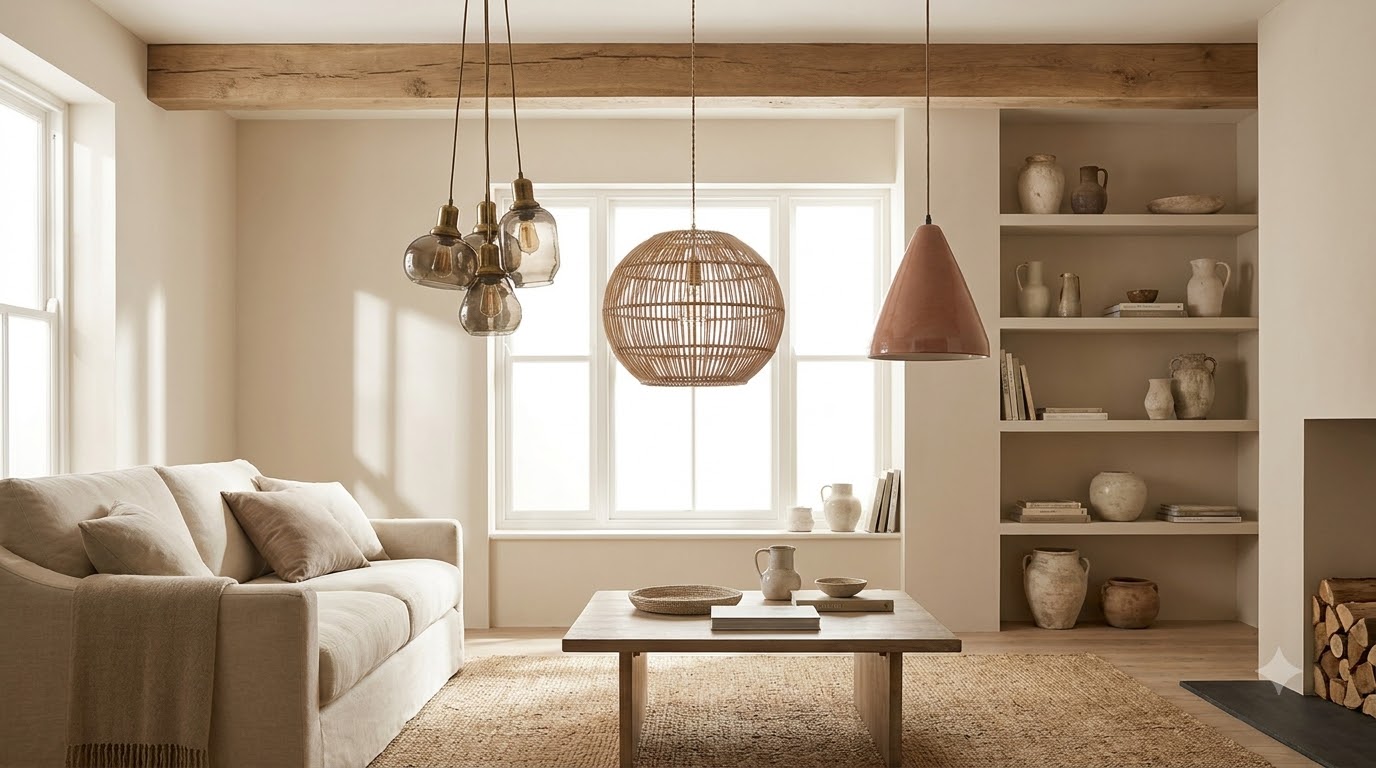
Note on installation: Hardwired pendants require an existing ceiling junction box and, in most cases, a licensed electrician for a new installation ($75 to $150 typical service call). Plug-in pendants hang from a ceiling hook and run a cord to a wall outlet – no electrician needed, renter-safe, and fully reversible.
IKEA SINNERLIG Pendant ($60) – Best Renter-Safe Rattan
The IKEA SINNERLIG is a bamboo/rattan pendant with a warm natural shade and a hanging cord in natural tones. Renter-safe via plug-in cord and ceiling hook – no hardwiring. Best for: boho, coastal, natural, or organic modern living rooms where the pendant shape reads as a decor element. Bulb type: E26 socket, fits a standard warm white LED. At $60, it’s the lowest-cost pendant in this list and the most clearly aesthetic pick. Pairs best with linen sofas, rattan chairs, and rooms with natural material furniture.
Amazon Stone & Beam Drum Pendant ($99) – Best Plug-In Drum Shade
The Stone & Beam Drum Pendant is a fabric drum-shade pendant in warm grey or linen tones with a plug-in cord option, making it renter-safe and electrician-free. Height adjustable via cord length. Best for: living rooms that need a pendant above a reading chair or side table without committing to a hardwired fixture. Bulb type: E26 socket, 60W max equivalent. At $99, it’s the best mid-range plug-in pendant for rooms that want a classic shade profile. Pairs best with traditional, transitional, or minimal living rooms.
West Elm Sculptural Cluster Pendant ($179) – Best Statement Hardwired
The West Elm Sculptural Cluster Pendant is a multi-arm pendant with glass globe or matte shade configuration, hardwired installation only. Requires electrician. Best for: living rooms with an existing ceiling junction box in the right location, or homeowners willing to invest in a one-time installation cost for a permanent design upgrade. Bulb type: E12 candelabra socket, multiple sockets. At $179 for the pendant itself (plus $75 to $150 electrician cost), it’s the highest-total-cost pick in this section but the most visually dramatic. Pairs best with mid-century, eclectic, or designed living rooms.
Wayfair Kichler Industrial Pendant ($149) – Best Industrial/Modern
The Wayfair Kichler Industrial Pendant is a black metal cage pendant with an exposed-bulb profile, available in plug-in and hardwired versions. Renter-safe in plug-in configuration. Height adjustable. Best for: living rooms with an industrial, modern, or masculine design direction where the fixture’s hardware is part of the visual. Bulb type: E26 socket, exposed globe LED for best visual effect. At $149, the plug-in version makes it one of the most versatile pendants in this list. Pairs best with dark walls, leather furniture, or rooms where the lighting is intentionally visible.
living room color palette context for fixture matching
What Are the Best Sconces for Living Rooms Under $150?
Sconces are the most underused category in living room lighting. They add the accent layer that floor lamps and pendants can’t: a horizontal band of light at eye level that draws the eye along a wall, warms a fireplace surround, or fills the dead zone on either side of a sofa. Three picks cover the key styles, with renter-safe options flagged clearly.
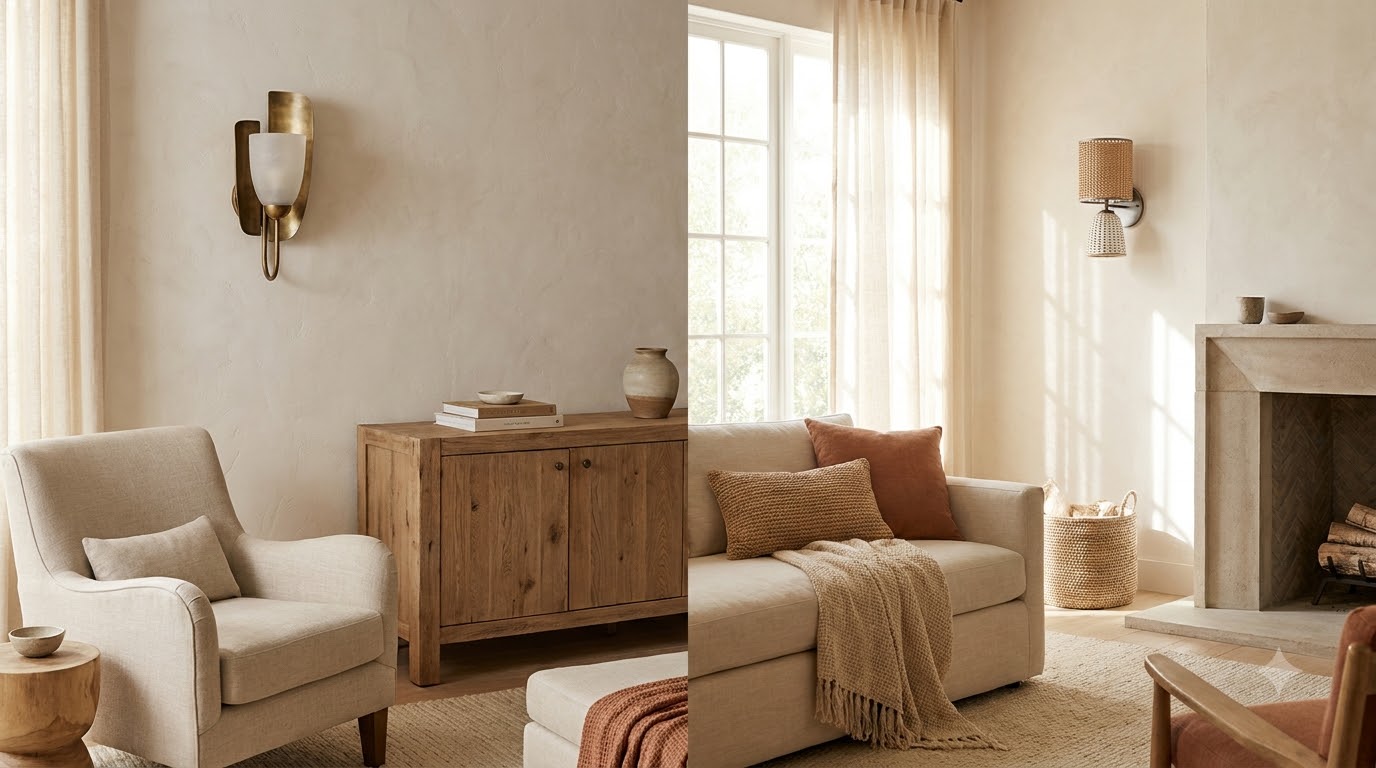
IKEA SKAFTET Plug-In Wall Sconce ($40) – Best Renter-Safe Budget
The IKEA SKAFTET is a plug-in wall sconce with a clean metal stem and a standard socket that runs a cord down the wall to an outlet. Renter-safe: no hardwiring, no drilling beyond a single small hook for cord management if desired. Best for: renters who want sconce-style accent light without any electrical work. Bulb type: E26 socket, takes any standard LED. At $40, it’s the most accessible sconce on this list and a near-zero-risk experiment. Pairs best with a warm 2700K bulb and placement flanking a mirror, sofa wall, or beside a bookshelf. Renter-safe.
Amazon Kira Home Plug-In Sconce ($89) – Best Mid-Range Plug-In
The Kira Home Plug-In Sconce is a fabric-shade wall sconce with a swing-arm option and a visible cord designed to sit flush against the wall. The swing-arm version lets you angle the shade for task or accent use. Renter-safe: plug-in, no electrician. Best for: living rooms where accent light is doing double duty as bedside-style reading light or where the sconce needs to be adjustable. Bulb type: E26 socket, 60W max equivalent. At $89, it’s the best mid-range plug-in sconce with functional flexibility. Pairs best with transitional, classic, or eclectic living rooms. Renter-safe.
We used the Kira Home swing-arm sconce beside a sofa in a rental living room with zero overhead lighting beyond a single builder-grade flush mount. Two sconces at 60 inches from the floor, flanking the sofa wall, replaced the overhead fixture entirely for evening use. The room felt like it had been redesigned from scratch. Total cost: $178 for two sconces plus two 2700K LED bulbs. No electrician, no damage to walls.
West Elm Mid-Century Hardwired Sconce ($129) – Best Design Upgrade
The West Elm Mid-Century Sconce is a hardwired brass or black metal sconce with a clean arm-and-shade silhouette designed for permanent wall installation. Requires electrician for installation. Best for: homeowners with existing junction boxes on the desired wall, or living rooms receiving a full electrical update. Bulb type: E12 candelabra socket, 40W max equivalent. At $129, the aesthetic payoff is significant – this sconce reads like a considered design choice rather than a functional addition. Pairs best with mid-century modern, organic modern, or minimal living rooms. Requires electrician – not renter-safe.
Citation Capsule: According to Apartment Therapy’s living room decor guides, wall sconces are consistently identified as the most impactful accent lighting upgrade for living rooms because they operate at eye level, where most of a room’s visual activity occurs. Plug-in sconces, available from $40 to $89, make this category accessible to renters without electrical access.
What Bulb Temperature Is Best for a Living Room?
Bulb temperature is the single most overlooked variable in living room lighting, and it’s the one that most directly determines whether a room reads warm and inviting or cold and clinical. Color temperature is measured in Kelvin (K): lower numbers are warmer (more amber), higher numbers are cooler (more blue-white). According to House Beautiful’s lighting guides, choosing the wrong bulb temperature is one of the top five lighting mistakes in residential design, and it’s fully correctable for under $20 per fixture.
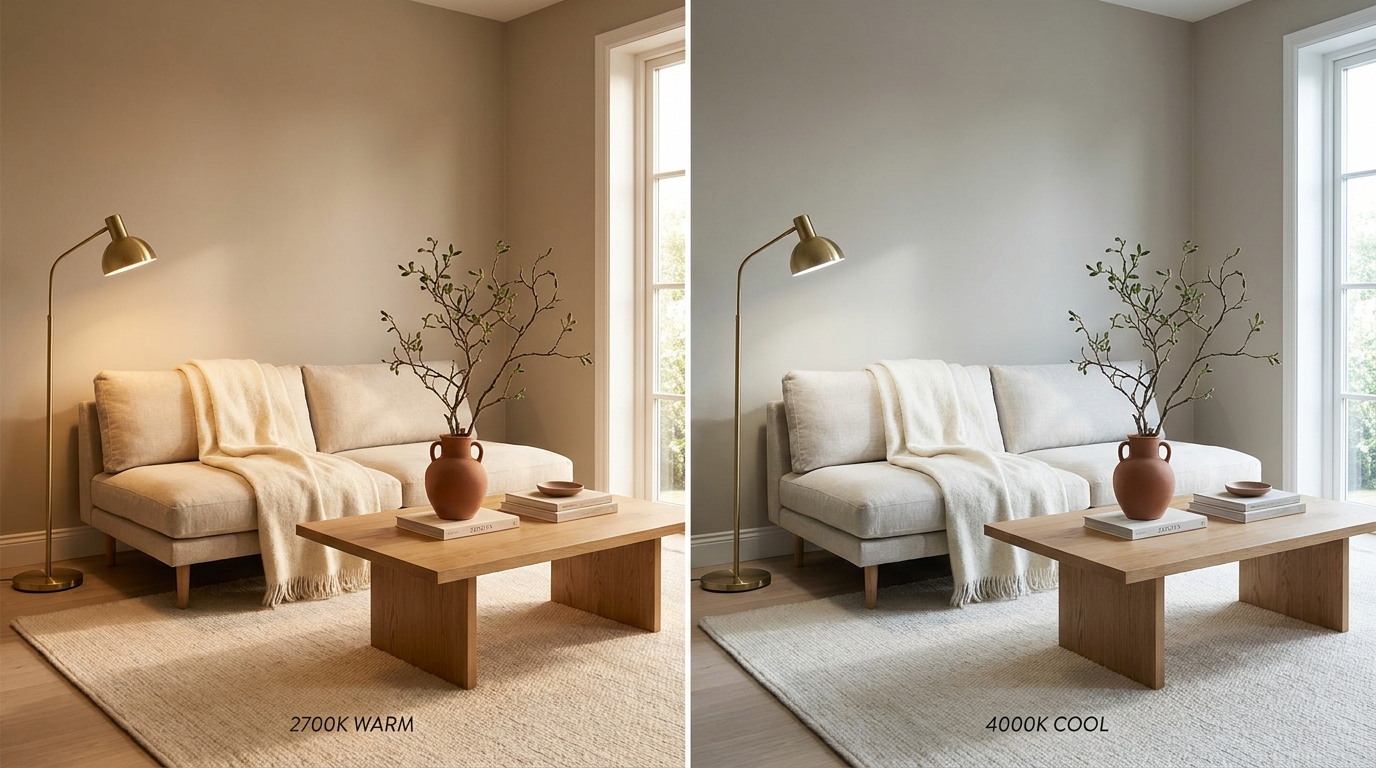
2700K – Warm White (Recommended Default)
2700K is the correct choice for almost every living room fixture. It reads amber-warm, mimics incandescent light, and makes skin tones, wood furniture, and fabric textures look their best. This is the temperature that makes a room feel like evening, like somewhere you want to stay. Use it in floor lamps, table lamps, sconces, and any pendant over a seating area. The Philips Warm Glow 2700K LED is the default recommendation: it dims smoothly from bright warm to deep amber, unlike standard LEDs that shift toward cool when dimmed.
3000K – Neutral Warm
3000K sits between warm and cool. It works in living rooms that double as work-from-home spaces where you need slightly better visual clarity than 2700K provides. The warmth reads true under most ambient conditions but loses some of the amber depth that makes 2700K feel truly residential. A reasonable choice for task lamps specifically. Less ideal for accent or ambient sources.
4000K – Cool White (Avoid in Living Rooms)
4000K is daylight-adjacent and belongs in kitchens, bathrooms, and workspaces. In a living room, 4000K makes the room look like an office. It washes out warm-toned furniture and makes the space feel transient. If your current living room lighting feels wrong and you can’t identify why, check the bulbs. 4000K replacements in the wrong fixtures are the cause more often than people expect.
Dimmer Compatibility
Not all LED bulbs dim correctly. Standard LED bulbs dim by reducing voltage, which often causes color shift toward cool, flickering at low settings, or buzzing in the socket. Philips Warm Glow 2700K LEDs use a proprietary dimming process that shifts the color warmer as brightness decreases, matching the behavior of incandescent bulbs. For living rooms with dimmer switches, this is the only bulb worth using. Verify your dimmer switch is LED-compatible (Lutron Caséta and Leviton Decora dimmers are both reliable choices under $30).
The most common reason living rooms feel “off” after a furniture refresh is that the new pieces were chosen in natural daylight and then viewed under 4000K or 5000K LEDs in the evening. The cool light strips the warmth from wood tones, makes white fabric look stark, and makes warm neutrals look grey. Swapping to 2700K bulbs before judging any furniture purchase is a genuinely useful diagnostic step.
Citation Capsule: House Beautiful’s room decorating coverage identifies incorrect bulb color temperature as a top-five living room lighting error. The correct default for residential living rooms is 2700K warm white. Philips Warm Glow 2700K LEDs dim to a warmer amber tone rather than shifting cool, making them the best-performing LED bulb in a dimmable living room fixture.
living room decor mistakes including lighting errors
Frequently Asked Questions
How many lights does a living room need?
A living room needs a minimum of three light sources: one ambient (ceiling or torchiere floor lamp), one task (reading lamp or arc floor lamp), and one accent (sconce or low table lamp). According to Architectural Digest’s living room planning guides, rooms with fewer than three simultaneous light sources consistently read flat and underlit in the evening, regardless of how the furniture is arranged. For larger living rooms over 300 square feet, five to six sources is more appropriate.
What is the best floor lamp for a small living room?
For small living rooms under 200 square feet, a slim-stem arc lamp like the IKEA HEKTAR ($70) or Brightech Sparq ($65-80) is the best option. An arc lamp takes minimal floor space at the base, arches over the furniture without blocking sight lines, and provides both task and ambient light from a single plug-in fixture. Avoid torchieres in small rooms – the wide base consumes too much floor space. For more small-room-specific layout decisions, the living room color palette guide covers how light interacts with wall color in tight spaces.
Can renters add proper lighting without an electrician?
Yes. Every ambient and accent lighting need in a living room can be met without hardwiring in 2026. Plug-in floor lamps cover ambient and task. Plug-in pendants hang from ceiling hooks. Plug-in sconces mount with a single anchor and run a cord to the outlet. The full three-layer setup – one floor lamp, one plug-in pendant, two plug-in sconces – can be assembled for under $300 using picks from this guide. The only category that benefits from an electrician is hardwired sconces and fixed pendant placement above a non-outlet location, and neither is required for a well-lit living room.
The best living room lighting isn’t about buying the most expensive fixture. It’s about getting three sources at three heights on dimmers, all running at 2700K. A $70 IKEA arc lamp, two $40 plug-in sconces, and a $15 pack of Philips Warm Glow bulbs will outperform a single $400 designer pendant over an overhead fixture every evening of the year.
Start with the floor lamp – it’s the fastest, most reversible, and highest-impact single change. Add sconces to the sofa wall once the floor lamp is in place. If the room still feels flat after both, the issue is almost certainly the bulb temperature. Swap to 2700K across all fixtures before adding another light source.
For the full living room design picture, the cozy living room ideas and layout guide covers how lighting placement fits into the room’s complete design sequence. For common mistakes that affect how light reads in the space, the living room decor mistakes guide covers the ten most common errors and how to fix each one.
color and light in the full room
Related reading
- Modern vs Cozy vs Maximalist Living Room: Which Style Fits You?
- Best Coffee Tables Under $400: 12 Modern Picks That Last