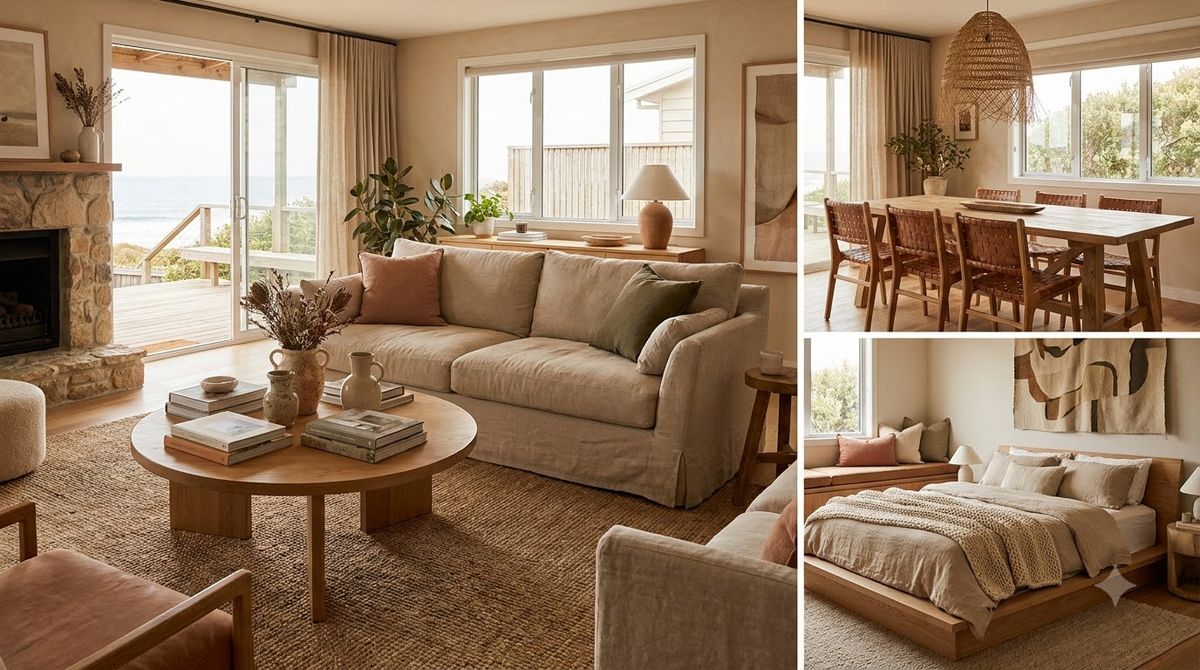
Modern coastal decor is light, airy, and built on natural fibers — think sun-bleached whites, soft sky blues, linen, jute, and rattan — not anchors, rope, or a shelf of seashells. If you want the calm of a beach house without the literal nautical theme, you swap the kitsch for texture and let the palette do the talking. Below are the colors, materials, and renter-friendly swaps that get the look in small, budget-conscious spaces.
Key Takeaways
- Coastal is a feeling, not a theme: light + airy + natural fibers, never anchors or rope.
- Palette: warm white
#F3F1EA, soft sky#9FC3D1, sand#E0D3BC, and a single deep navy accent#37516B. - Materials do the work: linen, jute, rattan, and driftwood carry the texture so you skip the seashells.
- Renter-friendly: most swaps (throws, baskets, sheers) run $15–$60 and leave zero holes in the wall.
- Restraint wins: pick two or three textures per room and let negative space breathe.
What is modern coastal style?
Modern coastal style is a pared-back interpretation of the classic beach house: it keeps the light, the calm, and the natural materials, but drops the literal ocean iconography. Where old-school nautical leaned on navy-and-white stripes, ship wheels, and starfish, the modern version is quieter. It reads as a bright, breathable room that feels like the coast because of how the light bounces off soft whites and how the textures echo sand, driftwood, and sea grass.
The shift happens the moment you stop decorating about the beach and start decorating like it. These are the three pillars to come back to every time:
- Light: maximize daylight, use sheer curtains, and lean on warm whites so the room glows instead of glares.
- Air: keep sightlines open, leave negative space, and choose low-profile or leggy furniture that lets the floor show.
- Natural fibers: layer linen, jute, rattan, and wood so every surface has a tactile, sun-washed quality.
What is the modern coastal color palette?
The palette is where most people either nail coastal or accidentally tip into theme-park nautical. Keep it warm and low-contrast, with one deeper color used sparingly for grounding. Here is a simple recipe to build a room around:
- Warm white
#F3F1EA: the base — walls, bedding, slipcovers. It has a hint of cream, so it never feels clinical. - Soft sky
#9FC3D1: the “water” note — a muted blue for a throw, a vase, or a single wall. - Sand
#E0D3BC: the connective tissue — jute rugs, rattan, oak, and linen all live here. - Deep navy
#37516B: the anchor color, used sparingly — a cushion, a lamp base, or art matting.
A simple balance keeps it from looking flat: mostly warm white, sky and sand as supporting tones, and just a touch of navy. That small amount of navy is doing a lot of quiet work — it gives the eye somewhere to rest so the airy palette feels intentional rather than washed out.
One warning: cool, bright whites can flip the whole mood. A stark, blue-white can make a room read cold and gallery-like instead of sunny. A warm, creamy white is the change that makes everything else — the linen, the jute, the sky-blue throw — look coastal. If you can only test one color, test the white, and always check it in your own daylight before committing.
Which materials and textiles create the coastal look?
If the palette is the mood, the materials are the proof. Modern coastal lives and dies on texture, because texture is what replaces the seashell shortcuts. Four materials carry almost every coastal room:
- Linen: slightly rumpled, breathable, and light-reflecting — perfect for curtains, cushion covers, and bedding.
- Jute: a warm, sandy floor texture that grounds a room without adding visual weight.
- Rattan & cane: woven, open, and airy — pendant shades, headboards, and accent chairs.
- Driftwood & pale oak: raw, sun-bleached wood tones for frames, side tables, and small accents.
The trick: do not use all four at maximum volume in one room. A jute rug, rattan chair, linen sofa, and a driftwood table crammed into one small living room reads as a beach gift shop. Pick two dominant textures and let the other two whisper. For a plant-forward, breezy finish, we like leaning on greenery too — our roundup of the best indoor plants for the living room pairs perfectly with a jute-and-linen base.
How do you do coastal without it looking themed?
It is a common question, and the answer is almost always subtraction. Themed coastal happens when the decor names the beach — a “Gone Coastal” sign, netting on the wall, a bowl of shells. Modern coastal suggests it. Use this quick do/avoid table as your filter before anything goes on a shelf.
| Coastal element | Do | Avoid |
|---|---|---|
| Color | Warm white base with muted sky and sand | High-contrast navy-and-white stripes everywhere |
| Texture | Linen, jute, rattan, pale oak | Glossy plastics and “faux driftwood” resin |
| Accents | A single ceramic vase or a bowl of stones | Seashells, starfish, anchors, ship wheels |
| Wall art | Abstract seascapes, soft photography | Literal “Beach This Way” signage |
| Lighting | Sheer curtains, warm bulbs, woven shades | Cool-white bulbs and heavy blackout drapes |
| Greenery | Olive, palm, or pampas in a neutral pot | Fake tropical foliage in bright plastic |
Notice the pattern: every “avoid” is something that announces a theme, and every “do” is a material or tone that simply feels coastal. When in doubt, choose the quieter option and add one more inch of negative space.
Why does modern coastal feel so calming?
Part of it is the low-contrast palette — your eye is not bouncing between sharp darks and brights, so the room reads as restful. But a bigger part is the emphasis on light and open space. Styled this way, a room loses visual noise: fewer competing colors, fewer hard edges, and more soft, matte texture that absorbs rather than reflects harsh light. The result is a space that feels like a slow exhale.
There is also a practical calm to it. Because the look depends on natural fibers and neutral tones, individual pieces are easy to source, easy to mix, and forgiving when they age. A linen cushion that softens with washing only looks more coastal over time. That low-maintenance quality is a big reason we keep recommending this style to renters who move often — nothing here is precious, and nothing needs to be perfect.
How do renters get the coastal look on a budget?
Coastal is genuinely one of the most renter-friendly styles, because it rewards soft goods over structural changes. You are layering textiles and swapping small accents — none of it requires drilling, painting, or a security deposit gamble. Here are the swaps to make first, with rough price ranges:
- Swap curtains for sheer linen-look panels ($20–$45): instantly softens light and adds height using existing rods.
- Add a jute or jute-blend rug ($40–$90 for a small size): warms the floor and hides landlord-beige carpet or scuffed vinyl.
- Layer two or three linen cushion covers ($15–$30 each): keep your existing inserts, just change the covers seasonally.
- Introduce one rattan or cane accent ($35–$60): a pendant shade clip-on, a small stool, or a mirror frame.
- Group natural objects on a tray ($10–$25): pale stones, a linen runner, and a single ceramic vase read as “coastal” without a shell in sight.
For small spaces, restraint is your best friend. Because everything above is textile-based, it packs into a couple of boxes when you move — no patched nail holes, no forfeited deposit. If you want the room to feel bigger, borrow tricks from our cozy living room layout guide: float furniture a few inches off the wall and keep the coffee table low and leggy.
How does coastal work room by room?
The palette and materials stay constant; only the emphasis changes. Here is how we translate modern coastal into the three rooms renters ask about most:
- Living room: warm-white slipcover, jute rug, one sky-blue throw, a rattan basket for blankets. Keep the navy to a single cushion.
- Bedroom: linen bedding in sand and white, a cane headboard or leaning mirror, and sheer panels to wake up softly.
- Bathroom: waffle-weave linen towels, a wooden bath mat or stool, and a spa-like calm rather than a shell soap dish.
The bedroom is where coastal feels most restful, and it overlaps heavily with soft, layered aesthetics — our aesthetic bedroom guide covers the linen-layering we use here. For the bathroom, a spa-coastal crossover is easy to pull off in a rental; we walk through it in our bathroom decor guide. And if you only remember one rule across all three rooms, keep the navy sparse and let sand and white lead.
Frequently Asked Questions
Is coastal decor the same as nautical?
No. Nautical leans on literal ocean symbols — anchors, ropes, ship wheels, and navy-and-white stripes. Modern coastal keeps only the light, airy feeling and natural materials like linen, jute, and rattan. It suggests the beach through texture and a soft palette rather than naming it with themed props.
What colors should I use for a coastal room?
Build on a warm white base (#F3F1EA), then layer soft sky blue (#9FC3D1) and sand (#E0D3BC) as your mid-tones. Add a deep navy (#37516B) sparingly for grounding. Let white lead, with sky and sand as supporting tones and navy as the smallest share.
Can I do coastal decor as a renter?
Absolutely — coastal is one of the easiest styles for renters. It relies on soft goods rather than structural changes, so sheer curtains, a jute rug, linen cushion covers, and one rattan accent do most of the work. Nearly every swap runs $15–$90 and leaves no holes, paint, or damage behind.
How do I get the look in a small apartment?
Lean into light and restraint. Use sheer panels to maximize daylight, choose leggy furniture so the floor shows, and pick just two dominant textures instead of four. Keep the palette low-contrast and airy, then add negative space. Small rooms feel larger the moment you stop crowding every surface with accents.
What materials say “coastal” without seashells?
Texture replaces the shells. Linen for curtains and bedding, jute for rugs, rattan or cane for furniture and lighting, and pale driftwood or oak for accents will all read as coastal on their own. Group a few natural objects like smooth stones on a tray to finish the look without a single themed prop.