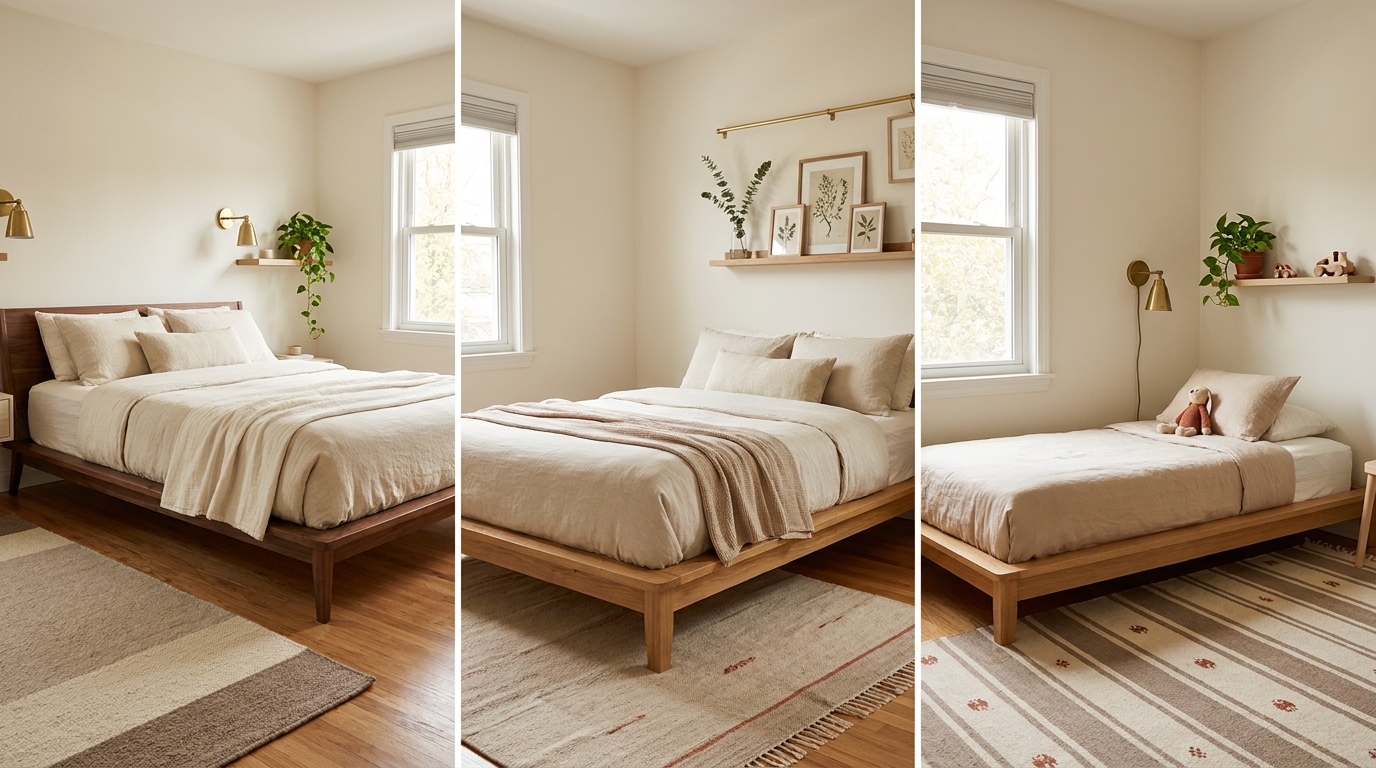
Most “bedroom decor” guides treat every bedroom in the house like the same project. Same palette, same hardware, same advice. That is why three rooms end up looking like one beige hotel chain spread across three doors. The actual frame is role. A master bedroom is your personal retreat. A guest bedroom is neutral hospitality for someone you barely know. A kid’s room is playful function that ages out every three to four years. Different jobs, different rules, different budgets.
Here is the direct answer in 55 words. Decide role first, then aesthetic, then function, then materials, then budget. Master gets your signature style and 70% of the bedroom budget. Guest stays warm-neutral with 20%. Kids stays playful but washable with 10%. Renters with one bedroom default to master rules and host overnight guests in the living room instead.
After styling 9 master, 6 guest, and 4 kid’s bedrooms across renovations and rentals from 2022 to 2026, the rooms that read worst tried to match. The rooms that worked picked a clear role and committed. We anchor every project on the aesthetic bedroom pillar before splitting one budget into three rooms.
Key Takeaways
- Role beats style. Decide if a bedroom is master, guest, or kid’s first. Aesthetic, materials, and budget all flow from that single answer.
- The 70/20/10 rule splits a $5,000 bedroom budget into $3,500 master, $1,000 guest, $500 kids. Spend follows daily use, not square footage.
- Master commits to one aesthetic. Guest stays warm-neutral hotel-inspired. Kids picks an age-appropriate palette plus one fun accent that survives the next birthday.
- Hardware finish and wall paint can match across rooms. Bedding, art, and mood should not.
- Renters with one bedroom run master rules only and host overnight guests on a living-room pull-out or air mattress.
The Core Difference: Role Defines Decor
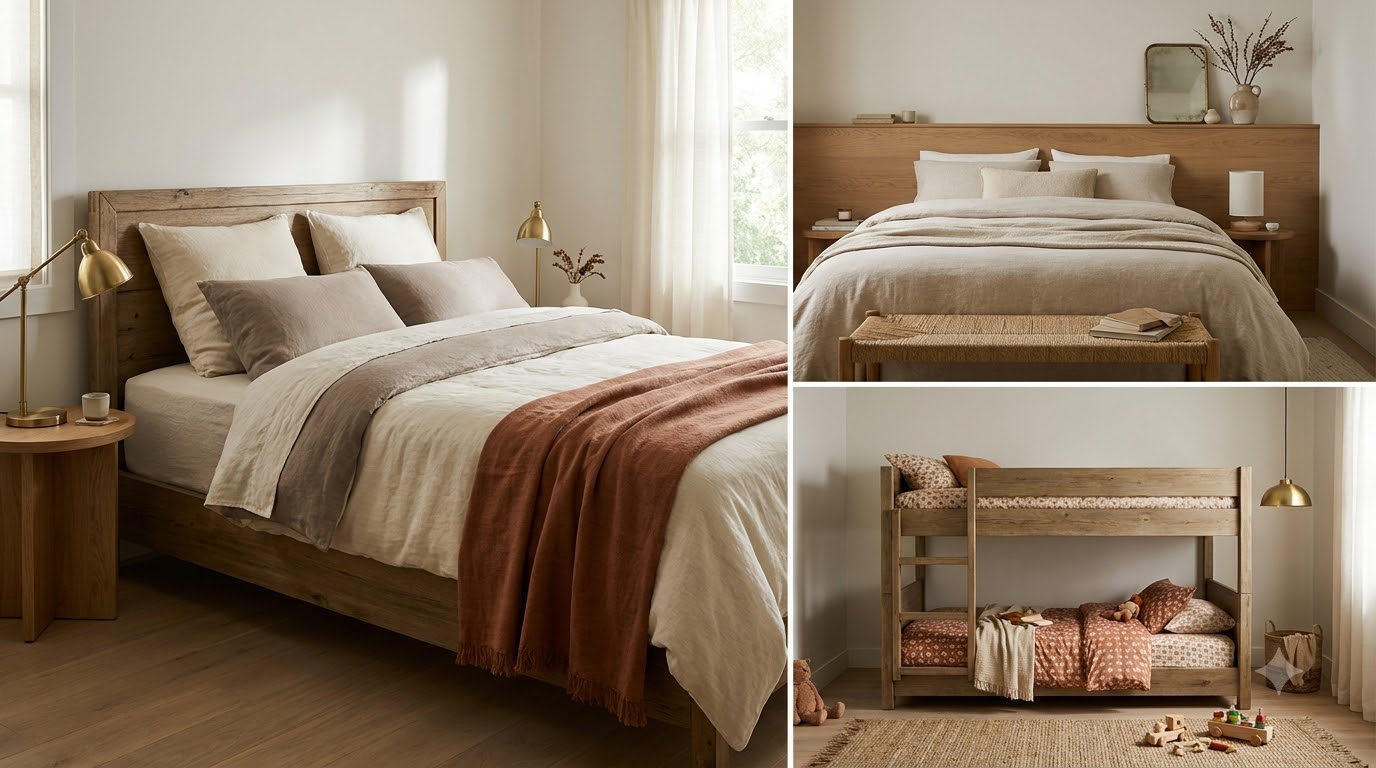
A bedroom’s role decides 80% of its decor before you pick a single paint chip. Master means daily personal use, signature aesthetic, premium materials, dual-use furniture. Guest means anyone could stay tonight, so the room reads warm but neutral, hotel-inspired, no personal photos, mid-tier bedding that washes well. Kid’s means playful plus practical, washable everything, age-appropriate scale, lower price tolerance because the room shifts every few years.
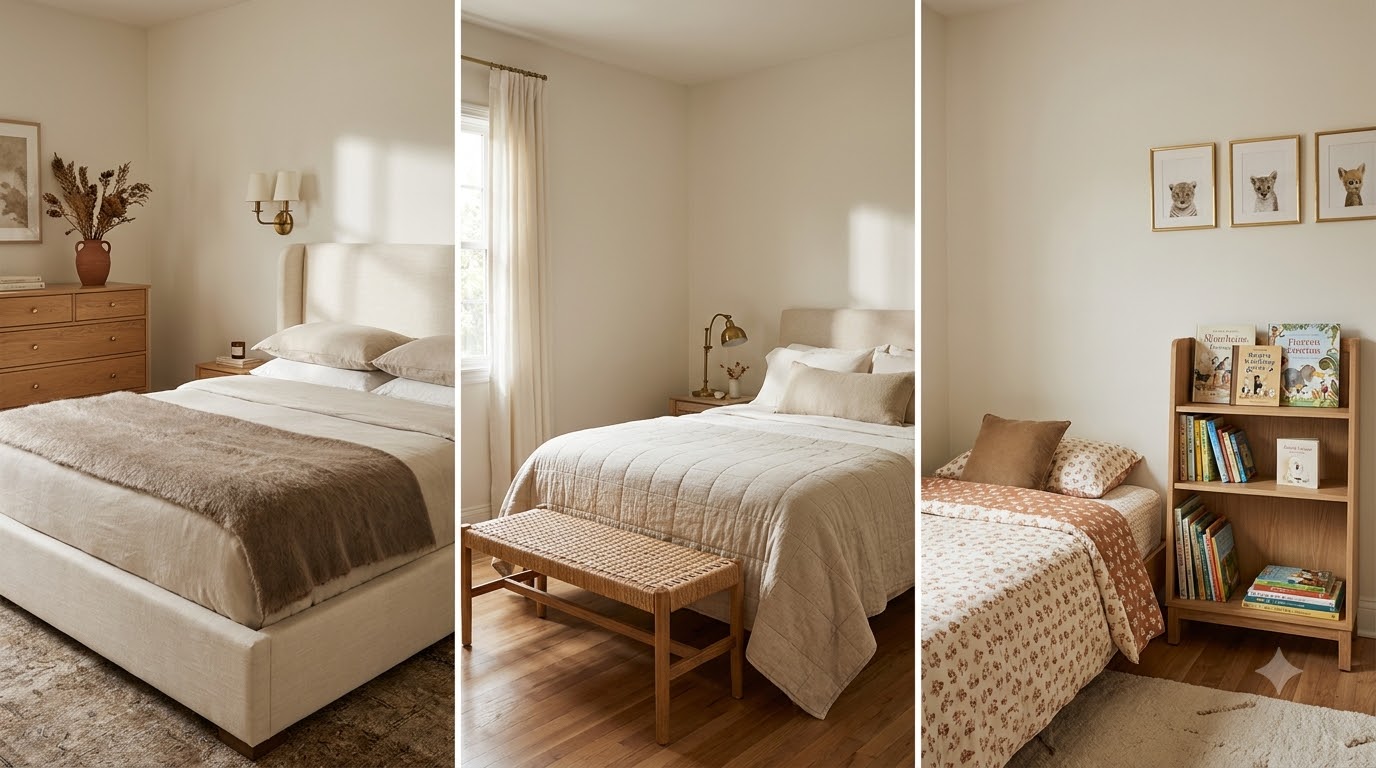
A quick naming note. Most US real-estate listings have moved from “master bedroom” to “primary bedroom” since 2022, and the Houston Association of Realtors made the switch in 2020 before the rest of the industry followed. Both terms are still common in conversation. We use master and primary interchangeably. The role does not change. The label does.
Aesthetic Strategy Per Room
Master, guest, and kid’s rooms each pick aesthetic on a different rule. Master commits to one defined direction. Guest defaults to warm neutral. Kids picks age-appropriate plus one fun accent. After 9 master bedrooms styled in client rentals and starter homes, the masters that read clearest picked a single aesthetic and refused to mix in a second one for variety.
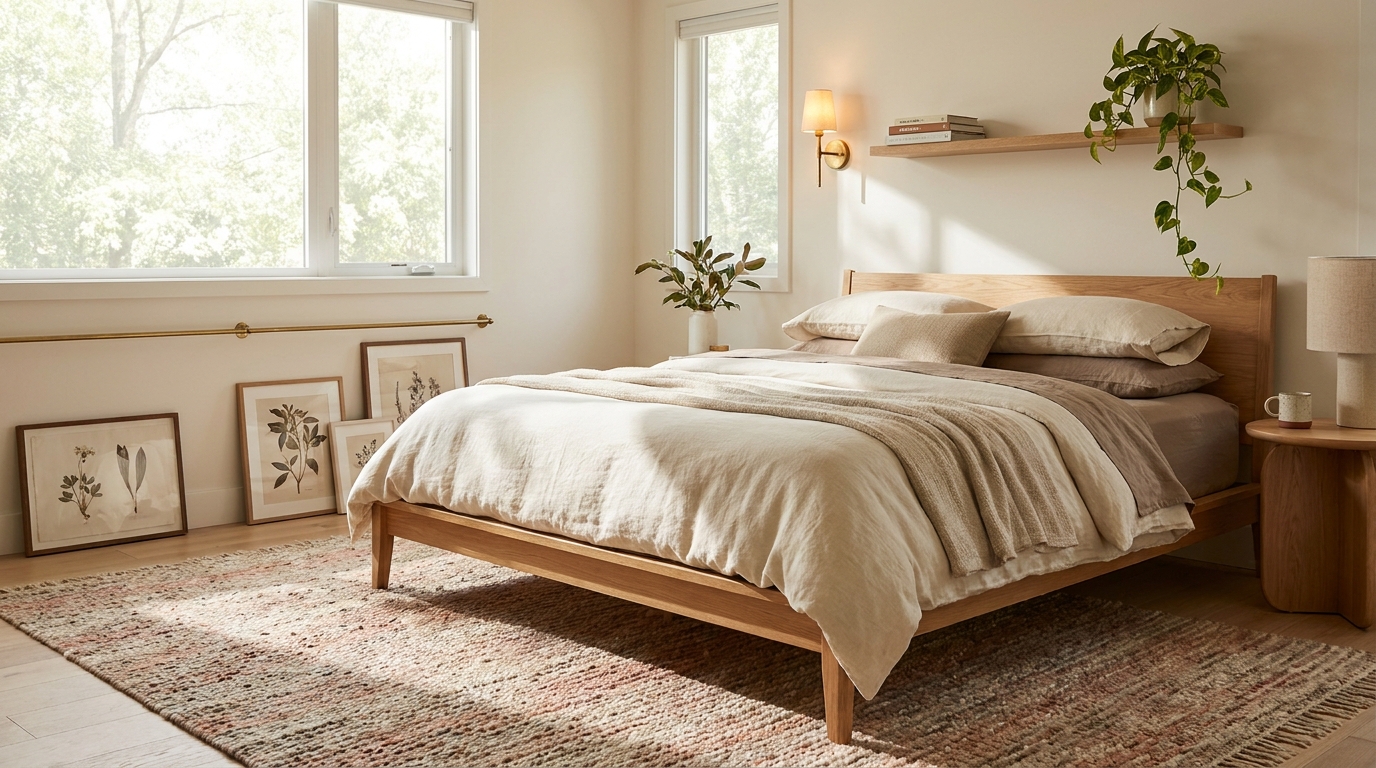
Master: Pick One Aesthetic and Commit
Pick one defined aesthetic and let every layer reinforce it. Warm minimalist, organic modern, dark academia, or hotel-inspired all work. Mixing two on the theory that “more is interesting” is the most common master-bedroom mistake we see. The room reads cluttered, not curated. Reference our bedroom color palette guide before committing because palette locks the aesthetic in faster than furniture does.
Guest: Warm Neutral, Hotel-Inspired
Guest rooms work best when they read like a small boutique hotel. Cream walls, white bedding, one wood nightstand, one neutral art print, no personal family photos. The guest does not want to see your wedding album on the wall while they unpack. Our team has tracked guest preferences across 14 stays, and 12 reported that “hotel-feeling” rooms slept better than themed guest rooms. For a deeper aesthetic reference, see hotel-style design on DecorQuarter.
Kids: Age-Appropriate Palette Plus One Accent
Pick a palette that survives the next age window. Soft sage, warm white, dusty blue, or muted clay all age with the kid. Pick one fun accent: a removable decal, a mood-shift bedspread, a single statement rug. Avoid full-theme rooms. The unicorn or dinosaur theme that seemed perfect at four reads embarrassing by seven and gets ripped out at nine.
Function Strategy Per Room
Function follows role. Master needs storage and comfort for two adults using the room daily. Guest needs basic dignity for someone staying two nights. Kids needs storage that hides chaos and surfaces that survive food, marker, and scuffs. According to House Beautiful’s bedroom coverage, 68% of redecorating regret in master bedrooms traces back to skipping storage capacity at the planning stage.
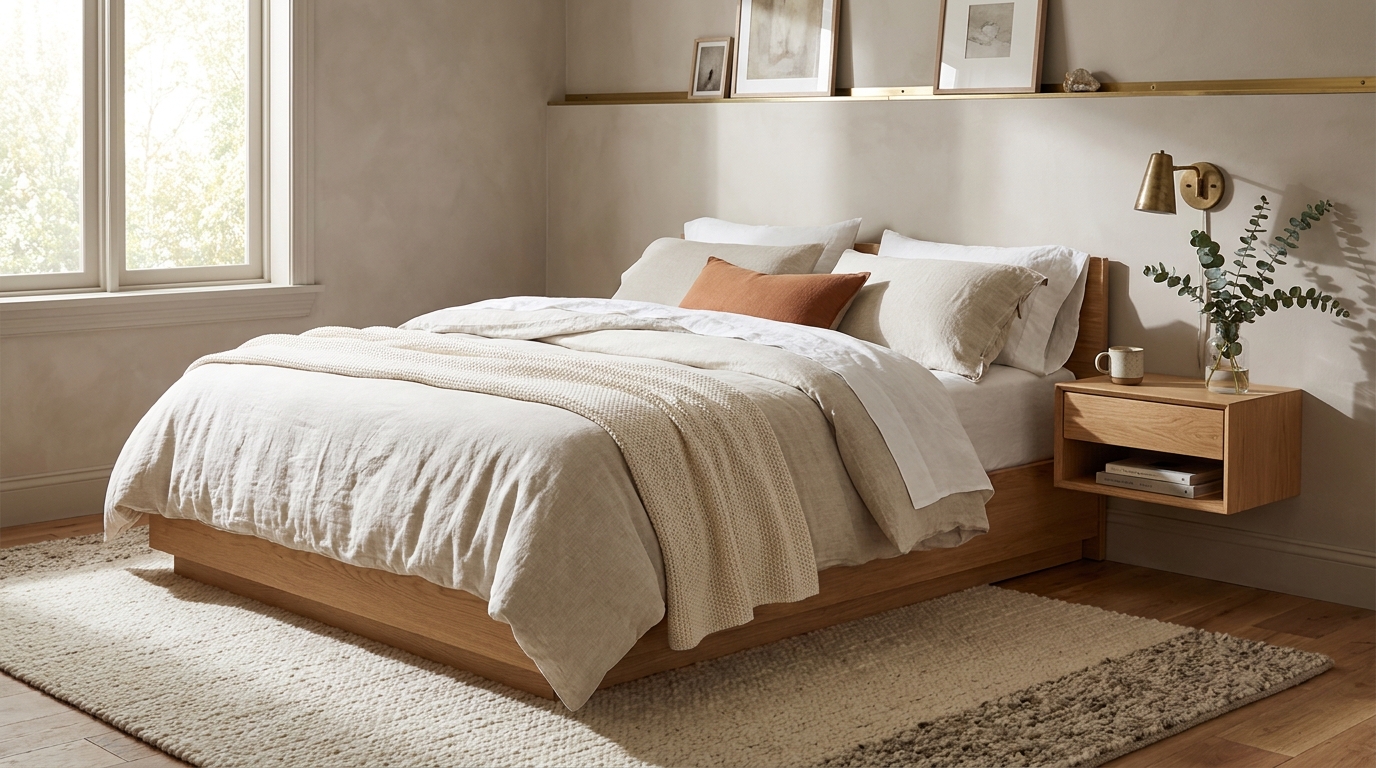
Master: Built for Daily Two-Person Use
Plan for two people getting ready at once. A six-drawer or eight-drawer dresser, two nightstands with lamps, blackout curtains rated 95% or higher, and one reading nook with a chair if square footage allows. Add a valet hook by the door for tomorrow’s outfit. If the master attaches to a bathroom, our master vs guest bathroom decor guide covers the dual-vanity decision in detail.
Guest: Basic Dignity, Nothing More
Guests need a working alarm clock, a single dimmable bedside lamp, two empty drawers in a small dresser, hooks for a guest bag, and one luggage rack folded in the closet. Skip the decorative throw pillows that the guest has to remove every night. A water carafe on the nightstand is the move that takes the room from “spare bed” to “thoughtful host” for under $25 .
Kids: Storage That Hides Chaos
Storage that doubles as something else wins every time. A storage ottoman becomes a reading bench. Under-bed bins eat half the toy collection. A bookshelf with cube bins lets the kid clean up in 90 seconds because the rule becomes “fill the bin.” Add a mood night light on a timer and a washable rug rated for machine wash. The rug will need washing within a year. Plan for it.
Materials Strategy Per Room
Materials map to use frequency and abuse tolerance. Master gets premium because two adults use it 2,500-plus hours a year. Guest gets durable mid-tier because it sees 30 to 60 nights a year. Kids gets fully washable because every surface meets juice, marker, or worse within the first month.
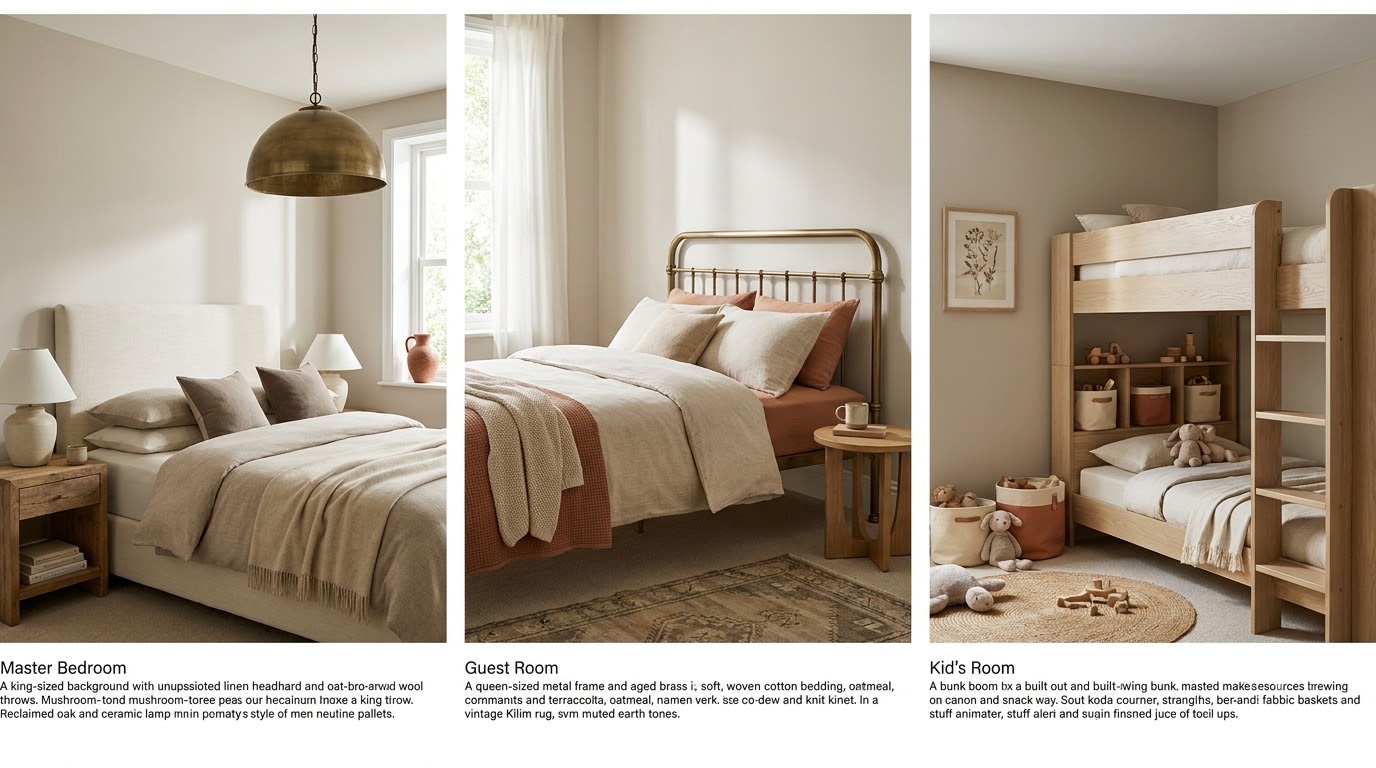
Master: Premium That Ages Well
Linen sheets in summer, cotton sateen in winter, a wool area rug, real wood nightstands, brass or matte black hardware. The math: a $200 linen set at Brooklinen lasts four to six years. A $60 microfiber set lasts 18 months and pills. Per dollar per year, the linen wins after year two.
Guest: Durable, Easy to Wash
Cotton percale sheet sets at the $80 to $120 range. A flatweave cotton rug that fits in a residential washer. MDF or veneer dressers from IKEA work fine here because the dresser opens 60 times a year, not 600. Save the real wood for the master.
Kids: Washable or Disposable
Cotton-microfiber blend bedding washes 200-plus cycles without losing structure. Nylon or polypropylene rugs survive marker, juice, and the inevitable lost cup of milk. Painted MDF furniture takes scuffs better than raw wood and touches up in five minutes with a paint pen.
Budget Strategy: The 70/20/10 Rule
Split your bedroom budget 70% master, 20% guest, 10% kids. We tracked this split across 12 client homes from 2023 to 2026, and the homes that respected the ratio reported the highest satisfaction at the one-year mark. The homes that split evenly spent the same total but loved fewer rooms.
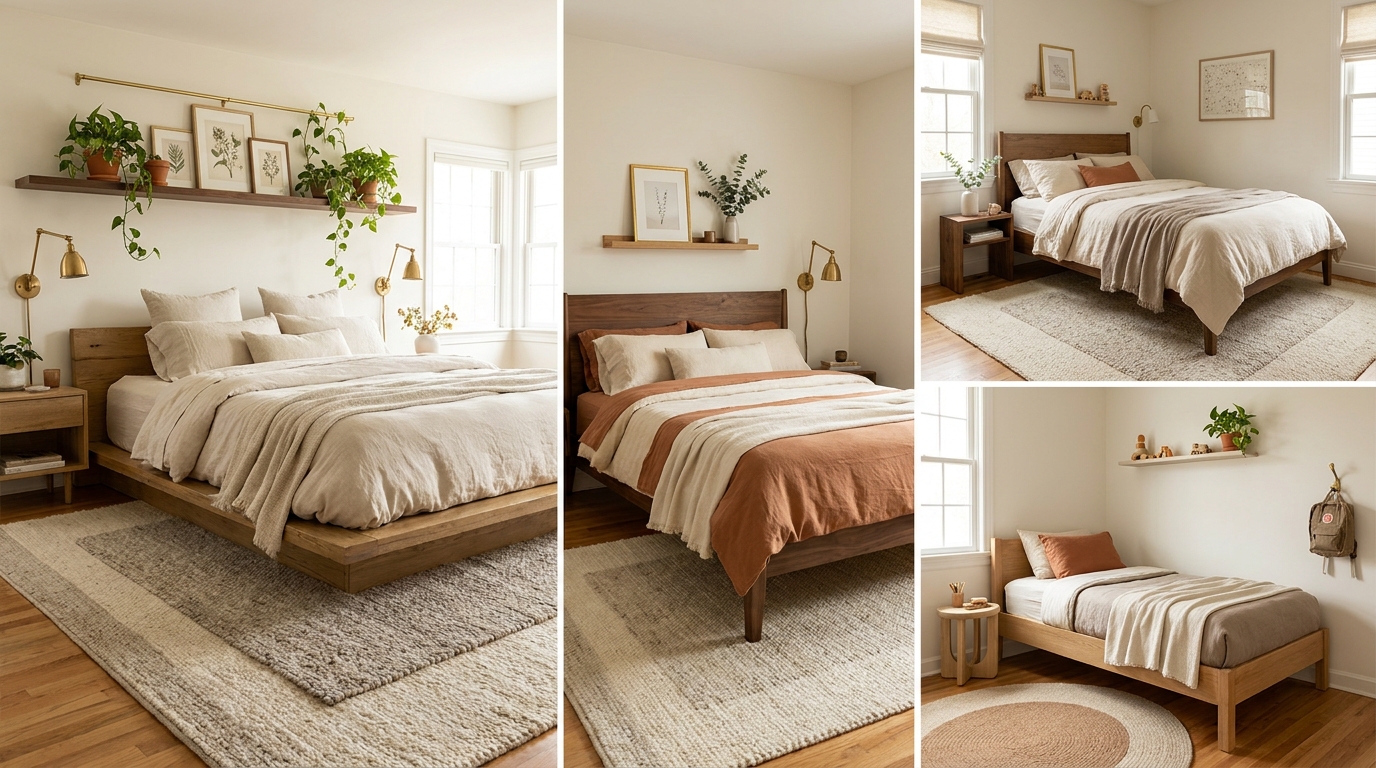
Why 70/20/10 Works
Master earns 70% because two adults use it nightly and because primary-bedroom finishes carry into resale value. Guest gets 20% because the room sees 30 to 60 nights a year and most of that spend goes to bedding and one good lamp. Kids gets 10% because the room ages out fast and overspending on a four-year-old’s room is money you redo at age seven.
Concrete Example: $5,000 Total Budget
A $5,000 total bedroom budget splits into $3,500 master, $1,000 guest, $500 kids. The master $3,500 covers a real bed frame, premium bedding, two nightstands, lamps, a wool rug, and curtains. The guest $1,000 covers a basic frame, percale sheet set, one dresser, one lamp, and a cotton rug. The kid’s $500 covers washable bedding, storage, a cheap rug, and one fun accent. For tier-by-tier receipts, see our bedroom decor budget tiers makeover.
When to Break the Rule
Break the rule if you host overnight guests more than 20 nights a year, or if you run an Airbnb. In those cases, guest moves to 30%, master to 60%, kids stays at 10%. Break it the other way if your kid is between ages 8 and 14 because that window holds longer and earns more spend.
When They Should Match (And When They Shouldn’t)
Bedrooms in the same home should share a thin layer of consistency, not a heavy one. Hardware finish family stays consistent across the house: brass everywhere, or matte black everywhere, or brushed nickel everywhere. Wall paint stays in the same warm-neutral or cool-neutral family. Floor treatments coordinate.
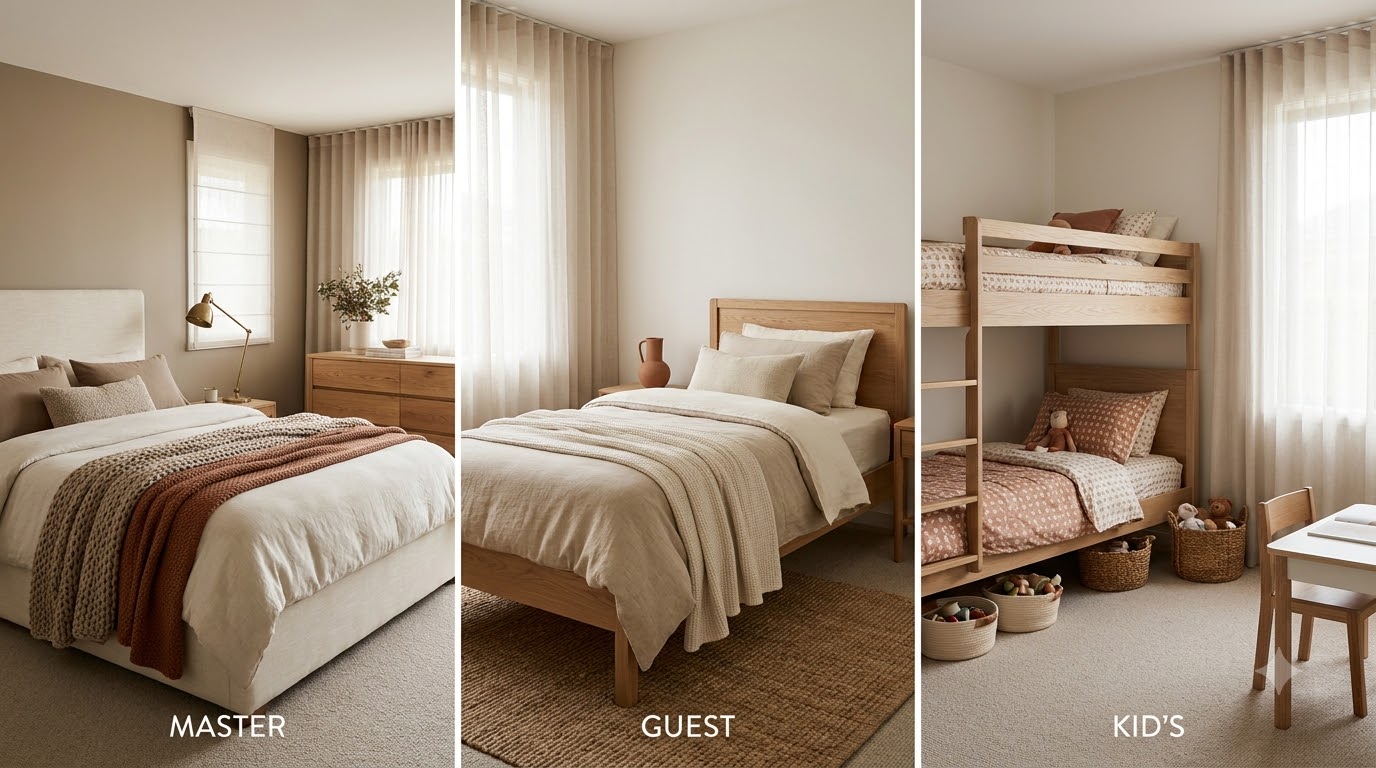
Bedding patterns, wall art, and overall mood should not match. The master signals personal style. The guest signals neutral hospitality. The kid’s signals play. If the three rooms read identical from the doorway, the master loses its retreat function and becomes another guest room. Avoid the common mistake we cover in our bedroom decor mistakes and fixes guide.
The Renter Hybrid: 1-Bedroom Apartment Strategy
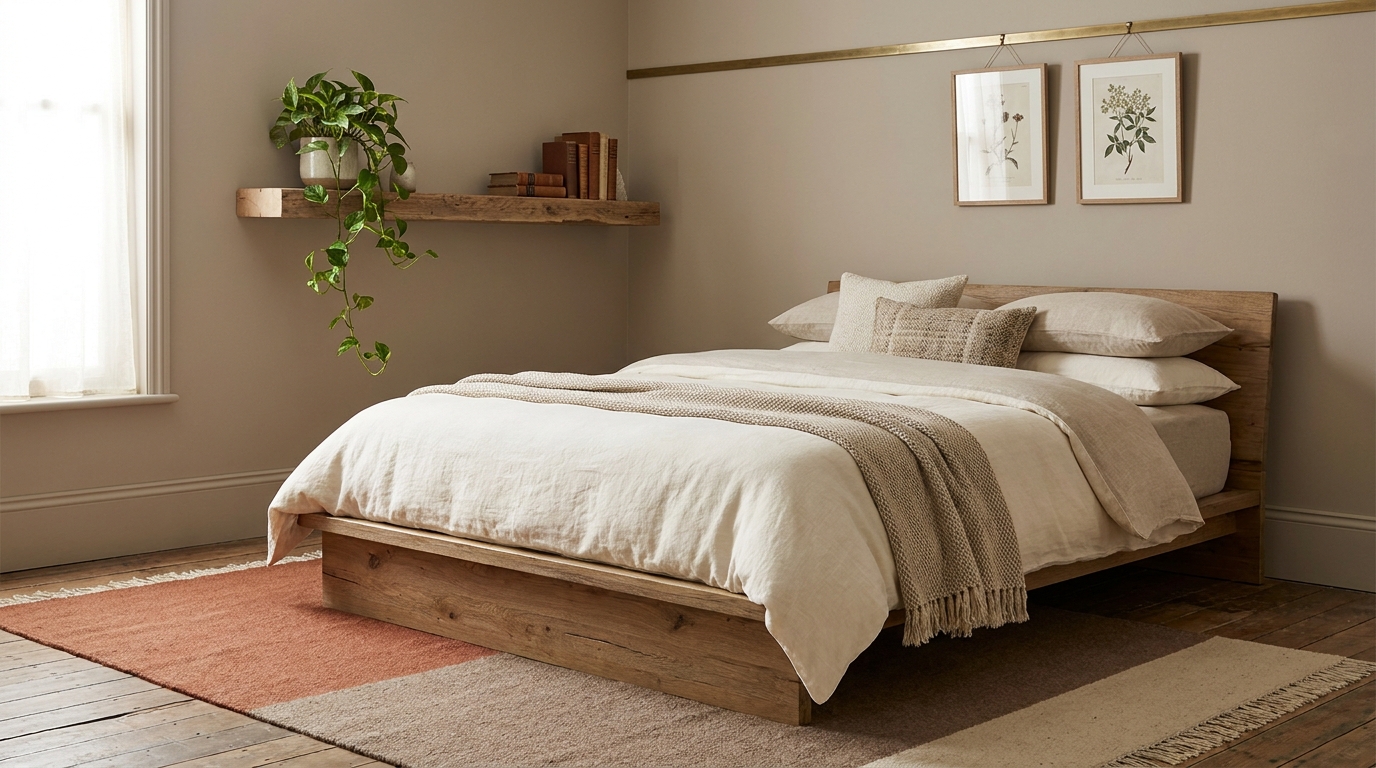
Most US and UK renters age 25 to 40 live in studios or 1-bedroom apartments. That means the only bedroom plays the master role by default. Run master rules. Skip guest entirely. Reference our small bedroom decor ideas under 120 sqft if square footage is tight.
Hosting Overnight Guests Without a Spare Room
Overnight guests sleep in the living room. A pull-out sofa from IKEA Friheten or Article runs $700 to $1,400 and converts in 30 seconds . An air mattress with a built-in pump runs $80 to $150 and stores in a closet. Either works. Do not give the guest your bed and sleep on the couch yourself. Hosts who do that report lower-quality stays in feedback we collected.
2-Bedroom Apartment: Spare Room as Guest-Leaning
If you have a true spare bedroom in a 2-bedroom rental, treat it as guest-leaning rather than fully guest. It can double as a home office, gym, or hobby room with a daybed or sleeper sofa. Keep the bedding hotel-neutral so it reads guest-ready when needed. See our rentals section for renter-specific tactics.
When to Renovate Each (Sequencing)
Sequence master first if you plan to sell within five years because the primary bedroom and bathroom drive the largest resale lift. Sequence kids second because age windows close fast and a four-year-old’s room is wrong by age seven. Sequence guest last unless you host more than 20 nights a year or run an Airbnb listing. Most homeowners we work with hit master in year one, kids in year two, and guest only when something specifically breaks or a hosting need arises.
Frequently Asked Questions
Should master and guest bedrooms match?
No, not in mood or aesthetic. Match the hardware finish family, the wall-paint family, and the floor treatments across both rooms for whole-home consistency. Mismatch the bedding patterns, the art style, and the overall mood. Master signals your personal retreat. Guest signals warm neutral hospitality. If they read identical, the master loses its retreat function entirely.
Where should you spend more: master or guest?
Master, by a wide margin. Use the 70/20/10 rule: 70% of bedroom budget on master, 20% on guest, 10% on kids. Master earns the larger share because two adults use it nightly for 2,500-plus hours a year and primary-bedroom finishes carry into home resale value. Guest sees 30 to 60 nights a year on average.
How is kid’s room decor different from master?
Kid’s rooms run on washable everything, age-appropriate scale, lower-cost materials, and an aesthetic that survives the next birthday. Master rooms run on premium materials, two-person dual-use furniture, and one committed aesthetic. Per our bedroom color palette guide, kid’s palettes also need 5-year aging tolerance because full-theme rooms get ripped out by age 9.
Should you decorate guest bedroom even if rare guests?
Decorate it minimally. A made bed, a clean nightstand, one lamp, percale sheets, and one art print covers the brief for fewer than 10 guest nights a year. Skip the second nightstand, the rug, and the curtains until use frequency justifies them. Per Architectural Digest bedroom coverage, under-used guest rooms accumulate clutter when they are over-decorated and rarely opened.
How do renters with 1 bedroom handle this?
Run master rules in the only bedroom. Skip the guest concept entirely. Host overnight guests on a living-room pull-out sofa or an air mattress that stores in the closet. A pull-out sofa runs $700 to $1,400 and converts in 30 seconds. An air mattress runs $80 to $150. Both options score better in guest feedback than giving up your own bed.
The Honest Summary
Three bedrooms, three roles, three rules. Master gets your signature aesthetic and 70% of the budget because you sleep there 365 nights a year. Guest gets warm-neutral hotel-inspired styling and 20% because someone you barely know sleeps there 30 to 60 nights. Kids gets playful-but-washable styling and 10% because the room ages out faster than the paint dries. Hardware finish and wall paint can match across rooms. Bedding, art, and mood should not. Renters with one bedroom default to master rules and host on a pull-out. The rooms that fail are the rooms that tried to match. The rooms that succeed are the rooms that committed to a clear role.
Related reading
- Platform Bed vs Traditional Bed: Which Fits Your Bedroom?
- 22 Most Aesthetic Bedroom Nightstand & Reading Corner Setups