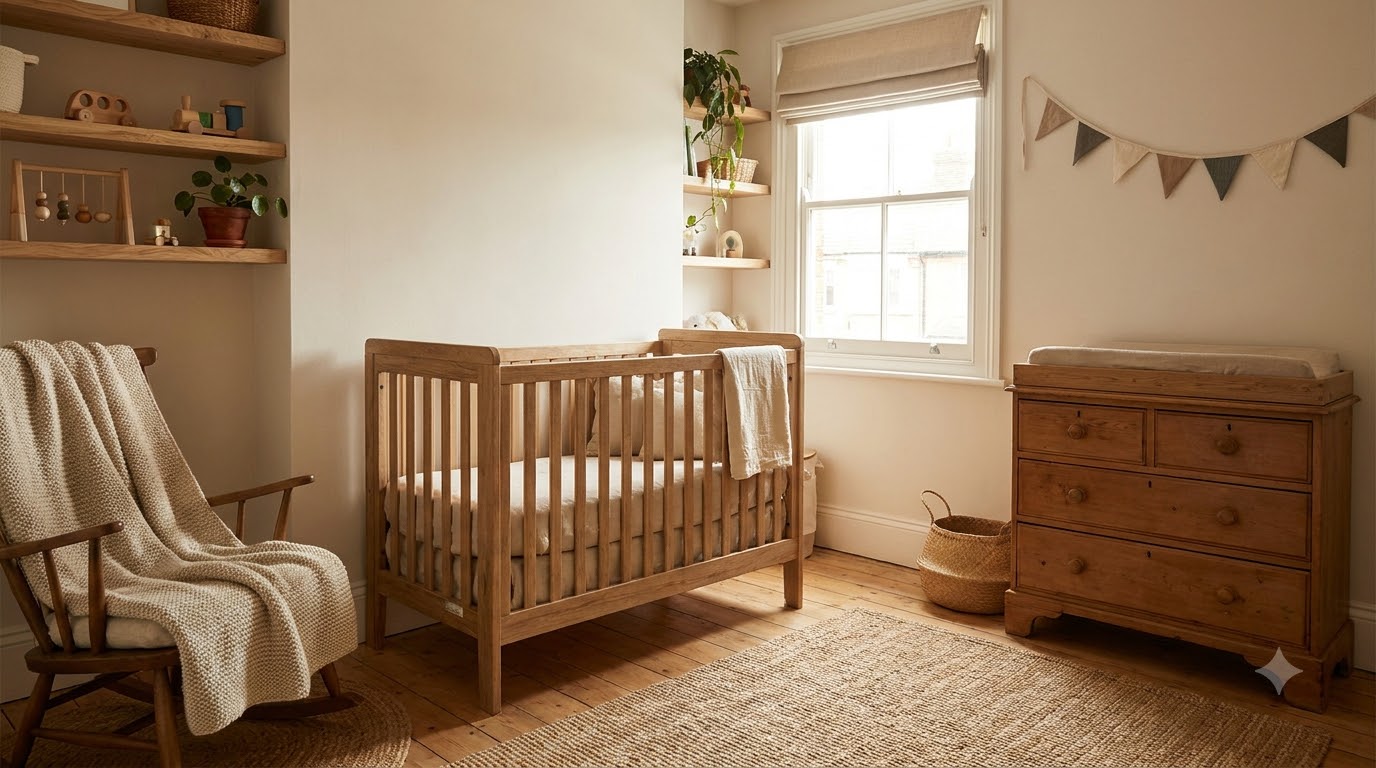
A calm nursery on a budget comes down to four things: a safe crib zone with clear clearance, a soft neutral palette, smart storage that grows with the baby, and one cozy corner for feeding and rocking. Get those right and you can furnish a warm, editorial-looking room for a fraction of the showroom price. We have set up nurseries in rentals with strict lease rules, so everything below is renter-friendly, small-space tested, and built around secondhand pieces you can find for a fraction of retail. Nursery decor ideas do not need to be expensive to feel intentional.
Key Takeaways
- A safe crib zone needs 2 to 3 feet of clearance from windows, cords, and heaters, with nothing hanging directly above.
- Use a standard dresser as a changing table with a clip-on topper to save $80 to $150 and one piece of furniture.
- A three-color neutral palette (cream #F5F0E6, sage #A9B5A0, clay #C08457) reads calm and hides scuffs.
- Hang wall decor at safe heights, at least 4.5 feet up or well outside the crib reach, so nothing can be pulled down.
- Buy the crib, dresser, and rocker secondhand; spend new money only on the mattress.
How do you decorate a nursery on a budget?
You decorate a nursery on a budget by spending where safety matters and saving everywhere else. Put your real money into a new mattress and a well-fitting crib, then furnish the rest of the room with secondhand furniture, a tight neutral palette, and soft textiles you already own or can find cheaply. The trick is restraint: a few good pieces in a calm color story always look more expensive than a room crammed with matching character sets. When we planned our first nursery in a one-bedroom rental, we set a hard ceiling and worked backward from it.
Here is the order we recommend spending in, from non-negotiable to nice-to-have:
- A new, firm crib mattress that fits snugly, no gaps at the edges (budget $50 to $120 new).
- A safe crib, ideally new or a recent secondhand model you can verify has never been recalled ($80 to $200).
- A solid dresser that doubles as a changing station ($40 to $90 secondhand).
- A comfortable chair for feeding, a rocker or a padded armchair you already have.
- Soft goods and decor last: rug, curtains, wall art, and a small lamp.
Because a nursery is often carved out of a corner or a shared room, the same space-saving habits that work in a small apartment apply here: vertical storage, multi-use furniture, and a light palette that keeps a tight footprint feeling open.
What do you actually need in a nursery?
Less than the registry lists suggest. A baby needs a safe place to sleep, a place to be changed, a place to be fed, and somewhere to store clothes and supplies. Everything else is comfort and style, which you can add slowly. We keep a running list of what earns its place in a small nursery versus what quietly collects dust.
The genuine essentials, the things we would not skip:
- Crib with a firm, snug mattress and fitted sheets (two or three sheets is plenty).
- Dresser with a changing pad on top, secured to the wall with an anti-tip strap.
- A feeding chair with a footstool or firm cushion for support.
- Blackout curtains or a removable blackout panel for daytime naps.
- Soft, low lighting: one lamp on a dimmer or a warm-toned bulb for night feeds.
Notice what is missing: a dedicated changing table, a wipe warmer, a matching furniture set, and most of the decorative extras. None of those are needed for a functional, good-looking room.
Set up a safe crib zone first
The crib zone anchors the whole room, so place it before anything else. Position the crib against an interior wall away from windows, blind cords, wall-mounted shelves, and heat sources. Aim for 2 to 3 feet of clearance on the sides you can manage, and keep the space directly above the crib empty, no framed art, no heavy garland, no mobile within a baby’s reach once they can stand.
Quick crib-zone safety checklist we run before the room is done:
- Crib is at least 2 to 3 feet from windows and any cords.
- Nothing hangs directly above the mattress that could fall or be grabbed.
- Mattress sits at the lowest setting once the baby can pull up.
- The crib holds only a fitted sheet, no bumpers, pillows, or loose blankets.
- Every tall piece of furniture is anchored to the wall.
Choose a soft neutral palette that hides wear
A tight neutral palette is the single easiest way to make a budget nursery look considered. We build almost every nursery on three colors: a warm cream base, a muted sage, and a grounding clay. Creams and soft greens also hide the scuffs, smudges, and everyday marks that come with a baby’s room far better than bright white.
Our go-to nursery palette, with hex values so you can match paint chips and textiles:
- Cream #F5F0E6, the wall and large-surface base color.
- Sage #A9B5A0, for curtains, a crib sheet, or a single accent wall.
- Clay #C08457, used in small doses on baskets, a rug, or wooden frames.
Renters can lean on removable options: peel-and-stick paint samples, a large neutral rug over unloved flooring, and textiles instead of paint to carry the color. If you want the same soothing, low-contrast mood in the rest of your home, the approach mirrors what we cover in our aesthetic bedroom ideas guide.
Nursery zones and budget picks
It helps to think of a nursery as four small zones rather than one big room. Here is how we map each zone to a low-cost pick and a realistic price range.
| Nursery zone | Budget pick | Typical cost |
|---|---|---|
| Sleep zone | Secondhand crib + new firm mattress | $130 to $320 |
| Changing zone | Existing or thrifted dresser + clip-on changing topper | $40 to $120 |
| Feeding corner | Armchair you own + footstool + floor lamp | $0 to $80 |
| Storage | Woven baskets + over-door organizer + closet shelf | $25 to $70 |
| Decor and walls | Printable art + secondhand frames + one plant | $15 to $50 |
Use a dresser as a changing station
A dedicated changing table is one of the shortest-lived pieces of nursery furniture; you stop using it within a year or two. A standard dresser does the same job, stores clothes underneath, and stays useful for a decade. Add a contoured changing pad on top with a clip-on topper or safety rail, and you have saved roughly $80 to $150 while removing an entire piece of furniture from a small room.
What we look for in a dresser-as-changer:
- A sturdy, wide top that comfortably fits a changing pad with a few inches to spare.
- A height around 35 to 40 inches so you are not bending over during changes.
- Deep drawers that hold clothes now and toys later.
- A solid frame you can anchor to the wall with an anti-tip strap.
Add smart storage without buying furniture
Storage is where small nurseries usually fail, so plan it early and go vertical. Instead of a second cabinet, use the walls, the back of the door, and the closet you already have. Woven baskets keep the palette calm while corralling diapers, burp cloths, and toys, and they cost a few dollars each at thrift stores.
Low-cost storage moves that punch above their price:
- An over-the-door organizer for creams, spare sheets, and small supplies.
- Two or three matching baskets on the dresser or a low shelf ($5 to $15 each).
- A closet divider set to sort clothes by size as the baby grows.
- Removable adhesive hooks for swaddles, hats, and the diaper bag.
- Under-crib bins for out-of-season clothes and bulk supplies.
Build one cozy feeding corner
You will spend more hours in the feeding corner than anywhere else in the room, so make that one spot genuinely comfortable rather than spreading a small budget thin. A padded armchair you already own beats a cheap new glider. Add a firm cushion or footstool, a small side table for water and a phone, and a warm, dimmable light for night feeds. In our own nursery, moving a living-room armchair into the corner cost nothing and became the most-used seat in the house.
A single trailing plant softens the corner and brings a little life to the palette; a pothos or another forgiving variety from our list of low-maintenance indoor plants for beginners works well, kept well out of the baby’s reach on a high shelf.
Hang wall decor at safe heights
Wall decor is where a budget nursery earns its polish, but placement matters as much as taste. Keep everything either above 4.5 feet or well outside the crib and changing areas, so nothing can be pulled down onto the baby. Lightweight, unbreakable pieces beat glass over a crib every time. Printable art in secondhand frames is our favorite trick, a few dollars for the prints and a thrift run for frames you spray-paint to match the clay accent.
Safe, low-cost wall ideas we come back to:
- A small grouping of printable art in mismatched thrifted frames.
- A fabric wall hanging or woven piece, soft and unbreakable.
- Peel-and-stick decals for renters, removable and damage-free.
- A single oversized print above the dresser as a low-cost focal point.
If you want to group several small prints into one arrangement, the spacing and layout principles in our gallery wall ideas guide translate directly to a nursery wall, just kept high and away from the crib.
Shop secondhand the smart way
Secondhand is where most of the savings live, but a nursery calls for a careful eye. Furniture, frames, baskets, and decor are all fair game used. The one thing we always buy new is the mattress. When we furnished our second nursery, the dresser, rocker, bookshelf, and every frame came secondhand, and only the mattress and sheets were new.
Our secondhand rules for a nursery:
- Buy the mattress new, always, for a firm, clean, well-fitting surface.
- For a used crib, confirm the model has never been recalled and has all its hardware.
- Check dressers for stability and smooth drawers before you commit.
- Wash and inspect all textiles; skip anything with strong odors or damage.
- Shop estate sales and community groups late in the day for the best prices.
Frequently asked questions
How much does it cost to decorate a nursery on a budget?
A comfortable, safe nursery comes together for roughly $250 to $600 when you buy the crib, dresser, and chair secondhand and spend new money only on the mattress and sheets. The range depends on what furniture you already own and how much you can source used from local sales.
Is it safe to buy a used crib?
A used crib can be safe if you verify the exact model has never been recalled, confirm it includes all original hardware and instructions, and check that it is sturdy with no missing or broken parts. Always pair any crib, new or used, with a firm, snug, new mattress.
What colors work best for a small nursery?
Soft, warm neutrals keep a small nursery feeling calm and open. We build ours on a cream base with muted sage and a touch of clay, because low-contrast palettes make tight spaces feel larger and hide the everyday scuffs a baby’s room inevitably collects far better than crisp white.
Can I set up a nursery in a rental?
Yes, and it is easier than most renters expect. Lean on removable decor: peel-and-stick decals, a large neutral rug, textiles instead of paint, and adhesive hooks that leave no marks. Anchor furniture with straps that use small, patchable holes, and carry your color through fabrics rather than the walls.
Do I really need a changing table?
No. A standard dresser topped with a contoured changing pad and a clip-on safety rail does the same job, stores clothes below, and stays useful long after the changing years end. Skipping the dedicated table saves roughly $80 to $150 and frees up floor space in a small room.