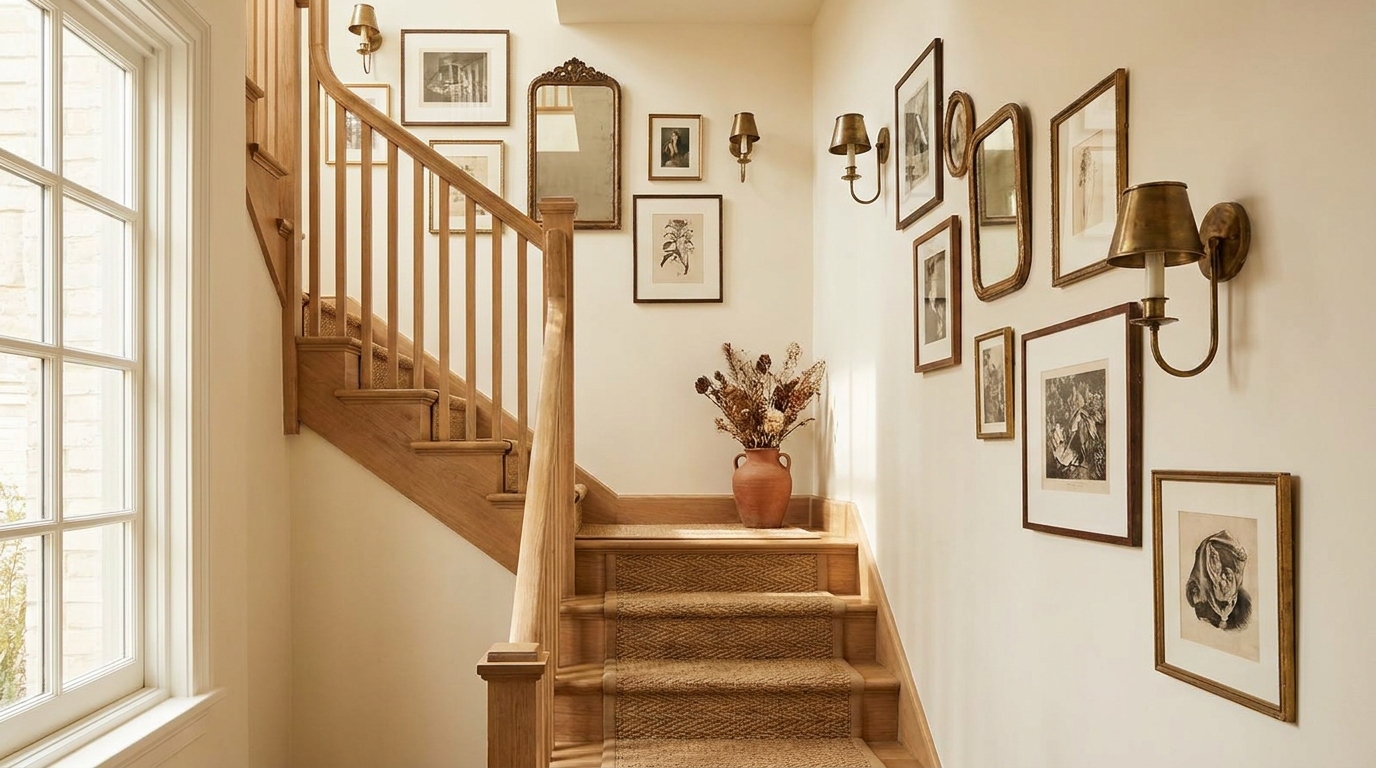
The best staircase gallery wall ideas follow the slope of your stairs, keep frame centers 57 to 60 inches above each tread, and mix two to three frame sizes for visual rhythm. Stair-step, salon-style, and grid layouts work in almost every stairwell, and most can be hung with damage-free strips if you rent.
This guide walks through 15 layouts that suit narrow townhouse stairs, open foyer stairwells, and basement runs alike. Each one includes a frame count, spacing notes, and a renter-friendly install path.
Key Takeaways
- Stair-step layouts are the safest starting point — frame tops descend at the same angle as your handrail.
- Frame centers should sit roughly 60 inches above each individual tread, not from a single floor reference point.
- Mix two or three frame sizes for movement; matching frames give you a calm, gallery-museum feel.
- Damage-free strips (Command Picture Hanging Strips, 3M Velcro) hold frames up to 16 pounds and pull off cleanly if you rent.
- Spacing of 2 to 3 inches between frames keeps the arrangement reading as one composition instead of scattered art.
How to Plan a Staircase Gallery Wall Before You Hang Anything
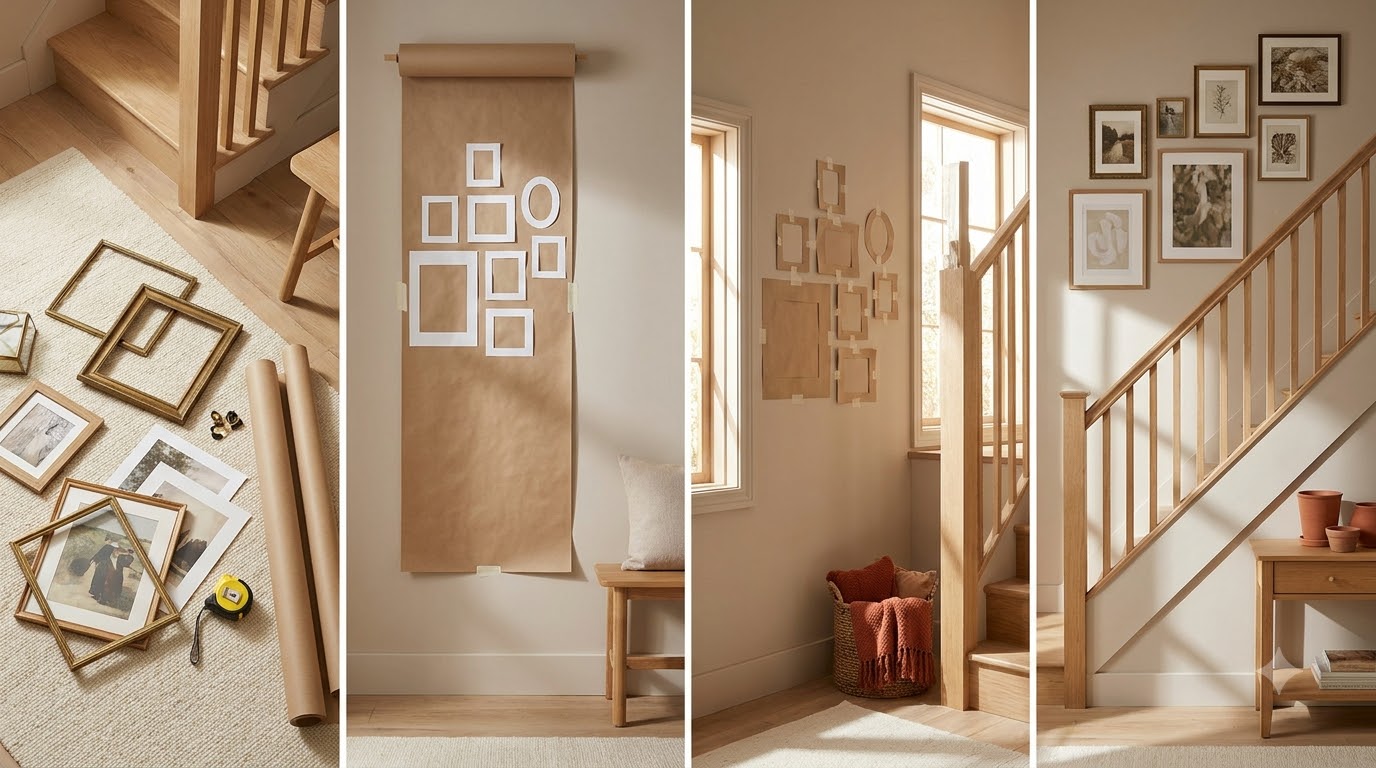
Lay everything out on the floor first. Cut kraft paper or newspaper to match each frame, label it, then tape the paper templates to the wall. Move them around for a few days before committing to nail holes or adhesive strips.
The single biggest mistake on stairs is treating the wall as flat. Stairs introduce a diagonal, and your eye needs that diagonal to feel intentional. If your frames sit at random heights, the wall reads as clutter instead of a gallery.
Three numbers to remember:
- 57 to 60 inches — the standard “museum height” for a frame’s center, measured from the floor or tread directly below it.
- 2 to 3 inches — the spacing between frames in a tight composition.
- 6 to 8 inches — the gap to leave between the bottom of the lowest frame and the handrail or stair nosing.
Information gain: Most guides repeat the 57-inch rule as if your stairwell were a flat wall. On stairs, that number resets for every frame because the floor reference (the tread) keeps changing. Measure each frame from the tread directly beneath it, not from the bottom of the stairs.
1. The Classic Stair-Step Layout
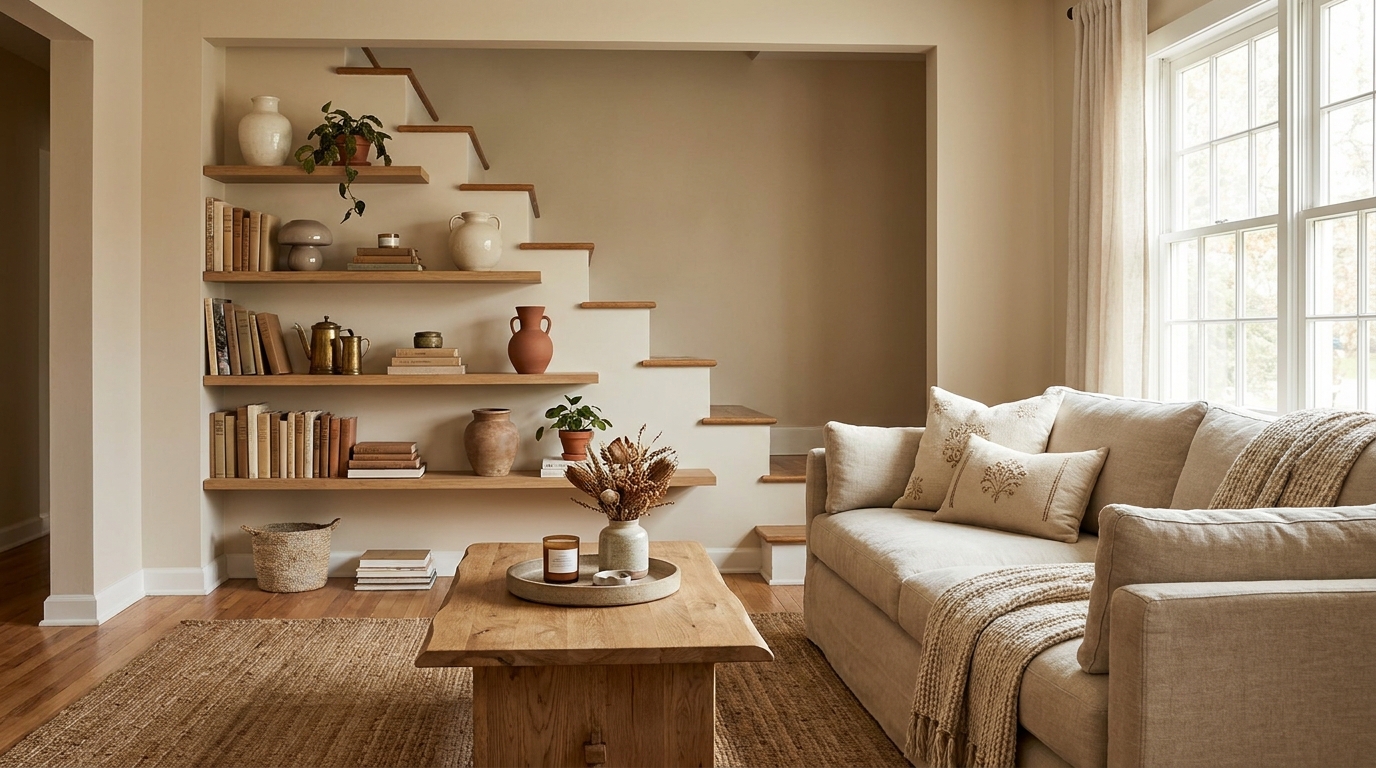
Frame tops follow the angle of your handrail in a clean diagonal line. This is the most forgiving layout for first-timers because the math is consistent — every frame center sits at the same height above its tread.
Best for: Straight-run stairs in townhouses, apartments, and split-levels.
Frame count: 5 to 8 frames, all the same size.
Spacing: 3 inches between frames.
Skill level: Beginner.
2. Salon-Style Cluster
A salon-style layout fills the wall with frames of varying sizes, packed tightly with 1.5 to 2 inch gaps. It looks unplanned but takes the most pre-planning. Pinterest’s most-saved staircase gallery walls in 2025 lean heavily on this look, especially with thrifted gold and black frames.
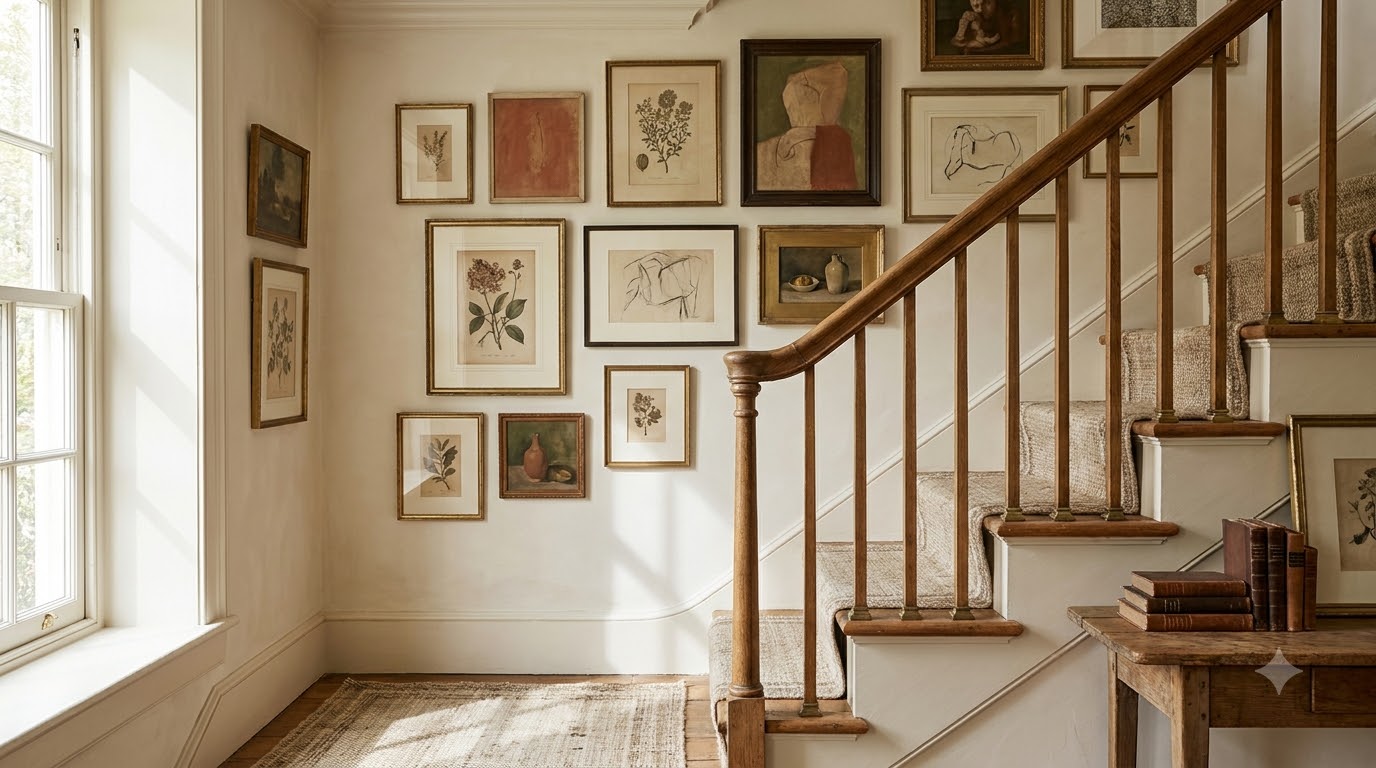
Best for: Wide stairwells, foyer walls, and renters who want maximum impact.
Frame count: 12 to 25 frames in 4 to 6 sizes.
Spacing: 1.5 to 2 inches.
Skill level: Intermediate — paper templates are non-negotiable here.
3. The Centered Anchor
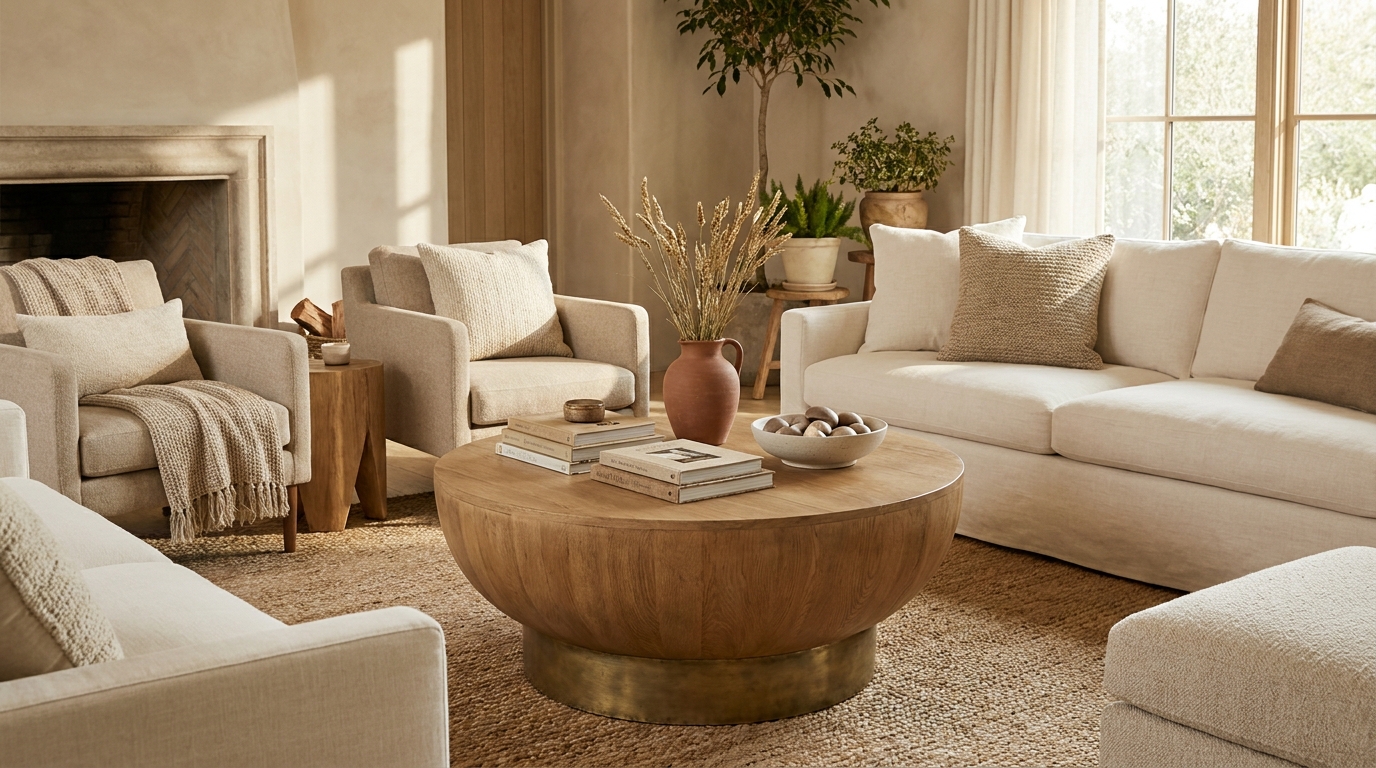
Pick one oversized piece — a 24 by 36 inch print or a vintage oil painting — and arrange 6 to 10 smaller frames around it. The anchor sits at eye level on the landing or the midpoint of the run.
Best for: Stairs with a clear midpoint (a landing or turn).
Frame count: 1 anchor plus 6 to 10 satellites.
Spacing: 2 to 3 inches.
Skill level: Beginner to intermediate.
4. Grid of Identical Frames
Six to nine matching frames in two or three vertical columns climb the stairs in lockstep. Black frames on white walls give you a graphic, almost editorial look. This is the layout interior designer Danielle Moss recommends for anyone nervous about an asymmetric composition.
Best for: Modern minimalist homes, narrow stairwells.
Frame count: 6 to 9 identical frames.
Spacing: 3 inches, perfectly even.
Skill level: Beginner — easiest layout to measure.
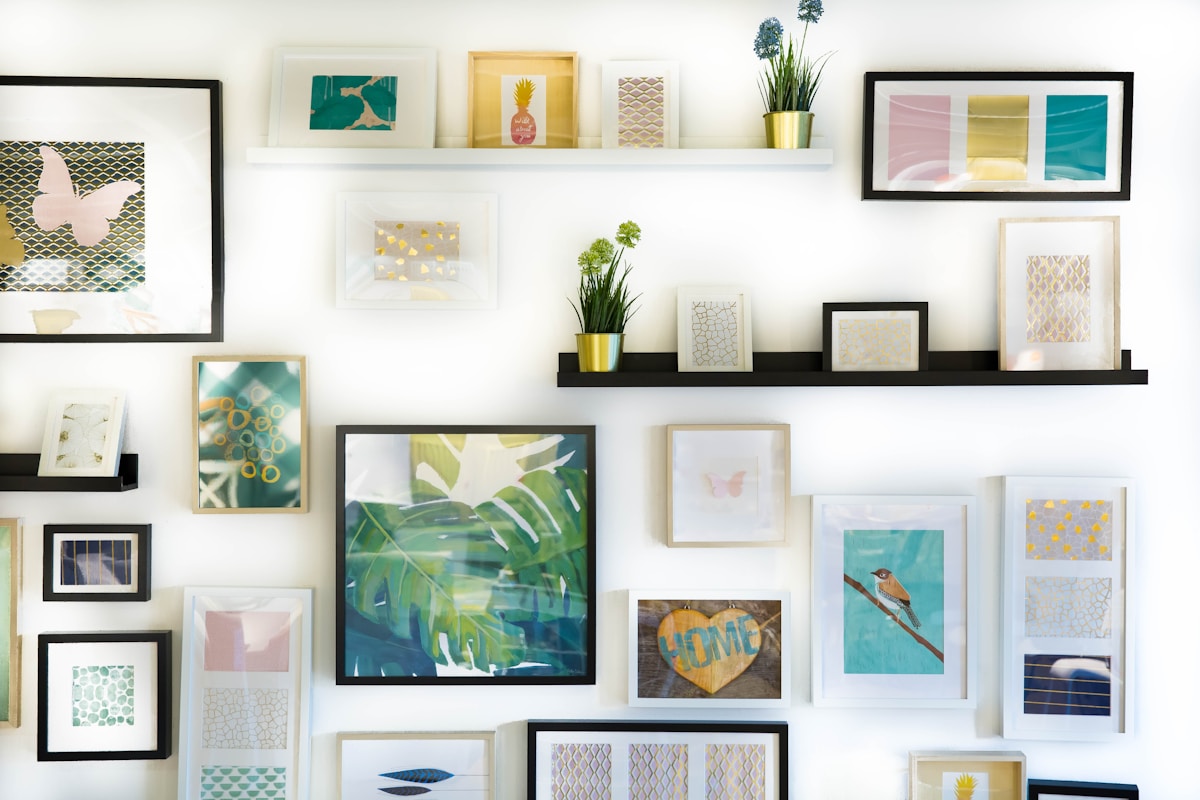
A grid of identical black frames is the cleanest staircase gallery wall layout for first-timers. Photo: Unsplash
5. The Pinterest Organic Mix
Round mirrors, rectangular prints, a woven basket, and a small shelf with a plant. This is the “modern organic” look that dominates 2025 staircase mood boards on Pinterest and is currently the most-pinned staircase gallery aesthetic.
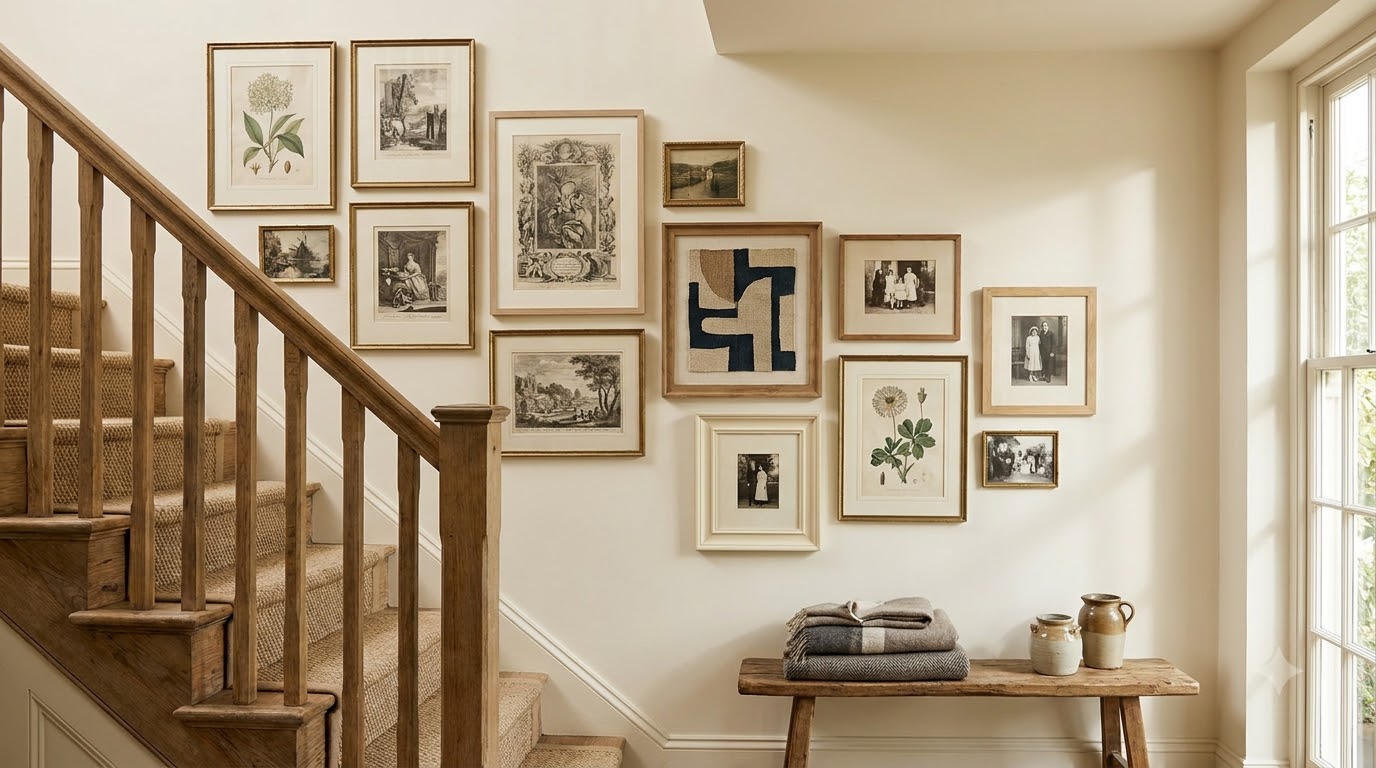
Best for: Boho, Japandi, and warm-minimalist interiors.
Frame count: 8 to 12 mixed objects (not just frames).
Spacing: 2 to 4 inches, varied intentionally.
Skill level: Intermediate.
6. Family Photo Timeline
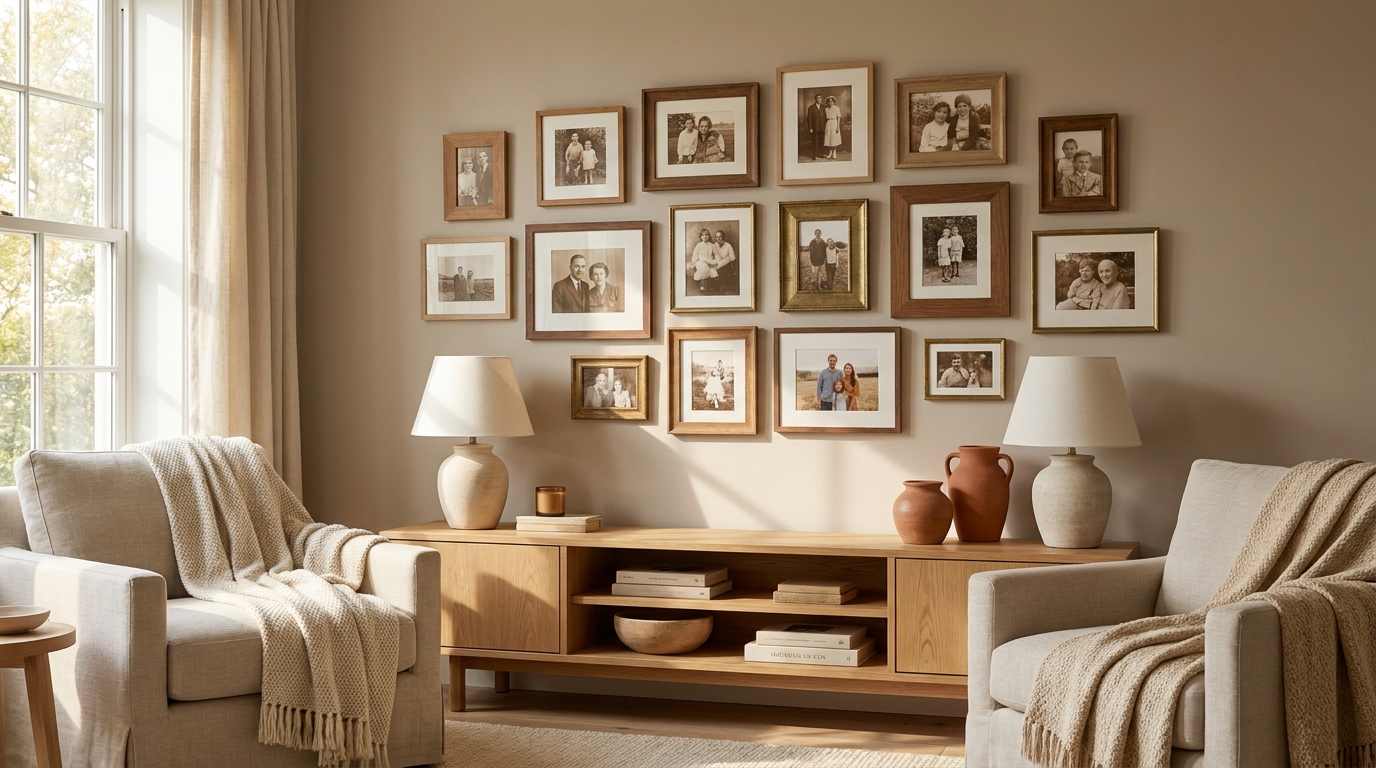
Arrange photos chronologically, oldest at the bottom, newest at the top. Use one consistent frame style — natural oak, matte black, or thin gold — so the photos do the talking.
Best for: Family homes, first-time homeowners building a 5 to 10 year photo archive.
Frame count: 8 to 15 frames, one size.
Spacing: 2.5 inches.
Skill level: Beginner.
7. Single-Color Print Run
Every frame contains art in one color family — blues, terracottas, sepia tones. The unifying palette ties together wildly different subjects (botanicals, abstracts, portraits) into one composition.
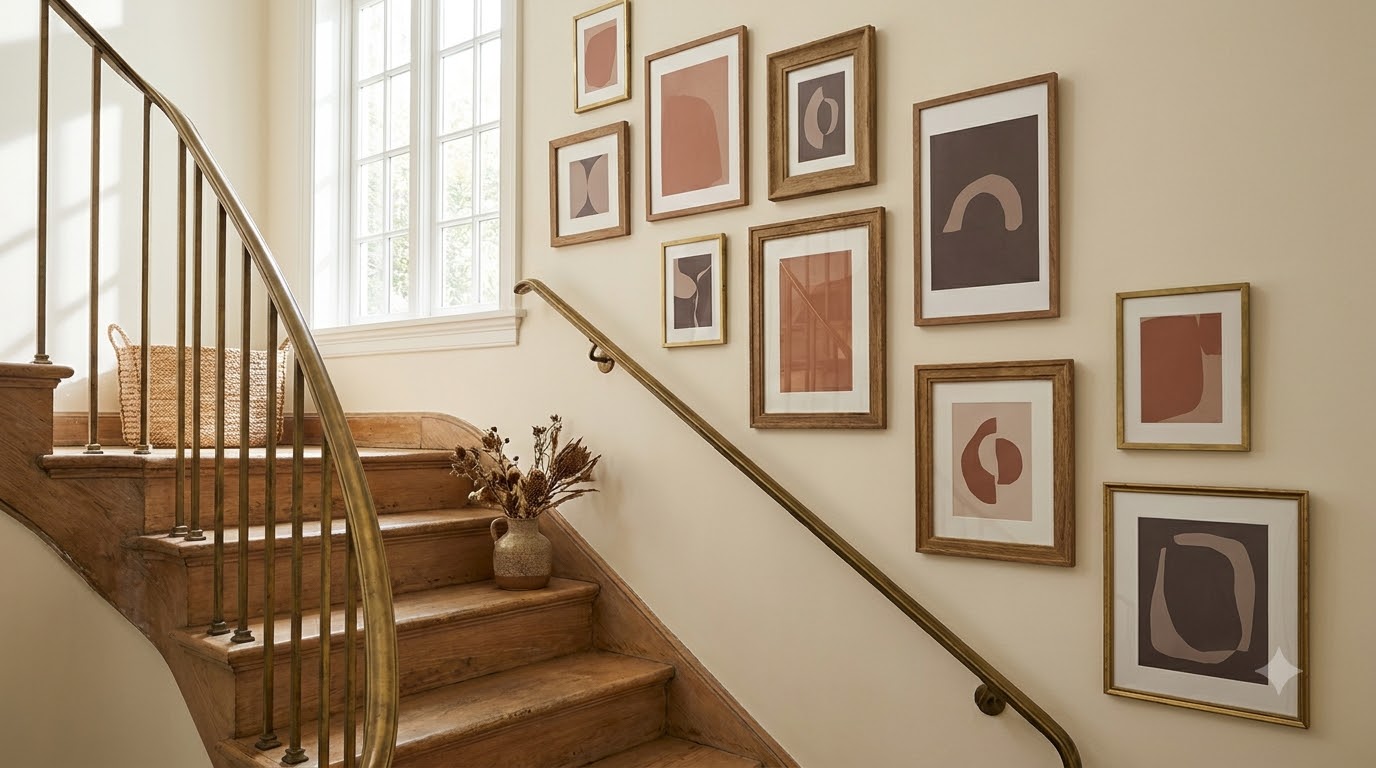
Best for: Renters who want low-commitment cohesion. Swap one print without disturbing the rest.
Frame count: 7 to 12 frames.
Spacing: 2 to 3 inches.
Skill level: Intermediate.
8. Vintage Thrifted Frames
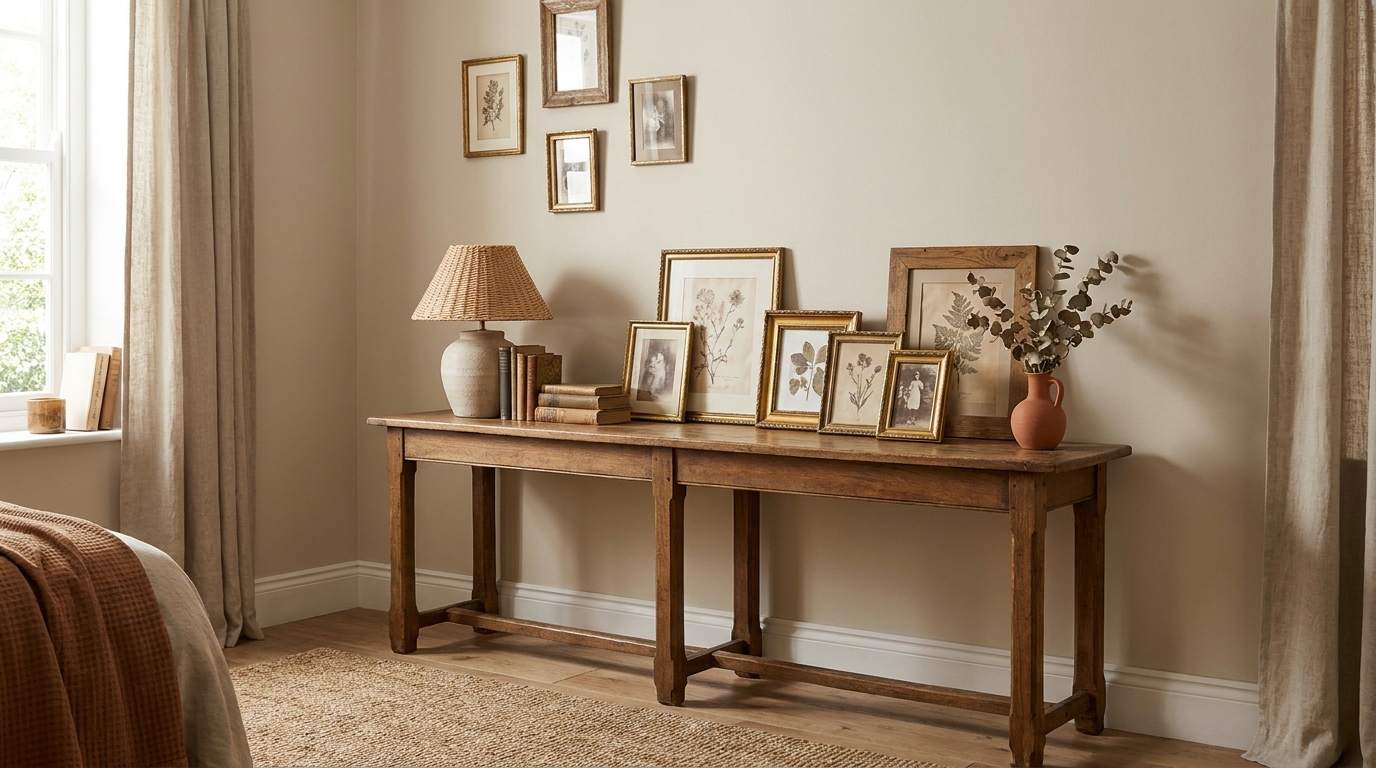
Mismatched antique frames — gilded, ornate, distressed wood — holding new prints or family photos. This is the look Bless’er House popularized and it remains one of the most-searched stairway looks heading into 2026.
Best for: Older homes, character-rich rentals, anyone who likes estate sales.
Frame count: 9 to 15 frames, all different.
Spacing: 1.5 to 2.5 inches.
Skill level: Intermediate.
9. Plates and Mirrors Mix
Decorative plates and small round mirrors climb the stairs alongside a few framed pieces. Plate hangers ($3 to $8 each at any home goods store) attach cleanly to the back of ceramic plates.
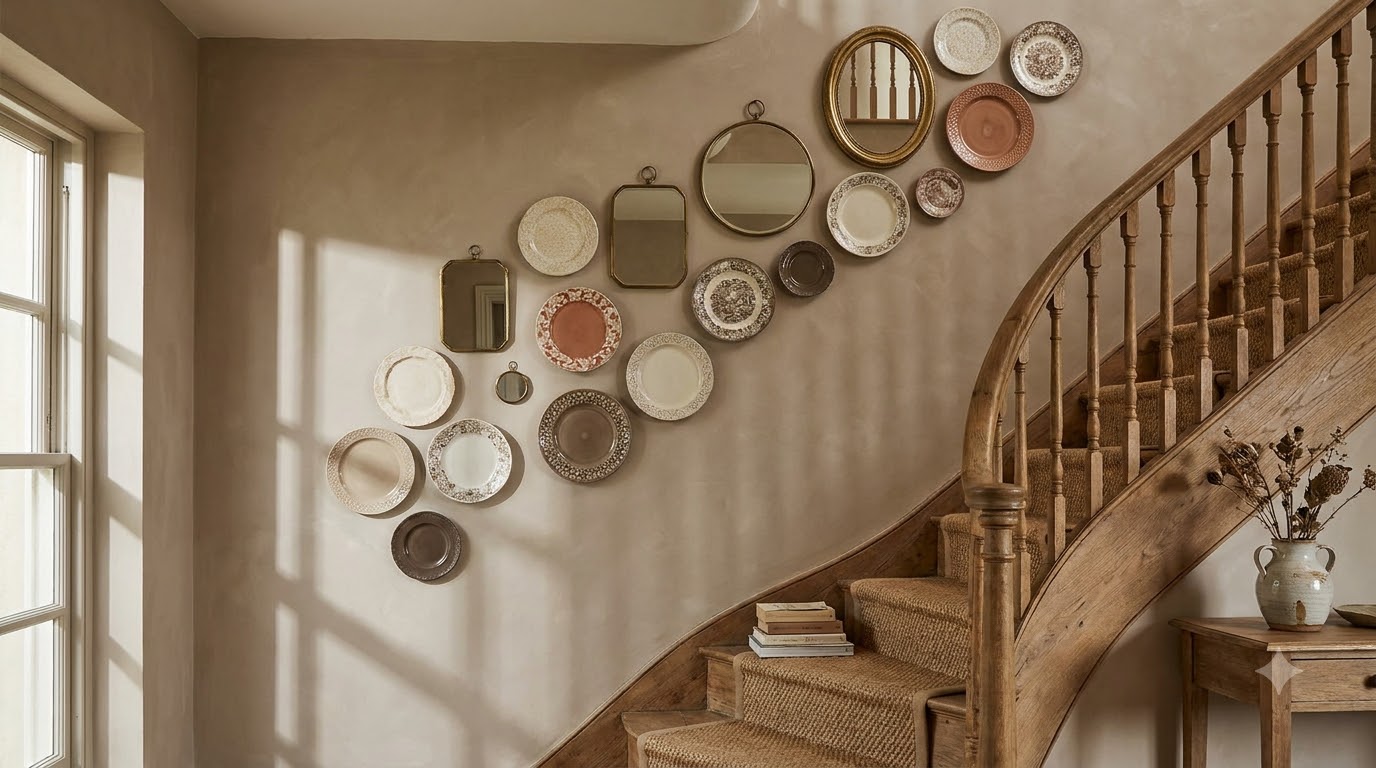
Best for: Cottage, grandmillennial, and maximalist interiors.
Frame count: 4 to 6 plates, 2 to 3 mirrors, 4 to 6 frames.
Spacing: 2.5 to 3 inches.
Skill level: Intermediate.
10. The Single Floating Shelf Hybrid
Install one long picture ledge (Ikea’s Mosslanda is the renter favorite at 22 to 45 inches) and layer 5 to 8 frames in front of a few hung frames. The shelf creates a horizontal anchor inside the diagonal climb.
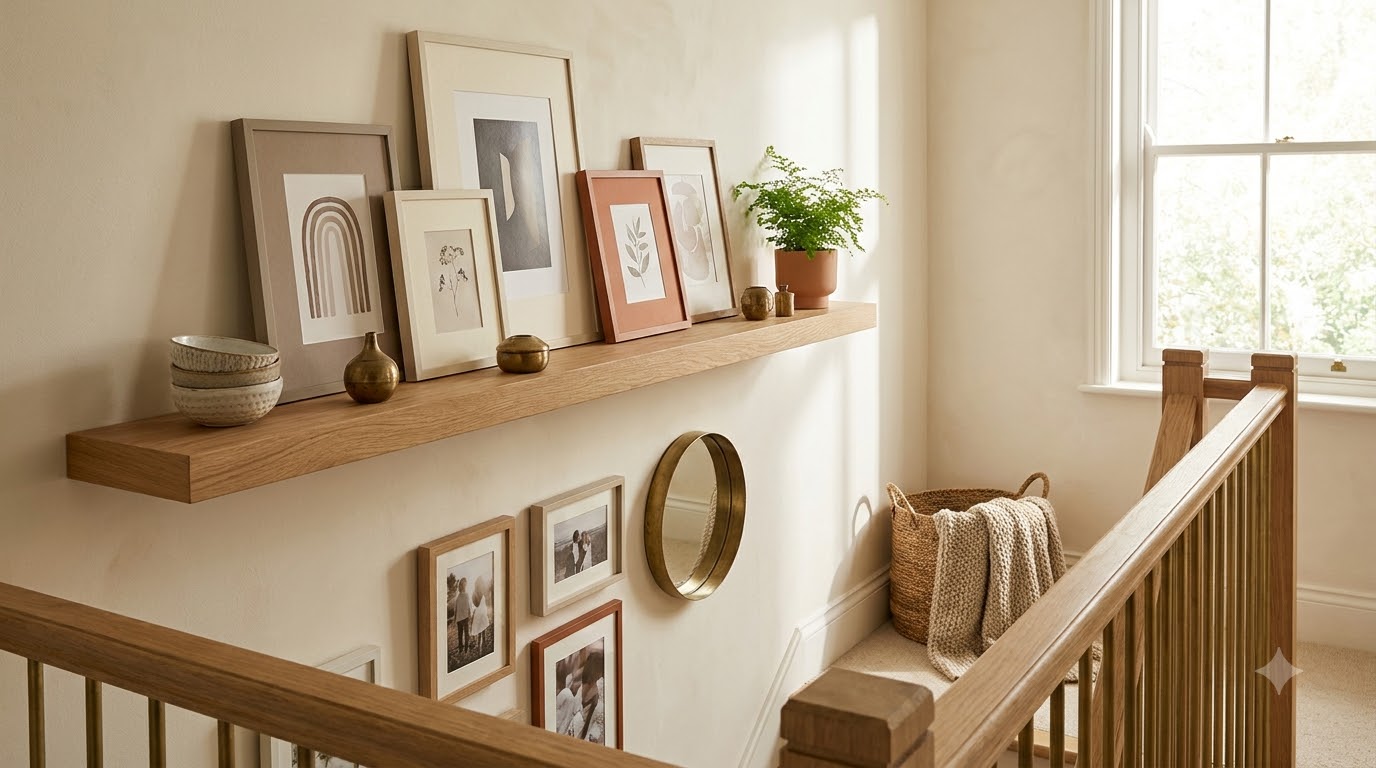
Best for: Renters and frame-rotators who want to swap art monthly.
Frame count: 8 to 14 total, layered.
Spacing: Overlap the shelf frames, leave 3 inches around hung pieces.
Skill level: Beginner — the shelf hides most placement mistakes.
11. Black and White Photo Story
All black and white photography in matching white mats and thin black frames. The wall reads as one continuous narrative — a great choice if your stairwell gets a lot of natural light, which can wash out colored prints.
Best for: Modern, Scandinavian, and minimalist homes.
Frame count: 8 to 14 frames.
Spacing: 2.5 inches.
Skill level: Beginner.
12. The Asymmetric Diagonal
Frames cluster on one side of the wall — denser at the bottom, sparser at the top — leaving negative space along the upper run. This works well in stairwells with low ceilings or when you want the eye to travel without feeling crowded.
Best for: Tight stairwells, low-ceiling basement stairs.
Frame count: 7 to 11 frames in 3 sizes.
Spacing: 2 to 3 inches.
Skill level: Intermediate.
13. Kid Art Gallery
Frame your kids’ artwork in matching frames with generous white mats. The mat is the trick — it turns refrigerator drawings into gallery-worthy pieces. Use 11 by 14 frames with 8 by 10 mat openings.
Best for: Family homes, playroom-adjacent stairwells.
Frame count: 8 to 12 matching frames.
Spacing: 2.5 inches.
Skill level: Beginner.
14. Travel Map and Souvenir Mix
Framed maps, ticket stubs in shadow boxes, polaroids, and one or two large landscape prints from places you’ve been. This is the layout that consistently gets the most questions when guests come over because every frame has a story.
Best for: Frequent travelers, first apartment after a move.
Frame count: 10 to 16 mixed pieces.
Spacing: 2 to 3 inches.
Skill level: Intermediate.
15. Bold Wallpaper Background
Paper the staircase wall in a graphic wallpaper (peel-and-stick if renting) and hang 4 to 6 frames over it. The wallpaper does the heavy lifting; the frames add personal layering without crowding.
Best for: Renters with bold taste, small stairwells that need a wow moment.
Frame count: 4 to 6 frames.
Spacing: 4 to 6 inches — the wallpaper needs room to breathe.
Skill level: Intermediate.
Renter-Friendly Hanging: What Actually Holds
The decision between nails and damage-free adhesives depends on frame weight, wall material, and how often you plan to swap art.
For frames under 16 pounds — which covers most 11×14 and 16×20 prints in standard frames — Command Large Picture Hanging Strips will hold securely on painted drywall. They release cleanly when you move out by pulling the tab straight down along the wall.
For heavier vintage frames, glass-front art over 20 pounds, or any frame with an irregular back, use a wall anchor or speak to your landlord. A single 1/16 inch nail hole is usually permitted in standard leases — check yours.
Spacing Math That Actually Works on Stairs
Here is the formula that prevents the wonky look:
- Find the rise of one step (typically 7 to 8 inches in US homes).
- Find the run of one step (typically 10 to 11 inches).
- Your gallery wall’s angle = rise divided by run = roughly 35 degrees in most homes.
- Pick a frame center for the first frame at 60 inches above tread 1.
- Each next frame center moves up by the rise (7 to 8 inches) and over by the run (10 to 11 inches).
This keeps the frame tops aligned with the slope of your handrail — which is the single visual signal that makes a staircase gallery look professional.
Common Mistakes to Avoid
- Hanging too high. Stair galleries should sit lower than you think — your eye level changes as you climb.
- Using one frame size only when you have a long run. Above 7 frames, identical sizes start to feel monotonous. Introduce one larger anchor.
- Forgetting the lighting. Stairwells are often the darkest hallway in the house. A plug-in picture light or a battery-powered LED puck behind the largest frame transforms the wall after sunset.
- Skipping paper templates. Every staircase gallery that “didn’t turn out” skipped this step.
Frequently Asked Questions
How many frames do I need for a staircase gallery wall?
For a standard 13 to 14 step run, plan on 8 to 12 frames for a balanced look. Salon-style layouts need 15 to 25 frames; grids work with as few as 6.
How high should frames be on a staircase wall?
Each frame’s center should sit 57 to 60 inches above the tread directly below it — not measured from the bottom of the stairs. This keeps every frame at consistent eye level as you climb.
Can I hang a gallery wall on a staircase without nails?
Yes. Command Large Picture Hanging Strips hold frames up to 16 pounds on painted drywall and remove cleanly. For heavier or vintage frames, use Monkey Hooks (which leave a small hole) or get written permission for standard wall anchors.
What is the best spacing between frames on a staircase?
2 to 3 inches between frames works for most layouts. Salon-style clusters can tighten to 1.5 inches; minimalist grids open up to 3.5 inches.
Should staircase gallery wall frames all match?
They do not have to. Matching frames create a calm, formal look; mixed frames feel collected and personal. Either works — pick based on the rest of your home’s style.
Where to Take This Next
If you are still planning your overall stairwell strategy, the Gallery Walls hub covers symmetric, grid, and salon-style layouts for every room. For a deeper dive into frame mixing, see our guide to mixing frame finishes without making the wall feel chaotic.
Once your layout is taped to the wall, live with it for 48 hours before you commit. The best staircase gallery wall ideas are the ones that still feel right after you have walked past them 20 times.
Last updated May 24, 2026. The Decor Note Editors test every renter-friendly product mentioned in our gallery wall guides on real apartment walls before publishing.
Related reading
- Best Gallery Wall Frames Under $100: 15 Picks
- Living Room Gallery Wall Ideas: Layout and Styling Guide