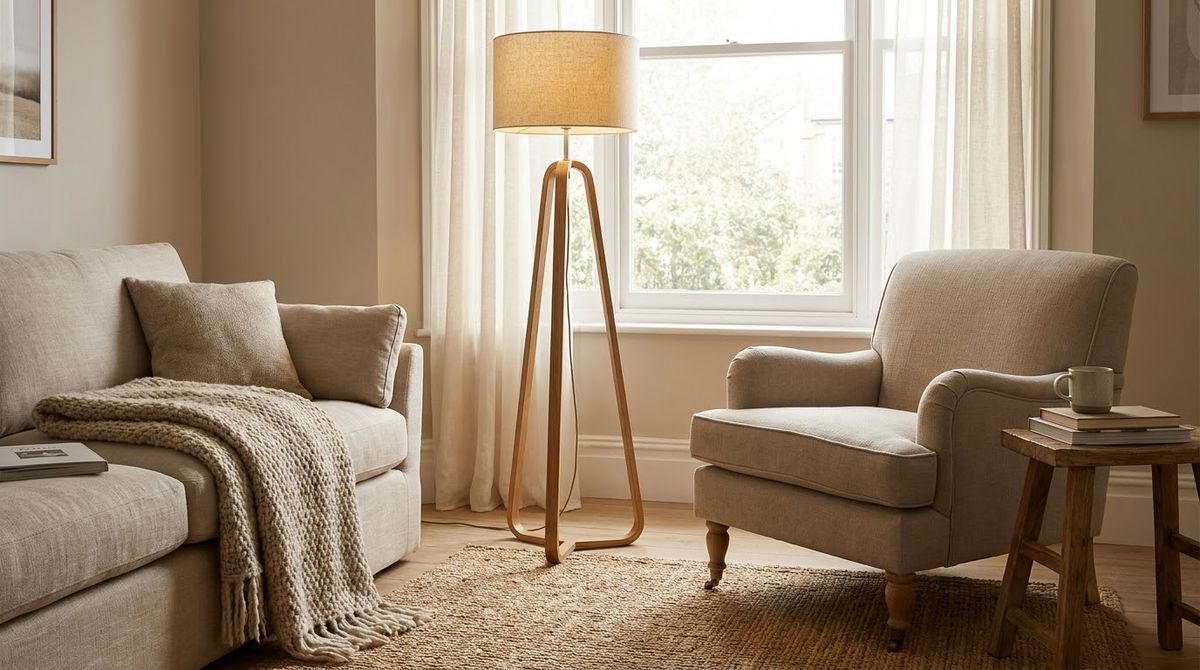
A great living room floor lamp under $100 is easier to find than you might think. The best budget picks share three traits: a stable weighted base, a warm 2700K LED bulb, and a total height between 58 and 65 inches so light lands where you actually sit.
The trick is knowing which of the five main lamp styles fits your room before you spend a dollar — a tall arc lamp that overwhelms a studio, or a dim globe lamp expected to light a whole living room, is money wasted no matter how low the price.
Below, we break down each floor lamp type worth your money, what it’s best for, the sizes and bulb specs to look for, and the realistic price ranges you should expect to pay.
Key Takeaways
- Expect to spend $40 to $100 for a well-made living room floor lamp; the sweet spot for durability sits around $60 to $80.
- Aim for a total height of 58 to 65 inches so the light clears your seated eyeline and fills the room evenly.
- Choose a 2700K warm-white LED bulb (around 800 to 1600 lumens) for that cozy, golden living-room glow.
- Arc and tripod lamps suit open layouts; task and globe lamps work best in tight corners and small rentals.
- A weighted or wide base matters most for renters with pets, kids, or high-traffic walkways.
Which floor lamp type is best for a small living room?
The right type depends on your layout, your ceiling height, and where you want the light to fall. We’ve grouped the five most common styles below so you can match a lamp to your space before you shop. Here’s a quick comparison to orient you, then we’ll walk through each type in detail.
| Lamp Type | Best For | Typical Price Range |
|---|---|---|
| Arc | Reading over a sofa without a side table | $70–$100 |
| Tripod | Open floor plans and mid-century decor | $50–$90 |
| Torchiere | Bright, even ambient light in dark rooms | $40–$75 |
| Task / Reading | Focused light in a corner reading nook | $45–$85 |
| Globe | Soft glow in tight, minimalist spaces | $50–$95 |
Arc floor lamps: reach light where you need it
An arc lamp curves outward from its base, suspending the shade over your seating area. This is a good pick for renters who want reading light above a sofa but don’t have room for an end table. Because the base sits off to the side, the cord and footprint stay out of your walkway.
- Look for an arc reach of 40 to 50 inches so the shade clears the front edge of your sofa.
- Prioritize a heavy base (marble, weighted metal, or a wide disc) to counterbalance the extended arm.
- Overall height usually runs 65 to 81 inches at the peak of the curve, so measure your ceiling first.
- A downward-facing drum or dome shade throws focused light for reading rather than diffusing it.
Budget note: arc lamps sit at the higher end of the under-$100 range because of the extra metal and heavier base. If your budget is tight, watch for versions with a hollow weighted base you fill with sand rather than solid marble — they ship cheaper and lighten the load on moving day. For more layered lighting ideas around a sofa, our guide to living room lighting with floor lamps and pendants pairs nicely with an arc pick.
Tripod floor lamps: style that stands on its own
Tripod lamps rest on three angled legs, giving them a sculptural, mid-century look that reads more expensive than it costs. They’re a favorite of ours for open living rooms because the legs add visual interest to an empty corner without crowding it.
- Wood-leg tripods (walnut or oak tones) suit warm, natural palettes; matte black metal suits modern spaces.
- Check the leg spread — a base footprint of 18 to 24 inches keeps the lamp stable underfoot.
- Standard height lands around 58 to 62 inches, ideal beside an accent chair.
- Fabric drum shades in oatmeal, ivory, or charcoal gray hide bulbs and soften the glow.
If you’re styling a whole corner around one, the cozy living room decor and layout guide shows how a tripod lamp anchors a reading nook.
Torchiere floor lamps: bright, upward ambient light
A torchiere directs light up toward the ceiling, where it bounces back down as soft, even ambient light. This is the most budget-friendly type on our list and a good fit for rentals with dim overhead lighting or no ceiling fixture at all.
- Best for filling a whole room with glare-free light rather than spotlighting one chair.
- Look for a built-in dimmer so you can drop to a warm evening glow.
- Heights typically run 70 to 72 inches to lift light above eye level.
- Skip older halogen torchieres; a modern LED version runs cooler and cheaper to power.
Because torchieres rely on your ceiling to reflect light, they work best under white or off-white (think soft #F5F5F0 or warm ivory) ceilings. A dark ceiling will swallow the glow.
Torchieres also suit rentals with popcorn or textured ceilings, since the bounced light softens harsh shadows that a downward shade would only deepen. Keep at least a few inches of clearance between the top of the shade and the ceiling so the reflected light spreads instead of scorching one hot spot.
Task and reading floor lamps: focused light for a nook
Task lamps, sometimes called reading lamps, use an adjustable head or gooseneck to aim light exactly where you need it. If you read, knit, or work from an armchair, this is the most practical pick in the under-$100 field.
- An adjustable gooseneck or pivoting head lets you angle light onto a book or laptop.
- Slim profiles fit tight corners; footprints as small as 9 to 11 inches wide are common.
- Choose a slightly brighter bulb here — around 1000 to 1600 lumens at 2700K to 3000K — for comfortable reading.
- A weighted round base keeps the lamp from tipping when you adjust the arm.
Globe floor lamps: soft glow for minimalist spaces
Globe lamps top a slim pole with a frosted glass or acrylic sphere that diffuses light in every direction. They’re understated and sculptural, which makes them a smart choice for small, minimalist living rooms where a bulky shade would feel heavy.
- Frosted glass globes (rather than clear) hide the bulb and prevent harsh glare.
- Slim brass, matte black, or white poles keep the visual footprint tiny in a corner.
- Heights run 58 to 64 inches, keeping the globe near seated eye level for a warm ambient wash.
- Pair with a low-wattage 2700K bulb; globes glow best as accent light, not primary task light.
What height should a floor lamp be?
For a living room, aim for a total height of 58 to 65 inches. At that range, the bottom of the shade sits near the eye level of someone seated on a standard sofa, so you get light on your book or lap without staring straight into the bulb.
Task lamps can sit a little lower since their heads adjust, while torchieres run taller (around 70 to 72 inches) to push light overhead. When in doubt, sit down in your usual spot and picture the shade landing just above your shoulder — that’s the comfortable zone.
What bulb should you put in a living room floor lamp?
Bulb choice makes or breaks the mood, and it’s the cheapest upgrade you can make. Here’s what we recommend for a warm, inviting living room.
- Color temperature: 2700K warm white for ambient corners; up to 3000K for reading zones.
- Brightness: 800 lumens for accent glow, 1000 to 1600 lumens for task and reading light.
- Type: LED, always — it runs cool, sips power, and lasts for years.
- Dimmable: pair a dimmable LED with a smart plug or in-line dimmer for evening flexibility.
- CRI: look for 90+ so your throw pillows and wood tones look true, not washed out.
What should renters look for in a budget floor lamp?
In a rental, the details that survive moves and small spaces matter more than flashy design. A few things separate a lamp that lasts from one you’ll replace in a year.
- A stable, weighted base that won’t topple in a walkway or with a curious pet nearby.
- A cord long enough (6 feet or more) to reach an outlet without a visible extension.
- Tool-free assembly — the best budget lamps twist together in minutes and break down for moving.
- A standard E26 socket so you can swap in any common LED bulb you like.
- A foot or in-line switch you can reach without bending down behind furniture.
Lighting is only one layer of a warm room. For the full picture, browse our 30 cozy living room ideas for every style, and if you’re furnishing from scratch, our roundup of the best living room sofas under $1,500 helps you build the seating your lamp will light.
Frequently Asked Questions
How much should I spend on a living room floor lamp?
You can find a solid living room floor lamp for $40 to $100. The $60 to $80 range hits the best balance of a weighted base, a quality shade, and sturdy construction. Below $40, bases tend to feel flimsy and shades wrinkle or fade faster than they should.
Which floor lamp is best for reading?
A task or reading lamp with an adjustable gooseneck head is best, because you can aim light directly onto the page. Pair it with a 1000 to 1600 lumen LED bulb at 2700K to 3000K. Arc lamps are a strong runner-up when you want reading light over a sofa without a side table underneath.
Are floor lamps good for small apartments?
Yes. Floor lamps add warm light without eating up surface space the way a table lamp does, which is ideal for renters. For tight rooms, choose slim globe lamps or narrow task lamps with footprints under 12 inches wide, tucked into a corner where they light the room without blocking a walkway.
What color light is best for a cozy living room?
Warm white at 2700K gives the golden, relaxing glow most people associate with a cozy living room. It flatters warm wood tones and soft textiles like linen and wool. Save cooler 4000K light for kitchens and offices; in a living room it can feel clinical and drain the warmth from your decor.
Where should I place a floor lamp in the living room?
Place it in a corner or beside a sofa or accent chair, ideally on the far side of a seating group so light crosses the room evenly. Keep the cord clear of walkways, and angle arc or task heads toward your seat. Our aesthetic bedroom ideas guide covers similar corner-lighting principles if you’re lighting a bedroom next.