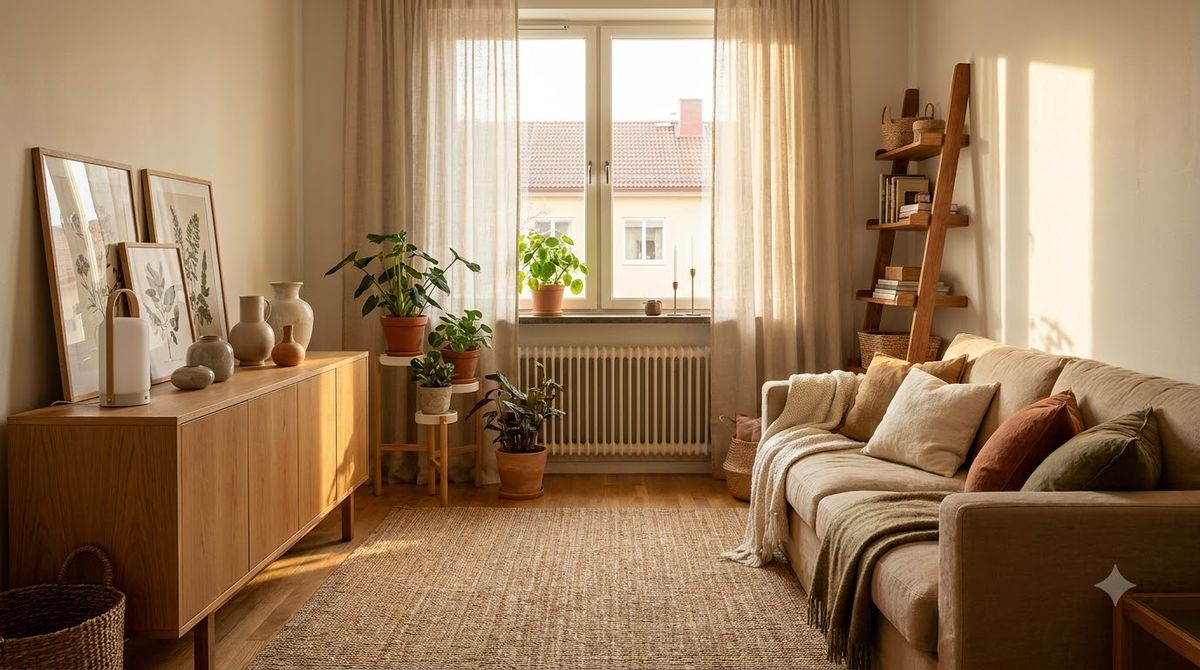
You can transform a rental with zero damage by leaning on five renter-safe tools: peel-and-stick surfaces, Command strips, freestanding pieces, textiles, and plants. Together they let you cover ugly walls, hang art and shelving, define rooms, and soften bad floors without a single hole, and every one of them comes off cleanly on move-out day so you get your full deposit back. The trick is simple: add layers you place on top of the space rather than drilling into it. Below is a room-by-room playbook, with weight ratings, price ranges, and the swaps to try first.
Key Takeaways
- No-damage decor works by adding removable layers (adhesive, freestanding, and textile) instead of drilling into walls, floors, or cabinets.
- Command strips hold real weight when matched correctly: small strips 4 lbs, medium 6 lbs, large 16 lbs per pair, and picture-hanging strips up to 16 lbs per frame.
- Peel-and-stick wallpaper, tile, and floor planks cover dated surfaces for $25 to $45 per roll or box and peel off in one piece within a lease term.
- Tension rods and area rugs hang curtains and hide bad flooring with no hardware and no subfloor contact.
- Photograph every wall and floor at move-in, and pull adhesives slowly and low-and-straight at move-out to protect your deposit.
How do you decorate a rental without losing your deposit?
You decorate without losing your deposit by choosing decor that rests on the surface rather than penetrating it, and by documenting the space before you touch it. Nail holes and gouged floors are among the biggest deposit risks, so skip both. Instead, build the whole look from removable systems that come off clean.
Start with a plan that protects you on both ends of the lease:
- Document move-in condition. Photograph every wall, floor, and fixture with timestamps before anything goes up.
- Read your lease for adhesive language. Most allow removable products; a few restrict wallpaper, so confirm first.
- Test adhesion on a hidden spot. Stick and peel a small piece behind a door to check the paint bond.
- Choose freestanding over mounted whenever a piece can stand on its own instead of attaching to a wall.
- Keep the original packaging for strips and hooks so you have the removal instructions at move-out.
What are the best no-damage decor tricks?
The best no-damage tricks are the ones that do the heaviest visual lifting for the least commitment. Five categories cover almost every rental problem, and you can layer them in any combination.
- Peel-and-stick everything. Wallpaper for accent walls, subway-look tile for kitchen backsplashes, and vinyl plank for tired floors. Expect $25 to $45 per roll or box and clean removal.
- Command strips and hooks. Hang art, mirrors, string lights, and even lightweight shelving with the right weight rating, no holes required.
- Tension rods. Curtains, room dividers, closet organizers, and under-sink storage all mount with spring pressure and zero screws, for $8 to $20 each.
- Textiles and rugs. Large area rugs, throws, and slipcovers hide bad floors and dated furniture instantly.
- Plants and freestanding decor. A tall floor plant, a leaning ladder shelf, or a freestanding room screen adds height and character with nothing attached.
If you want a deeper walkthrough of stretching a tight footprint, our guide to small apartment decor ideas pairs perfectly with these no-damage swaps.
Command strips: how much weight can they really hold?
Command strips fail for one reason: people guess the size instead of matching it to the object. Choose by weight, not by eye. Here is the rule of thumb.
- Small strips: up to 4 lbs, good for lightweight frames and hooks.
- Medium strips: up to 6 lbs, for mid-size art and organizers.
- Large strips: up to 16 lbs per pair, for big frames and mirrors.
- Picture-hanging strips: up to 16 lbs per frame when you use enough pairs and follow the spacing.
- Utility and jumbo hooks: 3 to 7.5 lbs each, for coats, bags, and string lights.
Three habits make the bond hold: clean the wall with rubbing alcohol first (never a household cleaner, which leaves residue), press firmly for 30 seconds, and wait a full hour before hanging anything. For a full picture wall, plan the grid on the floor, then transfer it up. If you are building a display, we walk through the exact process in how to hang a gallery wall without nails, and we compare the sticky hardware itself in our roundup of the best Command strips for a gallery wall under $30.
Rental problems and their no-damage fixes
Almost every rental frustration has a removable answer. Here is a quick reference table.
| Rental problem | No-damage fix | Typical cost |
|---|---|---|
| Ugly or dated wall color | Peel-and-stick wallpaper on one accent wall | $30 to $45 per roll |
| Scuffed or worn flooring | Large area rug or peel-and-stick vinyl plank | $40 to $200 |
| Dingy kitchen backsplash | Peel-and-stick tile panels | $8 to $15 per sheet |
| Can’t hang art (no nails allowed) | Command picture-hanging strips | $10 to $16 per pack |
| Bare windows, no curtain rod | Tension rod plus panels | $8 to $20 per rod |
| Not enough storage | Freestanding shelving and tension-rod organizers | $25 to $80 |
| Harsh overhead lighting | Plug-in floor and table lamps | $20 to $60 each |
| Builder-grade cabinet hardware | Swap knobs, keep the originals in a bag | $2 to $5 per knob |
Room-by-room renter-safe swaps
Living room
The living room is where layering pays off fastest. A large area rug is the highest-impact purchase you can make: sized 8-by-10 feet or larger, it floats over scratched hardwood or wall-to-wall carpet you dislike and instantly grounds the room. Anchor it with a non-slip pad so it stays put and protects the floor underneath. From there, build up.
- Float an 8×10 or larger rug over bad flooring; add a rug pad to prevent slipping and floor marks.
- Hang a mirror or large art with large Command strips (16 lbs) to bounce light.
- Add a plug-in floor lamp to replace harsh overhead light for $20 to $60.
- Use a freestanding ladder shelf instead of mounted shelving.
- Drape slipcovers and throws over a dated or landlord-supplied sofa.
Kitchen
Kitchens carry the most dated finishes and the fewest ways to change them, so focus on surfaces and hardware. Peel-and-stick tile transforms a grimy backsplash in an afternoon, and it wipes clean like real tile. Swapping cabinet knobs is a favorite five-dollar upgrade, and it is fully reversible.
- Apply peel-and-stick tile to the backsplash, $8 to $15 per sheet.
- Swap cabinet knobs and store the originals in a labeled bag.
- Add an under-sink tension rod to hang spray bottles and free up shelf space.
- Use a freestanding rolling cart for extra counter and storage.
- Lay peel-and-stick vinyl plank over a worn kitchen floor.
Bedroom
Bedrooms are the easiest room to personalize because so much of the impact comes from textiles. Treat the wall behind the bed as the one place to splurge on a peel-and-stick accent, then let bedding and lighting do the rest. A tension rod above the window means curtains without a single screw.
- Create a peel-and-stick accent wall behind the headboard, one to two rolls at $30 to $45 each.
- Hang curtains on a tension rod for privacy and softness.
- String battery or plug-in fairy lights on Command hooks for ambient glow.
- Add a freestanding clothing rack if closet space is tight.
- Layer a rug at the foot of the bed over cold or worn flooring.
Bathroom
Bathrooms respond well to small removable touches. A tension rod adds storage, peel-and-stick tile freshens a tired floor or wall, and adhesive hooks hold everything from robes to plants. Keep it simple so nothing traps moisture behind it; always press adhesives onto fully dry, non-textured surfaces.
- Install a tension-rod corner shelf in the shower for bottles.
- Cover a dated floor with peel-and-stick vinyl tile.
- Hang towels and robes on Command hooks rated 3 to 7.5 lbs.
- Swap the shower curtain and bath mat for an instant refresh.
- Add a small trailing plant on the windowsill for life and color.
Where you place all of this matters as much as what you choose. If your unit feels cramped, our small apartment layout ideas show how to arrange freestanding pieces so rooms feel bigger, not busier.
How do you remove peel-and-stick and adhesives without damage?
Clean removal is where deposits are won or lost, and it comes down to patience and direction. Adhesives are engineered to release when you stretch them along the wall rather than pulling straight out. Give yourself an unhurried hour on move-out day and work one piece at a time.
- Command strips: pull the tab slowly straight down, parallel to the wall, stretching it 12 or more inches until it releases.
- Peel-and-stick wallpaper: lift a corner and peel at a low angle in one steady, continuous motion; warm it gently with a hairdryer if it resists.
- Peel-and-stick tile and plank: warm the edge, then peel back on itself; wipe any residue with a little rubbing alcohol.
- Hooks: remove them before you take down the item so the weight does not tear the paint.
- Final walkthrough: compare each wall to your move-in photos and touch up any faint marks with a magic eraser.
Frequently Asked Questions
Will Command strips damage painted rental walls?
Not when used correctly. Match the strip to the object’s weight, clean the wall with rubbing alcohol first, and remove strips by pulling the tab slowly straight down. Freshly painted or low-quality flat paint is the main risk, so test one strip in a hidden spot before committing to a full display.
Does peel-and-stick wallpaper actually come off cleanly?
Yes, on smooth, cured, well-painted walls it peels off in one piece within a normal lease. It performs worst on fresh paint under three weeks old and on textured surfaces. Peel at a low angle, warm stubborn spots with a hairdryer, and you will rarely need more than a quick wipe afterward.
How do I cover bad flooring in a rental?
Use a large area rug, ideally 8-by-10 feet or bigger, over a non-slip pad to hide scratches, stains, or dated carpet. For a longer-term fix, peel-and-stick vinyl plank lays directly over the existing floor for $40 to $200 a room and lifts off cleanly, protecting your deposit.
Can I hang curtains without drilling holes?
Absolutely. A tension rod mounts inside the window frame using spring pressure alone, with no screws or brackets, and costs $8 to $20. For heavier drapes across a wide window, pair adhesive curtain-rod brackets rated for the weight, and always test the hold before loading the panels.
What decor should renters avoid entirely?
Skip anything that penetrates or permanently alters surfaces: nails, screws, wall anchors, permanent paint, and strong construction adhesives. Also avoid sticking products to fresh paint, wallpaper, or textured walls where the bond can lift the surface. When in doubt, choose freestanding or tension-mounted pieces that leave no trace at all.
Decorating a rental well is really about restraint plus a few smart removable systems. Layer peel-and-stick surfaces, Command strips, tension rods, textiles, and plants, document the space on both ends of the lease, and you get a home that feels entirely yours and a deposit that comes back in full.